
Buying a house in Canberra in 2026 is mechanically easier than in any other Australian capital, once you understand two ACT quirks. First, the territory has no cash First Home Owner Grant; instead, from 1 July 2026 eligible first home buyers pay $0 stamp duty with no property value cap and no income test under the Home Buyer Concession Scheme (ACT Revenue Office). The old $1,020,000 value limit and household income test were abolished, making the ACT the first Australian jurisdiction to remove first home buyer stamp duty entirely. Second, you don't buy land freehold here, you buy a 99-year Crown lease, which sounds alarming and turns out to matter almost not at all. The median Canberra house sits around $1.04 million and the median dwelling (houses and units combined) around $890,000 (Cotality Home Value Index, released 1 June 2026).
The short version, before we get into it:
- Stamp duty: $0 for eligible first home buyers, with no property value cap and no maximum concession, from 1 July 2026.
- Income test: none. The household income test was removed from 1 July 2026, so income no longer affects eligibility for the stamp duty exemption.
- Deposit: as little as 5% with no LMI via the Australian Government 5% Deposit Scheme (formerly the First Home Guarantee), with an ACT price cap of $1,000,000, or 2% via Help to Buy.
- Leasehold: 99-year Crown lease; banks lend on it exactly as they would on freehold.
- Conveyancing: the ACT requires a solicitor for the transfer, unlike NSW, Victoria and most states, you cannot use an independent licensed conveyancer.
Not sure if you qualify? Run your numbers through the first home buyer eligibility checker before you go any further.
Canberra property market snapshot 2026
Canberra is one of Australia's steadiest property markets. As the nation's capital, it has the largest concentration of public-sector employment in the country, which props up incomes and keeps housing demand consistent through the cycles that whipsaw Sydney and Melbourne. No mining booms to inflate prices, no busts to deflate them.
Here's where the market sits in mid-2026, with the headline figures reconciled to one source:
| Metric | Canberra 2026 |
|---|---|
| Median house price | about $1,040,000 |
| Median dwelling (houses + units) | about $890,000 |
| Median unit price | about $595,000 |
| Annual house value growth | about 5.2% |
| Average days on market | about 25 to 35 days (approximate) |
| Rental vacancy rate | about 1.5 to 2% (approximate) |
Source: Cotality (formerly CoreLogic) Home Value Index, released 1 June 2026. House values rose about 5.2% over the year while units rose roughly 1%, which is why the house and unit medians have drifted further apart.
What makes buying property in Canberra different isn't the price, it's the income behind it. Canberra consistently records the highest household incomes in the country, driven by public-service salaries, defence, and professional services. So even though house prices look a lot like Sydney's, the price-to-income ratio, the real measure of whether a place is affordable, is friendlier here than in most capitals.
If you're getting serious, work out your number first. Our borrowing power calculator factors in your income, debts and deposit to show what a lender would actually let you spend, and getting pre-approval early matters because well-priced homes still sell quickly.
The ACT advantages and oddities
Canberra sits mid-pack on price, but the buying mechanics are structurally more favourable than any other capital. Two ACT-specific levers do most of the work, and one quirk trips up every interstate buyer on day one. Here's all of it.
The Home Buyer Concession Scheme, now $0 duty, no cap
The Home Buyer Concession Scheme (HBCS) is means-tested but generous. From 1 July 2026 there is no income test and no property value cap, so eligible first home buyers pay zero stamp duty regardless of the purchase price. The old $1,020,000 value limit, the taper up to roughly $1,455,000 and the $35,238 maximum concession have all been abolished (ACT Revenue Office).
This isn't a rebate that lands months later. It's an exemption at settlement, so it comes straight off the cash you need on the day. The concession covers new and established homes, off-the-plan purchases and vacant residential land. On a typical first-home purchase, the saving against the standard duty schedule runs into many tens of thousands of dollars.
To qualify from 1 July 2026 you must:
- Meet no income test at all. The former $250,000 household income cap (plus $4,600 per dependent child) was abolished, so income no longer affects eligibility.
- Not have owned or held an interest in any other property in the last five years (this is "not recently owned", not "never owned").
- Live in the home as your principal place of residence for at least one continuous year, starting within 12 months of settlement.
One note on timing: the 2026-27 ACT Budget delivered this change, and stamp duty for eligible first home buyers has been abolished from 1 July 2026 with no value cap and no income test. Always confirm the live eligibility rules before you sign, check the current detail on our ACT grants page or directly at revenue.act.gov.au.
The 99-year leasehold, leasehold vs freehold, explained
The ACT is the only Australian jurisdiction where residential land isn't sold freehold. When you "buy a house" in Canberra, you're buying a Crown lease that runs for 99 years from when it was originally granted, and the land stays owned by the Commonwealth. So the honest answer to "leasehold vs freehold" here is: you hold a long lease, not the dirt.
In practice, almost none of that matters. Crown leases are renewed administratively without drama, the ACT government has never declined to renew a residential lease at expiry. The major banks lend on Canberra property using the same LVR and loan settings they use in freehold states, and valuers treat the lease as effectively perpetual. Resale, refinance and inheritance all work the way they do everywhere else.

The one real consequence is legal: conveyancing in the ACT is reserved legal work. You cannot use a licensed conveyancer, only an admitted solicitor can act on the transfer. Budget roughly $1,800 to $2,800 for an ACT solicitor on a standard purchase. (If you want the background on what this work involves, our conveyancing guide covers it.)
Public-service jobs and borrowing power
Around a third of Canberra's workforce, the highest public-sector share in the country, works for the Australian Public Service (APS) or a Commonwealth agency. Lenders treat that favourably for three reasons: APS roles are statistically very low-default, salary bands are publicly defined with structured progression, and Commonwealth super sits above the legislated minimum (15.4% for many APS staff, against the standard 12%).
The practical effect is that several lenders price APS files more sharply than their rack rate, sometimes a small interest discount, sometimes a more lenient treatment of living expenses that lifts borrowing capacity. Which lender does this best changes quarter to quarter, and it's never written into a public rate card. A Canberra broker who runs mostly APS files will know the current pecking order, which is the single biggest reason to use a local broker over a national franchise here.
The light-rail corridor, where the uplift has been, and where it's coming
Stage 1 (Gungahlin to City, opened 2019, about a 24-minute run) has already delivered its uplift. Corridor suburbs, Gungahlin, Mitchell, Lyneham, Dickson, Braddon and Civic, re-rated in the years either side of opening and now trade at a premium to comparable non-corridor stock. If you buy here in 2026 you're paying for the rail access; don't expect a second leg of growth from the same catalyst.
Stage 2A (City to Commonwealth Park) has been under construction since early 2025, with passenger services expected around 2028. Stage 2B (Commonwealth Park to Woden) is still working through design and federal approvals and has no locked-in construction start date. If you believe in the rail-uplift thesis, the speculative play is the Stage 2B corridor, Deakin, the Yarralumla fringe, Curtin, Hughes, Garran and Woden itself, but go in with your eyes open: these approvals have slipped before, and the timeline risk is real.
The Canberra FHB stack, and where buyers actually land
A single first home buyer on a public-service salary can stack three benefits cleanly: the ACT HBCS (zero duty, now with no cap or income test), the First Home Super Saver Scheme (voluntary super contributions withdrawn for a deposit, taxed concessionally), and the Australian Government 5% Deposit Scheme, formerly the First Home Guarantee (a 5% deposit with no LMI). Duty goes away, the deposit gap closes, and a steady income keeps serviceability comfortable.
Where buyers actually land in 2026: Belconnen and Tuggeranong are still the older budget tier; Gungahlin and the inner-north Stage 1 corridor sit higher for similar stock; and the Molonglo Valley (Denman Prospect, Whitlam, Coombs) is where most new-build first homes are going. The inner south (Kingston, Griffith, Manuka, Forrest) is a separate, beautiful market well above first-home reach. Suburb-level numbers are below, treat them as a starting point and check live listings.
ACT first home grants and concessions 2026
The ACT has no cash First Home Owner Grant. Where other states hand over a lump sum, the ACT gives you stamp-duty relief instead, and on a typical purchase that relief is worth more than most states' grants. Here's the full stack, with current 2026 figures.
Home Buyer Concession Scheme (the ACT's stamp-duty exemption)
As covered above, from 1 July 2026 the HBCS wipes stamp duty for eligible first home buyers with no property value cap and no income test, and there is no maximum benefit (ACT Revenue Office). You must not have owned property in the last five years, and you must live in the home for a continuous year. This is the real answer to "first home owner grant ACT": there's no FHOG, but this exemption does the work. See the full ACT eligibility detail →
5% Deposit Scheme (formerly First Home Guarantee), federal, 5% deposit, no LMI
The Australian Government 5% Deposit Scheme, formerly the First Home Guarantee, lets you buy with a 5% deposit and no lenders mortgage insurance, the government guarantees the rest. Since 1 October 2025 there are no income caps and unlimited places. The property price cap for the ACT is $1,000,000 (housingaustralia.gov.au), which covers the entire unit market and a large share of townhouses and outer-suburb houses.
Help to Buy, federal shared equity, 2% deposit
Help to Buy launched nationally in December 2025 and is now open in the ACT. The government co-contributes up to 30% of an existing home's value (40% for new builds) in exchange for an equity share, so you only need a 2% deposit. From 1 July 2026 the income caps are $103,000 for singles and $165,000 for couples and single parents (indexed each 1 July, up from $100,000 and $160,000). You buy back the government's share over time, and you can use the LMI calculator to see what you'd save by avoiding insurance on a low deposit.
First Home Super Saver Scheme
The First Home Super Saver Scheme lets you save up to $50,000 toward a deposit inside super (up to $15,000 of contributions per financial year), taxed at 15% rather than your marginal rate. Given Canberra's higher-than-average incomes, that tax saving adds up, it's one of the more powerful tools for a salaried first home buyer here. To check whether the whole stack fits your situation, start with the eligibility checker or browse all schemes on the grants page.
Find a Canberra broker who knows the ACT concessions
A broker who runs the Home Buyer Concession Scheme and the First Home Guarantee day in, day out can match you with the right lender and scheme, and the APS pricing edge is real money.
Stamp duty costs in Canberra
The ACT has been gradually replacing stamp duty (conveyance duty) with an annual land-based system since 2012, but duty still applies to purchases in 2026. The figures below are approximate guides at common price points, the ACT runs a sliding scale that changes each financial year, so re-check the live rate before you commit.
| Property price | Standard duty (approx.) | First home buyer (HBCS) |
|---|---|---|
| $500,000 | about $11,400 | $0 (exempt) |
| $600,000 | about $14,200 | $0 (exempt) |
| $800,000 | about $21,400 | $0 (exempt) |
| $1,000,000 | about $30,000 | $0 (exempt) |
| $1,100,000 | about $33,000 | $0 (exempt) |
Because the HBCS now exempts duty entirely with no value cap, an eligible first home buyer pays nothing on any Canberra purchase, whatever the price. The "standard duty" column is a rough guide to what a non-first-home buyer would pay; for an exact, current figure use our stamp duty calculator with the ACT setting, which is the safest way to get a number you can rely on for "stamp duty Canberra" before signing a contract.
How much deposit you need
Here's what a $700,000 purchase, roughly the entry point for houses in Canberra's most affordable districts, looks like across the main pathways:
| Pathway | Deposit on $700K | LMI cost |
|---|---|---|
| Help to Buy (2%) | $14,000 | $0 |
| First Home Guarantee (5%) | $35,000 | $0 |
| Bank loan with 10% | $70,000 | about $12,000 to $18,000 |
| Bank loan with 20% (no LMI) | $140,000 | $0 |
On a unit around $500,000 the numbers are gentler again: the First Home Guarantee needs a $25,000 deposit with no LMI, and you pay zero stamp duty under the HBCS. Add the First Home Super Saver Scheme on top and a disciplined saver can be buying inside a couple of years. Track your progress with the deposit tracker, sense-check your ceiling with the borrowing power calculator, and see what the repayments would actually be with the mortgage repayment calculator.
Best suburbs for first home buyers in Canberra
Canberra is built around a series of town centres, each one a semi-independent hub with shops, schools and transport. So you don't have to live near the CBD to have good amenities, unlike Sydney or Melbourne, where distance from the centre usually means fewer services. A note on the numbers: the suburb medians below are approximate and skew toward townhouses and units, which is why they sit well under the $1.04M territory-wide house median. Always check current listings before you anchor on a figure.
Entry level, under $700K (townhouses and units)
Gungahlin, Canberra's newest and fastest-growing district, about 15km north of the CBD, with modern housing, a young crowd, the Gungahlin Town Centre and light-rail access to the city. Suburbs like Harrison, Franklin and Bonner offer good value.
Belconnen, about 10km northwest, the largest district by population, anchored by Westfield Belconnen and Lake Ginninderra. Macgregor, Charnwood and Dunlop are the most affordable pockets, and the University of Canberra adds life and rental demand.
Tuggeranong, about 20km south, the most affordable district for actual houses. Banks, Conder, Gordon and Richardson sit below the Canberra median, which makes them popular with families who want space over a short commute.
Mid-range, $700K, $900K
Woden Valley, about 10km south, effectively Canberra's second CBD and home to many government departments. Phillip, Mawson and Pearce balance price and location, and the area is in line for future light rail.
Weston Creek, about 12km southwest, quiet and leafy, with established homes in Rivett, Stirling and Waramanga, close to Cooleman Court and Stromlo Forest Park.
Casey and Palmerston, both in the Gungahlin district, with modern builds, growing amenities and proximity to the town centre and light rail. Good options for buyers who want something newer without building from scratch.
Higher tier, $900K+ (with accessible units)
Inner north, Braddon, Dickson, Ainslie and Turner. Houses run well above first-home reach, but units here are genuinely accessible and put you within walking distance of the CBD, the Canberra Centre and the light rail. Braddon is the dining-and-nightlife hub.
Inner south, Kingston, Manuka and Griffith: established, leafy and prestigious. Houses are dear, but a unit in Kingston or Barton (think Kingston Foreshore) can be an entry point into the area.
Molonglo Valley, Denman Prospect, Whitlam and Coombs, between Weston Creek and Woden. New schools, shops and parks are still going in, and this is where most new-build first homes are landing in a reasonably central spot.
Should you look at Queanbeyan, just over the NSW border?
It's worth asking. Queanbeyan is a NSW town roughly 15 minutes' drive from Civic, and it often prices a notch below comparable ACT stock, so plenty of Canberra workers buy there. The trade-off is that you're in New South Wales, which means NSW rules apply, not the ACT's. You'd buy freehold (no Crown lease), you'd use a NSW conveyancer or solicitor, and your stamp-duty and first-home concessions follow the NSW first home buyer schemes, not the ACT's generous HBCS exemption.
For some buyers the cheaper entry price wins; for others the ACT's full stamp-duty exemption more than closes the gap. The only way to know is to model both: run an ACT purchase and a Queanbeyan purchase through the stamp duty calculator (switching the state) and compare the all-in cost, not just the sticker price.
Cost of living, heating and energy efficiency
Canberra's cost of living runs higher than most cities in some areas and lower in others. Here's a rough comparison:
| Expense | Canberra | Sydney | Melbourne |
|---|---|---|---|
| Median weekly rent (house) | about $600 to $700 | about $700 to $850 | about $500 to $650 |
| Electricity bill (quarterly) | about $500 to $700 | about $400 to $550 | about $350 to $500 |
| Childcare (daily) | about $130 to $160 | about $140 to $180 | about $120 to $160 |
| Public transport (monthly pass) | about $100 | about $200 | about $160 |
The number that quietly changes the maths is income. Canberra's median household income is the highest in the country, so despite house prices in Sydney, Melbourne territory, Canberrans tend to spend a smaller share of income on housing. Public-service jobs also come with super at 15.4% for many APS staff (against the standard 12%), which makes the First Home Super Saver Scheme especially worthwhile.
The one local cost that genuinely catches out interstate buyers is heating. Canberra winters are properly cold, overnight temperatures regularly drop below 0°C from June to August, and a poorly insulated older home can cost well over $2,000 a year to heat. This is where the Energy Efficiency Rating (EER) matters.
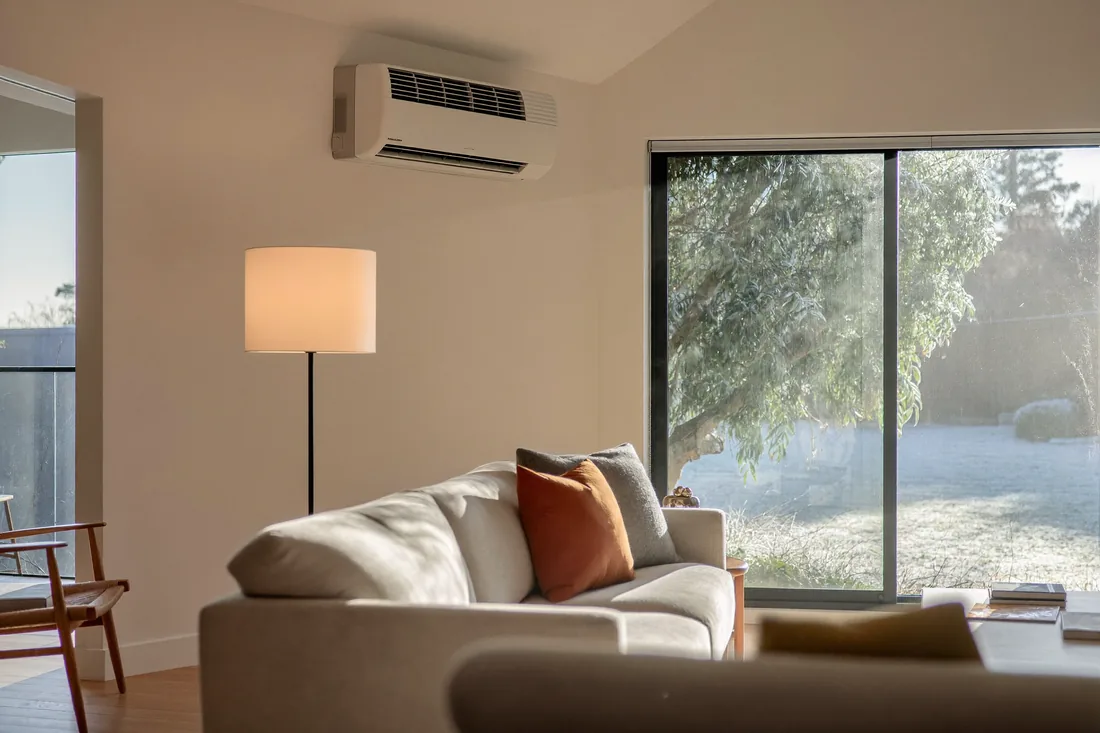
The ACT has required sellers to disclose an EER in advertising and the contract of sale since 1999, so you'll see a star rating before you inspect. For existing dwellings the scale runs from 0 to 6 stars, where 5+ is good and 6 is the top rating for an existing home (newer NatHERS-rated builds can score higher on a separate 10-star scale). A 0 to 2 home isn't a dealbreaker, but treat it as a renovation budget: insulation, draught-proofing and an efficient reverse-cycle system are the usual fixes. Ask the agent for the EER certificate and factor heating into your running costs before you fall in love with the place.
ACT land tax and rates for owners
The ACT funds itself differently from other states, and it matters for your annual budget. Two things to understand:
Rates. Every property owner pays quarterly general rates, and in the ACT these are typically higher than equivalent council rates in NSW or Victoria, that's the trade-off for the territory phasing out stamp duty. Build this into your ongoing costs, not just your purchase costs.
Land tax. If the home is your principal place of residence, you're exempt from land tax. Land tax applies to investment and rental properties, calculated on the unimproved land value, typically a fraction of the land value each year, but the exact rate scales and changes, so confirm the current schedule with the ACT Revenue Office. If you're buying now but might rent the place out later, factor a future land-tax bill into your plans rather than assuming today's owner-occupier position holds forever.
The Canberra buying process, step by step
- Work out what you can afford, use the borrowing power calculator and check your eligibility for the Home Buyer Concession Scheme and the First Home Guarantee.
- Get pre-approved, this sets your budget and shows sellers you're serious. Our pre-approval guide walks through it.
- Choose your district and start looking, open inspections, realestate.com.au and Allhomes (Canberra's local platform).
- Make an offer, Canberra is mostly a private-treaty market (offers by negotiation), though inner-suburb auctions do happen. Your agent or solicitor prepares the paperwork.
- Building and pest inspection, essential, especially for older homes. Check insulation, heating and the EER. Use our building inspector directory; allow roughly $400 to $600 for a combined report.
- Cooling-off period, the ACT gives you 5 business days after exchange. If you pull out within that window, you forfeit 0.25% of the purchase price to the seller, so use the time to finalise finance and inspections rather than to keep shopping.
- Finance approval, your lender issues formal (unconditional) approval after valuing the property. A local broker can keep this moving.
- Insurance, you need building insurance from the date of exchange, not settlement.
- Settlement, your ACT solicitor (remember, conveyancers can't act here) handles the legal transfer. Settlement is usually 30 to 60 days, and then you get the keys.
Want the whole thing laid out end to end? Our buyer's roadmap maps every stage from "what can I afford?" to keys in hand.
Canberra vs other capital cities for first home buyers
| Feature | Canberra | Sydney | Melbourne | Brisbane |
|---|---|---|---|---|
| Median house price | about $1.04M | about $1.5M | about $900K | about $1M |
| Household income | Highest in Australia | High | Mid | Mid |
| Minimum deposit (scheme) | 2% (Help to Buy) | 5% (FHG) | 5% (FHG) | 5% (FHG) |
| Cash FHOG (new build) | No FHOG | $10,000 | $10,000 | $30,000* |
| Stamp duty (FHB, $600K) | $0 (exempt) | $0 | $0 | $0 |
| Cooling-off period | 5 business days | 5 business days | 3 business days | 5 business days |
*Queensland's First Home Owner Grant of $30,000 for new builds was continued beyond 30 June 2026 in the 2026-27 Queensland Budget (23 June 2026); it did not revert to $15,000 (Queensland Revenue Office). NSW and Victoria sit at $10,000.
Canberra's edge is the combination of the country's highest incomes and genuine stamp-duty relief. There's no cash grant, but the uncapped duty exemption for eligible first home buyers is worth more than most grants, and high incomes mean Canberrans tend to save deposits faster than buyers in other capitals.
Buy vs rent in Canberra
Canberra's rental market is tight, with vacancy around 1.5 to 2% and a three-bedroom house renting for roughly $600 to $700 a week ($2,600 to $3,000 a month).
Compare that to a mortgage: a $700,000 loan at 6% over 30 years is roughly $4,200 a month, while a $500,000 loan (a unit) at the same rate is about $3,000 a month, close to the cost of renting a house. So the buy-vs-rent maths leans toward buying a unit, where you pay roughly what you'd pay in rent but build equity instead of handing it to a landlord. For houses, monthly costs are higher than renting, but with house values up about 5.2% over the past year you're also building wealth as you go.
For salaried buyers on steady incomes, the case is stronger still: predictable income makes you an easy borrower, and the First Home Super Saver Scheme lets you build the deposit with pre-tax dollars. Run your own numbers, plug a realistic loan size into the mortgage repayment calculator and compare it honestly against your current rent before deciding.
Frequently asked questions
Is Canberra a good place to buy a first home?
Yes, especially if you work in the public sector or professional services. The median house price is about $1.04 million (Cotality, June 2026), but Canberra has the highest household incomes in the country, so the price-to-income ratio is friendlier than the sticker price suggests. The Home Buyer Concession Scheme wipes stamp duty for eligible first home buyers with no property value cap since 1 July 2026. Employment is stable, and the market is far less volatile than Sydney or Melbourne.
How much deposit do I need to buy a house in Canberra?
As little as 2% with Help to Buy ($14,000 on a $700,000 home) or 5% with the First Home Guarantee ($35,000 on $700,000), both with no LMI. On a $500,000 unit, the First Home Guarantee needs $25,000. Without a scheme, lenders usually want 20% ($140,000 on $700,000) to avoid LMI, which can add $12,000 to $18,000. The First Home Super Saver Scheme helps you get there faster with pre-tax savings, and our borrowing power calculator shows what you can actually afford.
What suburbs in Canberra are best for first home buyers?
It depends on budget. For the lowest entry prices, look at Tuggeranong (Banks, Conder, Gordon) and parts of Belconnen (Macgregor, Charnwood). For connectivity, Gungahlin (Harrison, Franklin) has light rail to the CBD. Mid-range buyers do well in Woden Valley (Phillip, Mawson) and Weston Creek (Rivett, Stirling), and if you can buy a unit, the inner north (Braddon, Dickson) offers a walkable, vibrant lifestyle. Suburb medians are approximate, always check current listings, and a broker can model the long-term cost of each choice.
Do you really own your house in Canberra if it's leasehold?
You hold a 99-year Crown lease rather than freehold land, but in every practical sense it's ownership. Banks lend on it identically to freehold, valuers treat the lease as effectively perpetual, and you can sell, refinance or pass it on normally. The ACT government has never refused to renew a residential lease at expiry. It's the standard way property works across the entire territory.
Can I use a conveyancer in the ACT, or do I need a solicitor?
In the ACT a property transfer must be handled by an admitted solicitor, unlike NSW, Victoria and most states, you cannot engage an independent licensed conveyancer (Queensland works the same way). Budget roughly $1,800 to $2,800 for an ACT solicitor on a standard purchase.
What income do I need to qualify for the ACT stamp duty exemption?
There is no longer an income test. From 1 July 2026 the ACT abolished stamp duty for all eligible first home buyers, with no household income cap and no property value cap under the Home Buyer Concession Scheme. The old 2025-26 thresholds (a $250,000 household income cap plus $4,600 for each dependent child) no longer apply. You still need to have not owned property in the last five years and to live in the home for a continuous year, so confirm the current rules at revenue.act.gov.au before you sign.
What's the cooling-off period when buying in the ACT?
Five business days after you exchange contracts. If you rescind within that window, you forfeit 0.25% of the purchase price to the seller, so on a $700,000 home that's $1,750. Use the time to lock in finance and complete inspections.
Do first home buyers in Canberra get a cash grant (FHOG)?
No, the ACT has no First Home Owner Grant. Instead, from 1 July 2026 it abolished first home buyer stamp duty entirely, with no property value cap and no income test. For most buyers that's worth more than the cash grants other states offer.


