
The short version: First home buyers in NSW pay $0 stamp duty on a home up to $800,000, with a sliding concession up to $1 million, which is about $30,400 you don't hand over at settlement (Revenue NSW). The honest catch for 2026: in Western Sydney that mostly buys you a unit now. House medians in Liverpool, Blacktown, Penrith and Campbelltown have largely pushed past $800,000, so the full exemption increasingly lands on apartments rather than freestanding houses. On top of the duty saving you've also got the federal Australian Government 5% Deposit Scheme, formerly the First Home Guarantee (5% deposit, $1.5M Sydney cap, no income test) and the now-live Help to Buy scheme. This guide runs through the grants, the suburbs and property types that still clear the $800K line, the deposit you actually need, and the Sydney buying process. Current as of June 2026, run your own numbers here.
Buying a House in Sydney in 2026: What First Home Buyers Actually Face
Sydney is the most expensive property market in the country, and there's no point pretending otherwise. But the median gets set by inner and middle-ring suburbs that most first home buyers were never going to buy in anyway. You don't have to buy the median. You buy the property that fits your budget and qualifies for the help that's on offer.
| Metric | Sydney, July 2026 |
|---|---|
| Median house price | about $1.56 million |
| Median unit price | about $900,000 |
| Combined dwelling median | about $1.27 million |
| Recent monthly movement | Down (houses -1.5%, units -0.6% in June; Sydney -3.2% over the June quarter) |
| Average days on market | about 25 to 35 days |
Those figures come from Cotality's July 2026 data: a house median around $1.56 million, a unit median around $900,000, and a combined dwelling figure near $1.27 million. The market actually softened through the first half of 2026: Sydney house values eased about 1.5% in June and the city fell 3.2% over the June quarter, so the days of assuming a guaranteed 5% a year are behind us for now. Over the long run Sydney values have roughly doubled every decade or so, but that's a historical observation, not a promise, and it doesn't help you with this year's deposit.
The headline misses one thing. For a first home buyer, the relevant slice of Sydney is the bottom end: units across the west and south-west, and the houses that still sit in the $800K to $1M concession band. That's a very different market to the one the house median describes. The gap is the whole story: at around $900,000 the median unit is roughly $660,000 cheaper than the median house, which is what puts an apartment within reach when a freestanding house isn't. Before you fall in love with any suburb, the first job is to work out what you can actually borrow against your income, deposit and existing debts, because that number sets the floor under everything else.
First Home Buyers Stamp Duty NSW: $0 Up to $800,000
First home buyers in NSW pay no stamp duty on a home valued up to $800,000, with a reduced concessional rate from $800,001 to $1,000,000 (Revenue NSW). This is the single biggest structural advantage Sydney first home buyers have, and it runs through the First Home Buyer Assistance Scheme (FHBAS).
Under the rules in place since 1 July 2023, an eligible first home buyer pays zero transfer duty on a home up to $800,000, then a sliding concessional rate up to $1 million, and full duty above that. To put a number on it: the standard transfer duty on an $800,000 purchase is about $30,400 on the current Revenue NSW scale, and that's real cash you keep at settlement. Because the rate scale is indexed each year the exact figure moves a little, so plan around roughly $30,000 to $31,000 and use the stamp duty calculator for your precise number.
Two sensible things to do with that saving:
- Push it onto the deposit. An extra $30,400 on a 10% deposit takes you from, say, $80,000 to nearly $112,000. On a higher-priced property that can be the difference between paying lenders mortgage insurance and avoiding it.
- Keep it as a buffer for a concession-band buy. If you stretch to a $900,000 home you'll owe partial duty under the concession scale (a few thousand to around $10,000, depending on price). The saved cash covers that bill and leaves you change, so you can step up a suburb tier without a duty hit you weren't expecting.
First Home Buyer NSW Eligibility
The $800K threshold is the headline, but most people who lose the exemption lose it on the residence and ownership tests, not the price. The rules you can actually fail:
- Everyone on the title must be a first home buyer. If your partner has ever owned property in Australia (even an investment, even years ago) the whole purchase loses the exemption. There's no pro-rata.
- At least one buyer must be an Australian citizen or permanent resident.
- You must move in within 12 months of settlement and live there continuously for at least 12 months. That's stricter than some older guides still claim, and Revenue NSW can claw the duty back if you fail it. Permanent ADF members have a carve-out; everyone else needs to plan the 12 months in.
- The value cap is hard. Duty is assessed on the higher of contract price or market value. If your $810,000 contract values at $805,000 in Revenue NSW's read, you're in the concession band, not the full exemption.
If you're not sure whether you tick every box, the first home buyer eligibility checker walks you through it in a couple of minutes, and the stamp duty calculator shows what you'd pay if a property tips over the line.
Stamp Duty Exemption NSW First Home Buyer vs the Other States
You'll see Sydney guides claim NSW has the most generous first-home stamp duty deal in the country. That's no longer true, and the reason matters, because NSW still has a genuine edge, just a different one.
- Queensland charges $0 stamp duty on a new build with no value cap (since 1 May 2025), plus a full exemption on established homes up to $700,000 and a concession to $800,000.
- South Australia charges $0 on a new or off-the-plan home with no price cap, but established homes get nothing.
- The ACT abolishes stamp duty for all first home buyers from 1 July 2026, with no value cap and no income test.
- Victoria caps its full first-home exemption at $600,000 (concession to $750,000), lower than NSW.
So NSW isn't the most generous on the dollar figure anymore. Its real edge is that the $800K exemption covers established homes, not just new builds, which counts for a lot in a city where most affordable stock is existing houses and older units, not house-and-land packages. In Queensland and South Australia the no-cap deals only apply to new builds; in Sydney you can buy a 1990s unit in Liverpool and still pay zero duty under $800,000.
First Home Buyer Grants NSW 2026
NSW first home buyers have four main supports in 2026: the FHBAS stamp duty exemption (covered above), a cash grant, the federal deposit guarantee, and the now-live shared-equity scheme. Here's how they stack.
First Home Owner Grant, $10,000
A $10,000 cash grant for first home buyers buying or building a new home. The caps: the property must be under $600,000 for a newly built home, or under $750,000 for a house-and-land package (land value plus build contract combined), Revenue NSW. It's not available on established homes, so it's mainly useful for new apartments or house-and-land in the outer growth corridors.
5% Deposit Scheme, 5% deposit, no LMI
The 5% Deposit Scheme (formerly the First Home Guarantee) lets you buy with a 5% deposit and no lenders mortgage insurance, with the government guaranteeing the rest. Since 1 October 2025 the Sydney price cap is $1,500,000, there are no income caps, and places are unlimited, so it now covers most of the Sydney first-home market, not just the cheap end. Skipping LMI on a Sydney-priced loan can save you tens of thousands; the LMI calculator shows what you'd otherwise pay. And the 5% Deposit Map shows which Sydney suburbs a 5% deposit unlocks.
First Home Buyers Assistance Scheme NSW
The First Home Buyers Assistance Scheme is the NSW stamp duty exemption itself: $0 duty up to $800,000, concession to $1 million, on both new and established homes (Revenue NSW). It's the spine of the whole package and is covered in full in the stamp-duty section above. Worth naming separately because it's the one buyers most often confuse with the federal 5% Deposit Scheme. They're different schemes, and you can use both at once.
Help to Buy, shared equity, 2% deposit
Help to Buy is now live; it launched on 5 December 2025. The federal government takes an equity share of up to 30% on an existing home, or 40% on a new build, so you buy with just a 2% deposit. There are income caps of $103,000 for a single buyer and $165,000 for couples and single parents (from 1 July 2026, wage-indexed each year), and the NSW price cap is $1,300,000. You buy the government's share back over time, or when you sell.
(The older NSW Shared Equity Home Buyer Helper pilot closed to new applicants on 30 June 2024, so it's no longer an option for new buyers. Help to Buy is the shared-equity path now.)
Can I stack these?
Yes, and most Sydney first home buyers should. The FHBAS stamp duty exemption, the 5% Deposit Scheme and the First Home Owner Grant are separate schemes with separate rules, and a single buyer can use all three at once. Say you buy a new $600,000 home: you could pay $0 stamp duty (FHBAS), put down a 5% deposit with no LMI (5% Deposit Scheme), and pick up the $10,000 FHOG cash on top. Three supports on one purchase. Help to Buy is the exception. As a shared-equity scheme it usually replaces the 5% Deposit Scheme rather than stacking with it, because both deal with how much deposit and equity you bring. Getting the combination right is exactly where a good broker earns their keep.
Find a Sydney broker who maximises your grants
A broker who knows the NSW schemes can structure your purchase to capture every dollar of stamp duty saving, FHOG and deposit support, and tell you which combination you actually qualify for.
Why You Can No Longer Choose the Annual Property Tax in NSW
If you've read older Sydney buyer guides, you may have seen advice about choosing between upfront stamp duty and an annual property tax. That option no longer exists. The NSW First Home Buyer Choice scheme that ran from 16 January 2023 was repealed on 1 July 2023. Buyers who opted in before that date are grandfathered and keep paying the annual tax, but every Sydney first home buyer signing a contract today uses the expanded Assistance Scheme instead. No choice, just one path: $0 stamp duty under $800,000, concession to $1 million, full duty above. If a buyer's agent or an old article still pitches the annual-property-tax option at you, they're working from a pre-July-2023 playbook.
Best Suburbs for First Home Buyers in Sydney
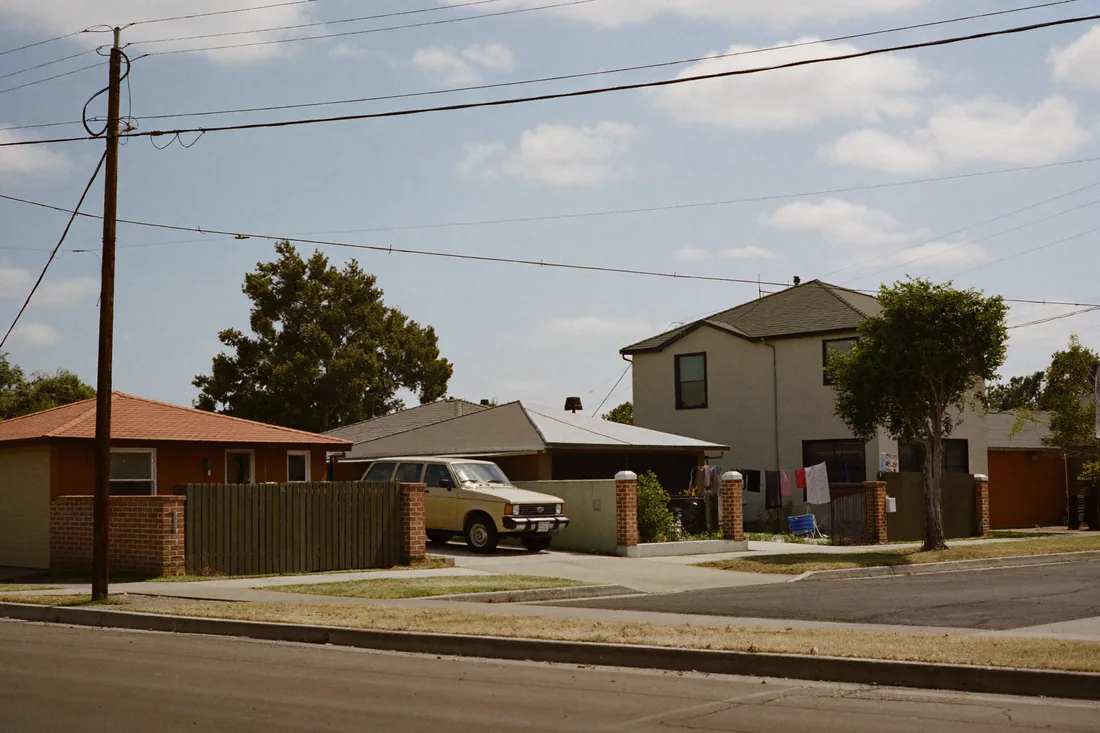
Here's the honest 2026 reframe, and it's the part most Sydney guides haven't updated: the $0-stamp-duty story in Western Sydney has become mostly a units story. House medians in the affordable belt have climbed past the $800,000 full-exemption line: Penrith sits around $1.1 million and Campbelltown around $965,000 on 2026 data. So if you want a freestanding house and the full duty exemption, your options have narrowed. If you're open to a unit, or to a house in the $800K to $1M concession band, you've still got room to move.
Liverpool is the anchor worth knowing. Postcode 2170 (Liverpool, Moorebank, Casula and neighbours) recorded the highest first-home-buyer sales volumes in NSW for a full year running, according to InfoTrack data. It's where Sydney first home buyers are actually buying, driven by the Western Sydney Airport corridor and the South West Metro. That tells you more than any agent's room-for-growth line.
Treat the figures below as directional ranges, not gospel. Suburb-level medians move month to month, so always check current listings before you set a budget.
Where units still clear the $800K line
- Liverpool / Moorebank / Casula (2170), south-west. Units broadly in the $480K to $650K range, comfortably under $800,000. Houses now mostly above the exemption line. The Airport and Metro Southwest are the structural story here.
- Campbelltown, Macarthur growth corridor, with its own hospital and university campus. Units roughly $450K to $600K and under the line; houses around the mid-$900Ks, so a house buyer here is in concession-band or full-duty territory.
- Penrith, units around $500K to $650K, well under $800,000; houses around $1.1 million. The aerotropolis and a future Metro link are the long-term drivers.
- Blacktown / Mount Druitt, among the cheaper parts of the metro. Units broadly under $600K. Some older houses still scrape under or sit just over $800,000, so check the individual listing against the threshold.
Houses in the $800K to $1M concession band
If you want a house rather than a unit, the realistic option is the concession band: properties from $800,001 to $1,000,000 where you pay reduced duty rather than none. That's most freestanding stock in Campbelltown, the outer Macarthur estates, and parts of the Blacktown LGA in 2026. You won't dodge duty entirely, but the concession plus the roughly $30,400 you'd otherwise pay at $800,000 still leaves you well ahead of a full-duty buyer.
Inner and middle-ring units
Closer in, units are the only first-home entry point, and many still sit under $800,000. Parramatta (Sydney's second CBD, with Metro West and the light rail landing) along with Bankstown and Canterbury (both on the converting Metro Southwest line) offer well-located apartments at a fraction of a house price. The transport-corridor logic is real here: a unit a short walk from a future Metro station tends to hold value better than one that isn't.
How Much Deposit Do You Need to Buy in Sydney?
Sydney's prices mean the deposit is almost always the real hurdle, not the repayments. What you need depends entirely on which scheme you use:
| Pathway | Deposit on $750K (unit) | Deposit on $1.1M (house) |
|---|---|---|
| 5% Deposit Scheme (5%) | $37,500 | $55,000 (under the $1.5M Sydney cap) |
| Help to Buy (2%) | $15,000 | $22,000 (under the $1.3M NSW cap) |
| Bank loan, 10% | $75,000 + LMI | $110,000 + LMI |
| Bank loan, 20% | $150,000 | $220,000 |
| Guarantor loan | $0 to $37,500 | $0 to $55,000 |
Note the 5% Deposit Scheme row for the $1.1M house: under the current $1,500,000 Sydney cap (in place since 1 October 2025), that house is covered, so a 5% deposit works. Older guides still showing a $900,000 cap are out of date.
Reality check: even 5% on a Sydney property is a serious sum. That's why guarantor home loans, where a parent uses their property as security so you need little or no deposit and skip LMI, are so common here. It's also why a unit makes sense as a first step: a $37,500 deposit on a $750K unit is far more reachable than $55,000-plus on a million-dollar house. The deposit tracker shows how close you are and how fast you're getting there, and the LMI calculator shows the cost of going in under 20% without a guarantee. For the longer game, our guide on how much deposit you really need covers the strategies to get there faster.
The Sydney Buying Process
Buying in Sydney has its own rhythm and legal quirks. The order that actually works:
- Work out your budget. Use the borrowing power calculator, check which grants you qualify for, and be realistic about which suburbs and property types fit.
- Get pre-approved. In a competitive market, agents and sellers take you seriously when you have pre-approval in hand.
- Start inspecting. For any unit, always request the strata report. It reveals the building's financial health, any planned special levies and known maintenance issues. This is the single most important document when buying an apartment in Sydney.
- Make an offer. For private-treaty sales, put a written offer through the agent with your conditions: subject to finance, subject to building or strata inspection.
- Exchange contracts. In NSW you pay a 0.25% deposit at exchange, which is forfeited only if you pull out during the cooling-off period. You then have a 5 business day cooling-off period to withdraw.
- Building or strata inspection. Get it done during cooling-off for private treaty, or before bidding at auction. A building inspector is cheap insurance against an expensive surprise.
- Finance approval. Your lender confirms formal approval after valuing the property.
- Settlement. Typically 42 days (six weeks) in NSW. Your conveyancer handles the legal transfer; see our explainer on what conveyancing involves. Arrange building insurance from exchange, not settlement.
On auctions: a fair share of Sydney properties sell under the hammer, fewer than in Melbourne, but enough that you should be ready for it. Auction rules are unforgiving: no cooling-off, no conditions, deposit due on the day. Get your pre-approval and inspections sorted before you raise a hand.
Strategies for Competing in Sydney's Market
Sydney rewards a plan. What works for first home buyers in 2026:
1. Consider a unit before a house. The median unit (about $900K) is around $660,000 cheaper than the median house (about $1.56M), and many units still sit under the $800,000 duty line. A well-located apartment in Parramatta or Bankstown builds equity you can later roll into a house. Plenty of Sydney homeowners started exactly this way.
2. Follow the new train lines. Metro West (Parramatta to the CBD) and Metro Southwest are reshaping where value sits. A unit within walking distance of a future station, bought before it opens, has been one of the more reliable growth plays in Sydney.
3. Watch the off-the-plan clock. Off-the-plan purchases in NSW have charged duty only on the land value at contract, not the finished build. That's a saving worth tens of thousands on a new apartment. But this concession is set to end on 21 October 2026, so if it's part of your plan, the timing now matters. Read our off-the-plan guide for the full mechanics and risks before you commit.
4. Use a guarantor to clear the deposit hurdle. A guarantor home loan lets a parent put up their property as extra security, so you can buy with 0 to 5% deposit and no LMI, even above the 5% Deposit Scheme cap. In Sydney, where the deposit is the biggest barrier, this is often the difference-maker.
5. Mind the $800K line. Properties under $800,000 attract zero duty for NSW first home buyers, about $30,400 saved. If you're looking at $820K to $850K, do the maths on whether a slightly cheaper place under $800,000 actually costs you less once the duty is factored in.
6. Look hard at Help to Buy. With a 2% deposit and the government taking up to 30 to 40% equity, Help to Buy can make a $700K purchase feel closer to a $420K one in terms of what you need upfront, as long as you're inside the $103K/$165K income caps and the $1.3M NSW price cap. You buy the government's share back over time.
Frequently Asked Questions
Can a first home buyer afford Sydney?
Yes, with strategy and realistic expectations. Units in Western Sydney and the south-west still start well under the $800,000 stamp duty exemption threshold, even though the median unit is now around $900,000. With the 5% Deposit Scheme (5% deposit, no LMI) on a $750,000 unit, you'd need about $37,500 deposit, and pay $0 stamp duty under $800,000 on top. That's a very different picture from the scary $1.6 million median house headline. A broker can show you exactly what's achievable on your income.
What is the cheapest way into the Sydney market?
A unit under the $800,000 duty line is the cheapest realistic entry, and the south-west is where first home buyers are actually buying. Liverpool's postcode 2170 (Liverpool, Moorebank, Casula) held the top spot for NSW first-home-buyer sales for a full year running, per InfoTrack, with units broadly in the $480K to $650K range. Campbelltown units sit around $450K to $600K. Freestanding houses in these suburbs have mostly climbed past $800,000, so the cheapest path in is units, not houses. Always check current listings before setting a budget. Our borrowing power calculator shows what fits yours.
Do first home buyers pay stamp duty in NSW?
No. Eligible first home buyers pay $0 stamp duty on a home valued up to $800,000 in NSW, a saving of about $30,400 at the $800,000 mark. From $800,001 to $1,000,000 a concessional rate applies, and above $1 million full duty is payable. The previous annual-property-tax option (First Home Buyer Choice) was repealed on 1 July 2023, so today every NSW first home buyer pays under the Assistance Scheme rules. Use our stamp duty calculator for your exact figure.
Is it worth buying a unit in Sydney?
For many first home buyers, yes. Sydney units are roughly $660,000 cheaper than houses, many still qualify for the under-$800,000 stamp duty exemption, and well-located apartments in Parramatta, Bankstown or Marrickville offer genuine lifestyle and growth potential. The common strategy: buy a unit, build equity over five to seven years, then upgrade to a house using that equity as the deposit. One rule though: always get a strata report before buying any unit. It reveals the building's financial health and any looming special levies, and it's the difference between a good buy and an expensive mistake.
What salary do you need to buy a house in Sydney?
There's no single figure, because it depends far more on your deposit and existing debts than on income alone. The realistic first-home entry point in Sydney is a unit or an outer-suburb house in the $700K to $900K range, and what you can borrow against that depends on your deposit, your other commitments (car loans, HECS, credit cards) and current interest rates. Rather than chase a headline salary number, plug your real income, debts and deposit into our borrowing power calculator. It shows what a lender would actually lend you and which suburbs that puts in reach.
Is Help to Buy available in NSW in 2026?
Yes. The federal Help to Buy shared-equity scheme launched on 5 December 2025 and is open to eligible NSW first home buyers. You buy with a 2% deposit while the government takes an equity share of up to 30% on an existing home or 40% on a new build. Income caps apply (currently $103,000 for a single buyer and $165,000 for couples and single parents, from 1 July 2026) and the NSW price cap is $1,300,000. You buy back the government's share over time or when you sell. See our NSW grants page for the full detail.
How much deposit do I need for a Sydney unit vs a house?
Through the 5% Deposit Scheme you can buy with a 5% deposit and no LMI: that's about $37,500 on a $750,000 unit, or about $55,000 on a $1.1 million house (now covered under the $1.5M Sydney cap). Help to Buy drops it to a 2% deposit, roughly $15,000 on that unit, if you're inside the income and price caps. A guarantor loan can take the deposit to as little as $0. Without any of those, expect 10% plus LMI, or 20% to avoid LMI entirely. The deposit tracker shows how close you are to your target.


