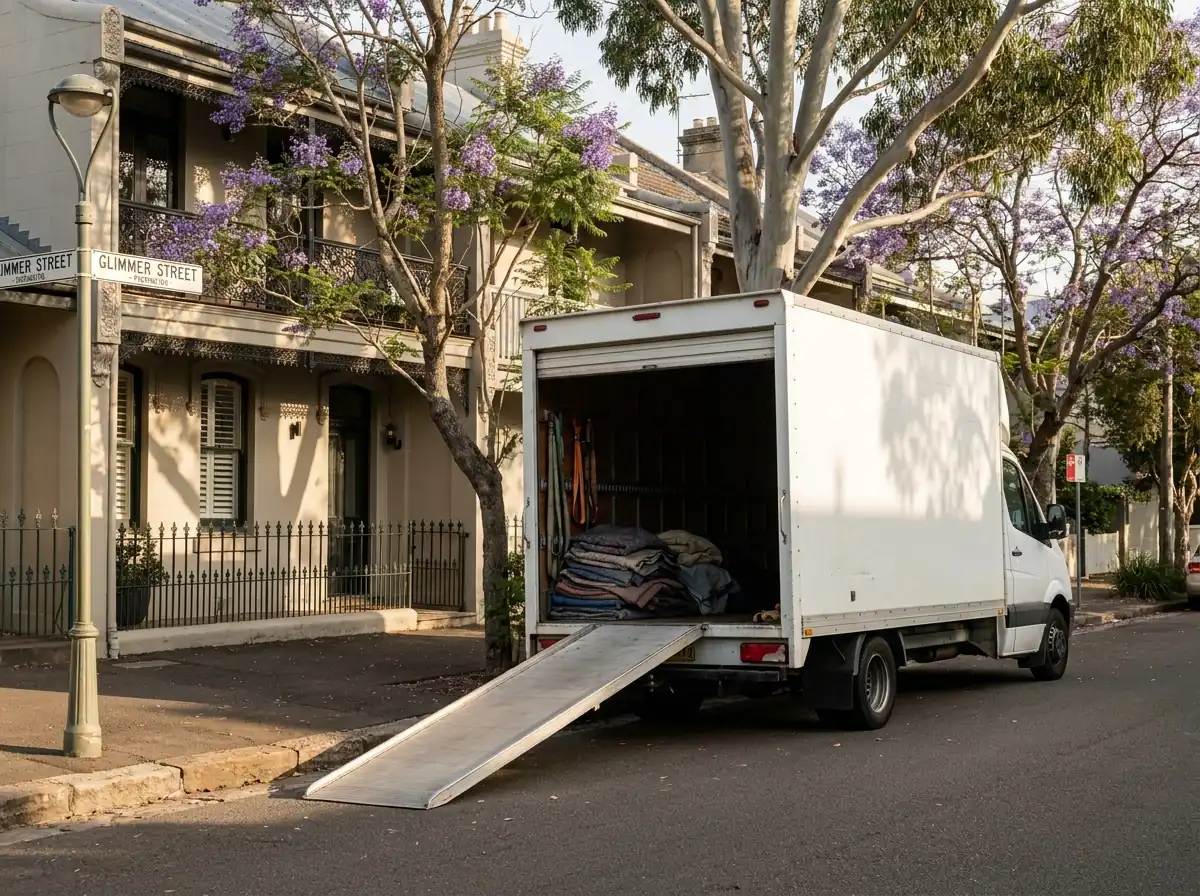
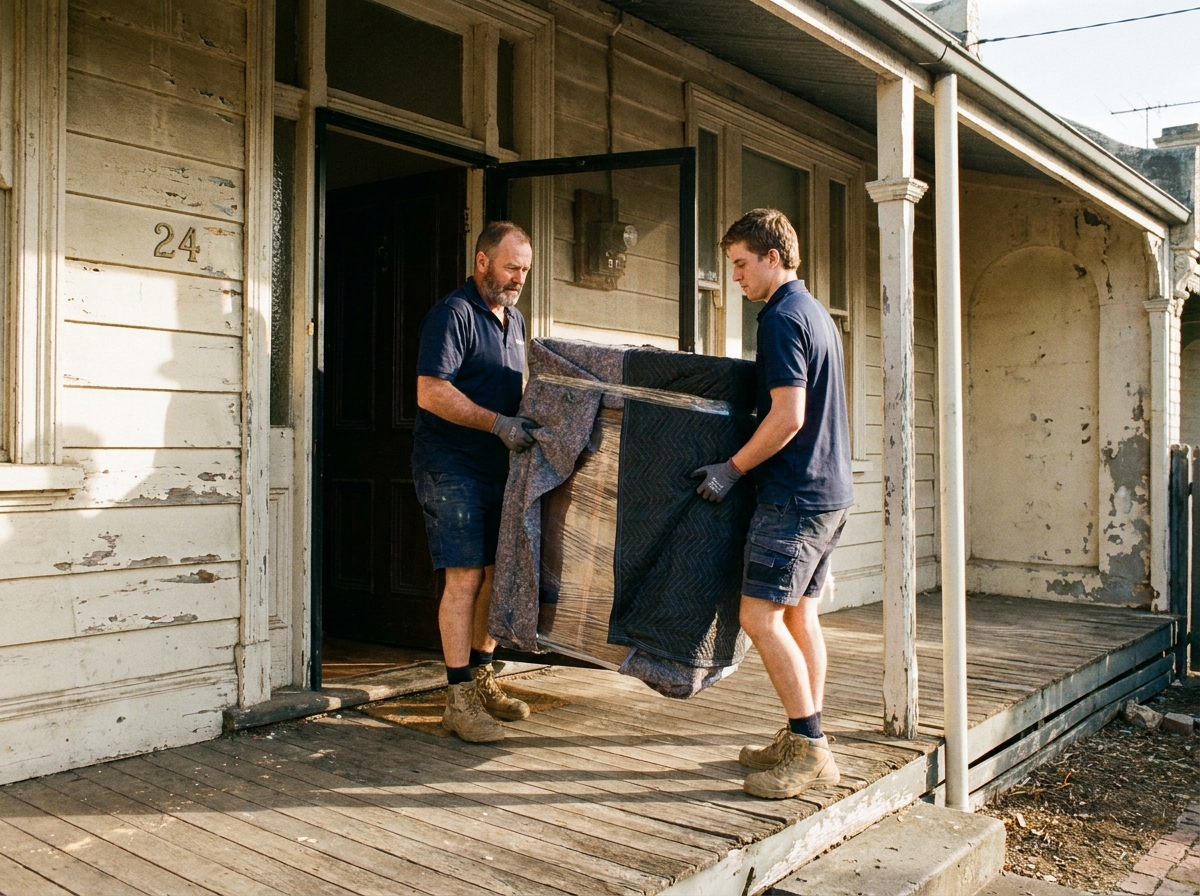


What our shortlist actually delivers.
We don’t run a directory. We don’t take agent referrals. We hand-check three things on every shortlisted removalist before we email you.
Vetted shortlist in 24 hours
Founder-curated. Every shortlisted removalist is AFRA-accredited, with valid public liability and transit insurance certificates checked before we email you.
Fixed-price, itemised
Every removalist on our shortlist quotes fixed-price (not open-ended hourly), with stairs, weekend rates, packing and insurance line items separated. No bill-shock at settlement.
Settlement-day specialists
Settlement is a moving target: PEXA can run late. We only shortlist removalists who handle first home buyer settlement-day moves with a 3-hour overrun buffer, so your move doesn’t collapse if the cheque lands at 3pm.
What does a removalist actually do?
A removalist (called a “mover” in the US) is a licensed, insured furniture removal professional who packs, transports and unloads your household belongings between homes. For a first home buyer move, a good AFRA-accredited removalist does six things:
- Pre-move survey: in-person or video walk-through so they can quote a fixed price, not an open-ended hourly rate.
- Packing service (optional): wrapping fragiles, packing kitchens, dismantling beds and bookshelves.
- Loading and transport: using proper trolleys, blankets, tie-downs and a truck sized for your load.
- Settlement-day timing: coordinating with the inevitable PEXA delay so they don’t leave you waiting on the kerb.
- Unload and placement: putting furniture where you actually want it, not just dumping it in the hallway.
- Damage claims process: under AFRA, members must offer a written claims procedure with their transit insurer.
Australia has no national mandatory removalist licence. Anyone with a ute and a back can call themselves a removalist. AFRA membership plus verified insurance is the single best filter you have.
Removalist costs in Australia, by home size and distance
Indicative ranges for a 2-person crew based on AFRA member pricing schedules, May 2026. Local means under 50km within the same metro area. Long distance means 50 to 500km within the same state. Interstate means a state-to-state dedicated truck (backloading typically saves 30 to 50% but locks the date).
| Home size | Local move | Long distance | Interstate |
|---|---|---|---|
| Studio / 1-bed | $400 to $700 | $900 to $1,800 | $1,400 to $3,000 |
| 2-bed | $700 to $1,400 | $1,400 to $2,800 | $2,000 to $4,500 |
| 3-bed | $1,200 to $2,200 | $2,200 to $4,200 | $3,000 to $6,500 |
| 4+ bed | $1,800 to $3,500+ | $3,200 to $6,000 | $3,500 to $8,000+ |
Most local removalists charge $130 to $220 per hour with a 2-hour minimum. Saturday and end-of-month bookings carry a 10 to 20% premium. Comprehensive transit insurance adds $50 to $200 to most quotes.
| City | Typical hourly rate |
|---|---|
| Sydney + Melbourne | $130 to $220/hr |
| Brisbane + Perth | $120 to $200/hr |
| Adelaide + Hobart + Canberra | $110 to $180/hr |
| Darwin | $140 to $240/hr (thin market premium) |
How to vet a removalist: 5-step checklist
- Verify AFRA membership. Search the member directory at afra.com.au. AFRA enforces minimum equipment standards, staff training, $1M+ insurance and a complaints process. Roughly 25% of Australian removalists are members. The other 75% operate to no enforced standard.
- Ask for the certificate of currency. Public liability and transit insurance: separate documents from the actual insurer. “We’re insured” is not enough; the paperwork is. A legitimate removalist emails it without flinching.
- Get a fixed-price written quote. Based on an in-person survey or video walk-through of your load. Hourly-only quotes without a cap are the #1 bill-shock pattern: the truck arrives small, the move takes twice as long as estimated, and you pay double.
- Confirm the line items. Stairs, lift bookings, long carry from kerb to door, weekend rate, packing service, insurance upgrade: each should appear separately. Bundled quotes hide the upcharges that come on invoice day.
- Check their settlement-day buffer. First home buyers move on settlement day, a date that can shift by hours if PEXA hits a snag. Ask: “What’s your buffer if my settlement runs 2 hours late?” If they don’t have a clear answer, find someone who does.
NestPath checks all five on every removalist before we shortlist them. Tell us your move and we’ll email you 2 to 3 we’ve already cleared. To budget the move itself, try our move-in cost calculator.
Frequently asked questions
How much do removalists cost in Australia?
Local moves in Australia cost roughly $400 to $700 for a studio or 1-bed, $700 to $1,400 for a 2-bed, $1,200 to $2,200 for a 3-bed, and $1,800 to $3,500+ for a 4-bed. Sydney and Melbourne sit at the upper end. Interstate moves typically run $2,000 to $4,500 for a 2-bed and $3,500 to $8,000+ for a 4-bed, depending on route and whether you choose a dedicated truck or backloading. Most local removalists charge $130 to $220 per hour with a 2-hour minimum.
How much do removalists charge per hour?
Hourly rates for two-person removalist crews typically run $130 to $220 per hour in Sydney and Melbourne, $120 to $200 in Brisbane and Perth, and $110 to $180 in Adelaide, Hobart and Canberra. Most charge a 2-hour minimum and bill in 15-minute increments after that. Travel time between your old and new home is usually included; travel time back to the depot may be billed separately on local moves, so confirm before booking.
How much does it cost to move interstate?
Sydney to Melbourne typically runs $2,000 to $3,500 for a 2-bed and $3,500 to $6,000 for a 4-bed dedicated truck. Sydney to Brisbane is $1,800 to $3,200 for a 2-bed. Melbourne to Brisbane is $2,500 to $4,500 for a 2-bed. Sydney to Perth (the longest popular route) is $4,500 to $8,500 for a 2-bed. Backloading, where you share a truck with other moves heading the same direction, typically saves 30 to 50% but locks the date.
Why do removalist quotes vary so much?
Four levers move a removalist quote: volume (the cubic-metre size of your load), distance, day of week, and insurance. Saturday and end-of-month bookings carry a 10 to 20% premium because demand spikes. Comprehensive transit insurance adds $50 to $200 to most quotes. Stair access, narrow streets and lift bookings add labour time. Always ask for a fixed-price written quote based on an in-home survey or video walk-through; hourly-only estimates without a maximum cap are the most common bill-shock scenario.
How do I check if a removalist is licensed and insured?
Three things to verify before booking. (1) A valid ABN: look them up at abr.business.gov.au. (2) Public liability and transit insurance certificates: ask for the certificate of currency from their insurer, not just their word. (3) AFRA membership: the Australian Furniture Removers Association vets members on insurance, training and complaints history. Search the member directory at afra.com.au. Australia has no national mandatory removalist licence, which is why these three checks matter.
What is AFRA and why does it matter?
AFRA, the Australian Furniture Removers Association, is the industry body that vets removalists on minimum equipment standards (proper trolleys, blankets, tie-downs), staff training, $1M+ public liability and transit insurance, and a complaints resolution process. Roughly 25% of Australian removalists are AFRA members; the rest operate to no enforced standard. For a first home buyer move, AFRA membership is the single most useful trust signal, because it dramatically reduces the risk of property damage, missed dates, or invoice surprises.
Can I move on settlement day?
You can, but most experienced removalists and conveyancers recommend against it for a first home buyer. PEXA settlement is scheduled for a specific time window (often midday) and can be delayed by a few hours if the lender or the seller’s conveyancer hits a snag. If your truck is already loaded and waiting outside, every hour of overrun costs you. The safer pattern: book your removalist for the morning after settlement, stay in your old home one extra night, and move in fresh. If you must move on the day, brief the removalist on the settlement-time risk and pad the booking with a 3-hour buffer.
When should I book a removalist?
4 to 8 weeks before your move date is the sweet spot. Good AFRA-accredited removalists book out 4 to 6 weeks in advance for Saturdays and end-of-month dates. If you’re moving on a Saturday in spring or summer, treat 8 weeks as the minimum. For a weekday move mid-month you can usually book 2 to 3 weeks out without trouble. For settlement-day moves, book as soon as your conveyancer confirms the settlement date (typically 30 to 42 days before).
Should I pack myself or pay for packing?
Packing service typically adds $400 to $1,200 to a removalist quote depending on home size: cheaper for a 1-bed, more for a 4-bed. Self-packing saves money but adds 8 to 20 hours of work plus the cost of boxes, tape, bubble wrap and packing paper ($150 to $400). The best compromise for most first home buyers: self-pack everything except the kitchen (which is fragile and time-consuming) and any breakables, and pay the removalist to pack just those.
What can’t removalists transport?
Universally excluded: flammables (petrol, paint thinner, propane), corrosives (pool chlorine, bleach in bulk), aerosols, ammunition, and live plants when crossing state borders due to biosecurity rules (especially into WA, TAS and NT). Most also exclude perishable food, opened liquor bottles, and valuables like cash, passports and jewellery; transport those in your car. Some refuse pianos and pool tables unless you book a specialist with the right equipment. Confirm exclusions in writing before the truck arrives.
What questions should I ask before booking a removalist?
Five before you commit: (1) Are you an AFRA member, and can I see your certificate of currency for public liability and transit insurance? (2) Is the quote fixed-price or hourly, and if hourly, what is the maximum cap? (3) Are stairs, lift bookings, long carry, and weekend rates included or extra? (4) What is your cancellation and damage-claim policy? (5) Have you handled settlement-day moves before, and what is your buffer if the settlement runs late? A confident, transparent removalist answers all five in writing.
What is transit insurance and do I need it?
Transit insurance covers your belongings while they’re on the removalist’s truck. It is not the same as the removalist’s public liability insurance, which covers property damage at your home. Most AFRA members include basic transit cover (often capped at $100,000) but charge extra for comprehensive cover that pays out at replacement value with no excess. For first home buyers, the question is: would you be financially OK if the truck rolled over and you lost everything? If no, pay the $50 to $200 for comprehensive cover.
How long does a typical move take?
Local moves: a 1-bed apartment takes 3 to 4 hours with a 2-person crew; a 2-bed house takes 5 to 7 hours; a 3-bed house takes 7 to 10 hours. Add 2 to 4 hours if you’re paying for packing on the day. Interstate moves: door-to-door is typically 1 to 3 days for east-coast routes (Sydney, Melbourne, Brisbane) and 5 to 10 days for cross-country routes (Sydney or Melbourne to Perth or Darwin). Backloading interstate moves are slower because the removalist waits for other loads to fill the truck.
Should I tip the removalists?
Tipping is not expected or required in Australia, unlike in the US where it is standard practice. What is appreciated and customary: cold drinks (water and a few cans of soft drink), lunch on long jobs (sandwiches or pizza for an all-day move), and a five-star Google review if they did a good job. Cash tips of $20 to $50 per crew member on a particularly hard move (lots of stairs, narrow streets) are kind but never expected.
Do removalists provide boxes?
Most AFRA members sell or hire moving boxes. New boxes typically cost $3 to $12 each depending on size; eco-friendly plastic crate hire (companies like Boxlt or Frogboxes) runs $80 to $200 for a 2-bed for two weeks. Free alternative: ask the local Facebook Marketplace and Buy Nothing groups, where you’ll typically find someone who just moved giving boxes away. Don’t skimp on tape and bubble wrap; a $30 budget on packing materials saves more than that in one broken plate.
Can the same removalist quote me a backload?
Yes. Most interstate removalists offer both a dedicated truck (your move only) and backloading (sharing the truck with one or two other moves headed the same direction). Backloading typically saves 30 to 50% on dedicated truck pricing, but you have less flexibility on pickup and delivery dates because the removalist needs to consolidate routes. Worth asking for both quotes side by side if you have a flexible move date. Not every removalist offers backloading; specialist interstate firms and dedicated interstate carriers are best.
By Anish Puri · Founder, NestPath · Last reviewed 14 August 2026