The best pillow in Australia depends on how you sleep, and loft is the number that decides it: side sleepers need about 12 to 14 cm of loft to fill the gap between ear and shoulder, back sleepers about 8 to 10 cm, and stomach sleepers under 8 cm. The Ecosa Memory Foam Pillow at about $180 to $210 is the best all-rounder here because its three insert system lets you set that height yourself, and the Amazon Basics Down-Alternative 2-pack at about $30 to $40 is the value pick.
Most people don't think about their pillow until they wake up at 3am with a stiff neck for the third night running. Then they buy whatever Kmart has on sale, spend the next eighteen months blaming the new mattress, the room temperature, the new house: anything except the $15 lump of polyester their head is on for 2,500 hours a year.
This guide cuts through the marketing claims ("CloudCool!", "TempActive Cooling!", "Cervical Alignment Technology!") and explains what actually matters when you're trying to pick a pillow that doesn't wreck your neck. We cover the four pillow fills that matter in Australia (memory foam, down-alternative, latex, buckwheat, plus why real down rarely makes the shortlist for first-home buyers), what specifications actually map to better sleep, and the three specific pillows worth buying at each price point in 2026.

Pillow Fills: What Each One Actually Does
Before you look at brands and models, it's worth understanding what you're actually choosing between. The fill type drives everything else: how the pillow feels, how long it lasts, how hot it sleeps, how often you'll need to replace it. The brand and the marketing language change; the underlying physics don't.
Memory Foam
Memory foam contours to the shape of your head and neck and holds that shape until you move. It's the strongest support of any consumer pillow fill, particularly for side sleepers who need the pillow to fill the gap between ear and shoulder, typically 4-6 inches of vertical space that has to be supported without your head sliding down or being pushed up. The trade-off is heat retention. Standard memory foam sleeps warm, which matters in a Sydney or Brisbane summer where the difference between a damp pillow at 3am and a dry one is roughly the difference between getting back to sleep and lying awake until dawn. Look for gel-infused or open-cell variants that move heat away from your head. Price range: $60 to $200. Lifespan: 3-5 years for quality models.
Down-Alternative (Polyester or Microfibre)
Down-alternative mimics the soft, mouldable, sinking-in feel of real down at a fraction of the price. Hypoallergenic, machine washable, and available everywhere from supermarket shelves to Amazon AU. The trade-off is durability: down-alternative compresses faster than memory foam or latex and typically needs replacing every 12-24 months. Price range: $15 to $60 for a basic pillow, $30-$80 for a quality 2-pack. The economics matter more than people assume: replacing a $30 pillow every 18 months runs you about $20/year. A $200 memory foam pillow lasting five years runs you $40/year. The "budget" pillow isn't always the cheapest option once you do the math over a five-year window.
Latex
Latex pillows are firm, naturally bouncy, and durable. They sleep noticeably cooler than memory foam, are naturally antimicrobial and dust-mite resistant, and last 4-5 years without losing shape. The downside is the feel ("springy" rather than "sinking"), which some sleepers love and others find unusable. If you've slept on memory foam your entire adult life, a latex pillow will feel wrong for the first week. Worth a try if heat retention has been your main complaint with memory foam. Price range: $80 to $200.
Buckwheat (Niche, but worth knowing about)
Buckwheat hulls inside a fabric shell. Extremely adjustable: you remove or add hulls to dial in the exact loft. Firm, breathable, and lasts 10+ years. The downsides: heavy, rustles audibly when you move at night, and the firm feel isn't for everyone. If you've tried four memory foam pillows and none felt right, buckwheat is worth a look. Otherwise, skip it. Price range: $40 to $100.
One omission worth flagging: real down. We don't recommend down pillows for first-home buyers. They cost $150-$400, need regular fluffing, can trigger allergies, and eventually compress anyway. The premium feel doesn't survive the practical reality of an Australian summer or a household with dust-sensitive sleepers, and the price-per-comfort math is worse than down-alternative for almost every use case.
What's not on this list: heritage pillow brands. Dunlopillo, Koala, MLILY and Sheridan pillows are not among our picks. The picks below optimize for what Amazon AU does well: Tontine's value engineering, Ecosa's adjustable memory foam, and Amazon Basics' hotel style two packs.
How the three pillows compare
Loft and washability are the two things that decide which of these suits you. Prices are what the listings showed at the time of writing and move around.
| Pick | Best for | Key spec | Price band | Rating |
|---|
| Tontine Comfortech Hydrocool Active | Cheapest, Australian Made | Hydrocool fibre, machine washable | from $19 | 2.9 (10) |
| Ecosa Memory Foam Pillow | Best overall, adjustable loft | Three insert system, 100 night trial, 5 year warranty | about $180 to $210 | 4.6 |
| Amazon Basics Down-Alternative Pillows | Best value, hotel style 2-pack | Poly microfibre, fully machine washable | about $30 to $40 | 4.7 |
Best Budget Pillow Under $50
Under $50 in Australia, you're buying down-alternative or basic polyester fill. Memory foam at this price doesn't really exist. Anything labelled "memory foam" under $50 is a low-density imitation that compresses to a pancake within eight months. Tontine leads this tier as an Australian-owned category incumbent. The Tontine Comfortech range is widely available across major Australian retailers, and the Hydrocool Active variant runs high-loft and firm (a legitimate side-sleeper fit at this price tier), with cooling tech that addresses Australian summer heat.
Tontine Comfortech Hydrocool Active
The Tontine Comfortech Hydrocool Active (about $19) is the same SKU sold on tontine.com.au, where it sits at $22.77 retail. Amazon AU is about $3 cheaper. The high-loft, firm-support construction provides the lift side sleepers need to fill the ear-shoulder gap, without paying for memory foam at this price tier. Hydrocool moisture-wicking adds cooling that matters in an Australian summer (a lever this guide returns to repeatedly), the antibacterial ultrafibre fill is machine washable, and the whole pillow is Australian Made. One honest flag before you buy: this specific Amazon AU listing currently shows 2.9 stars from a small base of 10 reviews, well below what the spec sheet alone would suggest: worth reading the current reviews yourself. For a first home or share house where chronic neck pain hasn't yet become a $150 priority and you're comfortable with that rating, this is the cheapest option here.
Flaws but not dealbreakers
Worth knowing before you buy: ultrafibre fill compresses noticeably within 12-18 months, particularly under heavier heads. The pillow that supported your neck on day one will feel flat by month sixteen. Hydrocool tech genuinely moderates heat retention, but it's not a $200 premium-cooling pillow. At this price you're getting honest cooling, not gel-infused-memory-foam-grade thermal performance. Neither limitation is a dealbreaker if you accept the 12-18 month replacement cycle. At $19 you can replace it annually without thinking about it, and the per-year math is friendlier than our mid-range pick.

Best Adjustable Pillow (About $180 to $210)
This is where pillows start to meaningfully improve. At this price, you get gel-infused or open-cell memory foam, adjustable loft systems, and durability that genuinely lasts 3-5 years rather than 12 months. This is the pick for first-home buyers who want to buy once and not think about it again for years. Ecosa leads this tier as an Australian-founded brand competing on adjustability rather than headline firmness ratings, a positive shift for sleepers, since loft adjustment matters more than the comfort score on the box.
Ecosa Memory Foam Pillow
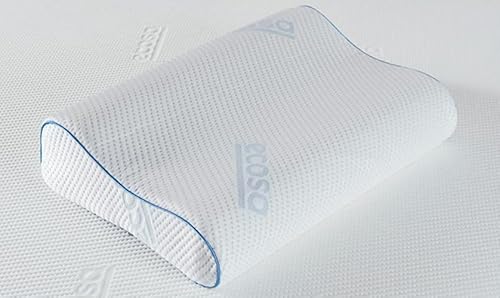
The Ecosa Memory Foam Pillow (about $180 to $210) is our top pick across all sleep styles for one specific reason: the adjustable height system. Three removable foam inserts let you change the loft from low (back sleepers and stomach sleepers) to medium (combination sleepers) to high (side sleepers). The gel-infused memory foam stays measurably cooler than standard memory foam, and the charcoal bamboo cover is naturally antibacterial. Ecosa is an Australian brand with a 100-night trial and a 15-year warranty, which is meaningful because pillows tend to be the household purchase you keep using long past when they should be replaced.
The longevity argument matters more for pillows than for most household purchases. As one Reddit user put it on r/AussieCasual: "It is downright the best pillow my partner have ever used. 6 years and still going strong, we're tempted to buy more." That comment was about a different brand (Koala), but the principle holds here too: a pillow that genuinely lasts five years spreads even a premium price out to a few dollars a month, and the daily comfort and support it provides is worth more than a monthly-cost sum captures. A cheaper down-alternative pillow that compresses every 16-24 months will need replacing more often, so factor the hassle of re-buying in as well as the sticker price before you assume "budget" is automatically the smarter choice.
Flaws but not dealbreakers
Real tradeoffs: memory foam off-gases for 24-48 hours after unwrapping. The chemical smell fades, but it's genuinely unpleasant for the first two nights. Air the pillow in a spare room before putting it on the bed. The Ecosa is also heavier than a polyester pillow, which matters if you flip it overnight, and the firm feel takes 1-2 weeks to adjust to if you're coming from a soft pillow. None of these reverse the value calculation, but they're worth knowing before you order so the first 48 hours don't make you regret the spend.
Best Hotel-Style Pillow: 2-Pack Under $40
If you want the soft, mouldable, sinking-in feel of real down without the price tag (and without the allergies that come with feathers), down-alternative is the answer. The Amazon Basics range is the most reliable budget down-alternative on Amazon AU and is sold as a 2-pack, practical for first-home buyers who need a primary head pillow plus a guest-room pillow without making two separate purchases.
Amazon Basics Down-Alternative Pillows (2-pack)
The Amazon Basics Down-Alternative pillows (about $30 to $40 for a 2-pack) deliver hotel-style softness: the kind your head sinks into rather than the kind that pushes back. The microfibre fill mimics real down's mouldability while being hypoallergenic and machine washable. Two pillows for under $40 is unreasonable value if you're setting up multiple bedrooms in a new home, and the price means you can replace them on the down-alternative cycle (every 18-24 months) without thinking too hard about it. Best for back sleepers, stomach sleepers, and combination sleepers who don't need the firm support of a dedicated side-sleeper pillow.
Flaws but not dealbreakers
Real limitations: this is not a side-sleeper pillow; the loft is too low and the support too soft to fill the ear-shoulder gap that side sleepers need. Down-alternative also compresses faster than memory foam, so plan to replace every 18-24 months rather than every 4-5 years. And the 2-pack means you store two even if you only need one, a small inconvenience but worth flagging if your linen cupboard is already full from the move.
What to Look for When You're Choosing
When comparing pillows, these are the specifications and features that actually matter, and the ones that are marketing noise.
Sleep Style Drives Loft, Not Brand Preference
Side sleepers need the highest loft (the gap between ear and shoulder is large and the pillow has to fill it). Back sleepers need medium loft (just enough to maintain the natural neck curve without pushing the head forward). Stomach sleepers need the lowest loft, ideally a thin pillow under the chest rather than the head. Combination sleepers (most of us) need an adjustable pillow that can be reshaped depending on which position you're in. This is why the Ecosa's three-insert system outperforms more expensive fixed-loft pillows for sleepers who don't fit a single category cleanly.
Firmness Ratings Matter Less Than You Think
Manufacturers obsess over firmness ratings ("medium-firm" / "ultra-soft" / "extra-plush") but most consumer pillows fall in a fairly narrow band: the difference between a "firm" Tontine and a "medium-firm" Ecosa is much smaller than the difference between ultrafibre fill and memory foam fill. The bigger lever is the fill material itself. Pick the fill that suits your sleep style; the firmness usually sorts itself out within a week of adjustment.
Cooling Features Are Worth The Premium In Australian Summers
Gel-infused memory foam, charcoal bamboo covers, and open-cell foam structures all genuinely move heat away from your head. Gel-infused memory foam typically sleeps a few degrees cooler than standard memory foam, which in a Sydney or Brisbane summer is the difference between a damp pillow and a dry one, the difference between sleeping through the night and waking up at 3am to flip it. Worth the $20-$30 premium for any household south of Cairns.
What First-Home Buyers Should Care About
You're setting up an entire home, not just a bedroom. Pillows fall in an awkward spot in the budget: too cheap to feel important, too important to skimp on. The pattern we see across hundreds of NestPath readers is the same: someone spends $1,500 on a quality mattress, $400 on a bed frame, $200 on sheets, and then buys a $15 pillow at Kmart on the way home. The mattress investment quietly underperforms because the head support is wrong, and the household ends up blaming the new mattress within six months.
The single highest-return upgrade
If you have a budget of about $250 for sleep upgrades and a brand new mattress, spend about $180 to $210 on the Ecosa pillow for the primary sleeper and about $30 to $40 on a 2-pack of Amazon Basics down-alternatives for the guest room. That mix gets you correct support for your main bed, hotel-style softness for guests, and a little left over for sheets. The "buy a premium pillow" advice from sleep-content publishers makes more sense if you have chronic neck pain. For a healthy first-home buyer setting up a new place, the Ecosa is the right ceiling: past that and you're paying for marginal improvements that the rest of your sleep setup probably can't take advantage of yet.
The hotel-stack-of-four advice is wrong for your own bed
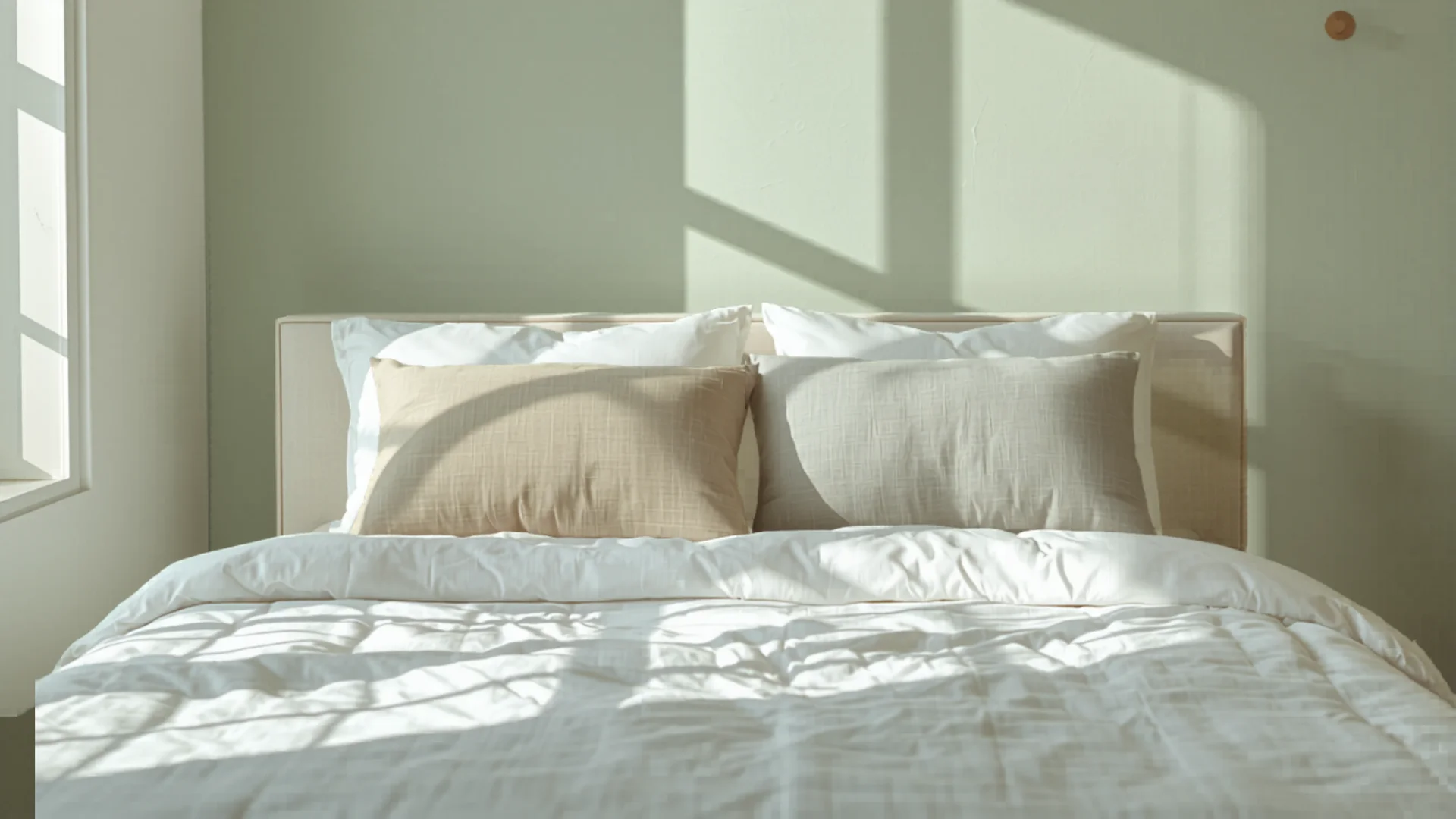
Hotels stack three or four pillows because guest preferences vary wildly and they don't know who's checking in. In your own bed, sleeping with two or more pillows under your head pushes your neck forward and misaligns your cervical spine, a recipe for morning headaches and the slow-onset stiffness that builds over months. One pillow under your head, sized to your sleep style, is the right answer. If you want the soft layered look during the day, keep the spare pillows decoratively on top of the duvet and pull them off before bed. And if the reason you stack is reflux or snoring rather than looks, stacking is the wrong fix: a bed wedge pillow holds a steady angle all night where a pile of pillows slides apart by 2am.
What to Buy Second-Hand vs New
Pillows are a never-buy-second-hand category. Used pillows accumulate dust mites, dead skin cells, body oils, and (after two years) up to a third of their weight in skin and dust-mite waste. Even washed and re-cased, a used pillow has degraded fill and embedded residue you cannot fully extract. Marketplace listings selling "barely used" pillows are not worth the $10 saving. Buy new, even at the budget tier where a Tontine pillow runs under $20 on Amazon AU.
The narrow exception: buckwheat hull pillows where the hulls and shell can both be replaced separately. If someone's selling the empty shell and a new bag of hulls, that's effectively a new pillow. But this is niche enough that we'd only suggest it for buckwheat enthusiasts who already know what they want. Most first-home buyers should treat pillows as a strict new-only category.
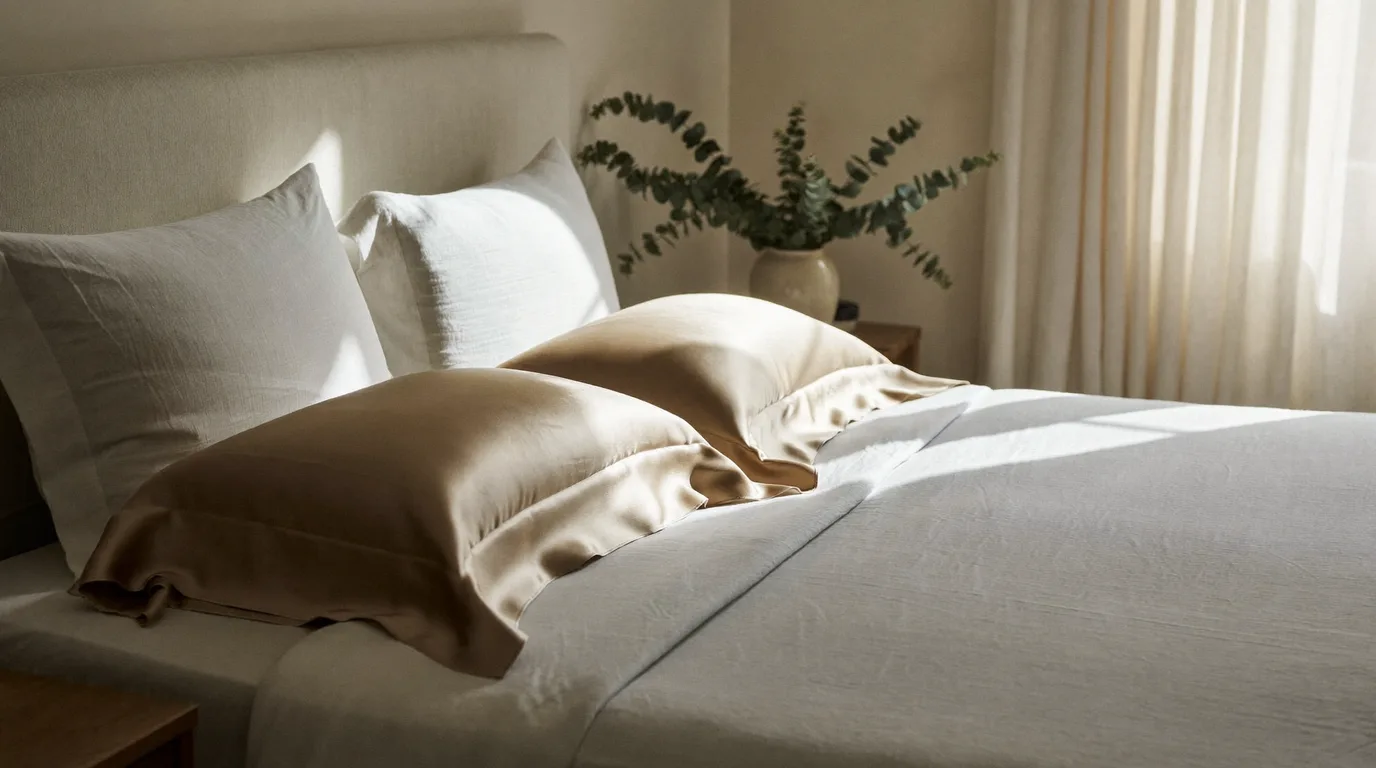
What does extend a new pillow is what you put over it. A pillow protector under the case takes the body oils and sweat that break fill down, and it washes at 60 degrees when the pillow itself cannot. A silk pillowcase is the other upgrade worth the money if you sleep hot or wake with creased skin and frizzy hair.
What about Koala, Emma, Dunlopillo and Dentons?
Those are the names that fill the Australian search results for pillows, and none of them is in our three. Koala sells direct and through Myer, Emma sells direct, Dunlopillo and Dentons sell through specialty bedding stores, Sheridan sells through Myer and David Jones, and the cheapest pillows in the country sit on the shelves at Kmart, Spotlight, Harris Scarfe and Harvey Norman. We rank from Amazon Australia listings where we can confirm a live price, a star rating and a review count, so those brands sit outside this guide rather than below it, and we earn nothing from those retailers. If you buy from one of them, use the same rule: match the loft to your sleeping position first, then worry about the fill.
Frequently Asked Questions
How often should you actually replace your pillow?
Memory foam: every 3-5 years. Down-alternative or polyester: every 12-24 months. Latex: every 4-5 years. Buckwheat: 10+ years for hulls but 3-4 years for the shell. The fold test tells you when: fold the pillow in half, let go. If it springs back to flat within a second, the fill still has support. If it stays folded or only partially unfolds, the fill has compressed and the pillow is no longer doing its job. For memory foam, press down firmly in the centre and release: if it takes longer than 3-4 seconds to return to shape, the foam is degrading and it's time to replace.
Can you wash a memory foam pillow?
No, never put a memory foam pillow in the washing machine or dryer. Water breaks down the foam's cell structure, destroying its support properties permanently. Instead, remove the cover (most quality pillows have a zip-off cover that's machine washable) and spot-clean the foam itself with a damp cloth and mild detergent if needed. Air-dry in a well-ventilated area, not direct sunlight (UV degrades foam over time). Wash the cover every 2-4 weeks to keep the pillow hygienic.
What pillow is best for chronic neck pain?
For chronic neck pain, a contoured memory foam pillow with adjustable loft is the standard recommendation, because the Ecosa Memory Foam Pillow's three-insert system lets you find the exact height that keeps your cervical spine in neutral alignment. Side sleepers with neck pain should use a high-loft, firm pillow that fills the ear-shoulder gap without pushing the head upward. Back sleepers should use medium-loft with a slight contour. If neck pain persists despite a good pillow, see a physiotherapist, since the issue is often postural rather than pillow-related, and no pillow purchase will fix a 9-hour-a-day desk-slouch.
What pillow is best for side sleepers?
Side sleepers need the most loft of anyone, about 12 to 14 cm, because the pillow has to fill the whole gap between ear and shoulder while keeping the neck level with the spine. A firm fill matters as much as height, since a soft pillow collapses under the weight of your head by midnight. Of the three here, the Ecosa Memory Foam Pillow is the one to buy, because its three insert system lets you build the height up rather than guess it.
How do you wash a pillow?
Check the care label first, because fill decides everything. Polyester and down alternative pillows, including the Amazon Basics 2-pack, go in the machine two at a time on a warm gentle cycle with a small amount of detergent, then through a second rinse to clear the suds. Dry them fully, with a couple of clean tennis balls to break up the clumps. Memory foam and latex never go in the machine: spot clean the foam and wash the cover.
What is a standard pillow size in Australia?
A standard Australian pillow measures about 48 x 73 cm, which is what almost every pillowcase sold here is cut for. A European pillow is square at about 65 x 65 cm and is the large one hotels prop against the bedhead, so it needs its own case. King pillows are longer again. Buy the case and the pillow to the same standard, because a pillow swimming in an oversized case slides and creases overnight.
Is it better to sleep without a pillow?
For most people, no. Sleeping flat leaves the neck unsupported for side and back sleepers, and the strain lands in the shoulders by morning. The exception is stomach sleepers, who are often better off with a very thin pillow, under 8 cm, or none at all under the head, because anything taller twists the neck sideways all night. If you are a stomach sleeper, try a thin pillow under the hips instead and see how the lower back feels.
What pillow do chiropractors and physiotherapists recommend?
The common advice is a pillow that keeps the neck in line with the spine rather than any particular brand: contoured memory foam with adjustable loft for side sleepers, medium loft with a slight contour for back sleepers, and something very thin for stomach sleepers. That is the reasoning behind the Ecosa pick here. Treat it as general guidance rather than clinical advice, and see a physiotherapist if neck pain persists.
Setting up your bedroom?
A pillow is one piece of a working bedroom, not the whole of it. The biggest single sleep upgrade for a new home isn't the pillow. It's the mattress, which carries the bulk of the spinal-alignment work. A correctly-sized pillow on a mediocre mattress underperforms a mediocre pillow on a quality mattress, so prioritise the mattress first if you can only do one. Once that's right, our best sheets guide covers the bedding that actually feels different against your skin (most don't, despite the marketing), and our mattress topper guide covers the cheaper alternative if a full mattress upgrade isn't in this year's budget. For the full bedroom-setup picture, see our bedroom essentials guide.
One pillow this guide deliberately leaves out is the long roll you put under your knees, between your legs or across the foot of the bed. That is a different shape with a different job, and our bolster pillow guide compares eight of them.
Why trust NestPath
We don't run a sleep lab. What we do: triangulate Australian availability and pricing, owner reviews on Amazon AU and ProductReview, retailer warranty terms, and first-home-buyer practicality. We update guides when prices or availability shift. The Reddit quote in this guide is from a real, dated, public thread on r/AussieCasual. It's not composite, not paraphrased, not invented.