
If someone's told you Adelaide is mainland Australia's cheap option, that advice is a year or two stale. The median house here passed $1 million in 2026, and the city has quietly slipped past Melbourne on dwelling values. So why does it still belong near the top of any honest first home buyer's shortlist? Because no other capital stacks three things together the way Adelaide does: HomeStart's 2% deposit with no LMI, abolished stamp duty on new builds with no price cap, and a 30-year defence and tech jobs floor anchored at Osborne and Lot Fourteen. The sticker price stopped being the reason to buy here a while ago. The way the schemes fit together is.
This is a practical 2026 guide to buying a house in Adelaide as a first home buyer: what you realistically need to earn and save, the grants and schemes worth knowing, the cheapest suburbs, South Australia's unusually fast buying process, and the honest trade-offs nobody on the listing portals will spell out for you.
Adelaide property market snapshot 2026
Here are the numbers as they actually stand, not as they read in a 2023 article.
| Metric | Adelaide, 2026 |
|---|---|
| Median house value | about $1,010,000 |
| Median unit value | about $697,000 |
| Annual growth (houses) | about 12% |
| Rental vacancy rate | about 0.7% (extremely tight) |
Those figures come from Cotality's Home Value Index (2026). Houses are up roughly 12% over the year, units close behind. For context, Adelaide now sits a little below Brisbane and Perth (both around $1.05M to $1.1M for dwellings), above Melbourne on dwelling values, and still well under Sydney. The "cheapest mainland capital" line is simply no longer true.
Why has it run so hard? Interstate buyers cashing out of Sydney and Melbourne, very little new supply coming online, and a real local jobs story (more on that below). The flip side: the rental market is brutally tight at around 0.7% vacancy, which is part of what pushes renters to try to buy in the first place.
So here's the honest read for a first home buyer in 2026. Adelaide is no longer cheap in dollar terms, but it is still the best-set-up entry point on the mainland, because of the scheme stack and the income side of the equation. That's what the rest of this guide is about. Before you go further, it's worth getting a rough sense of your own ceiling with our borrowing power calculator.
What you need to earn and save to buy a house in Adelaide
This is the question almost no city guide bothers to answer, so we will: how much do you need to earn, and how much do you need saved?
Lenders will generally let a household borrow somewhere in the order of five to six times gross income, depending on debts, dependants and the rate environment. With a house median near $1.01M and a unit median near $697K, the rough income picture looks like this:
- A unit around $650,000 to $700,000 is realistically within reach for a couple on a combined income in the low-to-mid $100,000s, or a single buyer on a strong income, once you factor in a deposit.
- A house at or near the median ($1M+) usually needs a combined income well into the $150,000s and up, plus a meaningful deposit, to clear servicing comfortably.
- A cheaper northern-suburbs house (see the suburbs section) pulls that income requirement right back down, which is exactly why first home buyers cluster there.
Treat those as ballpark ranges, not promises. Servicing comes down to your actual rate, your other debts, and your living costs. The only way to get a real number is to run your own figures: start with the borrowing power calculator, then sanity-check the monthly cost on the mortgage repayment calculator.
How much deposit do you need?
Your deposit depends entirely on which pathway you use, and the gap between them is enormous in South Australia.
| Pathway | Deposit on $650K | Deposit on $800K |
|---|---|---|
| HomeStart Graduate Loan (2% to buy) | $13,000 | $16,000 |
| 5% Deposit Scheme (formerly the First Home Guarantee) | $32,500 | $40,000 |
| Bank loan, 10% deposit | $65,000 + LMI | $80,000 + LMI |
| Bank loan, 20% deposit | $130,000 | $160,000 |
Two things jump out of that table. First, the low-deposit pathways in SA cut your upfront cash to a fraction of the 20% number. Second, if you're buying a new build, no stamp duty (covered below) means thousands more stays in your pocket. To see how a deposit actually accumulates against a target, the deposit tracker is the simplest place to start. And before you assume you need 20%, check whether the no-LMI routes apply to you with the LMI calculator.
HomeStart Finance, explained (the 2% deposit almost no one outside SA knows)
This is the part of buying in Adelaide that has no real equivalent on the east coast. HomeStart Finance is a South Australian state-government-owned lender, the same broad model as WA's Keystart, and it offers terms a commercial bank simply won't touch:
- 2% deposit to buy an existing home, or to build with one of HomeStart's partner builders.
- 5% deposit to build if you're buying land and building later, or choosing your own builder.
- No Lenders Mortgage Insurance on its standard products. On a commercial low-deposit loan, LMI can run into the tens of thousands; HomeStart just doesn't charge it.
- Eligibility for the low 2% deposit runs through the Graduate Loan: open to South Australians with a Certificate III, IV, diploma, bachelor's degree or higher. Technical College graduates and selected essential workers (police and firefighters among them) without a Certificate III can also qualify.
Source for all of the above: HomeStart's own Graduate Loan page and the SA Premier's announcement of the 2% deposit. Put plainly: HomeStart is about the closest thing in Australia to a "get into a home with a TAFE certificate and a small deposit" pathway.
HomeStart Graduate Loan: who qualifies
The Graduate Loan is the product behind the headline 2% deposit. You need to be a South Australian resident with a recognised qualification (Cert III or above), and the property has to be your own home to live in, not an investment. There's a combined-loan limit of $850,000 across the home loan plus any secondary loan, which caps what HomeStart will lend in total, not the property's value. With Adelaide's median house now above $1M, that distinction matters: the Graduate Loan suits the cheaper-to-mid end of the market more than the premium end.
Is HomeStart right for you? The honest catches
HomeStart is excellent, but it isn't magic and it isn't for everyone. The catches worth knowing:
- It's South Australia only. Buy interstate and it's off the table.
- It's for owner-occupiers, not investors.
- Income limits apply. It's designed as a lower-income, first-home product, so high earners may not qualify. HomeStart publishes current thresholds on its site; check them before you bank on it.
- A low deposit means a bigger loan and more interest over time. The trade-off is getting in years sooner versus saving a 20% deposit while prices keep moving. For a lot of SA first home buyers that trade is worth it, but it is a trade, not a free lunch.
- Most east-coast brokers have never written a HomeStart loan. You want someone who actually knows the product.
To see whether you're likely to qualify across the schemes before you commit time to it, run the first home buyer eligibility checker, then talk it through with a broker who knows SA schemes.
SA grants, stamp duty and the 5% Deposit Scheme in 2026
South Australia's first home buyer package changed substantially in mid-2024, and a lot of older guides (the previous version of this one included) still quote the old rules. Here's the current, verified position.
First Home Owner Grant SA - $15,000, new homes only
The First Home Owner Grant SA is a $15,000 cash grant for first home buyers who buy or build a new home. Since the 2024 changes, the old property-value cap is gone, so there's no longer an "under $650,000" limit on the grant. It doesn't apply to established (previously lived-in) homes. Authoritative source: RevenueSA.
Stamp duty - abolished on new homes, full duty on established
For contracts signed on or after 6 June 2024, eligible first home buyers pay no stamp duty on a new home, with no price cap. New means a newly built house, a unit or apartment, an off-the-plan apartment, a house-and-land package, or vacant land you build on.
Here's the catch you have to understand: this relief is new-homes-only. Buy an established home and you currently get no first-home stamp duty concession in SA, so you pay full duty like any other buyer. The earlier "$650,000 exemption tapering to $700,000" rule on established homes is gone; the new-build abolition replaced it. So a first home buyer eyeing an established house at, say, $700,000 should budget for the full duty bill, while the same buyer on a new build pays nothing. (Source: Premier of South Australia.)
Put the FHOG and the duty saving together on a real example. On a new build broadly in line with the SA median the government uses (about $750,000), the SA Government frames the combined benefit as over $50,000: the $15,000 grant plus the stamp duty you'd otherwise have paid. Work out the duty on your own price with the stamp duty calculator.
The 5% Deposit Scheme (formerly the First Home Guarantee)
The federal scheme, now run as the Australian Government 5% Deposit Scheme, lets eligible first home buyers purchase with a 5% deposit and no LMI, with the government guaranteeing the rest. From 1 October 2025 it changed in three big ways, all confirmed by Housing Australia:
- No income caps, so higher earners can now use it.
- Unlimited places, with no more racing for a quota.
- The Adelaide property price cap rose to $900,000 (up from $600,000), which actually matters now that the house median is above $1M.
And unlike HomeStart's new-build advantages, the 5% Deposit Scheme works on established homes too, so it's often the natural pathway for a first home buyer who wants a settled older house rather than a new build. Not sure which schemes you qualify for? The eligibility checker is built for exactly this, and our full SA grants page lays out each one.
Find an Adelaide broker who actually knows SA schemes
HomeStart, the new-build stamp duty abolition and the 5% Deposit Scheme can be stacked or traded off against each other. A broker who has written SA loans before can structure your purchase properly.
The cheapest suburbs in Adelaide for first home buyers
Adelaide is a compact city, so even its cheapest suburbs aren't far from work or the coast. After a roughly 12% citywide lift over the past year, every figure below has moved up, so treat these as approximate and always check current listings before you fall in love with a number.
The most affordable entry points - the northern corridor
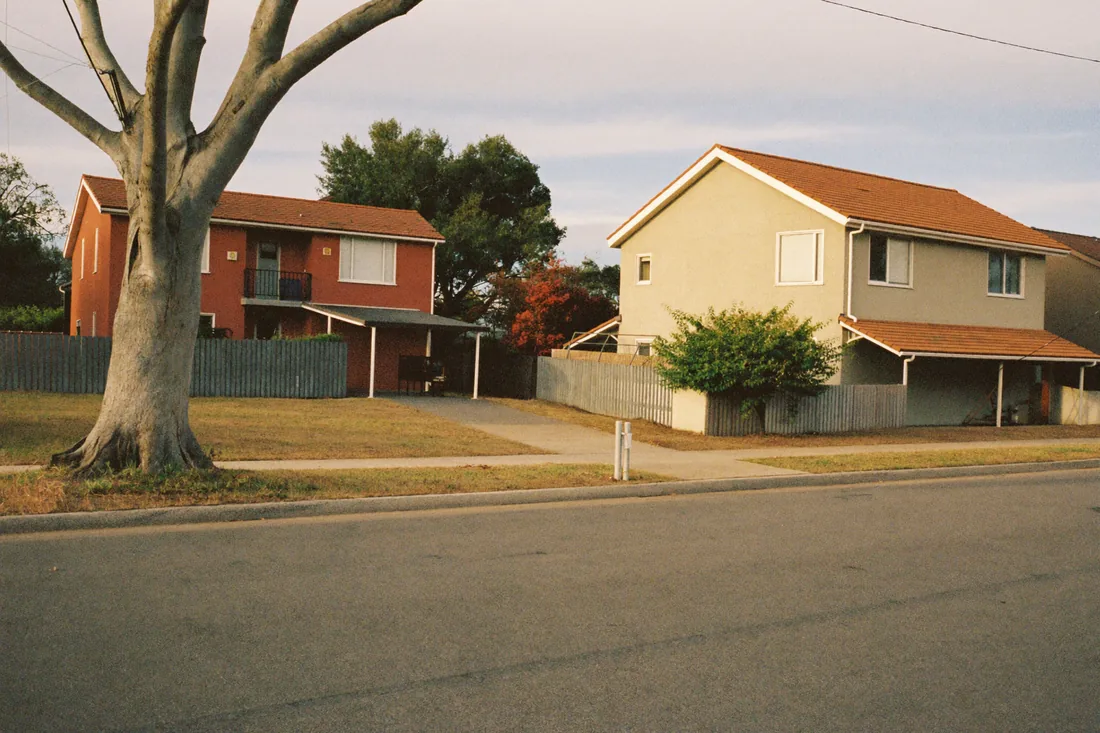
Davoren Park, around 28km north, is one of the lowest entry points of any Australian capital, on the Gawler rail line. Elizabeth, about 25km north, is anchored by the Lyell McEwin Hospital, the Edinburgh RAAF base and a growing industrial precinct. Smithfield, next to Elizabeth, mixes newer estates with established homes. Salisbury North, about 22km north, is a touch more established with better amenity and a shorter commute.
This northern run is also the part of Adelaide closest to the Osborne defence precinct (about 14km from the CBD), which is one reason first home buyers and investors have been circling it: the jobs story below feeds straight into rental demand here.
Mid-range - established middle suburbs
Salisbury is the main northern centre, with a major shopping precinct and train station. Mawson Lakes is a well-planned masterplanned suburb built around a lake system with a UniSA campus and train station; it feels premium for the price. Parafield Gardens is family-friendly, with good schools, near the Mawson Lakes precinct. Heading south, Morphett Vale and Seaford put you closer to the coast and the McLaren Vale wine country, with Seaford sitting at the end of its own train line.
Inner-suburb value - units beat houses here
If you want to be close to the city, the move is usually a unit rather than a house. In Prospect (about 5km north) and Norwood (about 4km east), houses command real premiums, but well-located units are far more attainable. Glenelg, Adelaide's best-known beach suburb on the tram line, has houses well above $1M, yet beachside units remain a genuine option for a fraction of what an equivalent coastal address costs in Sydney or Melbourne. Run any suburb's likely price against your budget with the borrowing power calculator.
The jobs story: AUKUS at Osborne and Lot Fourteen
Adelaide's price growth isn't just interstate money chasing a bargain. There's a real, sourced employment floor underneath it, and for a first home buyer that matters, because steady local wages are what make a mortgage sustainable and a suburb's rents reliable.
At Osborne, about 14km from the CBD, the AUKUS submarine program is being built out. The Australian Submarine Agency publishes the workforce numbers openly: up to 4,000 workers at peak constructing the submarine yard itself, a further 4,000 to 5,500 direct jobs building the boats, and around 20,000 direct jobs across 30 years spanning industry, the ADF and the public service. A Skills and Training Academy at Osborne is due to operate from 2028. The first boat begins construction in the late 2030s and delivers in the early 2040s, so this is three decades of work, not a one-off project.
The second pillar is Lot Fourteen, the seven-hectare innovation precinct on the old Royal Adelaide Hospital site in the CBD. It hosts the Australian Space Agency, the Australian Institute for Machine Learning, the Australian Cyber Collaboration Centre, the SmartSat CRC and Salesforce's Adelaide office, with an Innovation Centre (reported around 77% pre-leased) anchoring a defence, space and cyber cluster moving in by late 2028.
The point for a buyer isn't the brochure. It's that Adelaide is no longer a one-industry town. Osborne is trades, engineering and operations; Lot Fourteen is software, machine learning and space. That spread supports both wages and rental demand, particularly across the northern corridor near Osborne and the inner-north corridor (Prospect, Croydon, Bowden) near the CBD.
How buying a house works in South Australia
South Australia has its own conveyancing framework, and the one thing you most need to know is that the cooling-off period is the shortest in the country. Here's the process, in order.

- Work out your budget and get pre-approved. Run the borrowing power calculator, check your scheme eligibility, then read our pre-approval guide so you can move quickly when the right place comes up.
- Inspect and choose. Adelaide is overwhelmingly a private-treaty market, with far fewer auctions than Melbourne, so you can usually take your time at open inspections.
- Make an offer. Offers are submitted in writing through the agent, typically on a standard REISA contract.
- Receive the Form 1. This is SA's vendor disclosure document, similar in spirit to Victoria's Section 32. The seller has to provide it before or at signing, and your conveyancer should review it immediately. Read what conveyancing involves if it's new to you.
- Cooling-off: 2 clear business days. This is the shortest cooling-off period in Australia. You have just two clear business days from receiving the Form 1 to walk away. It's genuinely tight.
- Building and pest inspection. Allow roughly $400 to $600 for a combined report from a qualified building inspector.
- Finance approval and settlement. Settlement in SA commonly runs around 30 to 42 days, though that's a norm rather than a rule. Arrange building insurance from the contract date.
The tip that saves people real grief: book your building and pest inspection before you sign, not after. Because cooling-off is only two business days, you want the report landing on Day 1, not Day 3 when it's already too late to act on it. Plenty of experienced Adelaide buyers line up their inspector and conveyancer before they even make the offer.
Is Adelaide right for you? The honest trade-offs
A guide that only sold you the upside wouldn't be much use. So, frankly:
- Prices have run hard. Up around 12% in a year, with the house median now above $1M. Adelaide isn't a bargain in absolute terms anymore; the case for it is the scheme stack and the income side, not a cheap sticker price.
- The rental market is extremely tight. Vacancy around 0.7% means that if you're renting while you save, you may be doing it under real pressure, which cuts both ways: hard as a tenant, supportive if you end up leasing the place out.
- The job market is smaller than the east coast outside defence and tech. If your career depends on a deep, specific industry that mostly lives in Sydney or Melbourne, weigh that honestly.
What Adelaide gives back in return is a compact, livable city. Most suburbs sit within a 20 to 30 minute drive of the CBD, the beach and the Adelaide Hills, with none of Sydney's marathon commutes. World-class beaches and the Barossa and McLaren Vale wine regions are close. Everyday costs (groceries, dining, childcare) tend to run lower than the bigger eastern capitals, though how much depends on your lifestyle.
Adelaide suits a first home buyer who'd rather get in sooner than chase the absolute lowest price, who can use HomeStart or the new-build pathways, and who wants a genuinely livable city with a real jobs floor. It suits you less if your work is locked to an east-coast industry, or you were banking on the old "cheapest capital" maths. Either way, the next step is the same: map your real numbers. See where you stand on the first home buyer journey, then run the borrowing power calculator.
Frequently Asked Questions
How much do you need to earn to buy a house in Adelaide?
As a rough guide, a couple buying a unit near the $697,000 median needs a combined income in the low-to-mid $100,000s, while a house near the $1.01M median typically needs a combined income well into the $150,000s, plus a deposit. Cheaper northern suburbs lower that sharply. Run your own figure on our borrowing power calculator.
What is the median house price in Adelaide in 2026?
About $1.01 million for houses and roughly $697,000 for units (Cotality Home Value Index, 2026), up around 12% over the year. There's a wide spread: northern suburbs sit well below the median while inner suburbs like Norwood and Glenelg command house premiums above $1M.
Do first home buyers pay stamp duty in South Australia?
First home buyers pay no stamp duty on a new home (built or bought), with no price cap, for contracts signed on or after 6 June 2024. Established (previously lived-in) homes get no first-home concession, so you pay full duty. Check your figure with our stamp duty calculator.
What is HomeStart Finance and who can use it?
HomeStart is a South Australian government-owned lender. Its Graduate Loan offers a 2% deposit to buy (5% to build) with no LMI, for owner-occupiers with a Certificate III or higher (plus some essential workers). It's SA-only, and income limits apply, so it's built for first and lower-income buyers rather than high earners. Check your fit with our eligibility checker.
Is Adelaide still cheaper than Brisbane and Perth in 2026?
Yes, but only just. By 2026 Adelaide's house median (about $1.01M) sits a little below both Brisbane and Perth (around $1.05M to $1.1M for dwellings). Adelaide is below Sydney and above Melbourne on dwellings. The advantage now is the scheme stack (HomeStart and abolished new-build stamp duty), not the price tag.
What are the downsides of buying in Adelaide?
Prices have risen around 12% in a year and the house median has passed $1M, so it's no longer cheap. The rental market is extremely tight at about 0.7% vacancy, and the job market is smaller than the east coast outside defence and tech. It suits buyers who can use the SA schemes and value a compact, livable city.
Is Adelaide property a good investment?
Adelaide has delivered strong recent growth (around 12% over the past year) and rental vacancies are among the tightest in the country (about 0.7%), supported by interstate migration and the AUKUS and Lot Fourteen jobs pipeline. Momentum is now easing as affordability bites. Past performance doesn't guarantee future returns, so do your own due diligence.
How much is the First Home Owner Grant in South Australia?
The First Home Owner Grant in South Australia is $15,000, and it is available on new homes only, not established properties. South Australia also abolished stamp duty on new builds for first home buyers with no price cap, and the state lender HomeStart offers loans with as little as a 2 per cent deposit and no LMI.


