
Buying a house in Brisbane in 2026, the short version
Buying a house in Brisbane in 2026 comes down to four things, in order. Get pre-approved so you know your real budget. Check the property's flood overlay before you fall in love with it. Claim the $30,000 first home owner grant on an eligible new build. The 2026-27 state budget has now locked it in for four years, so there is no deadline racing you. And never skip the building and pest inspection in a city built on reactive soils and termites. Get those right and the rest is mostly paperwork.
Here's the honest read for a first home buyer in Brisbane, Australia: it's not the cheap capital it was five years ago. Brisbane's median house value sat around $1.22 million in April 2026, close to Sydney, well above Melbourne (Cotality data via OpenAgent). What still sets Queensland apart is the support: the most generous first home grant in the country, no stamp duty on a lot of purchases, and a federal scheme that gets you in with a 5% deposit and no LMI. Stack those properly and you can buy with far less cash than the sticker price suggests.
| Brisbane snapshot (as at April 2026) | Figure |
|---|---|
| Median house value | about $1.22 million |
| Median unit value | about $876,000 |
| House price growth (year to April 2026) | about +19% |
| Median days on market | about 19 days |
| Population growth | Among the highest in Australia |
Source: Cotality (formerly CoreLogic) via OpenAgent, April 2026. These figures move month to month, so treat them as a guide and always check current listings for the suburb you're chasing.
One reality check before you go further: work out what a lender will actually give you. Our free borrowing power calculator takes about 60 seconds, and if you'd rather see the whole path from "what can I afford?" to keys in hand, the NestPath buying journey lays it out step by step.
The $30K first home grant, the maths that still beats the sticker price
This part is worth getting your head around, because the numbers are genuinely good, and the 2026-27 state budget has now locked the $30,000 grant in for four years, so it's no longer a race against a deadline.
The $30,000 grant, now locked in for four years
Queensland's $30,000 First Home Owner Grant is the most generous in the country, three times the $10,000 that NSW and Victoria offer. It was previously due to drop back to $15,000 for contracts signed after 30 June 2026, but the 2026-27 state budget handed down on 23 June 2026 kept the full $30,000 in place for another four years, with more than $70 million committed (Queensland Government). The amount is set on your contract signing date, and settlement can happen later.
The rules, per the Queensland Revenue Office:
- New builds only. House-and-land packages, off-the-plan apartments, or substantially renovated homes. An established house doesn't qualify.
- Total value under $750,000, land plus dwelling combined.
- Owner-occupier only. You have to move in within 12 months of completion and live there for at least 6 continuous months.
- "First" means first in Australia. Neither you nor your spouse can have owned residential property here since 1 July 2000, and an investment property counts.
- Owner-builders qualify too; check the current QRO timing rules for when your build work needs to have started.
On a $600,000 house-and-land package out in Springfield or Ripley, that $30,000 roughly covers your whole 5% deposit. Not sure whether you'd qualify? Our first home buyer eligibility checker runs the rules in a couple of minutes.
Stamp duty: zero up to $700,000, and nothing at all on a new build
Queensland reformed its first home transfer duty concession, and the thresholds catch a lot of people out. Per the QRO:
- Established home valued at $700,000 or under: $0 transfer duty, a full concession.
- Established home $700,001 to $799,999: a sliding-scale partial concession (for example, around $6,555 duty on a $730,000 home).
- Established home $800,000 or above: the first home concession no longer applies and the standard home concession kicks in (roughly $24,100 on an $850,000 home).
- New homes, any price: eligible first home buyers get a full transfer duty exemption, with no price cap, for contracts signed on or after 1 May 2025.
That last line is the one most buyers miss. On a new build there's no stamp duty at all, even above $700,000, though the $30,000 grant itself still caps out at $750,000 total value. Buy a $750,000 new townhouse in Hamilton and you're looking at the $30,000 grant plus a transfer duty exemption worth around $19,600, which is close to $50,000 in stacked help. Want your exact number? Run it through the stamp duty calculator.
| Property price | Standard transfer duty | Eligible first home buyer |
|---|---|---|
| $400,000 | about $6,650 | $0 (full concession) |
| $500,000 | about $8,750 | $0 (full concession) |
| $600,000 | about $12,850 | $0 (full concession) |
| $700,000 | about $17,300 | $0 (full concession) |
| $730,000 | about $18,500 | about $6,555 (partial concession) |
| New build (any price) | varies | $0 (full exemption) |
Indicative only, as at June 2026, duty changes with valuation, so check the calculator for your figure. Source: Queensland Revenue Office.
The federal 5% deposit scheme
On top of the state help sits the Australian Government 5% Deposit Scheme (formerly the First Home Guarantee). You buy with a 5% deposit and the government guarantees the rest, so you skip lenders' mortgage insurance. Since 1 October 2025 the Brisbane price cap is $1,000,000, there are no income caps, and places are unlimited; it's administered by Housing Australia. Pair the 5% Deposit Scheme with the $30,000 grant on a new build and you've got the lowest-cash entry point of any capital city. The 5% Deposit Map shows which Brisbane suburbs a 5% deposit unlocks.
The Queensland Housing Finance Loan
There's also the Queensland Housing Finance Loan, run through the state's housing department, a low-deposit pathway a bit like WA's Keystart but with tighter income limits. It's narrower than the federal scheme and aimed at people who can't quite meet standard bank criteria. Check the current eligibility on the QLD housing website before you bank on it. For the full terms on every Queensland scheme, our Queensland grants page keeps them in one place.
Find a Brisbane broker who knows the QLD schemes
A good broker can line up the $30,000 grant, the new-build stamp duty exemption and the 5% Deposit Scheme so you get into a new home with as little cash out as possible.
How much deposit do you actually need in Brisbane?
Short answer: with the $30,000 grant on a new build plus the 5% Deposit Scheme, your out-of-pocket cash can be as low as $5,000 to $10,000 on a $600,000 home. The grant covers most of the 5% deposit, there's no stamp duty, and no LMI. For an established home with no grant, budget the full 5% deposit (so $35,000 on a $700,000 place) plus your buying costs.
| Scenario | Price | 5% deposit | Grant / scheme | Cash you'd need |
|---|---|---|---|---|
| New build + grant + guarantee | $600,000 | $30,000 | $30,000 grant | about $5,000 to $10,000 |
| New build + grant + guarantee | $650,000 | $32,500 | $30,000 grant | about $8,000 to $13,000 |
| Established home + guarantee | $700,000 | $35,000 | No grant | about $38,000 to $43,000 |
| Standard 20% bank loan | $700,000 | $140,000 | N/A | about $143,000+ |
Figures as at June 2026, rounded for illustration. The "cash you'd need" lines bake in rough allowances for legal fees, inspections and moving; they're not a quote. On a new build with the grant and the guarantee, your deposit is $30,000, the grant pays most of it, stamp duty is $0 and there's no LMI, which is why the out-of-pocket figure lands so low. No other capital city stacks up like that right now.
To pressure-test your own numbers: the borrowing power calculator shows what a lender will lend, the deposit tracker tells you how close you are, the LMI calculator shows what mortgage insurance would cost if you went outside the scheme, and the repayment calculator turns a price into a weekly figure. If you're still building the deposit, our guide to how much deposit you need to buy a house in Australia and our deposit saving guide are the next reads.
See what you can afford in Brisbane
Our free calculator shows your borrowing power in about a minute, so you can match it against the suburbs below.
Checking flood risk before you sign, the four-tool walkthrough
This is the thing interstate buyers underestimate most, and it's the cheapest mistake to avoid. Brisbane flooded badly in 2011 and again in 2022, and the insurance market has repriced the risk since. The 2022 South-East Queensland and Northern Rivers floods caused around $6.4 billion in insured losses across more than 245,000 claims, making them the costliest insured weather event in Australian history (Insurance Council of Australia). Nationally, the average home insurance premium climbed roughly 51% between 2020 and late 2025, from about $1,940 to $2,938 (analysis by actuarial firm Finity), and in flood-exposed Brisbane postcodes the increases run well past that. We've heard from buyers facing tens of thousands a year on heavily flood-affected properties. Whether that's your future is exactly what you need to find out before you commit.
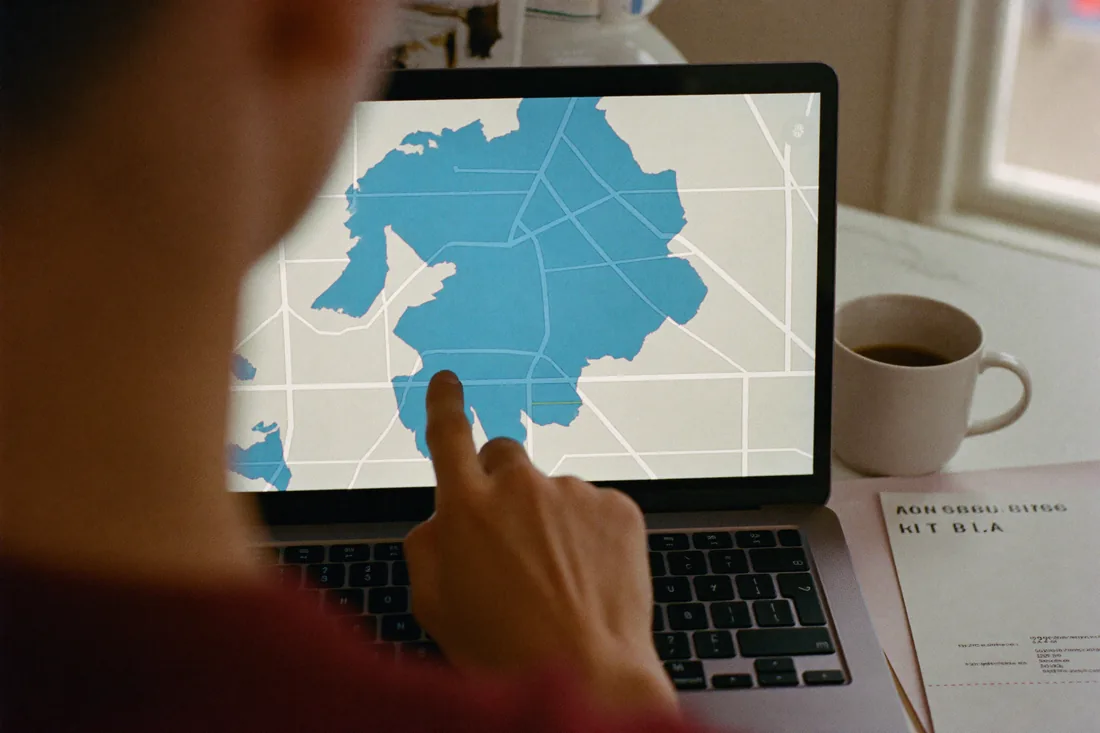
Before you sign any Brisbane contract, work through these four steps in order. They're all free and none take long:
- 1. Run Flood Awareness Online. Type the address into Brisbane City Council's Flood Awareness Online tool and you'll get the flood likelihood (very low, low, medium or high), plus any overland-flow (stormwater) risk.
- 2. Pull the FloodWise Property Report. The free FloodWise Property Report from Council gives you historic flood levels, aerial maps and a flood-summary graph for the exact lot.
- 3. Read the Q100 line. Q100 is the flood level expected to be reached, on average, once every 100 years (a 1% chance in any given year). A floor level above the Q100 line is generally treated as lower flood risk; below it, take the insurance question seriously.
- 4. Get an insurance quote before you go unconditional. This is the step people skip. If the reports flag any flood exposure, get a real quote in writing while you can still walk away. An annual premium you didn't budget for can blow up the serviceability sums your loan was approved on.
One more thing for the inspection itself: ask your building and pest inspector to look specifically for flood signs: watermarks, mould, replaced lower wall sheeting, oddly high power points. Brisbane's subtropical climate also makes termites and moisture damage more common than down south, so a combined report (budget roughly $400 to $600) is non-negotiable here.
None of this means avoid Brisbane. Plenty of its best suburbs carry little or no flood risk; higher ground in the north and south-west generally fares well, while low-lying pockets near the river and its creeks need careful checking. The idea is simply to buy informed. For the insurance side, our home insurance guide covers what flood cover actually includes, and if you're leaning toward a new build to capture the grant, our house-and-land packages guide walks through what to pin down in the build contract.
Best suburbs for first home buyers in Brisbane
Brisbane spreads out along the river and the train lines, and the value for first home buyers tends to sit in three directions: south through the Logan corridor, north into Moreton Bay, and south-west toward Ipswich and Springfield. The suburb price guides below are directional, drawn from recent listings, so they shift quickly; treat them as a starting point and check current listings before you get attached. Where a suburb is dominated by new-build estates, the $30,000 grant is in play.
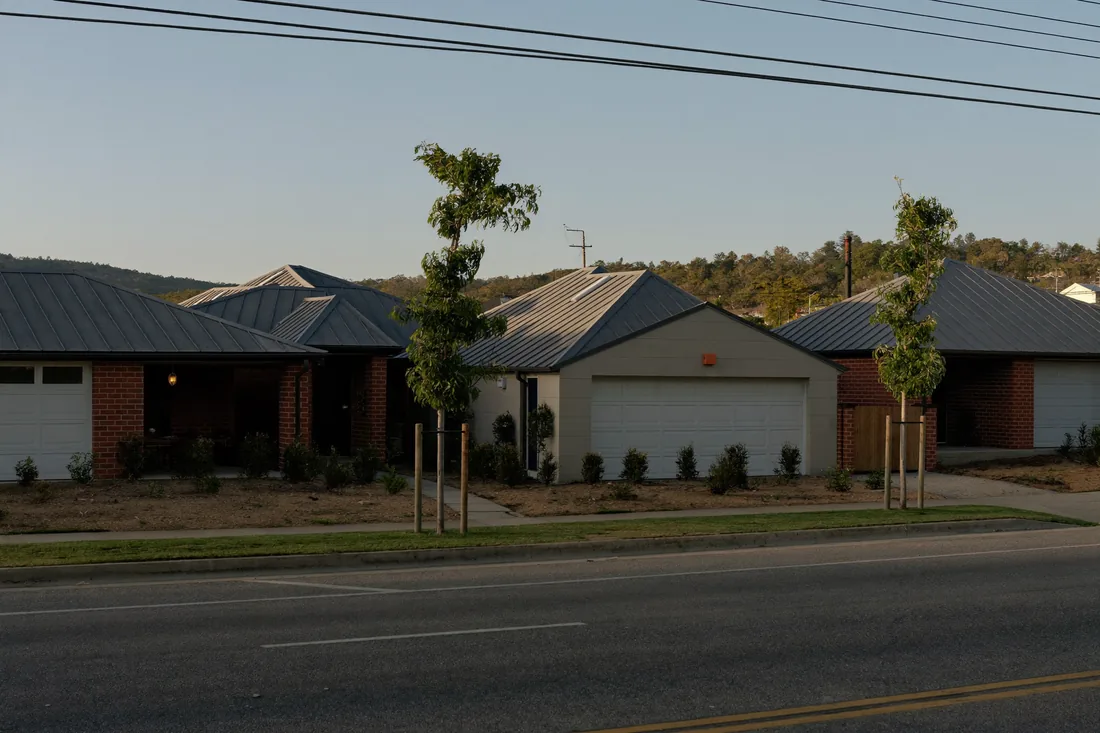
Under $550K, the entry tier (and the cheapest suburbs to buy in Brisbane)
If your budget is closer to half a million, you're looking at the outer corridors. A freestanding house near the CBD is out of reach at current medians, but these growth suburbs still put a new home within range, and many are exactly where the grant applies.
Ipswich sits about 40km south-west, a fast-growing city in its own right with heritage character, its own train line and serious infrastructure spending. Good value for families. Logan, around 25km south, sprawls across a lot of communities; it's close to the M1 and connected to both Brisbane and the Gold Coast, with newer estates offering modern homes at entry prices. Redbank Plains (about 30km south-west) is mostly modern estates and young families near the Springfield rail corridor, popular for putting the $30,000 grant toward a new build. Further north, Caboolture (roughly 50km out, on the North Coast line) and neighbouring Morayfield give you a growing town centre, newer estates and a semi-rural feel for buyers who want space.
$550K to $750K, the mid tier
Springfield is one of the best-planned growth areas in the city, a masterplanned community about 30km south-west with its own train station, a university campus and the Orion shopping centre. North Lakes, around 30km north, is the established version of the same idea: Westfield, good schools, an easy run to Redcliffe and the coast. Closer in, Carseldine (about 15km north, on the Caboolture line) is reasonable for the distance, and the old QUT campus site is being redeveloped into an urban village that will reshape it over the next decade.
Out on the bay, Redcliffe (roughly 35km north) trades beachside living for a fraction of Gold Coast prices, connected to the city by the Redcliffe Peninsula line, which opened in October 2016, so the rail premium is long since baked in. Kallangur, a bit further down the same line, stays affordable and well connected, and tends to keep buyers under the stamp duty concession threshold.
$750K+, inner-suburb value
Closer to the city, your money mostly buys units rather than houses. Chermside, about 10km north, is a major hub, with one of Brisbane's biggest Westfields, the Prince Charles Hospital and strong transport, where a unit gets you inner-suburb living at a more accessible price than a house. Nundah, around 8km north-east on the airport line, has a genuine village feel with cafes and weekend markets, and is gentrifying while still undercutting comparable inner suburbs. Woolloongabba, just 3km south of the CBD, is one to watch: the Gabba precinct and the new Cross River Rail station will make it one of the better-connected pockets in the city, and units there suit buyers with a longer horizon.
Whichever way you go, line up a conveyancer early. In Queensland that means a solicitor or law firm, because the state has no separate licensed-conveyancer profession, and they'll be reviewing your contract within days of you signing.
2032 Olympics and Cross River Rail, what's real versus hype
Every second Brisbane listing now name-drops the Olympics. Most of it is marketing. A few projects, though, are genuinely redrawing where the value sits. Here are the ones worth tracking:
- Cross River Rail: a 5.9km twin tunnel under the river with four new underground stations at Roma Street, Albert Street, Woolloongabba and Boggo Road, plus an upgraded Exhibition station. It's expected to open in 2029. Woolloongabba gets a train station for the first time, Boggo Road unlocks the Dutton Park and PA Hospital precinct, and Albert Street is the CBD's first new station in more than a century.
- Brisbane Metro: the high-capacity electric M1 route from Eight Mile Plains to Roma Street has been running since June 2025, with the M2 (UQ Lakes to RBWH) rolling out and extensions proposed north and south.
- Victoria Park stadium: the 63,000-seat main stadium for the 2032 opening ceremony and athletics. The site was handed over to the Games infrastructure authority on 1 June 2026 and early works are underway, with bulk earthworks due to start from late 2026. That's redirecting long-term investment north of the CBD toward Herston, Kelvin Grove and Spring Hill.
- Athletes' Village at Northshore Hamilton: the main 2032 village will house around 10,000 athletes on the Northshore Hamilton site and convert to housing afterward. Hamilton and Bulimba are the nearest established suburbs.
- The Gabba: kept as a cricket and AFL venue rather than the Olympic main stadium after the 2025 reset, but still served by the new Cross River Rail station next door.
The honest read: the Cross River Rail station catchments (Woolloongabba, Boggo Road and Dutton Park), the Albert Street fringe, and the Hamilton/Northshore corridor are where the infrastructure case for property is clearest, because the trains and the redevelopment are funded and being built. Everywhere else gets the general "Olympic city" tailwind, which is real but a lot softer than the brochures suggest. Treat the 2032 story as a reason to understand a suburb, never a reason to overpay for one.
The Brisbane buying process, step by step
Queensland runs one of the more buyer-friendly processes in the country. Here's the order it actually happens in:
- Work out your budget. Run the borrowing power calculator and check your eligibility for the grant and the 5% Deposit Scheme. The buying journey maps the whole thing if you want the bigger picture.
- Get pre-approved. Essential in a market where homes sell in under three weeks. Our pre-approval guide explains what lenders look for.
- Pick your suburbs and inspect. Go to open homes, run the flood checks above, and get a feel for the areas.
- Make an offer. Brisbane is mostly a private-treaty market, so offers go through the agent, usually in writing, with far fewer auctions than Melbourne.
- Sign the contract. Queensland contracts normally include building-and-pest and finance conditions as standard. You get a 5 business day cooling-off period, during which you can pull out (forfeiting 0.25% of the price).
- Building and pest inspection. Standard practice here and usually a condition of the contract. Budget around $400 to $600 for a combined report, and don't skip it in this climate.
- Finance approval. Your lender formally approves the loan once it's valued the property.
- Settlement. Usually around 30 days in Queensland. Your conveyancer handles the transfer (budget roughly $850 to $1,450 for conveyancing) and you'll want building insurance from the contract date. Not sure what a conveyancer does? Our explainer on what conveyancing is covers it.
Compared with NSW there's no exchange-of-contracts dance, and compared with Melbourne there's far less auction pressure. The standard building-and-pest condition also gives you more protection than buyers get in some other states. If you'd rather work with someone who's done it a hundred times, you can find a broker, a conveyancer and a building inspector through NestPath for free.
Frequently asked questions
Is Brisbane a good place to buy in 2026?
Brisbane is a solid long-term buy, but go in clear-eyed: the median house value is now around $1.22 million, so it's no longer the cheap capital it was five years ago. What still works in a first home buyer's favour is the support: the $30,000 grant, no stamp duty on a lot of purchases, and the 5% deposit scheme, plus genuine population growth and an Olympic infrastructure pipeline. The affordability advantage over Sydney and Melbourne has narrowed, so the case rests on the incentives and the long horizon rather than cheap prices.
How much do I need to buy a house in Brisbane?
On a $600,000 new build, your out-of-pocket cash can be as low as $5,000 to $10,000 once you combine the $30,000 grant with the 5% Deposit Scheme. The grant covers most of the 5% deposit, stamp duty is $0, and there's no LMI. For an established home with no grant, plan on the full 5% deposit (about $35,000 on a $700,000 place) plus buying costs. Run your own figures through our free borrowing power calculator.
Can you buy a house in Brisbane for $500,000?
Not a freestanding house close to the CBD; at a median around $1.22 million, $500,000 won't get you near the inner suburbs. What it can buy is a house in the outer growth corridors (parts of Logan, Ipswich and Caboolture) or a unit closer in. If $500,000 is your ceiling, focus on the under-$550K tier above and a new build where the $30,000 grant stretches your deposit. Check what a lender will actually offer with our borrowing power calculator.
Can I use the $30,000 grant on an established home in Brisbane?
No. The Queensland First Home Owner Grant only applies to brand-new homes, house-and-land packages, off-the-plan apartments, or substantially renovated properties, valued under $750,000. An established (previously lived-in) house doesn't qualify for the grant, no matter how cheap it is. If you're set on an established home, your help comes from the stamp duty concession and the 5% Deposit Scheme instead, not the $30,000 grant. The full rules are on our Queensland grants page.
Do first home buyers pay stamp duty on a new build in Brisbane?
No. Eligible first home buyers get a full transfer duty exemption on a new home, with no price cap, for contracts signed on or after 1 May 2025. So on a new build there's no stamp duty even above $700,000, though the $30,000 grant itself still caps out at $750,000 total value. On an established home, the full concession (zero duty) runs up to $700,000, then a sliding scale to $799,999. See your number on the stamp duty calculator.
Should I worry about flooding in Brisbane?
Be aware of it rather than scared of it. Brisbane flooded in 2011 and 2022, and some suburbs carry real exposure, but plenty of excellent areas have little or none. Before you sign any contract, check the property on Brisbane City Council's free Flood Awareness Online tool, pull the FloodWise Property Report, and get an insurance quote before you go unconditional, because an unexpected premium can sink your loan serviceability. Higher-ground suburbs in the north and south-west generally fare best; low-lying pockets near the river and creeks need careful checking.
What's the $30,000 QLD grant, in plain terms?
It's a one-off $30,000 cash payment for first home buyers building or buying a new home valued under $750,000 in Queensland, three times what NSW and Victoria offer. It applies to new builds, house-and-land packages and substantially renovated homes, not established houses, and you can put it toward your deposit. The $30,000 amount was previously set to revert to $15,000 after 30 June 2026, but the 2026-27 Queensland Budget continued the full $30,000 for another four years. Full eligibility is on our Queensland grants page.


