
If you have been house hunting for more than five minutes, you have almost certainly seen the words "house and land package" on a billboard, in a social media ad, or splashed across a display village. But what actually is one, and is it a smart move for a first home buyer in 2026?
Worth saying up front: NestPath doesn't sell you a house or a home loan. We're an independent guide for first home buyers, so we have no stock to clear and no mortgage to push. That means we can give you the honest version, including the bits the builder's sales office and the bank's brochure tend to skip.
This guide walks through how a house and land package actually works, what it really costs, whether it's cheaper than buying an established home, how little deposit you genuinely need, the current 2026 grants and price caps, how construction loans and draw-downs work, what happens if your builder goes under, and the contract traps that catch buyers out. All the figures are current as at June 2026 and sourced from the relevant state revenue office or federal scheme. If you only take one thing from this page, make it the grant numbers, because most guides online are running on figures that are a year or two out of date.
What Is a House and Land Package?
A house and land package is a single deal where you buy a block of land and a brand-new home to go on it, usually from a builder or developer working in a master-planned estate. Instead of hunting for an existing home on the open market, you pick a lot in a new development and pair it with a home design from the builder's range.
You sign two separate contracts, one for the land and one for the build, and the total is usually quoted as a single fixed price. That fixed-price structure means you know roughly what you're up for before you commit, which is a real advantage over bidding at auction where the final number is anyone's guess. The two-contract split also matters for stamp duty, which we'll come back to.
Packages are most common in the growth corridors on the edges of our capital cities: Oran Park and Box Hill in Sydney, Craigieburn and Tarneit in Melbourne, Springfield and Ripley in Brisbane, Baldivis and Yanchep in Perth, Mount Barker and Angle Vale in Adelaide.
The alternative to a bundled package is buying land separately and choosing your own builder. That gives you more control over both the block and the build price, and opens the door to smaller custom builders outside the package network, but it also dumps all the due diligence (zoning, easements, soil, titled versus untitled) onto you. Our guide to buying land in Australia covers what to check before you sign on a vacant block.
The big difference from buying an established home is that you're paying for something that doesn't exist yet. You sign, a builder constructs the home, and you move in once it's finished, usually 6 to 12 months later. That changes your loan (you'll need a construction loan rather than a standard one), your timeline for getting out of your rental, and how you budget along the way.
How a House and Land Package Works, Step by Step
In plain terms, a house and land package works like this: you choose a lot and a home design, get a construction loan approved, sign two contracts, the land settles, the builder constructs the home in stages while your lender pays them progressively, and you move in at the end. Here are the ten steps from first enquiry to move-in day.
- Choose your location and estate. Research the growth corridors in your target city, visit display villages on a weekend, and drive the commute during peak hour before you fall for a display home.
- Choose your block. Lots vary in size, orientation, slope and price. North-facing backyards get the most sun. Corner lots give you more room but cost more to fence. Smaller lots are cheaper but limit which designs fit.
- Pick a home design. Choose from the builder's range or customise it. Most builders offer 10 to 50-plus floor plans across single-storey, double-storey and narrow-lot designs. Read the standard inclusions closely, because two homes that look identical on paper can be very different once you see what's actually included.
- Get finance approved. You'll need a construction loan, not a standard home loan. A broker who knows construction loans is genuinely useful here. They'll steer you to lenders who handle progressive draw-downs well and explain the process so nothing blindsides you.
- Sign the contracts. Two of them, land and build. Keeping them separate is what unlocks the stamp duty saving (you pay duty on the land only). Have your conveyancer read both before you sign anything.
- Land settles. You take ownership of the block. Your loan covers it, and you start paying interest on the land component from this point.
- Construction begins. The builder lodges plans with council, gets approvals, and starts building. Typical build time is 6 to 12 months depending on the builder, the design and the weather.
- Progressive draw-downs. Your lender releases money to the builder at each stage: slab, frame, lock-up, fixing, completion. You pay interest only on what's been drawn so far, not the whole loan.
- Completion and inspection. The builder tells you the home is done. Before you accept handover, get an independent building inspection to flag any defects. The builder has to fix them before final handover.
- Settlement and move in. Your construction loan converts to a standard home loan and you move in. Sort out home insurance before settlement day.
Is a House and Land Package Cheaper Than Buying an Established Home?
Often, yes. For a first home buyer, a new build usually works out cheaper on day one once you add up the grants and the stamp duty saving, though an established home can still win if you'd otherwise be commuting two hours a day or renting for a year while you wait. The honest answer depends on your state, your price point, and how much you value being close to the city.
Here's the side-by-side, looking at where the money actually goes:
| What you pay / get | Established home | House and land package |
|---|---|---|
| Stamp duty | Charged on the full price (unless your state exempts FHBs) | Charged on the land only, where contracts are separate |
| First Home Owner Grant | Not available, FHOG is for new builds | Available in every state ($10k to $30k) |
| Move-in extras | Usually already done (flooring, fencing, landscaping) | Often extra on a standard package, budget for it |
| Timeline | Move in at settlement (weeks) | 6 to 12 months of build time, you keep paying rent |
| Condition | Existing wear; possible repairs | Brand new, builder's warranty, 7-star energy rating |
| Location | Often closer to the city | Usually an outer growth corridor |
Where the new build wins: the grants and the stamp duty saving are real money, and in some states they're now enormous. A first home buyer building in Queensland or South Australia pays $0 stamp duty on a new home with no price cap, then collects a state grant on top. Where the established home wins: you move in straight away (no double-paying rent and a mortgage for a year), you're usually closer to work and amenities, and you skip the site-cost and builder risk entirely.
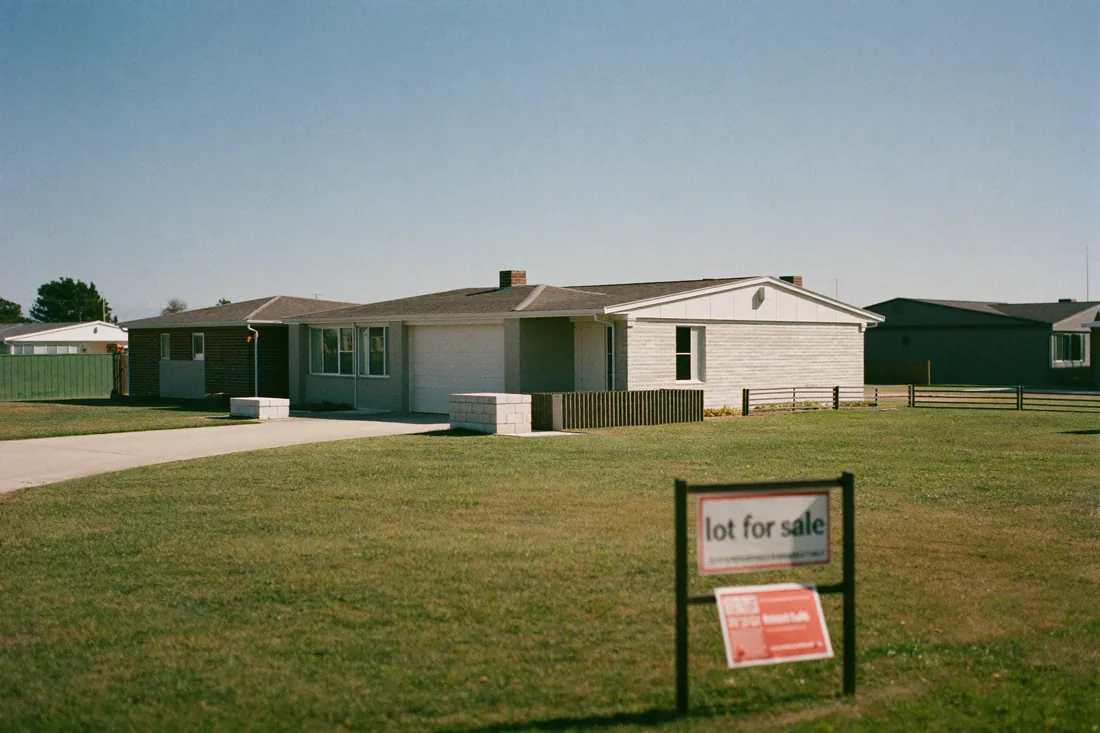
Run your own numbers rather than trusting a sales pitch either way. Our stamp duty calculator shows the duty on the land versus the full price for your state, and the borrowing power calculator tells you what you can actually afford to repay once the build is done and the loan goes full principal-and-interest.
How Much Deposit Do You Actually Need?
For a house and land package, you can get in with as little as a 5% deposit nationally through the Australian Government 5% Deposit Scheme (formerly the First Home Guarantee), or 2% in WA through Keystart, and on either path you pay no Lenders Mortgage Insurance, which is the fee that normally bites when your deposit is under 20%.
Here's how the deposit options stack up:
- 5% via the 5% Deposit Scheme (nationwide). Since 1 October 2025 the scheme has no income caps and no limit on places, so any eligible first home buyer with a genuine 5% deposit can use it, and the government guarantees the rest so you skip LMI. On a $500,000 package that's a $25,000 deposit instead of the $100,000 you'd need to hit 20%.
- 2% via Keystart (WA only). The WA Government's Keystart lets you buy with a 2% deposit and no LMI. On a $500,000 package that's a $10,000 deposit. Keystart covers packages up to $860,000 in Perth (as at 2026), with income limits of $155,000 for a single and $228,000 for a couple or family.
- Top it up with your grant and super. Your state First Home Owner Grant and any savings you've pulled out under the First Home Super Saver Scheme (up to $50,000 released) can go straight toward the deposit, sometimes leaving a WA buyer close to no cash out of pocket.
A quick reality check: the deposit isn't the only cash you need. Even with stamp duty waived, set aside money for conveyancing, a building inspection at handover, loan fees and a buffer for site costs. Our deposit tracker helps you set a target and watch it climb, and the eligibility checker tells you which schemes you actually qualify for before you get your hopes up.
First Home Buyer Grants and Schemes (2026)
House and land packages are where first home buyers get the biggest leg-up, because a new build qualifies for grants and concessions that simply aren't available on an established home. The figures below are current as at June 2026, but grant rules change often, so always confirm yours at your state revenue office or our state grants pages before you bank on a number.
| State | FHOG (new homes) | Stamp duty for FHBs (new builds) | Details |
|---|---|---|---|
| WA | $10,000 | Exempt up to $600k; concession to $800k (vacant land exempt to $450k); in force since 28 Jul 2026 | WA grants → |
| QLD | $30,000 (continued beyond 30 Jun 2026, no reversion to $15,000) | Abolished on new homes, no price cap, from 1 May 2025 | QLD grants → |
| NSW | $10,000 | Exempt up to $800k; concession $800k to $1M | NSW grants → |
| VIC | $10,000 | Exempt up to $600k; concession to $750k | VIC grants → |
| SA | $15,000 | Abolished on new homes and vacant land, no price cap, from 6 Jun 2024 | SA grants → |
A couple of things worth flagging in that table. Queensland's $30,000 FHOG has been continued beyond 30 June 2026: the enhanced $30,000 grant no longer expires on that date and does not drop back to $15,000, so QLD first home buyers of a new build still get the full $30,000. NSW runs two different caps for the FHOG: $600,000 if you're buying a completed new home, and $750,000 combined for a house and land package, so check which applies to your deal. And South Australia is now the standout for stamp duty: $0 on a new home or vacant land at any price.
On top of the state grants, three federal schemes make a new build even more reachable:
- 5% Deposit Scheme (formerly the First Home Guarantee): buy with a 5% deposit and no LMI, with the government guaranteeing the gap. New builds, including house and land packages, qualify within the price caps below. Since 1 October 2025 there are no income caps and no limit on places.
- First Home Super Saver Scheme: withdraw up to $50,000 of voluntary super contributions for your deposit, with a tax saving along the way. Our FHSS guide has the full breakdown.
- Keystart (WA only): 2% deposit, no LMI, for packages up to $860,000 in Perth. See our Keystart guide.
Put it together and the numbers can be substantial. A first home buyer building a $600,000 package in Queensland pays no stamp duty and collects the $30,000 FHOG, saving well over $40,000 against an equivalent established home that has no grant and full duty. In WA, a buyer combining Keystart's 2% deposit with the $10,000 FHOG can get into a $500,000 package with very little cash up front.
Stamp Duty on a House and Land Package
On a house and land package you usually pay stamp duty on the land only, not the finished home, because the building doesn't exist yet when the land transfers, and where your state exempts first home buyers on new builds, the duty can be nil. That land-only rule is one of the main reasons packages can come in cheaper than an established home of the same final value.
Here's a worked example in NSW, where the land-only saving still bites (in states like WA, QLD and SA the FHB exemption now does the heavy lifting on its own). Take an $850,000 package in a Sydney growth corridor with the land at roughly $450,000:
| Scenario | Duty is charged on | Rough stamp duty |
|---|---|---|
| Established home at $850,000 | $850,000 (full price) | Around $33,000 |
| H&L package at $850,000 (land about $450,000) | $450,000 (land only) | Around $15,000 |
These are rough figures to show the shape of the saving, not a quote. Duty scales change and your land split will differ. The key point holds: you're paying duty on a much smaller base. To actually get the benefit, the land and build contracts must be separate; sign a single combined contract and you can be hit with duty on the full amount. Your conveyancer makes sure the contracts are structured correctly. Run your own state and price through the stamp duty calculator for a real number.
Turnkey vs Standard: What's Included (and What's Not)
A turnkey package is move-in ready with everything you need to live there built into the price; a standard package gives you the house and not much else, leaving you to add the rest yourself. This is the single distinction that catches the most first home buyers off guard, so it's worth getting straight before you compare any two quotes.
| Item | Standard package | Turnkey package |
|---|---|---|
| Flooring | Bare concrete or basic carpet | Tiles, vinyl plank or carpet throughout |
| Window coverings | Not included | Blinds or curtains |
| Air conditioning | Not included | Split system or ducted |
| Front landscaping | Bare dirt | Turf, garden beds, path |
| Driveway | Not included | Concrete or paved |
| Fencing | Not included | Colorbond on all boundaries |
| Letterbox and clothesline | Not included | Included |
What's not included in a standard house and land package. If a quote just says "standard inclusions," assume the following are not in the price unless you see them written down: site costs, the driveway, fencing, front and back landscaping, window treatments, flooring upgrades, air conditioning, the letterbox, the clothesline, and flyscreens. The back yard on a standard package is typically left as bare dirt. None of that makes a standard package a bad deal. It just means the advertised price isn't the move-in price.
The price gap. Turnkey usually costs around $20,000 to $40,000 more than standard (a rough 2026 guide; it varies by builder and inclusions list). But here's the catch: buy standard and add all that yourself after handover and it often runs $30,000 to $60,000, because you're paying retail to individual tradies instead of the builder's bulk rates. Turnkey costs also roll into your home loan at home-loan rates rather than landing on a credit card or personal loan at 15 to 20 per cent.
Our take: always ask for a turnkey quote alongside the standard one, then compare standard-plus-extras against the turnkey total. In most cases turnkey is better value and saves you coordinating a dozen tradies in the months after you move in.
Construction Loans: How the Financing Works
A house and land package is funded by a construction loan, which releases money to the builder in stages as the home is built rather than handing over the full amount at settlement. It's a specialised product, and it behaves differently to a normal home loan in a few ways that matter.
How a construction loan differs from a standard home loan
- Progressive draw-downs: instead of the full loan landing upfront, your lender pays the builder in stages as each milestone is reached.
- Interest-only during the build: you pay interest only on what's been drawn so far, not the whole loan, which keeps payments lower while you're still renting.
- Land settles first: the loan covers the land at settlement, and interest on the land component starts from there.
- Converts at the end: once the build is done, the construction loan rolls over into a standard principal-and-interest home loan.
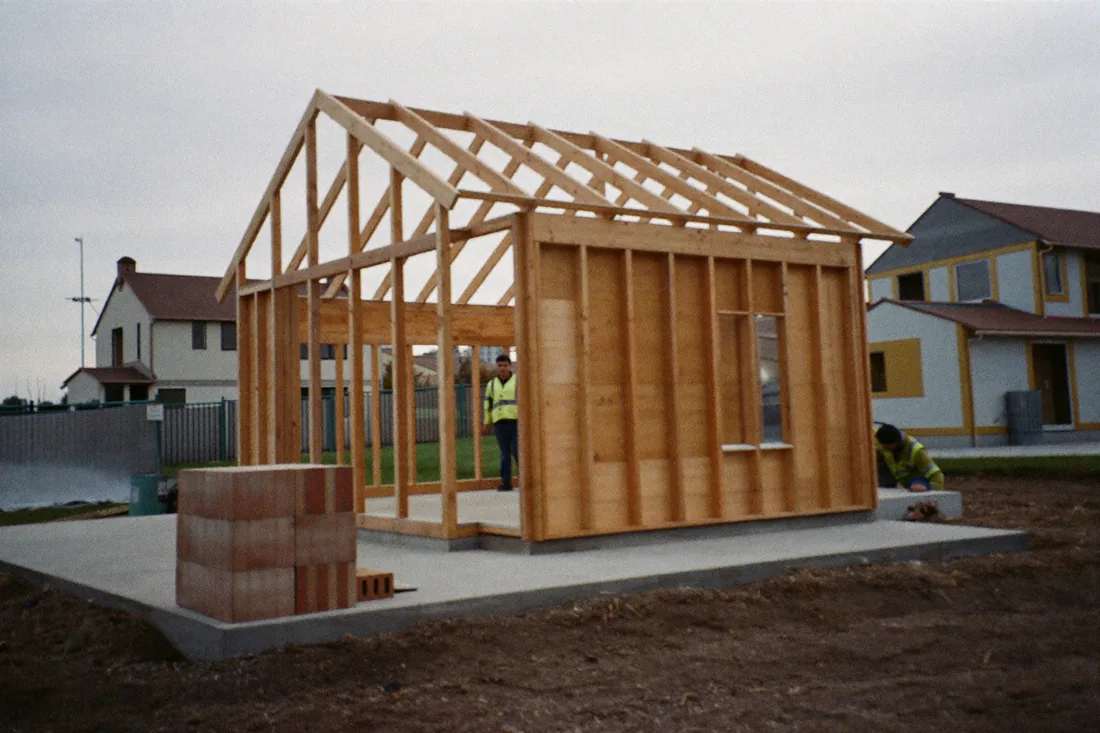
The five construction stages
| Stage | What happens | Typical share of build cost |
|---|---|---|
| 1. Slab / base | Concrete slab poured, plumbing roughed in | about 15% |
| 2. Frame | Timber or steel frame up, roof trusses on | about 20% |
| 3. Lock-up | Roof on, windows and external doors in | about 20% |
| 4. Fixing | Internal walls, kitchen, bathroom, electrical | about 25% |
| 5. Completion | Painting, final fixtures, clean, ready for handover | about 20% |
The percentages above are typical, not fixed. Your contract sets the exact split. Not every lender handles construction loans well; some have slow draw-down processes that hold up your builder and stretch out the build. A broker who specialises in construction loans will match you with a lender that processes draw-downs quickly and has done plenty of new builds. This is one area where a broker earns their keep.
For a deeper walk-through of the stages, progress payments, contract clauses and what to inspect at each step, see our construction loans guide and our guide to building a house in Australia.
Hidden Costs and Common Traps
The hidden costs in a house and land package are the ones that don't show up on the advertised "from" price: site costs, a shell of a home, sunset clauses, verbal promises, fake free upgrades, a skipped inspection, and the land not being registered yet. Packages are generally a smart move, but these are the traps that catch people, and how to dodge each one.
1. Site costs that blow out the "fixed price"
"Fixed price" doesn't always mean fixed. Most builders quote a base assuming standard soil. If your block has rock, reactive clay, sand or a slope, you'll cop additional site costs (rock removal, piering, retaining walls, engineered fill) that can add $10,000 to $30,000 on top of the quote. Always ask for a site-cost estimate specific to your lot before you sign, and get an independent soil test ($500 to $1,000): cheap insurance against a nasty surprise.
2. A "standard" package that leaves you with a shell
Standard can mean bare concrete floors, no window coverings, no air con, no fencing, no driveway and a yard of dirt. Get a full written list of inclusions and exclusions and hold it against a turnkey quote. The extra for turnkey is almost always worth it once you price up doing it yourself.
3. Sunset clauses
Building contracts carry a sunset date, a deadline for completion. The catch is that some contracts let the builder (not you) extend or even cancel if that date passes, which in a rising market can mean they walk and re-sell at a higher price. Read the clause, and ask your conveyancer to negotiate one that gives you the right to exit if the builder runs badly over.
4. Verbal promises that aren't in the contract
If a salesperson promises "we'll throw in ducted air con" or "the premium kitchen's included," get it written into the contract. Verbal promises aren't enforceable. If it's not in writing, it doesn't exist.
5. "Free upgrades" that are already priced in
"$50,000 in free upgrades" usually just means the base price has been lifted to cover them. Compare the total package price against competitors, not the headline value of the freebies. The plainest cheapest package can be the better deal.
6. Skipping the independent building inspection
Before you accept handover, get an independent building inspector to check the home. They catch defects the builder's own sign-off can miss: cracked tiles, paint faults, plumbing, waterproofing. The builder is obliged to fix defects before handover. An inspection runs $300 to $500 and can save you thousands. Our building and pest inspection guide has the full handover checklist.
7. Untitled land and the wait for registration
This is the trap nobody warns you about. In a lot of new estates the land is sold "untitled": the lot exists on a plan but hasn't been formally registered yet, because the developer is still putting in roads, power and drainage. You can't settle the land until the title registers, and that can slip by months or, in a few cases, more than a year. While you wait, you're often still renting, your finance approval can lapse and need re-doing, and if the land contract has its own sunset clause the developer can sometimes cancel and re-sell. Before you sign, ask one blunt question: is the land titled, and if not, what's the registered date estimate, and get the answer in writing.
What Happens If Your Builder Goes Bust?
If your builder goes into administration mid-build, you're generally protected by home building insurance, also called domestic or builders' warranty insurance, which is compulsory in most states and is designed to cover you if the builder dies, disappears or becomes insolvent and can't finish or fix the work. It's the question on a lot of buyers' minds after the run of builder collapses in recent years, and the honest answer is that it's stressful, but you're rarely left with nothing.
A few things genuinely work in your favour here:
- Staged draw-downs limit your exposure. Because your lender only pays the builder as each stage is completed, you haven't handed over the full build cost upfront. If the builder fails at lock-up, the later-stage money simply hasn't been drawn yet.
- Home building insurance is the backstop. Most states require the builder to hold cover (often called home building compensation, domestic building insurance or builders' warranty, depending on the state) that can help complete the home or fix defects if the builder becomes insolvent. The name, the cover limit and exactly what triggers a claim vary by state, so confirm how it works where you're building before you sign; your conveyancer can point you to the specifics.
- Your deposit has some protection. Deposits on building work are generally capped and, in many states, covered by the same warranty scheme, which is part of why you should never pay a large deposit or money "off the books" outside the contract.
We've flagged the state-by-state cover specifics as something to verify rather than take on faith, because the schemes differ enough that a general rule could mislead you. The practical takeaways don't change, though: keep your draw-downs staged, pay nothing outside the contract, check the builder is properly licensed and insured before you commit, and lean on your conveyancer to confirm the warranty cover that applies to your build.
Perth Price Guide 2026
Perth is one of the most affordable capital-city markets for house and land in the country, which is why first home buyers there often get the best value going. Land is cheaper than Sydney or Melbourne, population growth keeps demand strong, and Keystart gives WA buyers a 2% deposit pathway most other states don't have.
Packages in Perth typically run from $400,000 to $700,000 depending on the corridor and home size, with land usually $200,000 to $350,000 and the build a similar $200,000 to $350,000 for a solid three or four-bedroom home. These are indicative ranges as at June 2026. Estate prices move, so treat them as a guide, not a quote.
| Corridor | Direction | Typical H&L price | Notes |
|---|---|---|---|
| Yanchep | North | $380K to $500K | Cheapest corridor, beach proximity, rail extension |
| Alkimos | North | $400K to $530K | Coastal, beach access, train station |
| Byford | South-east | $420K to $550K | Semi-rural feel, growing infrastructure |
| Ellenbrook | North-east | $430K to $580K | Established suburb, shopping, new rail |
| Baldivis | South | $450K to $600K | Schools and shopping, close to Rockingham |
| Piara Waters | South-east | $500K to $650K | Premium estate, strong schools, parks |
Major builders working these corridors include HomeGroup WA, Summit Homes, Dale Alcock Homes, Plunkett Homes and ABN Group, all HIA members building in WA for decades. Read Google reviews and visit display homes before you commit; quality can vary even within one builder depending on the site supervisor you draw.
On finance, Keystart covers packages up to $860,000 in Perth (as at 2026) with a 2% deposit and no LMI, so a $500,000 package needs around a $10,000 deposit. Add the $10,000 WA FHOG and some buyers get in with very little cash up front. See the full WA first home buyer grants for eligibility.
House and Land by State: Price Guide 2026
Across the mainland capitals, packages run from the high-$300Ks in the cheapest Adelaide and Perth corridors to around $900,000 in outer Sydney. The table below is an indicative June 2026 guide; corridors and builders move prices around constantly.
| State | Typical H&L range | FHOG (new homes) | Key growth areas |
|---|---|---|---|
| SA | $350K to $550K | $15,000 | Mount Barker, Angle Vale, Munno Para |
| WA | $400K to $700K | $10,000 | Baldivis, Yanchep, Byford, Piara Waters, Alkimos |
| QLD | $450K to $750K | $30,000 | Springfield, Ripley, Pimpama, Yarrabilba |
| VIC | $500K to $800K | $10,000 | Craigieburn, Tarneit, Clyde North, Officer |
| NSW | $600K to $900K | $10,000 | Oran Park, Marsden Park, Box Hill, Leppington |
For context, established-home medians in the capitals now run from roughly $700,000 in the cheaper cities to well over $1.3 million in Sydney, so a growth-corridor package is materially cheaper, even before you count the grants and stamp duty saving. The trade-off is distance from the CBD and fewer established amenities. You're also getting a new home with a builder's warranty and a 7-star energy rating, which an older established home won't match. For what that warranty actually covers, see our new home warranty guide.
How to Choose a Package
Location and lifestyle
Growth corridors are further out, which means longer commutes. Drive it during peak hour before you commit. Check what schools, shops, medical centres and public transport are already there, not just what's "planned." Developer master plans are aspirations, not guarantees.
Builder reputation
Research the builder properly. Check their registration with the relevant state authority (QBCC in Queensland, the VBA in Victoria, Fair Trading in NSW, the Building Commission in WA). Look for HIA or MBA membership. Read Google reviews and check Whirlpool and ProductReview for real owner experiences. Ask for addresses of recently finished homes you can drive past to judge build quality for yourself.
Contract terms
Insist on a fixed-price contract and read what's included and excluded. Common exclusions on standard packages: site costs, driveway, fencing, landscaping, letterbox, clothesline, window treatments, flyscreens and air conditioning. Get the written inclusions list before you compare packages, or you're comparing apples with dirt.
Display home vs reality
Display homes are loaded with upgraded fixtures and professional styling. The base package will look different. Ask to see the standard inclusions list, not the display upgrades. Better still, walk through a recently completed home built on a standard package to see what you're actually getting.
Is a House and Land Package Worth It in 2026?
For a first home buyer chasing maximum grants, stamp duty savings and a brand-new home with warranty cover, a house and land package is usually worth it in 2026, but it's the wrong call if you value inner-city living or can't carry rent plus a mortgage through a 6 to 12-month build. Here's the candid version.
Pros
- Government grants: $10,000 to $30,000 in FHOG that only applies to new builds.
- Stamp duty savings: duty on land only, and in QLD and SA, nil for FHBs at any price.
- New home warranty: generally six years structural, two years non-structural (it varies by state; SA, for example, runs a five-year statutory warranty). See our warranty guide.
- Modern efficiency: a 7-star energy rating, better insulation, lower bills.
- Fixed-price certainty: you know the total before you sign, barring variations and site costs.
- Low maintenance: everything's new, so no surprise repairs for years.
Cons
- Build timeline: 6 to 12 months of construction plus approvals, and you pay rent the whole time.
- Further out: growth corridors mean longer commutes and thinner amenities.
- Site-cost surprises: soil conditions can add $10,000 to $30,000 if you don't check upfront.
- Less character: new estates lack the established trees and streetscapes of older suburbs.
- Builder risk: if your builder hits administration mid-build, it's manageable but stressful.
Bottom line: a package makes the most sense for first home buyers who want the grants, the stamp duty saving and a new home with warranty protection, and who can sit out the build. If you're set on an established streetscape, a character home or being close to the city, an established property will suit you better. You'll just pay more and miss the grants. Either way, since we don't sell you the house or the loan, our advice is the same: get your own numbers before you sign. Talk to a construction-loan broker, check your borrowing power, and work out your stamp duty. WA buyers, read our Keystart guide. A 2% deposit might get you in sooner than you think. And wherever you're at, the first home buyer journey maps out every step from saving to settlement.
Frequently Asked Questions
What is a house and land package?
A house and land package is a bundled purchase where you buy a block of land and a brand-new home together, usually from a builder or developer in a master-planned estate. You sign two separate contracts (land and build), the builder constructs the home, and you move in once it's finished, typically 6 to 12 months later. New builds qualify for the First Home Owner Grant in every Australian state and save on stamp duty because duty is charged on the land only.
How does a house and land package work?
You choose a lot and a home design, get a construction loan approved, then sign separate land and build contracts. The land settles first, the builder constructs the home in stages, and your lender pays the builder progressively at each stage: slab, frame, lock-up, fixing and completion. You pay interest only on what's been drawn until the home is done, when the loan converts to a standard home loan and you move in.
Are house and land packages cheaper than buying established?
Often yes for a first home buyer, once you add up the grants and the stamp duty saving. New builds attract the First Home Owner Grant ($10,000 to $30,000) and charge duty on the land only, and in Queensland and South Australia, first home buyers pay no stamp duty on a new home at any price. The catch is the move-in extras on standard packages and the 6 to 12 months of rent you pay while you wait for the build.
How much deposit do you need for a house and land package?
As little as 5% through the 5% Deposit Scheme (formerly the First Home Guarantee) nationwide, or 2% through Keystart in WA, and on both you pay no Lenders Mortgage Insurance. On a $500,000 package that's a $25,000 deposit under the scheme or about $10,000 with Keystart. Your state First Home Owner Grant and any First Home Super Saver savings can go toward it, sometimes leaving a WA buyer with very little cash out of pocket. Still budget for conveyancing, inspections and a site-cost buffer.
What is a turnkey house and land package?
A turnkey package is move-in ready, with everything you need to live in the home built into the price: flooring, window blinds, air conditioning, front landscaping, driveway, fencing, letterbox and clothesline. Standard packages leave most of those out, which can cost $30,000 to $60,000 to add yourself afterwards. Turnkey usually costs around $20,000 to $40,000 more than standard but is almost always better value, and it's financed at home-loan rates rather than on a credit card.
What's not included in a house and land package?
On a standard package, these are usually not in the advertised price: site costs, the driveway, fencing, front and back landscaping, window treatments, flooring upgrades, air conditioning, the letterbox, the clothesline and flyscreens. The back yard is typically left as bare dirt. Always get a written inclusions-and-exclusions list, and compare it against a turnkey quote before you decide which is better value.
Do house and land packages include landscaping?
Usually not on a standard package. The front yard is typically delivered as bare dirt and the back yard left unfinished. Only a turnkey package includes landscaping, and even then it's normally front turf, a path and basic garden beds, with the back yard often still bare. Always check the written inclusions list, because "landscaping" can mean anything from full turf and reticulation to nothing at all.
Can I use the 5% Deposit Scheme for a house and land package?
Yes. The 5% Deposit Scheme (formerly the First Home Guarantee) lets eligible first home buyers purchase with a 5% deposit and no LMI, and new builds including house and land packages qualify within the price caps. As at 2026 the caps are around $1.5 million in Sydney, $1.0 million in Brisbane, $950,000 in Melbourne, $900,000 in Adelaide and $850,000 in Perth. Since 1 October 2025 there are no income caps and no limit on places, so any eligible first home buyer with a 5% deposit can apply.
Has the 5% Deposit Scheme changed in 2026?
Yes. From 1 October 2025 the scheme dropped its income caps entirely and removed the old 35,000-a-year limit on places, so it's now open to every eligible first home buyer with a 5% deposit. The property price caps were also lifted, to around $1.5 million in Sydney, $1.0 million in Brisbane, $950,000 in Melbourne, $900,000 in Adelaide and $850,000 in Perth. You still need a genuine 5% deposit, and the government still guarantees the gap so you avoid LMI.
Can I use Keystart for a house and land package?
Yes. Keystart is a WA Government scheme that covers house and land packages up to $860,000 in Perth (as at 2026), with just a 2% deposit and no Lenders Mortgage Insurance. A $500,000 package needs only about a $10,000 deposit, and with the $10,000 WA FHOG on top, many buyers get in with very little cash up front. Income limits apply ($155,000 single, $228,000 couple or family). See our full Keystart guide for eligibility and how to apply.
What are site costs in a house and land package?
Site costs are the extra charges for preparing your specific block for construction: rock removal, retaining walls, piering for reactive clay, engineered fill and slope correction. They can add $10,000 to $30,000 on top of the quoted "fixed price," because most base quotes assume standard soil. Always ask for a site-specific estimate before you sign, and get an independent soil test ($500 to $1,000) before committing to a lot to avoid a nasty surprise.
How long does it take to build a house and land package?
Typically 6 to 12 months from slab pour to handover. Counting council approvals and site preparation, the full timeline from signing to move-in is usually 9 to 15 months, and in periods of high demand it can stretch to 18 to 24 months. If the land is untitled, add the wait for the title to register, which can run months on its own. Ask your builder for a realistic written timeline and read the sunset clause before you sign.


