
Buying a house in Melbourne in 2026 means learning a game the seller already knows how to play. This is Australia's most auction-driven city, and almost everything about the way property changes hands here works for the vendor, not you: the secret reserve, the optimistic price guide, the way the cooling-off window vanishes the moment the hammer falls. The upside: the market has softened, the rules are about to get fairer, and Victoria still hands first home buyers the most generous stamp duty break in the country. This guide walks you through the auction traps, the legal documents that actually matter, and the grants worth tens of thousands, in plain English, with current 2026 figures.
Melbourne property market snapshot 2026
As of July 2026, the median house price across Greater Melbourne sits around $948,000, with units closer to $637,000 (Cotality, formerly CoreLogic, 1 July 2026 figures). The broader "median dwelling" figure that blends houses and units comes in lower, around $808,000, which is why you'll see different numbers quoted depending on what's being measured. For a first home buyer chasing a standalone house, the $948K house figure is the honest benchmark.
| Metric | Greater Melbourne, July 2026 |
|---|---|
| Median house price | about $948,000 (Cotality, Jul 2026) |
| Median unit price | about $637,000 (Cotality, Jul 2026) |
| Median dwelling (houses + units) | about $808,000 |
| Annual price growth | Roughly flat to slightly down (well below the national average) |
| Average days on market | about 30 to 40 days (approximate) |
| Auction clearance rate | about 53% (Domain, week ending 13 June 2026) |
Melbourne's slower recent run is genuinely an advantage if you're buying your first home. Perth and Brisbane have surged since 2020 while Melbourne has barely moved, and it even slipped slightly through the first half of 2026. Cotality recorded a fall of about 1.0% in June. Less heat means less FOMO, more time to think, and more room to negotiate. The fundamentals haven't gone anywhere: strong population growth, a job market spread across finance, tech, health and education, and infrastructure most Australian cities would envy. The trick is knowing where to look and squeezing every dollar out of Victoria's stamp duty break. See all the Victorian grants and schemes in one place →
How much salary do you need to buy a house in Melbourne?
You'd need a household income of roughly $145,000 a year to comfortably afford Melbourne's median house, according to Canstar's May 2026 analysis. That assumes a 20% deposit and keeps repayments under the 30%-of-income line lenders treat as the edge of mortgage stress. Buy further out and the number drops fast. A $580,000 house in Cranbourne or Tarneit needs nowhere near that income, especially if you go in with a smaller deposit through a government scheme.
Two things change the maths in your favour. A government-backed low-deposit scheme means you don't need the full 20% saved, which lowers the income hurdle. And targeting the right suburb, rather than the median, can cut the income you need by $40,000 or more. Run your own numbers with our borrowing power calculator, then check which schemes you qualify for with the first home buyer eligibility checker.
Melbourne's auction trap, and how to survive it
If you're house-hunting in Melbourne, you will end up at auctions. A large share of houses sold in the inner and middle rings (Brunswick, Preston, Footscray, Coburg, Reservoir, Northcote) change hands on a Saturday under the hammer, far more than in Brisbane or Adelaide where private treaty dominates. That's the single biggest reason Melbourne is the hardest capital in Australia to buy your first home in. The whole process is built around the vendor: they set a secret reserve, the agent quotes a price that's often well under it, and you bid blind. You survive it by understanding the rules better than the people bidding next to you.

One thing the softer market does for you is hand you leverage. With clearance rates sitting around 53% in mid-2026 (Domain), well under the 60% line that usually separates a buyer's market from a seller's, far more homes are passing in or selling after auction than a year ago. That gives you room to negotiate that buyers in 2024 simply didn't have. Use it.
Underquoting: why the price guide lies
The advertised price guide in Melbourne is frequently 10 to 30% below where the property actually sells. Underquoting is illegal under the Estate Agents Act, but enforcement has been patchy for years. Consumer Affairs Victoria has fielded more than 5,000 complaints since 2022. A house quoted at "$750K+" can sell for $920K. Treat the guide as a floor, not a target, and add a realistic margin before you set your budget.
For a tighter read, ignore the headline guide and go to the Statement of Information the agent has to publish for every residential property. It lists three comparable recent sales nearby plus an indicative price range, and those comparable sales are much harder to fudge than the guide. If the comparables are all selling for $850K and the guide says "$700K+", you've just caught the underquote yourself.
This is about to get easier. From 1 October 2026, Victorian agents will have to publish the vendor's actual reserve price at least seven days before auction, an Australian-first reform the state government announced to stamp out underquoting. If the reserve isn't disclosed in time, the property legally can't go to auction. It won't be in force for every sale you look at this winter, so keep using the Statement of Information for now, but it's worth knowing the rules are shifting in the buyer's favour. (Confirm the exact commencement with Consumer Affairs Victoria before you rely on it, because the legislation was still moving through at the time of writing.)
Section 32, the document that decides whether you walk away
A Section 32 is the vendor's statement every Victorian seller must give you before you sign, disclosing anything that affects the land, covenants, planning overlays, owners corporation details, permits and outstanding rates. It's named for the relevant section of the Sale of Land Act 1962, prepared by the vendor's conveyancer, and it's the single most important document you'll read in the whole process. Read it before auction day. Then read it again.
What to look for:
- Covenants and easements on the plan of subdivision: these can restrict what you build, where you build, even the colour of the roof
- Planning overlays (heritage, bushfire, flood, vegetation) that limit renovations and add cost to any future build
- Owners corporation budgets on units and townhouses: check the last two years of fees, the sinking fund balance, and any special levies on the horizon
- Building permits for past works such as extensions, decks and carports, and, just as important, occupancy certificates. Unpermitted work becomes your problem the moment you settle
- Outstanding rates, land tax and notices, including council orders to fix retaining walls or remove trees
If the Section 32 is incomplete or misleading, you may have grounds to rescind, but "may" is carrying a lot of weight there, so get a conveyancer to review it before you bid. A good one costs $1,500 to $2,500 and earns it on the first overlay they spot. Here's how to find a conveyancer who knows Victorian contracts, and our guide on what conveyancing actually involves if you want the full picture first.
The pre-auction offer: how to attach conditions at a Melbourne auction
Yes, you can make an offer before a Melbourne auction, and it's the only way to attach conditions like "subject to finance" or "subject to building inspection" to a property heading under the hammer. Auction sales themselves are unconditional: the moment the hammer falls, you own the house. No finance clause, no inspection clause, no way out. A pre-auction offer is how experienced buyers get around that. In a softer market, plenty of vendors take a strong conditional offer rather than risk their property passing in on a quiet Saturday.
How to run it:
- Get your finance and inspections sorted first. A conditional offer is only credible if you can move quickly to make it unconditional
- Put it in writing through the agent, with your conditions clearly stated, subject to finance by a set date, subject to a satisfactory building and pest report
- Pitch it from the Wednesday before auction onwards. Agents start fielding pre-auction offers in the final week, especially where interest looks thin
- Expect a "best and final" deadline. The vendor may push you to drop conditions or lift your price to lock it in before Saturday, so decide your walk-away point in advance
- Have your conveyancer on standby to review the contract fast, a pre-auction offer can move in hours, not days
It costs nothing to ask, and in 2026's market the worst answer you'll get is "we'll see you on Saturday".
Get the building and pest inspection done first
Because auction contracts are unconditional, your building and pest inspection has to happen before you bid, not after. Budget $400 to $800 for a combined report from a qualified inspector. Spending $500 on a property you might not win stings, but it's a lot cheaper than buying a house with $30,000 of concealed termite damage you only find after settlement. Find an independent building inspector who works your target area, and read our building and pest inspection guide for what a thorough report should cover.
The cooling-off window, and when it doesn't apply
There is no cooling-off period when you buy at a Melbourne auction. Victoria gives buyers three clear business days to change their mind on a private treaty sale. Walk away in that window and you forfeit only 0.2% of the price, or $100, whichever is greater. But that protection vanishes at auction, and within three clear business days either side of one. The same applies if you buy from an agent's office on the day of a scheduled auction. In short: at auction, the second the hammer falls, you're committed. See cooling-off periods by state for how this compares around the country.
Best suburbs for first home buyers in Melbourne
The cheapest suburbs in Melbourne sit at the ends of the train lines, and the train network is the key to value. The further out you go, the more affordable it gets, but connectivity to the CBD stays surprisingly strong. Here are solid options by budget tier. Every median below is approximate and moves with the market, so always check current listings before you commit.
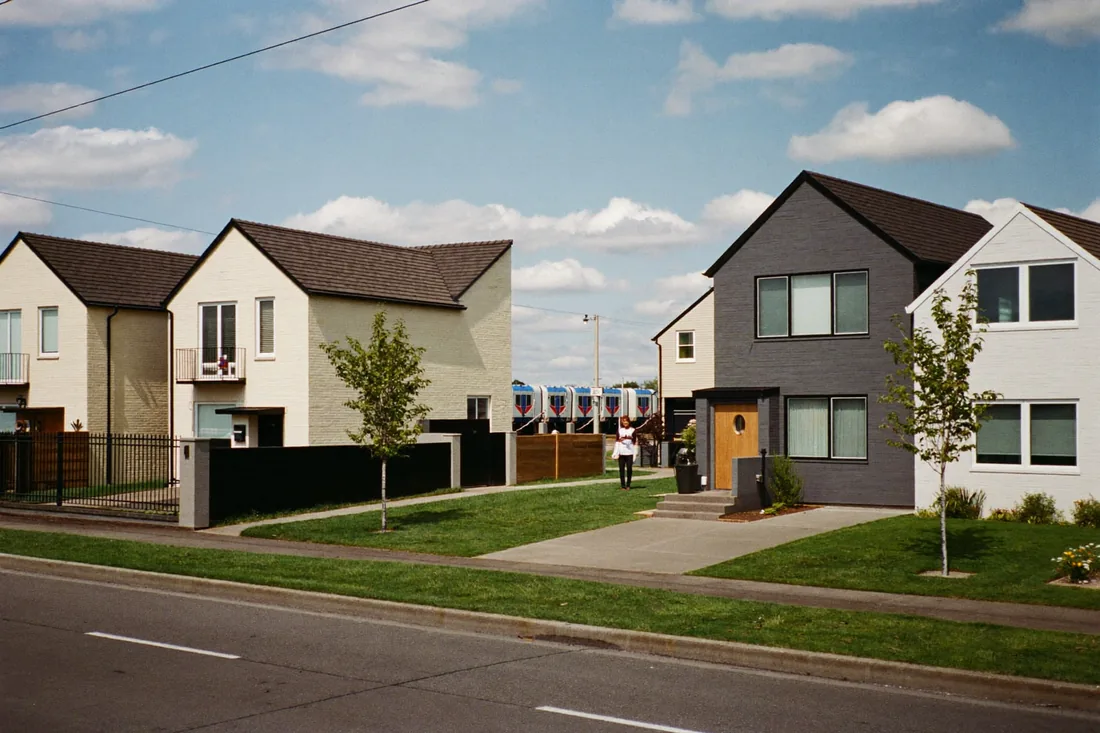
Under $600K, entry-level suburbs (and the stamp-duty sweet spot)
This bracket is the prize for first home buyers, because anything at or under $600,000 means $0 stamp duty in Victoria.
Melton (about $480K), 40km west. One of Melbourne's most affordable suburbs with a growing town centre, and rail electrification works are set to improve the CBD run.
Werribee (about $540K), 32km southwest. V/Line connected and growing fast, with new shopping, dining and recreation. Popular with young families for the mix of space and price.
Cranbourne (about $580K), 43km southeast. On the Cranbourne line with a recently upgraded town centre, a mix of new estates and established homes, and a strong community feel.
Pakenham (about $560K), 55km southeast. End of the Pakenham line. Very affordable, mostly newer estates, well connected by train and freeway despite the distance.
Tarneit (about $570K), 30km west. One of Australia's fastest-growing suburbs: modern homes, a young demographic, new schools and shopping centres, and close to future western rail upgrades.
$600K to $800K, mid-range suburbs
Point Cook (about $680K), 22km southwest. An established, well-regarded family suburb with good schools, parks and beach access. A little light on public transport, but strong on lifestyle.
Berwick (about $750K), 40km southeast. One of Melbourne's best outer suburbs: good schools including private options, a strong community, and the Pakenham/Cranbourne line.
Craigieburn (about $620K), 28km north. On the Craigieburn line with a major shopping centre and growing infrastructure. Good value for the distance, riding the northern corridor's development.
Sunbury (about $640K), 40km northwest. A semi-rural feel with a tight community, V/Line connected and increasingly folded into Melbourne's growth. Popular with families wanting space.
Mernda (about $650K), 30km northeast. End of the Mernda line. Modern estates with good amenities, and accessibility transformed by the relatively recent rail extension.
$800K+, inner-suburb value
Footscray (units about $450K, houses about $900K+), 5km west. Remarkable value for the proximity to the CBD, with a famous multicultural food scene, a university campus and a major transport hub. The units in particular are genuinely affordable and well located.
Brunswick (units about $500K, houses about $1M+), 6km north. Melbourne's cultural heartland, live music, cafes, Sydney Road. Units and apartments are the realistic entry point into one of the city's most desirable inner suburbs.
Preston (about $850K), 10km north. Rapidly gentrifying, with strong train access on the Mernda line, High Street's cafe culture and Northland nearby. One of the better-value inner-north options.
First home buyer grants VIC 2026
The biggest first home buyer grant in VIC for most Melbourne buyers isn't a cash grant at all, it's the stamp duty exemption, which can save you over $30,000. But there are several supports stacked on top, and used together they can be the difference between renting and owning. Here's what's actually available in 2026, checked against the official sources.
First Home Owner Grant (FHOG), $10,000
The FHOG is a $10,000 cash grant for first home buyers building or buying a brand-new home valued under $750,000 in Victoria. The catch: it only applies to new builds, house-and-land packages and off-the-plan apartments, not established homes. If you're buying an existing house in Footscray or Cranbourne, you won't get the FHOG, but you will get the far bigger stamp duty break below. The grant can go towards your deposit or settlement costs (State Revenue Office Victoria).
First home buyer stamp duty VIC, Melbourne's biggest saving
First home buyers in Victoria pay zero stamp duty on any home valued up to $600,000, a saving of up to $31,070. Between $600,001 and $750,000, a sliding-scale concession applies: you still save thousands, just less as the price climbs toward $750,000. Above $750,000 there's no first-home concession and you pay the full general rate.
What makes Victoria's break unusually generous is that it covers both new and established homes, unlike several other states where the equivalent exemption is limited to new builds. That's why so many first home buyers deliberately target the under-$600K bracket in Melbourne's outer and western suburbs: it turns a deposit-sized chunk of cash from "gone to the government" into "stays in your pocket". Work out your own figure with our stamp duty calculator, or check the official rates at the State Revenue Office.
The 5% Deposit Scheme (formerly the First Home Guarantee)
The Australian Government 5% Deposit Scheme (formerly the First Home Guarantee) lets you buy with a 5% deposit and no lenders mortgage insurance, with the federal government guaranteeing the rest. Two big changes landed on 1 October 2025 and still apply in 2026: there are no income caps and no cap on places, so every eligible first home buyer can use it. The property price cap for Melbourne and Geelong is $950,000 (Housing Australia).
That $950,000 cap matters more than people realise. At $950K the median Melbourne house is comfortably in reach of this scheme, and a 5% deposit on a $950K home is $47,500 rather than the $190,000 you'd need for a full 20% deposit. Skipping LMI alone can save you anywhere from $15,000 to $40,000 depending on the loan. See what you'd avoid with our LMI calculator. The 5% Deposit Map shows which Melbourne suburbs a 5% deposit unlocks.
Help to Buy, the shared-equity scheme
The Help to Buy scheme is the federal shared-equity programme where the government takes a stake in your home so you can buy with a much smaller deposit. It replaced Victoria's state-run Homebuyer Fund, which closed to new applicants on 10 September 2025 (existing participants are unaffected). Help to Buy went live nationally on 5 December 2025.
Under Help to Buy, the government contributes up to 40% of the price for a new home, or 30% for an existing home, and you need only a 2% deposit. Income is capped at $103,000 for singles and $165,000 for couples and single parents (from 1 July 2026, wage-indexed each year), and the Melbourne property cap is $950,000. The trade-off: the government owns its share, so when you sell (or buy them out), they get their percentage of the sale price back, including any growth. It's a powerful door-opener if your income fits the caps. Check whether you qualify with the eligibility checker, and browse all Victorian schemes in one place.
Find a Melbourne broker who knows VIC schemes
A broker who regularly works with the 5% Deposit Scheme, the federal Help to Buy programme and VIC stamp duty exemptions can save you tens of thousands, and tell you which combination you actually qualify for.
How to buy a house at auction in Melbourne, and how to win
Winning a Melbourne auction comes down to two things: being completely prepared before Saturday, and staying disciplined once the bidding starts. Most first home buyers lose two or three auctions before they win one. That's normal, not failure. Here's how to be ready and how to hold your nerve.
Before auction day:
- Get your finance sorted first. You need solid pre-approval before you bid. There's no "subject to finance" at auction, if you win, you're legally committed and the deposit is due that day
- Get and review the Section 32. Have your conveyancer go through the vendor's statement thoroughly before auction, covenants, overlays, owners corporation details and any restrictions
- Do your building and pest inspection. No cooling-off means no chance to inspect afterwards. Spend the money upfront
- Register to bid. You must register on the day with photo ID, and you'll be given a bidder number
On the day:
- Set your absolute maximum and write it on your hand if you have to. Auction fever is real and it will cost you $20,000 to $50,000 if you let it run. Decide your ceiling the night before, cold and calm
- Bid confidently. Strong, clear bids signal you're serious and can rattle weaker buyers
- Use odd numbers. If bidding moves in $10,000 steps, jump in with $11,000 or $6,000 increments. It breaks the rhythm and makes it harder for rivals to track where they sit
- Keep your face still. The auctioneer and the other bidders read body language. Stay calm no matter what your stomach is doing
- If you lose, you lose. There will be another house next Saturday. Walking away at your limit is a win, not a defeat
Once the hammer falls in your favour, you pay the deposit (usually 10%) on the spot and move to settlement. This is why the finance and inspection work has to be done first, there's no undo button. If you want the full step-by-step before you start attending, map it out with your buying journey.
First home buyer stamp duty costs in Melbourne
Here's what stamp duty looks like across common Melbourne price points, comparing the standard rate (what an investor or non-first-buyer pays) with the first home buyer outcome. The standard figures use the Victorian general rate published by the State Revenue Office.
| Property price | Standard stamp duty | First home buyer |
|---|---|---|
| $500,000 | $21,970 | $0 (exempt) |
| $600,000 | $31,070 | $0 (exempt) |
| $700,000 | $37,070 | Reduced (sliding-scale concession, use the calculator) |
| $800,000 | $43,070 | $43,070 (no concession above $750K) |
| $900,000 | $49,070 | $49,070 |
| $1,000,000 | $55,000 | $55,000 |
The first home buyer exemption on properties under $600,000 saves you up to $31,070, a deposit-sized sum. That's the single biggest reason so many first home buyers deliberately hunt in the under-$600K bracket out west and on the outer fringe. Between $600,001 and $750,000 a partial concession applies, so the exact first-home figure at $700,000 depends on the sliding scale rather than a round number, run your own through the official tool or our stamp duty calculator.
What buying in Melbourne actually costs (beyond the price)
The purchase price is only part of what you'll spend to get the keys. Budget for these upfront and ongoing costs so settlement day doesn't blindside you. Here's a realistic picture for a typical first home buyer in Melbourne in 2026.
| Cost | Typical range | When |
|---|---|---|
| Deposit | 2% (Help to Buy) to 20% of price | Upfront |
| Stamp duty | $0 under $600K (first home buyer); full rate above $750K | Within 30 days of settlement |
| Conveyancing / legal | $1,500 to $2,500 | Through the process |
| Building and pest inspection | $400 to $800 per property | Before you bid |
| Lenders mortgage insurance (LMI) | $0 with a scheme; otherwise often $15,000+ under 20% deposit | Added to loan at settlement |
| Loan and application fees | $0 to $1,000+ (varies by lender) | At settlement |
| Council rates and water | about $1,500 to $3,000 a year | Ongoing |
| Building insurance | about $1,000 to $2,500 a year | From the contract date |
The big swing factors are stamp duty and LMI, and both are exactly what the Victorian exemption and the 5% Deposit Scheme are designed to wipe out. Buy under $600K with a government-backed loan and you can erase two of the largest line items in one move. Map your numbers with the stamp duty calculator, the LMI calculator, and the deposit tracker to see how close you really are.
How much deposit do you need to buy in Melbourne?
The minimum deposit to buy in Melbourne can be as low as 2% through Help to Buy, or 5% through the 5% Deposit Scheme with no LMI, but Melbourne's higher prices mean those percentages are still real money in dollar terms. Here's how the main pathways compare.
| Pathway | Deposit on $700K | Deposit on $950K (scheme cap) |
|---|---|---|
| 5% Deposit Scheme (5%, no LMI) | $35,000 | $47,500 |
| Help to Buy (2% deposit, shared equity) | $14,000 | $19,000 |
| Bank loan 10% | $70,000 + LMI | $95,000 + LMI |
| Bank loan 20% | $140,000 | $190,000 |
The headline here is the $950,000 scheme cap, far more generous than the old $800,000 figure. It puts the median Melbourne house within reach of the 5% Deposit Scheme in a way it simply wasn't a couple of years ago. That said, targeting the right suburb still pays: buying in Cranbourne at $580K with the stamp duty exemption and the 5% guarantee saves you $31,000 in stamp duty plus $15,000 or more in LMI compared with a $900K inner-suburb purchase. Start tracking your deposit with the deposit tracker and pressure-test what you can borrow with the borrowing power calculator.
If your deposit is light and your income is healthy, a guarantor home loan is another route, no deposit minimum and no LMI, regardless of price, provided a family member can offer security.
See what you can actually afford in Melbourne
Our free calculator factors in your income, debts and deposit, so you can see whether you can reach the inner suburbs, or whether outer Melbourne is the smarter path.
How long does buying a house in Melbourne take?
From getting your finance ready to holding the keys, buying in Melbourne usually takes around four to eight months, though it swings a lot with how fast you find the right place. The bidding can be quick; the searching rarely is. Here's the rough shape of it:
- Finance and prep (2 to 6 weeks): pre-approval, work out your budget, confirm which schemes you qualify for
- Searching and offers (1 to 6 months): inspections, reviewing Section 32s, attending auctions or making offers. This is the part nobody can put a clock on, expect a few near-misses
- Under contract to settlement (30 to 60 days): formal loan approval, the conveyancer handles the legal transfer, and you arrange building insurance from the contract date
Settlement in Victoria typically runs 30 to 60 days, set out in the contract. The variable that matters most is how many Saturdays you spend chasing properties before one lands, so the more prepared your finance is, the faster you can pounce when the right house appears. The full sequence is laid out in your buying journey.
The Melbourne buying process, step by step
Buying in Melbourne follows a particular order because of the auction-heavy market and Victoria's legal requirements. Here's the sequence that keeps you out of trouble:
- Work out what you can afford. Use our borrowing power calculator and check which government schemes you qualify for
- Get pre-approved. Essential before auction day and a real advantage on private treaty sales. Start with our pre-approval guide
- Choose your suburbs and hit the opens. Go to as many inspections as you can to learn what your budget actually buys in different areas
- Request the Section 32. The vendor's statement is a legal requirement in VIC. Your conveyancer must review it before you bid or make an offer
- Book the building and pest inspection. Do it before auction, there's no chance after. On a private treaty sale, you can also include it as a condition
- Make your move. At auction: bid with discipline and stick to your limit. Private treaty: submit a written offer through the agent, ideally with conditions attached
- Finance approval. Your lender issues formal approval after valuing the property. For auction wins this has to happen fast, you're already committed
- Settlement. Typically 30 to 60 days in Victoria. Your conveyancer handles the legal transfer, and you take out building insurance from the contract date
Is it worth buying a house in Melbourne in 2026?
For a first home buyer with a stable income, Melbourne in 2026 is more worth it than the headline price tag suggests, precisely because the market has cooled while the support has expanded. Prices have been flat to slightly down, competition is softer than in Perth or Brisbane, and Victoria's stamp duty break plus the $950K scheme cap quietly do a lot of the heavy lifting. Here's how the three options stack up.
| Feature | Melbourne | Perth | Brisbane |
|---|---|---|---|
| Median house price | about $948K | about $900K (directional) | about $850K (directional) |
| Min deposit (scheme) | 2% (Help to Buy) / 5% (FHG) | 2% (Keystart) | 5% (FHG) |
| FHOG (new build) | $10,000 | $10,000 | $30,000 (continued in the 2026-27 QLD Budget) |
| Stamp duty exemption | $0 under $600K | $0 under $500K | $0 under $700K |
| Buying style | Auction-heavy | Private treaty | Private treaty |
| Job market | Diverse (finance, tech, health, education) | Mining, resources, health | Government, health, construction |
| Recent growth | Softer / flat | Strong | Strong |
One thing worth knowing: Queensland's First Home Owner Grant stays at $30,000 for eligible new-build contracts. The boosted amount was continued in the 2026-27 Queensland Budget handed down on 23 June 2026, so it no longer reverts to $15,000 (Queensland Revenue Office). If Brisbane's on your list and you're buying new, that's the most generous grant in the country. The Perth and Brisbane medians above are directional only; they move quickly and you should check current figures before deciding.
Honest assessment: Melbourne is harder to crack than Perth or Brisbane on raw affordability. But it has Australia's most diverse job market, world-class public transport, and a depth of culture the others can't match, and the softer recent run means less competition and more negotiating room than you'll find elsewhere right now. If you can target suburbs under $600K and capture the full stamp duty exemption, Melbourne becomes far more accessible than the median price makes it look. The system is built around the vendor, but the maths can still be made to work for you.
Frequently asked questions
How much do you need to buy a house in Melbourne?
You need enough for a deposit plus costs, and that depends heavily on the suburb. Melbourne's median house price is around $948,000 in 2026, but affordable outer suburbs run from roughly $480,000 to $600,000. With the 5% Deposit Scheme (formerly the First Home Guarantee, no income cap since October 2025), an entry-level home around $500K to $580K needs about $25,000 to $30,000 saved, with no LMI. The federal Help to Buy scheme can get eligible buyers in with just a 2% deposit. Use our free borrowing power calculator to see what you can borrow on your income.
Is it worth buying a house in Melbourne in 2026?
For many first home buyers, yes, Melbourne in 2026 offers a rare combination of a cooled market and expanded support. Price growth has been softer than Perth or Brisbane and even dipped slightly through early 2026, which means less competition and more negotiating power. Outer suburbs like Melton (about $480K) and Werribee (about $540K) offer real value, and the stamp duty exemption under $600K plus the federal Help to Buy scheme make entry more achievable than the median headline suggests. The inner suburbs stay expensive, so the value play is targeting the right suburb rather than the median.
Can I avoid stamp duty in Melbourne?
Yes, first home buyers in Victoria pay zero stamp duty on a home valued up to $600,000, saving up to $31,070. Between $600,001 and $750,000 a sliding-scale concession applies, so you still save thousands. Crucially, this covers both new and established homes, making it one of the most generous first-home stamp duty breaks in Australia. To wipe out stamp duty entirely, target a property at or under $600,000, very doable in Melbourne's outer and western suburbs.
Should I buy at auction or private sale in Melbourne?
The key difference is that auctions have no cooling-off period, while private sales give you three clear business days to change your mind. At auction you must have unconditional finance and your building and pest inspection done before you bid, because the moment the hammer falls you're legally committed. Private treaty sales let you attach conditions like "subject to finance" and offer that cooling-off window. If you're new to buying, private sales are generally less stressful, but in Melbourne you'll often have no choice, since most inner and middle-ring houses sell at auction. A good broker can help you prepare for either.
Is there a cooling-off period at a Melbourne auction?
No. There is no cooling-off period when you buy at auction in Victoria, and the same applies within three clear business days before or after an auction, or when you buy from an agent's office on the day of a scheduled auction. The three-clear-business-day cooling-off period (where you forfeit 0.2% of the price, or $100, whichever is greater) only applies to private treaty sales. This is why finance and inspections must be sorted before you bid. Once the hammer falls, you cannot walk away (Consumer Affairs Victoria).
Can I make an offer before a Melbourne auction?
Yes, and it's often the smartest move for a first home buyer. A pre-auction offer is the only way to attach conditions like "subject to finance" or "subject to building inspection" to a property that's heading to auction, because auction sales themselves are unconditional. In a softer market, plenty of vendors accept a strong pre-auction offer rather than risk their home passing in on a quiet Saturday. Put it in writing through the agent from the Wednesday before auction, have your conveyancer ready to review the contract quickly, and know your walk-away point before you start.
What is a Section 32 in Victoria?
A Section 32 is the vendor's statement that every Victorian seller must give a buyer before sale, disclosing anything that affects the property, covenants, easements, planning overlays, owners corporation details, building permits, and outstanding rates or notices. It's named for the relevant section of the Sale of Land Act 1962. Have your conveyancer review it before you bid or sign, because issues like an unpermitted extension or a restrictive covenant become your problem the moment you settle.
What salary do you need to buy a house in Melbourne?
You'd need a household income of around $145,000 a year to comfortably afford Melbourne's median house, according to Canstar's May 2026 analysis, which assumes a 20% deposit and keeps repayments under 30% of gross income. Buy further out or use a low-deposit government scheme and that figure drops substantially: a $580,000 outer-suburb house needs far less. Check your own position with our borrowing power calculator.


