Your first kitchen doesn't need 50 gadgets. It needs 15 good ones. Here's exactly what to buy, what to skip, and where to save money without sacrificing quality.
When you move into your first home, there's this overwhelming urge to buy a 20-piece cookware set, a knife block with 14 knives, a stand mixer, a bread maker, and a spiraliser. Don't. We did that, and six months later we were using exactly four items: one frying pan, one saucepan, one chef's knife, and a chopping board. Everything else sat in cupboards collecting dust.
Your first kitchen needs about 15 well-chosen items. That's it. With those 15 things you can cook 95% of meals, and you'll spend $200-$400 instead of $1,000+. Here's exactly what to buy, what to skip, and where the money is worth spending.
The "Starter Kitchen Set" Myth
Walk into any homewares store and they'll try to sell you a "starter kitchen bundle" — matching cookware set, knife block, utensil set, and maybe a small appliance thrown in. These bundles look great value on paper but they're almost always a bad deal. Here's why:
- Most sets include items you'll never use: A 10-piece cookware set includes a 14cm saucepan (too small for anything useful), a milk pan (who heats milk in a pan?), and specialty lids you'll lose within a month.
- Quality is averaged down: To hit a bundle price point, manufacturers use thinner materials across all pieces. You're better off buying 3-4 quality individual pieces than 10 mediocre ones.
- Knife blocks are a waste: A knife block with 8 knives sounds impressive, but you'll use two of them — the chef's knife and the paring knife. The bread knife, the boning knife, the santoku? They'll sit in the block untouched for years.
Instead, buy individual pieces based on what you'll actually use. You'll spend less, get better quality, and have less clutter in your kitchen.
Must-Have Cookware — The Core Four
These four items will handle 95% of your cooking. Start with these and add specialist pieces later as your cooking skills develop.
1. Non-Stick Frying Pan (28cm) — $30-$80
Your most-used item. A 28cm (11-inch) non-stick frying pan handles eggs, stir-fries, chicken, steaks, pancakes, and just about everything else. Don't go smaller — 28cm feeds two people comfortably with room to toss food without spilling.
Budget pick: Kmart Anko Stone Frying Pan (~$20). Genuinely good non-stick for the price, though it'll need replacing every 12-18 months.
Our pick: Tefal Unlimited Frypan 28cm (~$60). The titanium non-stick coating is significantly more durable than budget options and handles higher heat. It'll last 3-4 years with proper care. Check price on Amazon AU →
Upgrade pick: Scanpan Classic 28cm (~$120). Danish-made, PFOA-free ceramic titanium coating, oven safe to 260°C, 10-year warranty. Buy this if you want one pan for a decade. Check price on Amazon AU →
2. Medium Saucepan with Lid (20cm) — $25-$60
A 20cm (3-litre) saucepan handles pasta, rice, sauces, soups, boiled eggs, and steamed vegetables. Get one with a glass lid so you can see what's cooking without lifting it and losing heat.
Our pick: Tefal Ingenio 20cm saucepan (~$40). Good quality stainless steel, dishwasher safe, and the removable handle means it stores flat. Check price on Amazon AU →
3. Large Stockpot with Lid (24cm / 7L) — $30-$60
You won't use this daily, but when you need it, nothing else works. Batch cooking, big pasta nights, soups, stews, stocks, and boiling corn — a 7-litre stockpot is essential for anything that involves a lot of liquid. Stainless steel is the way to go here — it lasts forever, it's dishwasher safe, and it handles high heat without issues.
Our pick: Kmart Anko Stainless Steel Stockpot 7L (~$25). For a stockpot, there's genuinely no reason to spend more. It's stainless steel, it has a lid, it does the job. Browse stockpots on Amazon AU →
4. Baking Tray — $10-$25
A flat baking tray handles roast vegetables, oven chips, baked chicken, sheet-pan dinners, and cookies. Get a heavy-gauge one that won't warp in the oven — thin trays buckle and your food slides to one side.
Browse baking trays on Amazon AU →
Must-Have Knives — Two Is Enough
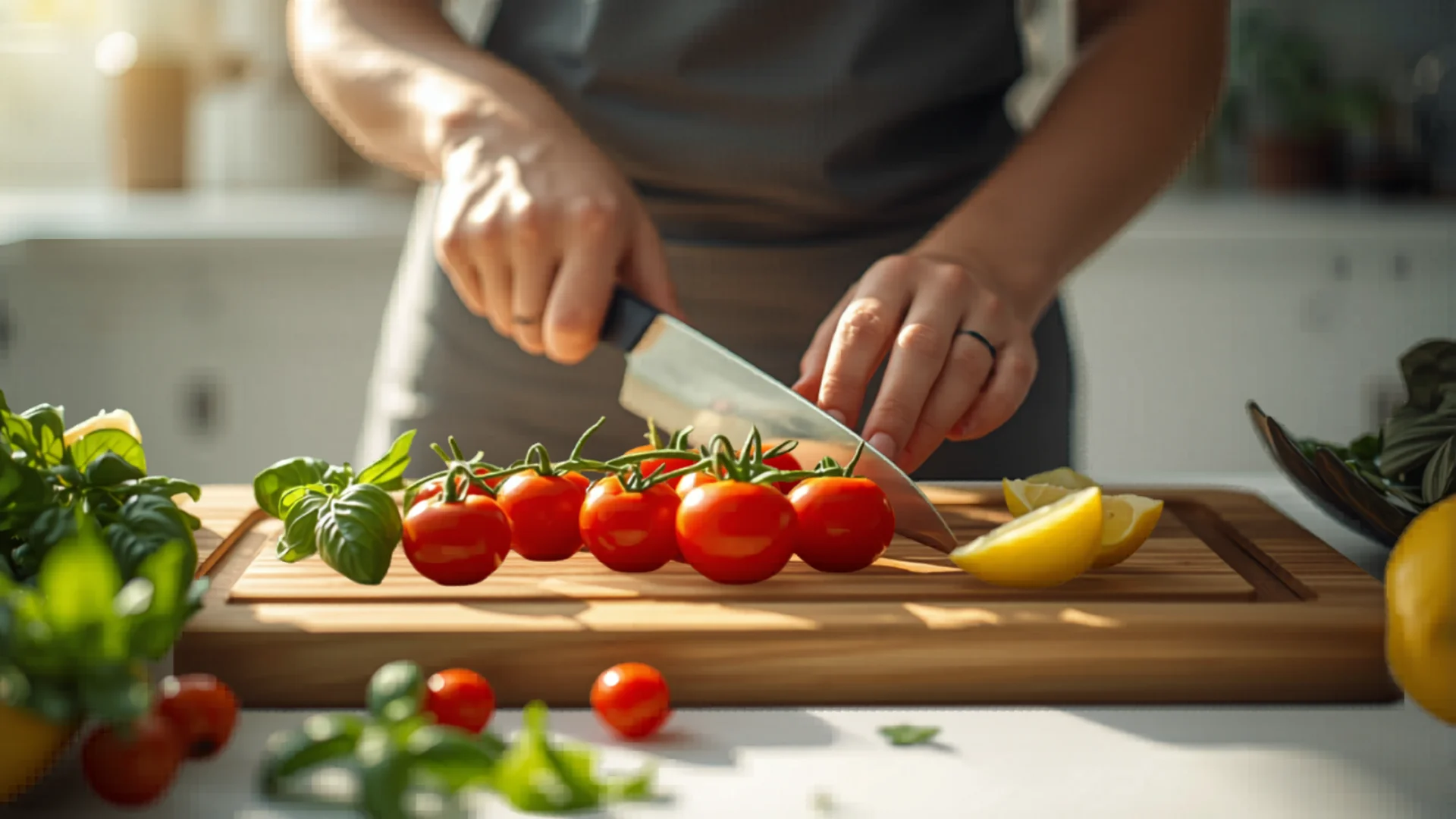
Ignore the 8-piece knife blocks. You need exactly two knives to start with, and they'll handle every cutting task in a home kitchen.
1. Chef's Knife (20cm) — $30-$80
The chef's knife does 80% of all cutting. Dicing onions, slicing chicken, chopping vegetables, mincing garlic — this is your workhorse. A 20cm (8-inch) blade is the standard size and suits most hand sizes.
Best value in Australia: Victorinox Fibrox Pro 20cm Chef's Knife (~$45). This knife is recommended by professional chefs, culinary schools, and every kitchen equipment review site. The blade holds its edge well, the handle is comfortable, and at under $50 it's absurdly good value. Check price on Amazon AU →
Upgrade pick: Wusthof Pro 20cm Chef's Knife (~$80). German steel, heavier blade that's satisfying to use, excellent edge retention. The step up from Victorinox if you enjoy cooking and want something that feels premium. Check price on Amazon AU →
2. Paring Knife (9cm) — $10-$25
For anything too small or fiddly for a chef's knife: peeling fruit, deveining prawns, hulling strawberries, slicing garlic. A 9cm paring knife is the perfect companion to your chef's knife.
Our pick: Victorinox Paring Knife 10cm (~$12). Same great quality as their chef's knife, costs almost nothing. Check price on Amazon AU →
Knife care tip: Get a basic knife sharpener or honing steel ($15-$20) and use it every few weeks. A sharp knife is safer than a dull one — dull knives slip and cause cuts. Browse sharpeners →
These are the items you'll reach for daily. Don't buy a 25-piece utensil set — buy these individually:
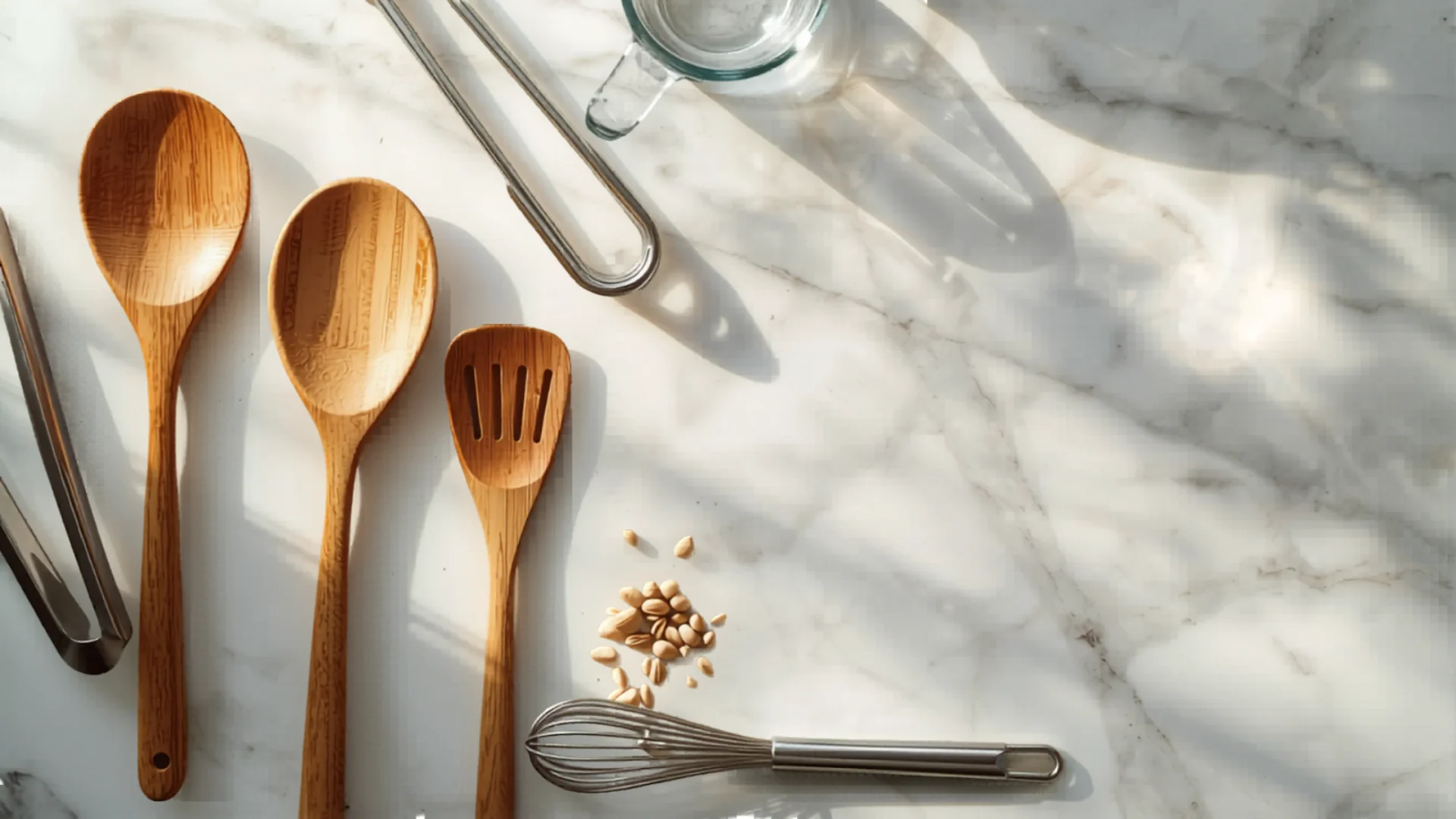
- Wooden spoon (x2): For stirring anything and everything. Silicone is fine too, but wood feels nicer. $5-$10. Browse →
- Silicone spatula: For scraping bowls, folding mixtures, and flipping eggs. $5-$10. Browse →
- Tongs (silicone-tipped): For turning meat, tossing pasta, serving salad. The most versatile utensil you'll own. $8-$15. Browse →
- Colander: For draining pasta, washing vegetables, and rinsing rice. Stainless steel lasts longer than plastic. $10-$20. Browse →
- Chopping boards (x2): One for raw meat, one for everything else. Colour-code them so you never cross-contaminate. Plastic is easier to sanitise than wood. $10-$20 for a set. Browse →
- Mixing bowls (set of 3): Nesting stainless steel bowls take up minimal space and last forever. $15-$25. Browse →
- Measuring cups and spoons: Essential for following recipes. $8-$15 for a complete set. Browse →
- Can opener: You will need this on day one and you will forget to buy it. $5-$10.
- Vegetable peeler: A Y-peeler is faster and easier than the traditional straight kind. $5-$10. Browse →
Must-Have Small Appliances
Three appliances. That's all you need to start. Resist the urge to fill every power point on your bench.
1. Electric Kettle — $20-$50
Non-negotiable. You'll use this multiple times a day. Any basic stainless steel kettle works fine. If you want to upgrade, a variable temperature kettle ($50-$80) is great for tea and pour-over coffee. Browse kettles on Amazon AU →
2. Toaster — $25-$50
A 2-slice toaster is enough for most couples. 4-slice if you have a family or love entertaining. Don't overthink this one — a basic toaster is a basic toaster. Browse toasters on Amazon AU →
3. Your Wildcard — Air Fryer OR Slow Cooker
Your third appliance depends on your cooking style:
- Air fryer if you like quick weeknight meals, crispy food, and want to save on oven energy costs. See our full air fryer guide.
- Slow cooker if you prefer set-and-forget meals, batch cooking, and winter stews. A basic slow cooker costs $30-$60 and produces incredible results with minimal effort. Browse slow cookers →
Buy whichever matches your lifestyle. You can always add the other one later.
What NOT to Buy (Yet)
These are all great appliances — for people who know they'll use them. For a first kitchen, skip them until you've lived in your home for at least 6 months and understand your actual cooking habits:
- Stand mixer: Amazing for baking, unnecessary if you don't bake regularly. $200-$600 gathering dust on your bench. Wait until you've baked at least 10 times with a $5 hand whisk before upgrading.
- Bread maker: You'll use it enthusiastically for 3 weeks and then never again. Almost everyone we've spoken to says the same thing.
- Pasta maker: Fun for a dinner party, not a weeknight essential. Buy one after you've hand-made pasta at least twice and decided you enjoy it.
- Juicer: Takes 20 minutes to clean for 30 seconds of juice. Buy a blender instead if you want smoothies.
- Waffle iron: You'll use it twice a year. Not worth the bench or cupboard space in a first home.
- Thermomix: Incredible machine, $2,500 price tag. Not for a first kitchen. Wait until you're a confident cook and have the budget.
Budget Breakdown — Complete First Kitchen
- Cookware (pan, saucepan, stockpot, baking tray): $80-$200
- Knives (chef's + paring): $40-$100
- Utensils and tools: $50-$100
- Small appliances (kettle, toaster, wildcard): $80-$150
- Total: $250-$550
That's a complete, functional kitchen for under $550. Compare that to the $1,200 "starter bundle" at a homewares store and you'll see why buying smart beats buying sets.
Care Tips — Making Your Kitchen Items Last
Good kitchen equipment lasts years if you look after it. Here are the care tips that actually matter:
- Non-stick pans: Never use metal utensils on non-stick surfaces — they scratch the coating and it starts flaking into your food. Use wooden or silicone utensils only. Don't stack non-stick pans without a cloth between them. Hand wash if possible — dishwashers degrade non-stick coatings faster.
- Knives: Never put good knives in the dishwasher — the harsh detergent and jostling dulls the blade fast. Hand wash, dry immediately, and store in a knife guard or magnetic strip. Sharpen with a honing steel every few uses and get a proper sharpening once or twice a year.
- Stainless steel cookware: Stainless steel is tougher — it can go in the dishwasher and handles metal utensils. If food sticks, soak in warm soapy water for 30 minutes before scrubbing. Bar Keepers Friend ($5 from Coles) removes any staining or discolouration.
- Chopping boards: Plastic boards can go in the dishwasher. Wooden boards should be hand washed and oiled with food-grade mineral oil every few months to prevent cracking. Replace any board that has deep grooves — bacteria hides in the cuts.
Frequently Asked Questions
What pots and pans do I need for a first home?
You need exactly four pieces to start: one 28cm non-stick frying pan (~$40-$60), one 20cm saucepan with lid (~$25-$40), one large stockpot (~$25-$30), and one baking tray (~$10-$15). These handle 95% of home cooking. Skip the 10-piece sets — you'll use 3-4 pieces and the rest will sit in the cupboard. Buy quality individual pieces from brands like Tefal (mid-range) or Kmart Anko (budget) rather than a matched set.
What's the best budget knife set in Australia?
Don't buy a set — buy two individual knives. The Victorinox Fibrox Pro 20cm Chef's Knife (~$45) is recommended by professional chefs worldwide and is widely considered the best value kitchen knife available. Pair it with a Victorinox Paring Knife (~$12) and you have every knife you need for under $60. This combination outperforms most $100-$200 knife block sets because the blade quality is genuinely superior.
Do I need a stand mixer?
Not for a first kitchen. A stand mixer (like a KitchenAid or Kenwood) costs $200-$600 and is genuinely useful only if you bake regularly — at least twice a month. For occasional baking, a $5 hand whisk and a $15 set of mixing bowls does the job. If you find yourself baking frequently after 6 months in your new home, then invest in a stand mixer. Until then, that money is better spent on quality cookware and knives that you'll use every single day.