Best Smart Locks in Australia 2026: What Actually Fits Your Door
By Anish Puri·12 May 2026·Last updated 3 October 2026·14 min read
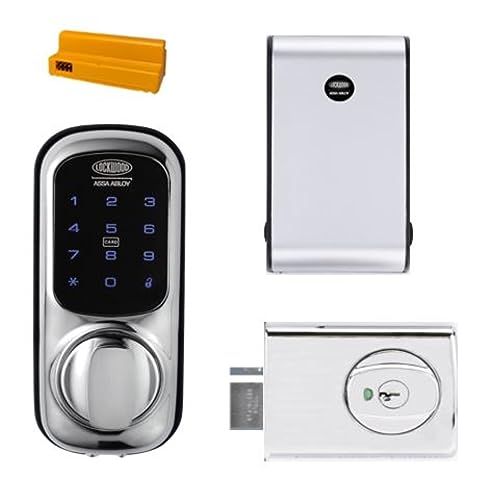
Best overall: Lockwood 001 Touch Plus. The Lockwood 001 Touch Plus is our pick for a compatible timber deadlatch door because the Amazon AU listing describes a retrofit for an existing 001 Deadlatch. The guide also compares the Lockly Secure Pro Zeno, Yale Keyless Connected, Schlage Encode, Aqara U100 and Yale ByYou Pro by Australian door format.
Prices checked 5 October 2026 on Amazon AU and subject to change.
Best overall: Lockwood 001 Touch Plus. The Lockwood 001 Touch Plus is our pick for a compatible timber deadlatch door because the Amazon AU listing describes a retrofit for an existing 001 Deadlatch, and ASSA ABLOY Australia lists a 25 year mechanical warranty.
For a deadbolt door, compare the Lockly Secure Pro Zeno: its Amazon AU listing describes built-in Wi-Fi, fingerprint entry and Apple Home access. Start with your existing hardware before choosing between a digital door lock, a keypad lock or phone-based entry.
Updated 3 October 2026. Listing ratings, Australian maker information and comparison bands reflect that check.
TL;DR Quick Overview
The Lockwood 001 Touch Plus is our pick for a compatible timber deadlatch door because the Amazon AU listing describes a retrofit for an existing 001 Deadlatch. The listing specifies timber doors 32 to 60 mm thick, while ASSA ABLOY Australia lists compatibility with most 60 mm backset deadlatches. Confirm the existing lock and frame preparation before arranging a replacement.
For a compatible deadbolt door, the Lockly Secure Pro Zeno is the option with Wi-Fi built in. Its Amazon AU listing describes built-in Wi-Fi, remote lock and unlock, fingerprint and keypad entry, and Apple Home access. Lockly Australia lists doors 35 to 80 mm thick and an adjustable 60 mm or 70 mm backset. Those dimensions are a starting point for a fit check, rather than a promise that the existing holes will suit.
The guide also covers the Yale Keyless Connected for 60 mm nightlatch doors and the Schlage Encode for US-style bored deadbolts, both sold through the Amazon Global Store from the UK and the US at the 3 October 2026 check, plus the Aqara U100 deadbolt and the Yale ByYou Pro mortice lock.
For connectivity, ASSA ABLOY Australia lists the Lockwood Wi-Fi bridge as sold separately; the Lockly Amazon AU listing describes Wi-Fi built into the lock. For power, the Lockwood listing specifies four AA batteries, and Lockly Australia specifies four AA alkaline batteries. Plan battery changes separately from your internet connection.
Ask a locksmith to identify the door format if you are unsure. A deadlatch, a separate deadbolt, a lever entrance lock and a mortice lock call for different installation questions. Choose the physical fit first, then compare access, connected features and the maker's warranty wording.
Compare-at-a-Glance
Model
Lock type and Australian door fit
Connectivity and access
Battery
Band
Lockwood 001 Touch Plus
Amazon AU lists a deadlatch retrofit for timber doors 32 to 60 mm thick; ASSA ABLOY Australia lists compatibility with most 60 mm backset deadlatches.
Amazon AU lists Yale Home app access and a mechanical key; ASSA ABLOY Australia lists the Wi-Fi bridge as sold separately.
Amazon AU lists four AA batteries, included.
Under $350
Yale Keyless Connected
Amazon listing: most timber doors with a 60 mm backset nightlatch (nightlatch not included).
Amazon listing: PIN, key card and key tag; app and remote fob with Yale modules sold separately. Sold by Amazon UK through the Global Store.
Amazon listing: four AA, included, with a 9V backup connection.
Under $160
Schlage Encode
Amazon listing: US-style bored deadbolt, doors about 35 to 44 mm, 60 or 70 mm backset.
Amazon listing: built-in Wi-Fi, touchscreen keypad, up to 100 codes, Alexa and Google Home. Sold by Amazon US through the Global Store.
Amazon listing: no hardwiring required.
Under $400
Lockly Secure Pro Zeno
Amazon AU lists a deadbolt; Lockly Australia lists doors 35 to 80 mm thick and an adjustable 60 mm or 70 mm backset.
Amazon AU lists built-in Wi-Fi, fingerprint, keypad, Apple Home, Alexa and Google Assistant support.
Lockly Australia lists four AA alkaline batteries.
Under $500
Aqara Smart Lock U100
Aqara Australia: standard deadbolt, 60 or 70 mm backset, doors 35 to 55 mm; 54 mm door hole per the listing.
Amazon AU listing: fingerprint, keypad and Apple Home Key; a Zigbee 3.0 hub for remote control.
Amazon AU listing: four AA, included, and USB-C emergency power.
Under $300
Yale ByYou Pro
ASSA ABLOY Australia: 60 mm backset mortice lock for doors 40 to 80 mm thick.
Amazon AU listing: fingerprint, PIN, RFID key tag, Yale Home app, Apple Home Key and a backup key.
ASSA ABLOY Australia: four AA alkaline.
Under $700
Prices checked 3 October 2026; bands reflect that check.
Will it fit an Australian door?
Start with the lock already on your door. Identify whether you have a lever entrance lock, a nightlatch or deadlatch, a separate bored deadbolt, or a mortice lock. These names describe the hardware arrangement, so an attractive app or entry method does not settle the fit question.
Lever entrance locks
A lever entrance lock combines a handle with a locking function. Identify how that handle is fitted and which parts operate the latch before choosing replacement hardware. Do not assume any featured lock replaces the handle just because its door thickness range matches your measurement.
Nightlatches and deadlatches
For an existing Lockwood deadlatch, compare the exact hardware with the replacement requirements. The Amazon AU listing describes the Lockwood 001 Touch Plus as a retrofit for an existing 001 Deadlatch. ASSA ABLOY Australia also describes upgrades from the Lockwood 001 and 002 deadlatches and the 100, 201, 211 and 213 nightlatches, and says additional fixing holes and modifications to the door frame are required for those upgrades. The Yale Keyless Connected listing says it fits most timber doors with a 60 mm backset nightlatch, with the nightlatch not included.
Bored deadbolts
A bored deadbolt is a separate lock fitted through an opening in the door. The Lockly Secure Pro Zeno Amazon AU listing identifies it as a deadbolt, while Lockly Australia lists an adjustable 60 mm or 70 mm backset and doors 35 to 80 mm thick. The Schlage Encode and Aqara U100 listings describe US-style bored deadbolts for a 60 or 70 mm backset, in doors about 35 to 44 mm and 35 to 55 mm thick respectively. Check the hole preparation, clearance and frame alignment alongside those measurements.
Mortice locks
A mortice lock has its body recessed into the door edge. Have a locksmith identify the existing body and replacement preparation before choosing a different format. A compatible backset alone does not answer whether the lock body, handle and frame arrangements match. The Yale ByYou Pro is the mortice lock on this page: ASSA ABLOY Australia lists a 60 mm backset for doors 40 to 80 mm thick.
Measure before choosing keyless entry
Measure the door thickness and backset, the distance from the door edge to the centre of the lock opening. Record the existing holes and photograph both sides of the door and the frame. Compare those details with the exact model's installation requirements, then resolve any uncertain measurements with the installer.
You will also see the terms digital door lock and keyless entry. Use them to describe the experience you want, then ask which access methods the exact model supports. Door format, dimensions and frame preparation still decide whether the proposed hardware belongs on your Australian door.
How we evaluated smart locks
This guide draws on the Amazon AU listings and the Australian maker information from ASSA ABLOY Australia, Lockly Australia and Aqara's Australian store, checked on 3 October 2026. Door fit comes first, followed by access methods, connectivity, battery information, warranty wording and the published Australian mechanical lockset standard statement.
The comparison separates documented features from decisions you need to make about your own door. A stated thickness range or backset is useful information, but the existing holes, handle arrangement and frame still need assessment. Likewise, an app feature and a remotely connected feature should be considered separately when planning accessories.
How we picked
At the 3 October 2026 check, the Lockwood, Lockly and Yale ByYou Pro listings showed Amazon AU as shipper and seller without an import notice, and the Aqara U100 was sold by Aqara AU and shipped by Amazon. Their Australian maker pages supplied the fit and warranty information used here. The Amazon AU listings supplied the dated ratings, which are context for the comparison rather than the sole basis for choosing a lock.
The Yale Keyless Connected and Schlage Encode listings were sold and shipped by Amazon UK and Amazon US respectively through the Amazon Global Store at that check. Their import notices say the products may differ from local products and that the manufacturer warranty may not apply but you may have other rights under law, so we describe both with those terms.
The Yale ByYou Pro smart mortise lock covers a different door class: Amazon AU and ASSA ABLOY Australia describe a 60 mm backset mortice lock for doors 40 to 80 mm thick, and its listing had only a few ratings at the check.
For the Aqara U100, sold by Aqara AU, we did not find an Australian warranty statement on Aqara's Australian store at the check.
Mains EESS registration does not apply to these battery-powered locks. Instead, we checked the Amazon AU buy box and import notices, the maker's Australian page and warranty, and AS4145.2 conformance for the Lockwood as ASSA ABLOY Australia states it. The supplier EESS register was also checked; no registration was needed or found for the locks themselves.
Keep those checks separate when buying. Local listing information, a maker warranty and a mechanical standard statement answer different questions, and none removes the need to confirm that the lock suits the door.
Best overall: Lockwood 001 Touch Plus
The Lockwood 001 Touch Plus recommendation centres on its deadlatch fit. The Amazon AU listing describes replacement of an existing 001 Deadlatch and suitability for timber doors 32 to 60 mm thick. ASSA ABLOY Australia lists compatibility with most 60 mm backset deadlatches, so check the existing hardware rather than treating the retrofit description as universal.
Who it is for
Choose this option to investigate a connected upgrade for compatible timber deadlatch hardware. The Amazon AU listing describes use as a standalone lock or with an additional latch and lever or knob. Ask your installer which arrangement suits the existing handle and how the door will operate after the change.
Access and connected features
The Amazon AU listing says the Yale Home app can lock and unlock the door, grant access and track visitor access. It also lists Auto Unlock and DoorSense, which reports whether the door is open or closed. ASSA ABLOY Australia lists the Wi-Fi bridge as sold separately, so include that accessory question when planning connected use.
The Amazon AU listing describes mechanical-key deadlocking that locks from both inside and outside. Ask the installer to explain that mode and how household members will operate it before relying on it. Keep the mechanical key accessible for backup entry.
Pros and cons
Pros: the Amazon AU listing describes a deadlatch retrofit, Yale Home app access and visitor tracking; ASSA ABLOY Australia publishes an AS4145.2-2008 conformance statement. These are useful details when comparing a replacement for existing deadlatch hardware.
Cons: ASSA ABLOY Australia lists the Wi-Fi bridge as sold separately and says additional fixing holes and modifications to the door frame are required for the upgrades it lists. Include those requirements in your installation plan.
Battery and warranty
The Amazon AU listing specifies four AA batteries, included, while ASSA ABLOY Australia lists battery life of one year. Treat the maker's duration as a planning reference and keep a replacement routine. ASSA ABLOY Australia lists a 25 year mechanical warranty.
The Amazon AU listing records 4.0 out of 5 from 21 ratings at the 3 October 2026 check.
Top pick
LOCKWOOD
Lockwood 001 Touch Plus Smart Deadlatch
4.0(21)
The Amazon AU listing describes a deadlatch retrofit with Yale Home app access and visitor tracking. Door format and the mechanical warranty that ASSA ABLOY Australia lists guide the recommendation. Sold and shipped by Amazon AU at the 3 October 2026 check.
$330.12$429.00
Save 23%
Amazon.com.au price as of 11:01 am AEDT, subject to change
As an Amazon Associate, NestPath earns from qualifying purchases.
For a 60 mm nightlatch door with a keypad: Yale Keyless Connected
The Yale Keyless Connected addresses a familiar Australian door setup: its Amazon AU listing says it fits most timber doors with a 60 mm backset nightlatch, with the nightlatch not included. For everyday entry it offers PIN codes, a key card and a key tag, with an illuminated keypad and a thumbturn, and the listing adds a remote fob or the smartphone app when used with the Yale Access Module and the Yale Home app.
The listing describes up to 20 unique PIN codes, 24 hour codes for visitors and an 80dB internal tamper alarm, and the lock disables access for a minute after three incorrect codes. Treat this as a keypad lock first. App access uses the Yale Access module and the remote fob the key fob module; remote access away from home also needs a Yale Connect Wi-Fi Bridge, per Yale. Each is sold separately.
Also great
Yale
Yale Keyless Connected Smart Lock
4.2(1,049)
A keypad lock for 60 mm backset nightlatch doors with PIN, card and tag entry, per the listing. At the 3 October 2026 check it was sold by Amazon UK through the Amazon Global Store; import terms differ and manufacturer warranty may not apply.
$155.75
Amazon.com.au price as of 11:01 am AEDT, subject to change
As an Amazon Associate, NestPath earns from qualifying purchases.
Power is four AA batteries, included, with a 9V battery connection as an override backup, per the listing. It is an import: at the 3 October 2026 check the listing was sold and shipped by Amazon UK through the Amazon Global Store, and its notice says UK imports may differ from local products, plugs may differ and the manufacturer warranty may not apply but you may have other rights under law. Choose it for a compatible nightlatch door and its physical entry options, and confirm the existing hardware before assuming a like-for-like replacement.
For a bored-deadbolt door: Schlage Encode
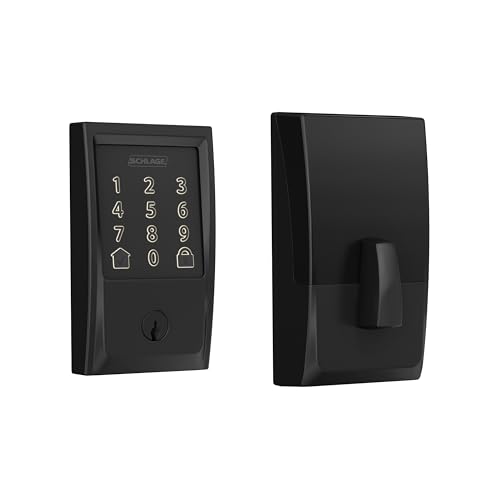
The Schlage Encode suits a door already prepared for a standard bored deadbolt. Its Amazon AU listing describes built-in Wi-Fi with no hub, a fingerprint-resistant touchscreen keypad, up to 100 access codes, lock history and notifications in the Schlage Home app, Alexa and Google Home support, auto-lock, and a built-in alarm for door movement and forced entry attempts. The listing states that it is certified to the highest residential Security, Durability and Finish rating by BHMA.
Runner-up
SCHLAGE
Schlage Encode Smart Wi-Fi Deadbolt
4.2(3,510)
A US-style bored deadbolt with built-in Wi-Fi and a touchscreen keypad, per the listing; not a drop-in swap for a typical Australian nightlatch. At the 3 October 2026 check it was sold by Amazon US through the Amazon Global Store; import terms differ and manufacturer warranty may not apply.
$368.46
Amazon.com.au price as of 05:00 am AEDT, subject to change
As an Amazon Associate, NestPath earns from qualifying purchases.
The fit caveat matters: this is a US-style bored deadbolt for doors 1 3/8 to 1 3/4 inches thick (about 35 to 44 mm) with a 2 3/8 or 2 3/4 inch backset (about 60 mm or 70 mm), per the listing. It is not a drop-in swap for a typical Australian nightlatch or mortice lock. At the 3 October 2026 check the listing was sold and shipped by Amazon US through the Amazon Global Store, and its notice says US imports may differ from local products and the manufacturer warranty may not apply but you may have other rights under law.
For a deadbolt door: Lockly Secure Pro Zeno
For a compatible deadbolt door, the Lockly Secure Pro Zeno offers the connected features described in its Amazon AU listing: built-in Wi-Fi, remote lock and unlock, and notifications when the door is accessed. Lockly Australia lists doors 35 to 80 mm thick and an adjustable 60 mm or 70 mm backset. Confirm the door preparation before comparing the access options.
Who it is for
Consider this option when you want a deadbolt with built-in Wi-Fi and Apple access: the Amazon AU listing describes those features, including iPhone and Apple Watch entry through Apple Home. Choose it around those documented functions and the door measurements, rather than the idea that a connected deadbolt replaces any existing lock.
Access and ecosystems
The Amazon AU listing describes a fingerprint sensor and keypad entry, and lists Alexa, Google Assistant and Apple HomeKit compatibility. Decide which entry method household members will use and which connected features you want to set up. Check the instructions for the exact platform before relying on a particular remote or voice function.
Pros and cons
Pros: the Amazon AU listing describes built-in Wi-Fi, remote access, fingerprint entry and Apple device access. Lockly Australia's adjustable backset information gives you two dimensions to compare with the existing deadbolt preparation.
Cons: Lockly Australia's fit information calls for doors 35 to 80 mm thick and a 60 mm or 70 mm backset, so a door outside those dimensions needs a different installation plan. Its AA alkaline battery requirement, as listed by Lockly Australia, also belongs in the household maintenance routine.
Battery and warranty
Lockly Australia specifies four AA alkaline batteries. Lockly Australia states: "LOCKLY extends a limited lifetime mechanical and finish warranty of up to five years and a limited electronics warranty of up to 2 years". Read that wording as the maker presents it when comparing warranty terms.
The Amazon AU listing records 4.9 out of 5 from 29 ratings at the 3 October 2026 check.
Also great
Lockly
Lockly Secure Pro Zeno Series
4.9(29)
The Amazon AU listing describes a deadbolt with built-in Wi-Fi, fingerprint entry and Apple Home access. Lockly Australia's published door dimensions guide the fit check before choosing it. Sold and shipped by Amazon AU at the 3 October 2026 check.
$499.00
Amazon.com.au price as of 11:01 am AEDT, subject to change
As an Amazon Associate, NestPath earns from qualifying purchases.
What to look for in a smart lock
Installation type: deadbolt, lever, retrofit or mortice
Match the replacement to the existing hardware before comparing its connected features. A retrofit description is a reason to investigate compatibility, rather than a guarantee that the job avoids drilling. The Amazon AU listing describes the Lockwood 001 Touch Plus as an existing deadlatch retrofit; the Lockly Secure Pro Zeno listing identifies a deadbolt.
Ask whether the handle remains, whether the lock body changes and whether the frame needs work. If you have a lever entrance lock or a mortice lock, start with those arrangements when discussing the installation. Write down the work proposed so you can compare an upgrade with a change of lock format.
Connectivity and accessories
Separate entry at the door from remote control away from home. ASSA ABLOY Australia lists the Lockwood Wi-Fi bridge as sold separately, while the Lockly Amazon AU listing describes built-in Wi-Fi and remote lock and unlock. Decide whether remote control is a requirement before finalising the hardware and accessory list.
If your household setup uses Bluetooth, Matter, Thread or Zigbee, ask for exact model support and any accessory requirements. Do not infer a protocol from the presence of a phone app or from another lock by the same maker. Check the connection needed for each intended feature and how you will enter when that connection is unavailable.
Access methods: fingerprint, keypad, app and key
Choose access around the people using the door. The Lockly Amazon AU listing describes fingerprint, keypad and Apple device entry; the Lockwood listing describes Yale Home app access and a mechanical key. Ask household members which documented method they can use comfortably before deciding how access will be managed.
If you want cards, tags or another access method, confirm it for the exact model before buying. Do the same for automatic features: the Lockwood Amazon AU listing names Auto Unlock, but you should review the setup and operating instructions before relying on it. Keep backup access separate from your usual phone-based routine.
Guest access and visitor records
The Lockwood Amazon AU listing says the Yale Home app can grant access and track visitor access. Use that description as the starting point for a guest access plan. Decide who needs access, who will manage it and when access should be reviewed after a visitor's stay.
Lockly Australia's Secure Pro Zeno page lists temporary codes that expire after a set period, recurring codes for frequent visitors and single-use Offline Access Codes that work when the lock is not connected to the network, with up to 3 free Offline Access Codes a month and more through a LocklyOS subscription. For the other locks, ask about expiry, schedules and separate credentials if those functions matter to you; granting access does not by itself establish that a particular timetable or temporary-code feature is supported. Review access after cleaners, tradespeople or guests finish, and agree within the household who will make those changes.
Ecosystems: Apple Home, Google Assistant and Alexa
The Lockly Amazon AU listing names Apple HomeKit, Google Assistant and Alexa, and describes Apple Home access with an iPhone or Apple Watch. The Lockwood listing names the Yale Home app. Match the named platform to the feature you actually want, rather than choosing solely by the ecosystem logo.
Before buying, check the exact device and setup requirements for entry, remote control and notifications. Ask separately about voice commands and automations if you intend to use them. An ecosystem compatibility statement should guide those questions without standing in for the instructions.
Battery, warranty and maintenance
The Lockwood Amazon AU listing specifies four AA batteries, included, and Lockly Australia specifies four AA alkaline batteries for the Secure Pro Zeno. Check the replacement procedure and keep suitable spare cells. Plan battery care even if you intend to use the app for day-to-day access.
Compare the maker's exact warranty wording rather than reducing it to a single duration. ASSA ABLOY Australia lists a 25 year mechanical warranty for the Lockwood. Lockly Australia states: "LOCKLY extends a limited lifetime mechanical and finish warranty of up to five years and a limited electronics warranty of up to 2 years". Keep the purchase record and warranty terms with your installation information.
Account access and privacy
Use a unique account password and enable additional account protection where offered. Review app permissions and who can see visitor information. Follow the maker's update instructions and review account access when phones, household members or visitor arrangements change.
Australian standard statements
Read the maker's standard statement for the exact model and ask how it relates to the proposed hardware. ASSA ABLOY Australia states that the Lockwood conforms to AS4145.2-2008. That statement answers a different question from app compatibility, warranty coverage or whether the door needs modification.
Other smart locks worth knowing
Two more locks round out the formats: the Aqara U100 is another bored deadbolt option, with Apple Home Key, and the Yale ByYou Pro is the mortice option.
A US-style deadbolt with Apple Home Key: Aqara Smart Lock U100
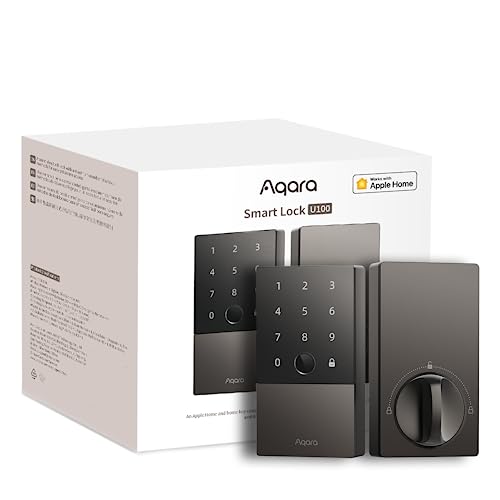
The Aqara U100's Amazon AU listing describes Apple Home Key, a fingerprint reader for up to 50 fingerprints, a touchscreen keypad, auto lock through a built-in gyroscope and an IP65 rating. Aqara's Australian store lists a standard deadbolt with a 60 or 70 mm backset for doors 35 to 55 mm thick, and the listing calls for a 54 mm door hole. Remote control and Alexa or Google Home need an Aqara Zigbee 3.0 hub, per the listing. It runs on four AA batteries, included, with a USB-C port for emergency power. At the 3 October 2026 check it was sold by Aqara AU and shipped by Amazon; we did not find an Australian warranty statement on Aqara's Australian store.
Aqara
Aqara Smart Lock U100
4.1(2,513)
A deadbolt with Apple Home Key, fingerprint and keypad entry, per the listing; remote control needs an Aqara Zigbee 3.0 hub. Sold by Aqara AU and shipped by Amazon at the 3 October 2026 check; we found no Australian warranty statement on Aqara's Australian store.
$279.00$480.95
Save 42%
Amazon.com.au price as of 11:01 am AEDT, subject to change
As an Amazon Associate, NestPath earns from qualifying purchases.
For a mortice door: Yale ByYou Pro
The Yale ByYou Pro is a smart mortice lock. ASSA ABLOY Australia lists it as a 60 mm backset mortice lock for doors 40 to 80 mm thick, powered by four AA alkaline batteries, with a three year Yale electromechanical warranty. The Amazon AU listing describes a fingerprint sensor in the handle that stores up to 100 fingerprints, PIN codes, an RFID key tag, the Yale Home app, Apple Home Key and a backup key, plus three interchangeable lever cover colours. It was sold and shipped by Amazon AU at the 3 October 2026 check, and its listing had only a few ratings. A mortice body sits inside the door edge, so have a locksmith compare the existing body before choosing it.
ASSA ABLOY AUSTRALIA
Yale ByYou Pro Smart Mortice Lock
5.0(3)
A smart mortice lock for 60 mm backset doors 40 to 80 mm thick, per ASSA ABLOY Australia, with fingerprint entry in the handle and Apple Home Key. Sold and shipped by Amazon AU at the 3 October 2026 check, with only a few ratings so far.
$699.00
Amazon.com.au price as of 11:01 am AEDT, subject to change
As an Amazon Associate, NestPath earns from qualifying purchases.
Start a separate search around the existing hardware if none of the featured door formats matches yours.
Lever and mortice door arrangements
For a lever entrance lock, identify the handle and locking arrangement before discussing a replacement. For a mortice door, ask a locksmith to compare the recessed body and handle preparation. Neither a matching thickness range nor a preferred app replaces that physical assessment.
Choosing a maker around the exact model
Compare the Australian maker page, warranty wording and installation requirements for the particular model you are considering. A brand name alone does not establish the door fit or supported functions. Keep your requested entry methods and connected features in the conversation alongside the hardware requirements.
When none of the featured locks fits
Take door measurements and photographs to a locksmith before widening the shortlist. Explain whether retaining existing hardware, avoiding frame changes or using a particular access method is your priority. Let the door arrangement guide the next options you investigate.
Installation and battery life
A compatible retrofit can be a different project from changing the lock format. The Amazon AU listing describes the Lockwood 001 Touch Plus as a retrofit for an existing 001 Deadlatch, but ASSA ABLOY Australia says additional fixing holes and modifications to the door frame are required for the upgrades it describes. Establish the work required before assuming the existing preparation can be reused.
For the Lockly Secure Pro Zeno, Lockly Australia lists an adjustable 60 mm or 70 mm backset and doors 35 to 80 mm thick. Compare those dimensions with the existing door, then ask the installer about the holes, handle clearance and frame. Keep the exact model information with the measurements rather than relying on a general deadbolt description.
DIY or a locksmith?
Read the exact installation instructions before deciding who will do the work. If the lock format changes, the frame needs alteration or a measurement is uncertain, ask a locksmith to assess it. Request an explanation of any hardware being retained, replaced or moved, and how the finished door will close and lock.
After installation, have the installer demonstrate entry, locking and the documented backup method. Follow the maker's setup instructions before enabling automatic or remote functions. Give household members the same explanation so the daily routine does not depend on one person's phone or knowledge.
Battery replacement routine
The Lockwood Amazon AU listing specifies four AA batteries, included; ASSA ABLOY Australia lists battery life of one year. Lockly Australia specifies four AA alkaline batteries for the Secure Pro Zeno. Use the exact model's battery instructions and plan replacements rather than treating a published duration as a household schedule.
Keep spare cells of the specified type and know how to reach the battery compartment. Set a reminder to review the battery condition, and respond to low-battery indications where offered. Arrange changes before travel or an extended absence if the battery condition is uncertain.
Renters and changes to the door
Discuss the proposal with the landlord or property manager before arranging a rental installation. Include the model, any new holes, frame changes, retained hardware and access arrangements. Obtain permission for the agreed work, and ask how the original hardware would be reinstated if that is part of the arrangement.
Do not equate retrofit with permission or a reversible installation. Ask the installer to assess the actual door and explain the work in plain language. Keep that explanation and the agreed access arrangements alongside the maker's instructions.
What happens in a power or Wi-Fi outage?
A mains power cut and depleted lock batteries are different situations. A mains outage does not itself use up the lock's battery charge, but it can interrupt the connectivity required for remote functions. Keep your entry plan separate from your expectation that the app will be connected.
The Lockly Amazon AU listing describes built-in Wi-Fi and remote lock and unlock. ASSA ABLOY Australia lists the Lockwood Wi-Fi bridge as sold separately. For either setup, ask which intended functions depend on a working connection and which documented entry method you will use if that connection is unavailable.
Emergency entry planning
The Lockwood Amazon AU listing describes a mechanical key. Keep that key somewhere accessible outside the home and make sure the appropriate household members know the plan. Ask the installer to explain how key entry and the listing's deadlocking function operate.
Before choosing any lock, read its instructions for depleted batteries and backup entry. Confirm the exact method rather than assuming it has an emergency terminal or that another model's procedure applies. Keep spare batteries ready, and make sure the backup plan does not require opening the locked door first.
Australian lock standards: what AS4145.2 tells you
AS4145.2 is the Australian standard for mechanical locksets. ASSA ABLOY Australia states that the Lockwood 001 Touch Plus conforms to AS4145.2-2008. Lockly Australia does not state AS4145.2 conformance on the pages used for this guide, so this comparison makes no conformance claim for the Secure Pro Zeno.
Use a published standard statement as one part of a hardware comparison. It is separate from the Amazon AU customer rating and from the maker's descriptions of app access, Wi-Fi or visitor functions. Do not turn it into an endorsement of connected features or a promise about your installed door.
What to check on any lock
Find the exact model number on the maker's Australian page and look for a named standard and edition. Ask the maker or installer to show the statement relevant to that model. If a standard matters to your purchase, resolve the question before choosing the hardware rather than substituting a general brand claim.
Then check fit, installation requirements and warranty terms separately. Ask a locksmith to consider the door, frame and proposed lock together. This guide does not assign standard grades or make claims about particular procedures within AS4145.2.
You'll also want
Spare cells of the specified type: the Lockwood Amazon AU listing lists AA batteries, and Lockly Australia specifies AA alkaline batteries.
An accessible backup key where supported: the Lockwood Amazon AU listing describes a mechanical key.
The exact installation instructions, door measurements, warranty terms and purchase record kept together.
A household plan for battery changes, guest access and entry during a connectivity outage.
A smart lock combines door hardware with electronic access or control, with the supported methods depending on the model. The Amazon AU listing describes Yale Home app access and a mechanical key for the Lockwood 001 Touch Plus, while the Lockly Secure Pro Zeno listing describes fingerprint, keypad and Apple device access. Choose the door format first, then the entry methods your household needs.
Will a smart lock fit an Australian door?
Yes, if its lock format, dimensions and required door preparation match your door. The Amazon AU listing specifies timber doors 32 to 60 mm thick for the Lockwood 001 Touch Plus, while ASSA ABLOY Australia lists compatibility with most 60 mm backset deadlatches. Lockly Australia lists doors 35 to 80 mm thick and an adjustable 60 mm or 70 mm backset for the Secure Pro Zeno. Ask a locksmith to assess the existing holes, frame and lock format before assuming any of them is a direct replacement.
Do smart locks need Wi-Fi?
Wi-Fi requirements depend on the feature, so distinguish everyday entry from remote control. ASSA ABLOY Australia lists the Lockwood 001 Touch Plus Wi-Fi bridge as sold separately, while the Amazon AU listing describes built-in Wi-Fi and remote lock and unlock for the Lockly Secure Pro Zeno. Check the connectivity and accessories needed for the specific function you want.
Do smart locks work in a power cut?
A mains power cut does not itself drain a battery-powered lock, but remote access still depends on the required connectivity remaining available. The Amazon AU listing specifies four AA batteries for the Lockwood 001 Touch Plus, and Lockly Australia specifies four AA alkaline batteries for the Secure Pro Zeno. Plan separately for an internet outage and depleted lock batteries, and keep an accessible backup key where the lock supports one.
Are smart locks allowed in Australian rentals?
Discuss the proposed lock change with your landlord or property manager and obtain permission before arranging work. Show them the exact model, any drilling or frame changes and how access will be managed. Ask a locksmith whether the existing hardware can be retained or reinstated, rather than assuming a retrofit is suitable for your rental.
Which smart locks work with Apple Home in Australia?
The Amazon AU listing describes Apple Home app, iPhone and Apple Watch access for the Lockly Secure Pro Zeno, and lists Apple HomeKit compatibility. The Aqara U100 listing describes Apple Home and Home Key support, and the Yale ByYou Pro listing describes Apple Home Key. Check the Apple devices and setup requirements for the function you want before buying. Treat an app name, an ecosystem name and a particular entry method as separate details to confirm.
How do you use a smart lock day to day?
Use the entry method supported by your model and keep a battery replacement and backup access routine. The Lockwood 001 Touch Plus Amazon AU listing describes Yale Home app lock and unlock, granting access and tracking visitor access; the Lockly Secure Pro Zeno listing describes fingerprint, keypad and Apple device entry. Review who has access when household or visitor arrangements change.
How secure are smart locks?
Assess the exact lock, its installation and your access arrangements rather than treating connected features as a security guarantee. ASSA ABLOY Australia states that the Lockwood 001 Touch Plus conforms to AS4145.2-2008, the Australian standard for mechanical locksets. Read the Australian lock standards section, ask a locksmith about the door and frame, and use separate access credentials where the chosen system allows them.
Which smart door lock is the best?
For a compatible 60 mm deadlatch door, our best overall pick is the Lockwood 001 Touch Plus: the Amazon AU listing describes a retrofit for an existing 001 Deadlatch, and ASSA ABLOY Australia lists a 25 year mechanical warranty. The right lock still depends on your door format: the Yale Keyless Connected suits 60 mm nightlatch doors, the Schlage Encode, Lockly Secure Pro Zeno and Aqara U100 suit bored deadbolts, and the Yale ByYou Pro suits mortice doors.
What is the highest rated smart lock?
Of the six listings on this page at the 3 October 2026 check, the Yale ByYou Pro showed 5.0 out of 5 from 3 ratings and the Lockly Secure Pro Zeno 4.9 out of 5 from 29 ratings. The largest rating bases were the Schlage Encode, 4.1 out of 5 from 3,582 ratings, and the Aqara U100, 4.1 out of 5 from 2,511 ratings; the Lockwood 001 Touch Plus showed 4.0 out of 5 from 21 ratings. These are dated listing ratings with very different rating counts, not a ranking of all smart locks. Choose between these options by door fit, connectivity and the access methods you need.
What door locks do police recommend?
This guide found no police recommendation in its sources and does not claim a police endorsement for any lock on this page. See the Australian lock standards section for the AS4145.2 statement that ASSA ABLOY Australia publishes for the Lockwood 001 Touch Plus. Ask a locksmith to assess the lock, door and frame together.
What are the downsides of smart locks?
The practical downsides to plan for are battery replacement, connectivity requirements and door fit. ASSA ABLOY Australia lists the Lockwood 001 Touch Plus Wi-Fi bridge as sold separately, while Lockly Australia lists AA alkaline battery power for the Secure Pro Zeno. Measure the door before buying and plan how you will enter if batteries are depleted or the connection is unavailable.
About the author
Anish Puri founded NestPath in 2026 after going through the Australian first-home-buyer process himself. NestPath focuses on Australian first-home buyers because the existing review sites are American, generic, or both. Anish handles editorial selection across the homeowner hub. Reach out: hello@nestpath.com.au
DETAILED REVIEWS
Top pick
LOCKWOOD
Lockwood 001 Touch Plus Smart Deadlatch
4.0(21)
The Amazon AU listing describes a deadlatch retrofit with Yale Home app access and visitor tracking. Door format and the mechanical warranty that ASSA ABLOY Australia lists guide the recommendation. Sold and shipped by Amazon AU at the 3 October 2026 check.
$330.12$429.00
Save 23%
Amazon.com.au price as of 11:01 am AEDT, subject to change
As an Amazon Associate, NestPath earns from qualifying purchases.
Also great
Yale
Yale Keyless Connected Smart Lock
4.2(1,049)
A keypad lock for 60 mm backset nightlatch doors with PIN, card and tag entry, per the listing. At the 3 October 2026 check it was sold by Amazon UK through the Amazon Global Store; import terms differ and manufacturer warranty may not apply.
$155.75
Amazon.com.au price as of 11:01 am AEDT, subject to change
As an Amazon Associate, NestPath earns from qualifying purchases.
Runner-up
SCHLAGE
Schlage Encode Smart Wi-Fi Deadbolt
4.2(3,510)
A US-style bored deadbolt with built-in Wi-Fi and a touchscreen keypad, per the listing; not a drop-in swap for a typical Australian nightlatch. At the 3 October 2026 check it was sold by Amazon US through the Amazon Global Store; import terms differ and manufacturer warranty may not apply.
$368.46
Amazon.com.au price as of 05:00 am AEDT, subject to change
As an Amazon Associate, NestPath earns from qualifying purchases.
Also great
Lockly
Lockly Secure Pro Zeno Series
4.9(29)
The Amazon AU listing describes a deadbolt with built-in Wi-Fi, fingerprint entry and Apple Home access. Lockly Australia's published door dimensions guide the fit check before choosing it. Sold and shipped by Amazon AU at the 3 October 2026 check.
$499.00
Amazon.com.au price as of 11:01 am AEDT, subject to change
As an Amazon Associate, NestPath earns from qualifying purchases.
Aqara
Aqara Smart Lock U100
4.1(2,513)
A deadbolt with Apple Home Key, fingerprint and keypad entry, per the listing; remote control needs an Aqara Zigbee 3.0 hub. Sold by Aqara AU and shipped by Amazon at the 3 October 2026 check; we found no Australian warranty statement on Aqara's Australian store.
$279.00$480.95
Save 42%
Amazon.com.au price as of 11:01 am AEDT, subject to change
As an Amazon Associate, NestPath earns from qualifying purchases.
ASSA ABLOY AUSTRALIA
Yale ByYou Pro Smart Mortice Lock
5.0(3)
A smart mortice lock for 60 mm backset doors 40 to 80 mm thick, per ASSA ABLOY Australia, with fingerprint entry in the handle and Apple Home Key. Sold and shipped by Amazon AU at the 3 October 2026 check, with only a few ratings so far.
$699.00
Amazon.com.au price as of 11:01 am AEDT, subject to change
Affiliate Disclosure: As an Amazon Associate, NestPath earns from qualifying purchases. This means if you click a product link and buy something, we may receive a small commission at no extra cost to you. We only recommend products we genuinely believe will help new homeowners. This does not influence our recommendations.
CERTAIN CONTENT THAT APPEARS ON THIS SITE COMES FROM AMAZON. THIS CONTENT IS PROVIDED ‘AS IS’ AND IS SUBJECT TO CHANGE OR REMOVAL AT ANY TIME.