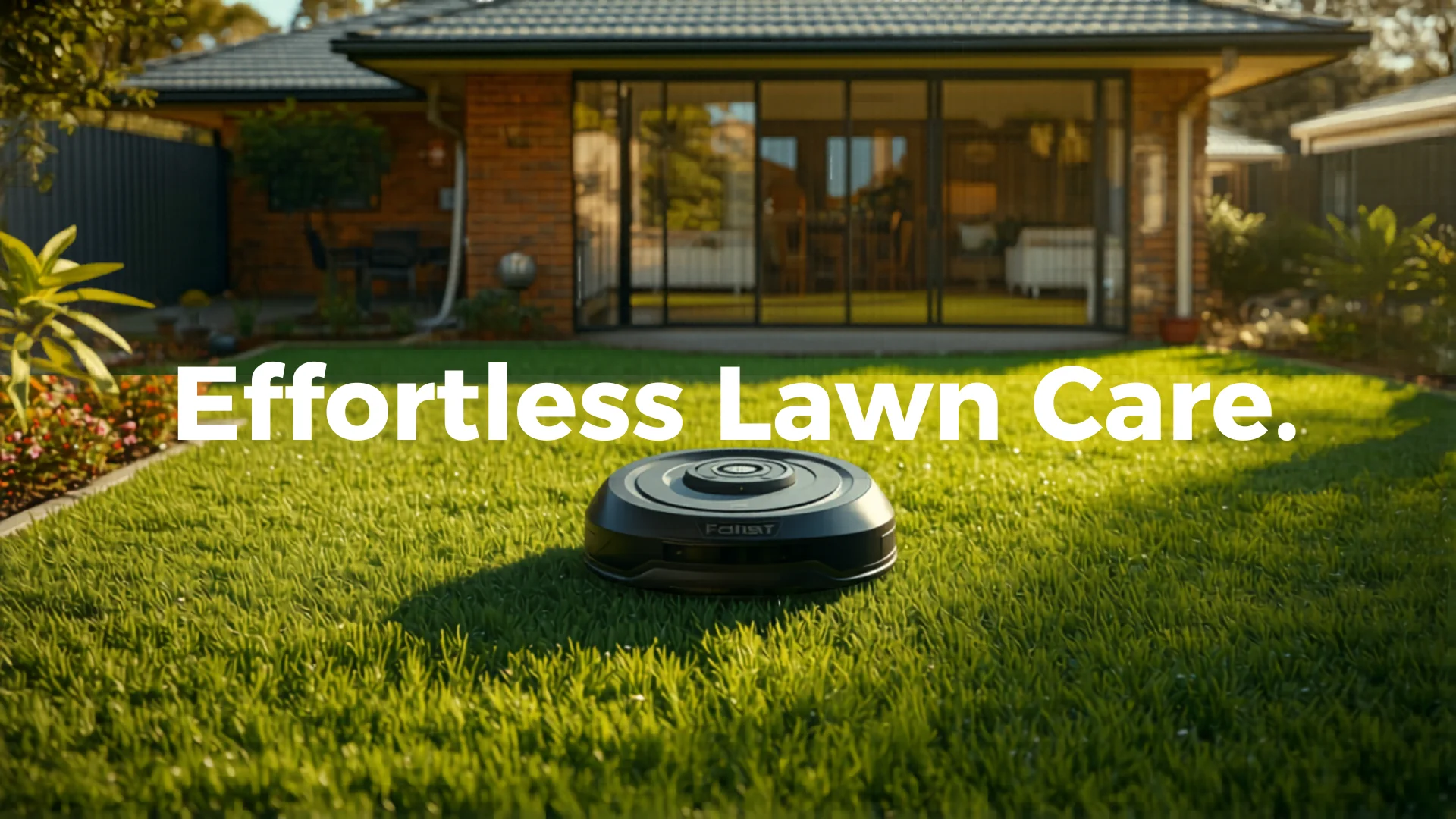
What if you never had to mow your lawn again? Robot lawn mowers run on a schedule, return to their charging dock, and keep your grass trimmed while you are inside watching Netflix. The two robotic lawn mowers in this guide are built for small to mid-size Australian blocks: Husqvarna lists the Automower 305 with an area capacity of 600 square metres and a maximum slope of 40 per cent inside the installation, and Segway lists the Navimow i105 as recommended for 500 square metres, with a maximum of 600 and a maximum slope of 30 per cent. Here is whether one is right for your yard and which to buy.
We have compared the robotic lawn mowers available in Australia for 2026, from budget wire-guided models to premium GPS-navigated systems. The technology has matured, and these are genuine set-and-forget machines rather than remote-control toys. Every specification below comes from the manufacturer's own published spec sheet.
How Do Robot Lawn Mowers Work?
Robot lawn mowers are simpler than you might think. Here's the basic setup:
- Define the mowing area: Traditional models use a boundary wire, a thin cable you bury or peg around the edge of your lawn. Newer models (like the Segway Navimow) use GPS with centimetre-level accuracy, so no wire is needed at all. Either way, this tells the mower where to mow and where to stop.
- Set a schedule: Using the phone app, you set which days and times the mower should run. Most people set it to mow daily or every other day. Because the mower cuts tiny amounts each pass (2-3mm), the clippings are so small they decompose instantly, no collection needed.
- Automatic charging: When the battery runs low, the mower navigates back to its charging dock, recharges, and resumes where it left off. You don't need to do anything.
- The result: A lawn that always looks freshly mowed. No weekend mornings spent pushing a mower, no fuel, no noise complaints. The mower handles it continuously so the grass never gets long enough to look untidy.
Our Top Picks for 2026
After comparing the major brands available in Australia (Husqvarna, Worx, Segway, Bosch), these three cover the main use cases and budgets.
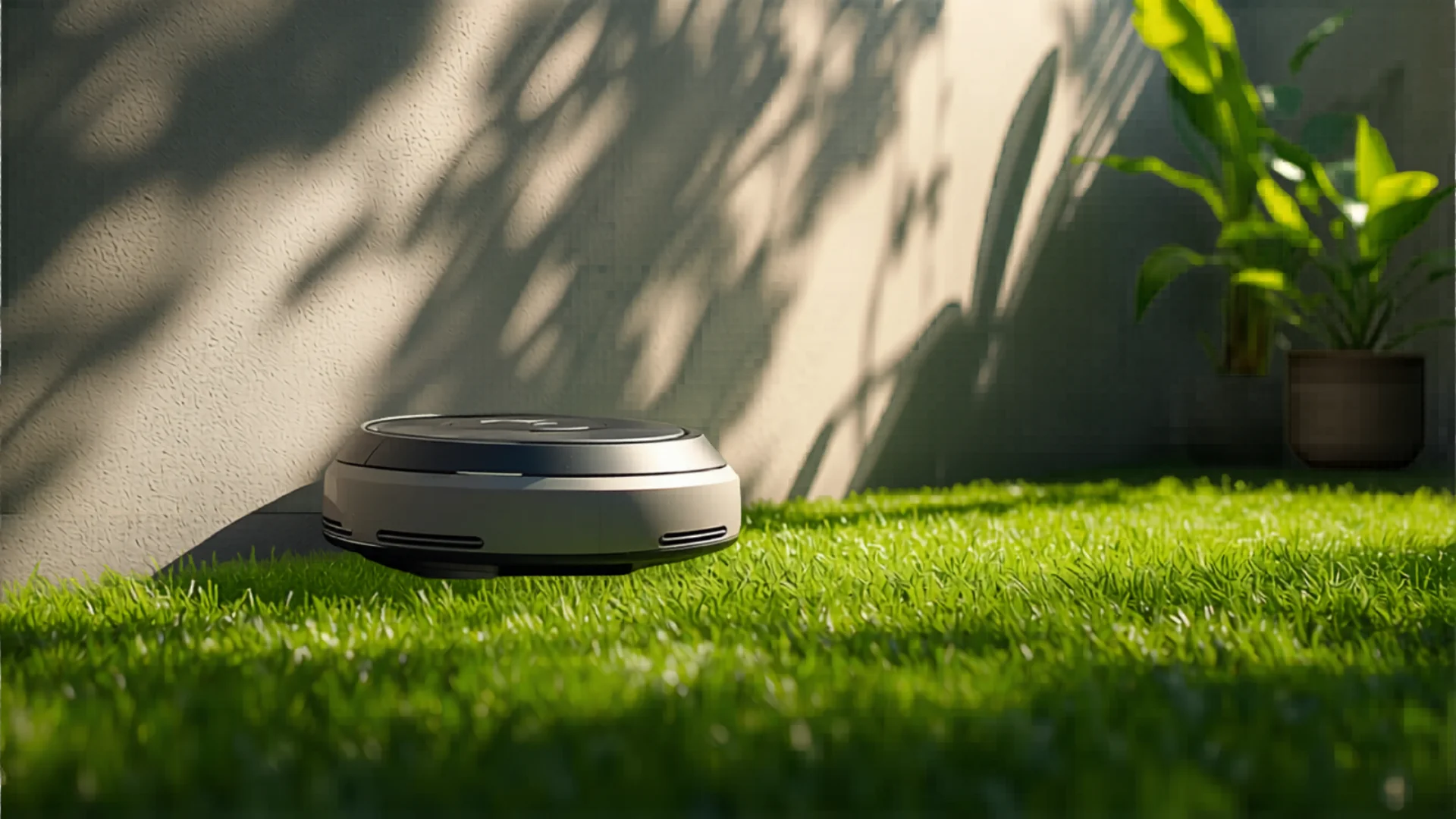
| Model | Area capacity | Maximum slope | Slope at the boundary | Boundary type |
|---|
| Husqvarna Automower 305 | 600 square metres | 40 per cent inside the installation | 15 per cent | Physical boundary wire |
| Segway Navimow i105 | 500 square metres recommended, 600 maximum | 30 per cent | 10 per cent | Wire free, satellite guided |
Two numbers decide whether a robotic lawn mower suits your block, and they are the two that get quoted loosely everywhere else. The first is area capacity, which is the lawn the mower is rated to keep on top of, not the biggest patch it can physically reach. The second is slope, and the important detail is that the headline figure applies inside the mowing area: at the boundary itself both machines drop sharply, to 15 per cent for the Automower 305 and 10 per cent for the Navimow i105. A steep bank at the fence line is the single most common reason a robot mower disappoints.
Is a Robot Mower Right for Your Yard?
Robot mowers work brilliantly in the right conditions, but they're not for every yard. Here's how to decide:
Best for
- Yards under 1,000sqm: Most residential robot mowers are designed for this range. The models in our picks cover 500-600sqm, which suits the majority of suburban Australian blocks.
- Relatively flat lawns: Robot mowers handle gentle slopes (up to 15-20° depending on the model) but struggle with steep terrain. If you can walk your yard comfortably, a robot mower can handle it.
- Simple layouts: Open lawns with minimal obstacles are ideal. Robot mowers navigate around trees and garden beds, but very complex layouts with narrow passages may cause issues.
Not ideal for
- Very steep slopes (20°+): Most robot mowers lose traction on steep banks. Some premium models handle up to 35°, but at significantly higher prices ($3,000+).
- Complex layouts: If your yard has many garden beds, retaining walls, steps between levels, or very narrow passages, a robot mower may get stuck or miss areas. Simple, open layouts work best.
- Very thick buffalo or kikuyu grass: These aggressive grass types grow fast and thick. Most budget robot mowers struggle with dense buffalo. Mid-range and premium models handle it better, but you may need to set more frequent mowing schedules.
Installation
Wire-guided models need a boundary wire installed around your lawn perimeter. You can DIY this in an afternoon. The wire pegs into the ground with included stakes and gradually sinks below the surface. Most brands also offer professional installation for $200-$400 if you'd rather not do it yourself. Wire-free GPS models (like the Segway Navimow) skip this entirely. You set up virtual boundaries in the app in about 30 minutes.
Robot Mower vs Battery Push Mower: Which Saves You More?
Let's do the maths:
Robot mower: $800-$3,000 upfront. Zero ongoing time commitment. Runs daily on a schedule. Electricity cost is negligible (about $20-$30 per year). Blade replacements every 2-3 months cost $10-$20.
Battery push mower: $300-$900 upfront. 30-60 minutes per week of your time during growing season (roughly 35-40 weeks in most of Australia). That's 17-40 hours per year of mowing.
If your time is worth $30/hour (a reasonable estimate for someone who'd rather be doing anything else on a Saturday morning), a push mower costs you $510-$1,200 per year in time alone. A $1,500 robot mower "pays for itself" in saved time within 1-2 years, and then keeps saving you time for the next 5-8 years of its lifespan.
The financial case is clear if you value your weekends. The only question is whether your yard is suitable.
Every robotic mower leaves a border along hard edges, because the cutting disc sits inboard of the wheels, so budget for a whipper snipper to finish the fence line and a hedge trimmer for the beds it drives around. For keeping the rest of your outdoor space tidy, check out our pressure washer guide for driveways and paths.
Frequently Asked Questions
Are robot lawn mowers worth it in Australia?
If you value your time and have a suitable yard (under 1,000sqm, relatively flat, simple layout), absolutely. A robot mower eliminates 17-40 hours of manual mowing per year. At $30/hour, that's $510-$1,200 in saved time annually. A mid-range robot mower ($1,000-$1,500) pays for itself in 1-2 years and then saves you time for the remaining 5-8 years of its lifespan.
How much does a robot lawn mower cost in Australia?
Budget models start at around $800 (like the Worx Landroid M500 at $999). Mid-range models with better navigation and larger coverage run $1,200-$1,500 (Husqvarna Automower 305, listed at $1,199 on the Husqvarna Australia site). Premium GPS-guided models with no boundary wire cost $1,300-$2,000 (Segway Navimow i105 at $1,299). Top-end models for large properties can reach $3,000-$5,000.
Can robot mowers handle Australian grass?
Yes. Most robot mowers handle common Australian grass types, including couch, kikuyu and ryegrass, without issues. Thick buffalo grass can be more challenging for budget models due to its dense growth pattern. For buffalo lawns, choose a mid-range or premium model with higher cutting torque and set it to mow more frequently (daily rather than every other day). The daily cutting approach actually works better with buffalo because it prevents the grass from getting too thick between cuts.
Do robot lawn mowers work in the rain?
Most modern robot mowers are rain-rated (typically IPX5 or higher) and will mow in light rain without issues. Some premium models have rain sensors that detect heavy rain and return the mower to its dock until conditions improve, then resume automatically. Mowing in light rain is actually fine for the lawn, because the small clippings decompose quickly. In heavy rain, the ground may be too soft and the mower could leave tracks, so models with rain sensors are preferable in areas with frequent heavy rainfall.
Can a robot lawn mower go uphill?
Up to a point, and the point is lower at the edges than in the middle. Husqvarna rates the Automower 305 at a maximum slope of 40 per cent inside the installation but only 15 per cent at the boundary. Segway rates the Navimow i105 at 30 per cent, dropping to 10 per cent at the boundary. Those boundary figures are the ones that matter on a typical Australian block, because the steepest ground is usually the strip against a fence or a retaining wall. Measure the slope where the mower has to turn, not where it cruises.
What size lawn can a robot mower handle?
Both picks here are built for small to mid-size suburban blocks. Husqvarna gives the Automower 305 an area capacity of 600 square metres. Segway lists the Navimow i105 as recommended for 500 square metres with a maximum of 600. Area capacity is what the machine is rated to keep on top of across a week of scheduled runs, not the largest area it can physically drive over, so buy above your lawn size rather than at it. Anything past about 1,000 square metres needs a larger machine than either of these.
Do robot lawn mowers need a boundary wire?
It depends on the model. The Husqvarna Automower 305 uses a physical boundary wire that you peg around the lawn edge, and the wire gradually sinks below the surface. The Segway Navimow i105 is wire free and uses satellite positioning instead, so you walk the perimeter once in the app and set virtual boundaries in about 30 minutes. Wire is cheaper and more forgiving under tree cover; wire free is faster to install and much easier to change when you redo a garden bed.