
Last updated: July 2026
Buying vacant land is not the same transaction as buying an established home. The loan product is different, the deposit is higher, the due diligence is harder, and most of the things that can go wrong are invisible when you first walk the block. A sloping site, a sewer easement, a flood overlay, or an unregistered title can each cost you tens of thousands of dollars, or leave you with a block you can't build the home you wanted on.
This guide answers the question every future first home builder eventually asks: how do I get a block worth building on? It is the sequel to our guide to building a house in Australia, which assumes you already have the land. If you're still buying the block, start here. We'll cover land loans, titled versus untitled blocks, easements, soil tests, stamp duty by state, and the holding costs nobody warns you about, all updated for 2026, including the Australian Government 5% Deposit Scheme.
Why Buy Land and Build Separately
There are three paths to a new home in Australia: a house-and-land package from a volume builder, a knock-down-rebuild on an existing lot, or buying vacant land on its own and choosing your builder separately. That third path, buying the block on its own, gives you the most control and also the most homework.
Buying land and choosing your own builder lets you negotiate the land price and the build price separately. Package buyers often assume the headline price covers everything, then cop site-cost variations, upgrade fees and siteworks surprises once the builder actually surveys the block. Buy the land on its own and you know exactly what the dirt cost. You can put two or three builders against each other on the same block before you sign anything, and it opens you up to smaller custom and local builders who don't do packages.
The trade-off is that everything sits on you to check before you sign: zoning, easements, soil type, slope, services, bushfire rating. A house-and-land package shifts most of that due diligence onto the developer. Work out which path suits you before you start inspecting blocks.
Titled vs Untitled Land: The Single Biggest Trap
One of the most common and most expensive first home buyer mistakes is signing on untitled land without understanding what that does to your finance, your timing, and your pre-approval.
Titled land has already been registered with the state land titles office. It has a lot number, a deposited plan, and a title you can settle on within the usual 30 to 90 day window. You can borrow against it straight away and start planning your build the week after settlement.
Untitled land has been sold in a new estate but not yet registered. The developer is still finishing roads, stormwater, power, water, sewer and the final surveys. You sign a contract and pay a holding deposit, but settlement doesn't happen until titles are registered, which can be anywhere from three months to two years later.
And here's what catches people out. Most lenders won't formally approve your finance until the land is registered, because there's no title yet to secure the loan against. That's exactly why expiring pre-approval on untitled land is so dangerous. We've seen first home buyers wait eight months or more for registration, with their pre-approval lapsing while they wait. Always ask the developer for a realistic title registration timeline before you commit, and have a plan to refresh your pre-approval if registration slips. If interest rates rise while you're waiting, your borrowing power at final settlement can be materially lower than at contract date, because the lender re-assesses you against the live rate, not the rate when you signed.
Untitled land can genuinely be the right call. Prices are often lower, and you lock in today's estate pricing against future growth. Just go in with your eyes open. Run the numbers on the borrowing power calculator at a rate one per cent higher than today's, so you know what happens if settlement slides into a higher-rate environment.
Land Loans vs Construction Loans: How Finance Differs
A vacant land loan is its own product, and it behaves differently from both a standard home loan and a construction loan. Three differences matter most for first home buyers:
- Higher deposit. Most lenders want a 20% deposit on vacant land, and some require 30 to 35% for larger or rural blocks. Lenders Mortgage Insurance on bare land costs more than on an established home, and some insurers won't cover a bare block at all, which is why a small-deposit land-only purchase can be hard to get across the line. The cleaner route, covered below, is to buy the land with the build already contracted so the lender treats it as a new-build construction loan.
- Higher rate. Vacant land loans typically carry a premium over a standard owner-occupier variable rate, often in the order of 0.25% to 0.75%, though there's no single published figure and the gap varies a lot by lender. Lenders treat vacant land as higher risk because it earns no rental income and can't be lived in as security if you default.
- Build trigger clauses. Many land loans require you to start construction within a set period, commonly two to five years across lenders, with some land loans as short as 12 to 24 months. Miss it and the loan can be re-priced to a non-owner-occupier rate or called in. Read your specific clause before you sign, and diarise the date.
For most first home buyers, the cleaner path is to buy the land and sign the building contract at the same time, so both settle as a combined construction loan. This gets you standard owner-occupier pricing, the state First Home Owner Grant on the build, and the Australian Government 5% Deposit Scheme for eligible buyers. A common misconception is that the 5% scheme never applies to land. It does apply when you build: under the scheme (rebranded the Australian Government 5% Deposit Scheme from 1 October 2025, with no income caps, unlimited places, a 5% deposit, and no LMI), building on vacant land via a combined land-plus-build contract is treated as a new-build home purchase and is covered, as long as the combined land price plus build cost stays under your state's price cap. What's not covered is a bare block bought on its own with no building contract. A construction loan specialist broker can structure this so the land settles first, then construction drawdowns begin under the same facility.
FHB Grants and Stamp Duty Concessions for Land
Stamp duty on vacant land is worked out on the land value alone, not the finished home, which is one reason building from a block is often cheaper in upfront duty than buying established. Several states also offer enhanced concessions or full exemptions for first home buyers buying land to build their first home. And since the 1 October 2025 expansion of the federal scheme, eligible buyers building on that land can pair these state concessions with a 5% deposit, no income caps, and no LMI.
| State | Vacant land concession (first home buyer building) | First Home Owner Grant (new build) |
|---|---|---|
| NSW | Full exemption on land up to $350,000; concessional rate tapering to $450,000 | $10,000 |
| VIC | Duty charged on land value only (not the finished home value); principal-place-of-residence concession may apply | $10,000 on new builds under $750,000 |
| QLD | Full exemption, no value cap, for eligible first home buyers building (contracts on or after 1 May 2025; must build and move in within 2 years) | $30,000 (locked in the 2026-27 Queensland Budget for four years, not the $15,000 base) |
| WA | Full exemption on land up to $350,000; concessional rate to $450,000. Under the 2026-27 Housing Taxation Package (announced 7 May 2026), these rise to $450,000 full and $550,000 concessional for vacant land, with the headline home exemption lifting to $600,000 (concessional to $800,000), subject to legislation passing WA Parliament before it takes effect. | $10,000 |
| SA | Full exemption on eligible first home buyer land (value cap removed June 2024) | $15,000 |
| ACT | Stamp duty abolished for all first home buyers from 1 July 2026, with no property value cap and no income test (this replaces the old income-tested Home Buyer Concession Scheme, which capped eligible homes at $1.02M) | No separate FHOG |
Concession rules change with every state budget, so always confirm the current figures with your state revenue office or a conveyancer before you budget. The stamp duty calculator gives you the exact figure for your state and lot value. State-specific guides: NSW grants, VIC grants, QLD grants, WA grants.
Can Foreign Buyers Purchase Vacant Land?
This guide is written for Australian resident first home buyers, so the deposit schemes and grants above assume you're a citizen or permanent resident. If you're a foreign person or temporary resident, the rules are different. Foreign persons can still apply to buy vacant residential land in Australia, but it takes Foreign Investment Review Board (FIRB) approval before you sign a contract, and approval generally comes with a condition to complete construction within four years. Note that the separate ban on foreign persons buying established dwellings runs from 1 April 2025 to 30 June 2029. Rules, fees and conditions change, so check the current detail at foreigninvestment.gov.au and ato.gov.au before you act.
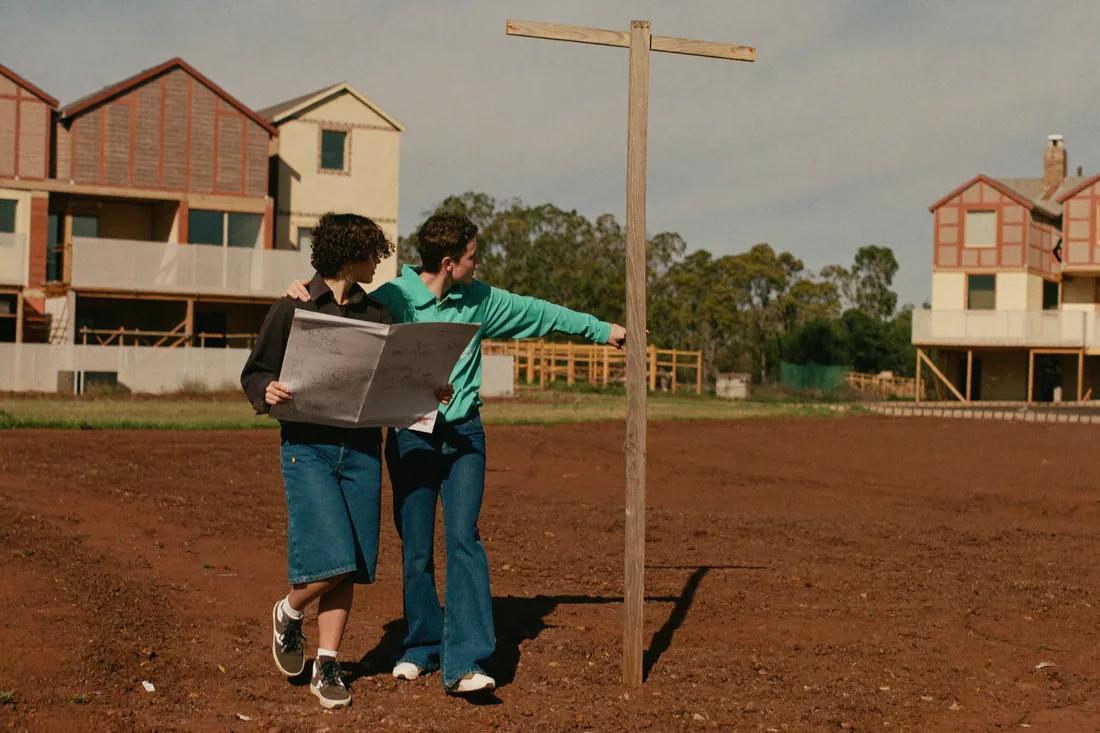
What to Check Before Buying Land: The Due Diligence Checklist
Every item on this list has cost a first home buyer real money when it was missed. Walk through it once before you sign anything, and again before your cooling-off period ends.
- Zoning and overlays. Ask the agent or council for the planning certificate (Section 10.7 in NSW, the Section 32 vendor statement in VIC). Queensland has no single equivalent statutory vendor statement, so there you lean on the contract disclosure plus the title and council searches your conveyancer runs. Residential zoning is what you want; anything else limits what you can build. Overlays (heritage, flood, bushfire, vegetation, environmental significance) add conditions and cost.
- Easements on the title. Sewer, stormwater, drainage and power easements can carve out one to three metres of land where you can't build anything permanent. A sewer easement down one side of a 400m² lot can shrink your buildable footprint by 20% or more. See the easements section below.
- Soil classification. An "H2" or "P" soil classification (highly reactive clay or unstable fill) can add $15,000 to $40,000 to your slab cost. Ask for a soil test report, or get one done in your cooling-off period (around $300 to $600 through a geotechnical engineer).
- Slope and cut-and-fill. A block with more than a one-metre fall from corner to corner usually needs engineered cut-and-fill or retaining walls, commonly $15,000 to $50,000-plus in site costs that volume builders leave out of their base price.
- Bushfire Attack Level (BAL). A Bushfire Attack Level rates how exposed a block is to bushfire, from BAL-LOW up to BAL-FZ (Flame Zone), under the building standard AS 3959. Higher ratings such as BAL-29, BAL-40 or BAL-FZ require bushfire construction measures (toughened glass, ember screens, non-combustible cladding) that can add roughly 5 to 15% to the build cost. Ask for the BAL certificate before you offer.
- Services to the block. Confirm that power, water, sewer, gas (if relevant) and NBN are connected or available at the boundary. "Available" and "connected" are not the same thing; connection fees can run $3,000 to $15,000 each.
- Contamination history. If the land was previously industrial or agricultural, or had fuel tanks, request an environmental audit. Remediation costs can render a block uneconomic.
- Covenants and design guidelines. New estates often mandate roof materials, colours, driveway styles, minimum floor area, or a ban on two-storey homes. These aren't law; they're developer rules, but they're enforceable and they shape your house design.
- Flood zone status. Check the council flood overlay. A block in a 1-in-100-year flood zone is harder to insure and may need elevated construction.
- Title and registration status. Confirm titled versus untitled (see the section above) and get the realistic registration timeline in writing from the developer.
A good NestPath-matched conveyancer runs these checks as part of the contract review. Don't rely on the real estate agent for it. Conveyancers go through planning certificates, vendor statements, title searches and overlay reports, and they're the people who catch the $20,000 easement nobody mentioned at the display home. Pair that with an independent land inspection of the physical block for soil, slope and services. An inspection on raw land typically costs $350 to $550.
Services Connection Costs: The Hidden $5K to $30K
When you buy vacant land, the headline price covers the dirt. Getting that dirt connected to water, sewer, electricity and NBN is a separate set of costs most first home buyers don't see coming until the builder's quote lands.
Connection costs swing wildly on two things: whether the lot sits in a serviced subdivision where the infrastructure is already at the boundary, or whether you have to extend services in from further away. In newly developed estates, services are usually at the boundary and connection is straightforward. For older infill lots or rural blocks, costs can blow out fast.
Realistic 2026 ranges for connecting a typical Australian residential lot:
| Service | Connection cost (lot at boundary) | Cost if extension needed |
|---|---|---|
| Water (mains) | $1,000 to $6,000 | $50 to $200 per linear metre extension |
| Sewer (mains) | $1,500 to $6,000 | $50 to $200 per linear metre extension |
| Electricity (poles nearby) | $1,000 to $4,000 | $40K+ for long rural extensions |
| Gas (mains) | $1,000 to $3,000 | Often not worth it; many new builds skip gas entirely |
| NBN / fibre | $300 to $2,000 | Higher in remote or fibre-not-available areas |
| Total typical urban / outer-suburb FHB | $5,000 to $15,000 | N/A |
| Total typical rural / acreage | $15,000 to $30,000+ | Can exceed $50K with an electricity extension |
If mains sewer isn't available (common on acreage and some semi-rural blocks), you'll need an on-site sewage system instead. A standard septic system runs $7,000 to $15,000; an advanced aerated treatment system runs $15,000 to $25,000. Council rules vary on what's permitted.
Critical questions to ask before you settle on land:
- Is mains water at the boundary, or does it need extending? (Ask the seller's agent for service connection certificates.)
- Is mains sewer available? (If not, factor in a septic system plus a soil percolation test.)
- Where is the nearest power pole? (Distance is the cost driver; every metre adds up.)
- Is NBN fibre, fixed wireless, or satellite at this address? (Check nbnco.com.au's address checker for free.)
Practical tip: ask three neighbours on the same street what they paid to connect when they built. Real numbers from people on the same services beat any general guide.
Easements on Property: What They Mean for Your Build
An easement is a legal right for someone else, usually a utility or a neighbour, to use part of your land for a set purpose. It's registered on the title and doesn't disappear when you buy. These are the types first home buyers most often run into on residential land:
- Sewer easement. Sydney Water, SA Water, Yarra Valley Water and other utilities run sewer mains along the rear or side of many urban blocks. You usually can't build a permanent structure over a sewer easement, and any works within it (a pool, shed, or extension) need utility approval and can mean relocating the main at $15,000 to $40,000, at your cost.
- Drainage easement (stormwater). A drainage easement protects the council's or a neighbour's stormwater flow across your land. Same build restriction, commonly one to two metres wide on one side of the block.
- Power easement. Overhead or underground electrical infrastructure. High-voltage easements, such as those for transmission lines, can be 10 metres or more wide and make large parts of a block unbuildable.
- Right-of-way / access easement. Gives a neighbour a legal right to cross your land to reach theirs. Common on battle-axe or flag lots.
- Carriageway easement. Shared driveway access, common on strata and subdivided land.
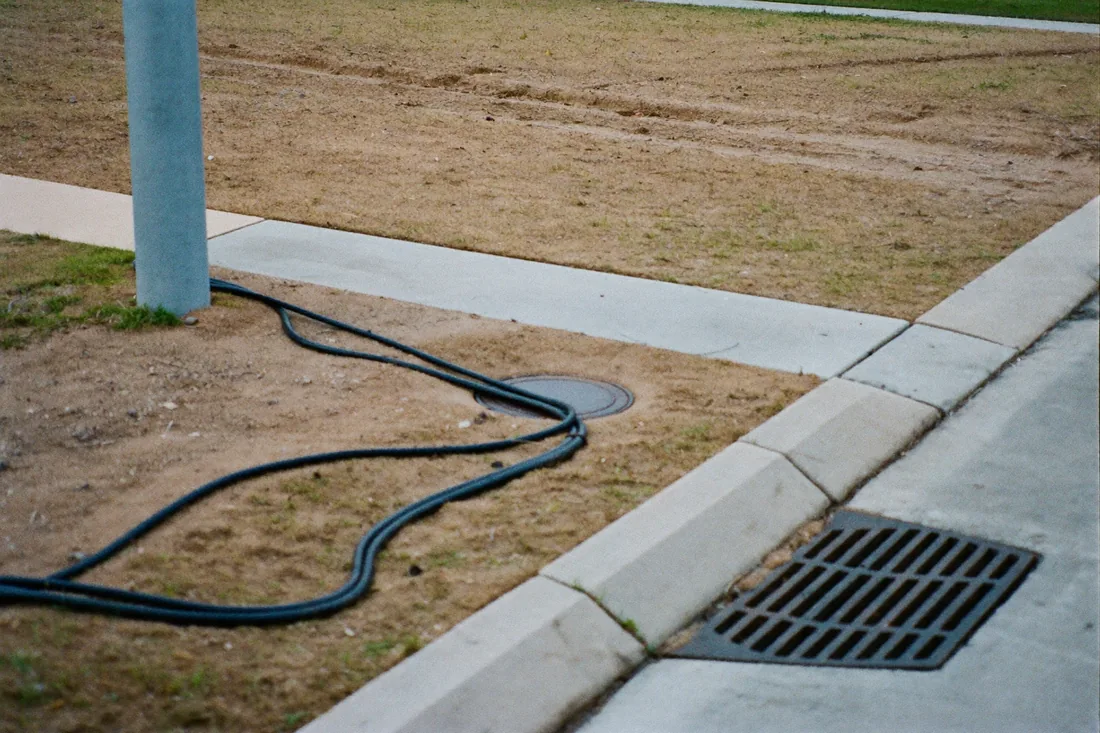
How easements affect your build
Your building envelope is not the lot boundary. It's the lot boundary minus easements, setbacks and any overlay buffers. Before you fall in love with a floor plan, mark up a site plan showing the easements and ask your builder whether the footprint still fits. Sewer and drainage easements in particular are non-negotiable with most councils; you won't get approval to build over them.
An easement can also dent resale value. If the buildable area is constrained, future extensions are constrained too, so price it into your offer. Easements are disclosed in the Section 10.7 certificate (NSW) or the Section 32 statement (VIC); in Queensland they show up in the title search and contract disclosure. Your conveyancer will flag them in the contract review, but it's worth reading the title plan yourself.
The Land Purchase Process: Step by Step
Buying vacant land follows most of the steps of a standard property purchase, with a few land-specific additions:
- Pre-approval for the land loan (or combined land-plus-construction loan). A broker structures this so you don't end up stuck with a land loan that re-prices at the build trigger. Run your starting numbers on the borrowing power calculator, then match with a specialist broker.
- Identify and inspect blocks. Visit in person. Google Street View hides slope, drainage, and the neighbour's half-finished shed. Walk the boundary. Look for services at the kerb.
- Make an offer (or sign the estate contract). In a display-village estate you sign the developer's contract with a holding deposit, usually $1,000 to $5,000, which rolls into the full 10% on unconditional. Private sales follow the state's usual offer-and-acceptance process.
- Contract review in cooling-off. Hand the contract to your conveyancer straight away. Cooling-off is when you check zoning, easements, covenants, title status, and any special conditions. Don't let the period expire without a written review.
- Finance approval. Convert pre-approval to formal approval. Land valuations can come in low, so build a 5% buffer into your deposit budget.
- Pre-settlement inspection and searches. Final title search, rates adjustment, and a physical inspection of the block to confirm it matches the contract description.
- Settlement. Funds transfer, title transfers, keys to the block. For untitled land, settlement waits until registration.
- Start the build clock. Most land loan contracts require construction to start within the build trigger window. Read the clause, diarise it, and line up your builder early. Our guide to building a house in Australia walks through the five stages of construction from there.
Settling on land is faster than settling on an established home: no tenant, no chattels, no fixture disputes. The only thing you're transferring is dirt. But the post-settlement timeline matters. Book your builder, soil test, siting meeting and conveyancing sign-off well ahead so your construction drawdown starts before the land-loan clock runs out.
Holding Costs While You Plan the Build
The other budget surprise most first home buyers miss: the gap between settling on the land and starting construction is rarely free.
A typical first home buyer settles on land, then takes three to nine months to sort out builder selection, design, council approvals and the construction loan drawdown. During that window you're paying:
| Holding cost | Typical monthly | Annual estimate |
|---|---|---|
| Land loan interest (illustrative: about 6.5% interest-only on a $400K loan) | $2,000 to $2,200 | $24,000 to $26,000 |
| Council rates on vacant land | $80 to $250 | $1,000 to $3,000 |
| Water service charges (vacant land, applies in most states) | $30 to $50 | $370 to $600 (e.g. WA Water Corporation 2025-26 minimum: $370.80 sewerage + $139.04 drainage) |
| Land insurance (optional but advisable) | $30 to $80 | $360 to $960 |
| Continued rent or mortgage at your current address | varies | varies |
| Realistic monthly holding cost (not counting rent) | $2,150 to $2,580 | $25,800 to $31,000+ |
For a six-month planning window, that's roughly $13,000 to $16,000 of holding cost before the builder pours the slab. For a 12-month window, common for custom builds with council delays, $26,000 to $31,000. Calculate the actual monthly carry for your specific land loan amount and rate. Once the build is finished, see how insurance for a finished home is compared.
Two ways to cut your holding-cost exposure:
- Have your construction loan and builder selection ready before you settle on the land. If you can move from land settlement straight into the first construction drawdown within 60 to 90 days, you minimise the carrying-cost gap.
- Use a registered project builder with stock floor plans and shorter approval timelines. Volume builders working from approved plans can get you to slab in three to four months. Custom architectural builds with fresh council applications more often run six to 12-plus months.
Some buyers stretch their budget on the assumption that "the land is bought, the build will start soon." In 2026, with the Housing Industry Association reporting that 88% of builders face council approval times over eight weeks (and around one in three waiting more than six months, per the HIA Small Business Conditions Survey fielded in late 2025), buying land without a clear path to construction is a real cash-flow risk. Plan the carrying cost into your budget, or have a financial buffer ready.
For the full mechanics of how a construction loan handles the transition from land settlement to staged drawdowns, see our complete construction loans guide.
FAQ: Buying Land in Australia
How much deposit do I need to buy vacant land in Australia?
Most Australian lenders want a 20% deposit on vacant land, with 30 to 35% for rural or large blocks, because bare land is higher-risk security: it earns no income and can't be lived in. The cleaner structure for first home buyers is a combined land-plus-construction loan, which gets you standard owner-occupier pricing and, for eligible buyers, the Australian Government 5% Deposit Scheme on the new build. A construction loan specialist broker can structure the land to settle first, with construction drawdowns following under the same facility.
Can I get the 5% Deposit Scheme if I buy land and build?
Yes, if you build. The Australian Government 5% Deposit Scheme (rebranded from the First Home Guarantee on 1 October 2025, with no income caps, unlimited places, a 5% deposit and no LMI) covers building on vacant land when you sign a land and fixed-price building contract together, because that's treated as a new-build home purchase, provided the combined land price plus build cost stays under your state's price cap. What it doesn't cover is a bare block bought on its own with no building contract. Get the structure right at pre-approval stage; getting it wrong can cost you tens of thousands in LMI or a larger required deposit.
What is the difference between titled and untitled land?
Titled land has been registered with the state land titles office, so it has a lot number and a deposited plan, and you can settle within a normal 30 to 90 day window. Untitled land has been sold in a new estate but registration is still pending while the developer finishes roads, services and final surveys. Settlement for untitled land can be three months to two years away; most lenders won't formally approve finance until it's registered, and your pre-approval can expire in the meantime. Always get a realistic title registration timeline in writing from the developer before signing.
What are easements on property and do they affect my build?
An easement is a legal right for a utility or a neighbour to use part of your land for a set purpose, commonly sewer mains, stormwater drains, power infrastructure, or shared driveways. You usually can't build a permanent structure over an easement, and it stays on the title when you buy. A one-metre sewer easement on one side of a 400m² block can cost you 10 to 20% of your buildable footprint. Easements are disclosed in the Section 10.7 certificate (NSW) or Section 32 statement (VIC); in Queensland they appear in the title search and contract disclosure, which your conveyancer reviews.
Can you build over an easement?
Usually not for sewer and drainage easements; most councils and water authorities will refuse approval to build a permanent structure over them. Where works within an easement are allowed at all, you need the relevant utility's approval first, and it can mean relocating a main at your own cost, commonly $15,000 to $40,000. Always check the easement on the title plan before you commit to a floor plan or an extension.
What is a soil test and do I need one before buying land?
A soil test (a geotechnical report) classifies the ground under your block by reactivity. Stable A or S classifications support a cheap standard slab, while M, H1, H2, E or P classifications (reactive clay, fill, or problem soils) need engineered slab designs that can add $15,000 to $40,000-plus to the build cost. A soil test costs around $300 to $600 through a geotechnical engineer. If the seller doesn't provide a recent one, get it done in your cooling-off period; a bad soil report is a legitimate reason to walk away.
Do you pay council rates on vacant land?
Yes. Council rates apply to a bare block just as they do to a built home, and in most states you'll also pay water and sewerage service charges even though nothing is connected to a house yet. Together these typically run $80 to $250 a month in rates plus $30 to $50 a month in service charges. Budget for them across the whole period between land settlement and moving in, on top of your land loan interest.
How long after buying land do you have to build?
It depends on your specific land loan and any state concession conditions. Lender build-trigger clauses commonly require construction to start within two to five years, though some land loans are as short as 12 to 24 months. Separately, state stamp duty concessions can carry their own deadline; Queensland's first home vacant land exemption, for example, requires you to build and move in within two years of settlement. Read your loan clause and any concession conditions, and diarise the date.
Do first home buyers get stamp duty concessions on vacant land?
Yes, in most states. NSW exempts land up to $350,000 (tapering to $450,000); Queensland gives a full exemption with no value cap for eligible first home buyers building (contracts on or after 1 May 2025); WA currently fully exempts vacant land up to $350,000 and offers a concessional rate to $450,000, with the 2026-27 Housing Taxation Package set to lift those to $450,000 and $550,000 once the legislation passes WA Parliament; SA gives a full exemption on eligible first home buyer land; VIC charges duty on the land value only; and from 1 July 2026 the ACT abolished stamp duty entirely for all first home buyers (no value cap, no income test). Rules change with state budgets, so confirm the current figures with your state revenue office or use the NestPath stamp duty calculator.
Can foreigners buy vacant land in Australia?
Yes, with approval. Foreign persons can apply to buy vacant residential land but must get Foreign Investment Review Board (FIRB) approval before signing a contract, and approval generally comes with a condition to complete construction within four years. The separate ban on foreign persons buying established dwellings runs from 1 April 2025 to 30 June 2029. Fees and conditions change, so check the current detail at foreigninvestment.gov.au and ato.gov.au. This guide is written for Australian resident first home buyers.
Ready to start your search? Run your borrowing power on the NestPath borrowing power calculator, check stamp duty for your state and lot value, and see what you qualify for with the first home buyer eligibility checker. Then match with a specialist broker who can structure a combined land-plus-construction loan. Once you have a block under contract, our guide to building a house in Australia takes you through the five stages from slab to handover, and your journey map shows where land-buying fits in the bigger first-home picture.


