
Quick version: Home warranty insurance protects you if your builder dies, disappears, goes broke or loses their licence partway through a build or in the years after. The builder takes out the policy and the cost is folded into your contract, so you pay for it without arranging it. It is mandatory for residential building work above a set dollar value in every state and territory except Tasmania. The one thing it does not do is guarantee good workmanship from a builder who is still trading. Get the Certificate of Insurance in your hands before you sign anything.
Home warranty insurance is a statutory insurance product that pays to fix or finish your home if your builder can no longer do it themselves, because they have become insolvent, died, vanished or lost their licence. It goes by several other names, including builders warranty insurance and home owners warranty insurance, and a different name again in each state.
You have just signed a contract for a brand new home. Maybe it is a house and land package in a growth corridor, maybe a custom build on a block you tracked down yourself. The builder is licensed, the contract looks solid, and you are counting down the months to handover.
Then you read a headline about a builder going into administration mid-job, leaving a street of half-built homes: slabs poured, frames up, nobody answering the phone. It happens more than most first home buyers expect, and it is the exact thing home warranty insurance exists for. This guide walks through what it is, who pays for it, the state-by-state rules as they stand in July 2026, what it covers, what it costs and how to claim, plus the checklist to run before you sign. If you are still weighing up the build itself, our guide to building a house in Australia is a good companion read.
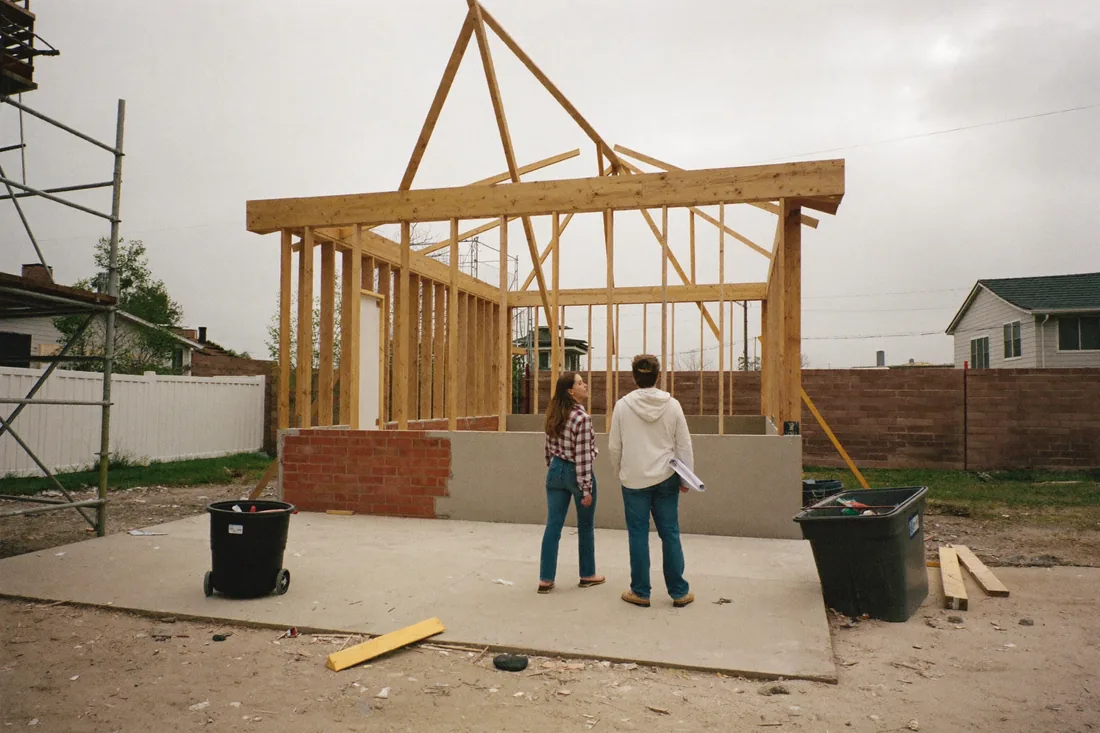
What is home warranty insurance?
Home warranty insurance is cover that steps in when your builder can no longer meet their obligations on a residential build. It pays to complete unfinished work or fix defects when the builder has died, disappeared, become insolvent, or had their licence cancelled.
You will see it called a few different things. Builders warranty insurance, builders home warranty insurance and home owners warranty insurance all describe the same statutory product. On top of that, every state and territory has its own scheme name:
- NSW: Home Building Compensation Fund (HBCF), run by icare
- VIC: Domestic Building Insurance (DBI)
- QLD: the Queensland Home Warranty Scheme, run by the QBCC
- WA: Home Indemnity Insurance (HII)
- SA and ACT: Building Indemnity Insurance (BII)
- NT: Residential Building Cover, issued as a Fidelity Fund Certificate
The mechanics are the same wherever you build. The builder takes out the policy, not you. The premium is then passed on inside your building contract, so the cost lands with you even though the builder arranges it. And the cover sticks to the property, not the person, so if you sell within the warranty period the next owner inherits whatever cover is left.
This is a separate thing from home and contents insurance, which you arrange yourself after settlement to cover fire, storm, theft and the like. The two do not overlap, and you will want both on a new build.
It is not a quality guarantee, and that trips up most buyers
Home warranty insurance is cover against your builder going under, not against poor workmanship. This is the single most misunderstood thing about it, and getting it wrong can cost you months.
If your builder is still trading and simply refuses to come back and fix a dodgy bathroom or a cracked render, the insurance does nothing. It only fires when the builder cannot fix the problem, not when they will not. Worth holding onto:
- It is the builder who buys it, but you who relies on it.
- The policy follows the house, not the builder.
- Think of it as a safety net for the day your builder goes under, not a lever for chasing one who is still in business.
So if you are stuck with a trading builder who will not make good on their work, the insurance is not your first port of call. Your path runs through your state building authority, then a tribunal (NCAT in NSW, VCAT in Victoria, QCAT in Queensland) or the courts. We cover that route in the claims section below.
Who pays, the builder or you?
The builder arranges and pays the premium, but the cost is passed on to you inside the building contract. You are paying for it. You are just not the one filling in the forms. A well-drawn contract shows the premium as its own line item. If you cannot find it, ask your builder to break it out, and have your conveyancer or solicitor confirm it is there and valid when they review the contract before you sign.
Home warranty insurance state by state
Each state and territory runs its own scheme, with its own threshold, cover periods and payout cap. Here is the comparison at a glance (figures current as of July 2026), followed by a closer look at each.
| State / Territory | Local name | Threshold | Insurer / regulator | Structural cover | Non-structural cover | Max cover |
|---|---|---|---|---|---|---|
| NSW | HBCF | $20,000 | icare | 6 years | 2 years | $340,000 |
| VIC | DBI | $16,000 (rising to $20,000 from 1 July 2026) | BPC | 6 years | 2 years | $400,000 |
| QLD | Qld Home Warranty Scheme | $3,300 | QBCC | 6 yrs 6 mths from contract | 6 months | $200,000 ($300,000 optional) |
| WA | HII | $20,000 | Building and Energy (WA) | 6 years | 6 years | $200,000 (licensed builder) |
| SA | BII | $20,000 | SAFA / QBE | 5 years | 5 years | $250,000 |
| ACT | BII | $12,000 | Approved insurer | 6 years | 2 years | Varies |
| NT | Residential Building Cover | $12,000 | Fidelity Fund NT | Consumer guarantee period | Consumer guarantee period | Varies |
| TAS | None mandatory | N/A | N/A | N/A | N/A | N/A |
One rule covers most of it: if your build is above the threshold for your state and your builder cannot produce a certificate, walk away. A builder who cannot get mandatory insurance is either unlicensed, uninsurable, or operating illegally, and none of those is a risk worth taking on your first home.
New South Wales, Home Building Compensation Fund (HBCF)
NSW cover is provided through the Home Building Compensation Fund, run by the state insurer icare. It kicks in for residential building work over $20,000. Cover runs 6 years for structural defects and 2 years for non-structural, both from completion, with a payout cap of $340,000, the highest in the country. If your builder is still trading, your first stop for a dispute is NSW Fair Trading, then NCAT.
Victoria, Domestic Building Insurance (DBI)
Victoria's scheme is Domestic Building Insurance, and it is in the middle of the biggest shake-up of any state. As of mid-2025 it is administered by the BPC (Building and Plumbing Commission), which absorbed the domestic building insurance functions of the old VMIA and the Victorian Building Authority. DBI is required for work over $16,000, a threshold that rises to $20,000 from 1 July 2026. Cover is 6 years for structural defects and 2 years for non-structural, with a cap of $400,000.
One thing to watch: Victoria is moving DBI from a "last resort" model to a first-resort one from 1 July 2026, under the Building Legislation Amendment (Buyer Protections) Act 2025. In plain terms, the long-term plan is that Victorian homeowners will be able to claim on the insurance for defective work even while the builder is still trading. That is a genuine exception to the "insolvency only" rule that applies everywhere else, so if you are building in Victoria, check the current BPC position when your contract is drawn up.
Queensland, Queensland Home Warranty Scheme (QBCC)
Queensland has by far the lowest threshold. The Queensland Home Warranty Scheme, run by the QBCC, applies to insurable work over just $3,300, so almost every build is covered. Structural cover runs 6 years and 6 months from the date of the contract (note: from the contract date, not completion, and it stretches to 7 years if the build itself takes longer than 6 months), with 6 months of cover for non-completion. The base cap is $200,000, with the option to lift it to $300,000 for higher-value builds. The QBCC also publishes a premium calculator, which we point to in the cost section.
Western Australia, Home Indemnity Insurance (HII)
In WA the product is Home Indemnity Insurance, required for residential work over $20,000, with the regulator being Building and Energy (WA). WA does not split structural and non-structural, so the whole policy runs 6 years from completion. For work by a licensed builder, cover is up to $200,000 for incomplete or defective work (plus up to $40,000 for a lost deposit). Owner-builder cover is more generous after a 2022 change (more on that below). If you are building in WA with Keystart, the builder must have HII in place before the first progress payment.
South Australia and ACT, Building Indemnity Insurance (BII)
Both call it Building Indemnity Insurance, but the detail differs. South Australia overhauled its scheme in late 2025, its biggest overhaul in years: the threshold rose from $12,000 to $20,000 (from 10 November 2025) and the maximum cover jumped to $250,000 (for policies from 1 October 2025). SA runs a single 5-year cover window with no structural/non-structural split, administered through SAFA with QBE as insurer. The ACT keeps a lower $12,000 threshold, with 6 years structural and 2 years non-structural cover, and a cap that varies by policy.
Northern Territory and Tasmania
The Northern Territory does not use Home Indemnity Insurance at all. Instead, builders must issue a Fidelity Fund Certificate (Residential Building Cover) under the Building Act for contracts over $12,000, administered by Fidelity Fund NT. It does the same job as the other schemes, covering you to bring in a new builder if yours becomes bankrupt, dies, disappears or has their registration cancelled. For specifics, NT Building Advisory Services is the place to check.
Tasmania is the one state with no mandatory scheme, the legacy of scrapping its old one years ago. Worth knowing: Tasmania has legislated to reintroduce a mandatory scheme, so this is one to keep an eye on if you are building there. In the meantime, a Tasmanian build leans even harder on a thorough contract review and an independent inspection, since the insurance backstop is not there.
Two people are worth their fee on any new build, in any state: a building inspector to check the work, and a conveyancer to check the paperwork.
What does home warranty insurance cover?
Cover splits into two buckets, structural and non-structural, each with its own warranty period. Here is what falls into each.
Structural defects, 6 years (also 6 years in VIC)
Structural defects go to the bones of the building:
- Foundation and footing failures (cracking, sinking, shifting)
- Load-bearing wall defects
- Roof structure failures (the structure itself, not cosmetic finishes)
- Floor structure defects (sagging, uneven, structural failure)
- External wall defects that let weather in
Non-structural defects, 2 years
Non-structural defects are about workmanship and finishes:
- Waterproofing failures in bathrooms, laundries and balconies
- Plumbing defects (leaks, poor drainage, incorrect installation)
- Electrical defects (faulty wiring, non-compliant work)
- Tiling defects (cracking, lifting, poor finishing)
- Painting defects (peeling, bubbling, uneven application)
- Fixtures and fittings (doors, windows, cabinetry)
Other losses it can cover
- Incomplete work: if the builder walks off the job, cover pays to bring in another builder to finish it.
- Loss of deposit: if you have paid a deposit and the builder becomes insolvent before starting.
What it does not cover
- Normal wear and tear: paint fading, carpet wearing, timber weathering
- Damage you cause: modifications, DIY, neglect
- Defects you already knew about before buying
- Work done without proper permits: no required council approvals, no cover
- Work below your state's threshold
- Work by unlicensed builders: cover only applies to licensed work
- Consequential losses: temporary accommodation, lost rent, personal property damage (some of these may sit with your home and contents insurer or a legal claim instead)
When can you make a claim?
Only if your builder has died, disappeared, become insolvent, or lost their licence. That is the whole trigger. Spelled out, the policy responds when your builder:
- Has died or become incapacitated
- Has disappeared and cannot be contacted, having abandoned the job
- Has become insolvent, entering administration, liquidation or bankruptcy
- Has had their licence suspended or cancelled
- In some states, has failed to comply with a tribunal or court order to fix defective work
You cannot claim just because you are unhappy with the quality of the work. If the builder is still trading but stonewalling you on a defect, your first move is your state building authority:
- NSW: NSW Fair Trading
- VIC: the Building and Plumbing Commission (BPC)
- QLD: the Queensland Building and Construction Commission (QBCC)
- WA: Building and Energy (WA)
- SA: Consumer and Business Services (CBS)
These authorities can investigate, mediate, and issue orders to fix the work. If the builder still will not budge, you can escalate to a tribunal (NCAT, VCAT, QCAT) or the courts. The insurance is the backstop for when none of that is possible, because the builder no longer exists as a viable business.
Time limits: report structural defects within the structural warranty period (6 years in most states, including Victoria) and non-structural defects within 2 years of completion. These clocks run from practical completion, when you take handover, not from the date you signed the contract. The Queensland scheme is the exception, running from the contract date.
How much does home warranty insurance cost?
Premiums vary a lot, and there is no single published schedule that pins them down, so treat any figure here as a rough guide, not a quote. As a ballpark, you might see anything from $1,500 to $5,000 or more for a project, depending on:
- Contract value: bigger builds cost more to insure
- State: each scheme sets premiums its own way
- The builder's claims history: a riskier builder means a higher premium, passed on to you
- Type of work: new build, renovation or addition
For a very rough sense of scale only (again, not a quote):
| Contract value | Indicative premium range |
|---|---|
| $50,000 to $100,000 | $1,000 to $1,500 |
| $100,000 to $300,000 | $1,500 to $3,000 |
| $300,000 to $500,000 | $2,500 to $4,000 |
| $500,000+ | $3,500 to $5,000+ |
The builder arranges and pays the premium, and the cost sits inside your building contract as a one-off, with no ongoing payments. You should see it itemised. If you do not, ask for it to be broken out, and have your conveyancer or solicitor check it during the contract review.
How to estimate your premium
The honest answer is that the scheme itself is the only reliable source for your actual number. Several states publish official premium calculators or fee tables, and they beat any generic estimate:
- NSW: icare publishes HBCF premium information.
- QLD: the QBCC has a Home Warranty Scheme premium calculator.
- VIC, WA, SA, ACT, NT: ask your builder for the premium figure from their insurer, or check the relevant scheme's published rates.
Because the premium is baked into the build price, it is already part of the total your lender assesses. If you are working out how much you can borrow for a new build, you do not need to budget for it separately on top of the contract price.
New build home warranty, what to check before you sign
This is where you protect yourself, and it is the part most worth slowing down for. Do not sign the building contract until every box below is ticked.

- Get the Certificate of Insurance in your hands. Every builder must provide one before work begins. It proves they hold valid home warranty insurance for your specific project.
- Check the certificate is genuine. Contact the insurer listed on it and confirm it is current. Your conveyancer can do this as part of the contract review.
- Make sure the cover matches the contract value. The amount on the certificate should equal or exceed your building contract value.
- Confirm the cover periods. Know exactly how long you are covered for structural and non-structural defects in your state (see the table above).
- Check the builder's licence is current. Verify with your state building authority that the licence is valid and there are no outstanding complaints or disciplinary actions.
- Keep a copy of the certificate. Store it with your building contract. You will need it if you ever claim, and if you sell, the new owner benefits from the remaining cover.
- Book an independent inspection. Arrange for a building inspector to do a practical completion inspection before handover, while the builder is still on the hook to fix anything they find.
If you are building in WA with Keystart, remember the builder must have warranty insurance in place before that first progress payment lands.
Home warranty insurance for owner builders
If you build your own home under an owner-builder permit, the rules flip. You do not need home warranty insurance during construction, because you are both the builder and the owner. But if you sell within the warranty period (usually 6 years), you may have to arrange cover to protect the buyer.
The detail varies by state:
- NSW: owner builders must arrange HBCF cover if selling within 6 years and the work exceeded $20,000.
- VIC: owner builders must arrange DBI if selling within 6 years and 6 months of completion (and note the threshold moves from $16,000 to $20,000 from 1 July 2026).
- QLD: owner builders must disclose all building work to buyers under QBCC rules.
- WA: owner builders must hold Home Indemnity Insurance if selling within the cover period. WA owner-builder cover was doubled in 2022 to up to $200,000 for incomplete or defective work, plus up to $40,000 for a lost deposit.
Owner-builder cover is harder and dearer to get, because insurers see owner builders as higher risk than qualified, experienced trades. If an owner-builder permit is on your radar, factor this in early, especially if you might sell inside the warranty window. Our guide to building a house in Australia weighs up owner-builder versus licensed builder in more depth, and is worth reading before you apply.
Home warranty insurance vs home and contents insurance
These are two completely different products covering completely different risks, and on a new build you need both.
| Feature | Home warranty insurance | Home and contents insurance |
|---|---|---|
| What it covers | Builder defects and insolvency on new builds and renovations | Damage to your home and belongings from events (fire, storm, theft, flood) |
| Who takes it out | The builder (cost passed to you) | You (the homeowner) |
| When it applies | Only when the builder cannot fix defects (insolvency, death, disappearance) | When your property or belongings are damaged by a covered event |
| Duration | 2 years non-structural, 6 years structural (including in VIC) | Annual policy, renewed each year |
| Ongoing cost | One-off premium inside the build cost (indicatively $1,500 to $5,000) | Annual premium ($1,000 to $3,000+ depending on cover) |
| Transfers with the property | Yes, it protects future owners too | No, the new owner arranges their own |
Home warranty insurance does not touch fire, storm, theft or flood. Home and contents insurance does not touch builder defects. You arrange your own home and contents insurance separately once you take ownership, and you want it in place from settlement day.
How to claim on home warranty insurance
If your builder has died, disappeared or become insolvent and you are left with defective or unfinished work, here is the path.
Step 1: Document the defect
Photograph and video everything, and note the date you found it. For structural issues, get an independent building inspector to assess and write it up. Their report is your key piece of evidence.
Step 2: Confirm the builder cannot fix it
Gather proof the builder can no longer meet their obligations: insolvency records (ASIC), licence cancellation (your state building authority), or evidence they have disappeared (unanswered correspondence over a reasonable stretch).
Step 3: Contact your state building authority
Notify the relevant body (NSW Fair Trading, the BPC in Victoria, the QBCC in Queensland, Building and Energy in WA). They can confirm the builder's status and point you to the next step.
Step 4: Lodge the claim with the insurer
Contact the insurer named on your Certificate of Insurance, and have ready: the certificate, your building contract, evidence of the defect (photos and the building report), proof the builder cannot fix it, and all your correspondence with the builder.
Step 5: Assessment and resolution
The insurer assesses the claim. If it is approved, they arrange and pay for an alternative builder to repair or finish the work. Be realistic about timing: even a straightforward claim takes weeks, and complex structural claims can run much longer. Victoria's own ombudsman has documented DBI claims that dragged on far past what anyone would call reasonable. Keep every document, and keep copies of copies.
Tips for first home buyers building a new home
Whether it is a house and land package, a custom build or a major renovation, here is how to protect yourself stage by stage.
Before signing the contract
- Verify the builder's licence. Check with your state building authority that it is current, with no outstanding complaints or disciplinary action.
- Ask for the warranty insurance certificate. Confirm it is genuine, current, and covers your project for the full contract value.
- Have the contract reviewed. Your conveyancer or solicitor should go over the building contract before you sign, checking the insurance is in place, the terms are fair, and your rights are protected.
- Talk to a broker about construction finance. If you need a loan, get matched with a broker who knows construction lending, since progress-payment structures work differently from a standard home loan.
During construction
- Monitor progress. Visit the site regularly (with the builder's okay) and photograph each stage.
- Raise issues in writing. If something looks off, email the builder and keep every reply.
At practical completion
- Get an independent inspection. Engage a building inspector for a practical completion (or defects) inspection before handover. Do not skip this one.
- Write a defects list. Based on the inspection, list every defect. Most contracts include a defects liability period (often 3 to 12 months) during which the builder must fix what is identified, at their cost.
After moving in
- Keep everything for the full warranty period. Store the contract, insurance certificate, inspection reports, invoices and correspondence for at least 6 years.
- Report defects promptly. If you spot one inside the warranty period, tell the builder in writing straight away. Sitting on it can complicate a later claim.
- Arrange home and contents insurance. Have your own home and contents insurance in place from settlement day, covering fire, storm, theft and the events home warranty insurance does not.
If you are still finding your feet with the whole process, our step-by-step buyer journey shows where the build and its insurance fit into the bigger path from "what can I afford?" to keys in hand.
Frequently asked questions
What is home warranty insurance in Australia?
It is a statutory insurance product that protects homeowners if their builder dies, disappears or becomes insolvent during or after construction. It pays to finish incomplete work and repair defective work, but only when the builder can no longer do it themselves. The builder arranges and pays for it, with the cost folded into your building contract, and it is mandatory in every state and territory except Tasmania for residential work above a set threshold.
Who pays for home warranty insurance, the builder or me?
The builder takes out and pays for the policy, but the cost is passed on to you inside the building contract. So you are paying for it. You are just not the one arranging it. A good contract lists the premium as its own line item, and your conveyancer can confirm it is there when they review the paperwork.
Is home warranty insurance the same as builders warranty insurance?
Yes. They are two names for the same statutory product, and it goes by even more names from state to state: Domestic Building Insurance in Victoria, the Home Building Compensation Fund in NSW, Home Indemnity Insurance in WA, Building Indemnity Insurance in SA and the ACT, and Residential Building Cover (a Fidelity Fund Certificate) in the NT. "Builders home warranty insurance" and "home owners warranty insurance" describe the same thing too.
Do I need home warranty insurance for a new build?
Yes, your builder must arrange it for residential work above your state's threshold: $20,000 in NSW, WA and SA, $16,000 in Victoria (rising to $20,000 from 1 July 2026), $12,000 in the ACT and NT, and just $3,300 in Queensland. The builder handles the application and payment, and you should receive a Certificate of Insurance before work starts. No certificate, no contract.
How much does home warranty insurance cost?
As a rough guide, premiums run from around $1,500 to $5,000 or more, depending on the contract value, the state, and the builder's claims history. There is no single published schedule, so treat any figure as indicative rather than a quote, and use your state scheme's official calculator (icare in NSW, the QBCC in Queensland) or ask your builder for the actual number. It is a one-off cost, included in the build price, with no ongoing payments.
What does home warranty insurance cover?
It covers structural defects (foundations, load-bearing walls, roof structure) for 6 years from completion, and non-structural defects (waterproofing, plumbing, tiling, electrical) for 2 years. It also covers incomplete work and a lost deposit. Cover is only triggered if the builder has died, disappeared or become insolvent, not for general quality disputes with a builder who is still trading.
Is home warranty insurance required in every state?
It is required in every state and territory except Tasmania, which is the only one without a mandatory scheme (though Tasmania has legislated to reintroduce one). Thresholds range from $3,300 in Queensland, where almost all building work is covered, up to $20,000 in NSW, WA and SA.
How do I check if my builder has home warranty insurance?
Ask for the Certificate of Insurance before you sign the contract. It shows the insurer, policy number, cover amount, and the specific property it applies to. To confirm it is genuine, contact the insurer directly or check your state building authority's records. Your conveyancer should verify it as part of the contract review.
Can I claim on home warranty insurance for poor workmanship?
Only if the builder has died, disappeared or become insolvent and cannot fix the defective work themselves. If your builder is still a functioning business but refusing to fix a problem, your remedy is through your state building authority (NSW Fair Trading, the BPC in Victoria, the QBCC in Queensland, Building and Energy in WA), then a tribunal (NCAT, VCAT, QCAT) or the courts, not through the insurance.
Does home warranty insurance transfer if I sell my home?
Yes. The policy stays with the property and protects future owners for whatever cover period is left. If you sell a home that is 3 years old, the buyer still has around 3 years of structural cover remaining. This is one reason to hold onto your Certificate of Insurance, since the buyer will want a copy.
Is home warranty insurance compulsory?
Yes, in most of Australia. Home warranty insurance is mandatory for residential building work above a set contract value in every state and territory except Tasmania, which has no mandatory scheme (though it has legislated to reintroduce one). The builder must arrange and pay for it, and you should receive a Certificate of Insurance before work starts. The exact threshold varies by state.


