Best overall: Philips Azur 8000 Series DST8020/20. It is our pick for shirts and mixed fabrics because it offers 55 g/min continuous steam, a 240 g boost and OptimalTEMP with one setting for ironable fabrics, per the Amazon AU listing, checked 30 September 2026.
For the best steam iron in Australia, choose the Philips for its steam figures and fabric controls. If you want a budget iron for clothes you press occasionally, our choice is Sunbeam Verve CeraFlow (SRC6000). We also compare six more irons sold on Amazon Australia, checked on 5 October 2026, including a cordless Russell Hobbs and a Philips steam generator, and explain when a steam generator, cordless iron or garment steamer fits your routine.
Best irons in Australia at a glance
| Iron | Type | Best for | Soleplate | Steam output | Rating |
|---|
| Philips Azur 8000 Series DST8020/20 | Steam iron | Shirts and mixed fabrics | SteamGlide Elite | 55 g/min continuous; 240 g boost | 4.2 stars |
| Sunbeam Verve CeraFlow (SRC6000) | Steam iron | Occasional ironing | CeraFlow ceramic | 150 g/min steam shot | 4.2 stars |
| Philips 3000 Series DST3010/39 | Steam iron | Everyday pressing, vertical steam | Ceramic | Up to 30 g/min continuous; 140 g boost | 4.5 stars |
| Russell Hobbs Rapid RHC902 | Steam iron | Simple everyday ironing | Non-stick ceramic | Continuous steam or a burst; figure not stated | 4.5 stars |
| Russell Hobbs Freedom RHC580 | Cordless steam iron | Ironing without a trailing cord | Copper coated ceramic | 40 g continuous; 135 g shot | 4.0 stars |
| Philips 5000 Series DST5030/80 | Steam iron | Regular ironing | SteamGlide Plus | 45 g/min; up to 180 g boost | 4.3 stars |
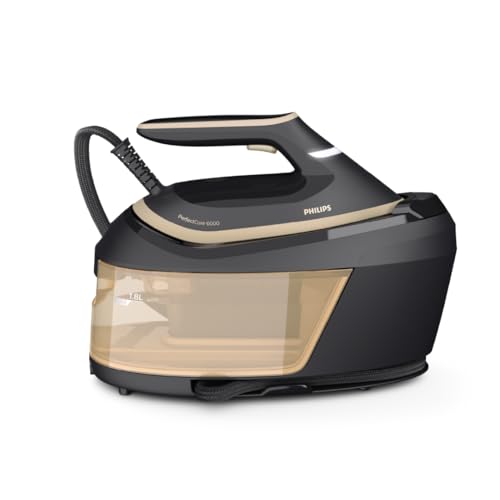
| Philips 6000 Series PSG6064/80 | Steam generator | Large loads and linen | SteamGlide Advanced | Continuous steam; 1.8 L tank | 4.2 stars |
| Tefal Ultragliss Plus FV6842 | Steam iron, imported | Hard-water homes | Durilium Airglide | Up to 50 g/min; 260 g/min boost | 4.1 stars |
Amazon AU listings, checked 30 September 2026 for the first two irons and 5 October 2026 for the six added. The steam figures are per each Amazon AU listing. Ratings describe those listings at those checks, rather than our editorial scores.
What separates the picks: Sunbeam Verve CeraFlow (SRC6000) has a 300 mL tank, ceramic soleplate, 150 g/min steam shot and Safe Store indicator. Philips Azur 8000 Series DST8020/20 has a SteamGlide Elite soleplate, 55 g/min continuous steam, a 240 g boost and OptimalTEMP. Both are specified at 2,400 W. The Sunbeam shot and Philips boost use different stated units, so those two numbers are not a direct comparison. Our preference for Philips for mixed fabrics is an editorial judgement based on its steam specifications and one fabric setting.
How we pick and verify irons
This guide uses desk research from Sunbeam Australia's specification page, the supplied Philips Australia material, the existing page record and Amazon AU listing data. Last checked: 5 October 2026, when we also checked every listing's stock and seller. We assess each listing by soleplate, steam output, tank information and fabric controls, then match those features to an ironing routine.
Philips Azur 8000 Series DST8020/20 is our overall pick because its listing combines continuous steam, a boost and OptimalTEMP for mixed ironable fabrics. Sunbeam Verve CeraFlow (SRC6000) is our budget pick because its ceramic soleplate, steam shot and built-in tank cover occasional pressing. The six irons added on 5 October 2026 are compared on the same listed features. We also searched Australia's EESS electrical equipment register on 5 October 2026: the Russell Hobbs RHC902 and RHC580 and the Tefal FV6842 appear by their listing model codes on current Level 3 records, and current Philips records list the base models DST3010, DST5030 and PSG6064 without the market suffix the listings use. The Tefal record covers the Australian-market FV6842, not the German unit sold through the Global Store. This is not a ranking of the entire Australian market.
Steam Iron vs Dry Iron vs Steam Generator
A steam iron carries its water tank in the handheld body. A dry iron supplies heat and pressure without producing steam. A steam generator connects the handheld iron to a separate base and water tank by a hose.
For a few shirts or trousers, start with a standard steam iron. For a regular basket of clothing or large pieces of linen, compare the generator format's separate tank with the extra space its base and hose require. Choose a dry iron when your pressing task specifically calls for heat without steam.
Steam Irons
Compare continuous steam separately from the short steam boost or shot. Tank capacity, soleplate and fabric controls also matter. The Philips listing gives continuous steam and a boost figure; the Sunbeam listing gives a steam-shot figure and 300 mL tank capacity.
Dry Irons
A dry iron has no steam tank to fill. Decide whether pressing without steam suits the fabrics and tasks you have in mind, following the garment care label. This guide does not recommend a dry-iron model.
Cordless Irons: Are They Worth It?
A cordless iron heats on a base and returns to it for reheating. That arrangement removes a trailing cord while you press, but adds a base to your setup. Think about where you would put the base and whether returning to it fits your ironing rhythm.
Before choosing a cordless model, compare its stated ironing time between reheats, reheating time and steam output. For a long batch of shirts, those details matter more than the absence of a cord alone. We compare one cordless model below but have not ranked it as a pick.
The cordless iron we compare: Russell Hobbs Freedom RHC580
The Russell Hobbs Freedom RHC580 is the cordless model in this guide. Its Amazon AU listing gives 40 g continuous steam, a 135 g steam shot, a copper coated ceramic soleplate that stores heat, auto shut-off and a base with a 1.8 m power cord, and its title states an AU plug. We did not find the ironing time between returns to the base in its listing bullets, so check that before you buy if you press long batches.
Philips Azur 8000 Series DST8020/20 is our overall recommendation. Per the Amazon AU listing, checked 30 September 2026, it has 55 g/min continuous steam, a 240 g boost and OptimalTEMP with one setting for ironable fabrics. We choose it for shirts and mixed fabrics because it combines those steam options with fewer temperature-setting decisions.
Flaws but not dealbreakers: Philips Azur
If you press only an occasional item, decide whether you will use the Philips fabric controls and continuous steam often enough to justify choosing it over the budget Sunbeam. Our recommendation rests on its listed features. It does not promise a particular ironing time or number of passes.
Best Steam Generator Irons
A steam generator places the water tank and steam system in a separate base connected to the handheld iron by a hose. The format is worth assessing when a regular ironing session involves a large basket or bulky linen. We compare one steam generator, the Philips 6000 Series PSG6064/80, below.
Who Needs a Steam Generator
Start with your workload. A separate tank can suit a long pressing session, but the base and hose need space during use and storage. If you usually press one item before leaving home, a standard steam iron is our suggested starting point.
How to assess a steam generator
Compare the exact model's tank capacity, continuous steam, boost, fabric controls and cleaning instructions. Check the base dimensions against your available space and the support instructions for your ironing board. Judge those features against your workload rather than assuming that the format guarantees faster ironing.
The steam generator we compare: Philips 6000 Series PSG6064/80
The Philips 6000 Series PSG6064/80 is a 2400W steam generator with a 1.8 L detachable tank that its listing rates at up to 1.5 hours of use, OptimalTEMP with one temperature setting, a SteamGlide Advanced soleplate and a safety carry lock that locks the iron to the base station. Its listing highlights a 600 g steam boost and 8 bar pressure. Its review base on Amazon AU was small at our 5 October 2026 check.
Flaws but not dealbreakers: steam generators
The separate base and hose change how you arrange and store your ironing setup. Before choosing this format, plan where both pieces will sit and whether that setup is convenient for your usual load.
What to Look For in an Iron
Start with the fabrics and number of items you press. Compare steam output, soleplate, tank capacity and fabric controls against that routine. Read the exact model's instructions for setup, water and cleaning.
Wattage: It Matters More Than You'd Think
Wattage describes electrical power, rather than crease removal by itself. The Philips Azur and the Sunbeam are both specified at 2,400 W, and our runner-up, the Philips 3000 Series, at 2,000 W; the six irons added on 5 October 2026, the Philips 3000 among them, list between 2,000 W and 2,800 W. Compare power alongside their steam figures and fabric controls.
At constant 2,400 W, one hour uses 2.4 kWh; actual consumption varies with thermostat cycling. Multiply by your own electricity rate for the cost of that hour.
The example calculation is 2.4 kWh per hour of use; multiply by your own rate per kWh.
Soleplate Material
Sunbeam Verve CeraFlow (SRC6000) has a CeraFlow ceramic soleplate. Philips Azur 8000 Series DST8020/20 has a SteamGlide Elite soleplate. The coating name alone does not establish which will suit your ironing routine better.
Anti-Drip and Self-Clean
Sunbeam Australia's SRC6000 specification lists drip stop and an anti-calc cartridge. Follow the exact model's manual for its cleaning procedure. Do not assume that a cleaning method for one iron applies to another.
Vertical Steam
Sunbeam Australia's SRC6000 specification lists a vertical steam shot. For hanging garments, follow the model's instructions. For flat pressing or a defined crease, use the ironing setup directed by the manual and garment care label.
Tefal vs Philips: Which Iron Brand Should You Buy?
For shirts and mixed fabrics within this guide, choose our Philips Azur 8000 Series DST8020/20 pick. Its Amazon AU listing specifies 55 g/min continuous steam, a 240 g boost and OptimalTEMP with one setting for ironable fabrics, checked 30 September 2026. Those are the concrete reasons behind our recommendation.
That conclusion applies to our verified Philips listing, rather than proving Philips beats Tefal across its range. We now compare one Tefal, the Ultragliss Plus FV6842. Its listing gives up to 50 g/min continuous steam, a 260 g/min boost, a removable limescale collector and a 240 volt rating, but at our 5 October 2026 check it was sold and shipped by Amazon Germany through the Global Store and the listing did not state the plug, so check the plug before you buy. Its listing does not describe a single fabric setting like OptimalTEMP, which is why the Azur stays our pick for mixed fabrics.
What about Braun, Tefal and Russell Hobbs?
Brand names alone do not settle the choice. Compare the same iron format and the exact Australian listing, then check the features relevant to your workload. Our three recommendations are the Philips Azur, the Philips 3000 Series as runner-up and the Sunbeam; the Russell Hobbs, Tefal and other Philips irons added on 5 October 2026 are compared on their listed features.
Best Iron for Shirts and Business Collars
For shirts, compare the soleplate tip and steam functions. A precision, pointed soleplate tip reaches into the gap between buttons and around the placket, so you can press the plain panels without re-creasing what you have just finished. Vertical steam lets you refresh a shirt on the hanger and knock back the worst of the creases before the shirt even reaches the board.
The feature that most separates a shirt iron from a basic one is the steam boost. A steam boost helps tackle stubborn creases: cuffs and collars are double-layered and stiffened with interfacing, and a strong burst of steam gives those thick seams extra moisture and heat. This is where the Philips Azur 8000 Series, our mid-range pick, is well specified for shirts: its listed 240 g steam boost and 55 g/min continuous steam suit collars and cuffs, and OptimalTEMP provides one setting for ironable fabrics, so among ironable fabrics you can move from a cotton business shirt to a synthetic work top without stopping to change a dial. Those specs are from the Amazon AU listing and the Philips AU DST8020/20 page, checked 30 September 2026.
If you press a stack of business shirts in one sitting, prioritise steam boost and a pointed soleplate tip over raw wattage. For the occasional single shirt before a meeting, either of our picks will handle it: the Sunbeam Verve CeraFlow covers light shirt duty with its ceramic soleplate and vertical steam, while the Azur's listed steam features are the ones to choose when collars and cuffs are a weekly job.
Best Iron for Linen, Quilting and Sewing
Linen and quilting cotton are a different job to shirts. Sunbeam's chart specifies the LINEN setting, medium to high steam and damp fabric; iron on the reverse or use a pressing cloth, especially for dark colours. Dampening the fabric first, or ironing while it is still slightly damp, makes creases easier to remove. Thick cotton quilting fabric is a dense weave, so a steady high-heat setting and continuous steam are the specifications to compare for it. Among our picks, the Philips Azur 8000 Series has the highest listed continuous steam at 55 g/min, against 30 g/min for the Philips 3000 Series; the Sunbeam listing gives a steam shot figure instead. That figure is from the Amazon AU listing and the Philips AU DST8020/20 page, checked 30 September 2026.
For sewists and quilters there is an extra requirement worth knowing: a stable heel and a soleplate that sits flat, because you are pressing seams open and setting them in short, repeated presses rather than gliding across a whole garment. Sunbeam's guide also recommends a pressing cloth on fabrics where a mark could show. Weight and sustained steam are worth comparing against how often you press large pieces. If the sewing machine itself is still on your list, our sewing machine guide covers that side of the setup.
A technique note that applies to both picks: Press rather than scrub, lifting and lowering the iron over stubborn areas rather than dragging it across the fabric, and let the steam and heat do the work. A pressing cloth protects delicate or dark fabrics from shine; use the setting for that fabric. Work in sections and hang or lay each piece flat as you finish so it does not crease again. For everyday linen and cotton, a steam iron from our picks above does the job without needing a specialist craft iron.
Best Travel and Compact Irons
There is no travel-iron winner in this guide. Choose by the exact model's supported voltage, plug requirements, packed dimensions and weight. If it has a voltage selector, check the manual's instructions for your destination.
For pressing shirts, compare soleplate size, steam functions and tank capacity. For suitcase storage, check whether the handle folds and whether the model comes with suitable storage instructions. If you mainly want light wrinkle removal on hanging clothes, compare the format with a garment steamer.
Which Water Should You Use? An Australian Hard-Water Guide
Use the water and cleaning instructions in your exact iron's manual. Sunbeam Australia's SRC6000 specification lists an anti-calc cartridge, but that feature does not establish a universal water-mixing ratio. Use its model-specific guidance rather than a general rule for a city or brand.
Sunbeam's SRC6000 manual permits tap water and recommends distilled or demineralised water in very hard-water areas. This guidance comes from the Sunbeam SRC6000 user guide.
If you are considering filtration for other household uses, see our water filter guide and kettle guide. Check the iron's own instructions before changing the water you use.
Iron vs garment steamer: which should you buy?
Choose an iron when you want flat pressing, collars, cuffs or a deliberate crease. A garment steamer works on hanging clothes without applying the same soleplate pressure. Decide whether your routine centres on pressing or light wrinkle removal.
Our garment steamer guide explains that option in more detail. Check garment care instructions whichever format you choose.
Frequently Asked Questions
Which brand of iron is best in Australia?
Philips won Canstar Blue's 2026 Most Satisfied Customers Award for clothes irons. Tefal, Sunbeam and Russell Hobbs are the other consistent finishers. For most households the Philips Azur 8000 Series is the mid-range pick; the Sunbeam Verve CeraFlow is the standout budget choice if you iron infrequently.
How much should I spend on an iron in Australia?
Choose the features you will use, then compare the current card price. Sunbeam Verve CeraFlow (SRC6000) is our budget pick for occasional pressing; Philips Azur 8000 Series DST8020/20 is our choice for regular shirts and mixed fabrics. For large loads, assess the steam-generator format separately.
Is Tefal or Philips better for ironing?
For shirts and mixed fabrics within this guide, our choice is Philips Azur 8000 Series DST8020/20. Its Amazon AU listing specifies 55 g/min continuous steam, a 240 g boost and OptimalTEMP, checked 30 September 2026. This is a scoped recommendation for that listing, rather than a brand-wide verdict against Tefal.
What is the best iron for shirts in Australia?
Our pick is Philips Azur 8000 Series DST8020/20. Per the Amazon AU listing, checked 30 September 2026, it has 55 g/min continuous steam, a 240 g boost and OptimalTEMP with one setting for ironable fabrics.
What is the difference between a steam iron and a steam generator iron?
A standard steam iron contains its water tank in the handheld unit. A steam generator has a separate base and tank connected to the iron by a hose. Compare the separate tank's usefulness for your workload with the extra setup and storage space.
Is a steam generator worth the extra cost?
Assess one if you regularly press a large basket or bulky linen. For a few items at a time, we suggest starting with a standard steam iron. We compare one generator, the Philips 6000 Series PSG6064/80, but do not recommend it as a pick or promise a time saving in this guide.
Is an expensive iron worth it?
Spend more when the specific features solve a repeated problem in your routine. Our Philips pick's listed continuous steam, boost and OptimalTEMP are why we favour it for regular shirts and mixed fabrics. For occasional pressing, our budget Sunbeam is the starting point.
How many watts should a good iron have?
Do not choose by wattage alone. Both Sunbeam Verve CeraFlow (SRC6000) and Philips Azur 8000 Series DST8020/20 are specified at 2,400 W. Compare steam output and fabric controls alongside power.
What soleplate is best for an iron?
There is no soleplate winner established by this guide. Sunbeam Verve CeraFlow (SRC6000) has CeraFlow ceramic, while Philips Azur 8000 Series DST8020/20 has SteamGlide Elite. Compare the complete iron's features and follow its cleaning instructions.
What is the best budget iron in Australia?
Our budget pick is Sunbeam Verve CeraFlow (SRC6000). Its Amazon AU listing, checked 30 September 2026, specifies a ceramic soleplate, 300 mL tank, 2,400 W power, 150 g/min steam shot and Safe Store indicator.
What's the best travel iron in Australia?
This guide does not name a travel-iron winner. Compare the exact model's supported voltage, plug requirements, packed dimensions, weight and soleplate size. If you need steam, also check tank capacity and the maker's water guidance.
Can I use tap water in my iron?
Sunbeam's SRC6000 manual permits tap water and recommends distilled or demineralised water in very hard-water areas. This guidance comes from the Sunbeam SRC6000 user guide. Use tap water only as directed by your exact model's manual. Follow its water guidance and cleaning procedure rather than applying a universal tap-water or distilled-water rule.
How do I clean a steam iron at home?
Follow the exact model's manual for the tank, soleplate and any calc-cleaning function. Use only the cleaning products and procedures it specifies.
Are cordless irons worth buying in Australia?
They can suit someone who values movement without a trailing cord. Compare the exact model's ironing time between returns to its base, reheating time and steam output before choosing one.
Do I really need a cordless iron?
Choose cordless if removing the trailing cord matters enough to accommodate a reheating base. Otherwise, start by comparing standard steam irons for your workload.
What is the best rated iron on the market?
At our 5 October 2026 check, the Philips 3000 Series and the Russell Hobbs Rapid RHC902 listings showed the highest ratings in this guide at 4.5 stars. That snapshot does not establish a market-wide rating winner.
How do you descale a steam iron?
Use the procedure in the exact model's manual. Sunbeam Australia's SRC6000 specification lists an anti-calc cartridge, but that does not establish a cleaning procedure for another iron.
How do you use a steam iron?
Follow the iron's manual and the garment care label. Use their instructions for filling, readiness, fabric settings, steam and storage.
Where can you buy a steam iron in Australia?
The eight product cards in this guide link to Amazon AU listings; the Tefal is sold from Amazon Germany through the Global Store. Match the listing to the exact model you want and check the retailer's current terms before buying.
Why is my steam iron leaking water?
Common causes are overfilling above the maximum mark, using steam or the steam boost before the iron has reached the set temperature, or scale build-up in the water system. If your iron leaks, stop ironing, switch it off and unplug it before emptying the water tank. Sunbeam's user guide advises against continuing to use an iron that leaks: contact the manufacturer or an authorised service agent before using it again.
What are the top 5 irons?
We recommend three listings: Philips Azur 8000 Series DST8020/20 overall, the Philips 3000 Series DST3010/39 as runner-up, and Sunbeam Verve CeraFlow (SRC6000) for budget occasional pressing. The guide also compares five more irons on their listed features, including a cordless Russell Hobbs and a Philips steam generator, so this is not a five-product ranking, and none of the five is ranked as a pick.
Which brand of iron is the most reliable?
This evidence does not establish a brand-wide reliability winner. For an exact model, compare warranty terms, owner reviews and the maker's Australian support information rather than treating a star rating as proof of durability.
What is the best type of iron for clothes?
For shirts and mixed fabrics, our starting recommendation is a standard steam iron. Assess a steam generator for regular large loads, or a dry iron when your task specifically calls for pressing without steam.
Setting up your laundry?
Plan your pressing setup alongside washing and drying. Our guides to washing machines, dryers and ironing boards cover the other decisions.