A washing machine is one of those purchases you don't think much about until you need one. You've just moved into your first home, the laundry is empty, and you need something that washes clothes reliably for years. But the sheer number of options (front loader vs top loader, 7.5kg vs 9kg, budget vs premium, energy stars, water stars, spin speeds) makes it feel more complicated than it needs to be.
The best washing machine in Australia for 2026 is the Bosch Series 8 WGG24403AU, a 9kg front loader with 5 energy stars and 4.5 WELS stars. The Fisher & Paykel WL9058G1 is our best top loader, the Haier HWF75AW3 is our budget front loader (outlet stock, with the Hisense HWF3S7514X as the alternative) and the Miele WQ 1000 WPS Nova Edition is the premium pick. On our Western Australia example further down, the Bosch costs about $51 a year in electricity at five washes a week. We've researched, compared and ranked the best washing machines in Australia for 2026, whether you call it a washer, a clothes washer or a laundry machine. This guide covers front loaders, top loaders, budget picks, premium models and honest brand comparisons: everything you need to choose the right machine without overspending.
These are editorial picks based on published Australian specifications. The right choice still depends on your usual load, available space and how you prefer to load the drum.

Best Washing Machines Australia 2026: Quick Comparison
These eight models have Australian maker listings or buying routes verified for this guide. WELS means the Australian Water Efficiency Labelling and Standards scheme. Spin figures below are maximum speeds, so individual programmes may use a lower setting.
| Model | Type | Capacity | Energy stars | WELS | Spin rpm | Key feature | Our verdict |
|---|---|---|---|---|---|---|---|
| Bosch Series 8 WGG24403AU | Front load | 9kg | 5 | 4.5 | 1,400 | SpeedPerfect | Best overall |
| LG Series 9 WX9-1409W | Front load | 9kg | 5 | 5 | 1,400 | AI DD and ThinQ | Best smart features |
| Samsung WW90DG6U3ALESA | Front load | 9kg | 5 | 4 | 1,400 | BubbleWash and AI Control | Mid range pick |
| Fisher & Paykel Series 5 WL9058G1 | Top load | 9kg | 4.5 | 4 | 750 | Auto load sensing | Best top loader |
| Westinghouse WWT8084J7WA | Top load | 8kg | 3 | 3 | 800 | Full Load 60 programme | Basic top loader |
| Haier HWF75AW3 | Front load | 7.5kg | 4.5 | 4.5 | 1,200 | Refresh steam cycle; AU outlet stock | Budget front loader |
| Hisense Series 3 HWF3S7514X | Front load | 7.5kg | 4.5 | 4.5 | 1,400 | Steam and Pause & Add | Budget alternative |
| Miele WQ 1000 WPS Nova Edition | Front load | 9kg | 5 | 5 | 1,600 | TwinDos automatic dosing | Premium pick |
How we ranked these washing machines
Last checked: 17 November 2026. We compared published specifications from Bosch Australia, LG Australia, Samsung Australia, Fisher & Paykel Australia, Westinghouse Australia, Haier Australia, Hisense Australia and Miele Australia. The model links in the table lead to those sources. We used Australian energy rating and WELS label figures, with the WA Government's household electricity pricing source for the running cost example.
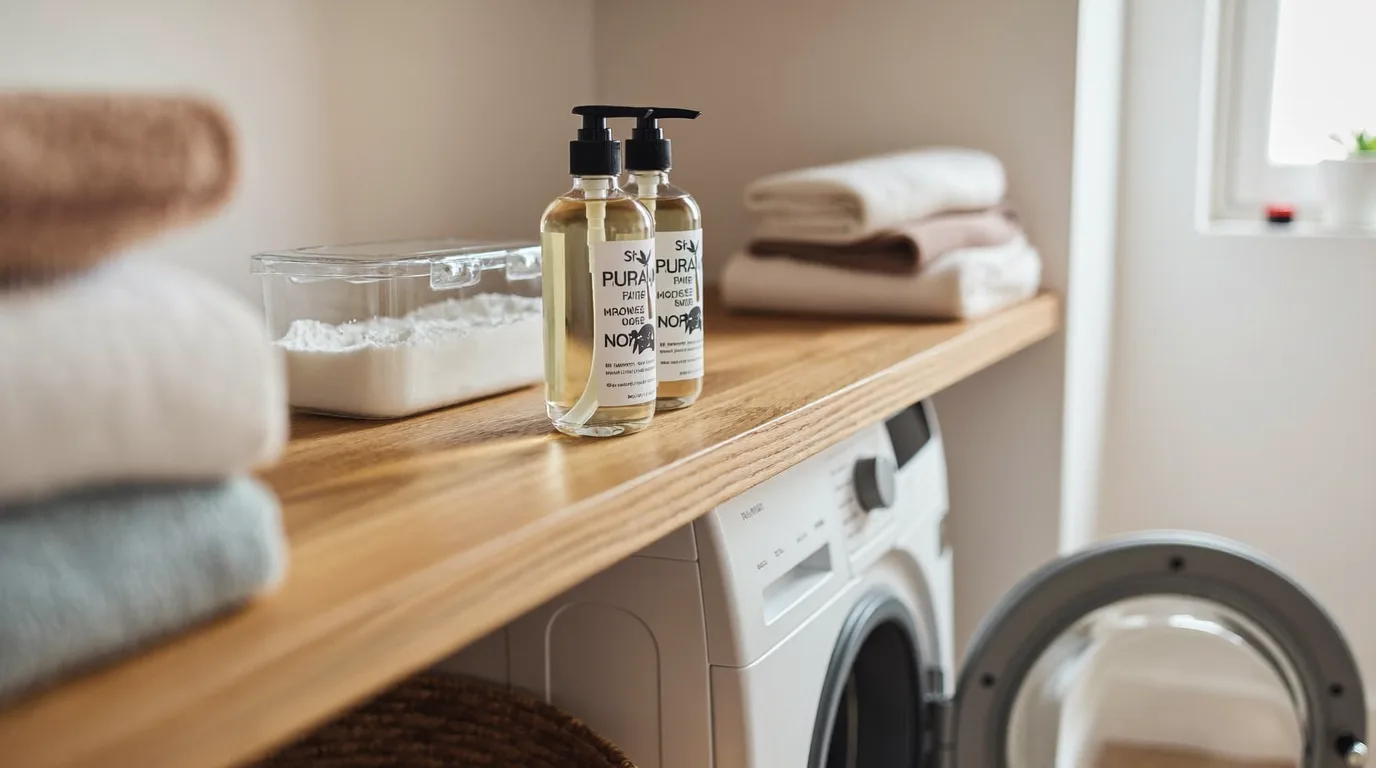
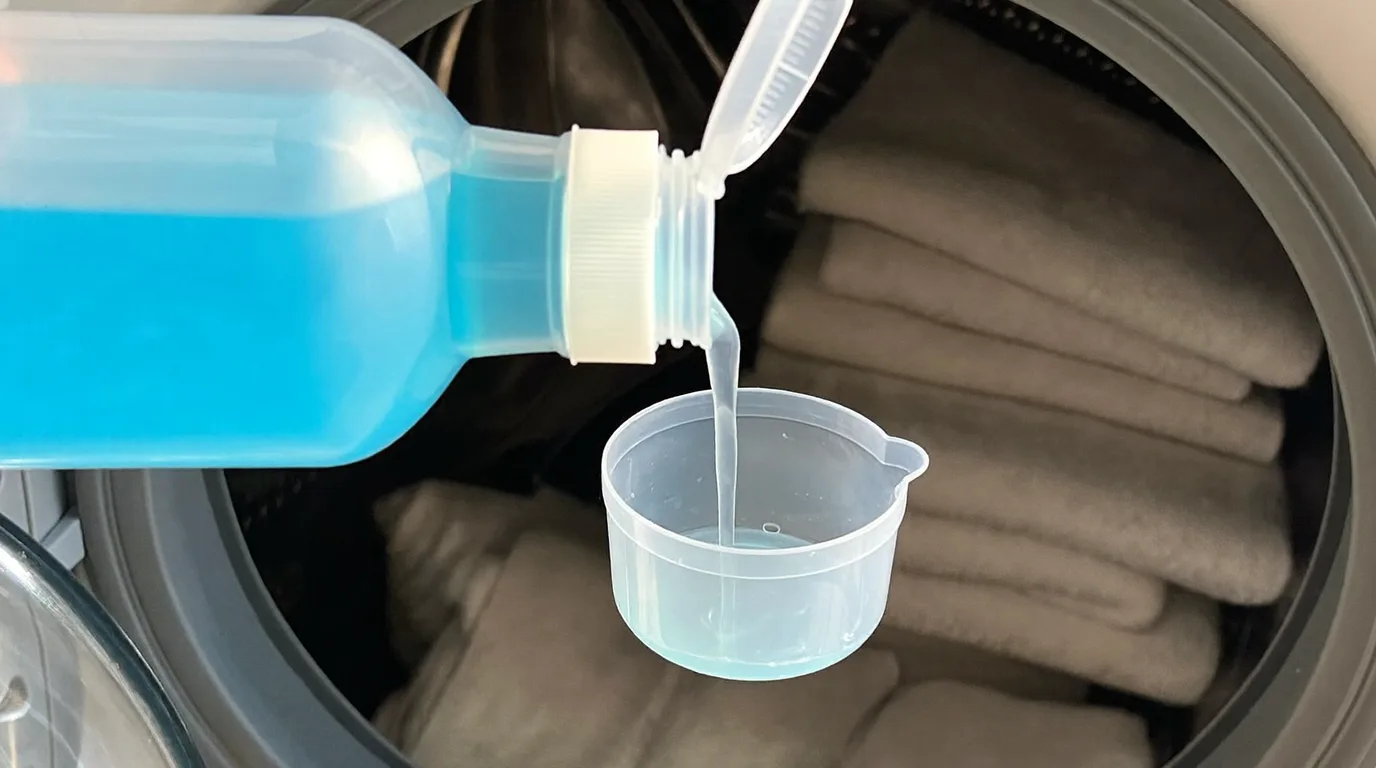
Our selection criteria were an Australian listing or buying route, usable capacity, energy and water ratings, maximum spin speed and features with a clear household purpose. We also considered installation needs and whether a model served a distinct role, such as top loading, a smaller capacity or automatic detergent dosing. A machine without automatic dosing can still pair with a refillable detergent dispenser for liquid or powder that you dose with a pump or measuring cup.
The category winners are our editorial judgement from desk research. We do not run a lab. Named features come from manufacturer descriptions; they do not establish comparative cleaning performance or service life. When comparing top rated washing machines, check whether the rating refers to customer reviews, energy efficiency or an editorial recommendation, then use the exact model code and label figures to make a shortlist easier to compare.
Best Front Load Washing Machines Australia 2026
Front loaders are the best washing machines for most Australian homes. In this shortlist they match or beat the top loaders on energy and water star ratings, they spin faster at full speed (1,200 to 1,600 rpm against 750 to 800 rpm), and some can take a compatible dryer on top with the specified stacking kit, which matters in the compact laundries of most first homes. The three front loaders below all offer 9kg capacity and a maximum spin speed of 1,400 rpm. Their water ratings and control features differ, which gives you a practical way to choose between them. Before the first load, check the manual's detergent instructions and our laundry detergent guide.
Best overall: Bosch Series 8 WGG24403AU (9kg)
The Bosch Series 8 WGG24403AU is our pick for the best front load washing machine in Australia for 2026. It matches the highest energy rating in this shortlist, 5 stars, at a usable 9 kg size and is currently sold through Bosch Australia. Its published dimensions are 848 mm high, 598 mm wide and 590 mm deep, and it needs about 1073 mm of clearance with the door open, per Bosch, so measure your laundry space first. We put it first for that balance of size, a 5 star energy label and current availability, not for any cleaning or reliability claim. The LG WX9-1409W matches it on capacity, energy stars and spin speed and carries a higher 5 star WELS water rating, so if water use is your priority the LG is the closer look.
- Pros: 5 energy stars at a usable 9kg size, SpeedPerfect for a shorter programme option where supported, a published spin noise figure of 74 dB(A), and it is sold through Bosch Australia.
- Cons: The LG WX9-1409W has a higher WELS star rating at the same capacity, and the door needs about 1073 mm of clearance to open. Check the programmes and controls alongside the labels.
- Best for: Most households whose regular clothing, towel and linen loads fit a 9kg machine.
See the Bosch Australia model page and Australian specification sheet.
Best smart features: LG WX9-1409W (9kg)
The LG Series 9 WX9-1409W is our smart features pick for buyers interested in AI DD and ThinQ. It combines 9kg capacity with 5 energy stars, 5 WELS stars and a maximum spin speed of 1,400 rpm.
Shortlist it if connected functions appeal to you and its controls feel straightforward. Before buying, check which ThinQ functions you would use, their setup requirements and whether the ordinary controls suit everyone who does the washing. App features add little value if your routine is simply choosing a programme at the machine.
- Pros: 5 energy stars and 5 WELS stars, the best pair of labels among the three 9kg front loaders in this section, plus AI DD and ThinQ app control.
- Cons: App features add little if you simply choose a programme at the machine, and ThinQ has its own setup requirements.
- Best for: Buyers who want connected features and the highest water rating in this section.
See the features and requirements on the LG Australia WX9-1409W page.
Mid-range front loader: Samsung WW90DG6U3ALESA (9kg)
The Samsung WW90DG6U3ALESA is our mid-range option for households considering BubbleWash and AI Control. This 9kg front loader has 5 energy stars, 4 WELS stars and a maximum spin speed of 1,400 rpm.
Samsung lists AI Control for this model, rather than AI Wash. Compare the exact programme list with your routine instead of assuming similarly named machines have the same functions. Its WELS rating is lower than those of the other two 9kg front loaders in this section, so include water consumption in your comparison.
- Pros: 5 energy stars and 9kg capacity, with BubbleWash and AI Control.
- Cons: 4 WELS stars, the lowest water rating of the three 9kg front loaders here. Samsung lists AI Control for this model, so check the programme list if you expected AI Wash.
- Best for: Households that want a 9kg Samsung front loader and will use its control features.
Check the full model code on the Samsung Australia WW90DG6U3ALESA page.

Best Top Load Washing Machines Australia 2026
Top loaders load from above, so there is no crouching at a front door, and the lid opens upward, which helps where there is no room for a door to swing out. A top loader can be a comfortable choice if you prefer loading from above. Check the reach to the bottom of the empty drum and measure the space with the lid fully open. Neither of these models should be selected on the assumption that every programme is faster than a front loader's.
Best top loader: Fisher & Paykel WL9058G1 (9kg)
The Fisher & Paykel Series 5 WL9058G1 is our top loader pick. It offers 9kg capacity, 4.5 energy stars, 4 WELS stars, auto load sensing and a maximum spin speed of 750 rpm.
Fisher & Paykel describes its wash mechanism as a low-profile agitator. That distinction matters when comparing drum designs. This is a useful shortlist option if you want top access and more capacity than the Westinghouse WWT8084J7WA below.
- Pros: 9kg capacity with 4.5 energy stars and 4 WELS stars, the higher labels of the two top loaders here, plus auto load sensing.
- Cons: A maximum spin of 750 rpm, lower than every front loader in our table, and a dryer cannot sit on top of it.
- Best for: Households that want top access with the larger drum and the better labels of the two.
Its maximum spin speed is lower than those of the front loaders in our table. Consider that alongside your drying routine, and check the available spin settings for delicate garments. See the Fisher & Paykel Australia WL9058G1 listing.
Basic top loader: Westinghouse WWT8084J7WA (8kg)
The Westinghouse WWT8084J7WA is our basic top loader option, with 8kg capacity, 3 energy stars, 3 WELS stars and a maximum spin speed of 800 rpm. Its Full Load 60 programme is a feature to investigate if a defined programme duration matters to your routine.
Check that programme's conditions and permitted loads in the manual. The machine's capacity and both star ratings are lower than those of the Fisher & Paykel WL9058G1, so compare the complete specification rather than choosing on loading style alone.
- Pros: An 8kg drum with top access and the Full Load 60 programme.
- Cons: 3 energy stars and 3 WELS stars, the lowest labels in this guide.
- Best for: Buyers who want a basic top loader and have checked the Full Load 60 conditions in the manual.
See the Westinghouse Australia WWT8084J7WA page.
Best Budget Washing Machine Australia
You don't need the dearest machine in the shop to get good labels. For a smaller budget, start with the capacity you need and the features you will use. These two 7.5kg front loaders both have 4.5 energy stars and 4.5 WELS stars. They are worth considering for smaller regular loads, subject to their programme limits and installation dimensions.
If you are furnishing a first home, allow for delivery and installation alongside other commitments. Our borrowing power calculator can help with the broader home buying plan. For the costs that arrive with the keys, our move in cost calculator lists removalists, connection fees and appliances alongside the purchase costs. If you are kitting out a first home, our Amazon AU checked electric can openers cover a small kitchen gadget.
Budget front loader: Haier HWF75AW3 (7.5kg)
The Haier HWF75AW3 is our budget front loader pick, with 7.5kg capacity, 4.5 energy stars, 4.5 WELS stars, a maximum spin speed of 1,200 rpm and a Refresh steam cycle.
The Haier HWF75AW3 is currently sold through an Australian outlet channel. Confirm stock, the condition of the individual unit, delivery arrangements and return terms before ordering. Its outlet status makes availability an important part of the buying decision.
- Pros: 4.5 energy stars and 4.5 WELS stars, a 1,200 rpm maximum spin and a Refresh steam cycle.
- Cons: It is sold through an outlet channel, so stock, the condition of the individual unit and the return terms all need confirming before you order.
- Best for: Smaller households that want front loader labels on a smaller budget and are comfortable with outlet stock.
See the current buying route on the Haier Australia HWF75AW3 page.
Budget alternative: Hisense HWF3S7514X (7.5kg)
The Hisense Series 3 HWF3S7514X is the alternative to compare if the Haier outlet option does not suit. It has the same 7.5kg capacity and 4.5 energy and WELS star ratings, with a higher maximum spin speed of 1,400 rpm.
Hisense lists steam and Pause & Add among its features. Check the conditions for adding an item after a programme starts. Choose between these two models on fit, available programmes, stock and the complete delivered offer.
- Pros: The same 7.5kg capacity and 4.5 star labels as the Haier, with a higher 1,400 rpm maximum spin, steam and Pause & Add.
- Cons: Pause & Add has conditions for adding an item after a programme starts, so read them first.
- Best for: Buyers who want the budget capacity without the outlet route.
See the Hisense Australia HWF3S7514X page.
Premium Washing Machines
Premium pick: Miele WQ 1000 WPS Nova Edition (9kg)
The Miele WQ 1000 WPS Nova Edition is our premium pick for households interested in TwinDos automatic detergent dosing. This 9kg front loader has 5 energy stars, 5 WELS stars and a maximum spin speed of 1,600 rpm.
Automatic dosing is the clearest reason to put it on your shortlist. Read the instructions for detergent compatibility, replenishment and cleaning, then decide whether that routine would make laundry easier in your home.
Check the controls in person if possible, particularly how you select a programme, change settings and manage dosing. Measure the installation space, door opening and hose clearance before ordering. A premium feature set should earn its place through everyday usefulness.
- Pros: 5 energy stars and 5 WELS stars, the fastest maximum spin in this guide at 1,600 rpm, and TwinDos automatic detergent dosing.
- Cons: TwinDos brings its own detergent compatibility, replenishment and cleaning routine to keep up.
- Best for: Households that will use automatic dosing every week.
See the Miele Australia model listing and Australian ratings catalogue.

Best Washing Machine Brands in Australia 2026
Not sure which brand to trust? Here's how the washing machine brands in this guide compare on what we could verify: the exact model, its labels and its standout feature. Choose an exact model before drawing conclusions about a whole brand. Within this shortlist, the meaningful differences include loading style, water rating, controls, spin speed and detergent dosing.
Washing machine brands compared
| Brand | Verified model | Load type | Distinguishing feature |
|---|---|---|---|
| Bosch | Series 8 WGG24403AU | Front | SpeedPerfect |
| LG | Series 9 WX9-1409W | Front | AI DD and ThinQ |
| Samsung | WW90DG6U3ALESA | Front | BubbleWash and AI Control |
| Fisher & Paykel | Series 5 WL9058G1 | Top | Auto load sensing |
| Westinghouse | WWT8084J7WA | Top | Full Load 60 programme |
| Haier | HWF75AW3 | Front | Refresh steam cycle; outlet buying route |
| Hisense | Series 3 HWF3S7514X | Front | Pause & Add |
| Miele | WQ 1000 WPS Nova Edition | Front | TwinDos automatic dosing |
Bosch
Bosch supplies our overall pick, the Series 8 WGG24403AU: 9kg, 5 energy stars, 4.5 WELS stars and SpeedPerfect. Bosch also publishes a spin noise figure for it, 74 dB(A), which makes it easy to compare if a quiet laundry matters to you.
LG
LG brings the smart features pick, the Series 9 WX9-1409W, with AI DD and the ThinQ app. It is one of two machines in this guide with 5 stars on both the energy and WELS labels.
Samsung
Samsung's WW90DG6U3ALESA is the mid range option, with BubbleWash and AI Control. It matches the other 9kg front loaders on energy stars and sits a little lower on water, at 4 WELS stars.
Fisher & Paykel
Fisher & Paykel makes our top loader pick, the Series 5 WL9058G1, with a low profile agitator and auto load sensing. At 4.5 energy stars and 4 WELS stars it carries the better labels of the two top loaders here.
Westinghouse
Westinghouse covers the basic top loader with the 8kg WWT8084J7WA and its Full Load 60 programme. Its 3 star energy and WELS labels are the lowest in this guide.
Haier and Hisense
Haier and Hisense cover the budget end with 7.5kg front loaders that both carry 4.5 stars on each label. The Haier HWF75AW3 is outlet stock with a Refresh steam cycle; the Hisense Series 3 HWF3S7514X spins faster at 1,400 rpm and adds Pause & Add.
Miele
Miele is the premium brand in this guide. The WQ 1000 WPS Nova Edition has 5 stars on both labels, the highest maximum spin here at 1,600 rpm and TwinDos automatic dosing.
Bosch or Miele: which suits your household?
The Bosch Series 8 WGG24403AU is our overall choice for a 9kg front loader. The Miele WQ 1000 WPS Nova Edition is the premium alternative if automatic dosing matters to you. Both have 5 energy stars; the Miele has 5 WELS stars and a maximum spin speed of 1,600 rpm, compared with the Bosch's 4.5 WELS stars and 1,400 rpm.
Decide whether the dosing system and different controls would improve your routine. Neither the brand name nor the feature list establishes how long an individual machine will last.
What reliability evidence can tell you
A meaningful reliability comparison needs model-specific evidence, a clear time period and enough machines to make the result useful. Published specifications alone cannot establish which brand breaks down least.
Before buying, read the maker's current warranty length and terms, distinguish whole-machine coverage from motor-only coverage, and ask how service is arranged for your postcode. Use the energy label and capacity to judge household fit, rather than treating them as evidence of durability.
Front Loader vs Top Loader: Which Is Better?
This is the first and most important decision when buying a washing machine in Australia. Both types do the job, but they suit different laundries, routines and budgets.
Start with access and space. A front loader is worth considering if you need a bench above the machine or a compatible stacked dryer. A top loader suits a laundry with clear space overhead, provided you can comfortably reach the bottom of the drum. Compare the individual models' energy and water labels before deciding.
| Consideration | Front loader | Top loader |
|---|---|---|
| Loading access | Needs room to open the front door and reach into the drum. | Needs room to lift the lid and reach down into the drum. |
| Stacking | Some models accept a compatible dryer with the specified stacking kit. | The lid needs to remain accessible, so a dryer cannot sit directly on the machine. |
| Space | Check depth with the door and hoses included, plus clearance in front. | Check total height with the lid open, including any shelves above it. |
| Cycle choice | Compare the duration and load limit of the programmes you will actually use. | Check programme details rather than assuming every cycle will be quicker. |
| Energy and water | Use the model's energy consumption and WELS label for comparison. | Use the same measures at a similar capacity. Loading style alone does not give an annual bill. |
| Energy stars in this shortlist | 4.5 to 5 stars across six models. | 3 to 4.5 stars across two models. |
| WELS stars in this shortlist | 4 to 5 stars. | 3 to 4 stars. |
| Maximum spin in this shortlist | 1,200 to 1,600 rpm. | 750 to 800 rpm. |
Our verdict: A front loader is the best washing machine for most Australian homes. The front loaders in this shortlist match or beat the top loaders on both star labels, they spin faster, and some can take a compatible dryer on top, a real advantage in a small laundry. Choose a top loader if you would rather load from above, or if lid access suits your laundry better than a front door.
If both styles fit, use capacity, label ratings and useful programmes to narrow the choice. A comfortable loading height matters more than a feature you will rarely use.
How to Choose the Right Washing Machine for Your Home
What Size Washing Machine Do I Need?
Use the amount you normally wash as your starting point. Capacity is stated as the weight of dry laundry, and individual programmes can have lower load limits than the machine's headline capacity.
- 7 to 7.5kg: As a rule of thumb, enough for 1 to 2 people. Start by comparing the 7.5kg options if you wash little and often.
- 8 to 9kg: The sweet spot for most couples and small families. Consider the 8kg and 9kg options if towels, sheets and clothing regularly fill the basket. This is the size we suggest for most first home buyers.
- 10kg and over: For larger families or anyone who lets the washing pile up. None of the eight machines here is that large, so apply the same label checks to a bigger model.
- Bulky bedding: Check both the item's care label and the machine's bedding instructions. A capacity figure alone does not confirm that a particular doona will fit. To compare the doonas themselves, see our doona guide. An electric blanket goes by its own care label: some makers allow a machine wash once the controls are removed, and our electric blanket guide covers washing one.
Our recommendation: an 8 to 9kg front loader for couples and small families. A larger drum is useful only if it matches the loads you need to wash. Plan the rest of the room with our laundry setup guide.
Will it fit your laundry?
Measure width, height and depth, then check the manufacturer's installation clearances. Allow for hoses, taps, the door or lid opening, nearby cupboards and the route from your entrance to the laundry. If the machine travels in a ute or trailer, secure it with ratchet straps for moving appliances.
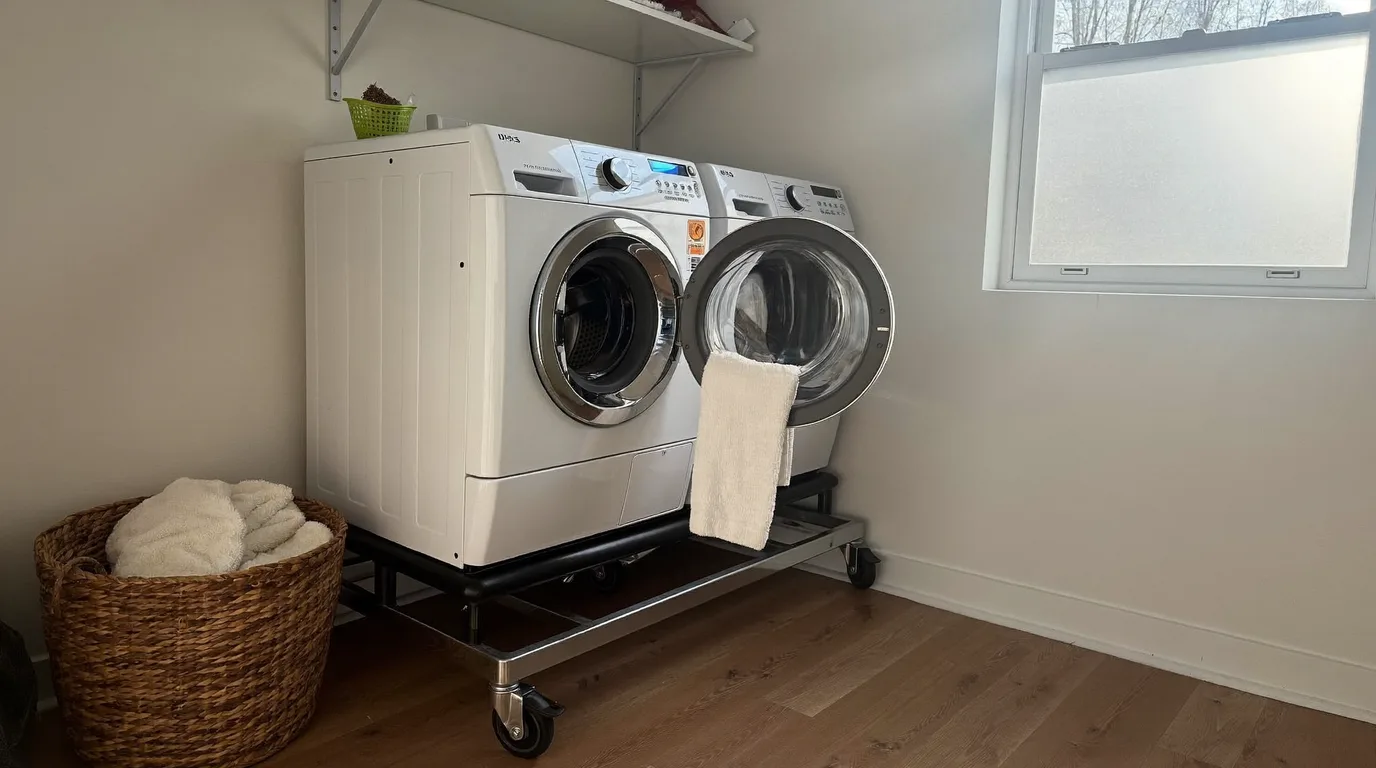
A smaller kilogram rating does not automatically mean a smaller cabinet. If you want a raised front loader, our washing machine stand guide is a starting point, but confirm that the support is permitted for the exact machine. For stacking, check compatibility for both appliances and use the specified kit.
Energy and Water Ratings: How to Read the Labels
Australian washing machines carry two labels: energy stars and WELS water stars. More stars mean a more efficient machine at the same capacity, so look for 4 stars or more on each. Every machine in this guide except the basic Westinghouse top loader clears that mark on both labels.
Read both the stars and the consumption figures. Energy stars help compare efficiency between machines of similar capacity; the labelled kWh figure describes electricity use under the stated programme conditions. The WELS label provides a water efficiency rating and water consumption information.
Check the programme and load assumptions before turning either label into an estimate for your household. Your chosen temperature, load size and washing frequency may differ from the label basis.
Features That Matter vs Marketing Gimmicks
- Worth paying for: Programmes you will use every week. Check the load limits for cottons, delicates, bedding and quick washes. A shorter programme option, such as SpeedPerfect on the Bosch or Full Load 60 on the Westinghouse, earns its place if time matters in your routine.
- Worth paying for: Automatic dosing, such as TwinDos on the Miele, if you would rather not measure detergent. Check compatible detergents and the required cleaning routine.
- Nice but not essential: Adding forgotten clothes. Read the conditions for pausing and opening the machine during a cycle.
- Nice but not essential: Connected controls. Decide whether app functions would help, and check any account or connection requirements.
- Nice but not essential: Steam functions. Read what the particular programme does and which fabrics it permits.
- Skip these: Paying more for a long list of specialist modes you will rarely use, or for the top spin figure alone. Compare the available speeds and follow garment care instructions. The maximum speed is only one part of the specification.
A laundry machine should make your usual jobs straightforward. A clear control panel and a suitable everyday programme can matter more than a long list of specialist modes.
Not everything goes in the machine: the product tables for the strapless bras listed as hand wash only say so, so check the care label before any cycle.
Care lines differ between bras too, so our T shirt bra care lines compared quote each listing before you wash one.
Which washing machine for a small laundry or narrow space?
The front loaders here are all close to 600 mm wide. Check the door-open clearance for your shortlisted model: the Bosch Series 8 WGG24403AU, for example, is 848 mm high, 598 mm wide and 590 mm deep and needs about 1073 mm of clearance with the door open, per Bosch. Measure your door-open clearance first. If floor space is tight but you have room above the machine, a top loader such as the Fisher and Paykel WL9058G1 opens upward instead of outward.
Which washing machine is quietest?
Check the maker's stated spin noise for the exact model rather than assuming. Bosch publishes 74 dB(A) on the spin for the WGG24403AU. Compare the published spin-noise figure for your shortlisted model, and set the machine on a solid, level floor.
Washing Machine Prices in Australia 2026
Here's what to expect at each tier. We leave dollar figures out of this guide because they move with every sale, so use the tiers to decide what you are paying for.
Choosing between budget, mid-range and premium
Compare the complete offer for the same model code. Delivery, installation, access requirements and removal of an old appliance can change which offer suits you best.
- Budget: Prioritise suitable capacity, label ratings and essential programmes. Check the Haier HWF75AW3 outlet conditions against the Hisense HWF3S7514X alternative.
- Mid-range: Decide whether features such as AI Control on the Samsung WW90DG6U3ALESA have a useful role in your routine.
- Premium: Identify the specific benefit you want, such as TwinDos on the Miele WQ 1000 WPS Nova Edition.
Where to Buy Washing Machines in Australia
Start with the maker's Australian listing or retailer locator, then compare available offers for the exact code. Ask each seller to confirm stock for your postcode and provide the delivery and installation terms in writing.
Check whether the quote includes placement in the laundry, connection, packaging removal and collection of the old machine. If stairs, narrow doors or a stacked installation are involved, explain those details before booking.
Affiliate disclosure: NestPath's affiliate relationships are with Amazon. The washing machine recommendations here are based on the published specifications described above. The model links in this guide go to each maker's Australian page, and we earn nothing on the washing machines themselves.
When to Buy: Best Times for Deals
If your current machine still works, track the same model across several sellers before choosing an offer. EOFY, Black Friday and Boxing Day are useful occasions to compare advertised promotions, but a sale label alone does not establish value.
If you need a replacement immediately, prioritise confirmed stock and a suitable delivery date. Compare the total delivered quote with the features and capacity you actually need.
Running Costs: Front Loader vs Top Loader
Here's a real electricity cost example for an Australian household at five washes a week. Compare running costs using the exact models' consumption figures and the same washing schedule. Star ratings alone do not provide a household bill, and a front loader versus top loader comparison needs more than the loading style.
Worked electricity-cost example
Western Australia A1 residential example: Assume five washes a week, about 260 washes a year, using the Bosch Series 8 WGG24403AU's labelled Cottons Eco 60C programme at 1,400 rpm. Its published electricity consumption is 215 kWh a year on the label's basis of seven washes a week, about 365 washes a year.
Calculation: 215 kWh x (260 / 365) x 33.3c per kWh = about $51 a year.
The tariff shown is Western Australia's regulated A1 residential electricity rate, effective 1 July 2026, rounded for display. The estimate uses the published tariff before rounding. Sources: Bosch's Australian specification sheet and WA Government household electricity pricing.
To estimate your own cost, use the rate on your electricity bill.
This is a WA example, not an Australian average or a measured household result. It assumes each wash uses the labelled programme basis and excludes water, detergent, drying and fixed supply charges.
Why programme choice and water use change the result
Changing the programme, temperature, load or number of washes changes how closely your use matches the label. Water is a separate part of the comparison, so check the model's labelled litres per wash alongside the electricity figure.
If you are choosing a dryer too, use our best dryer guide to plan the drying side of the routine. Our energy saving tips cover other ways to manage household energy use.
If there is no room for a dryer, see our heated clothes airer with 20 heated rods for drying a small load indoors.
Complete your laundry day: the accessories worth buying with the machine
The machine itself comes from an appliance store, but the things that make wash day work can come from Amazon in one order. These laundry essentials pair with a new machine, and every card below was checked on Amazon AU for stock and the seller. Start with the items that solve a clear need in your home, then add the rest as your routine settles.
If seasonal bedding is what fills your cupboards between washes, our vacuum storage bags guide compares jumbo bags made for doonas and blankets.
Our duvet cover care and size guide sets out the wash steps each listing gives for eight bed covers.
Affiliate disclosure: We may earn a commission from qualifying purchases through Amazon affiliate links in our accessory guides.
Detergent, cleaning and garment protection
- Washing machine cleaner: Choose a cleaner compatible with the machine and follow both the appliance manual and cleaner instructions.
- Mesh laundry bags: Use suitable bags for small items or garments whose care instructions permit machine washing.
- Anti-vibration pads: Consider them only if the manufacturer permits them. First check that installation and levelling follow the manual.