For frequent drying, start with a heat pump such as the Electrolux EDH912R9WC UltimateCare Plus 900: a 9 kg heat pump dryer with 10 stars for energy efficiency. Households needing an occasional backup can also consider a vented dryer with suitable external ventilation.
Start with how often you dry clothes, where the machine will sit and how much washing you actually tumble dry. Those details matter more than a long programme list. This guide compares verified Australian models, explains installation requirements and shows how to estimate electricity costs from the energy label.
Best Dryers Australia 2026: Quick Comparison
These eight models cover regular family drying, smaller loads and occasional use. Follow a model link for its recommendation and installation considerations.
| Model | Type | Capacity | Energy stars | Key feature |
|---|---|---|---|---|
| Electrolux EDH912R9WC | Heat pump | 9 kg | 10 | 3DSense moisture sensing |
| LG DVH5-08W | Heat pump | 8 kg | 9 | Automatic condenser cleaning |
| Bosch WTH83002AU | Heat pump | 8 kg | 8 | AutoDry |
| Miele TWH780WP | Heat pump | 9 kg | 10 | SilenceDrum |
| Fisher & Paykel DH9060D5 | Heat pump | 9 kg | 9 | Fibre-specific programmes |
| Beko BDCB8020W | Condenser | 8 kg | 2 | OptiSense |
| Haier HDV70AWW1 | Vented | 7 kg | 2 | Sensor drying and 15 cycles |
| Westinghouse WDV556N3WB | Vented | 5.5 kg | 2 | Included wall mounting kit |
Specifications come from the Australian manufacturer sources linked below. A current catalogue listing does not guarantee stock at your postcode. Compare energy stars alongside capacity and the label's annual kWh figure.
How we picked these clothes dryers
Last verified 30 September 2026. This shortlist is based on desk research using Electrolux Australia, LG Australia, Bosch Australia, Miele Australia, Fisher & Paykel Australia, Beko Australia, Haier Australia and Westinghouse Australia. Each recommendation links to its Australian product information.
We considered Australian catalogue availability, capacity, published energy use, useful features and installation requirements. The recommendations reflect different household needs. Before ordering, confirm local availability, installation compatibility and the manufacturer's current warranty terms for the exact model.
For electricity estimates, we used the Australian Government Energy Rating label guidance and WA Government household electricity pricing. The calculation and its assumptions appear in the running costs section.
Best Heat Pump Dryer Australia 2026
A heat pump dryer recovers heat and recirculates drying air in a closed loop. It collects moisture as water, so it does not need an external exhaust duct. That makes it a useful starting point for regular drying, provided the laundry meets the model's clearance and ventilation requirements.
Electrolux EDH912R9WC UltimateCare Plus 900: 9 kg and 10 stars
Best for: households regularly drying larger loads and prioritising electricity use.
The Electrolux EDH912R9WC combines 9 kg capacity, a 10-star energy rating and 3DSense moisture sensing, with a published annual label consumption of 110 kWh on the one-load-per-week basis. Among the two 10-star models here it suits households drying larger loads often; the Miele TWH780WP is the premium alternative where quiet operation near living spaces matters most.
Fit and limitations: Electrolux lists 850 mm high, 596 mm wide and 659 mm deep, so measure the cabinet and the door-open clearance before ordering. It is a freestanding heat pump dryer that needs no venting; if you plan to stack it, confirm the exact Electrolux washer and stacking-kit pairing first.
Value shortlist: LG DVH5-08W
Best for: buyers comparing an 8 kg heat pump dryer with automatic condenser cleaning.
The LG DVH5-08W has a 9-star energy rating and an automatic condenser cleaning system. The value label reflects a strong feature set for the tier: an 8 kg 9-star heat pump with automatic condenser cleaning, Wi-Fi and a 10-year warranty on the inverter compressor, per LG. That cleaning feature reduces but does not remove routine care, so keep following the lint filter instructions.
Fit and limitations: LG lists 850 mm high, 600 mm wide and 690 mm deep. Confirm the dimensions, the door-open clearance and any stacking pairing against your space before ordering.
Another 8 kg option: Bosch WTH83002AU
Best for: households wanting an 8 kg heat pump model with AutoDry moisture sensing.
The Bosch Series 4 WTH83002AU is a heat pump dryer, with 8 kg capacity and an 8-star energy rating. Its AutoDry feature makes it worth comparing with the LG DVH5-08W when choosing between the two 8 kg options, though at 8 stars it is the least energy-efficient of the heat pump picks here.
Fit and limitations: Bosch lists 842 mm high, 598 mm wide and 613 mm deep, with AntiVibration side walls and stacking kits available, per Bosch. Confirm the dimensions, the door-open clearance and the exact washer and stacking-kit pairing before ordering.
Premium pick: Miele TWH780WP
Best for: buyers seeking a 9 kg heat pump dryer with 10 stars and Miele's SilenceDrum feature.
The Miele TWH780WP is the other 10-star model in this shortlist and the premium pick. Miele states its SilenceDrum reduces rattling from zips and buttons and lists an acoustics package for lower sound emissions, which is worth investigating if the laundry is near living spaces. That does not establish it is quieter than every alternative, so check the published sound figure for your model.
Fit and limitations: Miele lists about 596 mm wide and 850 mm high and states the dryer is suitable for stacking, per Miele. Confirm the exact dimensions, the door-open clearance and any Miele stacking kit for your space before ordering.
For a matching laundry setup: Fisher & Paykel DH9060D5
Best for: buyers planning a coordinated laundry and wanting programmes for different fibres.
The Fisher & Paykel DH9060D5 is a 9 kg heat pump dryer with a 9-star energy rating. Its fibre-specific programmes are a reason to compare it if your loads contain different fabrics, while still following each garment's care label.
Fit and limitations: Fisher & Paykel lists 850 mm high, 602 mm wide and 682 mm deep, and the range is designed to stack specific heat pump dryers on matching Fisher & Paykel front loaders, per Fisher & Paykel. Confirm the exact washer and stacking pairing, the dimensions and the door-open clearance before ordering.
Who should buy a heat pump dryer?
Start here if you dry clothes regularly, want to prioritise electricity efficiency or cannot provide an external exhaust duct. Compare programme durations for your usual loads, access to filters and the practicalities of emptying a tank or connecting a drain.
There is no universal number of weekly loads at which a heat pump becomes the right purchase. Your electricity rate, installation costs, usage and the alternatives you are considering all matter.
Best Condenser Dryer Australia 2026
A conventional condenser dryer heats air with an electric element and collects moisture as water. It avoids an external exhaust duct, but still needs the room conditions and clearances specified by its manufacturer. Do not assume it will use less electricity than a vented dryer.
Conventional condenser shortlist: Beko BDCB8020W
Best for: buyers specifically seeking a conventional condenser dryer with 8 kg capacity.
The Beko BDCB8020W has a 2-star energy rating and OptiSense. It is the only current conventional condenser dryer we could verify on an Australian manufacturer site for this guide, as at 30 September 2026. That describes the scope of our verification, rather than the entire Australian market.
Beko lists annual label consumption of 360 kWh. Confirm local stock through its store finder and check the water collection, drainage and installation instructions before ordering. See the Beko Australia product page and model specification sheet.
Classification matters: the Bosch Series 4 WTH83002AU is actually a heat pump dryer. Although heat pump machines also condense moisture, it does not belong in the conventional condenser shortlist.
Who should buy a condenser dryer?
Consider a conventional condenser if you need water collection instead of external exhaust and its features suit your routine. Compare its annual kWh figure with a heat pump before deciding. The absence of a duct does not make it suitable for an unventilated cupboard.
Best Vented Dryer Australia 2026
A vented dryer heats air, passes it through the load and releases the moist air through an exhaust. Plan how that moisture will leave your home before choosing the machine. Follow the model's instructions for ducting and room ventilation.
For larger occasional loads: Haier HDV70AWW1
Best for: occasional drying when you want more capacity than the smaller Westinghouse option.
The Haier HDV70AWW1 is a 7 kg vented dryer with a 2-star energy rating, sensor drying and 15 cycles. Its published annual label consumption is 315 kWh.
Its suitability depends on your exhaust arrangement and load sizes. Check the permitted installation position, venting accessories and any mounting requirements in the Haier Australia product information and installation guide.
For smaller loads and wall mounting: Westinghouse WDV556N3WB
Best for: smaller loads where an approved wall installation would free up floor space.
The Westinghouse WDV556N3WB is a 5.5 kg vented dryer with a 2-star energy rating and an included wall mounting kit. Its smaller capacity is the main trade-off if you regularly wash large loads.
The supplied kit does not remove the need to assess the wall, fixings, clearances and exhaust route. Follow the Westinghouse Australia installation instructions and arrange an installer if needed.
Who should buy a vented dryer?
A vented dryer can suit occasional backup drying in a laundry with a suitable route for moisture to escape outside. It also offers a wall mounting option where the exact model permits it. For frequent use, compare label electricity consumption with a heat pump before committing.
Best Budget Dryer Australia
A limited budget makes capacity and installation especially important. A machine that needs unexpected venting work or cannot handle your usual loads may be a poor fit even when its initial cost is appealing.
Smaller households: Westinghouse WDV556N3WB
Shortlist the 5.5 kg Westinghouse WDV556N3WB if you dry small loads and can provide suitable ventilation. The included wall mounting kit is useful where the wall and installation instructions allow it.
More capacity: Haier HDV70AWW1
Compare the 7 kg Haier HDV70AWW1 if the smaller Westinghouse would leave you splitting your usual tumble-dry load. Check its sensor programmes, installation needs and local availability.
What to prioritise on a limited budget
- Enough capacity for the items you actually put in the dryer.
- A workable installation, including ventilation, mounting and access.
- The annual kWh figure on the energy label.
- Controls and programmes you will use regularly.
- A clear delivery and installation quote for your address.
If drying will be a regular part of your week, include a heat pump in your comparison. Avoid choosing from the initial outlay alone.
Heat Pump vs Condenser vs Vented: Which Type Do You Need?
The three main clothes dryer types differ in how they supply heat and remove moisture. Understanding those two jobs makes the choice easier.
What is a heat pump clothes dryer?
A heat pump clothes dryer uses a refrigerant system to recover heat. Air circulates through the drum in a closed loop, moisture condenses into water and recovered heat returns to the drying process. Water collects in a tank or leaves through a drain connection where supported.
What is a condenser clothes dryer?
A conventional condenser clothes dryer uses an electric heating element and condenses moisture into water. It needs no external exhaust duct, but releases heat into its surroundings and must have the ventilation specified in its manual.
What is a vented clothes dryer?
A vented clothes dryer uses an electric element to heat air and exhausts the moist air from the machine. A suitable external exhaust arrangement helps prevent that moisture accumulating indoors.
Which clothes dryer type suits your home?
| Factor | Heat pump | Conventional condenser | Vented |
|---|---|---|---|
| Heat generation | Refrigerant system recovers heat | Electric element | Electric element |
| Moisture disposal | Tank or supported drain connection | Tank or supported drain connection | Moist air through an exhaust |
| Ventilation | No external exhaust duct; room requirements still apply | No external exhaust duct; room requirements still apply | Suitable exhaust route and room ventilation |
| Installation | Floor installation or approved stacking | Floor installation or approved stacking | Floor installation or model-approved mounting |
| Programme duration | Gentler, lower-temperature drying; check the programme and load limit for cycle time | Uses more energy than a heat pump; check the programme and load limit for cycle time | Needs external venting; check the programme and load limit for cycle time |
| Maintenance | Lint filters, water handling and model-specific heat exchanger care | Lint filters, water handling and condenser care | Lint filters and exhaust checks |
| Usage suitability | Strong starting point for frequent drying | An option when water collection suits the installation | Occasional drying with suitable external ventilation |
Programme names, temperatures and cycle lengths vary by model. Compare the programme you would actually use, including its load limit, rather than assuming every dryer of one type behaves the same way.
Best Dryer Brands in Australia 2026
Choose the model and installation first, then assess the support available where you live. The table below describes the models represented in this guide, rather than making claims about each brand's entire range.
| Brand | Shortlisted model and type | Feature to compare | Manufacturer information |
|---|---|---|---|
| Electrolux | EDH912R9WC, heat pump | 3DSense | Specifications and support |
| LG | DVH5-08W, heat pump | Automatic condenser cleaning | Specifications and support |
| Bosch | WTH83002AU, heat pump | AutoDry | Specifications and support |
| Miele | TWH780WP, heat pump | SilenceDrum | Specifications and documents |
| Fisher & Paykel | DH9060D5, heat pump | Fibre-specific programmes | Specifications and support |
| Beko | BDCB8020W, condenser | OptiSense | Specifications and documents |
| Haier | HDV70AWW1, vented | Sensor drying | Specifications and documents |
| Westinghouse | WDV556N3WB, vented | Included wall mounting kit | Specifications and support |
Compare warranty coverage and local support
Read the manufacturer's current warranty document for the exact model. Check the whole-appliance warranty length, parts and labour coverage, any separate component cover and exclusions. Ask who services your postcode and how a repair is booked.
Keep a dated copy of the terms supplied with your purchase. These checks help you understand the support being offered without treating a warranty headline as a prediction of appliance life.
Where to buy in Australia
Use the manufacturer links to locate an Australian seller or direct purchase option. Confirm the exact model code, stock for your postcode, delivery access and what installation includes. For the Westinghouse WDV556N3WB, you can also check The Good Guys model listing.
Before paying, establish who supplies any stacking kit, drain hose or venting accessories. Ask whether packaging removal and removal of an old appliance are included in the quote.
Dryer Running Costs Australia 2026
Estimate electricity costs from the model's annual label consumption, your drying frequency and your electricity usage rate. The star rating helps you compare efficiency, while the kWh figure provides the input for the calculation.
How much does a heat pump dryer cost to run?
The Electrolux EDH912R9WC has published annual label consumption of 110 kWh on a one-full-load-per-week basis. For four loads a week, multiply that label figure by four: 110 kWh x 4 = 440 kWh a year.
Using the Western Australia A1 residential tariff effective 1 July 2026, displayed here as 33.3c per kWh, that gives about $146 a year. Calculations use the published tariff before rounding. Sources: Electrolux Australia label consumption, Energy Rating label assumptions and WA Government tariff data.
Annual and ten-year electricity costs
WA A1 example: all three estimates below assume four loads a week, scaling each annual label figure from its one-load-per-week basis, at the same tariff displayed as 33.3c per kWh. This is a WA example, not an Australian average.
| Model | Capacity | Annual label energy, one load weekly | Estimated electricity cost, four loads weekly |
|---|---|---|---|
| Electrolux EDH912R9WC | 9 kg | 110 kWh | about $146 a year |
| Beko BDCB8020W | 8 kg | 360 kWh | about $479 a year |
| Haier HDV70AWW1 | 7 kg | 315 kWh | about $419 a year |
For the Electrolux EDH912R9WC, extending the unrounded annual calculation gives about $1,460 over ten years, assuming unchanged usage and tariff. This is an electricity projection only. It excludes supply charges, repairs and purchase price.
The models have different capacities, so these figures do not provide an equal-load comparison. Actual consumption also depends on load size, residual moisture, programme and operating conditions.
Adjust the calculation for your household
use your own rate from your bill
For a dryer label based on one load weekly, multiply annual label kWh by your expected weekly loads. Multiply that result by your electricity usage rate in dollars per kWh; if your bill shows cents per kWh, divide it by 100 first, so 33.3 cents is $0.333.
If your tariff changes by time of day, use the rate applying when you normally dry clothes. Treat the result as a planning estimate and check the label's stated assumptions before using the formula.
How to Choose a Dryer for Your New Home
Choose capacity for your actual loads
Dryer capacity refers to the dry weight of laundry. Start with the portion of each wash that is suitable for tumble drying, rather than automatically copying your washer's capacity.
- 7 kg: consider this size when your tumble-dry loads are modest and you air dry larger items separately.
- 8 kg: compare this size if you need more room for regular mixed loads.
- 9 kg: consider it for larger loads, while checking the specific bedding programme limits.
- 10 kg: investigate this capacity if your actual loads need it, then compare dimensions and energy labels for the exact models available.
Household size alone is a rough guide. A couple washing bulky towels may need more drum space than a larger household that mostly uses a clothesline. Our best washing machine in Australia guide can help you plan the pair.
Will it fit a laundry cupboard?
Measure the cupboard opening, internal width, height and depth. Compare those measurements with the published appliance dimensions, then add the clearances required by its installation manual. Include the door swing, hoses and space to remove filters or a water tank.
Even a heat pump or condenser dryer, which needs no external vent, still releases warm, moist air and heat into the room, so makers set minimum side, rear and top clearances in the installation manual and some require the cupboard to be ventilated or the door left open during a cycle. There is no universal clearance that suits every dryer, so check your model's manual. Also measure the delivery route, including stairs and doorways.
Check stacking, wall mounting, drainage and power
For stacking, obtain confirmation that the exact dryer, washer and stacking kit are compatible. If considering a separate support frame, use our washing machine stand guide as a starting point, then confirm the load rating and appliance installation requirements.
Wall mounting requires a dryer specifically approved for it, a suitable wall and the specified mounting hardware. For water-collecting dryers, decide whether you will empty the tank or use a supported drain connection. Check the required power supply and socket position in the manual.
What to check before you buy
- Programme durations and maximum loads for your usual fabrics.
- Access to lint filters, water tanks and other maintenance points.
- Instructions for loading sheets and bulky bedding to manage tangling.
- Door opening direction and access when appliances are stacked.
- Delivery, installation accessories and local service arrangements.
- Annual label kWh and your likely weekly usage.
Our homeowner energy-saving guide helps you consider the dryer alongside other household appliances. Add installation tasks to your new home essentials checklist. If you are also planning the home purchase, the borrowing power calculator can support that broader planning.
Complete the drying setup: what to buy alongside the dryer
A practical drying setup needs somewhere for garments that cannot tumble dry, a place to sort washing and easy access to routine dryer care. These are the laundry essentials we pair with a new dryer.
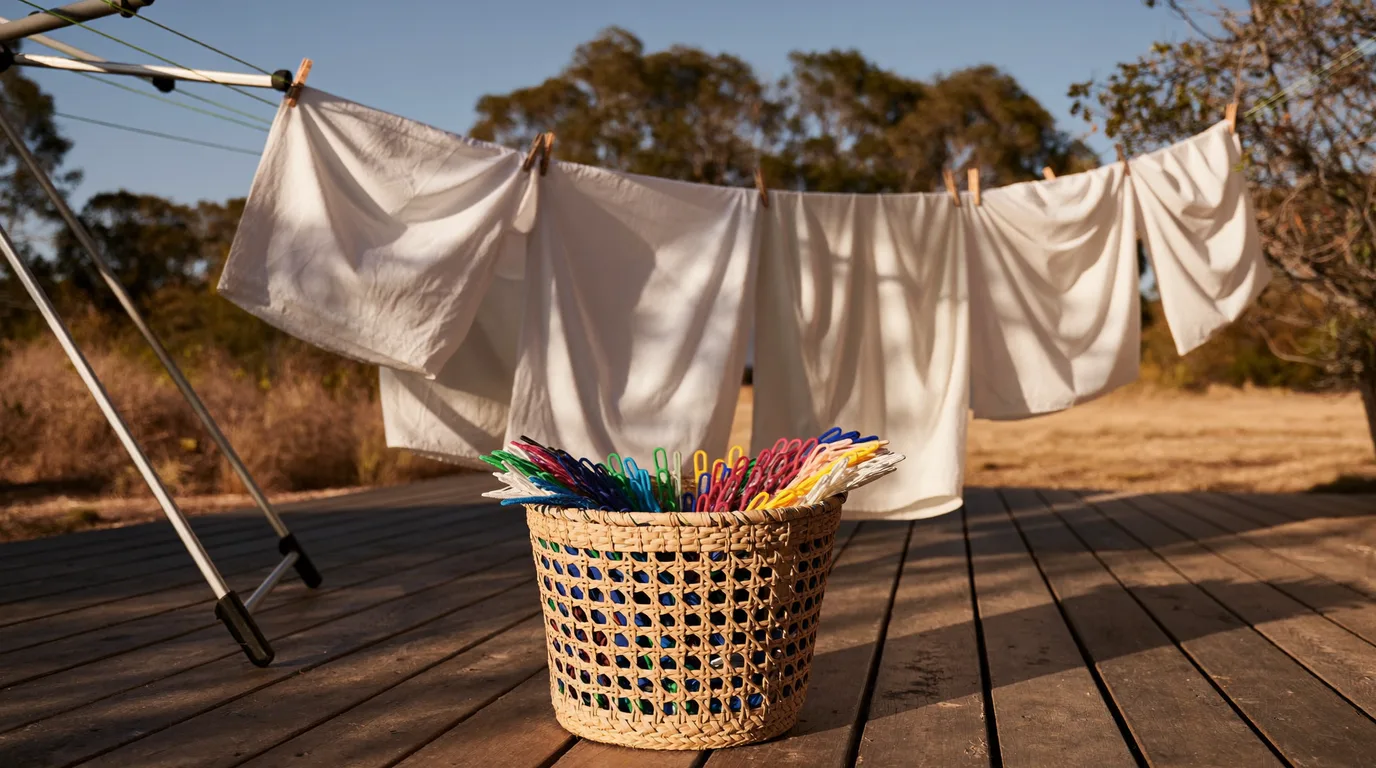
Airers and clotheslines for suitable garments
For garments whose care labels call for air drying, a folding airer covers everyday items and a retractable line handles bigger loads where you have a mounting position. Compare usable space and folded size in our clothes airer guide and retractable clothesline guide.