The fastest way to freshen a shirt without ironing
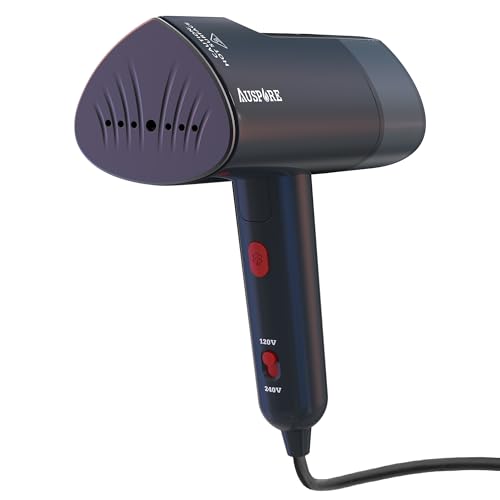
The Philips 3000 Series Handheld Steamer is our pick for most people wanting to freshen hanging clothes without an iron. The folding Auspure is the compact unit for quick touch ups. Both relax wrinkles in garments rather than making crisp creases.
The Philips 7000 Series is rated at up to 28 grams of continuous steam a minute from a 1,500 W unit, compared with 20 grams a minute for the Philips 3000 Series.
Steam works while the garment hangs, so a shirt, dress or curtain can stay off the ironing board. The steamers here are all handheld models. Each suits a different routine: the Philips 3000 for an everyday wardrobe, Auspure for compact touch ups, Sunbeam for longer runs, Russell Hobbs for contact pressing, and Philips 7000 for a higher published continuous steam rate than the 3000. A steamer relaxes wrinkles; a steam iron remains useful when you need a sharply pressed finish.
Best garment steamers in Australia 2026: quick comparison
Compare the maker and listing figures with the job you actually do. Every output figure below is the maker's continuous rate. Bands describe typical listing prices; live card prices can change.
We compared specifications from maker Australian pages with the current Amazon AU listings. Published claims are attributed to the maker or listing.
| Model | Steam output (as published) | Tank | Heat-up (listed) | Band |
|---|
| Auspure Handheld Garment Steamer AP-GS80 | Up to 24 g/min continuous | Conflicting (120 to 140 ml) | Maker: rapid; Amazon specification: 20 seconds | Under $50 |
| Philips 3000 Series Handheld Steamer | Up to 20 g/min continuous | 100 ml | About 30 s | Under $50 |
| Sunbeam SG1000 Power Steam Handheld | 23 g/min continuous | 300 ml | Under 40 s | On the live card |
| Russell Hobbs Handheld Supreme RHC410 | 30 g/min continuous | 200 ml | About 45 s | On the live card |
| Philips 7000 Series Handheld STH7060/80 | Up to 28 g/min continuous | 100 ml + 200 ml tanks | About 30 s | Under $130 |
Prices checked 1 October 2026; bands reflect that check.
Philips STH3000/20 and Philips STH7060/80 both list heat-up times of about 30 seconds, while Sunbeam SG1000 is ready in under 40 seconds. Philips STH3000/20 lists up to 20 g/min; Philips STH7060/80 lists up to 28 g/min and interchangeable 100 ml and 200 ml tanks. Sunbeam SG1000 lists 23 g/min continuous steam and a 300 ml tank.
Heat-up times where the maker publishes one: the Sunbeam SG1000 is stated ready in under 40 seconds and the Russell Hobbs RHC410 in about 45 seconds.
Best overall: Philips 3000 Series Handheld Steamer
Our pick for most people is the Philips 3000 Series Handheld Steamer. Philips rates it at up to 20 g/min of automatic continuous steam, and the maker says its plate can touch any ironable fabric, including silk, without burning it. That means you can use contact where the garment label permits, or keep the head back if the fabric calls for more care. Its compact, folding body also makes storage easier between uses.
Its Amazon AU listing carries 4.3 stars from 1,238 ratings, the largest rating base on this page. Philips lists a roughly 30 second heat-up and a 100 ml detachable water tank for this model on its specification sheet.
Auspure Handheld Steamer: compact touch ups
The Auspure AP-GS80 is the compact unit here. Its listing names a 1,100 W folding unit, and Auspure states up to 24 g/min of continuous steam for 10 minutes. Its published tank capacity is inconsistent (140 ml in the maker's title, 120 ml in its description) and its overseas voltage claims are unverified, so it suits compact home touch ups rather than travel. Its stated steam output is up to 24 g/min.
A small tank is better suited to a quick shirt or outfit than a long pile of laundry. The maker describes heat-up as rapid, and the Amazon specification lists 20 seconds. Its Amazon AU listing shows 4.7 stars from 44 ratings, a promising score from a much smaller pool of feedback than the Philips 3000.
How we picked
We compared handheld steamers sold on Amazon Australia on three published figures: steam rate, tank size and heat up time. The cards here include the Philips 3000 Series STH3000/20, the Auspure AP-GS80, the Sunbeam SG1000, the Russell Hobbs Handheld Supreme RHC410 and the Philips 7000 Series STH7060/80. Figures come from each Amazon AU listing and from the maker pages: Philips Australia for both Philips models, Sunbeam Australia for the SG1000 and Russell Hobbs Australia for the RHC410. For the Auspure AP-GS80, the table labels its heat up figure by source and flags its conflicting tank sizes.
Listings and maker pages were checked 2 October 2026, and every listing was rechecked on Amazon AU for stock and the seller on 5 October 2026. The Philips 3000 Series is the best overall pick because it pairs the largest rating base on this page with a plate Philips says is safe on all ironable fabrics.
The figure to remember: Philips Australia says the STH3000/20 is ready to start steaming in about 30 seconds.
The three numbers that actually matter
Start with heat-up time, tank capacity and steam output. They tell you how quickly you can begin, how often you need to refill, and what kind of steam flow the maker describes. The published data is uneven across these models, so missing figures deserve attention when they matter to your purchase.
- Heat-up time: The Sunbeam is stated to be ready in under 40 seconds and the Russell Hobbs in about 45 seconds. The Auspure is described by the maker as rapid, and its Amazon specification lists 20 seconds. Philips lists 30 second heat-ups for both of its models here. Wait for the ready indication on the unit rather than starting from an assumed time.
- Tank size: The stated capacities are 100 ml for the Philips 3000 on its specification sheet, 200 ml for Russell Hobbs, 300 ml for Sunbeam, and 100 ml plus 200 ml interchangeable tanks for the Philips 7000 Series; Auspure publishes conflicting figures (140 ml and 120 ml). The Sunbeam's up to 18-minute claim is specifically for continuous steam on Low. A larger tank can reduce refills but adds water to the weight in your hand.
- Steam output: The Philips 3000 is rated up to 20 g/min continuous, the Philips 7000 up to 28 g/min continuous and the Russell Hobbs at 30 g/min continuous. The Auspure is stated at up to 24 g/min continuous for 10 minutes, and the Sunbeam at 23 g/min continuous.
Continuous steam, trigger steam and fabric safety
Continuous steam describes a steady flow while the steamer is operating. A steam shot is a burst intended for a more stubborn area. A trigger controls when steam comes out on some designs; the presence of a trigger alone does not tell you the output rate. Published figures should be compared only when they describe the same mode; every rate in the comparison table here is the maker's continuous figure.
The Philips 3000 is listed with automatic continuous steam, and both Philips models have maker claims about safe plate contact with ironable fabrics. Those claims are useful for silk and other delicate ironable pieces, but they do not override a garment's care label. For any unfamiliar fabric, start a couple of centimetres away, try an inconspicuous area and watch how it responds. Keep steam away from your free hand while holding fabric taut.
Upright steamers and steam stations: when a handheld is not enough
An upright steamer usually has a floor-standing base, a larger water supply and a hose leading to the steam head. It can make sense when you work through many garments at once or regularly steam long curtains. A steam station brings a separate steam-generating base to a handheld iron, and some garment-care stations include a board or support for pressing. These formats need more storage and a suitable place to set up.
Before moving beyond a handheld, check tank capacity, stated run time, hose reach, heat-up time and the space the equipment needs when stored. Check whether the head can be held comfortably at the height of your hanging garments. If sharp collars and trouser creases are your main goal, an iron may be a better next purchase than a larger steamer. The cards on this page are all handheld models.
How to use a clothes steamer
Fill the tank according to the model's instructions and let the unit show that it is ready. Overfilling or starting before heat-up can lead to water droplets on fabric. Hang the garment on a sturdy clothes hanger where it can hang freely, with enough space to reach the back and sleeves. Avoid a loose hook that might slip while you work.
Hold the hem gently taut with your free hand, away from the steam path. Start near the top and move down in slow passes from a couple of centimetres away. Let the steam relax the fibres without pressing hard. If the maker allows plate contact on that fabric, use it only where helpful and follow the care label. Take extra care around prints, trims and fabrics you have not steamed before.
Let the garment hang after steaming so any remaining moisture can dissipate before it goes into a wardrobe or against your skin. Repeat a pass if a crease remains, but switch to an iron if you need a sharp line rather than a softer drape. Switch off, unplug and allow the steamer to cool before emptying the tank and storing it. The specific cleaning and water advice in its manual should settle any uncertainty. For clothes you are packing away for the season, our vacuum storage bag guide compares bags and pumps.
Which one should you actually buy?
Start with the Philips 3000 Series Handheld Steamer if you want one handheld for routine freshening. Its 20 g/min stated continuous output, foldable body and maker's contact safety claim cover the everyday job. For trips, check any steamer's voltage and plug arrangement against your destination before packing it; the Auspure's overseas voltage claims are unverified, so treat it as a compact home unit.
For a pile of garments, choose the Sunbeam SG1000 for its 300 ml tank and stated run time on Low. For some contact pressing alongside steam, choose the Russell Hobbs RHC410 and its ceramic-coated plate. For a higher published continuous rate than the Philips 3000, plus a pointed metal tip and adjustable head, look at the Philips 7000 Series STH7060/80.
None of these handhelds is the tool for a knife-sharp crease. Keep an iron and a stable board for that result. If you are trying to get laundry dry before you even think about wrinkles, a heated clothes airer addresses a different part of the job. Pick the steamer for the garments you actually wear and the number you usually handle at once.
Frequently Asked Questions
What is the best brand for a garment steamer?
Our pick for most people is the Philips 3000 Series Handheld Steamer, while the Auspure is the compact folding unit and the Sunbeam SG1000 offers the largest stated tank here. The Russell Hobbs RHC410 adds a pressing plate. In the under $130 band, the Philips 7000 Series STH7060/80 offers a higher published continuous steam rate than the Philips 3000. Choose the exact model for your task rather than a brand name alone.
Tefal or Philips: which garment steamer is better?
Our handheld picks here include the Philips 3000 Series and Philips 7000 Series. Tefal also sells handheld garment-care products and larger garment-care systems in Australia. Compare the exact models' published continuous steam output, tank capacity and heat-up time, then check the fabric instructions and the current listing. Published specifications differ model by model, so compare the exact Tefal and Philips models side by side rather than assuming a brand level winner.
Can a garment steamer replace an iron?
A steamer can handle wrinkle relaxing on many hanging garments, but it does not fully replace an iron for crisp collars, cuffs or sharp trouser creases. The Russell Hobbs RHC410 has a ceramic-coated pressing plate that offers some contact pressing between those jobs. Keep an iron and board if a sharply pressed finish matters to you.
Can a steamer remove wrinkles as well as an iron?
For relaxing wrinkles on hanging garments, steam works well and suits fabrics that should not take direct hot metal, provided the care label and appliance manual permit steaming. It does not press: an iron and board still finish cotton business shirts, sharp pleats and flat seams better.
Is a garment steamer better than an iron?
Neither is better for every wardrobe; it depends on the fabrics you own. A steamer relaxes wrinkles on hanging garments and suits delicate fabrics that should not take direct hot metal, while an iron and board stay the right tools for cotton business shirts, sharp pleats and flat seams. Steam only fabrics permitted by the garment care label and the appliance manual.
How do you clean and descale a garment steamer?
Follow the manual for your exact steamer rather than applying one descaling method across brands. Use the water the maker specifies and descale only as its instructions direct. Switch off, unplug and allow the unit to cool before emptying the tank after use, following the maker's care instructions.
Is the Kmart clothes steamer any good?
Kmart sells entry handheld steamers in store under its own brand, but this guide does not compare a current Amazon AU listing for them. Check tank capacity, wattage and the store's returns policy before deciding whether a specific model suits your jobs. Those details give you a practical comparison without relying on an unsupported rating.
How long does a garment steamer take to heat up?
Philips STH3000/20 is ready in about 30 seconds, Philips STH7060/80 lists a 30 second heat-up, and Sunbeam SG1000 is ready in under 40 seconds. Heat-up is a specification for the exact model, so use its listed time and follow the manual's warm-up instructions before triggering steam.
Do garment steamers leak or spit water?
Yes, garment steamers can spit water when the tank is overfilled, the unit is tilted past its working angle or steam is triggered before full heat. Follow the manual's fill line and warm-up instructions. Keep the steamer within the working angle specified for your exact model.
How big a water tank do you need?
Choose tank capacity for the length of your steaming session. Philips STH7060/80 has interchangeable 100 ml and 200 ml tanks and Sunbeam SG1000 has a 300 ml tank. A larger tank allows longer sessions between refills, while a smaller tank keeps steaming lighter; compare that trade-off with the exact model's steam output.
Handheld vs upright garment steamer: which is better?
Choose a handheld for quick touch-ups and compact storage, or an upright for longer sessions if you have floor space. The handhelds in this guide list tanks between 100 ml and 300 ml, which suits shorter jobs. All the cards in this guide are handhelds, so the recommendations here compare that format.
Can you steam any fabric?
No. Steam only fabrics permitted by the garment care label and the appliance manual, and keep steam away from materials the maker excludes. When a care label is missing or unclear, test a hidden area first and follow the manual for your exact steamer.
What is the best clothes steamer in Australia?
Our pick for most people is the Philips 3000 Series Handheld Steamer STH3000/20, with up to 20 g/min of steam, a folding body and a plate the maker says can touch any ironable fabric. The other cards cover bigger tanks, contact pressing and higher steam output; choose by the jobs your wardrobe actually needs.
Is it worth buying a garment steamer?
It is worth it when you regularly freshen hanging clothes, delicate fabrics or curtains and do not want to set up an ironing board. It is not a full iron replacement for crisp collars or trouser creases. Decide by how often creased hanging garments actually slow you down.
Philips 3000 or 7000 Series: which handheld steamer should you buy?
Philips Australia lists both as ready in about 30 seconds. The 7000 Series STH7060/80 lists up to 28 g/min of steam and interchangeable 100 ml and 200 ml tanks, while the 3000 Series STH3000/20 lists up to 20 g/min and a 100 ml tank. Choose the 7000 if you want more steam and a larger tank option; the 3000 is our best overall pick for everyday touch ups.
What are the best garment steamers in Australia according to reviews?
On Amazon AU, the Philips 3000 Series has the largest rating base in this guide, at 4.3 stars from 1,267 ratings. The Sunbeam SG1000 holds 4.4 stars from 674 ratings and the Russell Hobbs RHC410 4.4 stars from 383. The Auspure shows 4.7 stars from a much smaller pool of 42 ratings. Ratings reflect owner feedback, not testing.