Australian electricity prices are among the highest in the developed world. The average Australian household pays $1,800-$2,500 per year on electricity, and if you've just taken on a mortgage, every dollar counts. The good news: there are simple, affordable changes you can make from the day you move in that genuinely reduce your power bill. Some cost less than $10. Others cost $200-$500 but pay for themselves within a year.
Here's the complete guide, organised from cheapest to most impactful.
Quick Wins: Under $20 Each
1. Replace Every Light Bulb with LED: $3-$5 per bulb
If your new home still has halogen or incandescent bulbs (check: many do), replacing them with LEDs is the highest-return energy investment you can make. An LED bulb uses 80% less energy than a halogen and lasts 15-25 years. At current electricity prices, each LED bulb saves roughly $15-$20 per year in running costs. If you replace 15 bulbs across your home, that's $225-$300 saved annually, for a one-time cost of $45-$75.
Buy warm white (2,700K-3,000K) for living areas and bedrooms, and cool white (4,000K) for kitchens, bathrooms, and laundries. Check the base type before buying. Most Australian homes use bayonet cap (B22) or Edison screw (E27).
Browse LED bulbs on Amazon AU →
2. Draught Stoppers for External Doors: $5-$15 each
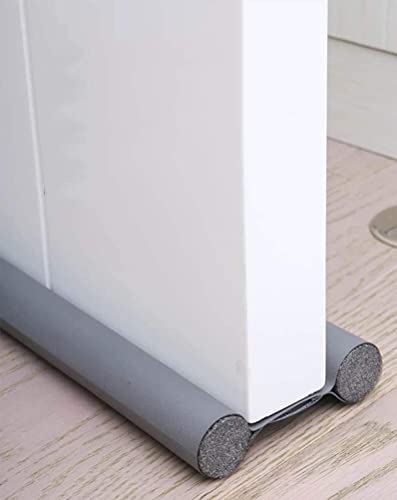
Gaps under external doors let cold air in during winter and hot air in during summer, forcing your heating and cooling to work harder. A simple adhesive draught stopper strip ($5-$8) or a door snake ($10-$15) seals the gap instantly. This alone can reduce heating costs by 10-15% in winter. Check all external doors: front, back, laundry, and garage access.
Browse draught stoppers on Amazon AU →
3. Smart Power Board: $15-$25
Standby power (the energy electronics use when "off" but still plugged in) accounts for up to 10% of household electricity use. TVs, gaming consoles, computer monitors, and phone chargers all draw standby power. A smart power board automatically cuts power to devices in standby mode. Plug your TV, PlayStation, Chromecast, and soundbar into one. When you turn off the TV, the board cuts power to everything. Saves $50-$100 per year.
Browse smart power boards on Amazon AU →
Medium Investments: $50 to $200
4. Smart Plugs: $15-$25 per plug
Smart plugs let you schedule appliances to run during off-peak electricity hours (usually 10pm-7am in most states, when electricity is cheapest on time-of-use tariffs). Schedule your dishwasher, washing machine, and dryer to run overnight. Some energy plans charge 50% less during off-peak hours. The savings from scheduling just your washing machine and dishwasher can be $100+ per year. See our smart home guide for recommended plugs.
Browse smart plugs on Amazon AU →
5. Ceiling Fan: $80-$200 (plus $100-$150 installation)
A ceiling fan uses about 50 watts of power, roughly 1/40th of an air conditioner. In moderate heat (under 35°C), a ceiling fan keeps you comfortable without needing the AC at all. In extreme heat, using a ceiling fan with AC set 2-3 degrees higher saves up to 25% on cooling costs. In winter, reverse the fan to clockwise to push warm air from the ceiling back down. For the most efficient DC-motor models, see our best ceiling fans for new Australian homes guide.
Browse ceiling fans on Amazon AU →
6. Blockout Curtains: $30-$80 per window
Windows are the biggest source of heat gain in summer and heat loss in winter. Blockout curtains reduce heat transfer by up to 25%, meaning your AC and heater run less. Hang them on north and west-facing windows for maximum effect. These are the windows that cop the afternoon sun in Australian homes. Blockout fabric is heavy, so hang it from a curtain rod rated for the load rather than one that sags in the middle by the first winter. See our bedroom essentials guide for recommendations.
Browse blockout curtains on Amazon AU →
7. Window Film / Reflective Film: $20-$50 per window
Reflective window film applied to north and west-facing windows reflects heat before it enters the room. It's cheaper than new curtains and doesn't block your view. DIY application is straightforward. Clean the glass, spray with soapy water, apply the film, and squeegee out air bubbles.
Browse window film on Amazon AU →
Bigger Investments: $200 to $1,000
8. Heat Pump Hot Water System: $1,500-$3,000 (after rebates)
If your home has an electric storage hot water system, it's one of the biggest energy consumers in the house, up to 25% of your total electricity bill. Replacing it with a heat pump hot water system saves $300-$500 per year in running costs. Heat pumps work like a reverse air conditioner. They pull heat from the air to warm water, using one-third the energy of a conventional electric system.
Australian federal and state governments offer rebates of $800-$1,000+ for heat pump installations, bringing the out-of-pocket cost to $1,500-$2,000. The payback period is 3-5 years, after which you save $300-$500 every year for the 10-15 year life of the system.
9. Reverse Cycle Air Conditioning: $800-$2,500 per unit
If you need heating and cooling (most Australian homes do), reverse cycle AC is the most energy-efficient option. It's 3-5 times more efficient than portable electric heaters and radiant heaters. A quality 2.5kW split system ($800-$1,500 installed) heats and cools a medium bedroom efficiently. A 7kW unit ($1,800-$2,500 installed) handles a large open-plan living area.
Free Habits That Save Money
No purchase is required. Just change these habits:
- Wash clothes in cold water: 90% of a washing machine's energy goes to heating water. Cold wash with modern detergent cleans just as well. Savings: $80-$115 per year.
- Air dry instead of using the dryer: An electric dryer costs $0.60-$1.00 per cycle. A clothesline costs nothing. Sun-drying also kills bacteria naturally. Savings: $150-$250 per year for a household that runs the dryer 4 times per week.
- Shorter showers: Cutting your shower from 8 minutes to 4 minutes halves your hot water usage. A water-efficient showerhead ($30-$50) reduces flow without reducing pressure. Combined savings: $100-$200 per year. Browse water-saving shower heads →
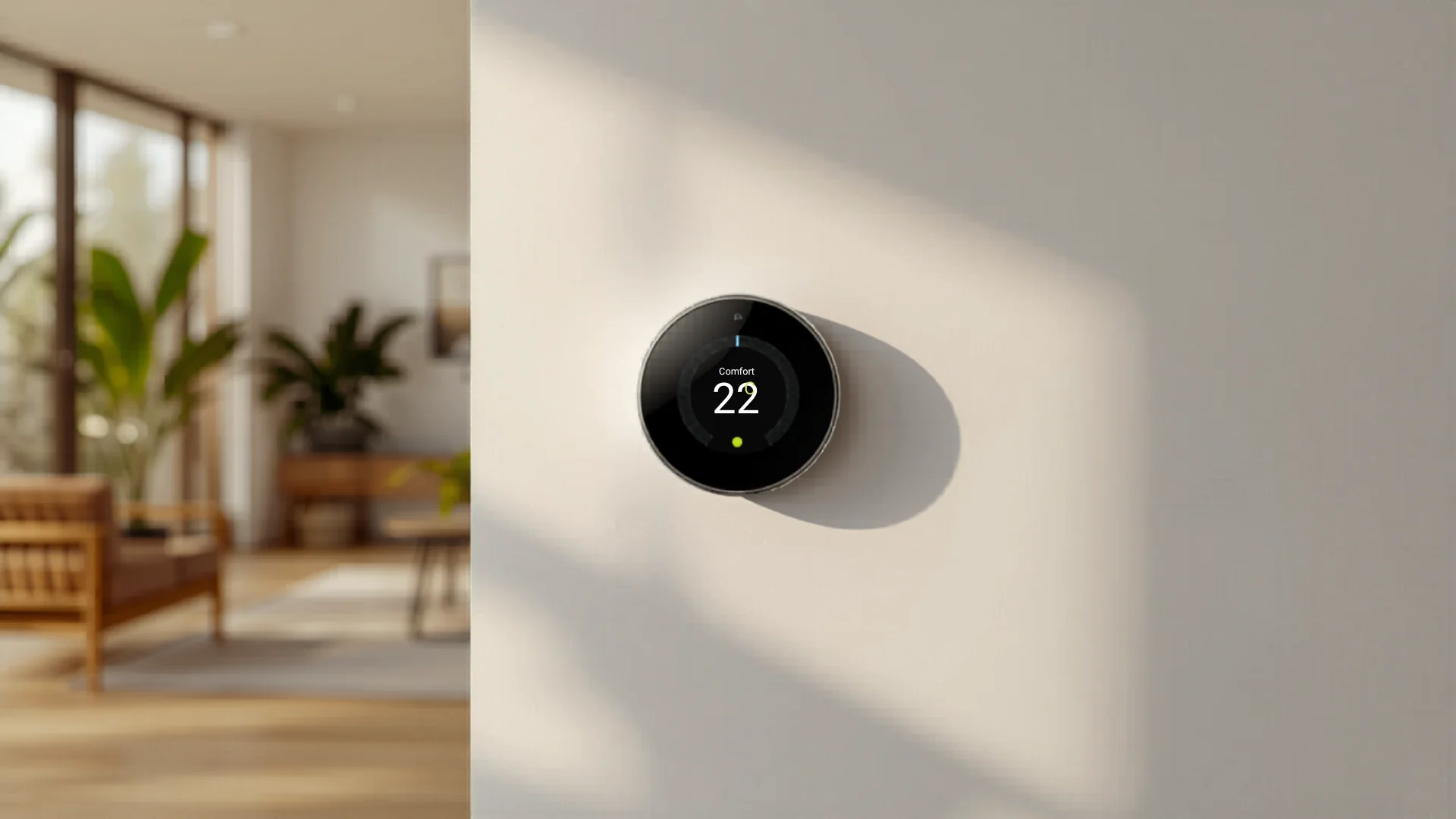
- Set AC to 24-25°C in summer, 18-20°C in winter: Every degree of heating or cooling costs roughly 10% more energy. Setting to 24°C instead of 21°C in summer saves 30% on cooling costs, and a smart thermostat is the easiest way to hold that setpoint instead of nudging the remote all evening.
- Close doors and curtains: Only heat or cool the rooms you're using. Close internal doors and curtains to unused rooms so your AC isn't working to climate-control empty spaces.
- Use off-peak electricity: If you're on a time-of-use tariff, run high-energy appliances (dishwasher, washing machine, dryer) during off-peak hours, typically 10pm-7am. The rate can be 50% cheaper than peak.
Solar Panels: Should New Homeowners Get Them?
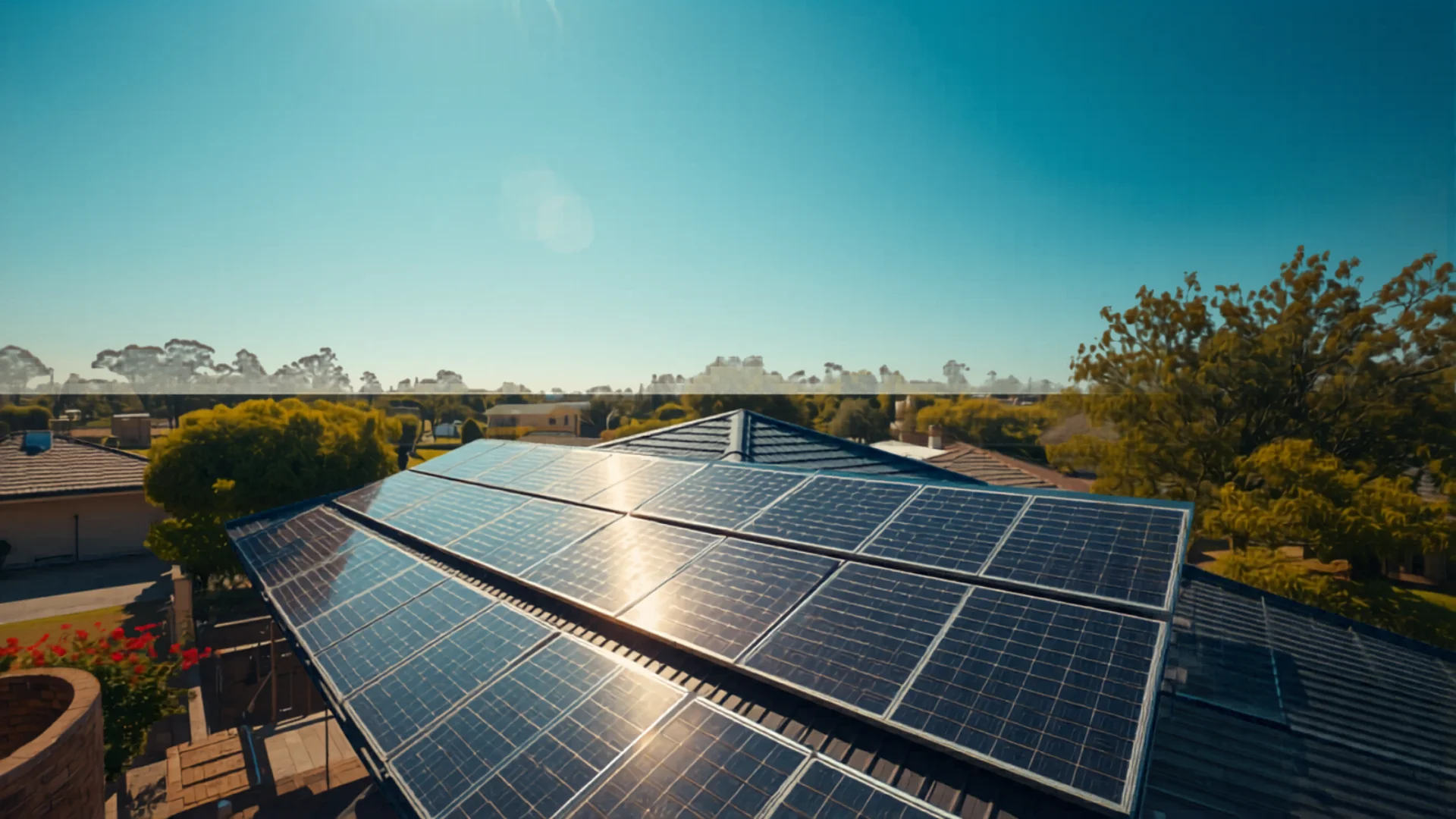
Solar panels are an excellent long-term investment for Australian homes, but we recommend waiting 12-24 months after moving in before installing them. Here's why:
- Understand your usage first: Live in the home for a full year to understand your actual energy consumption patterns. This data helps a solar installer size your system correctly.
- Cash flow: You've just bought a home. Your savings are depleted. Solar costs $4,000-$10,000 after rebates. Give your finances time to recover before taking on another large expense.
- Roof condition: Get a roof inspection before installing panels. Solar panels last 25 years. You don't want to install them and then discover the roof needs replacing in 3 years.
When you're ready, a 6.6kW system (the most popular residential size in Australia) costs $4,000-$8,000 after federal rebates and typically saves $1,200-$1,800 per year on electricity, paying for itself in 3-5 years.
Total Potential Savings
- LED bulbs: $225-$300/year
- Draught stoppers: $50-$100/year
- Smart power board: $50-$100/year
- Cold washing: $80-$115/year
- Air drying: $150-$250/year
- Shorter showers: $100-$200/year
- AC temperature discipline: $100-$200/year
- Total potential savings: $755-$1,265/year
That's up to $1,265 per year saved, roughly $100 per month back in your pocket. And the initial investment for all the quick wins is under $100.
Compare Your Energy Plan
Beyond reducing usage, make sure you're on the cheapest energy plan available. Many Australians are on their retailer's default plan, which is almost never the cheapest. Use the Australian Government's free Energy Made Easy comparison tool (energymadeeasy.gov.au) to compare plans in your area. Switching takes 10 minutes and can save $200-$500 per year with zero change to your usage.
Look for plans with:
- Lowest supply charge: The daily fee you pay regardless of usage. Ranges from $0.80-$1.50/day.
- Lowest usage rate: The per-kWh cost. Ranges from 22-38 cents/kWh depending on your state and retailer.
- Time-of-use option: If you can shift usage to off-peak hours (washing machine at night, dishwasher on a timer), time-of-use tariffs can save significantly. Off-peak rates are typically 50% cheaper than peak.
- No lock-in contract: The best plans don't require a contract. You can switch anytime if a better deal appears.
Energy Monitoring: Know Where Your Money Goes
You can't reduce what you can't measure. These tools show you exactly which appliances cost the most to run:
- Smart plug with energy monitoring: The TP-Link Tapo P110 ($20-$25) shows real-time and historical energy usage per appliance via the app. Plug in your fridge, dryer, or heater and see exactly what it costs per day. Browse energy monitoring plugs →
- Whole-home energy monitor: Devices like the Efergy or Smappee ($100-$200) clip onto your meter and show total household usage in real time on your phone. Seeing your usage spike when you turn on the dryer is surprisingly motivating.
The most common discovery people make with energy monitoring: their second fridge (the beer fridge in the garage) costs $150-$250 per year to run. Old fridges are energy vampires. If yours is more than 10 years old, replacing it with a modern energy-efficient model pays for itself in 2-3 years.
Water Saving: The Other Bill
While electricity gets the most attention, water bills in Australian cities are climbing too. Quick water-saving wins:
- Low-flow shower head ($30-$50): Reduces flow from 15-20 litres per minute to 7-9 litres without noticeably reducing pressure. Saves 40-50% of shower water, and our best shower head guide lists the WELS star rating and litres per minute for each pick. Browse water-saving shower heads →
- Dual-flush toilet: Most Australian homes already have these. Use the half-flush (3L) for liquids and the full flush (6L) for solids. This alone saves thousands of litres per year.
- Fix dripping taps immediately: A tap dripping once per second wastes over 12,000 litres per year. That's $30-$50 in water charges alone, plus the annoyance factor.
- Water the garden in the morning: Watering before 10am reduces evaporation by up to 30% compared to midday watering. Use a timer on your hose ($15-$25) to automate this. Browse hose timers →
Frequently Asked Questions
How can I reduce my electricity bill in Australia?
Start with the three cheapest, highest-impact changes: replace all light bulbs with LEDs ($45-$75 total, saves $225-$300/year), install draught stoppers on external doors ($15-$45, saves $50-$100/year), and use a smart power board to eliminate standby power ($15-$25, saves $50-$100/year). These three changes cost under $150 and save $325-$500 annually. Beyond that, washing in cold water, air drying clothes, shorter showers, and disciplined AC use (24°C summer, 18°C winter) save another $400-$765/year with zero purchase cost.
Are smart plugs worth it for saving energy?
Yes, particularly if you're on a time-of-use electricity tariff (which most new connections are). Smart plugs let you schedule high-energy appliances to run during off-peak hours when electricity costs 50% less. Scheduling your dishwasher and washing machine alone saves $80-$120/year. Smart plugs with energy monitoring ($20-$30 each, like the TP-Link Tapo P110) also show you exactly how much each appliance costs to run. This awareness alone changes behaviour and reduces waste. At $15-$25 per plug, they pay for themselves within 2-3 months.
Should new homeowners get solar panels?
Not immediately. We recommend living in your home for 12-24 months first to understand your actual energy usage patterns, recover financially from the purchase, and confirm your roof is in good condition for a 25-year installation. When you're ready, a 6.6kW solar system costs $4,000-$8,000 after Australian government rebates and typically saves $1,200-$1,800/year, paying for itself in 3-5 years. After that, the savings are essentially free electricity for the remaining 20+ years of the system's life. Solar is one of the best long-term investments an Australian homeowner can make, just not in the first year.
Found this helpful?
Check out more guides for new homeowners.