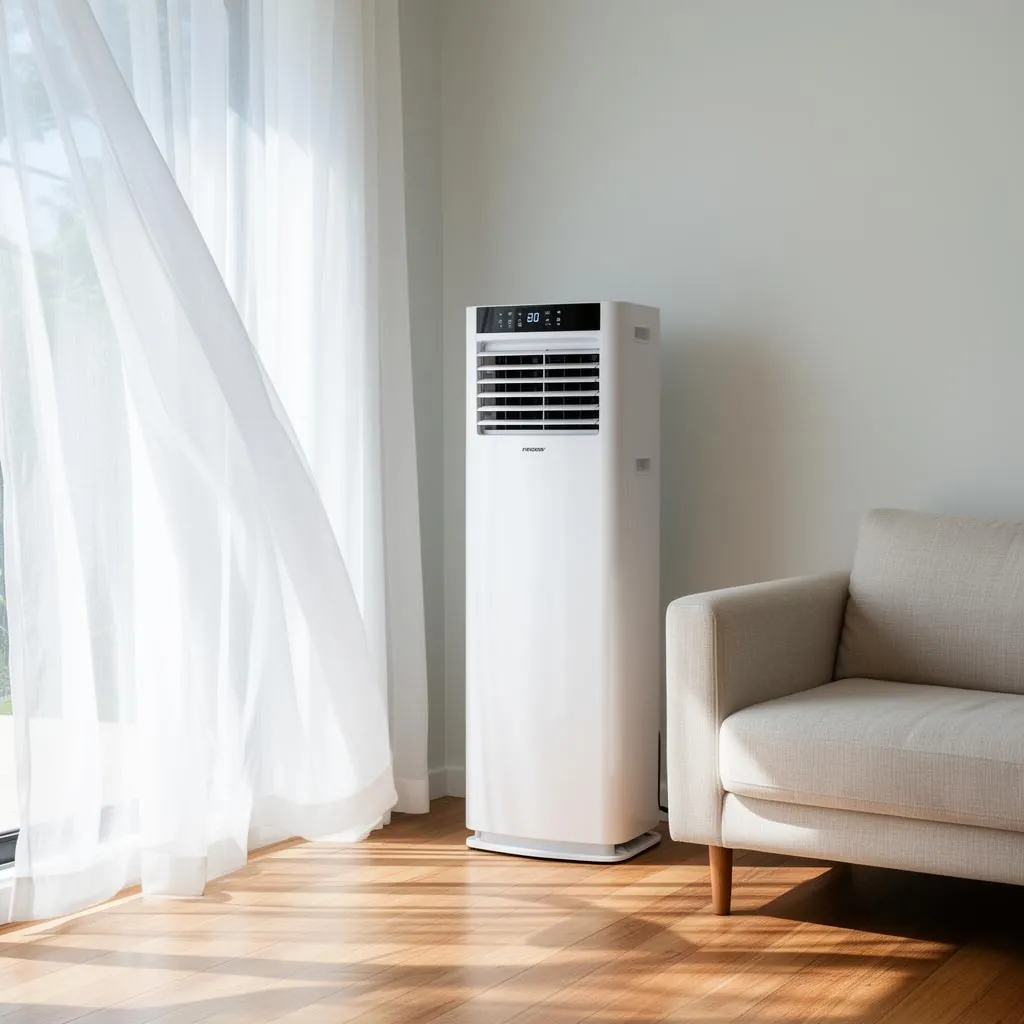
Mould is the silent enemy of Australian homes. The best dehumidifier in Australia for most homes is the De'Longhi Tasciugo AriaDry Multi 16L at about $445 on Amazon AU, and the Ausclimate Cool-Seasons Premium 10L desiccant at about $444 is the pick for cold southern rooms where compressor units stall. It damages paint, ruins grout, stains ceilings, destroys clothes and shoes stored in wardrobes, and, most importantly, it's a serious health hazard. Mould exposure causes respiratory issues, allergic reactions, skin irritation, and can trigger asthma attacks. For babies and young children, it's particularly dangerous.
New homes are especially vulnerable. Fresh concrete, plaster, and paint release moisture for 12 to 18 months after construction. Modern homes are built to be energy-efficient and airtight, which means that moisture has nowhere to go. Add in daily activities like showering, cooking, and drying clothes indoors, and indoor humidity levels can easily exceed 70%, the threshold where mould starts growing.
A dehumidifier is the solution. It pulls excess moisture from the air, keeping humidity at a healthy 40 to 60% range. A home weather station or hygrometer display is the cheapest way to see where your rooms actually sit. This prevents mould growth, eliminates condensation on windows, stops that musty smell in wardrobes and bathrooms, and even helps indoor laundry dry faster. For the cost of a few hundred dollars, it protects a home worth hundreds of thousands.
Best dehumidifiers in Australia 2026: quick comparison
Extraction figures are the makers' ratings at the test condition of 30 degrees C and 80% humidity; expect 30 to 50% less in a typical Australian room. Card prices and stock are from our 9 September 2026 Amazon AU check.
| Model | Type | Litres a day | Best for | Price | Availability |
|---|
| De'Longhi Tasciugo AriaDry Multi 16L | Compressor | 16 | Whole floor, laundry drying, bedrooms (38 dB quiet mode) | about $445 | Amazon AU card, in stock 9 Sept |
| Ausclimate Cool-Seasons Premium 10L Desiccant | Desiccant | 10 | Cold southern rooms, keeps working down to 1 degree C | about $444 | Amazon AU card, 1 left 9 Sept |
| Arovec 900ml Compact | Peltier (thermoelectric) | 0.25 to 0.5 | Wardrobes, bathrooms, spaces under 10 sq m | about $72 | Amazon AU card, out of stock 9 Sept |
| Goldair 10L Compressor | Compressor | 10 | Bathrooms, laundries, single bedrooms | about $199 | Amazon AU search link |
| DeLonghi Tasciugo DX10 10L | Compressor | 10 | Budget step-up with laundry mode | about $279 | Amazon AU search link |
| DeLonghi Aria Dry 25L | Compressor | 25 | Apartments and large living areas | about $399 | Amazon AU search link |
| Mitsubishi Electric Oasis 18L | Compressor | 18 | Reliability over 10 years | about $449 | Specialty retailers |
| Ausclimate NWT Supreme All Seasons | Desiccant | 7.5 at low temperatures | Cold climates, 34 dB bedrooms | about $549 | Amazon AU search link |
| Ionmax ION632 10L Desiccant | Desiccant | 10 | Allergy sufferers in cold climates | about $440 to $460 | Amazon AU search link |
Why New Homes Get Mould (and How to Stop It)
The best dehumidifier for mould in Australia is a desiccant model if your problem rooms run cold: mould thrives in cool, damp air below about 15°C, exactly where compressor units lose efficiency. The Ausclimate Cool-Seasons Premium 10L (our carded desiccant pick, about $444), the Ausclimate NWT Supreme All Seasons and the Ionmax ION632 are our desiccant picks for that job. In a warm, humid climate a compressor unit sized to your dampest room pulls more water per dollar of electricity. Match the machine to your conditions, then fix the moisture source below.
Understanding why mould appears helps you prevent it. Here's what's happening in your new home:
- Construction moisture: Concrete slabs, plaster walls, and wet-area waterproofing all contain significant moisture that takes 12 to 18 months to fully dry. During this period, your home's internal humidity is elevated regardless of what you do.
- Sealed building envelope: Modern energy-efficient homes have better insulation and sealing, which reduces heating and cooling costs but also traps moisture inside. Older homes with draughty windows and gaps naturally ventilated, but newer homes don't.
- Daily moisture sources: A family of four generates 10 to 15 litres of moisture per day through breathing, showering, cooking, and drying clothes. That moisture goes into your indoor air.
- Bathrooms and laundries: These are ground zero for mould. Steam from showers raises humidity to 90%+ in minutes. Without adequate ventilation or extraction, that moisture soaks into grout, ceiling paint, and silicone sealant.
- Wardrobes and closets: Closed, poorly ventilated spaces where mould thrives. If your wardrobe backs onto an external wall (common in bedrooms), the temperature difference creates condensation that feeds mould growth on walls and clothing.
The fix involves three layers:
- Ventilation: Use exhaust fans in bathrooms and kitchens. Open windows when weather permits. Install trickle vents if your windows don't have them.
- Behaviour: Wipe down shower walls after use. Don't dry clothes on indoor racks in closed rooms. Use rangehood when cooking.
- Dehumidification: For the moisture you can't ventilate away, a dehumidifier removes it mechanically. This is especially important during winter when you can't open windows, and during the construction drying period of a new home.
How to choose a dehumidifier
Four checks cover it. 1. Climate first: a compressor unit for warm, humid rooms (Brisbane, Sydney, Darwin, the coast); a desiccant unit where rooms drop below 15 degrees C in winter (Melbourne, Hobart, Canberra, the highlands), because compressors lose most of their extraction in the cold and desiccants do not. 2. Size to the room: 10 to 16 litres a day for a bathroom or single bedroom, 16 to 25 for a living room, 25 or more for open plan, and one size up for a new build in its first year. 3. Drainage and tank: a continuous drain hose means never emptying it; without one, a tank under 3 litres needs emptying daily. 4. Noise: under 48 dB for a bedroom, and a sleep mode that dims the lights. A desiccant unit warms the room slightly, which helps in winter but is no substitute for a heater. The sections below take each of these in turn.
Compressor vs Desiccant Dehumidifiers
This is the most important decision when buying a dehumidifier, and the right choice depends on where you live in Australia:
Compressor dehumidifiers
These work like a reverse air conditioner: they pull air over cold coils, condensing the moisture, then reheat the air slightly before releasing it. They're the most common type in Australia.
- Best in: Warm and humid conditions (Sydney, Brisbane, Darwin, coastal areas). Compressors work most efficiently above 15°C.
- Pros: More energy efficient in warm conditions, lower purchase price, higher extraction capacity (litres per day), widely available
- Cons: Louder than desiccant models (compressor noise), performance drops significantly below 15°C, heavier
- Running cost: $0.10 to $0.20 per hour at average electricity rates
Desiccant dehumidifiers
These use a rotating desiccant wheel that absorbs moisture from the air, then a heater drives the moisture off into a collection tank. They don't use refrigerant or a compressor.
- Best in: Cold conditions (Melbourne, Hobart, Canberra, highlands). Desiccant dehumidifiers maintain their performance regardless of temperature.
- Pros: Works effectively at any temperature (even below 5°C), lighter and more compact, significantly quieter than compressor models, slightly heats the room (bonus in winter)
- Cons: Higher electricity consumption, lower extraction rates, slightly warmer exhaust air (not ideal in already-warm rooms in summer)
- Running cost: $0.15 to $0.30 per hour at average electricity rates
Our recommendation: If you live in Queensland, northern NSW, or the NT, get a compressor dehumidifier. If you live in Victoria, Tasmania, ACT, or highland areas, consider a desiccant. If you're in Sydney or southern coastal areas, either works: compressor for summer, desiccant if you mainly need it in winter. If in doubt, compressor models are the safer all-round choice for most Australian homes. For the opposite problem - air that gets too dry in winter - see our best humidifier for bedroom Australia guide.
What Size Dehumidifier Do You Need?
Dehumidifier capacity is measured in litres per day (L/day): how much moisture it can extract from the air in 24 hours. Here's what you need based on room size and moisture level:
- Bathroom or single bedroom (8 to 15sqm): 10 to 16L/day. A small compressor or mid-size desiccant handles these spaces easily. For a bathroom, running the dehumidifier for a few hours after showering is often enough.
- Living room or master bedroom (15 to 30sqm): 16 to 25L/day. This is the most common size purchased. It handles the room's moisture generation and can be moved between rooms as needed.
- Open plan living or whole house (30sqm+): 25L+/day. For larger spaces or homes with persistent moisture problems, you need a high-capacity unit. Some homeowners place a large dehumidifier in a central hallway and leave internal doors open to dehumidify the whole house.
Important notes:
- Manufacturer capacity ratings are measured under ideal conditions (30°C, 80% humidity). Real-world extraction is typically 30 to 50% lower. If a unit is rated at 20L/day, expect 10 to 14L/day in typical Australian conditions.
- If you're drying clothes indoors, add 5 to 10L/day to your requirements. A single load of laundry releases approximately 5 litres of moisture as it dries.
- New builds in their first year should go one size up due to elevated construction moisture.
Best Budget Dehumidifiers Under $300
Budget dehumidifiers handle single rooms effectively and are perfect for targeting problem areas like bathrooms, laundries, and bedrooms. They're a smart starting point, solve the immediate mould risk and upgrade later if you need whole-house dehumidification. Our compact pick for wardrobes and bathrooms, the Arovec 900ml Peltier unit (about $72, up to 500 ml a day), was out of stock on Amazon AU at our 9 September 2026 check; the two units below are the in-stock budget buys.
Best budget compressor: Goldair 10L Compressor Dehumidifier, about $199
The Goldair 10L is a straightforward, reliable dehumidifier that does its job without fuss. The auto humidity sensor lets you set a target humidity level (we recommend 50%), and the unit turns off when it's reached, saving electricity. The continuous drain option means you can connect a hose and direct water to a drain, so you never need to empty the tank.
- Pros: Affordable, auto humidity sensor, continuous drain option, 10L/day extraction handles bathrooms and bedrooms, compact size
- Cons: Noisy on high (compressor models are inherently louder), small 2L tank needs frequent emptying without a drain hose, struggles in rooms over 20sqm
- Best for: Bathrooms, laundries, and single bedrooms with mould or condensation problems
Check price on Amazon AU →
Best budget step-up: DeLonghi Tasciugo DX10 10L, about $279
DeLonghi's budget dehumidifier offers better build quality than the Goldair at a slight premium. The electronic controls are more precise, and the unit includes a laundry dry function that runs the dehumidifier on high for a set period to speed up indoor clothes drying. The dust filter is washable and helps capture airborne particles while dehumidifying.
- Pros: Better build quality than cheaper brands, laundry dry function, electronic controls with humidity display, washable dust filter, DeLonghi brand reliability
- Cons: More expensive than the Goldair for similar capacity, still compressor-loud, the tank sits at the back (harder to access than front-loading tanks)
- Best for: Buyers who want a step up in quality and features from the cheapest options
Check price on Amazon AU →
Best Mid-Range Dehumidifiers ($300 to $450)
Mid-range dehumidifiers cover larger rooms, have larger tanks, and include features like laundry drying modes, digital humidity displays, and quieter operation. If you're dealing with moisture across multiple rooms, this is the tier to invest in.
Best compressor dehumidifier for a whole floor: De'Longhi Tasciugo AriaDry Multi 16L, about $445
The De'Longhi Tasciugo AriaDry Multi 16L is the pick for most Australian homes and the runner-up card on this page (about $445 on Amazon AU, in stock at our 9 September 2026 check). Sixteen litres a day covers a four-bedroom home or an open-plan apartment, the laundry mode runs the unit hard for a set period to dry clothes indoors, and the Real Feel humidistat holds the room at 45 to 55% and cycles the compressor off once it gets there rather than running flat out. At 38 dB in quiet mode it can stay on overnight in a bedroom, it uses the lower-impact R290 refrigerant, and the transparent tank shows the level at a glance.
- Pros: 16L/day covers a whole floor, laundry mode, three-action filtration alongside dehumidifying, 38 dB quiet mode, humidistat cycling keeps running costs down
- Cons: Compressor type, so extraction falls in rooms below 15 degrees C; the Amazon AU listing carried only a handful of ratings at our check
- Best for: Sydney, Brisbane and coastal homes that need one unit for the living area, the laundry and a bedroom
Best for large living areas: DeLonghi Aria Dry 25L, about $399
The DeLonghi Aria Dry is our top mid-range recommendation. At 25L/day capacity, it handles entire apartments and large living areas. The laundry dry function is particularly useful for Australian homes where indoor drying is common during winter. The auto-restart feature means it picks up where it left off after a power outage, important if you run it while you're at work.
- Pros: 25L/day capacity covers large spaces, laundry dry function, auto-restart after power outage, relatively quiet for its capacity, large 4.5L tank (less frequent emptying)
- Cons: Compressor type (performance drops below 15°C), heavy at 13kg, takes up floor space, higher electricity consumption than smaller units
- Best for: Apartments and houses where you need to dehumidify multiple rooms or a large living area
Check price on Amazon AU →
Most reliable long-term buy: Mitsubishi Electric Oasis 18L, about $449
Mitsubishi Electric makes some of the most reliable dehumidifiers in Australia. The Oasis 18L is a compressor model with excellent build quality and a reputation for lasting 10+ years. It's quieter than most compressor dehumidifiers at its capacity, and the intelligent humidity control maintains your target level with minimal energy waste.
- Pros: Exceptional reliability (Mitsubishi Electric quality), quiet operation for a compressor model, intelligent humidity control, easy-access front tank, sturdy caster wheels for mobility
- Cons: More expensive than similar-capacity competitors, no laundry dry mode, conservative design (functional, not pretty)
- Best for: Buyers who want a reliable dehumidifier they won't need to replace for a decade
Note: Mitsubishi Electric dehumidifiers aren't reliably stocked on Amazon AU's buy-box right now. Check Mitsubishi Electric Australia's site or specialty appliance retailers (Harvey Norman, The Good Guys, JB Hi-Fi) for current models and pricing.
Check Mitsubishi Electric dehumidifier range →
Best Premium Dehumidifiers ($450+)
Premium dehumidifiers use desiccant technology for all-season performance, achieve the lowest noise levels, and often include advanced features like HEPA air filtration alongside dehumidification. If you live in a cold climate, have a serious mould problem, or want the quietest possible operation, these are worth the investment.
Best desiccant dehumidifier: Ausclimate Cool-Seasons Premium 10L, about $444
The Ausclimate Cool-Seasons Premium 10L is our desiccant recommendation for cold southern rooms (about $444 on Amazon AU, with one unit left at our 9 September 2026 check). It is built for the cold, damp half of the country: the desiccant wheel keeps pulling its rated 10 litres a day in rooms down to 1 degree C, where a compressor unit has all but stopped, the listing rates it for rooms up to 50 square metres, and it is approved by the National Asthma Council. The 3 litre tank means daily emptying at full tilt, so use the continuous drain hose option in a laundry. A HEPA filter cleans the air while it runs.
- Pros: Full extraction in cold rooms, 10L/day rating, Australian-owned brand built for local conditions, National Asthma Council approval, HEPA filter, drain hose option
- Cons: Higher power draw than a compressor unit in warm rooms, 3 litre tank, thin Amazon AU rating count (18 ratings at 3.8 stars at our check) and scarce stock
- Best for: Melbourne, Hobart, Canberra and any bedroom or laundry that runs cold and damp through winter
Best desiccant for cold climates: Ausclimate NWT Supreme All Seasons, about $549
The Ausclimate NWT Supreme is the best desiccant dehumidifier in Australia. Unlike compressor models, it works effectively at any temperature, making it the go-to choice for Melbourne, Hobart, Canberra, and any home where winters are cold. At 34dB on its lowest setting, it's genuinely whisper-quiet and won't disturb sleep. The brand is Australian-owned and has excellent customer service.
- Pros: Desiccant technology works at any temperature, 34dB ultra-quiet operation, lightweight (6.5kg, easy to move), Australian-owned brand, 7.5L/day extraction at low temperatures (where compressors struggle)
- Cons: Higher electricity consumption than compressor models, lower extraction rate than similarly-priced compressors in warm conditions, small 3.5L tank, desiccant models slightly warm the room
- Best for: Cold-climate homes (VIC, TAS, ACT), bedrooms where quiet operation is essential, and anyone who needs reliable dehumidification year-round regardless of temperature
Check price on Amazon AU →
Best desiccant for allergy sufferers: Ionmax ION632 10L Desiccant, about $440 to $460
The Ionmax ION632 is another excellent desiccant option that combines dehumidification with an ioniser and antibacterial filter. It's particularly popular in homes with allergy sufferers because it improves air quality while reducing humidity. The nano-silver filter inhibits bacteria and mould growth within the unit itself.
- Pros: Desiccant + ioniser + antibacterial filter, effective at all temperatures, quiet operation, lightweight and portable, built-in silver nano filter
- Cons: 10L/day capacity limits room coverage, higher price for the capacity compared to compressor models, ioniser benefits are debated in scientific literature
- Best for: Allergy sufferers in cold climates who want combined air purification and dehumidification
Check price on Amazon AU →
Running Costs and Maintenance
Dehumidifiers run for extended periods, so understanding the ongoing costs helps you budget:
- Compressor electricity cost: $0.10 to $0.20 per hour. Running 8 hours per day: $0.80 to $1.60/day, or $24 to $48 per month.
- Desiccant electricity cost: $0.15 to $0.30 per hour. Running 8 hours per day: $1.20 to $2.40/day, or $36 to $72 per month.
- Maintenance: Clean the air filter every 2 to 4 weeks (rinse under water and dry). Empty the water tank daily, or connect a continuous drain hose to a floor drain or laundry sink. Wipe down the unit monthly to prevent dust buildup.
Tips to reduce running costs:
- Use the auto-humidity function and set a target of 50%. The unit will cycle off when humidity is controlled, rather than running constantly.
- Close windows and doors in the room you're dehumidifying. Dehumidifying open-plan spaces with windows open is like trying to fill a bath with the plug out.
- Use exhaust fans in bathrooms and kitchens first. Mechanical ventilation is free. Use the dehumidifier for residual moisture that ventilation can't handle.
- Run during off-peak electricity times if your energy plan has time-of-use pricing.
Protecting your home from moisture damage is part of being a responsible homeowner. For more on maintaining your new property, check our new home checklist covering everything from maintenance schedules to essential products.
Frequently Asked Questions
What is the best dehumidifier for mould in Australia?
For mould, match the technology to your climate. In cold or southern rooms, a desiccant dehumidifier keeps pulling moisture below 15°C where mould grows and compressors stall, so the Ausclimate NWT Supreme All Seasons and the Ionmax ION632 are our picks. In warm, humid conditions a compressor unit sized to your dampest room is cheaper to run. Whichever you choose, size it to the room, run it until relative humidity sits at 45 to 55 percent, and fix the underlying moisture source: a dehumidifier controls mould but does not remediate it.
What is the best dehumidifier for a bedroom?
For a bedroom, prioritise low noise and right-sizing over raw capacity. A 10L compressor unit like the Goldair 10L or the DeLonghi Tasciugo DX10 clears a standard bedroom cheaply, but compressor noise means they are best run for a few hours before bed rather than overnight. If you want a unit running while you sleep, the Ausclimate NWT Supreme is the pick here at 34dB on its lowest setting. If the room runs cold in winter, desiccant models like it also add a little warmth, at the cost of higher power use. Position any unit centrally with 30cm clearance for airflow.
Where is the best place to put a dehumidifier in the house?
Place it in the room with the worst moisture problem, usually the bathroom, laundry, or a bedroom with condensation on the windows. Position the unit centrally in the room with at least 30cm clearance on all sides for airflow. Keep doors and windows closed in the room being dehumidified. If you want to dehumidify multiple rooms, place the unit in a central hallway and leave internal doors open. Avoid placing it directly against walls or in corners where airflow is restricted. For bathrooms, run it for 2 to 3 hours after showering rather than 24/7.
Do dehumidifiers use a lot of electricity?
Compressor dehumidifiers use roughly the same electricity as a fridge, at $0.10 to $0.20 per hour, or $24 to $48 per month running 8 hours daily. Desiccant models use slightly more at $0.15 to $0.30 per hour. To put this in context, a compressor dehumidifier running 8 hours a day for a month costs roughly the same as running your air conditioner for 2 to 3 hours. Compared to the cost of treating mould damage (repainting: $500+, replacing mouldy carpet: $2,000+, structural remediation: $5,000+), a dehumidifier's running cost is trivial insurance.
Can a dehumidifier help with indoor clothes drying?
Absolutely, this is one of the best uses for a dehumidifier. A single load of washing releases approximately 5 litres of moisture as it dries indoors. Without a dehumidifier, that moisture goes into your walls, ceiling, and soft furnishings, promoting mould. With a dehumidifier running near the drying rack in a closed room, clothes dry 30 to 50% faster and the moisture is captured in the tank instead of your home. Many mid-range and premium dehumidifiers include a dedicated laundry dry mode that runs on high for a set period specifically for this purpose; the De'Longhi Tasciugo AriaDry Multi 16L (about $445) has one. A folding clothes airer parked next to the unit in a closed laundry is the cheapest indoor-drying setup. If you line-dry indoors all winter, the washer half of the equation matters too: our best washing machine guide ranks 8 picks from $450 by type and running cost.
What is the most recommended dehumidifier in Australia?
For most homes we recommend the De'Longhi Tasciugo AriaDry Multi 16L (about $445 on Amazon AU): 16 litres a day covers a whole floor, it has a laundry mode and a humidistat that holds 45 to 55% humidity, and at 38 dB in quiet mode it can run in a bedroom overnight. If your rooms run cold in winter, the Ausclimate Cool-Seasons Premium 10L desiccant (about $444) is the recommendation instead, because it keeps extracting below 15 degrees C where compressor units stall and it carries National Asthma Council approval.
Will a 20L dehumidifier do a whole house?
Usually not with the doors closed. Maker ratings are measured at 30 degrees C and 80% humidity, so a 20 L unit pulls closer to 10 to 14 litres a day in a typical Australian room, which suits an open-plan living area of about 30 square metres or one very damp bedroom plus the laundry. To treat a whole house with one machine, park a 25 L or larger unit in a central hallway, leave the internal doors open and run it on an auto setting of 50%; for closed bedrooms at the far end, a second small unit is cheaper than a bigger one.
What is the quietest dehumidifier in Australia?
Desiccant and Peltier units are quieter than compressor units because there is no compressor. On this page the Arovec 900ml Peltier unit runs below 30 dB (bedroom quiet, but only for spaces under 10 square metres), the Ausclimate NWT Supreme All Seasons desiccant runs at 34 dB on its lowest setting, and the De'Longhi Tasciugo AriaDry Multi 16L (about $445) is the quietest compressor pick here at 38 dB in quiet mode. For a bedroom, look for a rating under 48 dB and a sleep mode that dims the display.
What does a dehumidifier do?
A dehumidifier pulls water vapour out of the air and collects it in a tank or sends it down a drain hose, holding a room in the 40 to 60% relative humidity range where mould, dust mites and window condensation cannot take hold. A family of four adds 10 to 15 litres of moisture a day through breathing, showers, cooking and drying clothes; a 10 to 25 litre-a-day unit sized to the room removes it. Compressor models condense the moisture on cold coils; desiccant models absorb it into a rotating wheel and keep working in cold rooms.
What are the downsides of using a dehumidifier?
Running cost, noise, emptying the tank and warmth. A compressor unit costs $0.10 to $0.20 an hour and a desiccant unit $0.15 to $0.30, so eight hours a day is $24 to $72 a month. Compressor units are louder and lose most of their extraction below 15 degrees C; desiccant units warm the room slightly, a bonus in winter and a nuisance in summer. Tanks of 2 to 4.5 litres need emptying daily unless you fit a drain hose. A dehumidifier also controls mould rather than fixing the leak, missing exhaust fan or unvented rangehood that caused it.
Is an air purifier the same as a dehumidifier?
No. An air purifier pulls particles (dust, pollen, smoke, mould spores) out of the air through a HEPA filter and does nothing to humidity; a dehumidifier removes water from the air and does little for particles beyond a basic dust filter. Mould is a humidity problem first, so a damp bedroom needs the dehumidifier; an allergy sufferer in a dry room needs the purifier. Some models such as the Ionmax ION632 bundle a desiccant dehumidifier with an ioniser and an antibacterial filter, and our best air purifier guide covers the purifier side.