A reverse-cycle split system is the single most impactful climate-control purchase an Australian first home buyer will make. Daikin and Mitsubishi Electric make the split systems we recommend most often in Australia, and a 2.5 kW reverse cycle bedroom unit runs about $1,299 to $1,799 installed at 19 dB indoor noise, while a 5 kW living-room unit runs about $2,299 to $2,799 installed. For the bridge purchase before the permanent install (or for renters), see our portable air conditioner guide, same cooling principle with a different installation tradeoff. For most homes, it's the primary source of heating in winter, the primary source of cooling in summer, and, if you pick well, the cheapest energy-efficient way to do both. For supplementary heating in rooms the split system doesn't reach, our best heater guide covers portable convection and oil-column picks; for whole-of-house running cost, a heat pump hot water system is the next-tier upgrade after the AC. Pick poorly, and you're stuck with $600 to $1,200 a year in extra power costs, a noisy bedroom, and a unit that needs replacing in six years instead of fifteen.
Three things have shifted the Australian market for 2026. First, Daikin, Mitsubishi Electric, and Fujitsu have extended their 5-year parts-and-labour warranties, and the quality gap between premium and mid-tier has narrowed. Second, energy prices have pushed the running-cost difference between a 5-star and 7-star unit to over $400 a year on a typical living-room install, making the higher efficiency unit pay for itself inside 4 years. Third, installed pricing has stabilised: a good 2.5kW bedroom unit is now $1,200 to $1,500 installed, a good 5kW living-room unit is $2,000 to $2,700 installed, and a premium 7kW open-plan unit is $2,800 to $3,400 installed. Below these bands, you're buying a unit that won't last.
This guide compares every major split system sold in Australia for 2026 (by size, by brand, by budget, and by room type) and matches them to the realistic needs of first home buyers setting up a new home. Whether you're fitting out a single-bedroom apartment, a three-bedroom townhouse, or a four-bedroom family home, there's a specific pick for each.
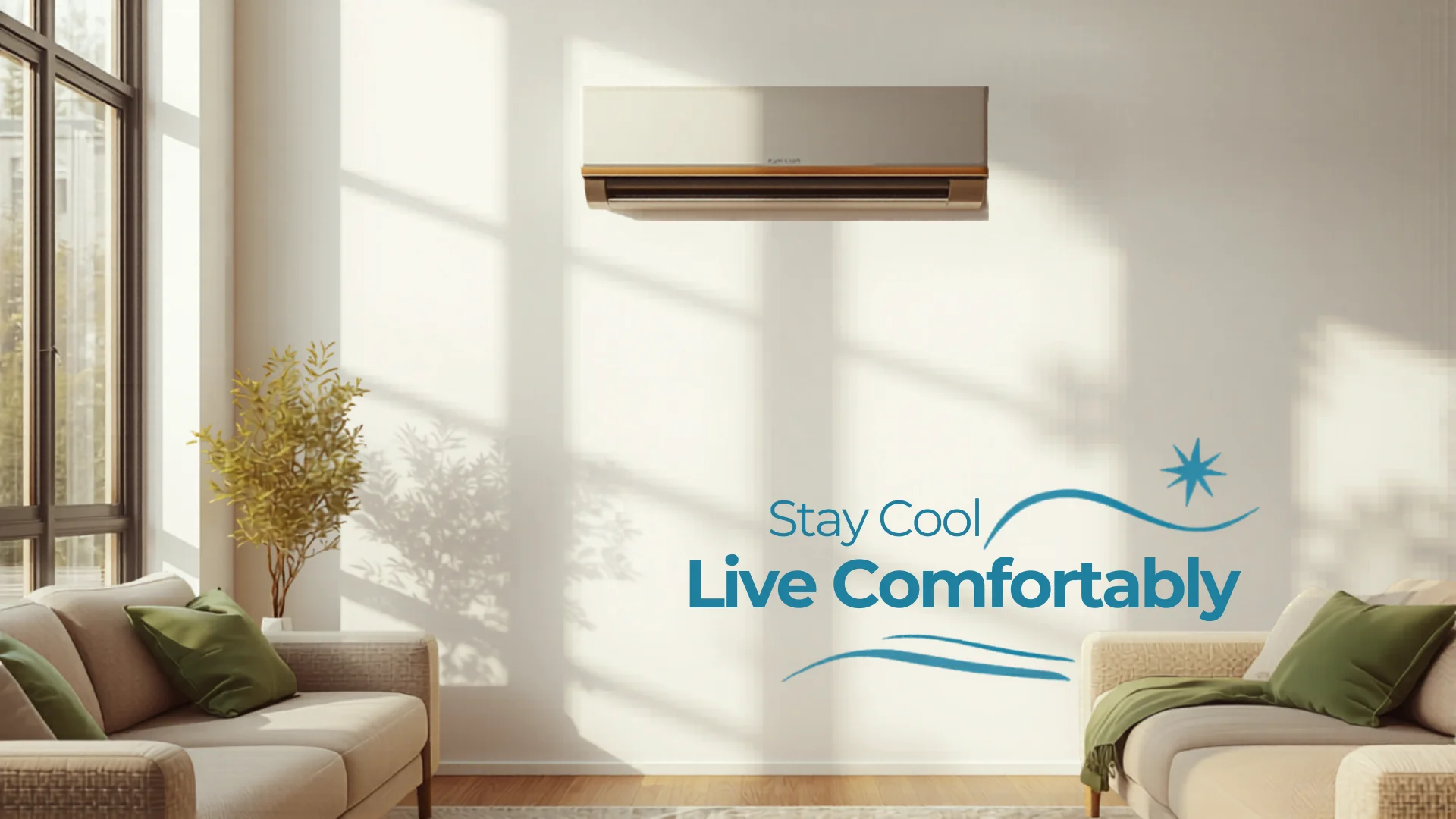
Best Split System Air Conditioner Australia 2026: Quick Comparison
If you only have two minutes, these are the eight split systems we would recommend for an Australian first home buyer in 2026, spread across room sizes, brands, and budget tiers. Every one is a reverse cycle split system aircon, so it heats in winter as well as cooling in summer.
| Model | Best for | Capacity | Indoor noise | Installed price |
|---|---|---|---|---|
| Kelvinator KSV25HRJ | Cheapest we would recommend | 2.5 kW | 26 dB | About $999 |
| Fujitsu Lifestyle ASTH24 | Best value tier-1 bedroom | 2.5 kW | 20 dB | About $1,099 |
| Daikin Cora FTXV25U | Benchmark bedroom pick | 2.5 kW | 19 dB | About $1,299 |
| Mitsubishi Electric MSZ-LN25 | Quietest bedroom pick | 2.5 kW | 19 dB | About $1,799 |
| Mitsubishi Heavy Industries Avanti SRK25ZSA-W | The Amazon AU route, installer arranged separately | 2.5 kW | 21 dB | About $1,862 to $2,162 fitted |
| Fujitsu Lifestyle ASTH50 | Best value living room | 5.0 kW | 24 dB | About $1,999 |
| Daikin Alira X FTKM50 | Best overall living room | 5.0 kW | 23 dB | About $2,299 |
| Daikin Alira X FTKM71 | Open-plan living | 7.1 kW | Not stated | About $3,199 |
All prices are average April 2026 installed prices including a standard back-to-back install (indoor unit and outdoor unit on opposite sides of the same wall, under 3m pipe run). Complex installs (longer pipe runs, first-floor units requiring scaffolding, electrical upgrades) can add $400 to $1,200. Expect summer (November to February) sale pricing to drop these 10 to 20%.
If you want the one-line answer for a three-bedroom-plus-living-room fitout, you have two paths. Path A (Amazon AU + separate installer): Mitsubishi Heavy Industries Avanti 2.5kW in each bedroom (about $1,862 fitted) and a Daikin Alira X 5kW in the living room (about $2,299 installed via specialist retailer) totals approximately $7,886 installed. Path B (specialist retailer end-to-end): Daikin Cora 2.5kW in each bedroom ($1,299 installed each) and a Daikin Alira X 5kW in the living room ($2,299 installed) totals approximately $6,196 installed. Either way, this is the single biggest home-comfort investment of the first year, and the one that pays back every power bill for the next 15 years.
How to Buy a Split System in Australia 2026
Split systems work differently from most other appliances on this site. Most premium brands (Daikin, Mitsubishi Electric, Fujitsu, Panasonic, LG) are sold through specialist retailers like Bing Lee, Harvey Norman, Appliances Online, and The Good Guys, almost always packaged with installer scheduling, warranty registration, and a back-to-back install as a single quoted transaction. That bundled pathway is where the "$1,299 installed" numbers in our table above come from.
The one tier-1 Japanese exception we card here is Mitsubishi Heavy Industries Avanti 2.5kW (SRK25ZSA-W), sold as a unit-only listing on Amazon AU at around $1,162. You'll need to engage a licensed refrigeration installer separately (DIY refrigerant work is illegal in Australia under the Ozone Protection Act), which typically adds $700 to $1,000 for a standard back-to-back install. Total: roughly $1,862 to $2,162 fitted, which is comparable to a Daikin Cora 2.5kW installed via a specialist retailer once you factor in the convenience trade-off.
For full-size living-room units (5kW+) and premium-quiet bedroom alternatives (Mitsubishi Electric MSZ-LN, Daikin Alira X), the specialist-retailer pathway is the only realistic route. Brand sites for direct comparison and dealer locators: Daikin Australia, Mitsubishi Electric Australia, Fujitsu General Australia, Panasonic Australia, LG Australia.
The picks below split into two tracks: the Amazon AU bedroom pick (MHI Avanti, our only affiliate pick), and the specialist-retailer brand picks across bedroom and living-room capacities (which require an installer quote alongside the unit purchase).
Best Split System for Bedrooms (2.5kW)
Bedrooms are the most common split-system install location in Australia, and they need a fundamentally different unit from a living room. Bedroom units need to be quiet (sub-20dB on low-speed indoor is the 2026 benchmark), efficient (running through a 7 to 9-hour sleep cycle compounds energy costs), and sized correctly (oversized bedroom units short-cycle, making them less efficient and noisier). 2.5kW is the right capacity for 15 to 25 sqm bedrooms, which covers almost every Australian master and secondary bedroom.
Our top bedroom picks
Mitsubishi Heavy Industries Avanti 2.5kW (SRK25ZSA-W, about $1,162 unit-only on Amazon AU + installer): Our Amazon AU named pick. Mitsubishi Heavy Industries is Mitsubishi Group's value-tier Japanese AC brand, separate company from Mitsubishi Electric despite the shared name. 21 dB indoor noise on low fan, solid build quality, 5-year warranty. You buy the unit on Amazon AU and arrange a licensed refrigeration installer separately. Fitted total: roughly $1,862 to $2,162. The pragmatic pick for buyers willing to coordinate the installer themselves to save the specialist-retailer markup.
Daikin Cora FTXV25U (2.5kW, about $1,299 installed via specialist retailer): The benchmark bedroom pick if you want a single quoted transaction (unit + installer + warranty registration in one go). 19 dB indoor noise on low fan (quieter than a whisper), 5.5-star cooling efficiency, 5.0-star heating efficiency, and Daikin's reliable Smart inverter that modulates output to hold temperature without short-cycling. Five-year parts-and-labour warranty. Wi-Fi optional via Daikin's BRP adapter, and if you would rather add scheduling another way, our smart thermostat guide covers what actually works on Australian ducted, split-system and hydronic setups. Sold via Bing Lee, Harvey Norman, Appliances Online, and The Good Guys. The bedroom split you can buy and forget if you don't mind paying for the convenience bundle.
Mitsubishi Electric MSZ-LN25 (2.5kW, about $1,799 installed via specialist retailer): The premium bedroom pick. 19 dB indoor noise, dual-barrier hybrid filter that genuinely reduces dust and allergens, plasma-cluster air purification, and the best-in-class fit-and-finish on the indoor unit (often specified in architect-designed builds). Specialist-retailer pathway only. Expensive for a bedroom but meaningfully quieter and better-looking than the competition, worth the premium for apartment bedrooms where quietness is critical.
Fujitsu Lifestyle ASTH24 (2.5kW, about $1,099 installed via specialist retailer): Best value tier-1 bedroom pick. 20 dB indoor noise, 4.5-star efficiency, a simple feature set, and Fujitsu's strong reputation for reliability. Smaller 4-year warranty (shorter than Daikin's 5-year) but rarely needed. Specialist-retailer pathway only. Ideal for second bedrooms, guest rooms, and home offices where premium quiet isn't critical.

Best Split System for Living Rooms (5.0 to 7.1kW)
Living rooms need more capacity, better airflow distribution, and stronger heat-pump performance than bedrooms. Australian climate zones matter here: cooler cities like Melbourne and Hobart need strong heating capacity, while Sydney and Brisbane lean cooling-heavy, and Darwin is cooling-only territory. Aim for 5.0kW cooling / 6.0kW heating for a standard 30 to 45 sqm living room, and 7.1kW cooling / 8.0kW heating for 45 to 70 sqm open-plan spaces.
Honesty note: premium living room units (Daikin Alira X, Mitsubishi Electric MSZ-AP, Fujitsu Lifestyle, LG ArtCool) are sold through specialist retailers (Bing Lee, Harvey Norman, Appliances Online, The Good Guys) with installer scheduling included as a single packaged transaction. The picks below are the units we'd recommend asking for by name when getting installer quotes.
Our top living-room picks (specialist retailer + installer)
Daikin Alira X FTKM50 (5.0kW, about $2,299 installed): Our overall living-room pick. 5.0-star cooling, 4.5-star heating, extremely wide airflow distribution via Daikin's 3D airflow louvres, and in-built Wi-Fi for the Daikin app. Holds a set temperature in a 40 sqm room more stably than any competitor under $3,000. Five-year parts-and-labour warranty. Ask for it by model name at any of the specialist retailers above.
Mitsubishi Electric MSZ-AP50 (5.0kW, about $2,799 installed): Premium alternative. Slightly quieter than the Alira X (21 dB vs 23 dB), marginally better heating in sub-zero temperatures (critical for Canberra, Hobart, highland NSW/VIC), and Mitsubishi's five-year warranty. Worth the $500 premium for buyers in cold-climate zones.
Fujitsu Lifestyle ASTH50 (5.0kW, about $1,999 installed): Best value at this capacity. 4.5-star efficiency, slightly noisier at 24 dB, but a 20% price saving over the Alira X. Ideal if you're installing three or four units across a home and want to keep total spend under $6,000 installed.
Daikin Alira X FTKM71 (7.1kW, about $3,199 installed): For open-plan living. 7.1 kW cooling / 8.0 kW heating capacity comfortably handles 45 to 70 sqm spaces. Same inverter technology and app support as the 5.0 kW model. Running costs are roughly 25% higher than a 5.0 kW unit in the same space due to the larger compressor. Only buy this capacity if your room genuinely needs it.
LG ArtCool Gallery 5.0kW (about $2,499 installed): The smart-home-integration pick. Native ThinQ app, Google Home and Alexa compatibility, and a customisable display panel on the indoor unit. 4.5-star cooling, 10-year compressor warranty. Best for buyers already invested in smart-home ecosystems and who value the aesthetics.
The units in this section are sold through specialist retailers. To buy, get three quotes from licensed installers via the specialist retailers above (or contact the brand sites linked earlier in this guide for dealer locators).
Best Reverse Cycle Air Conditioner Australia
"Reverse cycle" means an air conditioner that both heats and cools: the same refrigerant cycle running forwards produces cooling, and running in reverse produces heating. Over 95% of split systems sold in Australia are reverse cycle. Cooling-only units exist (they're 10 to 20% cheaper) but are almost never the right choice outside the tropical north, where winter heating is unnecessary. For anywhere south of Rockhampton, reverse cycle is the default.
Reverse-cycle heating is extraordinarily efficient compared to alternatives. A good reverse-cycle split produces roughly 4 to 5 kW of heating per 1 kW of electricity, a Coefficient of Performance (COP) of 4 to 5. By comparison, an electric bar heater produces 1 kW of heat per 1 kW of electricity (COP 1), and gas heating produces about 0.85 kW per 1 kW of gas energy. In practice, heating a 40 sqm living room through an Australian winter costs roughly $220 a year with a 5-star reverse-cycle split, $380 with ducted gas, and $900+ with plug-in electric heaters.
What does a split system cost to run?
Work it out from your own bill rather than a national average, because tariffs differ by state and by retailer. Take the unit's electrical input, not its cooling capacity: at the Coefficient of Performance of 4 to 5 above, a 2.5 kW reverse cycle unit draws roughly 0.5 to 0.6 kW while it is running. Multiply that by the hours you use it a day, then by the days you use it a year, then by the cents per kilowatt hour printed on your electricity bill. For a sense of scale, the figure above puts a 40 sqm living room heated through an Australian winter at roughly $220 a year on a 5-star reverse cycle split.
Two cheaper machines take load off the split system. A ceiling fan draws a small fraction of what a compressor does, so running one alongside the air conditioner lets you sit comfortably with the thermostat a degree or two higher. And in coastal or northern homes the complaint is often humidity rather than heat, which a dehumidifier targets directly for far less power than cooling the whole room.
Our top reverse-cycle picks
Every unit listed in the bedroom and living-room sections above is reverse cycle. For buyers prioritising heating performance specifically (cold-climate Melbourne, Canberra, Hobart, Tasmania, alpine NSW), the standouts are:
Mitsubishi Electric MSZ-AP series: Heating performance remains strong down to -10°C ambient, while most competitors start losing capacity below 0°C. Premium but justified in cold climates.
Daikin Alira X series: Strong heating performance down to -7°C, and Daikin's "warm-up boost" feature maintains indoor comfort during defrost cycles better than most competitors.
Fujitsu Lifestyle series: Good heating performance down to -5°C at a meaningfully lower price than Mitsubishi Electric. Best value for cold-climate buyers.
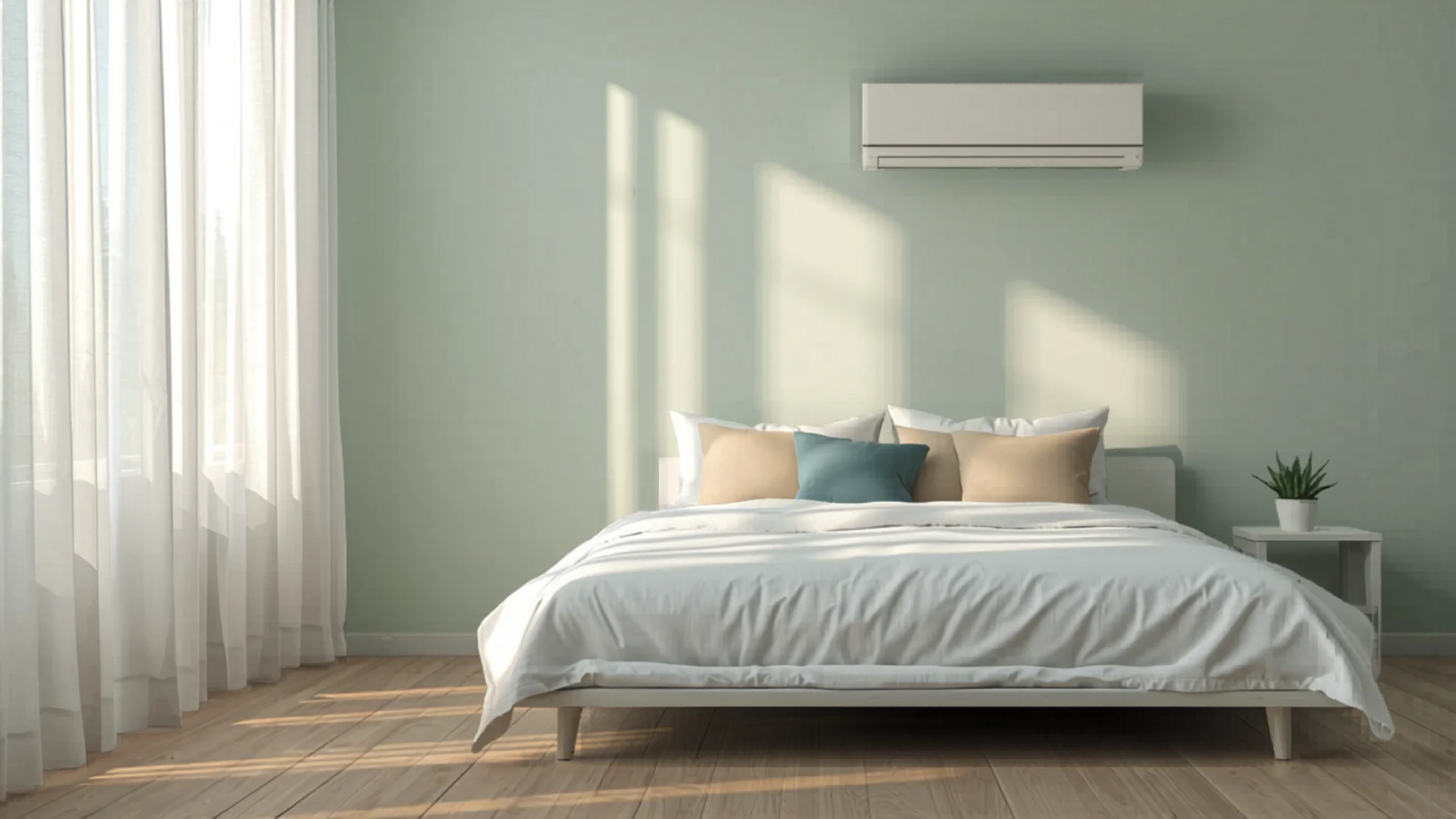
Best Budget Split System Australia: Under $1,500 Installed
There is a genuine floor below which split systems become false economies. Sub-$600 units (some Kmart and Bunnings no-name brands) typically use older, less-efficient compressors, 2-year warranties, and parts availability that disappears after 4 to 5 years. Under $1,500 installed for a 2.5 kW unit is achievable with reputable brands, but under $900 installed is not.
Our top budget picks
Kelvinator KSV25HRJ (2.5kW, about $999 installed): Owned by Electrolux, a genuinely reliable budget brand in Australia. 3.5-star cooling, 3.0-star heating, 5-year parts / 1-year labour warranty. Not the quietest (26 dB indoor) and not the most efficient, but solid for a 5 to 7-year ownership window. The cheapest split system we would actually recommend.
Haier Tempo 2.5kW (about $1,099 installed): Haier's entry-level range is built in the same factory as some LG units and shares a lot of technology. 4-star cooling, 5-year full warranty, Wi-Fi built-in. Better value than Kelvinator if you want Wi-Fi and longer labour coverage.
Fujitsu Lifestyle ASTH24 (2.5kW, about $1,099 installed): Listed in the bedroom section above; genuinely the best budget split you can buy from a tier-1 brand. If budget allows an extra $100, this is a better purchase than the Kelvinator.
Hitachi RAS-E10 2.5kW (about $1,299 installed): A hidden-gem budget-premium option. Hitachi has a smaller Australian dealer network than Daikin or Mitsubishi but builds some of the quietest budget units on the market (20 dB). Worth considering if you find one in stock.
Best Split System Brands Australia 2026
Brand matters more in split systems than in most appliances because the premium brands have larger spare-parts networks, longer warranties, and field-service infrastructure that actually takes warranty calls. Here is the honest brand read for 2026.
Daikin: The market leader in Australia and the benchmark brand. Japanese engineering, imported with full local warranty and service. The Alira X, Cora, and Zena ranges cover every price point from entry-level to premium. Five-year parts-and-labour warranty across the range. Best for: buyers who want the safe, excellent default choice backed by the biggest service network in the country.
Mitsubishi Electric: Premium Japanese alternative to Daikin. Quieter indoor units, better cold-climate heating performance, and superior fit-and-finish. Slightly smaller service network than Daikin but still excellent. Generally 15 to 25% more expensive than the Daikin equivalent. Best for: apartment buyers prioritising quietness, cold-climate buyers needing strong sub-zero heating, and design-conscious buyers.
Fujitsu General: Japanese, reliable, good value. Strong reputation for reliability and a broad dealer network, particularly in metro Sydney and Melbourne. 4-year warranty (slightly shorter than Daikin/Mitsubishi's 5-year). Best for: value-conscious buyers who want tier-1 reliability without the premium badge.
LG: Korean, strong on smart-home features and design. 10-year compressor warranty (longest in the market), 5-year full unit warranty, and the best app-based control experience. Best for: smart-home-integrated buyers and anyone prioritising compressor longevity.
Mitsubishi Heavy Industries: Separate brand to Mitsubishi Electric despite the shared name. Japanese, value-priced, with solid build quality in the entry and mid-tier. Best for: buyers who want Japanese reliability at a meaningfully lower price point.
Panasonic: Japanese, strong on air-quality features (nanoeX ionisation, advanced filtration). Mid-tier pricing. 5-year warranty. Best for: buyers prioritising air purification as part of the unit, or anyone with allergies.
Haier: Chinese, owner of the Fisher & Paykel brand, strong on Wi-Fi and budget value. Shares some manufacturing with LG. 5-year warranty. Best for: budget-focused buyers wanting Wi-Fi and smart-home features.
Kelvinator: Australian-owned brand (Electrolux subsidiary), strong budget-tier presence with solid reliability. 5-year parts / 1-year labour warranty. Best for: budget-focused buyers wanting a trusted local brand.
Samsung: Korean, competes with LG on smart-home and design. Smaller dealer network in Australia for split systems specifically. 5-year warranty. Best for: buyers already using Samsung SmartThings ecosystem.
Daikin vs Mitsubishi vs Fujitsu: Head to Head
These three Japanese brands dominate the Australian premium and mid-premium split-system market. Here's how they compare on the factors that actually matter for first home buyers.
| Factor | Daikin | Mitsubishi Electric | Fujitsu |
|---|---|---|---|
| Typical 5kW installed price | $2,299 | $2,799 | $1,999 |
| Warranty (parts & labour) | 5 years | 5 years | 4 years |
| Indoor noise (5kW, low fan) | 23 dB | 21 dB | 24 dB |
| Cold-climate heating (<0°C) | Strong | Best in class | Good |
| Cooling efficiency (5kW) | 5.0 stars | 5.0 stars | 4.5 stars |
| Heating efficiency (5kW) | 4.5 stars | 4.5 stars | 4.0 stars |
| Wi-Fi / app quality | Excellent | Good | Basic |
| Service network size | Largest | Large | Medium |
| Spare-parts availability (10 yrs) | Excellent | Excellent | Good |
| Best for | Most buyers | Quiet / cold climate | Value / reliability |
The honest summary: Daikin is the best all-round choice and the one most buyers should default to. Mitsubishi Electric is worth the $500 premium only if bedroom quietness is critical or you're in a cold-climate zone (Canberra, Hobart, Tasmania, alpine NSW/VIC). Fujitsu is the best value play when you need three or four units installed and total spend matters more than the last 10% of efficiency.
What Size Split System Do You Need?
Sizing matters more than brand. An oversized unit short-cycles (turns on and off too frequently), wastes energy, and cools or heats unevenly. An undersized unit runs flat-out trying to keep up, uses far more electricity than expected, and never reaches set temperature on extreme days.
The rule of thumb for Australian homes with standard ceiling heights (2.4 to 2.7m) and reasonable insulation:
| Room size | Capacity | Example model | Typical use |
|---|---|---|---|
| Up to 15 sqm | 2.0 kW | Daikin Cora FTXV20 | Small bedroom, study, nursery |
| 15 to 25 sqm | 2.5 kW | Daikin Cora FTXV25 | Standard bedroom, home office |
| 25 to 35 sqm | 3.5 kW | Daikin Cora FTXV35 | Master bedroom, small living |
| 35 to 50 sqm | 5.0 kW | Daikin Alira X FTKM50 | Standard living room |
| 50 to 70 sqm | 7.1 kW | Daikin Alira X FTKM71 | Open-plan living/dining |
| 70 to 100 sqm | 9.0 kW | Daikin Alira X FTKM90 | Very large open plan |
Upsize by one capacity tier for rooms with any of: a full wall of west-facing windows, cathedral or 3m+ ceilings, poor insulation (pre-1980s uninsulated walls), open connections to large unconditioned spaces (stairwells, double-height entry), or five-plus regular occupants. Downsize by one tier for bedrooms that only run at night with bedroom doors closed and curtains drawn.
For apartments with body-corporate restrictions, the outdoor unit placement matters as much as the indoor capacity. Check body-corp rules and common-property easements before selecting. Many apartment schemes require outdoor units to be installed in nominated service pens, which may constrain the total capacity the install pipework can carry.
How to Choose a Split System for Your New Home
A split system is one of the biggest first-year purchases for a new home, and it interacts with your electrical capacity, your body corporate rules, your insulation, and the order in which you set up the rest of the house. Here's the decision framework we would work through.
1. Plan the install order. Living room first (biggest impact per dollar: you spend most time there), master bedroom second (sleep quality matters), then secondary bedrooms, then studies. Most first home buyers install 3 to 4 units in year one at $1,200 to $2,500 each installed, for a total spend of $5,000 to $9,000. For a room-by-room essentials and furniture guide to pair with your climate-control plan, the new home checklist covers the full first-year fit-out.
2. Get three installer quotes. The same Daikin Cora 2.5kW varies by $300 to $500 in installed price depending on the installer, the offered sale pricing, and the complexity of the install. Always get three quotes, confirm the quote includes a standard back-to-back install and a 10-amp or 15-amp electrical circuit if needed, and confirm the warranty covers labour (not just parts: some cheaper installers only pass through the parts warranty). The same logic applies if you're going the Amazon AU + separate installer route with the Mitsubishi HI Avanti 2.5kW: get installer-only quotes from three licensed refrigeration installers (try the Australian Refrigeration Council search at arctick.org for licensed pros) before committing.
3. Install before summer peak. Installer demand spikes 60 to 80% from late November through February. Winter-install pricing is typically 10 to 20% lower than summer-install pricing, and lead times drop from 3 to 6 weeks to 2 to 5 days. If you're buying a home in spring or early summer, plan the install for May to September if possible.
4. Match energy rating to expected usage. Living-room units that run 6+ hours per day in summer and winter pay back a 5-star unit over a 3-star in roughly 3 to 5 years. Bedroom units that only run at sleep time pay back over 8 to 12 years. For high-usage rooms, always spend the extra $200 to $400 on higher star rating. For detailed household energy strategy beyond split systems, our energy saving tips guide covers hot water, appliances, and standby loads, the other three big levers on your annual power bill.
5. Check electrical capacity. Multiple split systems running simultaneously can exceed older 40-amp to 60-amp main-switch capacity. A good installer will check the main switchboard and flag if an electrical upgrade is needed (roughly $800 to $1,500 for a modern 63-amp or 80-amp board). Factor this into the total install cost for whole-home plans.
6. Confirm body-corp approval if applicable. Apartments and townhouses under body-corporate governance almost always require written approval for split-system installs: outdoor unit placement, pipe routing through common walls, and sometimes specific brands or installers on approved lists. Get approval in writing before you book the install, not after.
7. Budget it properly. Three bedrooms plus a living room at standard Daikin / Fujitsu pricing totals approximately $5,500 to $8,000 installed. This is one of the biggest climate-control decisions of the first year and sits alongside the fridge, washing machine, and hot water system in terms of first-year home-setup cost. If you're still working out what your first home can realistically afford across appliances, furniture, and home-setup, our borrowing power calculator shows the total-budget picture before you shop.
Once the first living-room split is installed and running, the rest of the home tends to come together quickly. Good climate control is the invisible upgrade that makes every other comfort decision land better. It's one of the highest-return purchases in the first year of home ownership.
Frequently Asked Questions
What is the best split system air conditioner in Australia?
It depends on whether you're shopping Amazon AU or going through a specialist retailer with installer included. On Amazon AU, the Mitsubishi Heavy Industries Avanti 2.5kW (SRK25ZSA-W) at about $1,162 unit-only is the strongest value pick for a bedroom or small living room, with a Japanese engineered inverter and a 5 year warranty. You'll need to engage a licensed refrigeration installer separately (about $700 to 1,000 extra), making the fitted total roughly $1,862 to 2,162. For a full-size living-room unit (5.0kW+) and the convenience of unit-plus-installer in one quoted transaction, the Daikin Alira X FTKM50 at $2,299 installed via Bing Lee, Harvey Norman, Appliances Online, or The Good Guys is the overall pick. For bedrooms via specialist retailer, the Daikin Cora FTXV25 at $1,299 installed remains the benchmark.
What is the best air conditioner brand in Australia?
Daikin is the benchmark brand for most Australian buyers, largest service network, the most reliable 5-year warranty coverage, and the widest range across price points. Mitsubishi Electric is the premium alternative, quieter, better cold-climate heating, and superior fit-and-finish at a 15 to 25% price premium. Mitsubishi Heavy Industries (a separate company despite the similar name) is the value tier-1 Japanese brand and can be bought on Amazon AU as the unit only, which suits buyers who want to coordinate their own installer. Fujitsu is the best-value tier-1 brand for multi-unit installs (slightly shorter 4-year warranty). LG leads on smart-home integration and has the longest compressor warranty (10 years). Panasonic stands out for buyers prioritising air-quality features. Kelvinator and Haier are the reputable budget picks via specialist retailers.
Can I buy a split system on Amazon Australia?
Yes, but with caveats. Mitsubishi Heavy Industries Avanti 2.5kW (SRK25ZSA-W) at about $1,162 is sold on Amazon AU as the unit only. You'll need to engage a licensed refrigeration installer separately to fit it (DIY refrigerant work is illegal in Australia under the Ozone Protection and Synthetic Greenhouse Gas Management Regulations 1995, which require an ARCtick refrigerant handling licence). Most premium-brand split systems (Daikin, Mitsubishi Electric, LG, Fujitsu, Panasonic) are instead sold through specialist retailers, Bing Lee, Harvey Norman, Appliances Online, The Good Guys, where the package includes installer scheduling and warranty registration. For a single bedroom unit, the Amazon-AU-then-find-installer route can save $200 to $400 versus the specialist-retailer bundle. For full-house fitouts, the convenience of a single quoted transaction usually wins.
What size split system do I need?
Match capacity to room area. Up to 15 sqm: 2.0 kW. 15 to 25 sqm (standard bedroom): 2.5 kW. 25 to 35 sqm (master bedroom or small living): 3.5 kW. 35 to 50 sqm (standard living room): 5.0 kW. 50 to 70 sqm (open-plan living/dining): 7.1 kW. 70 to 100 sqm (very large open plan): 9.0 kW. Upsize one tier for west-facing walls, cathedral ceilings, poor insulation, or open connections to unconditioned spaces. Downsize one tier for bedrooms that only run at night with doors closed and curtains drawn. Undersized units run flat-out and waste electricity; oversized units short-cycle and cool unevenly, both cost more in operating expenses than a correctly sized unit.
What is a reverse cycle air conditioner?
A reverse-cycle air conditioner is a split system that both heats and cools, the same refrigerant cycle produces cooling when run one way and heating when reversed. Over 95% of split systems sold in Australia are reverse cycle because a cooling-only unit is only 10 to 20% cheaper but unusable for half the year in any climate south of Rockhampton. Reverse-cycle heating is extraordinarily efficient compared to alternatives, typically producing 4 to 5 kW of heat per 1 kW of electricity input (a Coefficient of Performance of 4 to 5). Running-cost comparison: heating a 40 sqm living room through winter costs roughly $220 a year with a 5-star reverse-cycle split, $380 with ducted gas, and $900+ with plug-in electric heaters. For almost all Australian homes, reverse cycle is the default.
How much does a split system cost installed?
In 2026, expect to pay $999 to $1,500 installed for a 2.5kW bedroom unit from a reputable brand, $2,000 to $2,800 installed for a 5.0kW living-room unit, and $2,800 to $3,400 installed for a 7.1kW open-plan unit. These prices assume a standard back-to-back install, indoor and outdoor units on opposite sides of the same wall, under 3m pipe run, single-storey property. Complex installs add $400 to $1,200: longer pipe runs, first-floor outdoor units requiring scaffolding, electrical upgrades for older switchboards, or body-corporate approved installers in apartments. Always get three installer quotes. Summer-peak pricing (November to February) runs 10 to 20% higher than winter pricing, plan installs for May to September where possible.
Is Daikin or Mitsubishi better?
Both are excellent Japanese brands with effectively identical reliability records, both sold via specialist retailers in Australia (not Amazon AU). The honest difference: Daikin has the larger Australian service network, marginally better Wi-Fi and app support, and is typically 15 to 25% cheaper than the Mitsubishi Electric equivalent, making it the better value choice for most buyers. Mitsubishi Electric is quieter (2 dB lower indoor noise on comparable models, genuinely noticeable in bedrooms), has better cold-climate heating performance below 0°C, and has superior fit-and-finish on the indoor unit. Choose Mitsubishi Electric if bedroom quietness or cold-climate heating matters most to you, or if the premium design matters. Choose Daikin for every other scenario, including if you're installing multiple units and total cost matters. Footnote: Mitsubishi Heavy Industries is a separate company from Mitsubishi Electric; its Avanti 2.5kW is sold on Amazon AU as the unit only, if you're willing to coordinate your own installer.
What is the $5000 rule for air conditioners?
It is a rule of thumb for deciding between a repair and a replacement. Multiply the age of the unit in years by the quoted repair cost. If the answer is more than $5,000, replace the unit; if it is under, the repair is usually worth doing. A 3-year-old unit with a $600 quote scores 1,800, so you fix it. A 12-year-old unit with a $600 quote scores 7,200, so you put the money towards a new install instead. It is a starting point, not a law, and efficiency matters too: an older unit replaced with a higher star rating can claw back part of the cost every year it runs.
How much does it cost to regas a split system?
Ask for a leak test before you ask for a price. A split system is a sealed refrigerant loop, so it does not consume gas the way a car consumes fuel. If a unit is low on refrigerant, it has a leak, and topping it up without finding that leak means paying for the same gas twice. Handling refrigerant is licensed work in Australia under the Ozone Protection and Synthetic Greenhouse Gas Management Regulations 1995, which require an ARCtick refrigerant handling licence, so this is a job for a licensed refrigeration mechanic, and the quote should cover finding and repairing the leak, not just the gas. On a unit past ten years old, put that quote next to the $5,000 rule above before spending anything.
How do you remove a split system air conditioner?
You do not do it yourself. Removing a split system means opening the refrigerant circuit, and pumping down and recovering refrigerant needs a refrigerant handling licence under the Ozone Protection and Synthetic Greenhouse Gas Management Regulations 1995, the same rules that make DIY installation illegal. A licensed refrigeration mechanic pumps the gas back into the outdoor unit, disconnects the line set, and takes both units off the brackets. If you are moving house and want to take the unit with you, book the same trade for the reinstall, because a system that is opened to the air needs to be evacuated and recharged properly before it will work again.