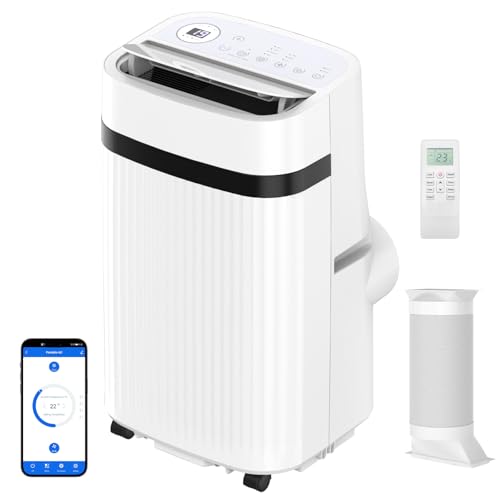
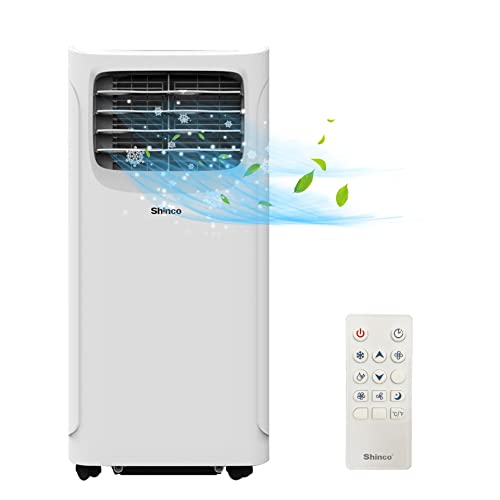
The best portable air conditioner in Australia for most rooms is the DeLonghi Pinguino 12,000 BTU at about $799, the portable aircon Australian owners single out most often for quiet running; the Midea 9,000 BTU at about $449 is the budget pick for a bedroom, and the Breville Smart Air Plus at about $1,199 is the premium option. Australian summers are brutal. If you've just bought your first home and you're staring down a $3,000 to $5,000 quote to install a split system air conditioner, a portable AC might be exactly what you need right now. No installation, no landlord permission, no waiting weeks for a tradesperson. Just wheel it into the room, attach the exhaust hose to a window, plug it in, and you're cool in minutes.
Portable air conditioners have improved dramatically in the last few years. They're quieter, more efficient, and some now include smart features that let you control them from your phone. They're not as efficient as a split system long-term, but for first home buyers who need relief now without blowing the budget, they're a genuinely smart purchase.
We've researched the Australian market for 2026, read hundreds of real owner reviews, and compared specs across every major brand. Here's our honest breakdown: from budget models that get the job done to premium units that rival split systems.
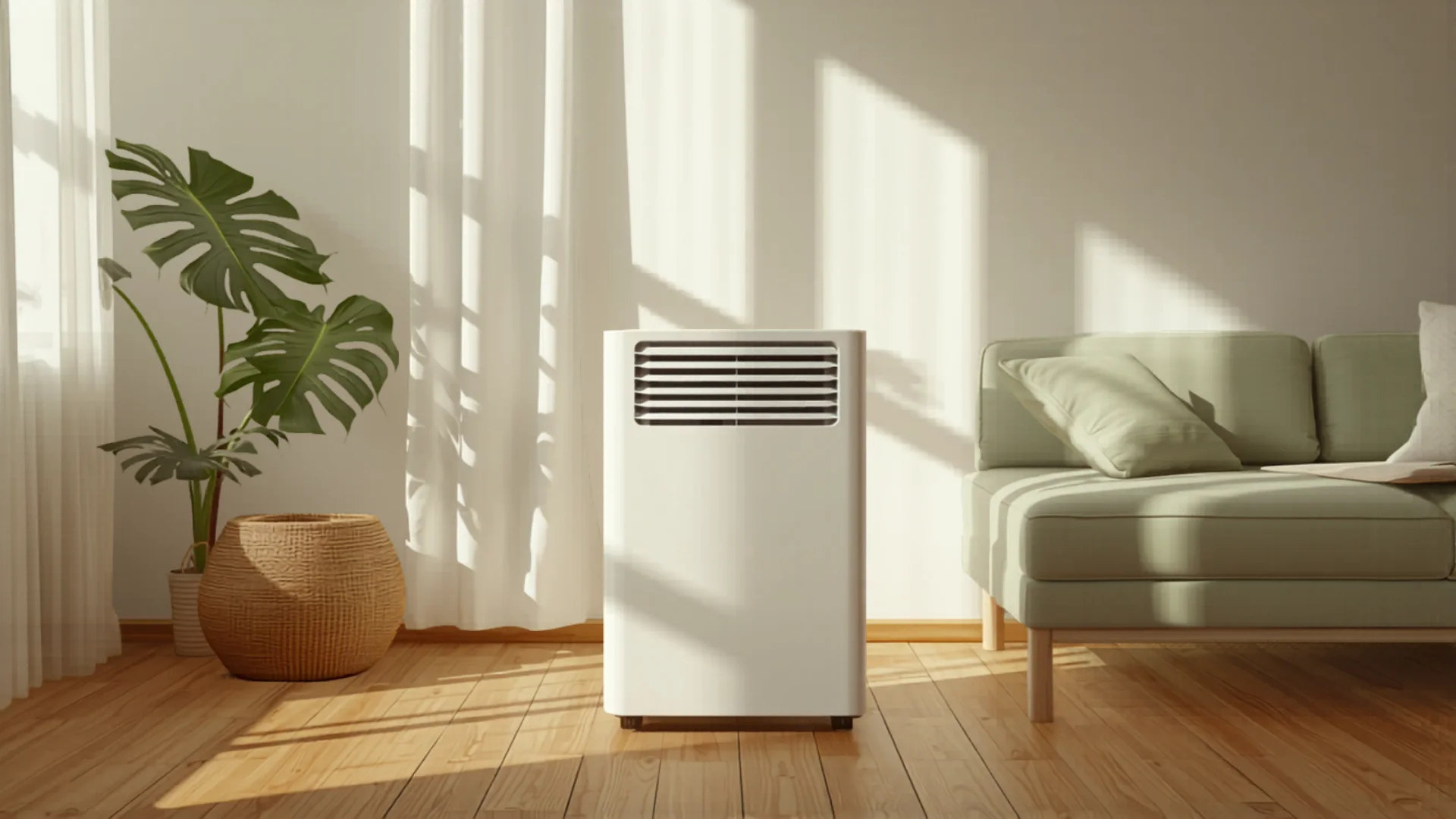
Why New Homeowners Love Portable Air Conditioners
The biggest advantage of a portable air conditioner is the maths. A split system installation costs $2,000 to $5,000 depending on the unit and complexity of the install. A portable AC costs $400 to $1,200, and you can take it with you if you move. For first home buyers who've just emptied their savings on a deposit, that difference matters. When the budget recovers from settlement, our split system air conditioner guide covers the permanent upgrade for the same room.
Here's why portable ACs are particularly popular with new homeowners:
- No installation costs: Zero. You unbox it, attach the window kit, and plug it in. The window kits fit most Australian window types including sliding and awning windows.
- Move it room to room: Cool the bedroom at night, the living room during the day. You only need one unit instead of multiple split systems.
- Renter-friendly: If you're renting while saving for a home, or if you've bought an investment property you'll eventually move into, a portable AC goes with you.
- No body corporate approval needed: Many apartment buildings restrict external split system units. Portable ACs sit inside your home, with no approvals required.
- Bridge solution: Use a portable AC for the first summer while you save up for a proper split system installation. When you upgrade, sell the portable on Facebook Marketplace and recover 50 to 70% of the cost.
The trade-off? Portable ACs are noisier and less energy-efficient than split systems. But if you need cooling this summer without spending thousands, they're the practical choice.
BTU Guide: What Size Portable AC Do You Need?
BTU (British Thermal Units) is the standard measure of cooling power. The bigger the room, the more BTUs you need. Get this wrong and you'll end up with a unit that runs constantly, never reaches temperature, and drives your electricity bill through the roof.
Here's the sizing guide for Australian homes:
- Small room (up to 15sqm): 7,000 to 9,000 BTU. Think bedrooms, studies, and small living areas. Most budget models sit in this range and handle these rooms well.
- Medium room (15 to 25sqm): 10,000 to 12,000 BTU. This covers most standard Australian living rooms and master bedrooms. The sweet spot for most buyers.
- Large room (25 to 35sqm): 14,000+ BTU. Open-plan living/dining areas and large bedrooms. You'll need a premium unit to cover this area effectively.
Important: These figures assume standard 2.4-metre ceilings and reasonable insulation. If your home has high ceilings (common in Queenslander-style homes), large windows with direct sun exposure, or poor insulation, size up by one category. An undersized portable AC will run continuously, never cool the room properly, and cost a fortune in electricity.
Also consider which direction your room faces. A west-facing living room with floor-to-ceiling windows in a Brisbane summer is a very different cooling challenge than a south-facing bedroom in Melbourne. When in doubt, go bigger: an oversized unit cools faster and then cycles off, which is actually more efficient than an undersized unit running non-stop.
Best Portable Air Conditioners Under $600
Budget portable ACs have come a long way. These models won't win awards for quiet operation, but they'll cool a small-to-medium room effectively and won't break the bank. For a first home buyer furnishing an entire house, spending $400 to $550 on cooling instead of $3,000+ makes a lot of sense. If your worst heat is dry inland heat rather than humid coastal heat, an evaporative cooler undercuts even that, with our picks running from $79.
Midea 9,000 BTU Portable AC: about $449
The Midea is our top budget pick for 2026. It delivers 9,000 BTU of cooling power (enough for rooms up to 15sqm) and includes a dehumidifier mode that's genuinely useful during humid coastal summers. The 24-hour timer means you can set it to start cooling your bedroom 30 minutes before you get home from work.
- Pros: Affordable, 3-in-1 function (cool/dehumidify/fan), easy window installation kit, remote control included
- Cons: Noisy at full power (around 55dB, similar to a conversation), only suits small rooms, basic thermostat accuracy
- Best for: Bedrooms and studies up to 15sqm on a tight budget
Check price on Amazon AU →
Hisense 10,000 BTU Portable AC: about $499
If you need a step up in power without a big price jump, the Hisense 10,000 BTU handles rooms up to 20sqm. It has a slightly more accurate thermostat than the Midea and comes with both cooling and heating modes, useful if you want to use it in winter too.
- Pros: Heating and cooling modes, stronger 10,000 BTU output, relatively compact for its power
- Cons: Still quite noisy, the exhaust hose is a bit stiff and hard to position, filter needs regular cleaning
- Best for: Medium bedrooms and small living rooms, especially if you want year-round use
Check price on Amazon AU →
Dimplex 2.6kW Portable AC: about $549
Dimplex is a well-known Australian brand and their 2.6kW portable (approximately 9,000 BTU) is reliable and well-supported locally. The build quality feels a step above the cheapest models, and Dimplex has good customer service if something goes wrong.
- Pros: Australian brand with local support, solid build quality, dehumidifier mode, straightforward controls
- Cons: Slightly less powerful than the Hisense at a similar price, no smart features, heavier than competitors
- Best for: Buyers who prefer an established Australian brand with reliable local warranty
Check price on Amazon AU →
Best Mid-Range Portable Air Conditioners ($600 to $900)
This is the sweet spot for most buyers. Mid-range portable ACs are noticeably quieter, have better thermostats, and cover medium-to-large rooms. The extra $200 to $400 over budget models buys you meaningful improvements in comfort and noise levels.
DeLonghi Pinguino 12,000 BTU: about $799
The DeLonghi Pinguino is the gold standard of mid-range portable ACs in Australia. Its "Real Feel" technology adjusts both temperature and humidity simultaneously, which means the room actually feels cool rather than just blowing cold, clammy air. At 50dB, it's noticeably quieter than budget models. You can sleep with it running.
- Pros: Real Feel technology, quieter than most portables (50dB), strong 12,000 BTU cooling, excellent build quality, handles rooms up to 25sqm
- Cons: Heavier at 33kg (harder to move between rooms), premium price for a portable, no Wi-Fi control
- Best for: Living rooms and master bedrooms up to 25sqm where you want genuine comfort, not just cold air
Check price on Amazon AU →
Samsung Wind-Free Portable 3.5kW: about $849
Samsung's portable offering uses their Wind-Free technology to distribute air through thousands of micro-holes rather than blasting a focused cold stream. The result is more even cooling without that uncomfortable direct-draft feeling. It also integrates with the SmartThings app for phone control.
- Pros: Wind-Free technology (no cold drafts), SmartThings app integration, 12,000 BTU, sleek design
- Cons: Expensive for a portable, app can be glitchy, exhaust hose could be longer
- Best for: Smart home enthusiasts who want phone control and draft-free cooling
Check price on Amazon AU →
Best Premium Portable Air Conditioners ($900 to $1,400)
Premium portable ACs push the boundaries of what a portable unit can do. They're the quietest, the most powerful, and include smart features that bring them closer to the split system experience. If you're spending in this range, you're getting close to split system territory on price, but you're also getting something you can take with you, use immediately, and move room to room.
Breville The Smart Air Plus: about $1,199
The Breville Smart Air Plus is the best portable AC we've compared. At 14,000 BTU, it handles rooms up to 35sqm. That's most open-plan living areas. The self-evaporating system means you never need to drain a water tray (a common annoyance with cheaper portables). Wi-Fi connectivity lets you start cooling the house from your phone while you're driving home.
- Pros: 14,000 BTU for large rooms, self-evaporating (no water tray), Wi-Fi control, relatively quiet for its power
- Cons: Expensive (approaching split system installation cost), heavy at 38kg, still noisier than a split system
- Best for: Large living areas where split system installation isn't possible or practical
Check price on Amazon AU →
DeLonghi Pinguino PAC EL98: about $1,099
DeLonghi's premium Pinguino model includes their patented condensate recirculation system and an improved Real Feel function. It's one of the quietest portable ACs available in Australia at 47dB on low, quiet enough for light sleepers.
- Pros: 47dB on low (exceptionally quiet for a portable), Real Feel technology, no water drainage needed, premium build quality
- Cons: Only 12,000 BTU (less powerful than the Breville), very heavy, premium price
- Best for: Bedrooms where quiet operation is the top priority
Check price on Amazon AU →
Running Costs: How Much Does a Portable AC Cost to Run?
This is the question every budget-conscious first home buyer asks, and the answer depends on your unit's power consumption, your electricity rate, and how many hours you run it.
Here's the maths for a typical 2.5kW portable AC running at the average Australian electricity rate of $0.30 to $0.35/kWh:
- Per hour: $0.75 to $1.20 depending on the unit's efficiency and your electricity rate
- Per night (8 hours): $6.00 to $9.60
- Per week (8 hours/day): $42 to $67
- Per month in peak summer: $180 to $290
That's not cheap. But consider that a split system costs $2,000 to $5,000 to install, and the portable costs $400 to $1,200 upfront. Even with higher running costs, you'd need to run a portable AC for several summers before the total cost exceeds a split system.
Tips to reduce running costs:
- Close doors and windows: A portable AC cooling an open-plan area will run constantly. Close off the room you're cooling and the unit will reach temperature faster, then cycle off.
- Use a timer: Set the AC to turn off 2 hours after you fall asleep. Once the room is cool, good insulation keeps it comfortable for hours.
- Run it at night: Outside temperatures drop at night, making the AC's job easier. Cool the bedroom for sleeping rather than trying to cool the whole house during 40°C daytime heat.
- Seal the window kit properly: The exhaust hose window kit needs to be sealed well. Any gaps let hot air back in, forcing the unit to work harder. Use foam tape to seal gaps in the window kit.
- Set the thermostat to 24 to 25°C: Every degree below 24°C increases energy use by roughly 10%. Setting your AC to 20°C won't cool the room much faster. It just makes the compressor run longer.
Portable AC vs Split System: Which Should You Get?
This is the real decision most new homeowners face. Here's an honest comparison:
| Factor | Portable AC | Split System |
|---|
| Upfront cost | $400 to $1,200 | $2,000 to $5,000 installed |
| Installation | None: plug in and go | Professional installation required |
| Running cost/hour | $0.75 to $1.20 | $0.30 to $0.60 |
| Noise level | 47 to 58dB (noticeable) | 19 to 30dB (whisper quiet) |
| Cooling efficiency | Good for one room | Excellent: cools faster, more evenly |
| Portability | Move room to room | Fixed position |
| Adds property value | No | Yes: buyers expect AC |
Our recommendation: If you own your home and plan to stay for 3+ years, start saving for a split system. The energy savings alone will pay for the price difference over time, and it adds value to your property. But if you're renting, in a body corporate that restricts external units, or simply can't afford a split system right now, a portable AC is a perfectly smart purchase. Many first home buyers use a portable for the first summer, then install a split system the following year when their finances have recovered from the purchase.
For more on managing your home finances as a first home buyer, check our mortgage repayment calculator to understand your ongoing costs, and the energy saving tips for new homeowners guide for the rest of the running-cost picture once cooling, hot water and lighting all land on the same bill.
Frequently Asked Questions
Do portable air conditioners really work?
Yes. Modern portable air conditioners genuinely cool rooms effectively, provided you choose the right BTU size for your room. A 12,000 BTU unit will cool a 20 to 25sqm room by 5 to 10°C within 30 minutes. They're not as efficient as split systems (they use 30 to 50% more electricity for the same cooling) and they're noisier, but they absolutely work. The key is sizing: an undersized portable AC will run constantly and never reach a comfortable temperature. Use the BTU guide above to match the unit to your room size.
Can you use a portable air conditioner without a window?
Technically no. Portable air conditioners need to vent hot exhaust air outside through a window, sliding door, or wall vent. Without venting, the unit pumps heat into the same room it's trying to cool, achieving nothing. However, you have options beyond windows: you can vent through a sliding door using a door seal kit ($30 to $50), through a ceiling cavity vent, or through a dryer vent hole if your laundry has one. Some people cut a small hole in a wall panel, though this is a more permanent solution.
How long do portable air conditioners last?
A quality portable air conditioner lasts 5 to 10 years with proper maintenance. Budget models tend toward the lower end (5 to 7 years), while premium brands like DeLonghi and Breville often last 8 to 10 years. To maximise lifespan: clean the filter every 2 to 4 weeks during heavy use, drain any condensate tray regularly, store the unit indoors during winter (not in a garage where temperatures fluctuate), and don't run it 24/7. Use a timer to give the compressor rest periods.
Is there a portable aircon that actually works?
Yes, and the honest answer is that hose design decides it. A single hose unit pushes hot exhaust out the window and pulls the replacement air in from the room, so it fights itself and the effective cooling is lower than the rated figure. A dual hose unit draws its own exhaust air from outside and keeps the room sealed. Size it properly with the BTU guide above and a portable aircon cools a room perfectly well.
Is there a portable air conditioner without a hose?
Not a real one. Anything sold as a hoseless portable air conditioner is an evaporative cooler, which blows air across a wet pad rather than running a refrigeration cycle. It adds moisture instead of removing it, so it works in dry inland heat and does very little in humid coastal Sydney or Brisbane. If a listing has no exhaust hose in the photos, it is not an air conditioner.
What is the best portable aircon for a bedroom?
For a typical Australian bedroom of 12 to 16 square metres, a 9,000 BTU unit is enough, which makes the Midea at about $449 the sensible bedroom buy. Do not oversize it: a bigger unit cycles on and off, which is louder and worse at removing humidity than a right-sized one running steadily. Noise matters more than capacity in a bedroom, and it is why the DeLonghi Pinguino keeps getting recommended.
What size portable air conditioner do I need for a small room?
Work from floor area. Up to about 15 square metres, 7,000 to 9,000 BTU. Around 20 to 25 square metres, 12,000 BTU, which the Pinguino here covers. Above that you are into 14,000 BTU or a split system. Add capacity for a west-facing window, a top floor or an uninsulated roof, and take some off for a shaded south-facing room. The BTU guide above has the full table.
What brand of portable air conditioner is best in Australia?
DeLonghi is the brand most often named by Australian owners, and the Pinguino line at about $799 is why. Midea and Hisense own the value tier from about $449. Dimplex and Kogan sit in the middle. Breville and Samsung are the premium end with the quieter running and the smart controls. Bunnings and Kogan house brands are cheapest and are almost always single hose, which is the trade you are making.
Where can you buy a portable air conditioner in Australia?
Bunnings, Harvey Norman, The Good Guys, Appliances Online, Kogan and Amazon Australia all carry the category, and the range splits by price. Bunnings and Kogan cover the sub $500 single hose end. Harvey Norman and The Good Guys carry the $600 to $900 middle where the DeLonghi Pinguino sits. Appliances Online and the specialists carry the premium units above $1,000. Prices move a lot in the first hot week of summer.
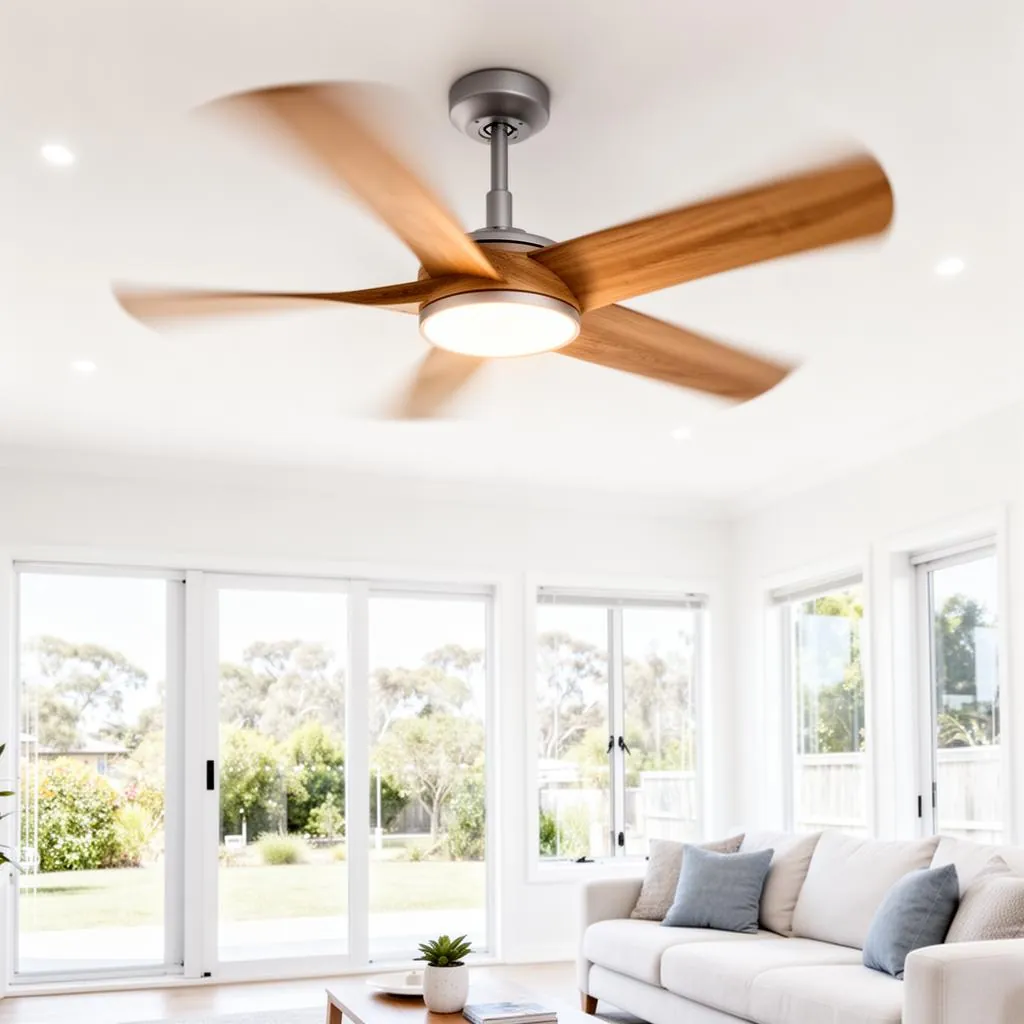
For rooms where the portable AC is overkill, a ceiling fan or tower fan handles the 200+ mild days each year at 1 to 2 cents per hour, leaving the portable AC for the 30+ days when it is genuinely needed.
Portable ACs dehumidify slightly as a side-effect of cooling, but if your room is genuinely damp (rising mould, foggy windows), a dedicated dehumidifier solves the moisture problem at lower running cost than running an AC for humidity alone.