If there is one thing that gets harder after buying a home, it is making it to the gym. Between the mortgage, the endless list of things that need fixing, and the general exhaustion of adulting, that $60 to $80 monthly gym membership starts to feel like money wasted. You go three times in January, once in February, and then it is just an automatic debit you feel guilty about for the rest of the year.
A home gym solves this. No commute, no waiting for equipment, no closing hours. Just walk into your garage, spare room, or even a corner of the living room and start training. And here is the maths that makes it a no-brainer: a basic home gym setup costs about $200 to $500, the equivalent of 3 to 7 months of gym membership. After that, it is free. Forever.
This guide covers everything you need to set up a home gym on any budget, from a $200 essential kit to a fully equipped $1,500+ garage gym. We will also cover the flooring you need to protect your house, the best equipment for small spaces, and the mistakes that waste money.
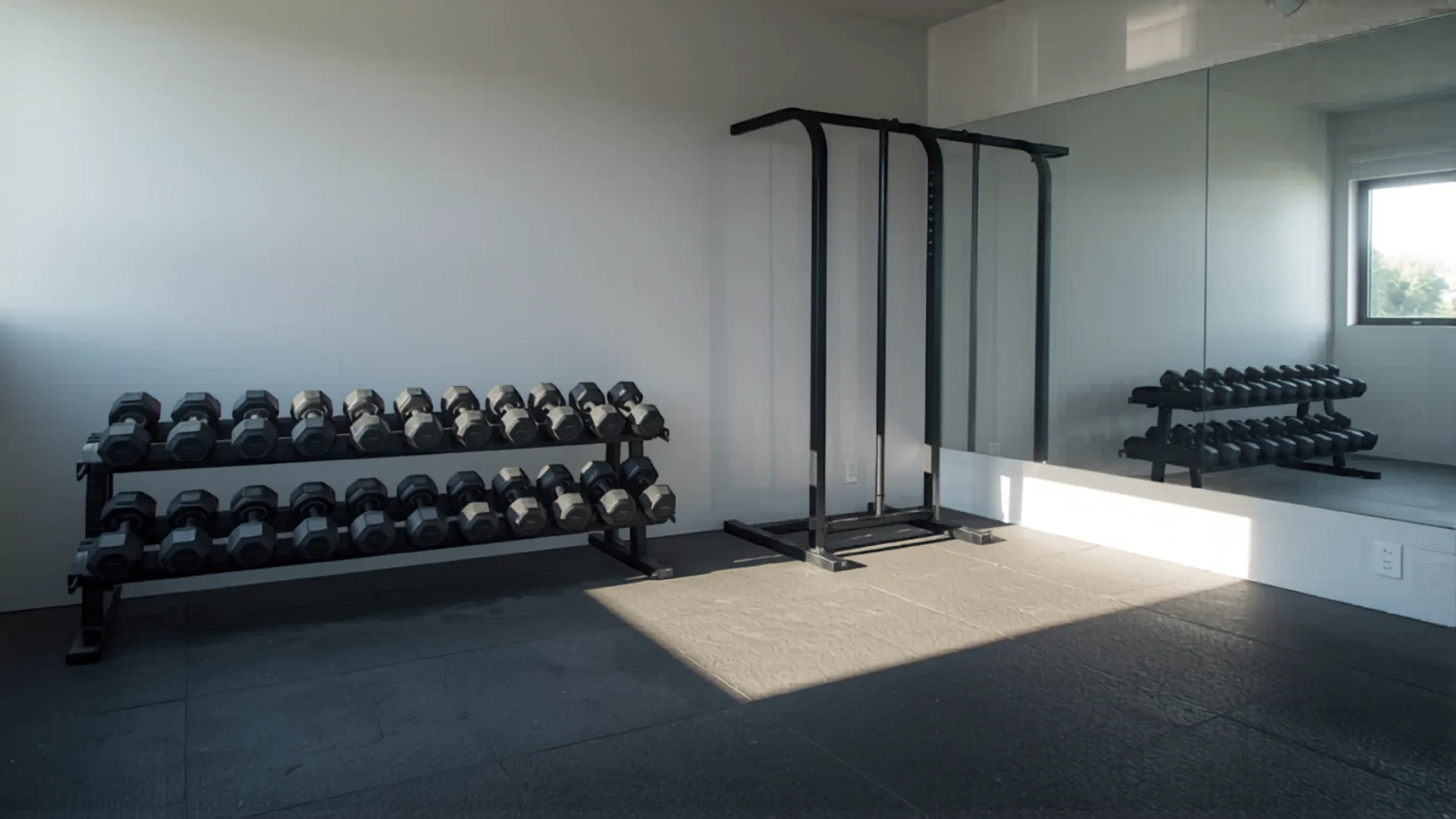
Is a Home Gym Worth It?
Let us do the maths properly because this is the question everyone asks:
- Average gym membership in Australia: $60 to $80 per month ($720 to $960 per year)
- Average home gym setup (functional): $500
- Break-even point: 7 to 8 months
After 8 months, every workout in your home gym is essentially free. Over 5 years, you save $3,100 to $4,300 compared to a gym membership, and you still have the equipment, which holds its resale value surprisingly well (second-hand dumbbells and barbells sell for 60 to 80% of their original price on Facebook Marketplace).
But money is not the only reason. Here are the benefits that matter just as much:
- Zero commute time. No driving to the gym, no parking, no driving back. If the gym is 15 minutes away, that is 30 minutes of travel per session (2.5 hours per week) that you get back.
- No waiting for equipment. Peak hour at a commercial gym means waiting for the squat rack, the bench, the cable machine. At home, everything is yours, all the time.
- Train any time. 5am before work? 10pm after the kids are asleep? Sunday at noon? A home gym does not have opening hours.
- No excuses. When the gym is in your garage, you cannot tell yourself "it's too far" or "the parking will be bad." It is right there. The barrier to starting a workout drops to near zero.
The only downside is space. You need somewhere to put the equipment. But as you will see below, even a 2m x 2m area is enough for a highly effective setup.
Home Gym on a $200 Budget
You do not need a squat rack and Olympic weights to get an effective workout. With $200, you can buy equipment that covers 80% of exercises and fits in a cupboard when you are not using it.
- Resistance bands set ($30): A set of 5 bands at different resistances covers light to heavy exercises. Use them for rows, curls, presses, squats, and dozens of other movements. They weigh nothing, take up no space, and travel easily. Our resistance bands guide compares six sets sold in Australia.
- Yoga mat ($25): Essential for floor exercises, stretching, and ab work. Also protects your floor from sweat. Get a 6mm+ mat for comfort on hard floors. Get a 6mm+ mat for comfort on hard floors, and see our guide to the best yoga mats in Australia for the thickness and material that suit your practice.
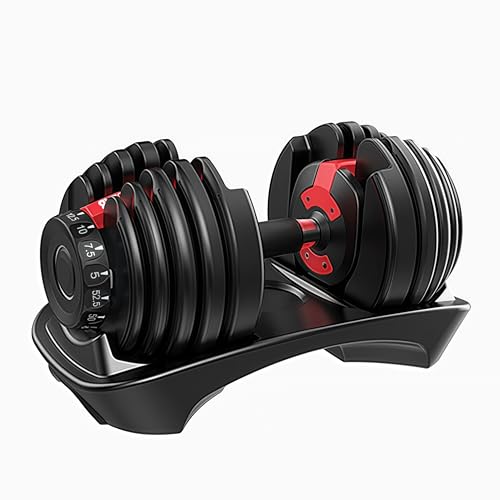
- Adjustable dumbbells, light pair ($100): A pair of adjustable dumbbells that go from 2kg to 10kg or 2kg to 20kg covers a huge range of exercises. If you can stretch to a set that goes up to 24kg, you will have enough resistance for years of training. These are the single most versatile piece of equipment you can buy.
- Skipping rope ($15): The cheapest and most effective cardio tool in existence. Five minutes of skipping burns as many calories as ten minutes of running, and you can do it in your backyard or garage.
- Doorway pull-up bar ($30): Mounts in a standard door frame with no screws or drilling. Pull-ups and chin-ups are the most effective upper-body exercises you can do with zero floor space. Most also support leg raises for core work.
Total: about $200. This kit fits in a single cupboard shelf, covers full-body workouts, and is enough equipment for a beginner to train effectively for 6 to 12 months before needing to upgrade.
Home Gym on a $500 Budget
With $500, you can build a setup that rivals a commercial gym for the exercises that matter most. Add these to the $200 kit:
- Adjustable weight bench ($150 to $200): This is the single most versatile piece of gym equipment after dumbbells. A bench with 5 to 7 positions (flat, incline, decline) unlocks dozens of exercises: bench press, dumbbell rows, seated shoulder press, step-ups, hip thrusts, and more. Look for one that folds flat for storage.
- Kettlebell set ($80 to $120): A 12kg and a 16kg kettlebell (or a 16kg and 24kg if you are stronger) cover swings, goblet squats, Turkish get-ups, cleans, and presses. Kettlebells are excellent for cardio-strength hybrid workouts that burn fat and build muscle simultaneously.
- Foam roller ($30): Not glamorous but genuinely essential for recovery. Rolling out tight muscles after a workout reduces soreness and improves mobility. Your 35-year-old body will thank you.
Total: about $460 to $550. This setup covers 90%+ of exercises you would do in a commercial gym. The combination of adjustable dumbbells, a bench, and kettlebells gives you progressive overload (the ability to increase weight over time) and enough variety to train every muscle group effectively.
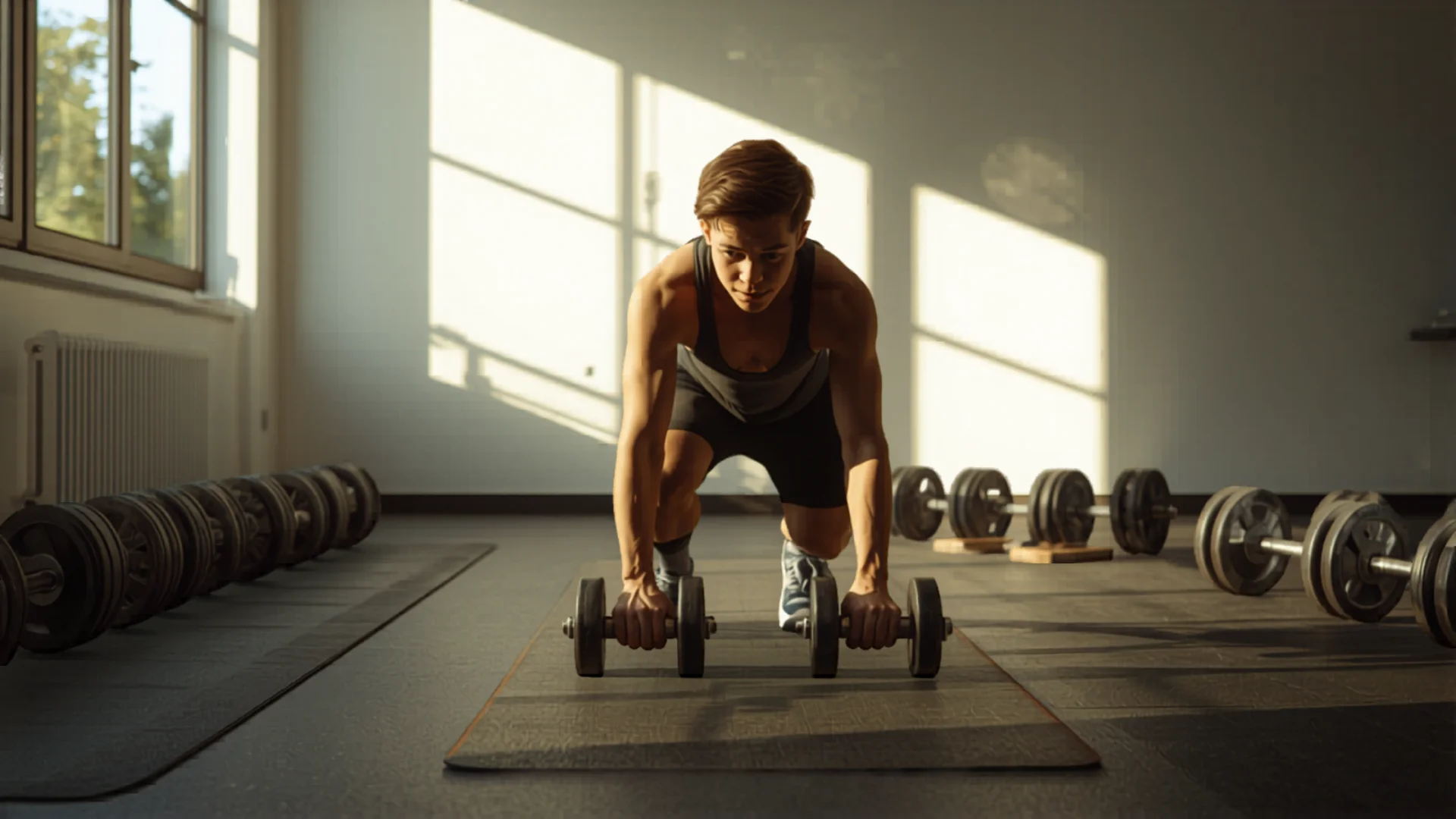
Home Gym on a $1,500+ Budget
If you have the space (a single-car garage or a dedicated room) and the budget, $1,500 to $2,000 gets you a setup that eliminates any reason to ever pay for a gym membership again.
- Power rack / squat rack ($400 to $800): The centrepiece of a serious home gym. A power rack with safety bars lets you squat, bench press, overhead press, and do pull-ups with confidence. If you fail a rep, the safety bars catch the weight. Entry-level racks start around $400. Mid-range racks with built-in pull-up bars and dip handles are $600 to $800. This is worth spending on. A cheap rack that wobbles under load is unsafe.
- Olympic barbell and weight plates ($300 to $500): A 20kg Olympic barbell ($150 to $250) paired with rubber-coated weight plates ($150 to $300 for 100kg of plates) lets you do the big compound lifts: squats, deadlifts, bench press, overhead press, and rows. These are the exercises that build the most strength and muscle per minute of training. Rubber-coated plates are quieter and protect your floor.
- Cardio machine ($300 to $600): A rowing machine ($400 to $600) is the best cardio option for a home gym. It works the full body, folds upright for storage, and provides low-impact cardio. If you prefer cycling, a spin bike ($300 to $500) takes up less space. An air bike ($400 to $600) is the most intense option, and a cross trainer is the low-impact choice if your knees rule out running. Skip the treadmill for now. They are expensive, huge, and running outside is free. For desk walking, our under-desk walking pad guide compares the TOPUTURE TP7 and YPOO M5038, including their speed ranges, storage dimensions and maintenance requirements. If you do want one, our guide to the best treadmills in Australia covers walking pads and folding frames from about $165.
- Rubber gym flooring ($100 to $200): Covered in detail below. Essential for protecting your floor, reducing noise, and providing a stable, non-slip surface for lifting.
Total: about $1,500 to $2,100. This is a complete gym that covers strength training, cardio, and flexibility. It pays for itself in under 2 years vs a gym membership, and the equipment will last a decade or more with basic maintenance.
Best Home Gym Equipment for Small Spaces
Not everyone has a double garage to dedicate to a gym. If you are working with a spare bedroom, a corner of the living room, or a single-car garage that also needs to fit a car, here is how to maximise your training in minimal space:
- Adjustable dumbbells (replace 15 pairs): A single pair of adjustable dumbbells that go from 2kg to 24kg replaces 15 individual pairs. They sit on one shelf. This is the number one space-saving piece of equipment. Look for a quick-lock mechanism so you can change weights in under 5 seconds.
- Folding weight bench: A bench that folds flat when not in use can slide under a bed or lean against a wall. Look for models that fold to under 30cm thick. You lose nothing in functionality versus a permanent bench.
- Wall-mounted fold-out rack: If you want a squat rack but do not have permanent floor space, wall-mounted fold-out racks ($200 to $400) swing out from the wall for training and fold flat against the wall when you are done. They bolt to wall studs and support up to 200kg.
- Doorway pull-up bar: Uses zero floor space. Mounts in a door frame in seconds. Supports pull-ups, chin-ups, hanging leg raises, and with some models, dips.
- Compact rower: A rowing machine like the Concept2 RowErg folds upright and leans against a wall when not in use. It takes up about 0.5 square metres when stored. Best full-body cardio machine for small spaces.
A 2m x 2m area is enough for adjustable dumbbells, a folding bench, and a doorway pull-up bar. That is a fully functional gym in 4 square metres, smaller than most walk-in wardrobes.
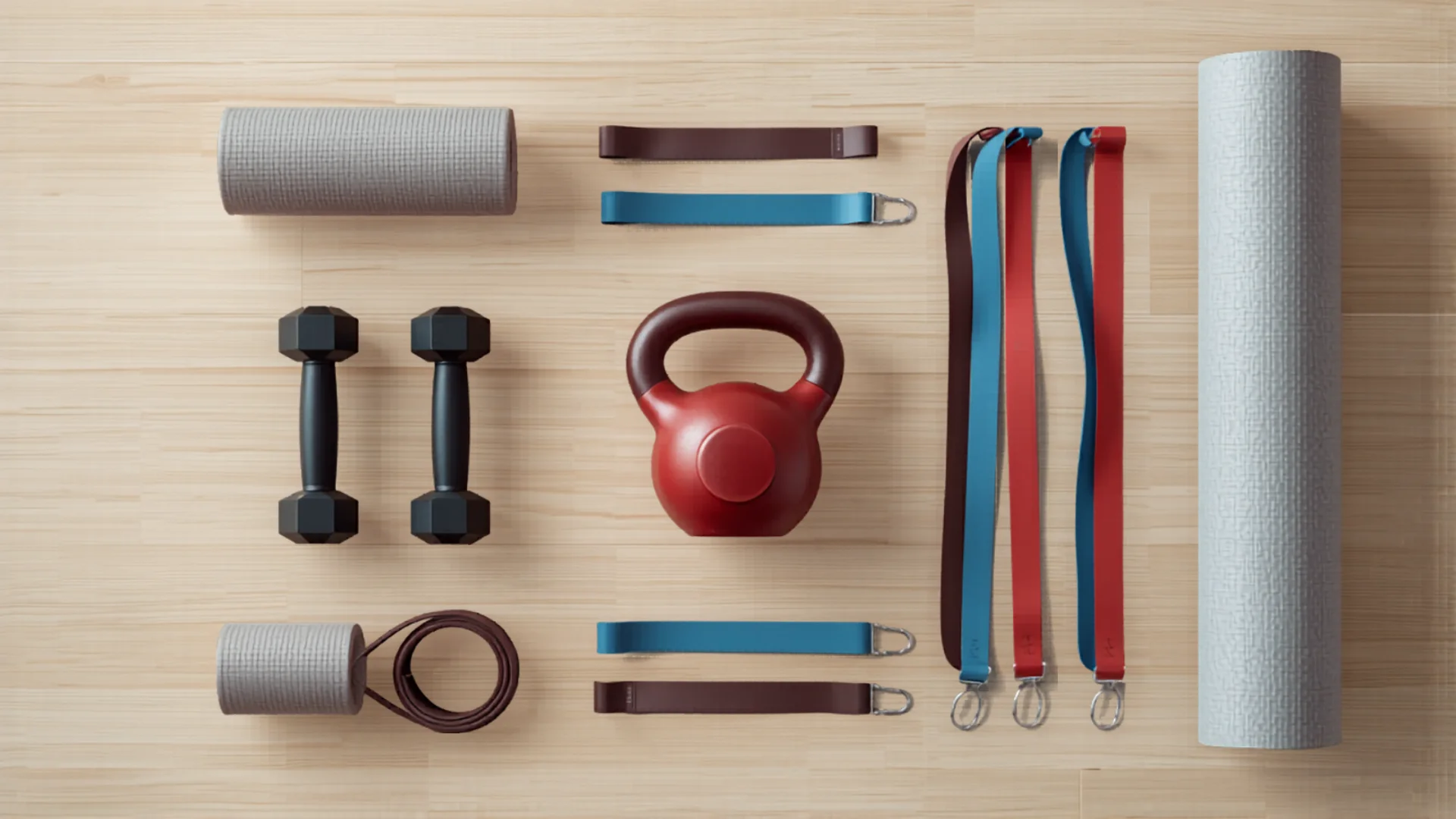
Home Gym Flooring
Do not skip flooring. Dropping a dumbbell on your garage's concrete floor cracks the concrete. Dropping it on timber floors puts a dent you will never fix. And training on bare hard floors without padding is uncomfortable and loud.
Rubber gym mats
The gold standard. Thick rubber mats (15mm+) absorb impact, reduce noise, provide a non-slip surface, and protect your floor from dropped weights. Individual mats (typically 900mm x 900mm) cost $30 to $60 each. You need 4 to 6 mats to cover a typical training area. Total cost: $120 to $300. These are the same mats used in commercial gyms. They are tough, easy to clean, and last forever.
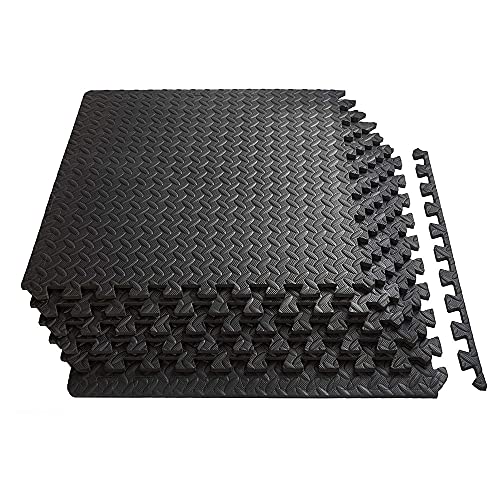
Interlocking EVA foam tiles
EVA foam tiles are lighter and cheaper than rubber mats. A 6-pack of interlocking tiles (covering about 2.4 square metres) costs $40 to $70. They provide good cushioning for dumbbell work, bodyweight exercises, and yoga. However, they are not suitable for heavy barbell work. The foam compresses under very heavy loads and the tiles can shift during dynamic movements. For a $200 to $500 home gym setup, EVA tiles are perfect. For a serious barbell setup, invest in proper rubber mats.
Why flooring matters
- Protects your floors. A single dropped 20kg dumbbell will crack concrete, dent timber, and destroy tile. Gym flooring absorbs the impact.
- Reduces noise. If you live in a townhouse, apartment, or have neighbours nearby, the sound of weights hitting the floor carries through the structure. Rubber mats significantly dampen the noise. Setting up the home gym usually happens around the same time as garage organisation. Our garage storage ideas guide covers wall hooks, overhead racks, and how to fit a squat rack plus your car in a single garage.
- Safer for lifting. A non-slip surface gives you a stable base for squats, deadlifts, and overhead presses. Hard, smooth floors can be dangerously slippery when you are sweating.
- More comfortable. Standing on rubber mats is far more comfortable than bare concrete, especially for longer sessions.
Budget $60 to $150 for flooring. It is one of those purchases that is easy to skip but you will regret it the first time you drop a weight on an unprotected floor.
Frequently Asked Questions
How much does it cost to set up a home gym in Australia?
A basic functional home gym costs $200 to $500: resistance bands, adjustable dumbbells, a yoga mat, and a pull-up bar. A mid-tier setup with an adjustable bench, kettlebells, and flooring costs $500 to $800. A fully equipped garage gym with a squat rack, barbell, weight plates, cardio machine, and rubber flooring costs $1,500 to $2,500. All of these pay for themselves within 6 to 18 months compared to a gym membership costing $60 to $80 per month.
What is the best home gym equipment for beginners?
Adjustable dumbbells are the single best piece of equipment for beginners. A pair that adjusts from 2kg to 24kg covers every exercise from light shoulder raises to heavy dumbbell rows, and they replace 15 pairs of fixed dumbbells. Add a yoga mat and a doorway pull-up bar and you have a complete beginner setup for under $350 that covers full-body strength training. A folding adjustable bench ($150) is the first upgrade worth making when you are ready.
How much space do I need for a home gym?
A minimum of 2m x 2m (4 square metres) is enough for dumbbells, a folding bench, and bodyweight exercises. A 3m x 3m area (9 square metres) comfortably fits a power rack, bench, and floor space for stretching. A full single-car garage (roughly 3m x 6m) gives you room for a complete gym with a rack, bench, cardio machine, and storage, with space to still park your car if you keep things tidy.
For households building both a gym corner and a desk corner in the same spare room, our home office setup guide and ergonomic chair guide cover the desk side. Home-gym floors get dirty fast, so a robot vacuum running on a daily schedule keeps dust and hair off the matting between sessions, useful if the gym corner is in carpeted living space.
Found this helpful?
Check out more guides for new homeowners.