When you buy a car, it comes with a service schedule. Every 10,000km or 6 months, you take it in. But when you buy a house (the most expensive thing you'll ever own), nobody gives you a maintenance manual. You're just expected to figure it out.
Most new homeowners don't think about maintenance until something breaks. A leaking tap turns into water damage. A blocked gutter turns into a flooded ceiling cavity. A dirty air conditioner filter means your unit works twice as hard and dies years early. The pattern is always the same: a $20 preventive task gets ignored and becomes a $2,000 repair.
Here's the maintenance schedule that prevents all of that. Pin it to your fridge, set calendar reminders, or bookmark this page. Your future self (and your bank account) will thank you.
Monthly Tasks: 30 Minutes Total
These tasks take 5 minutes each and prevent the most common household issues:
1. Test Smoke Alarms (2 minutes)
Press the test button on every smoke alarm in your home. If it doesn't beep loudly, replace the battery immediately. In most Australian states, it's a legal requirement to have working smoke alarms, and they save lives. Replace batteries annually even if they're still working (set a reminder for the anniversary of your move-in date). Replace the entire smoke alarm unit every 10 years. For the model-by-model picks (photoelectric, interconnected, QLD-compliant), see our best smoke detectors guide.
Browse smoke alarms on Amazon AU →
2. Check Under Sinks for Leaks (3 minutes)
Open every cupboard with plumbing behind it (kitchen sink, bathroom vanities, laundry) and look for dampness, drips, or water stains. A slow leak that goes unnoticed for months causes mould, wood rot, and potentially thousands in water damage. Catching it early is a $50 plumber visit. Catching it late is a $5,000 insurance claim.
3. Clean Range Hood Filter (5 minutes)
Your range hood filter catches grease from cooking. After a month of regular use, it's coated in a sticky layer that reduces airflow and becomes a fire hazard. Remove the filter, soak in hot water with dishwashing liquid for 15 minutes, scrub gently, rinse, and replace. If it's a charcoal filter (non-washable), replace it every 3-6 months. Browse range hood filters →
4. Clean Air Conditioner Filters (5 minutes per unit)
Slide out the dust filters from your split-system AC units, vacuum them or rinse under running water, let them dry, and slide them back in. Clogged filters force the unit to work harder, increasing energy use by up to 30% and reducing its lifespan. This single task can save $100+ per year in running costs. For the AC unit itself (sizing, brand, and energy rating), our best split system guide covers the upgrade decision. Browse AC filter cleaners →
5. Clean Dishwasher Filter (5 minutes)
Most people don't know their dishwasher has a removable filter at the bottom. Twist it out, rinse under running water, remove any food debris, and replace it. A dirty filter means your dishes come out grimy and your dishwasher develops an odour. While you're at it, run an empty hot cycle with a dishwasher cleaner tablet once a month. Browse dishwasher cleaners →
Quarterly Tasks: 1-2 Hours Total
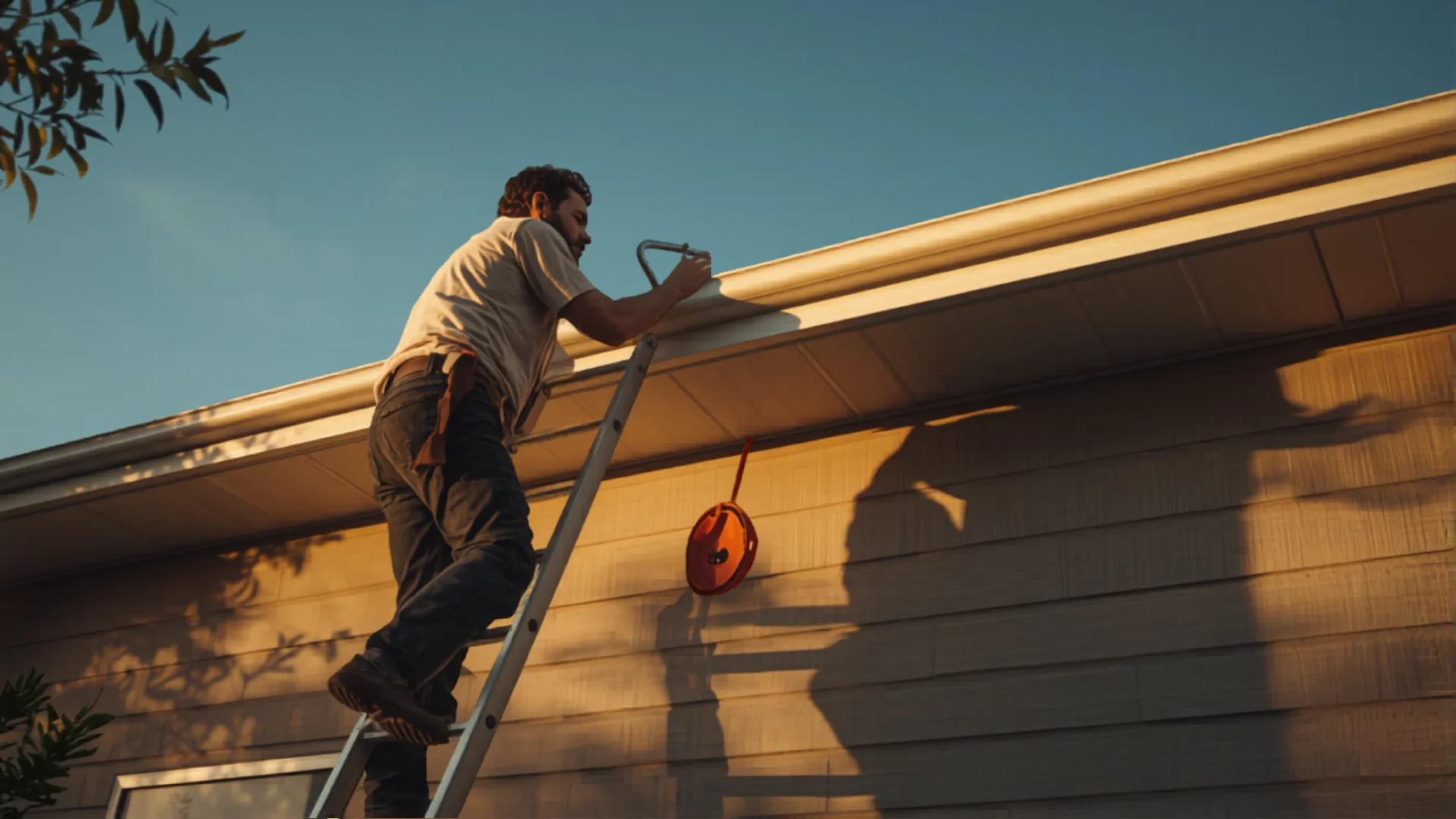
1. Clean Gutters (30-60 minutes)
Blocked gutters are one of the most common causes of water damage in Australian homes. Leaves, twigs, and debris build up and prevent water from draining properly. In heavy rain, water overflows into the ceiling cavity, down interior walls, or pools against the foundation. Clean gutters every 3 months, more often if you have overhanging trees.
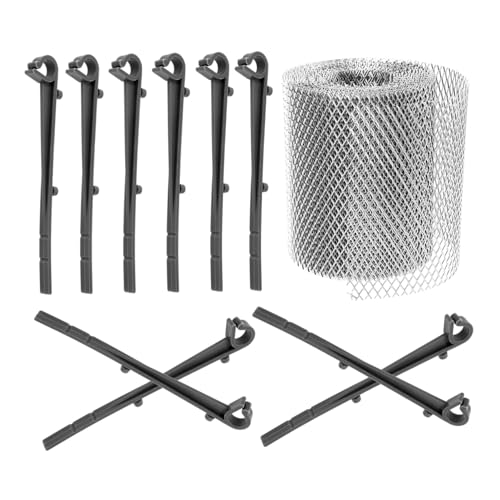
If you're comfortable on a ladder, this is a DIY job. Scoop out debris by hand (wear gloves) and flush with a hose. If not, a gutter cleaning service costs $100-$200 per visit. Gutter guards ($500-$2,000 installed) reduce the frequency of cleaning but don't eliminate it entirely. Browse gutter guards → Compare gutter guards before choosing a system for your roof.
2. Check Door and Window Seals (15 minutes)
Inspect the weatherstripping and seals around all external doors and windows. Cracked, compressed, or missing seals let in draughts (increasing heating and cooling costs) and allow water to seep in during storms. Replacing a door seal costs $10-$20 and takes 15 minutes. Replacing water-damaged flooring costs $2,000+. Browse door seals →
3. Test Safety Switch / RCD (2 minutes)
Your electrical switchboard has a safety switch (RCD) that protects against electric shock. It has a test button. Press it quarterly to confirm it trips correctly. If it doesn't trip when you press test, call a licensed electrician immediately. This device literally saves lives.
4. Deep Clean Oven (30 minutes)
A thorough oven clean every 3 months prevents grease buildup that causes smoking, bad odours, and reduced efficiency. Use a dedicated oven cleaner or bicarb soda paste for a natural approach. See our cleaning essentials guide for detailed instructions.
5. Check Hot Water System Temperature (5 minutes)
Your hot water system should be set to 60°C at the unit (to kill Legionella bacteria) with a tempering valve that delivers water at 50°C to taps (to prevent scalding). Check the temperature dial on the unit. If it's been turned down (common in winter to save energy), turn it back to 60°C. Below this temperature, bacteria can grow in the tank.
Bi-Annual Tasks: Every 6 Months
1. Service Air Conditioner (Professional: $100-$200)
A professional AC service every 6-12 months keeps your system running efficiently and extends its lifespan. The technician will clean the coils, check refrigerant levels, test electrical components, and clear drain lines. A well-maintained split system lasts 15-20 years; a neglected one lasts 7-10. Book before summer (October) for pre-season rates and availability.
2. Check Roof for Damage (Visual Inspection)
Walk around your property and visually inspect the roof from the ground. Look for cracked or missing tiles, lifted ridge caps, rusted or lifted metal sheets, and blocked valleys. If you see damage, get a roof specialist to inspect. Don't climb on the roof yourself unless you're experienced. A small repair now ($200-$500) prevents a catastrophic leak later ($5,000-$20,000).
3. Inspect Termite Barriers
If your home has a chemical or physical termite barrier, check that it hasn't been breached. Common breach points: garden beds built up against the house (bridging the barrier), landscaping changes, new concrete paths poured against walls, and stored items against external walls. If in doubt, book a termite inspection ($250-$350). Termite damage is not covered by standard home insurance in Australia.
Annual Tasks
1. Professional Pest Inspection ($250-$350)
An annual pest inspection checks for termites, borers, and other timber pests. This is especially important in termite-prone areas (most of Australia outside Tasmania). Many building and pest inspectors offer annual plans for $200-$300 that include ongoing termite monitoring.
2. Service Gas Appliances
Gas heaters, gas hot water systems, and gas cooktops should be serviced annually by a licensed gas fitter. Faulty gas appliances can leak carbon monoxide, an odourless, colourless gas that's lethal. Annual servicing costs $100-$200 per appliance and is non-negotiable for safety.
3. Review Insurance Coverage
Once a year, review your home and contents insurance to ensure the building sum insured reflects current rebuild costs (which increase with inflation and building costs). An underinsured home could leave you hundreds of thousands short if disaster strikes. Also check that your contents cover matches what you've accumulated during the year.
4. Clean Dryer Vent (If Applicable)
If you have a vented dryer, the exhaust vent can accumulate lint over time, a genuine fire hazard. Disconnect the vent hose, vacuum out any lint buildup, and check the external vent flap opens and closes freely. Browse dryer vent cleaning kits →
Seasonal Tasks (Australian-Specific)
Pre-Summer (October-November)
- Service air conditioner before the rush
- Clean ceiling fans (dust buildup from winter disuse)
- Check fly screens for holes. Repair before insect season. Browse screen repair kits →
- Clear garden of dead branches and debris (bushfire preparation in regional areas)
- Check outdoor furniture: clean, treat, and repair before entertaining season
Pre-Winter (April-May)
- Service gas heater before cold weather hits
- Check weatherstripping on doors and windows for draughts
- Clean gutters of autumn leaf fall
- Test hot water system is heating to 60°C
- Reverse ceiling fans to clockwise (pushes warm air down)
Budget for Maintenance
A common rule of thumb: budget 1-2% of your home's value per year for maintenance. For a $650,000 home, that's $6,500-$13,000 per year. That sounds like a lot, but it covers everything from changing light bulbs to replacing a hot water system when it eventually dies.
In reality, most years you'll spend less. But having a maintenance fund means you're prepared when something big fails, and in home ownership, something always eventually fails.
Setting Up Your Maintenance System
The hardest part of home maintenance isn't the work itself. It's remembering to do it. Here are three approaches that work:
- Calendar reminders: Set recurring calendar events for each task. Monthly tasks on the first Saturday of each month. Quarterly tasks at the start of each season. Annual tasks on the anniversary of your move-in date. This is the simplest approach and it works if you're disciplined about acting on reminders.
- Phone app: Apps like Centriq and HomeZada let you log your home's appliances, set maintenance reminders, and track what's been done. They can even store manuals and warranty information. Free versions are adequate for most homeowners.
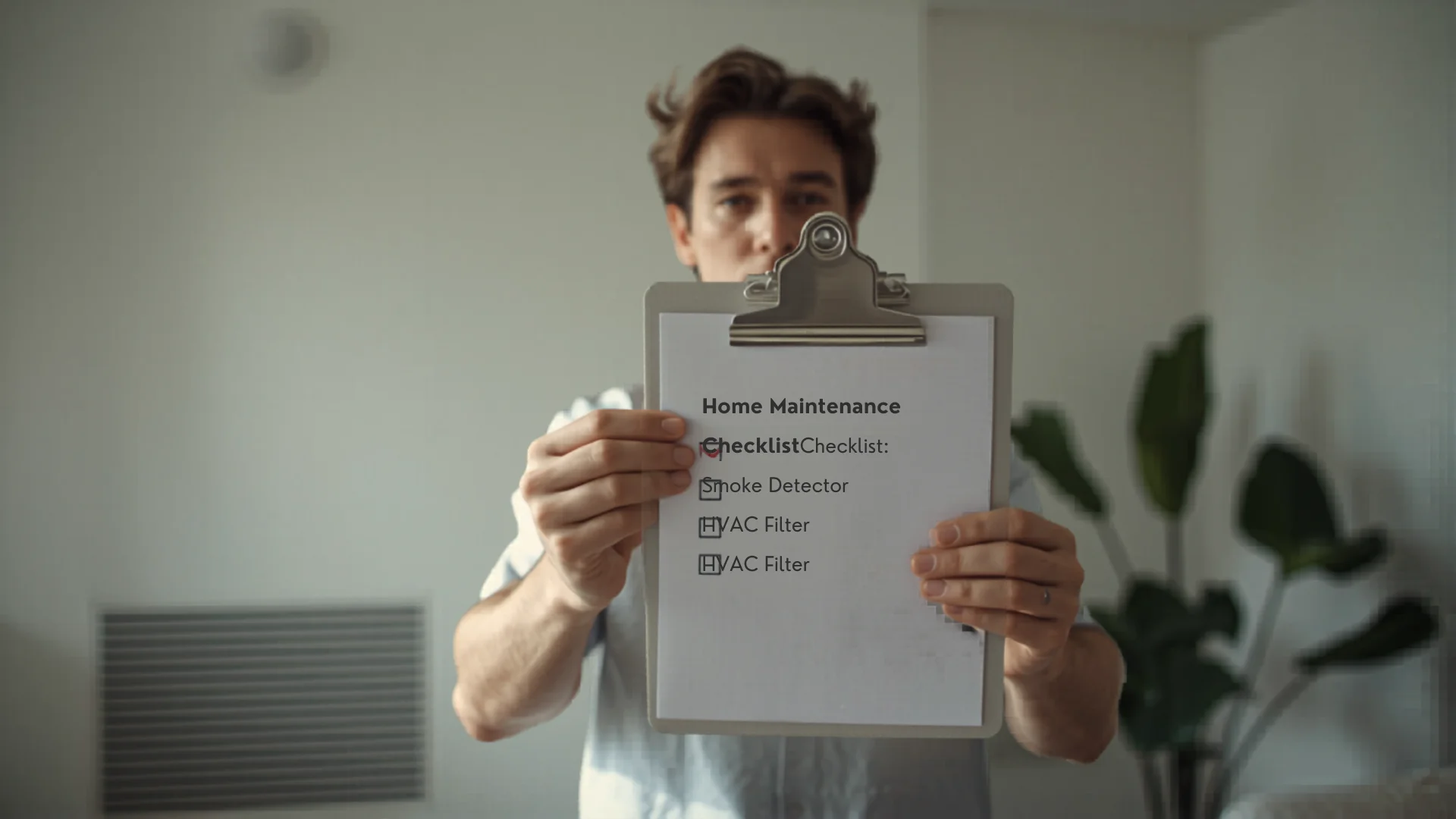
- Physical checklist: Print this guide and pin it to the inside of your laundry cupboard or garage. Cross off tasks as you complete them. Replace the printout annually. Sometimes the simplest approach is the most effective.
Whichever system you use, the key is consistency. Thirty minutes of preventive maintenance per month saves thousands in emergency repairs per year. Think of it like servicing your car. You wouldn't drive 50,000km without an oil change, and you shouldn't own a home without regular maintenance either.
Essential Maintenance Products to Keep on Hand
- Smoke alarm batteries (9V): Keep a spare pack. $8-$12 for a 4-pack. Browse →
- Silicone sealant (clear): For resealing bathroom and kitchen joins. $8-$12 per tube from Bunnings. Browse →
- WD-40: For squeaky hinges, stuck bolts, and moisture displacement. $8-$12. Browse →
- Drain cleaner: For slow drains before they become blocked drains. $5-$10. Browse →
- Plumber's tape (Teflon tape): For sealing threaded plumbing connections. $3-$5.
Frequently Asked Questions
What home maintenance should I do every month?
Five tasks, taking about 30 minutes total: (1) Test smoke alarms: press the test button on every alarm. (2) Check under all sinks for leaks or dampness. (3) Clean range hood filter: soak in hot soapy water and scrub. (4) Clean air conditioner filters: slide out, vacuum or rinse, replace. (5) Clean dishwasher filter: twist out, rinse, replace. These five tasks prevent the most common and expensive household problems. Set a monthly calendar reminder and do them all in one pass.
How much should I budget for home maintenance in Australia?
The standard rule is 1-2% of your home's value per year. For a $650,000 home, that's $6,500-$13,000 annually. In practice, most years you'll spend $2,000-$5,000 on routine maintenance and small repairs. Larger expenses (new hot water system $1,500-$3,000, AC replacement $2,000-$5,000, roof repairs $500-$5,000) come every 5-15 years. Having a dedicated maintenance savings account with $200-$500 per month set aside ensures you're never caught off guard by a major expense.
When should I get a pest inspection on a new home?
Get a pest inspection within the first 6 months of moving in. This establishes a baseline for your home's condition. After that, annual inspections ($250-$350) are recommended for most Australian homes. In high-risk termite areas (most of mainland Australia), annual inspections are essential. Termites can cause tens of thousands of dollars in structural damage that standard home insurance does not cover. Many pest companies offer annual plans that include monitoring stations and priority response if activity is detected.
If your hot water system is on its last legs (10+ years old, increasing repair costs), now is the time to research a replacement. A heat pump hot water system saves $400-$600 per year vs traditional electric and qualifies for federal STC and state rebates worth $1,500-$3,000.