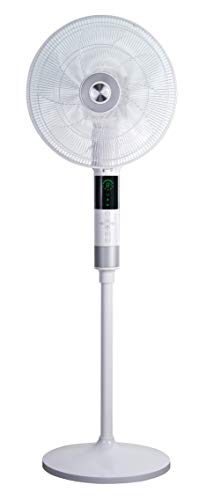
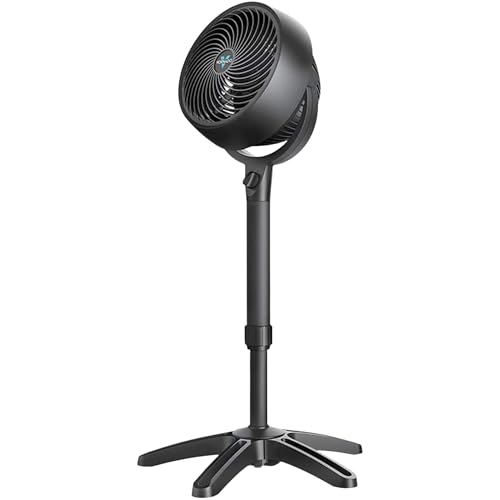
The best pedestal fan in Australia for most rooms is the Philips Series 3000 SilentWings, which Philips rates at 19 dB on its lowest setting; the De'Longhi DEAPF40WH 360 offers full 360 degree oscillation, the Vornado 683 throws air furthest at up to 23 m, and the Shark TurboBlade Ultra is the bladeless option. Here's what the SERP doesn't tell you when you search "best tower fan Australia": more than half the products in the top-10 results aren't actually sold on the Australian Amazon buy-box. The Dyson AM07 cool tower, the Vornado Tower Air Circulator, the Lasko Wind Curve, all heavily reviewed in US-centric guides, none available here without grey-import shipping at double the price. What Amazon AU does sell (and what this guide covers) is a tight set of credible tower and pedestal fans that you can actually buy today: Shark, Philips, Levoit, Vornado and De'Longhi. Six picks, all checked against the Amazon AU buy-box. The format mix is deliberate: three tower fans, three pedestal/circulator units, covering bladeless safety, full-circle oscillation, premium climate-control, quiet bedroom use, smart-home integration and wide-room coverage.
TL;DR: what to buy
Last updated September 2026. Six tower and pedestal fan picks for Australian homes, all probed live on the Amazon AU buy-box this week. Best overall: Shark TurboBlade Ultra Bladeless (about $399), bladeless tower with the safety story that matters for pets and toddlers, the premium splurge in the lineup. Also great: De'Longhi DEAPF40WH 360 Pedestal, with a 40 cm head and full 360 degree oscillation. Best wide-room coverage: Vornado 683 Pedestal Circulator (about $207), vortex circulation, up to 23m air throw, 5-year Australian warranty.
All six picks side by side, on the numbers that decide the purchase. The decibel and watt figures are the manufacturer specifications rather than independent measurements.
| Fan | Type | Best for | Key spec | Price |
|---|
| Shark TurboBlade Ultra | Bladeless tower | Overall, and homes with pets or toddlers | No exposed blades | $399.00 |
| De'Longhi DEAPF40WH 360 | Pedestal | Also great | 40 cm head, full 360 degree oscillation, 3 speeds | See current price |
| Philips 5000 Series CX5535/11 | Tower | Value | 105 cm, up to 2,230 cubic metres an hour on 40 W, 39 dB on low | $119.00 |
| Philips Series 3000 SilentWings CX3550/01 | Pedestal | Bedrooms and light sleepers | 19 dB on the low setting, app control | $139.00 |
| Levoit Smart Silent Tower 42 inch | Tower | Smart home | DC motor, about 107 cm, VeSync app with Alexa and Google Home | $199.99 |
| Vornado 683 | Pedestal air circulator | Wide and open plan rooms | Up to 23 m air throw, 5 year Australian warranty | $207.20 |
How we evaluated tower & pedestal fans
NestPath doesn't physically test every product. Here's what we actually do:
- Surveyed 40+ tower and pedestal fans available on Amazon Australia with verified buy-box listings, AU shipping, and current pricing.
- Cross-checked manufacturer specifications against retailer listings, removing products where claims didn't match the live Amazon AU title.
- Aggregated AU consumer-review data from ProductReview.com.au's standalone fans category, filtered for star rating, review count, recency, and verified-purchase ratio.
- Cross-referenced AU editorial sources: Choice's 2025 pedestal and tower fan reviews, Canstar Blue's 2025 tower fans award and panel scoring, Better Homes & Gardens' best fans Australia buyer guide, and Finder Shopping's best pedestal fan picks for cross-validation against the Amazon AU shortlist.
- Filtered for first-home-buyer fit: credible-brand AU distribution, full availability, household-suitable for 1-2 bedroom homes through to open-plan lounges, beginner-friendly operation.
- Verified availability daily via the Amazon Creators API. The "verified in stock" badge on each product card shows when we last confirmed buy-box availability.
- Editorial selection by Anish Puri, NestPath founder.
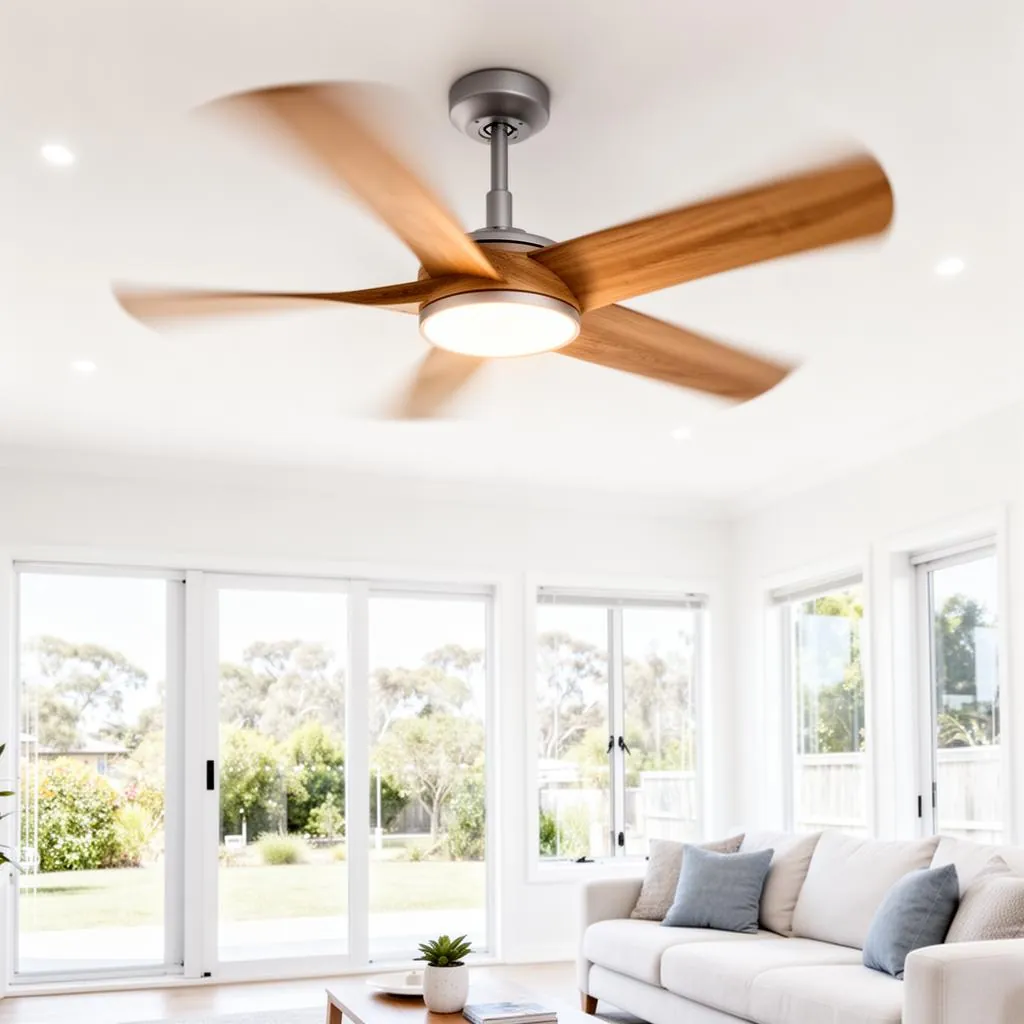
A note on scope: this guide covers freestanding tower and pedestal fans you plug into a standard AU 10A power point. Ceiling fans (a renovation/install decision), portable air conditioners (a different cooling tier) and split-system air conditioners are covered in separate guides linked at the bottom of this article.
We earn affiliate commission when you buy through our links. That doesn't change which products we recommend. Products are selected before commission rates are checked. Our methodology page explains scoring and how to flag inaccuracies.
Best overall: Shark TurboBlade Ultra Bladeless (about $399)
The De'Longhi DEAPF40WH 360 Pedestal Cooling Fan (carded above) is the pedestal for full-circle coverage and adjustable height in a small space. De'Longhi is the Italian small-appliance specialist whose name sits on most Australian kitchens' coffee machines, kettles and oil-filled radiators; the AU distribution network through Myer, Harvey Norman, David Jones and Amazon AU means warranty service is genuinely available.
The headline spec is the full 360° oscillation. Standard pedestals oscillate through 70-90° in front of the stand; the De'Longhi rotates fully around the column, which means a single unit can cover a circular zone rather than a wedge. For an open-plan lounge where you want to direct airflow at different spots over the course of an evening, that's a meaningfully different capability. The 40cm blade with 3 speed settings is conventional pedestal hardware: credible cooling output at full power, and the lowest speed is quiet enough to leave running while watching TV without conversation interference.
The asymmetry argument is straightforward at this tier. The downside of skipping a fan entirely is sitting in a humid Sydney or Brisbane summer evening waiting for the night cool-down. The downside of buying a sub-$80 Heller or Kambrook is a unit that works for one summer and then fails, and a warranty claim that takes longer than the residual fan life. It is the right pick for renters, first-home buyers in a small apartment, or anyone wanting a credible bedroom-or-lounge fan.
Flaws but not dealbreakers
The build is plastic-heavy: the unit feels lighter than premium pedestals in the hand, and the column has more flex than the Vornado at position 6. Noise on the top speed is around the typical 50-55dB for a 40cm pedestal, fine for a living room, audible across an open-plan space. The unit doesn't include a remote, and the speed-toggle on the rear of the head is awkward to reach when the fan is positioned facing a wall. And the warranty is De'Longhi's standard 2-year, shorter than the Vornado's 5-year but considerably better than the typical 12-month for sub-$100 commodity pedestals.
Best value tower: Philips 5000 Series (about $119)
The Philips Oscillating Tower Fan 5000 Series (CX5535/11) (carded above at around $119) is the value tower pick, the fan to buy when you want a slim, quiet tower in a bedroom or small lounge corner without spending pedestal-plus money. It is the #1 best-seller in Amazon AU's Tower Fans category, sitting on 376 Amazon AU ratings at 4.6 stars. Philips is the established small-appliance brand with steady AU distribution, and the 5000 Series is its mainstream oscillating tower, a 105cm slim column that self-rotates to spread air across a room rather than blasting it at one spot.
The value proposition is straightforward when you're honest about what a tower fan actually needs to do. At around $119 the Philips 5000 moves up to 2230 m³/h of air across 3 speeds and 3 modes while drawing only 40W, genuine living-room airflow for a power draw barely above a lightbulb. You get a remote and a sleep timer in the box, plus an optional aromatherapy pad if you want to drop in an essential oil. There's no app and no smart-home integration, which is the honest trade against the Levoit and Philips 3000 smart picks, but for a set-and-forget bedroom or lounge tower, most buyers never miss it. If you want bladeless child-safety, step up to the Shark TurboBlade; if you want the quietest possible bedroom floor, the Philips 3000 SilentWings pedestal lower down goes lower still on its minimum setting.
The quiet story is what earns the spot. Philips rates the 5000 at 39dB on its lowest setting and 46dB at full tilt. That low figure is Philips' own spec rather than an independent test, but it sits below the noise floor of a typical bedroom, so the fan all but disappears acoustically while you sleep, and even flat out it stays at the soft end of normal-conversation level. The slim 105cm tower takes up almost no floor space, and the self-rotating oscillation spreads air across the room instead of a single wedge. Unlike the Shark bladeless tower, this is a conventional bladed tower behind a guard, so it is not the pet-and-toddler-proof pick, but it is the quiet, slim, low-cost one.
Flaws but not dealbreakers
The honest weaknesses are about what you don't get at $119. There's no app or voice control. If you want scheduling or smart-home integration, the Levoit at position 5 or the Philips 3000 are the picks, not this one. It's a bladed tower behind a guard rather than a true bladeless design, so it doesn't carry the no-exposed-blades safety story of the Shark. And while the 39dB low setting is genuinely quiet, that figure is Philips' own spec rather than an independent test, and at full power the 46dB output is audible across an open-plan space. For a slim, quiet, set-and-forget value tower, none of these are dealbreakers; for child-safety or smart control, look elsewhere in the lineup.
Best for quiet operation: Philips Series 3000 SilentWings (about $139)
The Levoit WiFi Smart Silent Tower Fan 42-inch (carded above at around $200) is the smart-home pick, a tower fan with DC motor, full WiFi control through the VeSync app, and voice integration with both Alexa and Google Home. Levoit is the small-appliance specialist under the Etekcity / VeSync umbrella; the brand has built strong AU distribution through Amazon AU specifically and earned credible verified-buyer ratings on ProductReview.com.au. The Smart Silent Tower at 42-inch (around 107cm tall) sits in the mid-size tower category, taller than a desk-tower, shorter than the Shark.
The DC motor is the spec to call out. Most pedestal and tower fans run AC motors, cheaper to manufacture, but louder, less energy-efficient, and offering only step-wise speed control (typically 3-4 speeds). DC motors offer continuous variable speed control (often 8-12 increments), draw markedly less power for the same airflow, and run noticeably quieter than equivalent AC motors. At about $200 the Levoit is one of the cheapest DC-motor towers on Amazon AU. Most DC-motor pedestals sit at $250-400.
The WiFi-and-voice integration is the secondary value. The VeSync app handles scheduling (start the fan at 4 PM before you get home from work), scene-based control (link the fan to other VeSync products), and integration with Alexa and Google Home for hands-free voice control. For a smart-home household where the fan is one of multiple connected appliances, the integration tier is meaningful. For a household where the fan lives in one room and gets set once per day, the smart features are convenience tax.
Flaws but not dealbreakers
The VeSync app is a connectivity gamble. AU users have reported intermittent disconnections when the home WiFi router firmware updates, and the app's initial pairing flow requires a 2.4GHz WiFi network. Modern mesh routers default to 5GHz and the band-selection step trips up first-time setup. The Alexa integration works cleanly once paired; the Google Home integration has more rough edges. Plan for 15-30 minutes of setup friction on first install. The build is mid-tier plastic, credible for the price but not premium-feeling. And the 42-inch height is taller than most tower fans, which is the right call for living-room use but slightly oversized for a small bedroom corner.
Best wide-room coverage: Vornado 683 Pedestal (about $207)
The Vornado 683 Medium Pedestal Air Circulator (carded above at around $207) is the pick when the room is bigger than a bedroom: open-plan lounge, large dining room, or any space where a standard pedestal's 8-12m airflow runs out before it crosses the room. Vornado is the US-founded specialist brand whose entire engineering proposition is vortex circulation, moving the whole room's air mass rather than directing a single airstream at a single spot. The 683 is their medium-pedestal SKU with AU distribution through Vornado AU directly and through Amazon AU.
The vortex-circulation physics is genuinely different from blade-direction airflow. A standard pedestal pushes air in a directed cone; the Vornado's shrouded-impeller geometry creates a vortex that pulls room air into the unit, accelerates it, and ejects it as a coherent airflow that travels meaningfully further than a comparable directed airstream. Choice's 2025 pedestal and tower fan reviews picked out the Vornado line specifically for whole-room air movement against the directed-airflow alternatives. The published air-throw figure is up to 23m, meaningfully further than the 8-12m typical for a standard 40cm pedestal, which lets a single unit cover a large open-plan space that would otherwise need two fans.
The 5-year Australian warranty is the differentiator most other brands can't match. De'Longhi offers 2 years; Heller and Goldair offer 12 months; Vornado's 5-year on the motor and core mechanism is the longest in this category. Combined with Vornado's direct AU distribution (rather than reseller-only), it's the most warranty confidence in the category, and a credible signal about the brand's expectation of unit lifespan.
Flaws but not dealbreakers
The vortex design is loud at full power: the airflow geometry that lets it reach 23m comes from a higher-speed impeller, and the unit sits closer to 55-60dB on top speed than the Philips SilentWings on low. The 683 isn't the right pick for a bedroom where quiet operation matters. The unit is also visually distinctive (squat, industrial-looking, more "fan circulator" than design object), which some open-plan spaces won't aesthetically match. And the height isn't height-adjustable in the way most pedestals are; the medium 683 sits at a fixed height suited to seated/standing room use but not to direct cooling of a bed.
What to look for in a tower or pedestal fan
A fan moves air, it does not cool it. If a room is genuinely hot rather than stuffy, a portable air conditioner or, in dry inland heat, an evaporative cooler is the right tool, and for one person at a workstation a desk fan costs a fraction of either. If a tower or pedestal fan is the right category, this is what decides which one.
Tower vs pedestal: form factor decides bench-vs-floor
The single most important decision is tower vs pedestal, and it's a workflow question rather than a hardware question. Tower fans (Shark, Philips, Levoit) are tall vertical columns with internal impellers: typically slimmer footprint, less obtrusive in a small room, and easier to position in a corner. Pedestals (De'Longhi, Philips, Vornado) have a fan head on an adjustable column with a wider base, and typically deliver more raw airflow and are easier to direct at a specific person or area and to clean (the head detaches and the grille comes off). For bedrooms and small lounges where the fan lives in a corner, towers are usually the better aesthetic fit. For open-plan spaces where you want to move air across a wide arc, or for spaces where multiple people sit at different distances from the fan, pedestals win on raw airflow and directability.
DC motor vs AC motor: energy efficiency and noise tradeoff
Most affordable pedestal and tower fans run AC motors, cheaper to manufacture, but louder, less energy-efficient, and offering only step-wise speed control (usually 3-4 fixed speeds). DC motors are more expensive but deliver continuous variable speed control (8-12 increments is common), draw 30-50% less power for the same airflow, and run measurably quieter than equivalent AC motors. The Levoit Smart Silent at position 5 is a DC motor at the $200 tier. Most DC-motor pedestals sit at $250-400. If you run the fan for 8+ hours per day in summer (overnight cooling, all-day living room cooling), the energy savings from a DC motor can meaningfully offset the upfront premium across a 2-3 year horizon. For occasional use, the cheaper AC-motor units are the better honest spend.
Decibel ratings explained: 19dB whisper vs 50dB conversation
Manufacturer decibel ratings are quoted at the lowest setting on a quiet bench in a controlled environment. They're an idealised figure, not a real-world expectation. The useful framing: 19-25dB is whisper territory (Philips SilentWings claimed low-setting at 19dB), quieter than most refrigerators and below the noise floor of a typical AU bedroom; 30-40dB is library-quiet to soft-whisper; 40-50dB is normal conversation in a quiet room; 50-60dB is most pedestal fans on full power, comparable to background conversation in an open-plan office. For a nursery or light-sleeper bedroom, look for a quoted low-setting dB below 30dB. For a living room where conversation and TV are background, anything up to 55dB is usable. Above 60dB the fan is the loudest thing in the room, fine for industrial circulators, not for living spaces.
Oscillation angle and air throw: matching fan to room size
Oscillation angle is the horizontal arc the fan head sweeps; air throw is the distance the airflow remains coherent before dispersing. Standard pedestals oscillate through 70-90° and have air-throw figures of 8-12m. The De'Longhi at position 2 offers full 360° oscillation, useful for circular room layouts or open-plan spaces where the fan sits in the centre and needs to cover all directions. The Vornado at position 6 quotes up to 23m air throw, for large rooms where a standard fan's airflow runs out before crossing the space. Match form to room: a 70° oscillation 10m-throw unit handles a 4×4m bedroom or small lounge fine; a 360° or vortex-circulator unit is needed for open-plan spaces above 6×6m. Two cheaper units are sometimes the better answer than one expensive unit. Fan placement matters as much as fan power.
Bladeless safety: pets, kids, and curious fingers
Bladeless fans like the Shark TurboBlade eliminate the exposed-blade risk that traditional pedestals carry. For households with toddlers reaching through wire grilles, cats jumping at moving blades, or dogs with wagging tails near a 40cm pedestal, the bladeless form factor is genuinely safer. The caveats: bladeless fans still have an internal impeller pulling strong airflow, so loose hair, fabric, and small objects can be drawn into the air path; the units are still mains-powered and the no-water rule applies; bladeless designs are typically taller and more top-heavy, so the topple risk if a toddler grabs the column is greater than for a wider-based pedestal. Bladeless is the better safety story overall, but it's a different risk profile rather than a risk-free one.
Setup and everyday use
Positioning the fan in the room: height, distance, doorway flow
Three rules. First, position the fan at body height rather than floor height: most pedestals adjust from 110cm to 140cm; aim for 120-130cm so airflow hits the upper body where it cools sweat fastest. Tower fans deliver airflow at the full height of the column, which is why they work well in corners. Second, distance matters more than people realise: a fan delivers cooling out to roughly 3m for comfortable airflow; beyond 4-5m the air feels still. For a long lounge, the fan should be repositioned through the evening rather than left in one spot. Third, leverage doorways and windows: placing a pedestal facing inward at an open window during the cooler evening hours pulls cool outside air through the room far more effectively than running the fan in a closed space. Cross-ventilation across two open windows multiplies fan effectiveness.
Cleaning the blades and grille: quarterly maintenance
Dust load on the blades is the fastest path to fan motor failure. Quarterly cleaning extends unit life meaningfully. For pedestals (De'Longhi, Philips, Vornado): unplug the unit, pop the front grille off (most are clip-on or held with a single retaining nut), wipe the blades with a damp microfibre cloth, vacuum the rear grille to clear lint, wipe the column and base. For bladeless towers like the Shark: use a microfibre cloth on the external surfaces, vacuum the base intake grille, and once per season clean the internal impeller per the manufacturer manual. This typically requires removing the top cap and accessing the impeller assembly, more involved than pedestal cleaning. Levoit's tower fan sits between the two: the rear panel detaches for internal access. Cleaning once per quarter (more often in dusty areas) keeps motor bearings cool and extends unit life by 1-2 years over neglected units.
Reading the smart-fan app: when WiFi helps and when it's noise
Smart-fan features (Levoit VeSync, Philips Air+ Comfort) are genuinely useful in three scenarios: pre-cooling a room before you arrive home (set the fan to spin up 30 minutes before your arrival time), adjusting fan speed from bed without getting up (the bedside-table benefit), and integrating fan control into a broader smart-home routine (turn off all fans when you leave the house). Outside those three scenarios the smart features are marketing weight. If your fan lives in a bedroom and you set the speed once at bedtime, the WiFi connection isn't earning its premium. The honest framing: pay for smart features only if you have a concrete use case before purchase, not because the spec sheet listed them.
Storage and end-of-summer prep: wiping, dust-cover, off-season storage
Most Australian households use pedestal and tower fans for 4-5 months per year (November through March) and then store them for 7-8 months. Off-season storage matters. Before storing: wipe all external surfaces, clean the blades and grille (per the quarterly schedule above), and let the unit dry fully: moisture trapped in the column over winter causes motor bearing corrosion. Store the unit in its original box if you kept it, or wrap in a fitted dust cover (around $15-25 on Amazon AU for a universal pedestal cover). Store in a dry indoor space: garages and sheds with high humidity are the wrong choice. When pulling out for next season, plug in and run on low for 5 minutes outdoors before bringing inside. Any dust that settled in the impeller during storage gets blown out rather than into your living room.
You'll also want
A pedestal or tower fan handles airflow, but most Australian homes need a layered cooling strategy. Direct ASIN links to Amazon AU buy-box products plus internal cross-links to related NestPath guides:
- Portable air conditioner for hot zones: the layer above a fan when humidity is the issue rather than just air movement. See our best portable air conditioner guide for picks across 8,000-14,000 BTU units.
- Split-system air conditioner for whole-room cooling: the installation-grade option for bedrooms and lounges. Our split-system AC guide covers Mitsubishi, Daikin, Fujitsu and Panasonic picks plus install-cost expectations.
- Ceiling fan for permanent installation: the install-stage alternative to portable fans. Our ceiling fan guide covers the DC-motor and integrated-light picks worth the electrician visit.
- Dehumidifier for high-humidity rooms: when the fan isn't enough because the humidity is the real culprit. Our dehumidifier guide has picks for bathroom-scale through whole-house units.
- Air purifier for allergen-sensitive households: particularly relevant in bushfire-smoke season. Our air purifier guide covers HEPA, activated-carbon and combined picks.
- Neck fan for personal cooling: the wearable layer for when you are moving around rather than sitting in front of a fan. Our neck fan guide covers bladeless designs, battery life and how quiet they are at ear level.
- Full first-home checklist: for the room-by-room essentials picture. See our new home checklist.
The competition: products we considered but didn't pick
- Heller 40cm Pedestal Fan (about $59): the volume budget option at supermarkets and Bunnings. Skipped because the under-$80 pedestal tier has a 12-month failure rate that cancels the savings; warranty claims through Heller AU are slow and the unit doesn't outlast a 2-summer use cycle for most buyers. The De'Longhi is the better honest buy.
- Goldair 40cm Pedestal Fan (about $69): similar position to Heller. Australian-distributed budget specialist; the build and customer-service infrastructure both sit below the De'Longhi tier and replacement-part availability is unreliable. Skipped for the same reasons.
- Honeywell TurboForce Tower (about $99): Honeywell's tower fan range is a TurboForce-rebranded line that lacks the credible AU distribution Shark and Levoit have. Skipped because warranty service is reseller-routed rather than direct, and the product line refresh cycle creates SKU confusion at retail.
- Kambrook Arctic 40cm Pedestal Fan (about $79): Australian-distributed budget brand. Kambrook's small-appliance line has improved in the last 3 years, but the pedestal fan range specifically still shows a verified-buyer pattern of motor failure in year two. Skipped on reliability concerns at the price tier.
- Sunbeam 40cm Pedestal Fan (about $85): Sunbeam carries strong AU brand recognition but the pedestal fan SKU is a re-badged commodity unit rather than a brand-engineered product. Skipped because the SKU shares manufacturing with cheaper Heller-tier units without delivering the build differentiation the price tag suggests.
- TOKIT and AAOBOSI-equivalent generic Amazon-only OEMs (about $120-150): Amazon-native commodity brands making smart-fan plays. Skipped because the brand is a generic Amazon listing rather than a credible appliance specialist; the "smart" feature set (app control, scheduling) is marketing weight rather than meaningful capability, and warranty pathways through reseller-only distribution are unreliable.
Frequently Asked Questions
Which tower fans can I actually buy from Amazon AU?
Every fan in this guide is chosen because it sits on the Amazon AU buy-box with genuine local distribution and Australian warranty support. It is not parallel-imported from US sites that quote 110V specs and will not ship here, which is what most of the search results for Amazon tower fan actually point to. Our line-up spans Philips and Levoit tower fans plus Vornado and De Longhi pedestal circulators, all Australian-distributed. If you are after a value tower, start with the Philips 5000 Series; if you want WiFi and voice control, step up to the Levoit smart tower. The buy-here-with-local-warranty filter matters more than the spec sheet, because a fan you cannot service in Australia is a false economy.
Tower fan vs pedestal fan: which is better for an Australian summer?
Pedestal fans deliver more raw airflow and are easier to direct at a specific person or area; tower fans deliver more even, room-filling oscillation and take up less floor space. For a single-room bedroom or study, a tower fan with a quiet low setting wins. For an open-plan lounge or anywhere you want to move a lot of air across a wide arc, a pedestal with 360° oscillation (like the De'Longhi at position 2) or a vortex circulator (Vornado at position 6) is the better tool. In an Australian summer with 35-degree days, either can keep a well-shaded room comfortable; neither replaces an air conditioner on a 40-degree day.
How noisy is a fan at 35dB compared to other appliances?
35dB sits between a quiet library (about 30dB) and a soft whisper (40dB). For context, a typical AU bedroom's ambient noise overnight is around 30dB, and most people fall asleep comfortably below about 40dB. The Philips SilentWings at 19dB on its lowest setting is genuinely whisper-quiet, quieter than the average refrigerator. Most pedestal fans on full power sit around 50-60dB (normal conversation level), which is fine for a living room but disruptive in a bedroom. Look for a quoted low-speed dB rating below 30dB for nursery or light-sleeper applications.
Can a fan replace an air conditioner in a small bedroom?
For most Australian climates the honest answer is partly. Fans don't lower the room temperature. They move air across your skin, which accelerates sweat evaporation and feels several degrees cooler subjectively (the wind-chill effect). For Melbourne, Adelaide, Hobart and Canberra overnight temperatures most of summer, a quiet pedestal or tower fan in a well-shaded room handles sleep comfort fine. For Brisbane, Darwin and inland NSW/QLD on 35-plus degree nights with high humidity, the fan helps but doesn't replace an air conditioner: humidity is the real culprit and fans can't dehumidify. The cost calculus: a $130-400 fan run nightly costs cents; a split-system AC delivers actual cooling at meaningful electricity cost. See our split-system AC guide for the install-stage decision.
Are bladeless fans actually safer for pets and kids?
Yes, with caveats. The headline benefit is real: bladeless fans like the Shark TurboBlade at position 1 have no exposed rotating blades, so curious fingers, tails or paws can't reach them. That eliminates the most common minor-injury risk with traditional pedestals (kids reaching through the grille, pets jumping at the fan). The caveats: bladeless fans still have an internal impeller drawing strong airflow, so loose hair, fabric or small objects can still get pulled into the air path; the unit is still electric and shouldn't be operated near water; and bladeless designs are typically heavier and more top-heavy than pedestals, so the topple risk is greater if a toddler grabs the column.
How long should a quality pedestal fan last?
With reasonable care, expect 5-10 years from a credible-brand pedestal fan. The main failure points are the motor bearings (which dry out with heavy seasonal use), the oscillation gear mechanism (the most common single failure: the gears that drive the side-to-side motion wear faster than the rest of the unit) and the speed control switch (especially on cheap units). Vornado's 5-year warranty signals the brand's confidence in motor longevity; Heller and Goldair budget pedestals typically carry only 12-month warranties for a reason. The maintenance that extends lifespan: quarterly grille cleaning to prevent dust load on the motor, off-season storage with a dust cover, and not running on max speed continuously for hours.
Is a smart fan worth the extra $50-100?
For most households, no. The practical benefit of WiFi fan control is narrow. The Levoit Smart Silent (position 5) and Philips SilentWings (position 4) both add app control and voice-assistant integration over their non-smart equivalents. The genuinely useful scenarios are limited: setting the fan to spin up before you get home from work, adjusting speed from bed without getting up, or running a quiet ramp-down schedule overnight. If your fan lives in a bedroom and you'll set it once at bedtime, the smart features are marketing weight. If the fan lives across multiple rooms or you want voice control alongside other smart-home devices, the $50-100 premium is reasonable.
How much does it cost to run a pedestal fan?
Work it from the watts. The Philips 5000 Series tower here is rated at 40 W, so an hour uses 0.04 kilowatt hours: multiply that by your own tariff in cents per kilowatt hour for the hourly cost. Run it 8 hours a night across a 90 night summer and that is about 29 kilowatt hours for the whole season, which on any Australian retail tariff lands in single-digit dollars. A DC motor fan draws less again.
How much power does a pedestal fan use?
Between about 20 W and 60 W for the sizes in this guide. The Philips 5000 Series tower is rated at 40 W and moves up to 2,230 cubic metres of air an hour on that. A DC motor model such as the Levoit Smart Silent Tower draws less than an AC motor for the same airflow, which is the practical reason to pay more for one. A portable air conditioner draws well over a kilowatt, more than 25 times as much.
Are 3 or 5 blade pedestal fans better?
Blade count on its own tells you very little. More blades usually move a little more air per turn at a lower speed, which is quieter; fewer blades spin faster and feel more like a direct breeze. What actually decides the result is the motor, the blade pitch and the head size, and the 40 cm De'Longhi head here moves plenty of air on three speeds. Compare the quoted decibels and airflow instead of counting blades.
Which brand is best for pedestal fans in Australia?
There is no single answer, but the Australian shelf sorts cleanly. Philips and De'Longhi offer mainstream fans with local warranty support. Vornado is the air circulator specialist and the one for a wide room, at $207.20 here with a 5 year Australian warranty. Levoit owns the smart-fan slot. Goldair, Heller, Dimplex and the Kmart house range fill the under $100 tier that Amazon Australia barely stocks.
What is a standing fan?
A standing fan is another name for a pedestal fan: a head on an adjustable pole with a weighted base, so you can lift the airflow to bed or desk height. Australian retailers use standing fan, pedestal fan and floor fan for the same thing. A tower fan is the different shape, a tall slim column with no visible blade, like the Philips 5000 Series at $119.00 in this guide.
What is the best fan for a bedroom in Australia?
The quiet one. The Philips Series 3000 SilentWings pedestal at $139.00 quotes 19 dB on its lowest setting, the lowest figure in this guide and quieter than a fridge. For a bedroom, look for a quoted low speed figure under 30 dB, a timer so it does not run all night, and a display you can dim. Most fans on full power sit at 50 to 60 dB, which is fine in a lounge and not in a bedroom.
Setting up your first home? You'll also want
A pedestal or tower fan is one piece of a working climate-control setup, not the whole of it. The complement that earns the room fastest is a layered approach: a quiet fan for sleep (Philips SilentWings or similar in the bedroom), a wider-coverage fan for the lounge (Vornado or Shark), and an air conditioner for the days fans can't keep up. For the bedroom-side essentials picture see our bedroom must-haves guide; for the kitchen-side picture see our kitchen essentials guide; and for the whole-home energy picture (running fans and AC efficiently over a hot Australian summer) see our energy-saving tips for new home Australia guide. For the complete room-by-room first-home essentials list, see our new home checklist.
About the author
Anish Puri founded NestPath in 2026 after going through the Australian first-home-buyer process himself. NestPath focuses on Australian first-home buyers because the existing review sites are American, generic, or both. Anish handles editorial selection across the homeowner hub. Reach out: hello@nestpath.com.au