If you've just moved into a new home, the air inside it might not be as clean as you think. New paint, carpet, furniture, and building materials release volatile organic compounds (VOCs) for months after construction. Add in dust mites, pet dander, pollen from the garden, and the seasonal threat of bushfire smoke, and indoor air quality becomes something worth thinking about, particularly if anyone in your household has allergies, asthma, or a newborn.
Air purifiers have gone from niche health products to mainstream home appliances in Australia, driven largely by the 2019-2020 bushfire season and growing awareness of indoor air quality. For new homeowners, particularly those with babies, young children, or allergy sufferers, a quality HEPA air purifier is one of the higher-return health investments you can make.
We've reviewed the major air purifier brands available on Amazon Australia for 2026. Prices and stock are re-checked regularly, so treat the figures below as a recent snapshot rather than a promise, and confirm the listing before you buy. One naming note before we start: air cleaner is the other term you will see for the same machine, particularly on Australian health and asthma pages, and nothing on this page changes depending on which word you searched.
TL;DR: the best air purifiers in Australia for 2026
Last updated 6 September 2026. Six picks across budget, mid-range and large-room tiers, re-checked against Amazon AU stock regularly, with any machine that loses its current price flagged on its card.
- Best overall: Coway Airmega Mighty AP-1512HH at about $400: New York Times top pick, True HEPA + activated carbon, 109m² coverage, 4.6 stars across 284 AU ratings.
- Best for large rooms: Coway Airmega 250 (AP-1720H) at about $600: 131m² coverage, HyperCaptive + True HEPA double filtration, Smart Mode, Sensitive Choice asthma-certified.
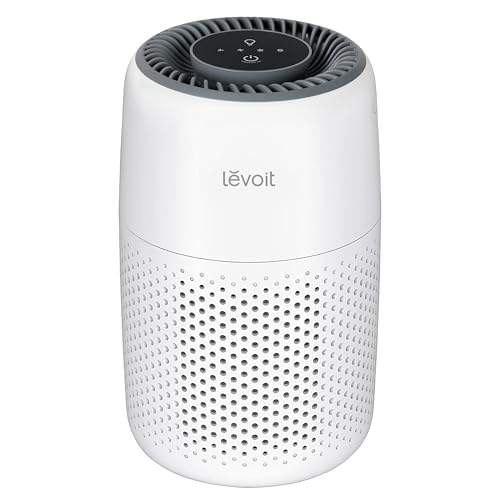
- Best budget: Levoit Core Mini at about $80: compact 3-in-1 True HEPA desktop unit, 25dB ultra-quiet, built-in night light, perfect for a desk or small bedroom.
- Best set-and-forget (5-year filter): Shark NeverChange Compact Pro at about $179: filter lasts 5 years, lowest ongoing cost on the list.
- Best asthma/allergy pick: Coway Airmega 150 (AP-1019C) at about $209: Sensitive Choice asthma-certified, triple-layer True HEPA filtration, 73m² coverage, 20dB sleep mode, listed as Quiet Mark certified.
- Best ultra-quiet larger-room: Philips 1000i Series (AU SKU for the EU AC1715) at about $199: 78m² coverage, 300 m³/h CADR, smart sensor + app.
About this list. Australian shoppers often look for IQAir HealthPro, Molekule Air Pro, or AirDoctor Pro 5000 air purifiers. These premium specialty brands are sold predominantly via specialty health and allergy retailers (Air Purifiers Direct, IQAir Australia, breathesafe.com.au) rather than Amazon AU. The picks below optimize for what Amazon AU does well: True HEPA purifiers from broad-distribution brands (Coway, Levoit, Shark, Philips) with Amazon AU listings; check the delivery estimate for your postcode. Coway appears three times because it carries the deepest verified review counts on Amazon AU in this category, and two of its models hold Sensitive Choice certification from the National Asthma Council Australia, the trust signal that matters most for asthma and allergy households.
Best air purifiers Australia 2026: quick comparison
Six machines side by side. Check the current Amazon AU listing for prices before you buy.
| Air purifier | Best for | Rated coverage | Filtration | Quietest mode | Filter cost | Price |
|---|
| Coway Airmega Mighty AP-1512HH | Best overall | 109 m2 | True HEPA plus activated carbon | 28dB sleep | $50 to $80 a set, carbon at 6 months, HEPA at 12 | About $400 |
| Coway Airmega 250 (AP-1720H) | Large open-plan rooms | 131 m2 | HyperCaptive plus True HEPA | Not stated | $50 to $80 a set | About $600 |
| Coway Airmega 150 (AP-1019C) | Asthma and allergies | 73 m2 | Triple layer True HEPA | 20dB, listed as Quiet Mark certified | $50 to $80 a set | About $209 |
| Philips 1000i Series (AC1715) | Quietest bedroom unit | 78 m2, 300 m3/h CADR | NanoProtect HEPA plus carbon | 17dB sleep | $85 every 12 months | About $199 |
| Shark NeverChange Compact Pro | Lowest running cost | 23 m2 | Pleated media, 99.97% at 0.3 microns | Not stated | Nothing through year 5, then $120 or more | About $179 |
| Levoit Core Mini | A desk or a small bedroom | Small space, not a whole room | 3-in-1 True HEPA plus carbon | 25dB | Not stated | About $80 |
The number nobody publishes: what the filters cost you a year. A purifier is not a one-off purchase, and the running cost separates these six far more than the sticker does. The Coway Airmega line takes a $50 to $80 filter set, and because the carbon layer saturates at about 6 months against the HEPA stage at 12, budget roughly $75 to $120 a year for a Mighty, an Airmega 250 or an Airmega 150. The Philips 1000i is a single $85 filter every 12 months. The Shark NeverChange costs nothing at all for five years, then $120 or more, which works out under $25 a year across the ownership period and is the lowest here by a wide margin. Add about $10 to $30 a year of electricity for a unit run continuously, and over three years a $400 Coway Mighty is closer to a $700 machine once filters and power are counted, while a $179 Shark is closer to a $240 one.
On CADR, only the Philips publishes a figure here at 300 m3/h. The rest quote rated coverage in square metres instead. Manufacturer coverage figures usually assume two air changes an hour, so halve them for the four to five changes an hour you actually want, which is why the 109 m2 Coway Mighty is the sensible pick for a 40 to 50 m2 open-plan room rather than a 100 m2 one.
How we evaluated air purifiers
NestPath doesn't physically test every product. Here's what we actually do:
- Surveyed 26 air purifier products available on Amazon Australia with AU shipping and current pricing.
- Cross-checked manufacturer specifications against retailer listings, removing products where claims didn't match.
- Aggregated verified Amazon AU customer review data: filtered for star rating, review count, recency, verified-purchase ratio.
- Filtered for first-home-buyer fit: under $1,000, household-suitable for 1-2 person setups, beginner-friendly daily 24/7 operation across bedroom and living-area use, available on Amazon AU.
- Editorial selection by Anish Puri, NestPath founder.
We earn affiliate commission when you buy through our links. That doesn't change which products we recommend. Products are selected before commission rates are checked. Our methodology page explains scoring and how to flag inaccuracies.
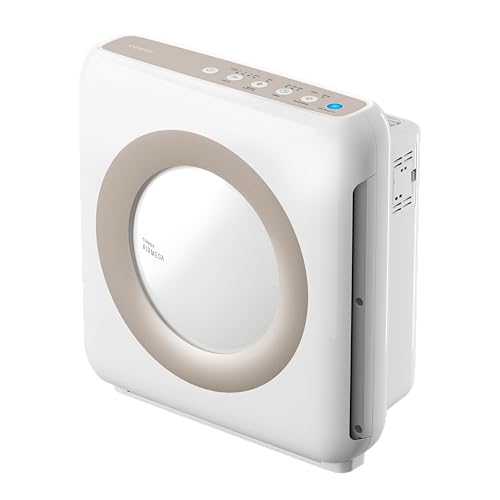
Best overall: Coway Airmega Mighty AP-1512HH
The Coway Airmega Mighty AP-1512HH is the best air purifier on this list for most Australian homes. It's the model the New York Times has named a top air purifier, and on Amazon AU it carries the deepest review base in this guide: 4.6 stars across 284 ratings, with an Amazon's Choice badge. At about $400 it sits mid-pack on price in this guide, and the specification earns it: True HEPA plus an activated-carbon stack that removes 99.999% of airborne particles and pollutants, an eco mode with a real-time air-quality LED that powers the unit down when the air is clean, and coverage up to 109m², comfortably handling most living rooms or open-plan kitchen-dining areas.
The four-stage stack (pre-filter, deodorising carbon, True HEPA, plus a switchable ioniser) handles the full range of indoor pollutants: PM2.5 from bushfire smoke, pollen, pet dander, dust-mite droppings, and odours and VOCs from new paint and furniture. The integrated air-quality sensor drives an automatic mode that ramps the fan up when particles spike and eases it back down when the air clears, so you can leave it running 24/7 without thinking about it.
Why we keep the ioniser switched off: at consumer fan speeds the ioniser produces trace amounts of ozone, which is itself a pulmonary irritant. The HEPA + carbon + pre-filter stack does all the real work; the ioniser is at best redundant and at worst counter-productive for asthma sufferers. Leave it off and you lose nothing.
- Pros: New York Times top pick with the deepest AU review count on this list (4.6 stars, 284 ratings, Amazon's Choice), True HEPA + activated carbon removes 99.999% of particles and pollutants, 109m² coverage, eco mode with real-time air-quality LED, replacement filters $50-80 (cheaper than premium brands).
- Cons: No smart-home integration (no Wi-Fi/app), slightly dated industrial design (white plastic shell), ioniser feature is best left off.
- Flaws: The carbon filter has a shorter life than the HEPA. It needs replacing roughly every 6 months at typical urban Australian usage versus the HEPA's 12-month interval. The filter-life indicator needs a manual reset after each replacement.
- Best for: Living rooms and open-plan areas where you want reliable, low-fuss purification without app complexity, on a value-conscious budget, the default recommendation for most first-home buyers.
Coway is a Korean home-appliance brand with 30-plus years in air care and broad Australian distribution (Amazon AU, Harvey Norman, The Good Guys).
Check price on Amazon AU →
Best set-and-forget: Shark NeverChange Air Purifier Compact Pro, about $179
The Shark NeverChange is the pick for buyers who don't want to think about filter replacement for half a decade. Shark's marketing claim is in the product name: the filter lasts 5 years. The engineering trade-off is a physically larger, denser filter stack that uses HEPA-exceeding pleated media. It captures 99.97% of particles at 0.3 microns, same as H13 HEPA, but with extended service life.
At $179 it's the cheapest pick on this list, and the lowest 5-year total cost of ownership of any HEPA purifier on the AU market. A typical air purifier needs $40-$130 of filter replacements per year. The NeverChange Compact Pro needs zero filter replacements through year 5. That's $200-$650 in saved filter costs across the ownership period.
Trade-off: rated coverage is only 23m². This is firmly a single-room purifier: bedroom, nursery, or small home office. Don't try to use it for an open-plan living area; you'd need two or three of them to keep up.
- Pros: 5-year filter life (no replacements through year 5), lowest total-cost-of-ownership on the list, HEPA-exceeding 99.97% particle capture, $179 entry price, compact footprint.
- Cons: 23m² coverage limits it to single small rooms, no Wi-Fi/app control, no air-quality sensor (no auto mode: manual fan speed only), large filter unit makes the device taller than it looks in photos.
- Flaws: The "5-year filter" claim assumes typical urban Australian usage and clean ambient conditions. If you live near a busy road, have multiple pets, or run it during bushfire smoke events for sustained periods, filter life will be materially shorter (Shark estimates 2-3 years in those conditions). Filter replacement when needed is a $120+ part.
- Best for: Bedroom or nursery buyers who prioritise zero ongoing maintenance over coverage area or smart features. Renters who want lifecycle simplicity.
Shark is a SharkNinja brand with broad Amazon AU + JB Hi-Fi + Bing Lee distribution.
Check price on Amazon AU →
Best asthma and allergy pick: Coway Airmega 150 (AP-1019C), about $209
The Coway Airmega 150 is the pick if asthma or allergies are the reason you're buying a purifier at all. It's Sensitive Choice Certified for Asthma & Allergies by the National Asthma Council Australia (the same independent Australian trust mark the larger Airmega 250 carries), and at about $209 it's the more affordable way into that certification. On Amazon AU it's an Amazon's Choice pick at 4.7 stars across 287 ratings and ranks #7 in Air Purifiers.
Filtration is a triple-layer stack: a pre-filter, a deodorisation layer, and a True HEPA stage that removes 99.999% of allergens down to 0.01 microns. Coverage is up to 73m², enough for a bedroom, a study, or a medium living area. It sits between the small-space Levoit Core Mini and the large-room Airmega 250 in capacity, while sharing the 250's Sensitive Choice certification.
Where the 150 really wins is overnight quiet: its Sleep Mode runs at 20dB and is listed as Quiet Mark certified, quieter than almost anything else on this list, and low enough to leave running all night in a bedroom without notice. Coway brings 30-plus years of air-care engineering to it.
- Pros: Sensitive Choice Certified for Asthma & Allergies (National Asthma Council Australia), triple-layer True HEPA filtration removes 99.999% of allergens to 0.01 microns, 73m² coverage, 20dB Sleep Mode listed as Quiet Mark certified, 4.7 stars across 287 AU ratings, Amazon's Choice, #7 in Air Purifiers.
- Cons: No Wi-Fi app or smart-home integration, smaller coverage than the Airmega 250, plain plastic shell looks utilitarian next to the Philips.
- Flaws: Like the rest of the Airmega line it uses an on-device sensor and on-device controls only. There's no app history or remote control. The carbon/deodorisation layer saturates faster than the HEPA stage, so plan on replacing it ahead of the main filter in odour-heavy rooms.
- Best for: Asthma and allergy households on a mid-tier budget who want Sensitive Choice certification plus the quietest sleep mode on the list, for a bedroom or medium living area.
Coway is a Korean home-appliance brand with 30-plus years in air care, distributed via Amazon AU + The Good Guys + Harvey Norman.
Check price on Amazon AU →
Best ultra-quiet larger room: Philips 1000i Series Air Purifier (AC1715), about $199
Philips 1000i Series is the Australian model name. International reviews often call it the AC1715: same machine, different market badge. The "1000i" is Philips's AU naming convention for the i-Series; the AC1715/70 is the model number printed on the back of the unit. If you see either name in reviews or Amazon listings, you're looking at the same physical product.
The 1000i Series is the ultra-quiet large-room pick. 78m² coverage, 300 m³/h CADR, sleep mode that drops noise to 17dB, the quietest sleep-mode reading on this list (below the Coway Airmega 150's 20dB and the Levoit Core Mini's 25dB). NanoProtect HEPA filter media (Philips's proprietary spec, exceeds H13 standard) + activated carbon, smart sensor with real-time AQI on the unit's display, Wi-Fi app control, voice-assistant compatible.
Where the Philips wins versus the Coway Mighty: build quality (powder-coated steel chassis vs Coway's plastic), display (proper AQI numbers vs Coway's three-LED indicator), and noise floor (17dB vs Coway's 28dB sleep). Where it loses: coverage area (78m² vs 109m²) and replacement filter cost ($85 every 12 months vs Coway's $50-60).
- Pros: Quietest sleep mode on the list (17dB), premium build quality with steel chassis, real-time AQI display, Wi-Fi app + voice assistant support, NanoProtect HEPA exceeds H13 standard, 78m² coverage suitable for medium living rooms or large bedrooms.
- Cons: Smaller coverage than the Coway Mighty, proprietary Philips filters ($85 every 12 months, more expensive than Coway), AU/EU model naming confusion (1000i vs AC1715).
- Flaws: The Air+ app requires a separate Philips account (can't merge with existing Hue lighting accounts). The smart-sensor calibration drifts over 6-12 months and needs manual reset via a button combination, not documented in the included quick-start guide.
- Best for: Buyers who want premium build quality + the quietest sleep mode at a mid-premium tier, particularly for medium bedrooms (15-30m²) where the 17dB floor matters.
Philips is a large global brand with broad Australian multi-retailer distribution. Note: AU model naming differs from EU. The 1000i Series in AU is the AC1715/70 in EU and the AC1715 in the US.
Check price on Amazon AU →
Best air purifier for a bedroom, for dust, for pets and for allergies
Most people arrive at this category with one specific problem rather than a general wish for cleaner air. Here is which machine, or air cleaner, answers each one.
Best air purifier for a bedroom
Sleep-mode noise decides it, because you will run it for eight hours a night beside your head. The Philips 1000i at 17dB is the quietest on this page, the Coway Airmega 150 at 20dB is listed as Quiet Mark certified, and the Levoit Core Mini at 25dB is fine for a small room. A typical Australian bedroom is 10 to 20 m2, so even the 23 m2 Shark covers one. Buy for quiet, not for coverage, and put it on the far side of the room from the bed rather than on the bedside table.
Best air purifier for dust
Any True HEPA unit here captures airborne dust, so the thing that matters is airflow and the pre-filter. The Coway Airmega Mighty at 109 m2 moves the most air of the mid-priced picks, and its washable mesh pre-filter is what stops the dust clumps and hair reaching the HEPA stage. Be clear on what a purifier can and cannot do here: it takes dust out of the air, not off the shelves. Settled dust is still a job for a vacuum cleaner, and the two work together, because vacuuming throws dust back into the air that the purifier then catches.
Best air purifier for pets
Pet households want continuous airflow rather than a headline particle rating, because shedding never stops. A washable mesh pre-filter is the single most useful feature, since hair caught there is hair that never loads the HEPA, and an auto mode that ramps the fan when the sensor sees a spike does the rest. The Coway Airmega Mighty and Airmega 250 both do this, and the Airmega 250 at 131 m2 is the one for an open-plan house with a dog in it. The activated carbon layer is what handles the smell, and it is also the layer that saturates first, so replace it early in a pet home.
Best air purifier for allergies
This is where the certification matters. The Coway Airmega 150 at about $209 and the Airmega 250 at about $600 are Sensitive Choice certified by the National Asthma Council Australia, which is an independent Australian trust mark none of the other picks carry. The 150 is the cheaper way into it and adds the 20dB sleep mode, which matters because bedroom placement is the highest-value spot for an allergy sufferer.
Where a purifier is the wrong machine
A purifier filters the air that passes through it. It does not ventilate, it does not dry the air, and it does not add moisture. If the problem is damp, mould or a musty smell, the machine you want is a dehumidifier, because a purifier catches mould spores while a dehumidifier removes the damp that grows them. If the problem is dry air, cracked lips and static in winter, that is a humidifier, which adds moisture and does not filter anything, so the two are not alternatives to each other.
What to look for in an air purifier
The five decisions that actually matter when you're picking an air purifier:
HEPA grade: H13, True HEPA, or HEPA-type
True HEPA (H13) captures 99.97% of particles down to 0.3 microns, the gold standard. Every pick on this list uses true HEPA. "HEPA-type" or "HEPA-like" filters capture 85-95%, sounds close but means 5-15x more particles pass through. Avoid anything that doesn't explicitly say "True HEPA" or "H13" on the spec sheet.
CADR and room coverage
CADR (Clean Air Delivery Rate, m³/h) measures how fast the purifier cleans air. Match CADR to your room size: bedroom (10-20m²) needs CADR 150+ m³/h; living room (20-40m²) needs 300+; open-plan (40m²+) needs 400+ or two smaller units. Rule of thumb: the purifier should cycle the room's air volume at least 4-5 times per hour. Manufacturer "rated coverage" numbers often assume 2 air changes per hour, divide by 2 for real-world equivalents.
Activated carbon: for VOCs, gases and odours
HEPA captures particles but doesn't capture gases. For new-home VOCs (the benzene and toluene that off-gas from fresh paint and furniture), cooking odours, pet smell, or smoke gases, you need a separate activated carbon stage. Every pick on this list pairs True HEPA with an activated-carbon layer, including the budget Levoit Core Mini, which uses a combined 3-in-1 True HEPA plus activated-carbon filter.
Pet-dander considerations
Pet households should prioritise three features: (1) higher CADR (250+ m³/h) to keep up with continuous shedding, (2) a washable mesh pre-filter to catch hair before it reaches the HEPA stage (cheap and extends HEPA life dramatically), and (3) an air-quality sensor with auto mode that ramps up during high-activity periods. Pet Mode (Levoit Vital 200S, some Shark models) automatically boosts fan speed during shedding periods, useful but not essential. The Coway Airmega Mighty, Airmega 250, and Airmega 150 all handle pet dander well at their respective price points, thanks to their pre-filter plus True HEPA stacks.
Noise floor: sleep-mode dB
The noise spec that matters is sleep-mode dB, not max-fan-speed dB. You'll run the purifier on sleep for 8 hours a night; you'll rarely hit max. The Philips 1000i (17dB), the Coway Airmega 150 (20dB, listed as Quiet Mark certified) and the Levoit Core Mini (25dB) lead the list on sleep-mode quiet. Anything above 35dB sleep is too loud for a bedside table.
Care and maintenance
Air purifiers are low-maintenance but neglected filters cripple performance. Four habits:
Weekly: vacuum the pre-filter
The pre-filter catches large particles (hair, dust clumps) before they reach the HEPA. Use a handheld vacuum on the mesh side weekly. Takes 30 seconds and dramatically extends HEPA life. Almost no one does this; everyone should.
Monthly: clean the air-quality sensor
The air-quality sensor that drives auto and smart modes (Philips, Coway Airmega 250 and 150) accumulates dust on the optical surface and stops reading accurately over time. Most models have a small cover that pops off, wipe the sensor lens with a microfibre cloth monthly so auto mode keeps responding to real particle levels rather than a dusty reading.
Every 6 to 12 months: replace the HEPA filter
Most HEPA filters need replacement every 6-12 months depending on usage and air quality. Filter-life indicators are airflow-based on better models (Philips, the Coway Airmega line) and timer-based on cheaper or smaller models. Don't wash HEPA filters under any circumstances, water destroys the fibre structure permanently.
As needed: extra filter changes after smoke events
Bushfire smoke and renovation dust load filters fast. If you run your purifier through a multi-day smoke event or during home renovation work, plan on replacing the HEPA filter immediately afterward, even if the indicator hasn't tripped. The filter has absorbed months of particle load in a few days.
You'll also want: accessories
Five accessories that make any purifier on this list better:
- Spare HEPA filters: $40-$120 depending on brand. Keep one on the shelf so you can swap immediately when the indicator trips. Browse →
- Replacement Coway Airmega filters: $50-$80 depending on model. The Mighty, Airmega 250 and Airmega 150 each take a model-specific True HEPA + carbon set. Keep a spare on the shelf so you can swap the moment the indicator trips. Browse →
- Indoor air quality monitor: $80-$200 for a standalone monitor (Awair Element, Temtop M10, Aranet4) that shows real-time PM2.5, CO₂, VOCs, humidity. Useful to verify your purifier is actually working in different rooms.
- Surge protector with on/off switch: $20-$40. Lets you remotely power-cycle the purifier (some models hang after Wi-Fi outages and only recover via power cycle).
- Wall-mount kit (Philips, Coway): $40-$80 brand-specific. Wall-mounting frees up floor space in tight rooms and improves airflow geometry.
The competition: air purifiers we considered but did not pick
Several well-known air purifier brands came up in research and didn't make the final shortlist. For transparency:
- IQAir HealthPro 250 / 350: Premium Swiss-engineered medical-grade air purifiers used in hospital cleanrooms. Sold predominantly via specialty health and allergy retailers (IQAir Australia, Air Purifiers Direct), not Amazon AU. About $1,500-$2,500 entry. Only worth considering if you have severe allergies or asthma and have already exhausted what consumer HEPA can do.
- Molekule Air Pro: American brand using "PECO" photoelectrochemical oxidation tech. Independent testing (Consumer Reports, Wirecutter) has been mixed: the technology breaks down VOCs effectively but particle capture is no better than standard HEPA at 3x the price. Sold via molekule.com.au and specialty retailers. Not recommended for general use.
- AirDoctor Pro 5000: American brand popular in allergy-community circles, "UltraHEPA" claim that's marketing-speak for H13 with denser pleating. Sold via airdoctor.com.au directly, intermittently on Amazon AU. Solid product, but at an entry price of about $799 its particle capture isn't meaningfully better than the True HEPA picks above at a fraction of the cost, and it carries none of the Sensitive Choice certification the Coway Airmega 250 and 150 do.
- Xiaomi Mi Air Purifier 4 Lite: Was on our shortlist in earlier versions of this guide. Not included because Xiaomi doesn't maintain a direct Amazon AU listing. Current listings are third-party seller (WOOYOOTE) imports at low stock at the time of writing, not the Xiaomi-direct supply chain. The product is fine; the AU availability isn't reliable.
- Blueair Blue Pure 411 / 3210: Swedish brand, well-respected internationally. Our Amazon AU searches returned replacement filters rather than the machines themselves. Sold in Australia via Air Purifiers Direct and breathesafe.com.au. If you specifically want Blueair, shop those retailers; Amazon AU isn't the channel.
Frequently asked questions
Do air purifiers actually help with allergies?
Yes, multiple clinical studies confirm HEPA air purifiers significantly reduce airborne allergens including dust mite droppings, pollen, pet dander, and mould spores. A 2020 study in the Journal of Allergy and Clinical Immunology found running a HEPA purifier in the bedroom reduced nighttime allergy symptoms by 30-50%. The key: use a genuine H13 HEPA filter (not "HEPA-type") and size the purifier correctly for your room. Running a purifier 24/7 in the bedroom is the single most effective placement for allergy sufferers.
Should I run my air purifier 24/7?
Ideally, yes, especially in the bedroom. Air purifiers work continuously, and turning them off allows particle levels to rise within an hour. Modern purifiers use 10-60 watts (similar to an LED bulb), so 24/7 operation costs $10-$30 per year. Most purifiers have an auto mode that runs on low when air quality is good and ramps up when particles are detected. Use auto mode for the best balance of performance, noise and running cost.
How often do HEPA filters need replacing?
Most manufacturers recommend every 6-12 months, but actual timing depends on air quality and usage. Live near a busy road, have pets, or recently endured bushfire smoke? Filters need replacing sooner. Many modern purifiers include filter-life indicators that monitor airflow resistance (Philips, the Coway Airmega line), these are more accurate than timer-based reminders. Don't wash HEPA filters, water permanently damages the fibre structure. When the indicator says replace, replace.
What's the difference between True HEPA and H13?
"True HEPA" is a US marketing term; "H13" is the European EN1822 classification. They both refer to filters that capture 99.97% of particles at 0.3 microns. H13 is slightly more stringent (must capture 99.95% across a broader particle size range), but in practical performance the two are equivalent. Both are good. "HEPA-type" or "HEPA-like" filters meet neither standard, avoid those.
Do air purifiers help with bushfire smoke?
Yes, significantly. PM2.5 smoke particles are exactly what HEPA filtration is designed for. During the 2019-2020 fires, Australian households running HEPA purifiers reported substantially better indoor air quality even with windows sealed. The constraint is coverage and airflow, during heavy smoke events, you need a unit sized well above your room so it can keep up with smoke infiltration through door seals and gaps. If bushfire smoke is a recurring concern, err toward higher-coverage picks (Coway Airmega 250 at 131m², Coway Airmega Mighty at 109m², Philips 1000i at 78m² and 300 m³/h CADR).
What's the AU-vs-EU naming on the Philips 1000i / AC1715?
Same machine, different market badge. "1000i Series" is Philips's Australian naming convention for the i-Series line; "AC1715/70" is the model number printed on the back of the unit; "AC1715" is the US/EU naming. International reviews use the AC1715 designation; the Amazon AU listing uses "Philips 1000i Series Air Purifier" with AC1715/70 in the spec sheet. If you see any of these names, you're looking at the same product.
Will an air purifier help with mould?
Partially. HEPA filtration captures airborne mould spores, useful for symptom relief if you have mould allergies. But it doesn't fix the underlying mould problem. If you have visible mould or persistent musty smell, address the moisture source (look at our dehumidifier guide) and have the mould professionally remediated. The purifier supports symptom management; it isn't a substitute for fixing the cause.
What does an air purifier do?
It pulls room air through a fan and a stack of filters, then pushes the cleaned air back out. The pre-filter catches hair and dust clumps, the activated carbon layer holds gases and smells, and the HEPA stage traps 99.97% of particles down to 0.3 microns, which covers pollen, dust-mite droppings, pet dander, mould spores and PM2.5 smoke. What it does not do is ventilate. It recirculates the air already in the room rather than bringing fresh air in, so it lowers particle levels but does nothing for carbon dioxide.
How does an air purifier work?
Four stages, in order. A fan draws air in. A mesh pre-filter takes the large stuff, which is why vacuuming it weekly extends the life of everything behind it. An activated carbon layer adsorbs gases, VOCs and odours, which HEPA cannot touch. Then the HEPA filter traps the fine particles in a dense mat of fibres. Clean air leaves through the top or the side, and the cycle repeats, which is why the useful measure is how many times an hour the machine turns over the whole room volume rather than what it captures in one pass.
Does an air purifier remove dust?
Airborne dust, yes. Settled dust, no. A HEPA purifier captures the dust floating in the room and keeps it out of your lungs, and running one continuously does noticeably reduce how fast surfaces re-dust, because a lot of settled dust is airborne dust that landed. It will not lift what is already on the shelf, so you still vacuum and wipe. The two jobs support each other: vacuuming throws fine dust back into the air, and a purifier running at the same time catches it.
Does an air purifier remove smells?
Only if it has an activated carbon stage, and only in proportion to how much carbon is in it. HEPA filters particles and does nothing to gases, so cooking smells, pet smell, cigarette smoke gases and the VOCs off-gassing from new paint and furniture are all the carbon layer taking them out. Every pick on this page pairs HEPA with carbon, including the Levoit Core Mini through its 3-in-1 filter. The catch is that carbon saturates faster than HEPA loads, so in an odour-heavy room the smell coming back is the signal to replace the filter early rather than proof the machine has failed.
Are air purifiers worth it in Australia?
In three situations, clearly. Bushfire smoke, where PM2.5 is exactly what HEPA is built for and a sealed house still fills up through door gaps. Spring and summer pollen, particularly in Melbourne and Canberra. And a newly built or renovated home, where paint, carpet and new furniture off-gas VOCs for months. Add allergies, asthma or pets and the case is strong. Against that, it is a machine you run continuously: about $10 to $30 a year of electricity, plus filters at roughly $75 to $120 a year on a Coway or $85 on the Philips. If nobody in the house has symptoms, the air outside is clean and the home is not new, the money is better spent elsewhere.
Is there a downside to using an air purifier?
Four, and they are worth knowing before you buy. Filters are an ongoing cost of roughly $75 to $120 a year on the Coway line, and a purifier with a clogged filter is an expensive fan. Noise, because the rated coverage figures assume the top fan speed and nobody runs those in a bedroom. Ozone, on any model with an ioniser: the Coway Airmega Mighty has one and we leave it switched off, because at consumer fan speeds it produces trace ozone, which is itself a lung irritant, and the HEPA and carbon stack does all the real work anyway. And false comfort, because a purifier does not ventilate, does not fix damp and does not remove the source of a problem.
Bundle this with: setting up your home's air quality
An air purifier handles airborne particles, but indoor air quality has multiple dimensions. If you're working through your first-home health setup, these guides cover the rest of the air-quality rotation:
Still working out your first-home budget? Check your borrowing power to see where appliance money fits inside the bigger picture.
About the author
Anish Puri founded NestPath in 2026 after going through the Australian first-home-buyer process himself. NestPath focuses on Australian first-home buyers because the existing review sites are American, generic, or both. Anish handles editorial selection across the homeowner hub. Reach out: hello@nestpath.com.au