There is a specific kind of panic that hits you when your phone battery drops to 8% while you are waiting for a call from your conveyancer on settlement day, or when a tradie is about to show you something on their tablet and you need to sign off on paperwork. New homeowners have more critical phone-dependent moments crammed into the first six months of ownership than almost any other life stage — settlement appointments, coordinating removalists, inspections, utility connections, council applications — and they all happen away from a power point. The full settlement-week and first-month admin sequence is laid out in our moving checklist and new home checklist — which is exactly where a power bank earns its keep.
A power bank is one of the most practically useful purchases a new homeowner can make, and it is one of the cheapest. A good 10,000mAh power bank from a reputable brand costs $35 to $50. It fits in a jacket pocket. It will give you two full phone charges in the field, which is the difference between a stressful day and a well-managed one. Not every device needs one: an e-reader runs for weeks on a charge, which is exactly why it goes in the bag instead of a tablet.
The problem is that the power bank market is flooded with cheap, unbranded products that range from merely disappointing to genuinely dangerous. Lithium-ion batteries that are not properly manufactured and tested can swell, overheat, and in rare cases cause fires. This guide cuts through the noise: here is what capacity you actually need, what the charging specifications mean in plain language, and which brands are genuinely safe and worth buying in Australia in 2026.
What Capacity Do You Need?
Power bank capacity is measured in milliamp-hours (mAh). The higher the number, the more charge the power bank can store and deliver. But the relationship between mAh and number of phone charges is not a simple division — there are real-world losses to account for.
In practice, expect to get roughly 60 to 70% of the theoretical charge capacity delivered to your device. A 10,000mAh power bank will deliver around 6,000–7,000mAh of usable charge, because some energy is lost to heat during the conversion from the power bank's battery voltage to your phone's charging voltage, and some is consumed by the power bank's own circuitry. This is normal and applies to all brands — it is physics, not a product defect.
5,000mAh gives you approximately one full phone charge for a modern smartphone (which typically has a 4,000–5,000mAh battery). The main advantage is size: a 5,000mAh power bank can be as small as a lipstick case, genuinely pocketable without bulk. This capacity suits commuters and anyone who wants emergency backup without the weight. It will not charge a tablet meaningfully.
10,000mAh gives you two to three full phone charges. This is the most popular capacity category for good reason — it is the sweet spot between portability and practical usefulness. A quality 10,000mAh power bank typically weighs 180 to 220 grams and fits in a jacket pocket or the top of a bag. For most people, 10,000mAh is the right answer. It will charge a phone twice, top up a tablet, and still have enough capacity for a third partial phone charge. If you are buying your first power bank and are unsure what you need, buy a 10,000mAh.
20,000mAh gives you four to five full phone charges. This capacity suits multi-day use: camping, travel, trade work where you are away from power points all day, or charging multiple devices (a phone and a tablet simultaneously). A 20,000mAh power bank is typically 300 to 400 grams — noticeable in a bag but not heavy. For new homeowners who are in and out of properties all day during the purchase and moving process, a 20,000mAh unit gives you complete peace of mind across a full day of intensive use. For owners who keep one in the car alongside a dash cam and emergency kit, the 20,000mAh tier is the right answer.
30,000mAh and above enters laptop-charging territory. At this capacity, the power bank is no longer just a phone charger — it can meaningfully charge a laptop. The Anker 737 at 24,000mAh with 140W USB-C PD output will charge a MacBook Air to usable levels, which is useful for people who work remotely or need a laptop in the field. The trade-off is weight: 30,000mAh units typically weigh 700 grams or more, which makes them bag items rather than pocket items. There is also an airline restriction to be aware of: the IATA rule limits power banks in carry-on luggage to 100Wh (approximately 27,000mAh at 3.7V). Power banks above this limit cannot be taken on commercial flights.
Fast Charging — USB-C PD vs Quick Charge
Power bank specifications include charging speed ratings that are genuinely meaningful but poorly explained in most product descriptions. Here is what the main standards actually mean for how quickly your device charges.
USB-C Power Delivery (USB-C PD) is the current gold standard for fast charging. PD negotiates the optimal voltage and current between the power bank and the device, which allows it to charge at the device's maximum safe speed without overloading the battery. USB-C PD is used by Apple (iPhone 8 and later, all iPads with USB-C, all MacBooks), Samsung (Galaxy S series from S20), Google Pixel phones, and most modern laptops. The key advantage of PD is universality — a single USB-C PD port on a power bank can fast-charge an iPhone, a Samsung Galaxy, a Google Pixel, and a laptop, all without separate cables or adapters. If you own a mix of Apple and Android devices, a USB-C PD power bank is the right choice.
PD charging speeds are measured in watts. A 20W USB-C PD port will fast-charge a modern iPhone at Apple's maximum charging speed. An 18W PD port will fast-charge most Android phones. For laptop charging, you need at least 45W PD — a MacBook Air requires around 30W to charge, an M-series MacBook Pro requires 67W or more. Check that the power bank's PD output wattage matches what your laptop requires if you intend to charge it in the field.
Quick Charge (QC) is Qualcomm's proprietary fast-charging standard, primarily used by Android phones with Qualcomm Snapdragon processors — which includes most mid-range and premium Samsung, Sony, Google, and Motorola phones sold in Australia. Quick Charge works by increasing the voltage delivered to the device, which transfers more power per second than standard 5V charging. QC 3.0 (the most common version) can charge a compatible phone to 50% in around 30 minutes.
The practical difference between PD and QC in 2026 is smaller than it used to be. Most premium Android phones now support both QC and PD, and modern iPhones only support PD. The best power banks in the mid-range and premium category include both a USB-C PD port and a USB-A QC port, covering all device types. If you are choosing between two otherwise equal power banks, choose the one with USB-C PD — it is more future-proof as the industry continues to move away from USB-A.
One specification worth checking: the input charging speed for the power bank itself. A power bank with only 5W input will take 10 to 12 hours to recharge its own battery. A power bank that supports 18W or 20W input via USB-C PD will recharge in 3 to 4 hours. For daily use, fast recharge of the power bank itself is just as important as fast charging of your devices.
Best Budget Power Banks Under $40
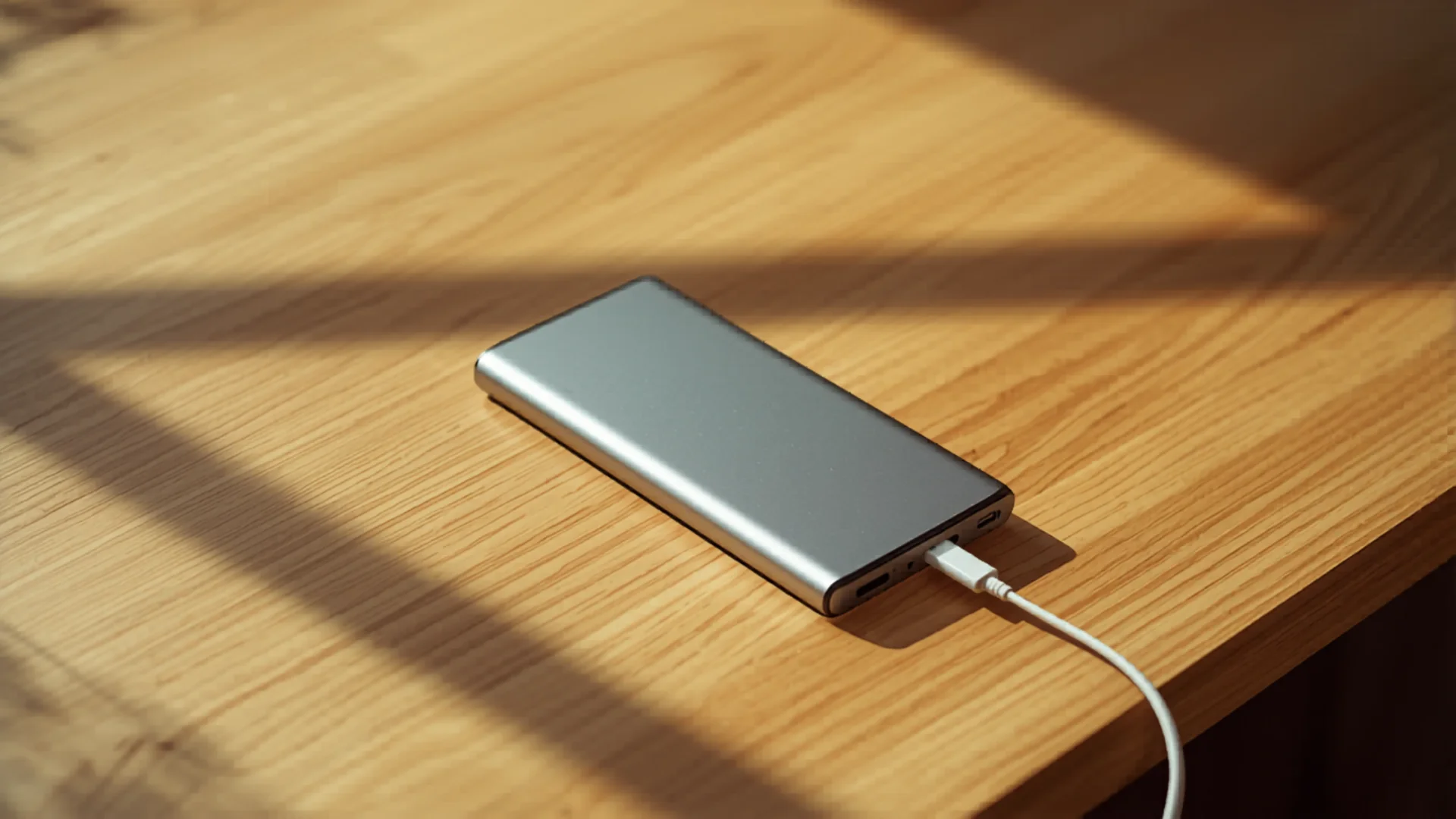
The sub-$40 category is dominated by a few reliable brands. Avoid the temptation to buy unbranded models at even lower prices — the safety risks are real and the claimed capacities are frequently false (a common scam in this category is labelling a 5,000mAh battery as 10,000mAh).
The Anker Power Bank 10,000mAh (Compact) is our top budget pick at around $28. It is one of the slimmest and lightest 10,000mAh power banks Anker makes, with USB-C PD input and output that fast-charges modern iPhones and Android phones. The trade-off versus the older Anker Nano series is no built-in cable — you carry a USB-C cable separately — but at $28 you save almost a third versus the cable-built-in models, and the slimmer profile is genuinely pocketable. Anker's 18-month warranty and established Australian retail presence (Amazon AU, JB Hi-Fi, Harvey Norman) provide legitimate after-sales support. Note: the Anker Nano Power Bank with the built-in InstaCord retractable cable went out of stock on Amazon AU in early 2026; if you want the cable-built-in version specifically, watch for it to come back in stock or check Anker AU directly.
The Cygnett ChargeUp Swift 10K is an Australian brand with strong local support, making it a viable alternative to Anker for buyers who prefer to support a local company or want easier warranty access. At around $35, it delivers 18W USB-C PD output, dual outputs (USB-C and USB-A), and a compact form factor. Cygnett products are widely available through Australian retailers including Woolworths, Big W, and Harvey Norman, which simplifies replacement under warranty.
The Anker Nano 2 (5,000mAh) is worth mentioning for those who prioritise size above all else. At just 96g and roughly the dimensions of a stack of credit cards, it is genuinely pocketable in a way that 10,000mAh models are not. The 30W PD output is surprisingly powerful for the size — this is one of the few 5,000mAh power banks that can fast-charge a modern iPhone at full speed. For commuters or travellers who always have the power bank on their person, the Nano 2 is a compelling option despite the lower capacity.

Best Mid-Range Power Banks ($40–$80)
The $40 to $80 range is where capacity increases meaningfully and fast-charging specifications become more complete. This is the range most new homeowners will find most useful — enough capacity for a full day of heavy use, fast enough charging to top up quickly between appointments.
The Anker Zolo Power Bank 20,000mAh is the strongest overall performer in this range. The 20,000mAh capacity delivers four or more full phone charges, the dual output (1× USB-C, 1× USB-A) charges two devices simultaneously, and the built-in USB-C cable means you'll never be caught without one. The 30W USB-C PD output fast-charges any modern phone or tablet — including iPhones, Samsung Galaxy phones, and iPads — and recharges the power bank itself in about 4 hours. At around $80, this is the power bank we would recommend to most new homeowners for general phone-and-tablet duties: the capacity is generous, the size is manageable, and Anker's reputation for reliability is well-earned across many years in the Australian market. For laptop charging specifically, step up to the Anker 737 in the premium section below.
The Belkin BoostCharge 20,000mAh is the premium-brand alternative at around $64. Belkin's advantage over Anker is brand recognition and retail availability — Belkin products are stocked in Apple Stores and JB Hi-Fi, which provides easy warranty service through established channels. The 20W USB-C PD output is slightly slower than the Anker Zolo's 30W, but the build quality feels premium and the price is lower. For buyers who prioritise easy Australian retail support over raw fast-charging speed, it is a legitimate choice.
The Cygnett ChargeUp Boost 27,000mAh at around $59 offers the highest raw capacity in this price bracket. At 27,000mAh, it can charge a phone five or six times, which is useful for extended trips or trade work where you are away from power for multiple days. The charging speed (18W USB-C) is adequate without being exceptional. The main trade-off is size — at 470g, this is a bag item rather than a pocket item. The airline restriction note applies here: at 27,000mAh (approximately 100Wh), this unit sits right at the IATA limit for carry-on power banks. Check with your airline before travelling.
Best Premium Power Banks ($80+)
Above $80, power banks offer meaningfully higher output wattage (enabling laptop charging), more sophisticated displays, and in some cases bidirectional charging for wireless earbuds and smartwatches. The premium category is not necessary for most phone-only users, but it is genuinely useful for anyone who works from a laptop in the field.
The Anker 737 PowerCore 24,000mAh is the most capable power bank available in Australia in 2026 for combined phone and laptop charging. The 140W USB-C PD output is sufficient to charge any current MacBook model, most Windows laptops with USB-C PD support, and phones simultaneously. The smart digital display shows not just battery percentage but current watt input and output in real time — useful for verifying that your laptop is actually fast-charging and not drawing from the power bank faster than it can keep up. At 680g and roughly the size of a thick paperback book, the 737 is a bag item for desk workers and tradies who carry a laptop daily. For a new homeowner who is also working from home and wants a single portable power solution for laptop and phone, it is the most practical premium option.
The Belkin BPB006 10,000mAh Boost Charge (around $89) is Belkin's most polished mid-size offering. The standout feature is the 15W Qi wireless charging pad integrated into the back of the unit — place an iPhone or Qi-compatible phone flat on the back of the power bank to charge wirelessly while the power bank charges via USB-C. For iPhone 12 and later users (which supports MagSafe and Qi charging), being able to charge wirelessly without plugging in is a genuine daily convenience. The overall capacity is only 10,000mAh (two phone charges), so it is not the choice if capacity is the priority — but for those who want the cleanest, most cable-free experience for phone charging, it is the most refined option.
The Mophie Powerstation XXL 20,000mAh is the premium build-quality option for Apple ecosystem users. Mophie is an Apple-partner brand — Mophie products are designed and certified specifically for Apple devices and are sold in Apple Stores with full Apple Retail support. For heavy iPhone users who already spend money in the Apple ecosystem, the Mophie Powerstation XXL's USB-C PD 30W output, 20,000mAh capacity, and seamless Apple device compatibility make it the premium recommendation at around $109.
Safety — Avoid Cheap Unbranded Power Banks
Power bank safety is not a trivial concern. Lithium-ion batteries store significant energy in a small volume. When a lithium-ion cell fails — due to manufacturing defects, overcharging, physical damage, or poor quality control — the failure can be rapid and severe. A swollen battery that ruptures can reach temperatures of 400 to 700 degrees Celsius and is extremely difficult to extinguish. This is not a theoretical risk: Australian fire services have documented fires caused by unbranded power banks in bedrooms, cars, and luggage.
The characteristics of dangerous power banks are predictable: they are unbranded or use unfamiliar brand names, they are sold at prices far below market (a 20,000mAh power bank for $12 is not a bargain — it is falsely labelled), and they are sold without certification marks. In Australia, legitimate power banks should carry the RCM (Regulatory Compliance Mark), which indicates the product has been assessed for electromagnetic compatibility and electrical safety standards under the ACMA and relevant Australian electrical safety standards.
Only buy power banks from established brands with a genuine Australian retail or warranty presence. Anker, Belkin, Cygnett, Samsung, Mophie, and Baseus are the reliable options in the Australian market. All have legitimate customer service channels, honour warranty claims, and use quality-controlled battery cells from reputable manufacturers (primarily Samsung SDI, LG Energy Solution, or CATL cells).
Never leave a power bank charging unattended overnight, particularly if it is sitting on a bed or sofa where heat cannot dissipate safely. Most quality power banks include overcharge protection that stops charging when full, but this protection adds only one layer of safety — physical conditions (heat, compression) can still cause issues. Charge on a hard, non-flammable surface such as a desk or benchtop, and store power banks at room temperature rather than in hot cars where ambient temperatures can exceed the safe operating range of lithium-ion cells.
The airline restriction is worth reiterating for new homeowners who travel: IATA regulations limit power banks in carry-on luggage to 100Wh (approximately 27,000mAh at 3.7V). Power banks above this wattage-hour rating — which includes almost all 30,000mAh and above models — cannot be carried onto commercial aircraft in Australia or internationally. They also cannot be checked in as baggage, as lithium batteries above certain thresholds are prohibited in the hold. If you travel regularly and need a laptop-capable power bank, stay at or below 27,000mAh to remain within airline limits.
Frequently Asked Questions
How long does it take to recharge a power bank?
Recharge time depends on the power bank's input wattage and total capacity. A 10,000mAh power bank that accepts 18W input via USB-C PD will take approximately 3 to 4 hours to fully recharge. A 20,000mAh power bank with the same input speed will take 6 to 8 hours. Budget power banks that only accept 5W input (common in cheap models) can take 10 to 15 hours to recharge a 20,000mAh battery — effectively overnight. When assessing a power bank, check both the output wattage (how fast it charges your devices) and the input wattage (how fast it recharges itself). A model with 20W input recharges far more practically than one limited to 5W, and the difference is rarely highlighted prominently in product descriptions.
Can I take my power bank on a plane in Australia?
Yes, but with restrictions. The IATA limit for power banks in carry-on baggage is 100Wh. To convert mAh to Wh, multiply the mAh rating by the battery voltage (3.7V) and divide by 1,000. Most 20,000mAh power banks come in at around 74Wh, well within the limit. A 27,000mAh unit sits at approximately 100Wh — right at the limit, and some airlines may question it. Power banks above 100Wh (roughly above 27,000mAh) cannot be carried onto flights and cannot be placed in checked luggage either. Power banks must always go in carry-on baggage, never in checked luggage, regardless of size — Australian airports enforce this actively. If you travel regularly, check your power bank's Wh rating (usually printed on the label alongside mAh) before arriving at the airport.
Why does my power bank charge my phone slower than a wall charger?
There are two common reasons. First, the power bank's output wattage may be lower than your wall charger. If your iPhone wall charger is 20W and the power bank output is only 10W, you will charge at half speed. The solution is to check the power bank's USB-C output wattage and match it to your device's maximum charging speed — look for USB-C PD power banks rated at 20W or higher for modern iPhones. Second, if you are using a USB-A to Lightning or USB-A to USB-C cable rather than a USB-C to USB-C cable, you will be limited to standard charging speeds regardless of the power bank's PD capability, because USB-A ports cannot negotiate PD protocols. For fast charging from a PD power bank, you need a USB-C to USB-C cable — or for older iPhones, a USB-C to Lightning cable.
A power bank also sits naturally in a home office setup for the inevitable storm-season outage day — it keeps the phone and tablet alive while the mains is out.