
A granny flat is one of the few moves in Australian property that does two jobs at once: it gives you somewhere to put a teenager, an ageing parent or a home office, and, in 2026, in every single state, you can now rent it out to whoever you like and turn your backyard into an income stream. That second part is new. For years, half the country could only let a granny flat to family. That restriction is gone. A finished, site-built granny flat typically costs $120,000 to $200,000 or more in 2026, with a basic kit from around $25,000, and your block, slope and access move the figure more than the brochure does.
So the real question isn't "can I?" anymore. It's "what will it cost me, and is it worth it?" And the honest answer is: it depends almost entirely on your block, not the brochure. Let's pull the numbers apart properly.
The short version
- Budget $120,000 to $200,000+ for a finished, site-built granny flat in 2026. A basic kit can start near $25,000 but that's a structure, not a home.
- The "from $X" price is a trap. Headline prices almost never include site works, service connections, approvals or finishes. Treat any sub-$150,000 quote that hasn't seen your block with real caution.
- You can rent it to anyone, in every state. But the size cap (60 to 70m²) and the approval shortcut differ a lot by state.
- Done right, the rent can be strong. $400 to $600 a week is realistic, which is a hefty return on the build cost, though it won't add its full cost to your valuation.
- It stays on one title. You can't subdivide it or sell it separately. Ever. That's the catch most people miss.
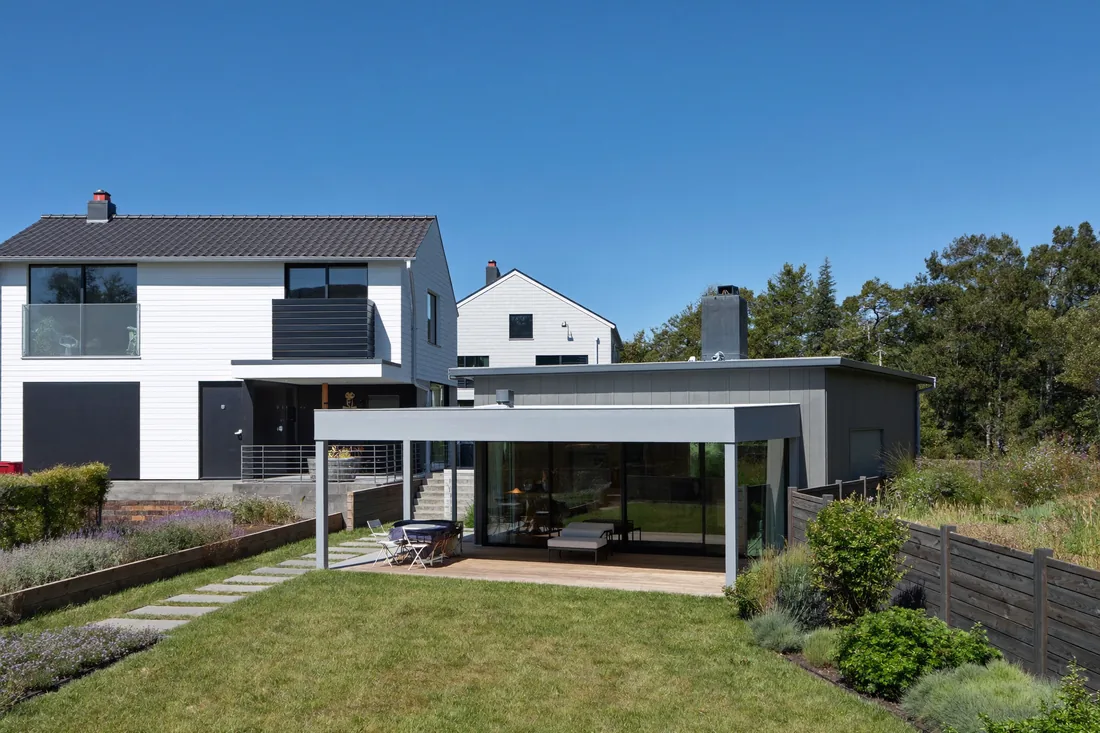
What a granny flat actually costs in 2026
There are really three ways to build one, and they sit at very different price points.
Kit and DIY: from about $25,000 (but read the fine print)
Flat-pack and kit granny flats are the cheapest entry point. A small studio kit can start around $25,000, and a two-bedroom lock-up kit runs around $68,000 plus GST. The number that matters, though, is what it costs finished. Once you add a slab, plumbing, electrical, internal linings and connections, that same two-bed kit typically lands at $120,000 to $180,000. The kit is the skeleton, not the house.
Modular and transportable: cheaper on paper
Prefab and transportable units look like a bargain because the quoted figure is usually the structure only, often $200 to $450 per square metre. A useful rule of thumb from the modular industry itself: structure cost × 2 = your real total, once you factor in footings, delivery, a crane and connecting it to services. By the time it's plumbed in and sitting on your block, modular often converges with a site-built price. The savings are real but smaller than the headline suggests.
Custom, site-built: $150,000 to $255,000 turnkey
A builder constructing on your block to your design is the most expensive route and usually the best for resale value (more on that below). In Sydney, brick-veneer builds run roughly $2,200 to $3,300 per square metre depending on finish, so a 60m² two-bedroom turnkey build lands around $205,000 to $255,000 at a medium spec, and $245,000 to $315,000 if you push the finishes. Adelaide, Brisbane and Perth typically come in cheaper than Sydney. A 60m² two-bed in Adelaide is closer to $140,000 to $200,000. Drop to a one-bedroom or studio and an all-in build lands around $148,000 to $192,000 in Sydney, less elsewhere.
Build cost at a glance (2026)
| Type / size | Indicative 2026 cost (AUD) |
|---|---|
| Kit / DIY structure (studio) | from about $25,000 |
| 2-bed kit (lock-up only) | about $68,000 + GST |
| 2-bed kit, finished | $120,000 to $180,000 |
| Modular structure only | $200 to $450/m² (about double for the total) |
| Custom site-built (Sydney $/m²) | $2,200 to $3,300/m² |
| Studio / 1-bed, all-in | $148,000 to $192,000 |
| 2-bed (60m²), all-in | $205,000 to $255,000 (medium) · up to $315,000 (high spec) |
| National "typical built" | $120,000 to $200,000+ |
Where the budget quietly disappears
The gap between a brochure price and a finished granny flat is almost always the site. These are the line items that blow budgets, and none of them show up in a "from $X" ad:
- Site works and excavation: $3,000 to $10,000 on a flat, friendly block, much more otherwise.
- Slope: a sloping block can add $20,000 to $50,000 in retaining walls and piered footings.
- Rock: rock excavation runs $100 to $300 per cubic metre on top.
- Service connections: sewer, stormwater, water and power can total $15,000 to $30,000. A sewer connection on the wrong side of the block alone is $5,000 to $25,000.
- Engineering and approvals: geotech, survey, BASIX and certifier fees commonly add $5,000 to $11,000.
- Slab: the concrete foundation by itself is often $15,000 to $30,000.
This is the same lesson that bites people who build a house from scratch: the dirt under the build decides the budget. Before you fall in love with a quote, get a proper site assessment. A site and services check that finds an easement or a far-side sewer connection early is the cheapest money you'll spend. Our free find a building inspector service can put you in touch with an inspector for exactly this kind of pre-build check.
Can you rent it out? The state-by-state rules
This is the part that's genuinely changed, and it's where most online guides are out of date. As of 2026, every state and territory lets you rent a granny flat to anyone, not just a family member. Queensland was the last big holdout to open up (its rule changed on 26 September 2022). What still varies, a lot, is how big you can build and how you get it approved.
The rules that matter, by state
| State | Max size | Approval shortcut | Rent to anyone? | Min lot |
|---|---|---|---|---|
| NSW | 60 m² | Complying Development (CDC), about 10 to 20 days, bypasses council | Yes | 450 m² |
| VIC | 60 m² | No planning permit needed ≤60m² (building permit still required) | Yes | N/A |
| QLD | Council-set (Brisbane up to 80m², rural 100m²) | Council DA, varies by council | Yes (since 26 Sep 2022) | N/A |
| WA | 70 m² | No planning approval needed since 10 Apr 2024 (building permit still required) | Yes | None (the old 450m² rule was scrapped) |
| SA | 70 m² (max 2 bed) | Development approval via PlanSA | Yes (reform from late 2024) | N/A |
| TAS | 60 m² (a rise to 90m² is proposed, not yet law) | Permitted use in residential zones | Yes | N/A |
| ACT | 40 to 90 m² | Standard approval; must meet adaptable-housing standard | Yes | 500 m² |
A few things worth calling out. NSW's CDC pathway is the fastest in the country. If your block ticks the boxes (450m², 12m wide, 60m² flat), a private certifier can approve it in days without the council or your neighbours getting a say. WA quietly became one of the easiest states in 2024, scrapping both the planning-approval step and the minimum lot size for a 70m² ancillary dwelling. And South Australia's late-2024 reform lifted the cap to 70m², allowed the flat to be fully self-contained, and, the big one, confirmed you can rent it to non-family.
The one to watch is Tasmania. The current cap is firmly 60m², but the government announced in March 2026 that it intends to raise it to 90m² to allow proper two-bedroom flats. That's still working through a planning amendment and isn't law yet, so design to 60m² for now and check the status before you commit.
Two rules are universal, and they're the ones that catch people:
- You cannot subdivide it or sell it separately. A granny flat stays on the same title as the main house. It adds value and income, but it's not a second property you can offload.
- You can't build over an easement. If there's a sewer or drainage easement running through the spot you wanted, that spot is off the table. Check the survey before you design anything.
Is a granny flat a good investment? The ROI reality
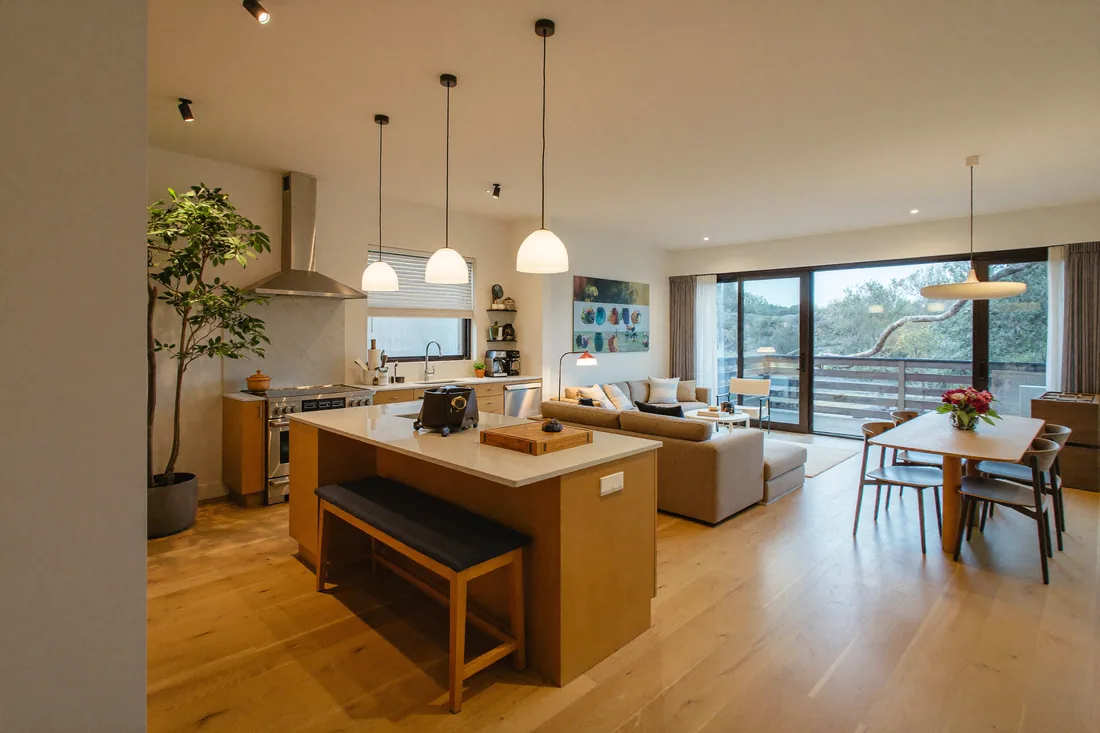
This is where granny flats earn their reputation. A well-designed, self-contained flat rents for roughly $400 to $600 a week in 2026, depending on the city and finish:
| City | Typical granny flat rent (2026) |
|---|---|
| Sydney | $400 to $600/wk (inner-ring can top $600) |
| Melbourne (outer) | $350 to $450/wk |
| Brisbane | $300 to $400/wk |
| Perth | $350 to $450/wk |
Run the maths on a $150,000 build earning $450 a week. That's $23,400 a year in rent, which works out to roughly a 15% gross return on what you spent to build it, and a gross payback of about six and a half years before expenses. That figure is genuinely strong, and it's why granny flats keep showing up in investor strategies.
But be honest with yourself about what that number is. It's the return on the build cost, not on the whole property. Measured against your home's total value, the extra rent is a more ordinary 4 to 5% yield. And there are expenses to net off: landlord insurance, maintenance, vacancy, and any property management. Lead with the gross-on-build figure if you like, but know the real one.
Will it add its cost to your home's value?
Mostly, no, not the full amount. A granny flat typically adds around 60 to 80% of its build cost to your property's market value. Spend $180,000 and you might see $110,000 to $145,000 of valuation uplift, because the next buyer could just build their own.
There's a sharper catch hiding in here, and it affects your finance: banks treat build materials differently. A brick, ground-up granny flat is usually counted in a valuation. A demountable or transportable unit can be excluded entirely because the valuer may treat it as a chattel, not part of the property. If you're funding this with equity, or planning to refinance against the higher value later, that distinction can quietly cost you tens of thousands. Build permanent if value matters.
How to pay for it
Most people don't take out a separate "granny flat loan." The cheapest and simplest route is usually a top-up or redraw on your existing home loan, using the equity you've already built. Our mortgage repayment calculator shows what adding the build cost to your loan means for the weekly, fortnightly or monthly repayments. If you've got an offset account with a balance sitting in it, even better. The main options:
- Equity top-up / redraw: simplest and cheapest if you have the equity. Lenders generally want you to keep at least 20% equity after the build.
- Construction loan: funds released in stages as the build hits milestones, better suited to larger custom builds. The same mechanics as a standard construction loan.
- Renovation or personal loan: for smaller kit builds where you don't want to touch the main mortgage.
One thing worth knowing if you're banking on the rent to help you qualify: lenders only count 75 to 80% of the estimated rent toward your serviceability, and they'll want a rental appraisal from a local agent to back it up. It helps your borrowing power, but not dollar-for-dollar. For a starting estimate of your maximum loan, try our borrowing power calculator before you talk to a lender.
Tax: the part people get wrong
There's a critical distinction here that trips up a lot of homeowners, and getting it wrong is expensive.
If you rent the granny flat out, the rent is taxable income you must declare. The upside is you can claim deductions, including depreciation: capital works at 2.5% a year over 40 years on the structure, plus plant and equipment like appliances and carpet. The downside is that renting out part of your home means you lose the full main-residence exemption from capital gains tax. When you eventually sell, the income-producing portion is subject to CGT, usually apportioned by floor area and time.
That's completely different from a "granny flat arrangement", a formal, written agreement to house an ageing parent or relative, often in exchange for them contributing to the build. Since 1 July 2021, a genuine granny flat arrangement doesn't trigger a CGT event. So a flat you build for Mum and a flat you build to rent on the open market are treated very differently by the ATO. Don't assume the family-care exemption covers a rental. If you're not sure which side of the line you're on, that's a conversation for an accountant before you build.
The pitfalls nobody puts in the brochure
- It stays on one title. Great for income, no good if you ever wanted to sell it off separately. You can't.
- Easements and sewer lines. An easement through the build zone, or a sewer on the far side of the block, are the classic budget-killers. Check the survey first.
- "From $X" base prices. They exclude the site works, connections, approvals and finishes that make up a third or more of the real cost.
- Strata properties. If your home is on a strata or unit title, a granny flat is almost certainly off the table.
- Separate metering. Splitting water, power and gas metering from the main house adds cost, especially on older homes, but it makes the flat far easier to rent cleanly.
- Valuation by material. As above, a transportable unit can be left out of the bank's valuation entirely.
So, is it worth it?
For a flat block with services nearby, in a city where granny flats rent for $450-plus a week, the numbers are some of the best in residential property, a 15%-ish return on your build cost and a near-permanent rise in your home's usefulness. For a sloping block with rock and a far-side sewer, the same flat can cost $80,000 more and the maths gets ordinary fast.
The deciding factor was never the brochure price. It's your block, your state's size cap, and whether you build something a valuer and a tenant both take seriously. Get a real site assessment, confirm your council's rules in writing, and build permanent if you can. Do that, and a granny flat is one of the few additions that pays you back in both cash and space.
Frequently asked questions
How much does a granny flat cost in Australia in 2026?
Budget $120,000 to $200,000 or more for a finished, site-built granny flat. A basic kit structure can start around $25,000 and a finished two-bedroom kit lands around $120,000 to $180,000, while a custom site-built two-bedroom turnkey runs roughly $205,000 to $255,000 in Sydney (less in Adelaide, Brisbane and Perth). The single biggest variable is your block: site works, slope, rock and service connections can add $20,000 to $50,000 on a difficult site, none of which is included in a "from $X" headline price.
Can you rent out a granny flat in Australia?
Yes. As of 2026, every state and territory allows you to rent a granny flat to anyone, not just a family member. Queensland was the last to open up, on 26 September 2022, and South Australia confirmed open-market renting in its late-2024 reform. You still need the right approval and a self-contained, compliant build, but the old family-only restrictions are gone nationwide.
How big can a granny flat be?
It depends on your state. NSW, VIC and TAS cap it at 60m²; WA and SA allow up to 70m²; the ACT allows 40 to 90m²; and Queensland leaves it to councils (Brisbane permits up to 80m², or 100m² in rural areas). Tasmania has proposed lifting its cap from 60m² to 90m², but that isn't law yet, so design to 60m² there for now.
Do you need council approval to build a granny flat?
You always need at least a building permit, but several states now skip the slow planning step. In NSW a Complying Development Certificate from a private certifier can approve a compliant 60m² flat in about 10 to 20 days without council. Victoria needs no planning permit for a second dwelling up to 60m², and WA scrapped planning approval for a 70m² ancillary dwelling in April 2024. Queensland, SA and the ACT still run a development-approval process.
Is a granny flat a good investment?
The returns are among the strongest in residential property. A $150,000 build renting for $450 a week earns about $23,400 a year, roughly a 15% gross return on the build cost, with a payback near six and a half years before expenses. Just remember that's the return on the build cost, not the whole property; measured against your home's total value it's a more ordinary 4 to 5% yield, and you still net off insurance, maintenance and vacancy.
Does a granny flat add value to your property?
Usually, but not its full cost, typically around 60 to 80% of what you spent. A $180,000 build might lift your valuation by $110,000 to $145,000. Build material matters here: a brick, ground-up flat is normally counted in a bank valuation, but a transportable or demountable unit can be excluded entirely, which can hurt both your resale value and any future refinance.
Can you sell a granny flat separately?
No. A granny flat stays on the same title as the main house and can't be subdivided or sold on its own. It adds income and value to the property as a whole, but it isn't a second dwelling you can offload separately.
Do you pay tax on granny flat rent?
Yes, rent from a granny flat is taxable income you must declare, though you can claim deductions including depreciation. Renting it out also means you lose the full main-residence exemption, so the income-producing portion becomes subject to capital gains tax when you sell. That's different from a formal "granny flat arrangement" to house a relative, which since 1 July 2021 doesn't trigger a CGT event. If you're unsure which applies, check with an accountant before you build.


