The best milk frother in Australia is the Breville the Milk Cafe BMF600, a 740ml induction jug with four settings that makes up to three cups at once and does cold froth for iced coffee; the Lavazza A Modo Mio MilkUp is the smaller one-button jug, and the Bodum Latteo is the cheapest way in with no power point at all. There's a particular moment Australians chase at home: the first flat white of the day, made the way the good cafe down the road makes it: glossy, silky milk poured into a strong shot, no bitter skin on top, no sad grey bubbles. For years the only way to get that texture was a barista with a steam wand. A standalone milk frother changes that. It is, quietly, the appliance that turns acceptable home coffee into something you actually look forward to.
The reason comes down to milk. Espresso is the easy part. A pod machine or a moka pot gets you most of the way there. What separates a cafe drink from a home one is the milk: properly stretched, properly heated, with the kind of fine micro-foam that pours and holds. A frother does that job in 60 to 90 seconds, hands-off, while you pull your shot, and it heats the milk itself so the kettle stays out of it. Flat whites, lattes, cappuccinos, weekend hot chocolates for the kids, iced lattes through summer: all of it gets dramatically better the moment you stop microwaving milk and shaking it in a jar, and it is worth pouring into mugs that hold the heat.
Who actually needs one? If you drink milk-based coffee and your machine has no steam wand (a Nespresso, a pod machine, a basic drip setup, or no machine at all), a frother is the single best small upgrade you can make to your coffee. If you already run a proper espresso machine with a steam wand, you may not need one (more on that honest trade-off below, and if you are still choosing a machine, start with our best coffee machine in Australia guide). For everyone in between, this is the upgrade that pays off every single morning.
At a glance: the six in-stock milk frothers we compared
Six frothers side by side: three electric jugs, a manual glass jug, a stovetop jug and a handheld wand. Only the electric jugs heat and texture in one hands-off run.
| Frother | Type | Capacity | Heating | Hot and cold | Controls |
|---|
| Breville the Milk Cafe BMF600 | Electric jug | 740ml, about three cups | Induction | Hot and cold | Four settings, measuring cap |
| Lavazza A Modo Mio MilkUp | Electric jug | Single and double servings | Induction | Hot and cold | One button, two-part whisk |
| Sunbeam Cafe Creamy EM0180 | Electric jug | 250ml, about two drinks | Automatic temperature control; method not stated | Hot, plus a cold mix option | Buttons, two attachments |
| Bodum Latteo | Manual glass jug | 250ml | None; warm the milk in the microwave first | Froths cold or pre-warmed milk | Hand plunger |
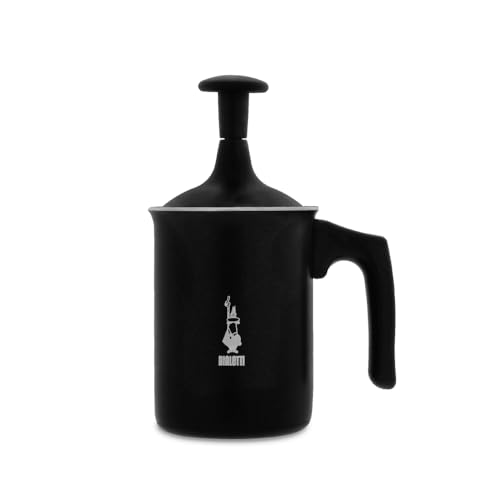
| Bialetti Tuttocrema | Stovetop jug | 3 cup | On a gas or electric hob, not induction | Hot | Hand pump |
| Maestri House LunaFro | Handheld wand | Any cup or jug | None | Froths whatever milk you give it | One button, rechargeable |
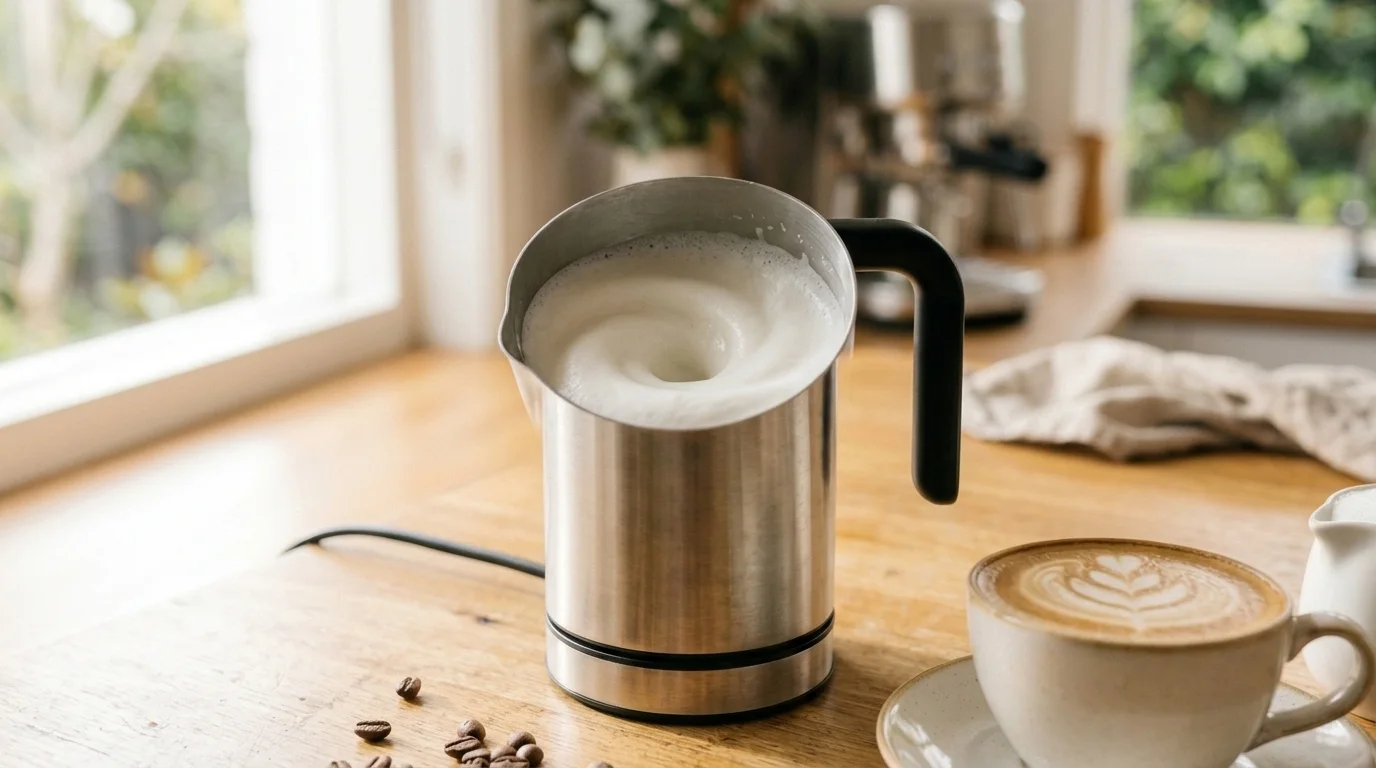
Best overall milk frother: Breville the Milk Cafe BMF600BSS
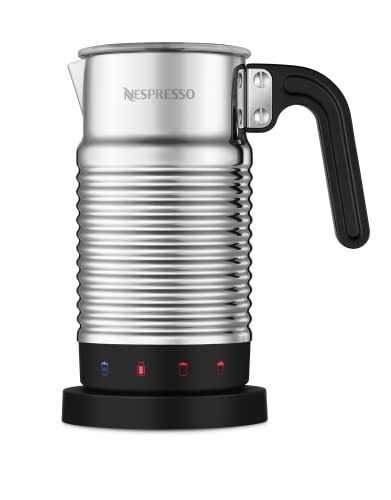
The Aeroccino 4 led this guide until the 5 October 2026 check, when it was currently unavailable on Amazon AU, and Australian reviewers on that listing reported units shipped from Germany with a European plug. We keep it here for reference, and the Breville above is the jug to buy now. The listing gives up to 120ml of foam or 240ml of hot milk, buttons for cappuccino, latte macchiato and iced frappe, and a removable jug that goes in the dishwasher at up to 70C.
How to choose a milk frother
Frothers look similar but split into a few clear types, and a few features genuinely matter. Here's what to weigh up.
Electric jug vs handheld wand vs steam wand
- Electric jug frother: The Breville, Lavazza and Sunbeam. You pour milk in, press a button, and it heats and froths automatically. Hands-off, consistent, and the texture is repeatable every time. This is the right choice for almost everyone.
- Handheld battery wand: A stick frother like the Maestri House LunaFro. Fast and cheap for a quick top-up of bubbles, but it does not heat the milk and the foam is coarser than a jug's, so warm the milk first.
- Manual and stovetop jugs: The Bodum Latteo pumps foam into milk you have warmed in the microwave, and the Bialetti Tuttocrema heats on the hob before you pump it. No motor, no power point, and more hands-on than an electric jug.
- Espresso-machine steam wand: The cafe method, built into mid and high-end machines. Brilliant in trained hands, but a separate purchase and a learning curve. We cover this honestly further down.
Hot and cold capability
Every electric jug here heats the milk. The feature that matters in an Australian summer is cold froth: silky cold milk for iced lattes and cold-brew, no heating involved. The Breville Milk Cafe has a Cold Stir setting, the Lavazza MilkUp froths cold too, and the Sunbeam has a cold mix attachment. The manual and handheld frothers work on whatever milk you give them, hot or cold. If you live anywhere north of Sydney, cold froth is not a gimmick, it is half your year.
Capacity and cups
Think about how many drinks you make at once. The Lavazza and the Sunbeam are built around one or two drinks, perfect for one or two coffee drinkers. The Breville Milk Cafe steps up to 740ml, roughly three cups in one run, which is the difference between making coffee for yourself and making coffee for a household before everyone leaves for work. Frothing milk in batches saves real time on a busy morning.
Froth texture by drink
Not all foam is the same, and the drink decides what you want:
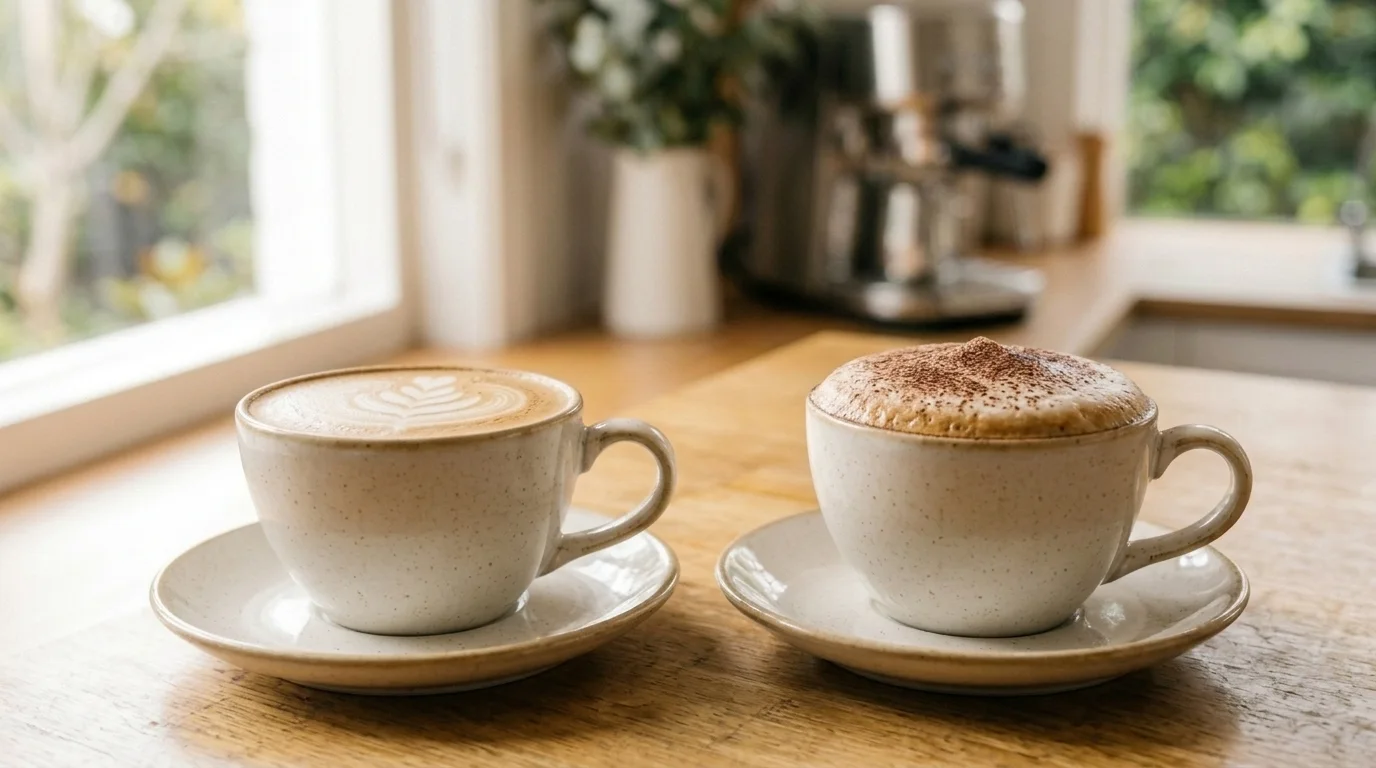
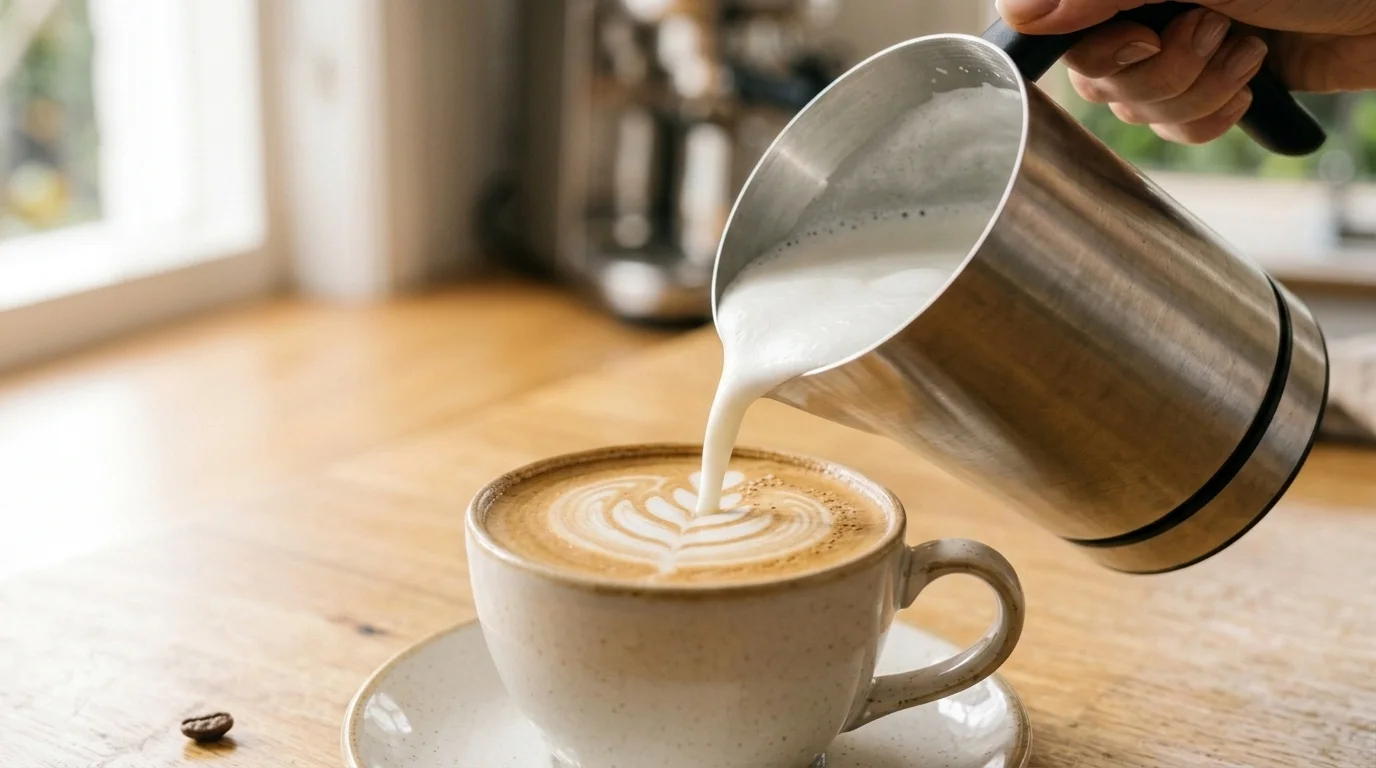
- Flat white and latte: Micro-foam: fine, glossy, paint-like milk that pours flat and integrates with the coffee. You want a frother that heats while it textures so the bubbles stay tight.
- Cappuccino: Stiffer, airier foam that sits on top in a thick layer. The Lavazza's two-part whisk is designed exactly for this. Use just the serrated disc for more air.
- Hot chocolate: Warm milk with body, ideally with cocoa stirred through. The Breville's measuring cap lets you add cocoa once mixing starts, which is the trick to a lump-free hot chocolate.
Induction vs hot-plate heating
How a frother heats matters more than the spec sheet suggests. Cheaper units use a hot plate in the base, which can scorch milk and leaves a baked-on ring to scrub. Induction heating (used by the Breville and the Lavazza) warms the jug evenly and gently, which means finer micro-bubbles, no scorching, and far easier cleaning. The Sunbeam listing gives automatic temperature control so the milk does not burn, but does not say how it heats. Induction is the single best reason to pay for a good jug over a bargain-bin one.
Cleaning and dishwasher-safe
You will clean this thing daily, so make it easy on yourself. Rinse the jug straight after use before milk dries on. The Breville's jug is dishwasher-safe, and the Bodum carafe and the Sunbeam jug are listed as dishwasher-safe too, a genuine convenience. Wipe the whisk and store it dry. Milk residue is the enemy of both hygiene and good foam.
Non-dairy milk
Plant milks froth differently, and the gap is wide. Barista-formulated oat milk is the best non-dairy performer by a distance. It stretches into proper micro-foam and holds it. Soy is the next best and froths reliably. Standard almond and regular (non-barista) oat are thinner and tend to collapse into big loose bubbles. The fix is simple: buy the barista version. Whichever frother you choose, it is the milk, not the machine, that usually lets people down.
The drinks you can actually make
Once you have a frother on the bench, the home menu opens right up. With your espresso shot plus textured milk you can make:
- Flat white: A short, strong shot with glossy micro-foam poured flat, the Australian default.
- Latte: More milk, a thin foam cap, served tall.
- Cappuccino: Equal espresso, steamed milk and a thick foam layer, often dusted with chocolate.
- Hot chocolate: Warm frothed milk with cocoa stirred through. The Breville's measuring cap makes this genuinely good rather than lumpy.
- Iced latte: Cold froth over ice and a shot, the summer staple.
- Matcha latte: Whisked matcha with hot or cold frothed milk; the frother gives it the cafe-style foam most home versions lack.
Frother vs espresso machine steam wand: the honest version
This is the question worth being straight about. A steam wand on a proper espresso machine can, in skilled hands, out-texture any standalone frother. It gives you more control and that last 10 percent of cafe quality. So why buy a separate frother at all?
Three honest reasons. First, most coffee setups in Australian homes do not have a steam wand. Pod machines, drip filters and plungers do not, and a frother is the only way to get cafe milk with them. Second, a steam wand has a real learning curve: dialling in the stretch, the temperature and the swirl takes practice, whereas a frother is press-and-walk-away every time. Third, even owners of wand machines often keep a frother for batch mornings and cold drinks, because frothing three cups by wand one at a time is slow. If you want a wand machine, our coffee machine guide covers the options, but for consistent, effortless milk, a standalone frother is the smarter buy for most homes.
Non-dairy milk: which froth best
If you have moved off dairy, the milk you choose decides whether your coffee looks like a cafe drink or a science experiment. A quick ranking from years of home-barista community sentiment:
- Barista oat milk: The clear winner. The added stabilisers let it stretch into tight micro-foam that holds for minutes. Buy the barista line, not the regular carton.
- Soy milk: A long-standing reliable frother: slightly heavier foam, good body, splits less than people fear if your milk and coffee are not both fridge-cold.
- Almond and regular oat: Workable but thin. Expect looser, shorter-lived foam. Barista almond exists and is a real improvement if you can find it.
Whatever frother you use, start cold, do not overheat, and let the barista version do the work.
Cleaning and care
A frother lives or dies on cleaning. Milk proteins bake on fast, so rinse the jug within a minute or two of finishing. For a daily wipe, warm water and a soft cloth or sponge handles the inside; never scrub a non-stick interior with anything abrasive. The Breville jug goes in the dishwasher, but a quick hand-rinse first stops residue setting. Dry the whisk and store it in the lid so it is ready for tomorrow. Done consistently, this is a 20-second job. Neglected, it ruins both your foam and the smell of your coffee. The Bialetti and the Maestri House wand are hand-wash items, so rinse them under warm water straight after use.
What about handheld wands, stovetop frothers and the other brands?
Three names come up constantly in Australian discussion of this category. The Bialetti Tuttocrema is the stovetop option, and it is now on this page: a hand-pumped jug you warm on the hob, no power point, no motor, and a genuinely good cappuccino foam. The Kmart Anko handheld wand is the one budget shoppers and review forums keep naming; like the Maestri House wand above, it is fine for topping up bubbles but does not heat the milk and the foam is coarse. Smeg's 50's Style and the Philips Baristina are the design-led jug alternatives sold through Australian department stores.
The Nespresso Aeroccino 4, which led this guide before, was currently unavailable on Amazon AU at the 5 October 2026 check, and Australian reviewers on that listing reported units shipped from Germany with a European plug, so it sits at the end of the product list above with that line rather than among the picks. We now include a stovetop jug, a manual jug and a handheld wand beside the three electric jugs, because the right frother depends on how you want to heat the milk. If you want no extra appliance on the bench, buy the Bialetti. If you want cheap bubbles on a hot chocolate, buy the handheld. For a flat white, buy an electric jug.
How we picked
We did not run a fake testing lab or invent star counts. Our picks come from three honest inputs: the Amazon Australia listings, which we checked on 5 October 2026 for stock, the seller and who ships each frother; the manufacturers' published specifications on those listings; and aggregate owner sentiment across Australian coffee communities and retailer reviews. We compare six frothers in stock, plus the Aeroccino 4 kept at the end for reference, because the right frother depends on how you heat the milk: three electric jugs, a manual glass jug, a stovetop jug and a handheld wand, each with a clear job. Prices shift, so check the live Amazon listing before you buy.
Frequently Asked Questions
Do I need a milk frother if I have an espresso machine?
Only if your machine has no steam wand. Pod machines, drip filters and plungers do not texture milk, so a frother is the only way to get cafe-style milk with them. If your machine has a wand you may not need one, though plenty of wand owners keep a frother for batch mornings and cold drinks because frothing several cups one at a time by wand is slow.
Can a milk frother make cold froth for iced coffee?
Yes. The Breville the Milk Cafe has a Cold Stir setting, the Lavazza MilkUp froths cold milk too, and the Sunbeam Cafe Creamy has a cold mix attachment. Cold froth is silky milk with no heating, ideal for iced lattes and cold brew through an Australian summer. The frother only handles the milk, of course. The coffee underneath it comes from a cold brew coffee maker, which steeps grounds in cold water overnight instead of brewing hot and chilling.
Will a frother work with oat, almond or soy milk?
Yes, but the milk matters more than the machine. Barista-formulated oat milk froths best by a clear margin, soy is a reliable second, and standard almond or regular oat give thinner, shorter-lived foam. Buy the barista version of whichever plant milk you prefer and any frother here will make a better foam with it.
Does the Nespresso Aeroccino 4 only work with Nespresso coffee?
No. It is a standalone milk frother, so it works with any coffee (drip, plunger, moka pot or your espresso machine), not just Nespresso pods. It was currently unavailable on Amazon AU at the 5 October 2026 check, so it sits at the end of this page with that line rather than among the picks, and every other frother on this page works with any coffee too.
What is the difference between froth for a latte and froth for a cappuccino?
A latte and flat white want fine micro-foam: glossy, paint-like milk that pours flat. A cappuccino wants stiffer, airier foam that sits on top in a thick layer. The Lavazza MilkUp uses a two-part whisk so you can switch between the two, while the Breville has four temperature settings (Cold Stir, Warm, Optimum Temperature and Hot) and its frothing discs.
How many cups can a milk frother make at once?
It depends on capacity. The Lavazza MilkUp and the Sunbeam are built for one or two drinks, while the Breville the Milk Cafe holds 740ml, roughly three cups in one run. If you make coffee for a household before everyone leaves, the larger Breville saves real time.
Are milk frothers hard to clean?
No, as long as you rinse the jug straight after use before milk dries on. The Breville jug and the Bodum carafe are dishwasher-safe, and a quick warm-water wipe handles daily cleaning. Avoid abrasive scrubbers on non-stick interiors and store the whisk dry.
Which brand of milk frother is best in Australia?
Breville for most people, because the Milk Cafe BMF600 does 740ml in one run with four settings. Lavazza makes the smaller one-button jug, Sunbeam a compact two-drink jug, Bodum the manual glass frother and Bialetti the stovetop one. Beyond those, Smeg and Philips sell design-led jugs through Australian department stores, and Nespresso's Aeroccino 4 was unavailable on Amazon AU at our 5 October 2026 check. Ignore brand and look at two things: induction heating rather than a hot plate, and a real cold froth setting.
Is there a milk frother that actually works?
Yes, and the difference is heating method. A frother that warms the jug by induction, as the Breville and the Lavazza do, holds the milk at the right temperature while the whisk works, and that is what produces micro-foam: fine, glossy, paint-like milk that pours flat and holds its shape. Cheap hot-plate units scorch the milk and give you coarse bubbles that collapse in 30 seconds. If you have been disappointed before, it was almost certainly a hot-plate jug or a battery wand, not the idea.
Does a milk frother heat the milk?
An electric jug frother does, and that is the main reason to buy one. The three electric jugs here heat and texture in the same run, and each also has a cold option for iced coffee, which matters more in Australia than anywhere else. A handheld battery wand does not heat at all: it whisks air into whatever temperature the milk already is, so you have to microwave the milk first, which is exactly the step that ruins the texture. A stovetop frother such as the Bialetti Tuttocrema heats on the hob rather than electrically.
How do you froth milk without a frother?
The jar method is the best of the improvised options. Fill a screw-top jar no more than a third with cold full-cream milk, shake hard for 30 to 60 seconds until it doubles, take the lid off and microwave for 30 seconds so the foam sets on top. A French press works too: warm the milk first, then plunge the filter up and down 20 times. A whisk in a warm saucepan is the last resort and gives the coarsest foam. None of them makes micro-foam, but all three beat pouring flat milk into a good shot.
How do you use a Nespresso milk frother?
Fit the whisk you want, the coil whisk for foam or the plain one for hot milk only, then pour milk to the lower line for a foamy drink or the upper line for hot milk. Press the button once for hot, hold it for cold froth. It stops itself after about 60 to 90 seconds and the Aeroccino 4 makes 120ml of foam or 240ml of hot milk. Rinse the jug straight away while the residue is still wet, because dried milk protein is what makes them hard to clean.
What is the best frother on the market?
Of the frothers we compared on Amazon Australia, the Breville the Milk Cafe BMF600 is the one we would buy for most homes: a 740ml induction jug that makes up to three cups in one run, with four settings from Cold Stir to Hot. For one or two drinks, the Lavazza MilkUp is the smaller one button jug.
What are the downsides of using a milk frother?
It depends on the type. A large electric jug takes real bench space, and any jug needs rinsing straight after use before milk dries on. A handheld wand does not heat the milk and gives coarser foam. The Bialetti stovetop jug does not work on induction, and no frother gives a skilled steam wand's control.
Which espresso machine has the best milk frother?
This guide compares standalone frothers, not espresso machines, so it does not name one. A steam wand on a proper espresso machine can, in skilled hands, out texture any standalone frother, but it has a real learning curve. Our coffee machine guide covers wand machines; for effortless milk, a standalone jug is easier.
Is De'Longhi or Breville better?
Breville is the brand we pick for most homes, because the Milk Cafe BMF600 does 740ml in one run with four settings. We have not compared a De'Longhi frother, so judge one on two things: induction heating rather than a hot plate, and a real cold froth setting.