Here is a first-home mistake that hurts, literally: you move in, you shower on the first morning, you step out onto a cold tiled floor, and a thin towel slides out from under your feet. A bath mat is the cheapest fix in the whole house, and it is the one nobody puts on the moving list. The marketing for fluffy spa-style rugs will not tell you which mats actually grip a wet tile, dry out before they go mouldy, and survive a hot wash. That is the boring stuff that decides whether a mat is safe and lasts, and it is exactly what this guide is about.
TL;DR quick overview
The LUMI Leaf Bathroom Rug is the best pick for most first-home buyers: a plush, quick-drying microfibre mat with a styled botanical look and a 4.7 Amazon AU star rating across 1400 reviews, the highest here. For the safest value buy, the Olanly Luxury Microfiber Bath Mat has more than 71,500 ratings and a no-PVC backing that resists peeling. If you want a mat that never goes soggy, the RUERYA diatomite stone mat wipes dry in minutes from around $17. Chenille options like the DEXI and Color&Geometry mats and the cushiony Yimobra memory-foam mat round out the picks. Every one is in stock for Australian buyers right now. Last updated June 2026.
Why the right bath mat matters more than you think
A bath mat does two jobs that a spare towel cannot: it grips the floor so you do not slip, and it has a backing built to cope with water so it does not slide, curl or breed mould. Wet tile is one of the most common places people fall at home, and a mat with a proper non-slip backing is genuinely a small safety buy, not just a soft one. For a first home, where you are working out every room from scratch, that is worth getting right on day one rather than after a near-miss.
The good news is that these are cheap. The picks below run from around $17 to about $50, less than most people spend on a single bath towel set, so the decision is low-stakes. We have focused on matching the right material and size to how your bathroom actually works, because the most common regret here is not price, it is buying a plush mat for a windowless bathroom that never dries out.
How we evaluated bath mats
We did not physically test any mat here. We are an aggregator: our job is to read the market honestly and point you to the mat that suits a first bathroom, so you do not have to open thirty tabs. Here is exactly what that involved.
- We researched the current bath mat and bathroom rug listings on Amazon AU, focusing on models genuinely in stock for Australian buyers.
- We cross-checked each product's stated specs, material, size, backing type and care instructions, against its own listing so nothing here is invented.
- We aggregated the verified Amazon AU star ratings and review counts, and we deliberately included mats across a range of materials so the guide is not just six near-identical microfibre rugs.
- We filtered for first-home fit: a real non-slip backing, sensible price, machine washable or wipe-clean, and a size that suits standard rentals and small bathrooms.
- We left out mats that were out of stock, and we skipped unbranded listings with only a handful of reviews where there was not enough verified feedback to recommend them honestly.
Best bath mat for most first-home buyers
The LUMI Leaf Bathroom Rug is the one to buy if you want a mat that looks deliberate rather than like an afterthought. It is a thick plush microfibre rug with a tropical Monstera leaf print, so it adds a bit of botanical style to a plain bathroom instead of sitting there as a beige slab. At 60 by 80cm it is a generous size, big enough to step onto comfortably as you climb out of the shower or bath.
The reason it tops the list is the combination of plush comfort and a strong track record. The dense microfibre pile soaks up water quickly so your floor stays drier, the backing is designed to hold the mat in place on a dry, smooth floor, and the whole thing machine washes to keep it looking fresh. Across 1400 Amazon AU reviews it holds a 4.7 star rating, the highest of any pick in this guide, which is a healthy and trustworthy sample for a bathroom rug. For a first home it hits the sweet spot of feeling nice underfoot while still looking like you chose it on purpose.
Flaws but not dealbreakers
Plush microfibre is lovely underfoot, but it does take longer to dry out fully than a flat low-pile mat or a stone one. In a bathroom with a window or a fan that is a non-issue, but in a small windowless ensuite, hang it to dry between uses or it can stay damp. It is also the priciest pick here at around $50, which is the cost of the styled look and the size.
Best value bath mat
The Olanly Luxury Microfiber Bath Mat is the pick if you want the safest, most-proven buy without overspending. It is a dense, plush microfibre mat with a nearly inch-thick pile that cushions cold tiles, and it sits on one of the largest review bases in the entire category: more than 71,500 Amazon AU ratings at a 4.4 average. That volume of feedback is its own kind of reassurance when you are buying something you will stand on wet, every day.
Beyond the comfort, Olanly has paid attention to the parts that usually fail first. The mat is OEKO-TEX certified, meaning it is tested for skin-safe materials, and the TP rubber backing is made without PVC or hot glue, which is exactly the construction that resists the cracking and peeling that sends cheap mats to landfill after a few washes. It is also low-shedding, so you are not picking lint off the floor, and it comes in multiple sizes and more than 30 colours to match whatever you have going on. For most bathrooms this is the smart-money choice.
Flaws but not dealbreakers
The headline price is for the smaller 16 by 24 inch mat, so if you want a larger size, check the size dropdown and expect to pay a little more. And like any plush mat, it prefers a floor that is dry underneath before you stand on it, because water trapped under the backing reduces grip. Neither is a dealbreaker, they are just worth knowing before you order.
The Yimobra Memory Foam Bath Mat is the pick if pure underfoot comfort is what you are after. It uses a thick memory-foam core under a soft velvet microfibre surface, so stepping onto it genuinely feels cushioned rather than like standing on a thin rug over hard tile. For a cold bathroom on a winter morning, that bit of plush give is a small daily luxury that costs very little.
It is not just soft, though. The velvet microfibre top layer is built to pull water off wet feet so it does not pool on the surface, and the PVC backing is designed to stay put and resist the peeling that plagues lower-quality mats over repeated washes. It machine washes and the colour is made to hold up wash after wash. Sitting on more than 50,000 Amazon AU ratings at a 4.5 average, it is one of the most-reviewed and best-liked memory-foam mats you can buy here, so the comfort claim is well backed.
Flaws but not dealbreakers
A thick memory-foam mat is the slowest of these to dry fully because there is more material holding moisture, so it really wants a bathroom with some airflow. Stock can also run low on popular colours, so if you have your eye on a specific shade, grab it when you see it rather than waiting.
Best chenille bath mat for soft, shed-free pile
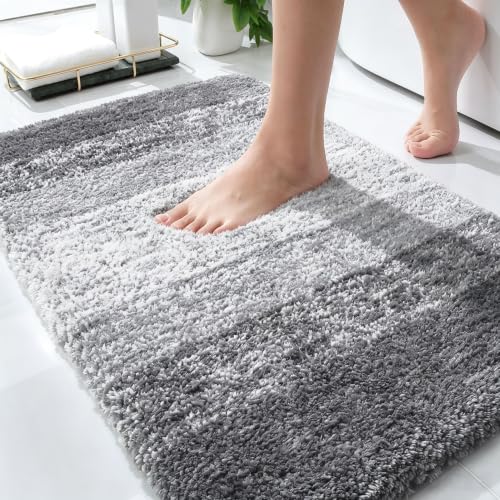
The DEXI Bathroom Rug Mat is the pick if you like a soft plush feel but want something that washes well and comes in sensible neutral colours. It is a 100 per cent microfibre mat on a TP rubber backing, made in eight colours and four sizes, so it is easy to find a version that fits your space and matches your tiles. The plush surface takes the chill off the floor and feels good underfoot first thing in the morning.
What earns it a place is balance. It is genuinely absorbent, trapping water from the shower, bath or sink so your floor stays drier, the anti-slip rubber bottom keeps it planted on a clean dry floor, and DEXI specifically markets it as fade-resistant and no-shed, so it looks like new after washing rather than leaving fluff behind. Across around 1000 Amazon AU ratings at a 4.3 average it is a well-proven everyday mat. The 40 by 60cm size in particular is a tidy fit for a compact rental bathroom.
Flaws but not dealbreakers
As with every plush mat, the grip depends on the floor being dry and smooth underneath, so it is not the one for a constantly wet floor without a fan. And the smaller 40 by 60cm size is on the compact side, so if you want to step onto something more generous, size up within the same range.
Best low-pile chenille mat for tight clearances
The Color&Geometry Chenille Bath Rug is the pick if your bathroom door clears the floor by only a centimetre or two, or you simply hate fluff getting everywhere. It is a tightly braided chenille mat with a deliberately low-pile, slim profile, so it slides under a door that a thick plush mat would jam against, while still feeling soft and looking neat in plain solid colours.
The low-pile design is the whole point. Unlike fluffy rugs that trap hair, fuzz and debris, this one stays cleaner and is easier to maintain, and its thin profile dries faster than a deep-pile mat too. The chenille is still absorbent enough to lock in moisture and keep floors dry, and the rubber backing grips firmly so it does not slide when you step on it. At a 4.5 Amazon AU rating across 219 reviews it is a well-liked, practical choice. One care note from the listing worth heeding: do not tumble dry it, because high heat damages the backing, so air-dry it instead.
Flaws but not dealbreakers
Its review count, 219, is smaller than the mega-reviewed Olanly and Yimobra mats, so the sample is more modest even though the rating is high. And the no-tumble-dry rule means you need somewhere to air-dry it, which is worth a thought if you rely on a dryer for everything.
Best budget bath mat that never goes soggy
The RUERYA Diatomite Stone Bath Mat is the pick if a soggy mat is your pet hate, and it is also the cheapest option here. Instead of plush pile, it uses a flexible diatomaceous-earth stone surface with a faux-suede finish that pulls water straight off your feet, so the wet patch wipes clear within a few minutes rather than sitting damp for hours. There is no pile to harbour mould or smell, which is a real plus in a humid bathroom.
It is also the most practical shape and profile of the group. It is a long runner, good for laying in front of a vanity or along a bath, and it is thin and low-profile enough to fit under a door and to stay friendly to robot vacuums rather than tangling them up. The non-slip rubber backing keeps it in place, and cleaning is a wipe with a damp cloth or a rinse under the shower rather than a trip through the wash. At around $17 with a 4.0 rating across 1200 reviews, it is a smart, low-fuss budget buy for anyone who wants hygiene over plushness.
Flaws but not dealbreakers
A stone mat is firm and flat underfoot, so it does not give you the soft, cushioned feel of a microfibre or memory-foam mat, which is the main reason it is not for everyone. Its 4.0 rating is the lowest of the in-stock picks here, perfectly respectable but a notch below the plush mats, so it earns its spot on dry-fast hygiene and price rather than top marks.
What to look for in a bath mat
Once you have decided you need a proper bath mat, a few things separate one you are glad you bought from one that slides around or goes mouldy. Match them to your actual bathroom.
The backing and grip
This is the one that matters most for safety. Look for a genuine rubber or TP backing rather than a flat fabric underside, and favour mats that say PVC-free or hot-glue-free, like the Olanly, because that construction resists cracking and peeling over time. Whatever the mat, grip depends on the floor being dry and smooth underneath, so wipe the tile before laying it down.
Material and how fast it dries
Plush microfibre and memory foam feel softest but hold the most water and dry slowest. Low-pile chenille dries faster and traps less fluff. Diatomite stone dries fastest of all and resists mould, but it is firm underfoot. Match the material to your ventilation: the less airflow your bathroom has, the faster-drying a mat you want.
Size and shape
Measure the spot in front of your shower, bath or vanity before you buy. A 40 by 60cm mat suits a compact rental, a 60 by 80cm mat is a generous step-out, and a long runner suits a double vanity or a galley bathroom. Also check the gap under your bathroom door, because a thick plush mat can jam a door that a low-pile or stone mat clears easily.
Care and washability
Most fabric mats are machine washable, but read the label: some, like the Color&Geometry chenille, must not be tumble dried because heat damages the backing. Stone mats skip the wash entirely and just wipe clean. Pick the care routine you will actually keep up with, because a mat you never wash is a mat that goes grey and musty.
Care and maintenance
A bath mat is cheap, but the thing that sends one to landfill early is mould and a perished backing, not wear from your feet. A few simple habits keep a mat fresh and grippy for years.
Let it dry out between uses
The single most important habit is airflow. Hang a fabric mat over the bath edge or a rail between showers rather than leaving it flat on a wet floor, and run the fan or open a window. A mat that dries fully between uses will not go musty or grow mould, which is the most common reason mats get binned.
Wash fabric mats properly
Machine wash fabric mats in cold or warm water with a mild detergent, avoid bleach, and skip the fabric softener, which can clog the fibres and reduce absorbency. Crucially, check whether yours can be tumble dried: some backings, like the Color&Geometry chenille, are damaged by dryer heat, so air-dry those flat or on a line.
Look after the backing
The rubber or TP backing is what keeps you safe, so treat it well. Always make sure the floor underneath is dry before you lay the mat down, because water trapped under the backing reduces grip and can speed up perishing. If the backing ever starts to crack or peel, replace the mat, because it is no longer doing its non-slip job.
Keep a stone mat clean
A diatomite stone mat just needs a wipe with a damp cloth or a rinse under the shower to stay hygienic. If it ever loses a little absorbency over time, a light sand with fine sandpaper, as the maker suggests, refreshes the surface so it pulls water in again like new.
You'll also want
A bath mat is one small piece of kitting out a bathroom. A few inexpensive extras make a new bathroom safer and tidier from day one.
- A set of good bath towels, so the mat and the towels are doing their separate jobs instead of one sad towel on the floor.
- A non-slip shower mat or strips for inside the shower or bath itself, which is a different, wetter job than the floor mat does.
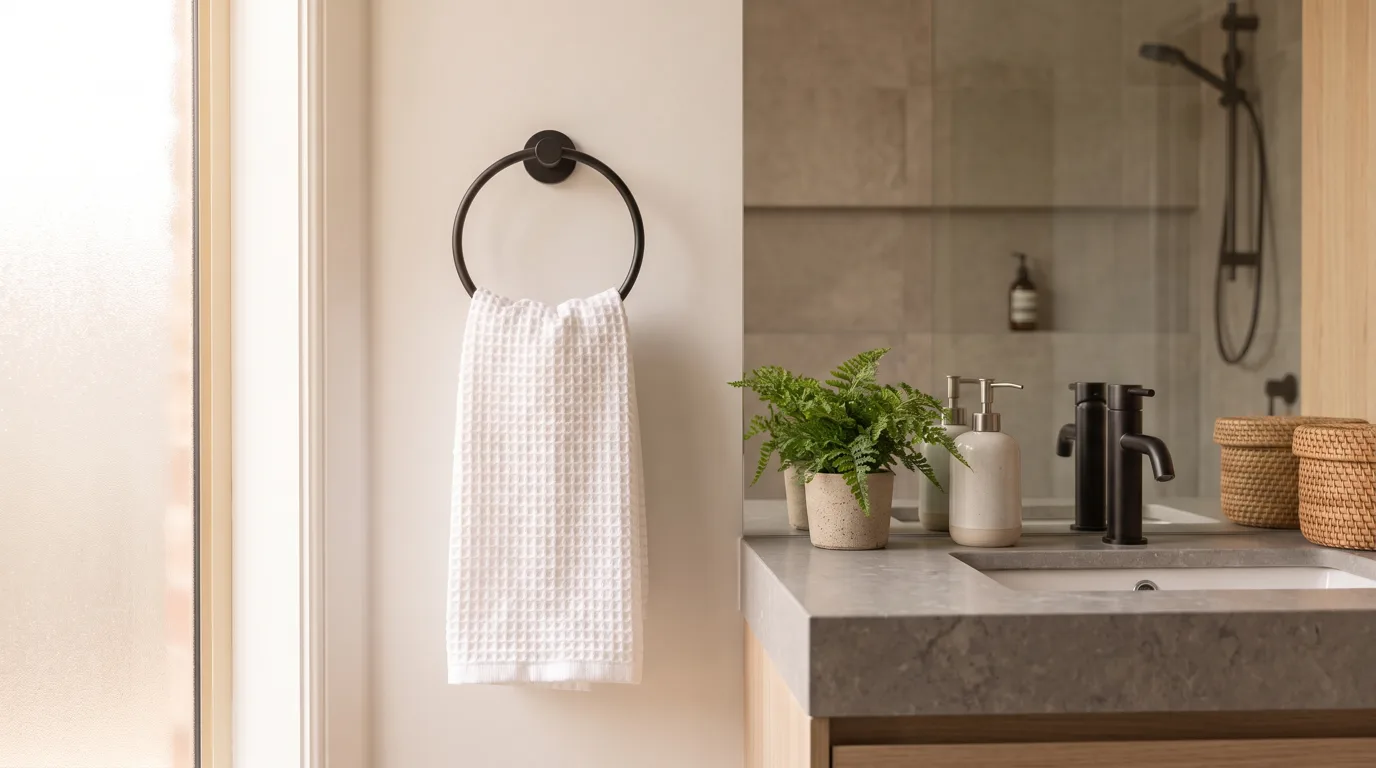
- A towel rail or hooks, so the bath mat has somewhere to hang and dry between uses rather than staying flat on the floor.
- An exhaust fan or a small bathroom dehumidifier if your bathroom has no window, because airflow is what stops mats and grout going mouldy.
- A toilet brush, plunger and basic bathroom cleaning kit, the unglamorous basics every new bathroom needs on moving week.
- A small storage shelf or caddy, to get bottles off the floor so the mat is the only thing down there.
- A spare mat, so one can be in the wash while the other is in use and you are never standing on cold wet tile.
The competition
Plenty of mats turn up in the same searches but did not make our list, and it is worth being clear about why so you can shop with your eyes open.
- Heritage homeware-brand mats: names like Sheridan, Bambury and Canningvale make lovely cotton bath mats, but they sell mainly through Myer, Harvey Norman and their own stores rather than the Amazon AU buy-box, so we left them out of an Amazon-based guide rather than point you to listings you cannot reliably buy.
- Single-review listings: the Amazon AU catalogue is full of unbranded mats with one or two ratings. We skipped these because there is not enough verified feedback to recommend them honestly, even when the price is tempting.
- Pure-decor cotton rugs: some boho and tasselled cotton bathroom rugs look gorgeous but have a thin fabric backing with little grip, so they slide on tile. They suit a dry powder room, not a wet step-out spot.
- Bath mat and toilet sets: matching multi-piece sets with a contoured toilet surround are fine if you want the coordinated look, but the contour piece is often the part that holds moisture and goes grey first, so a single quality mat is usually the smarter buy.
- Out-of-stock favourites: a couple of well-rated mats were unavailable when we checked, so we left them out rather than send you to a listing you cannot order today.
Frequently Asked Questions
What is the best bath mat in Australia?
For most first-home buyers the best bath mat in Australia is the LUMI Leaf Bathroom Rug. It is a thick plush microfibre mat with a styled botanical leaf print and a generous 60 by 80cm size, and it holds a 4.7 Amazon AU star rating across 1400 reviews, the highest of our picks. If you want the safest value buy, the Olanly Luxury Microfiber Bath Mat has more than 71,500 ratings and a no-PVC backing, and the diatomite stone RUERYA mat is the cheapest option for anyone who hates a soggy mat.
What type of bath mat is best, microfibre, chenille, memory foam or stone?
It depends on your bathroom. Plush microfibre and memory foam, like the LUMI and Yimobra mats, feel softest underfoot but hold the most water and dry slowest, so they suit a ventilated bathroom. Low-pile chenille, like the DEXI and Color&Geometry mats, dries faster and traps less fluff. Diatomite stone, like the RUERYA mat, dries within minutes and resists mould but feels firm rather than cushioned. The less airflow your bathroom has, the faster-drying a material you should choose.
How do I stop my bath mat from slipping?
Choose a mat with a genuine rubber or TP backing rather than a plain fabric underside, and always make sure the tile underneath is dry and smooth before you lay it down, because water trapped under the backing is the main thing that reduces grip. If the floor stays wet, a fast-drying low-pile or stone mat that does not soak through is safer. If a mat's backing starts to crack or peel, replace it, because it is no longer gripping.
How often should I wash a bath mat?
Wash a fabric bath mat about once a week if it is in daily use, and more often if several people use the bathroom or it stays damp. Machine wash in cold or warm water with a mild detergent, skip the fabric softener, and check whether yours can be tumble dried, because some backings are damaged by dryer heat and must be air-dried. A diatomite stone mat does not go in the wash at all, you just wipe it with a damp cloth or rinse it under the shower.
How do I stop my bath mat going mouldy?
The key is letting it dry fully between uses. Hang a fabric mat over the bath edge or a rail rather than leaving it flat on a wet floor, and run the exhaust fan or open a window so the bathroom is not constantly humid. Wash fabric mats regularly, and if your bathroom has no window, a small exhaust fan or dehumidifier makes a big difference. A diatomite stone mat resists mould by design because there is no pile for it to grow in.
What size bath mat should I buy?
Match the size to the spot in front of your shower, bath or vanity. A 40 by 60cm mat suits a compact rental bathroom, a 60 by 80cm mat like the LUMI is a generous step-out, and a long runner suits a double vanity or a galley bathroom. Always check the gap under your bathroom door too, because a thick plush mat can jam a door that a thin low-pile or stone mat would clear easily.
Setting up your bathroom?
A bath mat is one small piece of a first bathroom. If you are kitting out a bathroom or a rental from scratch, these companion guides cover the other buys that earn their place, each chosen with the same no-nonsense, first-home-buyer lens.