Which inflatable paddle board is actually worth buying in Australia?
The best inflatable paddle board in Australia in this guide is the Retrospec Weekender 10'6" Inflatable Paddle Board, a light kit that rolls up to backpack size, sold and shipped by Amazon Australia and rated 4.7 stars from 196 ratings.
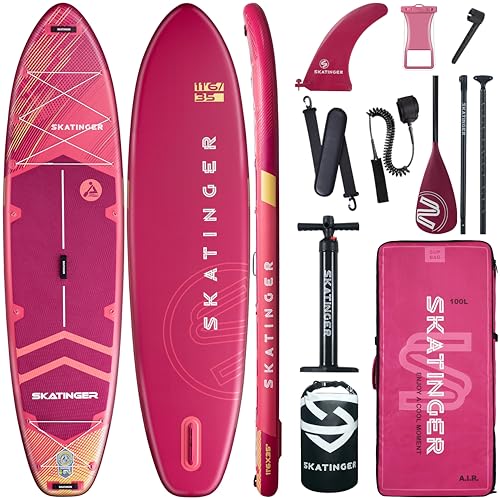
For the widest deck, look at the Skatinger 11'6" super wide, whose 89 cm deck is among the widest in this guide, though it sold through the Amazon US Global Store on 15 October 2026, so delivery takes longer. The SereneLife 10 ft could not be bought on 15 October 2026, as its product card explains. An inflatable stand up paddle board, or iSUP, is a practical way for a first home buyer to get on the water: the Retrospec listing, for one, says the board rolls up to backpack size when deflated and needs no roof rack. We pulled the iSUP kits listed on Amazon Australia when this guide was researched, screened them for real owner ratings and sane pricing, and ranked the boards that a beginner can buy without second guessing.
Several of the boards below are sold as kits with accessories, so check each listing's kit list before you buy. We collapsed the duplicate listings (the same board sold under three or four widths or colours) down to one entry per model line, so you are comparing actual different boards rather than the same hull four times. Star ratings and review counts were read from each Amazon Australia listing, as the method section below explains.
What is the short answer if you just want one board?
If you want one board to start with, get the Retrospec Weekender 10'6", our best overall pick: a 17.5 lb kit that rolls up to backpack size, rated 4.7 stars from 196 ratings on its Amazon Australia listing. If you want more room, the Niphean (Extra Large) is an 11 foot, 33 inch wide kit with four detachable fins and a three year guarantee. If stability matters most, the Skatinger 11'6" has an 89 cm (35 inch) deck and holds 4.8 stars from 3,407 ratings, though it sold through the Amazon US Global Store on 15 October 2026, so delivery takes longer. The Roc and the SereneLife could not be bought on Amazon Australia on 15 October 2026, as their product cards explain.
- Best overall: Retrospec Weekender 10'6", light and easy to carry, sold and shipped by Amazon Australia.
- Extra wide deck: Skatinger 11'6" x 35", one of the widest decks here. It sold through the Amazon US Global Store on 15 October 2026, as its product card explains.
- Roc Inflatable SUP: could not be bought on Amazon Australia on 15 October 2026, because its listing now opens a different product sold through the Amazon US Global Store, as its product card explains.
- SereneLife 10 ft: could not be bought on Amazon Australia on 15 October 2026, as its product card explains.
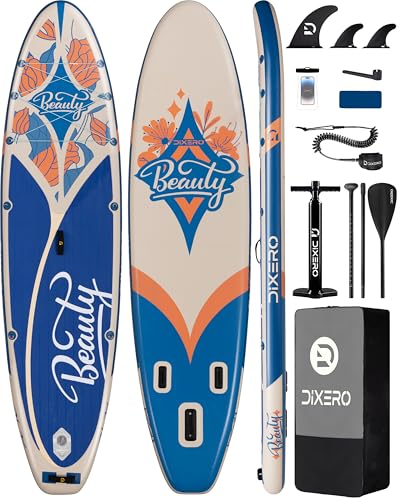
- Also worth it: Niphean (Extra Large) for a bigger deck and a three year guarantee, Aqua Plus 11 ft (a longer hull) and the FunWater, plus the FUNKEE, Dixero, Highpi, Flyroc and AISUNSS boards. Several sold through the Amazon US Global Store on 15 October 2026, so delivery takes longer.
How do the boards compare at a glance?
The table below lines up boards by size and owner rating, so you can see where each one sits before you read the detail. The numbers that separate them are length, deck width and how much weight they carry.
| Board | Size (L x W) | Rating |
|---|
| Skatinger 11'6" | 3.51 m x 89 cm | 4.8 (3,407) |
| Retrospec Weekender | 3.20 m x 81 cm | 4.7 (196) |
| Roc Inflatable SUP | Size not confirmed | Could not be bought on 15 October 2026, because the listing opened a different product sold through the Amazon US Global Store |
| FunWater Ultra-Light | Bullets say 10 ft 6 in x 33 in, table says 3.22 m x 0.81 m | 4.3 (445) |
| Aqua Plus 11 ft | 3.35 m x 84 cm | 4.4 (3,946), sold through the Amazon US Global Store on 15 October 2026 |
| Niphean (Extra Large) | 11 ft x 33 in | 4.5 (328) |
| FUNKEE 11 ft | 11 ft x 34 in | 4.7 (398) |
| Dixero 11 ft | 11 ft x 33 in | 4.7 (325) |
| Highpi 10 ft 6 in | Bullets say 10 ft 6 in x 32 in, table says 3.2 m x 0.79 m | 4.6 (1,560) |
| Flyroc 11 ft 6 in | 11 ft 6 in x 35 in | 4.5 (204) |
| AISUNSS | 10.6 ft or 11 ft x 32 in | 4.4 (491) |
A quick read of that table: the Skatinger and the Flyroc list 35 inch decks, the widest in the table. Several listings give two different values for the same spec, such as the Aqua Plus capacity and the Highpi width, so check each listing's own table. The Skatinger, Aqua Plus, FunWater, FUNKEE, Dixero, Highpi, Flyroc and AISUNSS sold through the Amazon US Global Store on 15 October 2026, so delivery takes longer. That is the whole argument for reading past the price tag, which is what the rest of this guide does.
The Niphean (Extra Large) Inflatable Paddle Board is the extra large 11 foot option in this guide, sold as a kit that is ready to use. The listing gives 11 feet by 33 inches by 6 inches and a weight of 19 lbs, with a larger detachable centre fin for straight tracking. Its listing gives more than one capacity figure, so we do not treat any of them as settled. The kit lists an adjustable paddle, four detachable fins, a safety leash, a pump, a backpack, a waterproof phone bag, a repair kit and a cup holder, and the board has 15 D rings for a kayak seat, a cooler or a second board.
It is sold by NipheanGlobal and shipped from Amazon, and Niphean backs it with a three year manufacturer guarantee and a 30 day return policy. The trade off is the evidence behind it: its Amazon Australia listing shows 4.5 stars from 328 ratings, a little under the Retrospec's 4.7 stars from 196 ratings and far fewer ratings than the Skatinger, and at 33 inches it is narrower than the Skatinger's 89 cm deck, so a nervous first timer who wants a steadier board should look at the Skatinger instead.
How did we choose these paddle boards?
Last checked: 15 October 2026, from each card's Amazon Australia listing (stock, seller, star rating and review count) and the maker specifications each listing states.
NestPath does not run boards through a lab, and we are not going to pretend otherwise. What we do is aggregate the evidence that already exists at scale and filter out the noise. For this guide that meant starting from every inflatable SUP kit listed on Amazon Australia, then applying a series of screens.
First, availability. A board that shows a five star rating but cannot actually be shipped to an Australian address is useless, so we read each listing's buy box for stock and seller, and any card that could not be bought, or that sold through an overseas Global Store, on 15 October 2026 says so in its note. Second, real ratings at real volume. We read each board's star rating and review count directly from its Australian listing when this guide was researched and leaned towards boards with hundreds or thousands of ratings rather than a handful. Third, sane pricing. Inflatable SUPs attract reseller listings at two or three times the normal price; anything that looked like a marked-up duplicate was dropped. Finally, we collapsed variant families so that a brand selling one board in four widths counts once, not four times. Specifications such as length, deck width and weight capacity were read from each product's own listing, not estimated. What survived all of that is the boards below. Beyond each card's Amazon Australia listing, we used the sellers' own listing text for sizes, capacity and kit contents, the buy box for seller and stock, the owner ratings shown on each listing, and the American Council on Exercise sponsored paddleboarding research cited in the FAQ.
Extra wide deck: why the Skatinger 11'6" suits nervous paddlers
Falling in is the worry that puts many first timers off paddle boarding, and a wider deck gives you more room to stand. Several boards here are 81 cm (32 inches) across; the Skatinger is 89 cm (35 inches), a clear step wider. It is among the widest boards in this guide, its listing bullets give 450 lbs but its product table says 430 pounds so we do not treat either capacity as settled, and its listing shows 4.8 stars from 3,407 ratings. If your household includes nervous first-timers, kids, or a dog that wants to come along, this is the board that makes those days work. Put a dog life jacket on the dog before it comes aboard, because the handle across the back is how you get a wet dog out of the water.
Its bullets give 10 ft 6 in by 33 in while its product table gives 3.22 m by 0.81 m, so we do not treat the width as settled, and the table lists a maximum weight recommendation of 149.69 kg. It is a conventional all round shape with a nonslip EVA deck, three fins for tracking and the full kit of paddle, pump, backpack and leash. FunWater backs it with a 3 year paddleboard warranty and a 1 year accessory warranty, per its listing. It sold through the Amazon US Global Store on 15 October 2026, so delivery takes longer. The listing gives an item weight of 11.68 kg, heavier than the Retrospec at 7.94 kg, so it is not the pick if low weight is what you want.
It lands here rather than higher up mainly because the more established picks above it have slightly stronger scores. If one of them is out of stock or the colour you want is unavailable, this is a perfectly sound alternative.
Flaws but not dealbreakers
The 4.3 star average is the lowest of the boards covered above. It does not do anything the boards above it cannot, so it is a strong backup rather than a first choice.
What should you look for in an inflatable paddle board?
Once you know the shortlist, a handful of specs decide which board suits you. Width is the big one. An 81 cm (32 inch) deck suits many adults, but if you are nervous, larger, or plan to share the board with kids, a wider board like the 89 cm (35 inch) Skatinger gives you more room to stand. Length affects glide: 10 ft boards are nippy and easy to store, while 11 ft boards track straighter and carry more, which is why the Aqua Plus and Skatinger suit longer paddles.
Weight capacity matters more than people expect, because you are adding a paddle, sometimes a dog, and often a cooler to your own body weight. The capacities listed here differ widely, and several listings give two different figures for the same board, so give yourself headroom rather than buying to the edge of the number. Thickness is easy: several of these listings give 6 inches, which is what gives an inflatable enough rigidity to feel like a hard board once it is pumped to pressure. Thinner boards can flex and sag, so 6 inches is a good thickness to look for.
Finally, look at what comes in the box. Most boards here are sold as a full kit, so check each listing's kit list before you buy a paddle, pump or leash separately, and note that the quality of those bits varies. The pump is almost always the weak link; a dual-action pump (which inflates on both the push and the pull) is faster than a single-action one, and an electric pump is the single best upgrade you can make. Check that a leash is included, because it is your primary safety device, and prefer a board with a decent backpack if you will be carrying it any distance.
How do you look after an inflatable SUP so it lasts?
Inflatables are tougher than they look, and a few simple habits will keep one going for years. The golden rule is to never store it wet or damp. After every paddle, especially in salt water, rinse the board with fresh water, wipe it down and let it dry completely before you roll it up, because trapped moisture is what grows mould and degrades the seams. Salt and sand are the two things that wear a board out, so a quick rinse is not optional if you paddle at the beach.
Pump to the pressure printed on the board, usually around 15 psi, and no higher. Under-inflating leaves the board soft and unstable; over-inflating stresses the seams, particularly on a hot day when the air inside expands. On that note, do not leave an inflated board lying in direct summer sun for hours, and never store it fully inflated in a hot car boot, where heat can push the internal pressure past its limit. Let a little air out if you are leaving it rigged in the heat.
When you pack it away, roll rather than fold to avoid sharp creases, store it loosely in a cool dry spot rather than crushed under heavy gear, and keep the repair kit that came in the box, because a small puncture is a five-minute fix if you have the patch. Treat the board this way and an inflatable will comfortably outlast the summer you bought it for.
What else do you need to go paddling?
The Retrospec Weekender, Niphean, Skatinger, Aqua Plus and FunWater above ship as complete kits, so you can technically paddle straight out of the box. A few inexpensive add-ons, though, make the experience meaningfully better and safer. A pair of water shoes is worth packing, because oyster covered rocks at a launch point can ruin a day, and a beach trolley is what carries a rolled iSUP and its pump across soft sand. These are the accessories worth adding to the cart.
- An electric pump. A hand pump takes real effort on a board this size. An OutdoorMaster Shark electric SUP pump inflates the board to pressure in a couple of minutes and turns the worst part of the day into a non-event.
- A spare coiled leash. Your leash keeps the board with you if you fall, which in open water is a genuine safety issue. A quality coiled SUP ankle leash is cheap insurance and a good backup to the one in the box.
- A hands-free carry strap. Even a light board is awkward under one arm on a long walk to the water. A Gradient Fitness SUP shoulder strap lets you carry board and paddle in one hand.
- A deck cooler or dry bag. For picnic paddles and longer trips, a Gradient Fitness SUP deck cooler straps to the bungee up front and keeps drinks cold and gear dry.
- A paddle leash. Dropping your paddle mid-fall is the fastest way to end a session early. An OCEANBROAD paddle leash tethers it to the board at a low cost.
- An anchor kit. If you like to stop and swim, fish or float in one spot, a folding grapnel anchor kit holds you in place instead of drifting off.
Which boards did not make the cut?
If you decide a sit-in craft suits your water better, our guide to the best kayaks in Australia covers the alternative. Plenty of iSUPs turn up in Australian search results without being a smart buy today. We kept to boards whose Amazon Australia listing shows a star rating, a review count, stock and a seller, because a board you cannot check is a board you cannot recommend.
We also left out store brands such as Tahwalhi and Venturer, which appear in the Google shopping results we saved. They are not among the Amazon Australia listings this guide ranks, so we cannot verify live pricing, stock and ratings for them the way we can for the picks above. If you are shopping in a physical store, they are worth a look; if you are buying online and want the evidence to back the purchase, stick with the ranked list.
Standalone accessories that sometimes rank for paddle-board searches, like electric pumps, carbon paddles and SUP coolers, are covered in the accessories section above rather than treated as boards. The list here is deliberately aimed at kits, because a first home buyer wants one box that contains everything, not a parts list to assemble.
What about Red Paddle Co, Tahwalhi and Venturer?
Google builds this category from a shelf we do not sell. Tahwalhi and Venturer boards appear in the Google shopping results we saved. Red Paddle Co also appears in those results as a brand, but we did not verify where it is sold. We rank the Amazon Australia catalogue because it is where we could verify price, stock and owner ratings when this guide was researched. No affiliate link is involved in naming them.
Frequently asked questions about inflatable paddle boards
Are inflatable paddle boards any good compared to hard boards?
For almost every recreational paddler, yes. A quality inflatable pumped to its rated pressure (around 15 psi) feels remarkably close to a hard board underfoot. What you gain is huge: an inflatable rolls into a backpack, stores in a cupboard, travels in a hatchback boot and needs no roof racks. Hard boards still edge them on outright speed and stiffness for racing, but for cruising bays, dams and estuaries, an iSUP is the more practical choice and the reason the category has taken over.
What size inflatable paddle board should a beginner buy?
Width matters more than length for a first board. An 81 cm (32 inch) deck like the Retrospec suits many adults, but if you are nervous, taller, heavier, or sharing with kids, a wider board such as the 84 cm (33 inch) Niphean or the 89 cm (35 inch) Skatinger gives you more room to stand. For length, a 10 ft board is easy to store and manoeuvre, while an 11 ft board such as the Aqua Plus tracks straighter and carries more weight. Match the weight capacity to your body weight plus gear with room to spare, and check each listing, because several give two different capacity figures.
How long does an inflatable paddle board take to pump up?
By hand with the included pump, expect somewhere around 8 to 12 minutes to reach full pressure, and the last stretch near 15 psi is the hard part on any inflatable board. A dual-action pump (which pushes air on both strokes) is quicker than a single-action one. The single best upgrade is a cheap electric pump: it reaches pressure in a couple of minutes while you sort out the rest of your gear, and it removes the one genuinely tedious part of owning an inflatable.
Do I need a licence to use a paddle board in Australia?
You do not need a boat licence to paddle a SUP recreationally anywhere in Australia, but rules around safety gear vary by state and by where you paddle. A stand up paddle board is generally treated as a vessel, which can mean you are required to carry or wear a personal flotation device in certain waters or beyond a set distance from shore, and leash rules can apply too. Because the detail differs between state maritime authorities, check your own state's rules before you head out; at a minimum, always use the leash that came with your board.
How much should you spend on a first inflatable SUP?
You do not need to spend a fortune to start. The SereneLife and the Roc could not be bought on Amazon Australia on 15 October 2026, as their product cards explain, so compare the boards you can buy by what the extra money adds. Spending more can buy you extra width and stability, higher weight capacity, a tougher backpack or a lighter board, rather than a fundamentally different experience.
How much PSI should an inflatable paddle board be?
Most iSUP kits are rated to about 15 PSI and should be pumped to at least 12 PSI before you stand on one. PSI is the number that decides whether the board holds a straight line or bends under an adult, and an underinflated board feels like a lilo. Check the pressure gauge on the hand pump every time, and remember a board pumped in the cool morning gains pressure sitting in the sun.
Can you leave an inflatable paddle board inflated?
For a few days in the shade, yes, and it saves the worst part of the day. Long term, no. Leaving a board at full 15 PSI in the sun stresses the drop-stitch seams as the air expands, and heat is what kills an inflatable rather than use. If you are storing it inflated between paddles, drop it to about half pressure and keep it out of direct sun and off hot concrete.
How do you repair an inflatable paddle board?
Most boards here ship with a patch kit, and a small puncture is a five minute fix. Find the leak with soapy water, deflate fully, clean and dry the area, then glue the patch down and leave it under weight overnight. A seam separation is the one you do not patch yourself: that is a warranty claim or a specialist repair. Keep the kit in the backpack rather than the shed.
Is a blow up paddle board the same as an inflatable paddle board?
Yes. A blow up paddle board is an inflatable paddle board, or iSUP: you pump it to its rated pressure, around 15 psi, and it rolls into a backpack when deflated. The Niphean listing uses both terms, saying even blow up paddle board beginners will find it easy to use.
How do you transport and store an inflatable paddle board?
Roll it rather than fold it, so the drop-stitch never takes a sharp crease, and roll from the nose toward the valve with the valve open so the air pushes out ahead of you. The boards here pack into their own backpack or carry bag, which is the whole reason to buy an inflatable instead of a hard board. Store it loose and dry in a cupboard, not crushed under gear in a hot garage.
Can you take a dog on an inflatable paddle board?
Yes, and inflatables suit it better than hard boards because the deck pad gives claws something to grip. Start on flat water with the dog sitting in front of you, and expect to swim the first few times. A wide deck helps a lot, which is why the 89 cm Skatinger is one of the easiest boards here to share. Put a buoyancy vest with a grab handle on the dog before you launch.
Where can you buy an inflatable paddle board in Australia?
Amazon Australia lists the twelve kits ranked here, and the product cards say which could not be bought on 15 October 2026. Buying in store lets you lift the board and feel the width; buying online is where the complete kits with paddle, pump and leash are offered.
What is the best inflatable paddle board brand?
No single brand wins every need, but Retrospec is our best overall pick, with its Weekender 10'6" rated 4.7 stars from 196 ratings on Amazon Australia. Niphean backs its 11 foot Extra Large board with a three year manufacturer guarantee, and Skatinger holds 4.8 stars from 3,407 ratings, so it is the one to check if you want a wider deck, though it sold through the Amazon US Global Store on 15 October 2026, so delivery takes longer.
How many calories do 3 hours of paddle boarding burn?
For a 70 kg paddler, three hours of stand up paddling burns roughly 1,134 to 2,142 calories in lab conditions, depending on intensity and experience. That uses American Council on Exercise sponsored research, which measured 0.09 to 0.17 kcal per kg per minute across light, moderate and high intensity. Your own figure will vary with weight, wind and effort.
Can you use a SUP for surfing?
Yes, makers list surfing as a use for these boards. The Niphean listing calls it versatile enough for yoga, surfing, exploring, traveling, and fishing, and the Dixero listing, which sold through the Amazon US Global Store on 15 October 2026, says the same, but a wide inflatable turns slowly, so keep to small waves, wear the leash and leave crowded breaks to narrower boards.
What is the best paddle board for beginners in Australia?
Our best overall pick for a beginner, the Retrospec Weekender 10'6", is a good start: its listing says the wide deck keeps you confident and balanced, and that the board rolls up to backpack size. For a wider, steadier deck, the Skatinger is 89 cm (35 inches) across, but it sold through the Amazon US Global Store on 15 October 2026, so delivery takes longer.
What is the best budget inflatable paddle board?
The SereneLife 10 ft could not be bought on Amazon Australia on 15 October 2026, as its product card explains, so we do not name a budget pick here. A board to price check is the Dixero 11 ft, which sold through the Amazon US Global Store on 15 October 2026, so delivery takes longer, and lists a 400 lb capacity and a two year manufacturer warranty.
What should you buy alongside your paddle board?
A paddle board tends to be the start of a bigger outdoor kit rather than the end of it, and a few of our other Australian buying guides pair naturally with a day on the water. If you are heading somewhere for the weekend to paddle, our guide to the best camping tents in Australia and the best camping chairs will sort out the shore end of the trip. Keep drinks and food cold with a pick from the best camping fridges, and lay out a base at the launch spot with one of the best picnic rugs. For overnight paddling missions, the best sleeping bags guide covers staying warm after dark, and a solid reusable water bottle keeps you hydrated between paddles. Each of those guides is built the same way as this one, from Australian pricing and real owner ratings. For floating rather than paddling, our pool float guide covers loungers, hammocks and group floats.
About the author
Anish Puri founded NestPath in 2026 after going through the Australian first-home-buyer process himself. NestPath focuses on Australian first-home buyers because the existing review sites are American, generic, or both. Anish handles editorial selection across the homeowner hub. Reach out: hello@nestpath.com.au