A wobble board looks almost too simple to do anything. It is a flat disc or a curved rocker that tips under your feet, and the whole job is to stop yourself from falling off. Yet that small, constant correction is exactly what rebuilds a sprained ankle, fires up a lazy core and turns a static standing desk into something your body actually has to work at. If you are recovering from a rolled ankle, training for surfing or snow, or just trying to move more while you work, the right board is one of the cheapest pieces of fitness gear you will ever buy.
The catch is that "wobble board" covers four quite different products, from a $42 plastic disc to a $73 roller kit, and a board that is perfect for ankle rehab can be miserable as a first board for a nervous beginner. We dug into the Australian Amazon catalogue, cross-checked live ratings and review counts, and matched each board to the person it actually suits. Below are six boards worth your money, sorted by who should buy them.
What is the best wobble board in Australia right now?
The best wobble board for most Australians is the StrongTek Professional Wooden Balance Board. It is a sturdy rocker board that holds up to 159kg, sits comfortably under a standing desk, and has earned more than 3,790 reviews at 4.6 stars on Amazon AU. The best value is the Yes4All Wooden Wobble Board, a true 360 degree disc with close to 10,000 reviews, and the cheapest sensible entry point is the plastic Yes4All Wobble Balance Board at around $42.
Here is the short version before we get into the detail. Last updated June 2026.
- Best overall: StrongTek Professional Wooden Balance Board, around $49.99, 4.6 stars, sturdy rocker that holds 159kg.
- Best value: Yes4All Wooden Wobble Board, around $58, 4.6 stars, nearly 10,000 reviews, true 360 degree disc.
- Best budget: Yes4All Wobble Balance Board (plastic), around $41.88, 4.4 stars, lightest and cheapest pick.
- Best for surf, snow and skate: Costway 3-in-1 Roller Balance Board, around $72.95, 4.8 stars, roller and felt mat included.
- Best all-rounder disc: Yes4All Versatile Wooden Balance Trainer, around $65.40, 4.6 stars, round wooden 360 board.
- Best for serious ankle rehab: 66fit Wooden Balance Board 40cm, around $60.07, 4.2 stars, steep 16 degree tilt for advanced work.
Why should you trust this guide?
NestPath is built for Australian first-home buyers and the gear they fill a home with, so every price, rating and spec here is for Amazon Australia, not a US site quoting US stock. We research and study products rather than running a physical gym test lab, and we are upfront about that. Here is how we put this shortlist together.
- We pulled the live Amazon Australia catalogue for wobble and balance boards and recorded each board's real star rating, review count and AUD price on the day of writing.
- We only kept boards that were in stock, carried a genuine star rating, and had at least three real customer reviews, so nothing here is a brand-new listing with no track record.
- We read the listing details for each board, including diameter, tilt angle, weight limit and material, and we matched those numbers against the product title and specification table to avoid repeating marketing fluff.
- We checked what the current top-ranking Australian pages and physiotherapy sources say a wobble board is good for, then made sure every claim about balance, proprioception and rehab here lines up with that.
- We grouped the picks by use case, because the "best" board genuinely changes depending on whether you are a beginner, rehabbing an ankle, or training for board sports.
We never invent a rating or a spec. Where a number comes straight off the Amazon listing, that is exactly what we have used.
Best wobble board overall: StrongTek Professional Wooden Balance Board
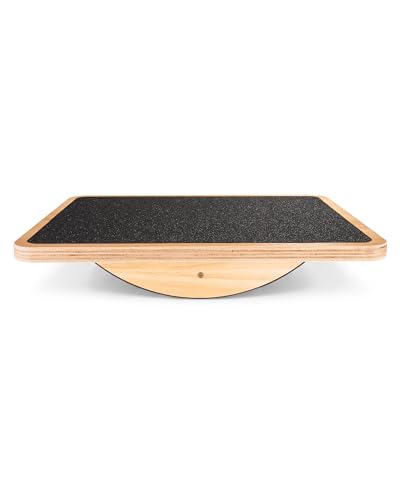
The StrongTek Professional Wooden Balance Board is our top pick because it does the most jobs well for the most people. It is a wooden rocker board, meaning it tips along a curved base rather than spinning freely, which makes it far less intimidating for a first-timer than a fully rotating disc. It holds up to 159kg, the surface is grippy enough for bare feet, and it is one of the few boards here genuinely sized to live under a standing desk all day. With more than 3,790 reviews at 4.6 stars and an Amazon's Choice badge, it is also the most proven wooden board in the Australian catalogue at this price.
At 44.5cm long and 34.3cm wide, it gives you a wide, stable footprint, so you can stand square and rock front to back, or turn side on for lateral work. The Lauan hardwood plywood construction is what reviewers keep coming back to: Australian buyers describe it as sturdy, well built and better than the boards their physiotherapist uses. Because the motion is a controlled rock rather than a 360 degree spin, it suits people who want the balance and core benefit without the fear of the board shooting out from under them. That makes it a great choice for older users, anyone returning from injury, and desk workers who want movement, not a circus act.
It is also the board we would hand a complete beginner who is nervous about wobble training. You can start by simply standing and letting it settle, then progress to rocking, then to single leg holds and squats once you trust it. For around $49.99 it is hard to argue with the value, and the 159kg weight limit comfortably covers most households.
Flaws but not dealbreakers
Because it rocks on one axis rather than rotating, advanced users chasing the hardest possible balance challenge may outgrow it and want a true 360 degree disc or a roller board. A small number of overseas reviews complain about grip wearing on the textured surface over heavy long-term use, though Australian feedback skews strongly positive. It is wood, so it is not one for leaving out in the rain on the patio.
Best value wobble board: Yes4All Wooden Wobble Board
If you want the most board for your money, the Yes4All Wooden Wobble Board is the value pick. It is a true 360 degree wooden disc, 40cm across, that rotates and tilts up to 15 degrees, so it delivers a noticeably bigger balance challenge than a one-axis rocker. With close to 10,000 reviews at 4.6 stars, it is the most reviewed board in this entire guide, which tells you a lot of Australians have bought one and kept using it.
The solid wood construction supports up to 136kg, and the 40cm diameter is wide enough for both feet with shoes on, so it works for standing balance, squats, planks and push-ups with your hands on the board. Reviewers love it as a standing desk companion, with several describing standing and gently rocking through 20 minute blocks while they work. Because it both spins and tilts, it trains your ankles and core in every direction rather than just front to back, which is why it lands so well with people who have already tried a basic rocker and want more.
It sits in the sweet spot of the range at around $58: more capable than the cheap plastic disc, less specialised than the steep rehab boards, and backed by a review count nothing else here can match. If you are not sure which board to buy and you want one that will keep challenging you as you improve, this is the safe, popular middle choice. The only reason it is not our outright number one is that the true 360 degree spin is slightly more daunting on day one than the StrongTek's gentle rock.
Flaws but not dealbreakers
The free spin makes it harder for absolute beginners, so you may want to hold a bench or door frame for the first few sessions. At 136kg the weight limit is lower than the StrongTek's 159kg, which is worth checking if that matters for you. As with any hard wooden disc, it can leave a small dent in soft carpet over time, so a mat underneath is a good idea.
Best budget wobble board: Yes4All Wobble Balance Board (plastic)
The cheapest sensible way into wobble training is the plastic Yes4All Wobble Balance Board, at around $41.88. It is the budget pick of our three headline boards and the lightest at just 1.5kg, so it is easy to slide under a desk, tuck behind a door or throw in a bag. It is a 40cm round disc with 360 degree rotation and a 15 degree tilt, made from heavy duty plastic that supports up to 136kg, and it carries 4.4 stars across more than 5,000 reviews.
What you get for the money is genuinely good. The textured anti-slip top grips bare feet well, the carry handle makes it easy to move, and it comes with a printed sheet of beginner exercises on one side and advanced ones on the other. One Australian reviewer said it was better than the boards her physiotherapist uses, which is high praise for the cheapest disc in the guide. It does the core, ankle and standing desk basics without asking you to commit much cash up front.
The trade-off is durability. Plastic does not feel as premium as the wooden boards, and one recent reviewer reported the base starting to peel after a couple of uses with poor support from the seller. That seems to be the exception rather than the rule given the strong overall rating, but it is the honest reason this is the budget option rather than the overall winner. If you are testing whether wobble training suits you before spending more, or buying for occasional light use, it is a smart low-risk start.
Flaws but not dealbreakers
The plastic build is less reassuring underfoot than wood, and a minority of reviewers have flagged the base peeling, so it is best for light to moderate home use rather than daily heavy gym work. The 136kg limit is the same as the wooden Yes4All but lower than the StrongTek. There is no roller or felt mat in the box, which is fine at this price but worth noting.
Best wobble board for surf, snow and skate training: Costway 3-in-1 Roller Balance Board
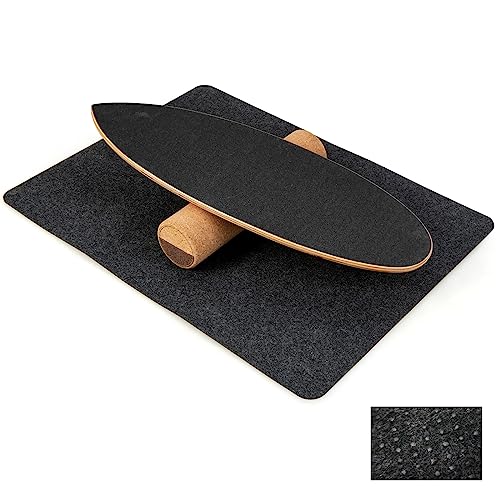
If your goal is board sports rather than general fitness, the Costway 3-in-1 Roller Balance Board is the pick. This is a different animal to a wobble disc: a long deck that sits on a free-rolling cork cylinder, so it mimics the side to side glide of a skateboard, snowboard or surfboard far more closely than a tipping disc ever could. It holds an impressive 227kg, comes with the roller and a felt mat to protect your floor and cut noise, and carries 4.8 stars, the highest rating of any board in this guide.
The 75cm by 25.5cm birch and cork deck gives you room to set your feet wide, and the roller lets the board travel left and right beneath you, which is exactly the movement surfers and snowboarders need to rehearse in the off season. One Australian parent bought it for a surfer son training out of the water and called the quality fantastic. Because the deck and roller are separate, you can also vary the difficulty by how you position the roller, and stack the whole kit away flat when you are done.
This is the most specialised board here, and that is the point. It will not slot neatly under a desk like a rocker, and a roller board has a steeper learning curve, so it is overkill if you only want gentle core work. But for anyone chasing dynamic, sport-specific balance, the rolling deck does something the discs simply cannot. At around $72.95 it is the most expensive pick, yet for board sport athletes it is also the best value because nothing else replicates that glide.
Flaws but not dealbreakers
The roller design has a real learning curve, so beginners should expect a few stack-offs and should train near a wall. The listing has carried slightly conflicting weight figures in its paperwork, though the headline 227kg capacity is generous either way. It is bulkier to store than a disc, and at the top of our price range it is more board than a casual user needs.
Best all-rounder disc: Yes4All Versatile Wooden Balance Trainer
The Yes4All Versatile Wooden Balance Trainer is the pick if you want a classic round wooden disc with a strong track record and a confirmed price. It is a 360 degree rotating wooden board built for the full range of balance drills, from simple standing holds to squats and push-ups, and it carries 4.6 stars across roughly 1,400 reviews. Think of it as the wooden disc for someone who likes the Yes4All wooden formula but wants a clearly listed, ready-to-ship option.
It does the same core work as our value pick, training your ankles and core through rotation and tilt rather than a single rocking axis. The wooden build feels more solid than plastic, the surface is textured for grip, and the round shape suits both feet planted for standing work or hands down for upper body drills. At around $65.40 it sits just above the value board on price, and the high review count means you are not gambling on an unproven listing.
Where it earns its place is as the dependable middle option for buyers who want wood, want a true spinning disc, and want something with a confirmed in-stock price they can order today. It is not the cheapest and it is not the most specialised, but it is a genuinely versatile board that will cover home core training, ankle work and standing desk use without fuss. If our value pick is ever out of stock, this is the wooden disc we would reach for next.
Flaws but not dealbreakers
Like every full rotation disc, it is more challenging on day one than a rocker, so ease in with support nearby. It costs a little more than the more heavily reviewed value board without adding a standout feature, so the choice between them often comes down to price and availability on the day. The hard underside benefits from a mat on soft flooring.
Best for serious ankle rehab: 66fit Wooden Balance Board 40cm
For genuine ankle rehabilitation and advanced proprioception work, the 66fit Wooden Balance Board 40cm is the specialist choice. It is built around a small wooden ball at the base that gives an acute 16 degree tilt, steeper than most discs here, which makes it deliberately challenging. 66fit describes it as recommended for intermediate to professional use, and the brand sits behind a wipe-clean PVC surface designed for repeated use in physiotherapy and rehab settings. It rates 4.2 stars across 15 reviews.
This is the board to buy if a physio has told you to retrain a rolled ankle, or if you have already mastered a gentler disc and want to push your balance further. Australian reviewers describe using it to rehab a broken metatarsal once out of the moon boot, starting seated and circling the ankle before progressing to standing, and others use it to sharpen the instinctive balance needed for tennis and other sports. Court sports are where that instinct shows up most, and picking the right tennis racquet for your level is the other half of the job. The steeper tilt means your stabilising muscles work harder, which is exactly what you want late in a rehab program, and the hygienic PVC top makes it practical for clinics and shared households.
The flip side of that steep angle is that it is not a beginner board, and 66fit says as much. New users should treat it with respect, keep something to hold nearby, and avoid hard tiled floors where it can slip. At around $60.07 it is mid-priced, and the lower review count and 4.2 star rating reflect that it is a more demanding, more niche product rather than a crowd-pleasing first board. Bought for the right reason, though, it is the most purpose-built rehab board in the guide.
Flaws but not dealbreakers
The 16 degree tilt is genuinely hard, so this is the wrong board for a nervous first-timer. Reviewers note it can leave deep indents in carpet and can slip on tiles, so a padded mat is essential. The rating and review count are lower than the big sellers here, which reflects its specialist appeal rather than a quality problem.
How do you choose the right wobble board?
The right wobble board depends on your skill level and what you want it for. Match the board type to your goal first, then check the weight limit, size and surface. Here is what actually matters.
Which type of board suits you: rocker, disc or roller?
There are three main styles and they are not interchangeable. A rocker board, like the StrongTek, has a flat top on a curved base and tips along one axis, front to back. It is the friendliest for beginners, rehab and standing desks. A wobble disc, like the Yes4All boards, sits on a central dome and both rotates 360 degrees and tilts in every direction, which is a bigger challenge and trains the ankle in all planes. A roller board, like the Costway, is a deck on a free-rolling cylinder that slides side to side and is built for surf, snow and skate training. Pick the style that matches your goal before you compare anything else.
How much should the board hold and how big should it be?
Check the weight limit against the heaviest person who will use it, with a margin. Our picks range from 136kg on the Yes4All discs up to 227kg on the Costway roller, with the StrongTek at 159kg. For the standing surface, a wider board such as the 40cm-plus discs and the StrongTek lets you stand square and place both feet comfortably, including in shoes. Smaller, steeper boards concentrate the challenge on one ankle and suit targeted rehab rather than relaxed all-day standing.
What about tilt angle and surface grip?
Tilt angle is the difficulty dial. A 15 degree tilt, as on the Yes4All discs, is a sensible all-round challenge, while the 66fit's 16 degree ball-base tilt is noticeably harder and aimed at advanced users. Grip matters too: a textured, anti-slip top keeps bare feet planted, and a wipe-clean surface is worth having if more than one person uses the board. Finally, if you have hard floors, look for anti-slip pads underneath, and put any wooden disc on a mat to protect carpet and cut noise.
How do you use a wobble board safely, and does it actually work?
Yes, wobble boards work, and the mechanism is well understood. Balancing on an unstable surface forces hundreds of tiny corrections that retrain proprioception, your body's sense of where it is in space, while firing up the small stabilising muscles around your ankles, knees, hips and core. That is why physiotherapists use them to rehabilitate sprained ankles and prevent re injury, and why they are popular under standing desks for low key all day movement.
Used sensibly, they are very safe, but the unstable surface does raise fall risk if you rush. Start beside a wall, a bench or a door frame you can grab. Begin with simple two-foot standing holds, then progress to rocking, then single leg balance, then squats and push-ups once you are steady. Keep early sessions short, around five minutes, and build up. If you have a painful or recently injured ankle, knee or hip, progress slowly and get physiotherapy advice if balance feels unsafe, pain persists, or sprains keep recurring.
Care and maintenance: how do you keep a wobble board in good shape?
Wobble boards are low maintenance, but a few habits will make yours last. Wipe the top surface down regularly, especially if you train barefoot or share the board, since sweat and dust reduce grip over time. Boards with a PVC or sealed surface, like the 66fit, can be wiped clean easily, which is part of why they suit shared use.
Protect your floor and your board at the same time by using a mat underneath. Hard wooden discs and ball-base boards can dent soft carpet and can slip on tiles, so a thin rubber or felt mat solves both problems and cuts noise for anyone in the room below. Keep wooden boards indoors and dry, as moisture can eventually warp or crack timber. For roller boards, store the roller and deck separately and check the roller surface stays smooth and free of grit so it keeps gliding cleanly. Beyond that, the occasional check that anti-slip pads and surfaces are still secure is all most boards ever need.
You will also want these to get the most from your board
A wobble board works even better as part of a small home balance and mobility setup. These accessories pair naturally with it.
- An exercise mat placed under your board protects flooring, cuts noise and gives you a defined training spot.
- A foam roller helps you warm up calves and loosen tight muscles before and after balance work.
- Resistance bands let you add ankle strengthening and gentle rehab moves alongside the board.
- Ankle weights progress your single leg balance and stability drills once the board feels easy.
- A foam balance pad gives you a softer, lower-stakes surface for very early rehab or warming up.
- A non-slip mat stops a hard disc sliding on tiled or timber floors.
- A reusable water bottle keeps you going through longer standing-desk balance sessions.
The competition: which boards we considered and skipped
Plenty of other boards show up when you search, and most of our picks already cover the same ground better. The 66fit Wooden Balance Board makes our list as the rehab specialist, but it is a demanding board, so we steered beginners toward the gentler StrongTek and Yes4All options instead. Roller kits with adjustable stoppers, like the various bamboo trainer boards, are capable but tend to be pricier and more niche than the Costway, which already covers the surf, snow and skate use case at a fair price.
We also saw plenty of brand new listings, including several cheap ankle-only boards and curvy kids' rocker boards, that simply did not have enough reviews yet to recommend with confidence. A board with one or two reviews might be excellent, but we hold our picks to a minimum of three real reviews and a genuine star rating so you are not the test case. The premium slackline-style and surf balance boards sold by specialist Australian retailers are lovely, but they sit well above this price range and beyond what most first-time buyers need. If your priority is proven value on Amazon AU, the six boards above are where we would put your money.
Frequently asked questions about wobble boards
Do wobble boards really work?
Yes. Standing on an unstable surface forces constant small corrections that retrain proprioception and strengthen the stabilising muscles around your ankles, knees, hips and core. That is why physiotherapists use them for ankle rehabilitation and injury prevention, and why they suit standing desks for gentle all-day movement.
Is a wobble board or a balance board better?
They overlap, but the difference is the motion. A wobble disc rotates 360 degrees and tilts in every direction for an all-round challenge, while a rocker balance board tips along one axis and is friendlier for beginners and rehab. A roller board adds side to side glide for board sports. Choose based on your goal: rocker for easing in, disc for all-round training, roller for surf and snow.
How long should I stand on a wobble board each day?
Start small, around five minutes, and build up as your balance improves. Many standing desk users work in 20 minute blocks, alternating board time with normal standing or sitting. Listen to your body, since overdoing it early can leave your back or legs sore, and progress gradually rather than chasing long sessions straight away.
Are wobble boards safe for beginners and older adults?
Used carefully, yes. The main risk is falling, so start beside a wall, bench or door frame you can hold, and choose a gentler rocker or a wider disc rather than a steep ball-base board. Begin with two-foot standing holds before progressing. Anyone with a painful or recently injured ankle, knee or hip should progress slowly and seek physiotherapy advice if balance feels unsafe.
What weight can a wobble board hold?
It varies by board. Among our picks, the Yes4All discs hold up to 136kg, the StrongTek rocker holds 159kg, and the Costway roller board holds up to 227kg. Always check the listed weight limit against the heaviest person who will use it, with a margin to spare.
Can I use a wobble board with a standing desk?
Yes, and it is one of the most popular uses. A rocker board such as the StrongTek or a wide wooden disc lets you gently rock and shift while you work, adding low-key movement to an otherwise static standing pose. Keep early sessions short, use a mat underneath on hard floors, and step off when you need a break.
About the author
Anish Puri founded NestPath in 2026 after going through the Australian first-home-buyer process himself. NestPath focuses on Australian first-home buyers because the existing review sites are American, generic, or both. Anish handles editorial selection across the homeowner hub. Reach out: hello@nestpath.com.au