The first sensor light most new homeowners buy is a hardwired floodlight, and then it sits in the shed for four months because nobody wants to book an electrician for one fitting. Meanwhile the side path stays dark and the back steps still catch someone out every second night.
That is the gap this guide is built around. Every pick below is solar, battery or plug-in, so you can put it up yourself with a drill and a level. The best sensor light in Australia for most blocks is the TECKNET 416 LED solar pair from $59.99, an IP66 motion sensor light that throws across a 300 degree arc with no wiring at all, with the WILLED rechargeable four pack the pick for indoor stairs and the Quntis three-head solar set the one for a long driveway at a quoted 12 metres of detection. We looked at what Australians are actually rating highly on Amazon Australia, checked the listing specs line by line, and grouped the results by the job you are trying to solve rather than by brand.
What is the best sensor light to buy right now?
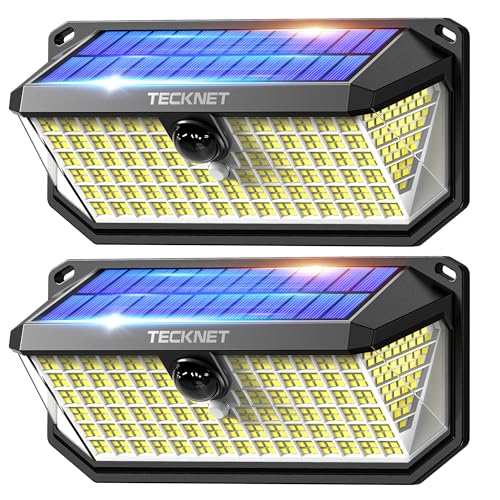
If you want one answer: the TECKNET 416 LED solar pair is the best all-round outdoor sensor light for a typical Australian block. It is IP66, it throws light across a 300 degree arc from three faces of the housing, it needs no wiring, and you get two units so you can cover a driveway and a back corner in one afternoon. It starts from $59.99.
Three shortcuts if that is not your situation:
- Dark internal stairs or a hallway you keep tripping down at 2am: the WILLED rechargeable stick-on four pack. It carries the highest star rating and the most customer ratings of any pick in this guide.
- A spot that never gets direct sun, such as under a deep eave, inside a garage or on a shaded wall: the ProGreen battery pair, which has the cheapest starting price of our seven picks.
- A wide driveway where you want light aimed in three directions at once: the Quntis three-head solar set, which quotes the longest detection range and the highest lumen figure here.
How do our seven sensor light picks compare?
The table below is the fast version. Detection ranges and weather ratings come from each product listing, not from our own measurements. Prices move constantly on Amazon Australia, so treat every figure as a starting point.
| Pick | Power | Weather rating | Lumens | Detection | Sensor | Rating |
|---|
| TECKNET 416 LED solar, 2 pack | Solar | IP66 | Not published | 4 to 6 m, 120 degrees | PIR | 4.5 from 1,548 |
| WILLED rechargeable stick-on, 4 pack | USB rechargeable | Indoor only | Not published | 1 to 3 m, 120 degrees | PIR plus light sensor | 4.6 from 4,172 |
| ProGreen battery wall light, 2 pack | 3 x AAA each | IP44 | About 100 | Not published | PIR plus light sensor | 4.0 from 2,378 |
| Quntis 189 LED three-head solar, 2 pack | Solar | IP65 | 1,200 peak | 12 m, 150 to 180 degrees | PIR | 4.2 from 20 |
| HOORAY 800 lumen solar flood light | Solar | IP65 | 800 | About 8 m, 120 degrees | PIR | 4.3 from 706 |
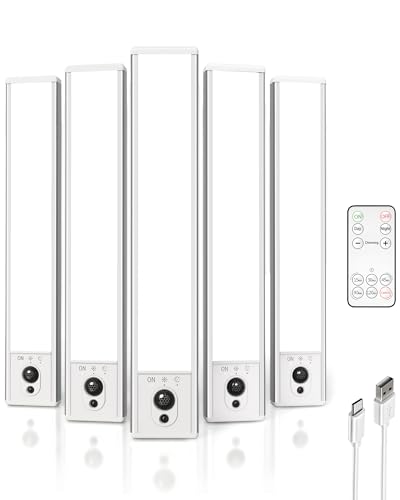
| EZVALO 23cm sensor bars, 5 pack | USB rechargeable | Indoor only | About 100 | 3 m, 120 degrees | PIR, day or night modes | 4.4 from 3,957 |
| Emeritpro plug-in dusk to dawn, 2 pack | Plug-in | Indoor only | 50 | No motion detection | Dusk to dawn photocell | 4.5 from 2,513 |
The TECKNET and Quntis sets are the two priciest starting prices in this guide, and they are a tie at $59.99 each. The TECKNET wins on weather sealing and spread. The Quntis wins on reach, peak brightness and the remote it ships with.
How did we evaluate these sensor lights?
NestPath is an aggregator, not a lab. We read the market properly and then check the claims.
We started with what Australians are searching for and buying, then pulled live listing data for every candidate from Amazon Australia so ratings, review counts and availability were current at the time of writing rather than copied from an old roundup. We only kept products genuinely purchasable in Australia with a real star rating behind them, and we dropped anything whose price looked like a reseller artefact.
One hard rule applied to the whole shortlist: nothing hardwired. Hardwired sensor floodlights are a licensed electrician job in every Australian state and territory, and this guide is for people who want the light working this weekend.
Always follow the manufacturer's manual and the requirements of your state or territory regulator.
Best overall: the solar pair for a dark driveway or backyard
The TECKNET 416 LED set is the pick for most people because it solves the most common problem: a large unlit outdoor area where running power is expensive or impossible. You get two lights, so the usual buy-one-then-buy-another-three-weeks-later cycle does not happen.
These are small magnetic bars that stick to a wall with an included adhesive plate. The light clips on and off magnetically, which is the detail that makes them liveable: you pull the light off, charge it, and click it back without touching the mounting. A three-in-one cable ships in the box so you can top up several at once.
The specification that matters is the pairing of a motion sensor with a light sensor. They only fire when it is dark and something moves within about 1 to 3 metres across a 120 degree arc, then hold for 20 seconds. That is why battery life is measured in weeks: the 500mAh cell is rated for up to two months of normal use and recharges in about two hours. Colour temperature is 2700K, a genuinely warm light rather than the blue-white of most cheap LED strips, which is the right call for a staircase at night. If the room needs a constant soft glow rather than something that fires on movement, our guide to the best night lights in Australia covers that job instead.
Flaws but not dealbreakers
Indoor only, and the listing says so plainly: not water resistant. They are also slightly chunkier than the photos suggest. Recharge frequency depends on traffic, so a busy hallway is more like monthly than every two months. And the 20 second timeout is fixed, which is fine for stairs but frustrating if you hoped to use one as a bench task light.
Best budget pick: battery lights for spots that never see sun
Every house has a place where solar simply will not work: under a deep eave, inside a garage, in a covered walkway, on the shaded side of a townhouse. The ProGreen pair exists for those spots, and it has the cheapest starting price of our seven picks.
Each light is a 9cm sphere on a base, and the head detaches and rotates a full 360 degrees, so one unit can be aimed at a doorway, a step or a wall as needed. It runs on three AAA batteries, which are not included, so add rechargeables to the order. No panel and no charging cable is the whole point: it works in permanent shade and it works during a blackout.
The listing rates it IP44. That is splash resistance, not weatherproofing, and it is the honest reading of the spec despite the word waterproof appearing in the title. IP44 is fine under a covered porch or in a garage. It is not fine on an exposed wall catching horizontal rain, and one Australian reviewer found that out the hard way. At four stars from more than 2,300 ratings this is the lowest-rated pick here, and the score largely reflects buyers who expected a floodlight and received a way-finding light.
Flaws but not dealbreakers
Batteries are not supplied, so factor in the extra spend. The output is genuinely low, and it will disappoint anyone trying to light a driveway. Placement matters more than with the solar picks because of the IP44 rating. And it will not trigger in a well-lit room, because the light sensor holds it off. Reviewers who missed that in the manual assumed the unit was faulty.
Best for wide coverage: a three-head solar flood light with a remote
If your problem is scale rather than placement, the Quntis set is the answer. It quotes the longest detection range and the highest peak lumen figure of any pick in this guide, and it ships as a pair with a remote control.
The three-head layout is the reason to buy it. The centre head tilts through about 90 degrees and the two side heads swing through about 120 degrees each, so one unit can cover a driveway, a gate and a side path from a single mounting point. Coverage is quoted at 270 degrees with a peak of 1,200 lumens from 189 LED beads, and it is rated IP65.
The PIR sensor is specified at 12 metres across a 150 to 180 degree arc, a big step up from everything else here. That is genuinely useful on a long driveway, where you want light before you reach the car rather than after. Three modes are offered: full brightness on detection with a 25 second hold, a constant 10 percent glow for about eight hours, and a dim-plus-motion mode.
Flaws but not dealbreakers
This has the fewest customer ratings of our seven picks, at 20, so the score is less settled than the others. There is no permanent full-brightness mode, which several Australian reviewers wanted for sitting outside in the evening. The 7000K output is stark and reads as security lighting rather than welcome lighting. And it needs direct daylight on the panel to hold charge through a wet week, which one reviewer flagged after mounting in partial shade.
Best compact solar option: a small three-head light for a side path
The HOORAY unit is what to buy when you need solar sensor lighting but the wall is small, visible from the street, or already crowded. It is a compact single unit rather than a pair, and it has been on the Australian market since 2021, a long run for this category.
Output is 800 lumens from 74 LEDs across three adjustable heads, with a 270 degree spread and an IP65 rating. The 2,400mAh lithium cell charges in five to seven hours of direct sun and runs for about six to nine hours, which comfortably covers a winter night in most of the country. The PIR sensor is quoted at 120 degrees with detection up to about 8 metres.
The solar panel pivots through 180 degrees, and that is the feature that matters most in Australia. You can mount the light where you need the light and still angle the panel north to catch the sun, instead of compromising one for the other. Mode switching works through a single button, cycling from off-until-triggered, to dim-plus-motion, to dusk-to-dawn.
Flaws but not dealbreakers
You get one light, not two, so covering a front and back door means buying twice. A run of wet days visibly dims the output until the sun returns, which is normal for solar but worth expecting. And the failure mode people report is water ingress after several months on a fully exposed wall, so give it shelter where you can and note the purchase date in case you need the warranty.
Best for kitchens and wardrobes: rechargeable bars with dimming
The EZVALO five pack handles the interior jobs the other lights cannot: under a kitchen overhead, inside a pantry, along a wardrobe rail, above a laundry bench. These are 23cm aluminium bars rather than small pucks, so they light a working surface rather than a spot.
What separates these from the cheap alternatives is control. A 2,400mAh cell drives 36 LEDs to about 100 lumens, and the included remote gives stepless dimming from 10 to 100 percent plus timers at 15, 30, 45, 90 and 120 minutes. Recharge is Type-C at about two and a half hours. Runtime is up to 12 hours at full brightness, or 14 to 43 days in sensor mode depending on how often the cupboard gets opened.
There are two sensor modes, and choosing correctly is the difference between loving these and returning them. Night motion mode only activates in low light, which is right for a hallway or bedroom wardrobe. All-day motion mode triggers on movement regardless of ambient light, which is what you want inside a pantry that stays dark with the door shut. Detection is 3 metres across 120 degrees with a 20 second hold.
Flaws but not dealbreakers
Indoor only, and the listing states it is not water resistant, so keep them out of poorly ventilated bathrooms. The colour is cool white with no warm option, which suits a kitchen better than a bedroom. Placement matters more than with a puck light because the beam is directional. And with five units you will spend a genuine half hour charging everything before installation day.
Best dusk to dawn option: plug-in lights that run all night
Not every sensor light should be a motion sensor light. The Emeritpro two pack uses a dusk to dawn photocell instead, so it comes on when the room goes dark and stays on until morning. For a hallway with small children, or a bathroom route at night, that constant low glow beats a light that flicks on and startles everyone.
They plug into a standard power point and draw 0.5 watts, so running both all night costs almost nothing. Output is 50 lumens at 3000K warm white, low enough to work in a bedroom, and a button switches to an RGB cycle if you would rather have colour than warm white.
Flaws but not dealbreakers
Covering the photocell with furniture or a curtain will make it stay on permanently. There is no motion function, so it will not serve as a security light. The listing is written for a UK socket and the review base is almost entirely British, so treat the fit notes as indicative. It is rated indoor only and not water resistant.
How do you reset a sensor light?
Answer first: switch the light off at the wall or the unit, leave it off for at least 10 seconds, then switch it on and off three times in a row and leave it on. That power-cycle sequence clears the sensor memory on most PIR lights and is the fix for a light that has stuck on, stuck off or stopped triggering.
On a solar or battery unit there is no wall switch, so the reset is physical instead. Turn the unit off with its own button or slide switch, cover the solar panel with a cloth or take the batteries out for a minute so the circuit fully drains, then power it back up in daylight and leave it to charge before you test it at night. Many solar sensor lights will not trigger at all while the panel sees light, which is the single most common reason a new light looks faulty on the afternoon it goes up.
If a reset does not fix it, work through the order that actually catches faults: check the batteries or the charge state, wipe the sensor lens and the solar panel, confirm the mode switch is on motion rather than dusk to dawn, and make sure nothing warm and moving sits in the detection field. A light stuck permanently on is usually a photocell covered by a curtain, an eave or a sticker that never came off.
How do you adjust a sensor light: time, sensitivity and lux
Most sensor lights carry three adjustments, and they are almost always marked with the same three symbols.
- TIME. How long the light stays on after the last movement, usually from about 10 seconds to several minutes. Short settings save battery on solar and rechargeable units. A driveway wants long enough to walk from the car to the door, which is usually 60 seconds rather than 20.
- SENS or SENSITIVITY. How much movement, and at what distance, sets the light off. Turn it down if the light fires at cars on the street, cats or a moving branch, and up if it misses someone walking slowly up a path. Aiming the head matters as much as the dial: a PIR reads movement across its field far better than movement straight towards it, so point it across the path rather than down it.
- LUX or the sun and moon symbol. How dark it has to be before the light will trigger at all. Set to the sun end it works day or night; set to the moon end it only works after dark. This is the setting people get wrong when a brand new light refuses to come on during the day.
Set the light up in daylight, then test it after dark, because the lux setting means a daytime test tells you almost nothing. Give the unit a minute to settle after each change before you decide it has not worked.
How do you wire a sensor light in Australia?
Answer first: you do not. Hardwired 240V sensor floodlights are a licensed electrician job in every Australian state and territory, and connecting one yourself is illegal as well as dangerous. An electrician will usually mount and connect a floodlight in well under an hour, and it is worth grouping the job with any other electrical work rather than booking a call-out for one fitting.
What you can legally do yourself is everything that plugs in or needs no wiring at all. Solar and battery units screw to a wall with the supplied bracket, plug-in units go into an existing power point, and a plug-in outdoor timer or a plug-in RCD needs no licence. That is the whole reason every pick in this guide is solar, battery or plug-in. If you already have a hardwired light in place and want to swap it for a newer unit, that is still an electrician job, because it means disconnecting active wiring.
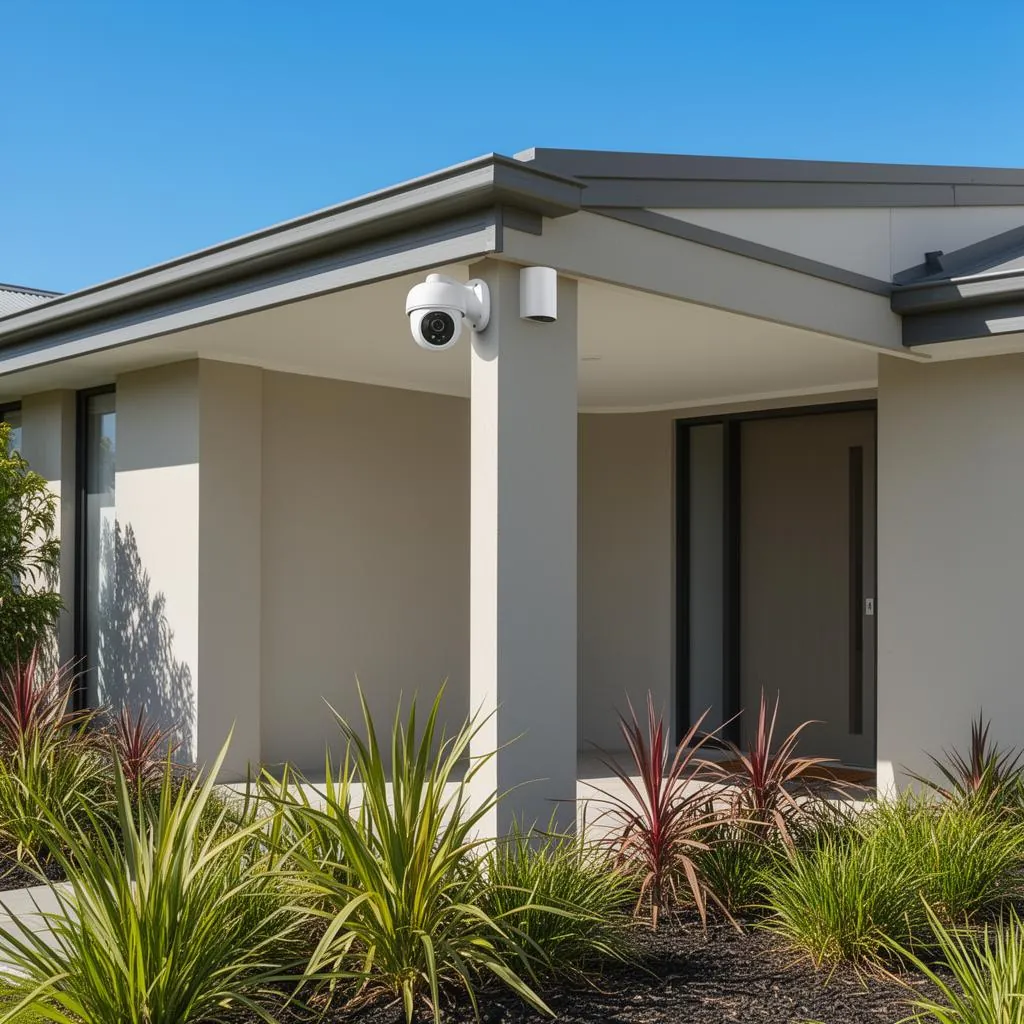
An outdoor sensor light also earns its keep alongside the rest of a security setup. A light on its own deters, but it does not record: pair it with a security camera covering the same area so the light gives the camera something to see, and a doorbell camera at the front entry where most visitors and most parcels arrive.
PIR or microwave: which sensor type do you want?
A PIR sensor, short for passive infrared, reads the heat signature of a body moving across its field. It is what every pick in this guide uses. PIR is cheap, uses almost no power, and does not trigger through walls, which is why it suits battery and solar lights. Its weaknesses are that it needs line of sight, it detects movement across the field far better than movement straight towards it, and on a very hot Australian afternoon the difference between a body and the background is smaller, so range shortens.
A microwave sensor, sometimes sold as a radar or doppler sensor, sends out a signal and reads the reflection. It is more sensitive, it works through glass and thin materials, and it covers a wider area with no line-of-sight requirement, which is why it shows up in commercial lighting and in carpark fittings. The trade is power draw and false triggers: a microwave sensor will happily read movement on the other side of a fence or a window, so it belongs on a mains-powered fitting in a place where over-triggering is not a nuisance. For a home wall light, PIR is the right answer.
Where do you buy sensor lights and security lights in Australia?
Our seven picks are Amazon Australia listings, which is where the deepest Australian review counts sit for solar and rechargeable units. Off Amazon, Bunnings is where most people meet the category, with its own security light range and the mains floodlights that need an electrician. Kmart sells very cheap indoor sensor lights under the Anko label, and JB Hi-Fi and The Good Guys carry the Evol rechargeable range. Beacon Lighting, The Lighting Outlet and other specialist lighting retailers stock the hardwired brands, including SAL and Calibo, which is the tier to look at for a permanent floodlight over a driveway. We do not publish prices for those retailers, because we only quote figures we can pull from a live listing we check.
What should you look for in a sensor light?
Start with power source, because it eliminates most of the market immediately. Solar suits open outdoor walls with real sun on them. Battery suits sheltered outdoor spots and interiors with no wiring. Plug-in suits interiors near a power point. Hardwired suits permanent installations and is a licensed electrician job in every state and territory, which is why nothing hardwired appears here.
- Lumens for the actual job. A driveway or wide backyard wants 700 lumens or more. A back door or path wants roughly 300 to 800. A staircase, wardrobe or hallway is well served by 60 to 150. Buying a 1,200 lumen floodlight for internal stairs is the most common mistake in this category.
- IP rating, read properly. First digit is dust, second is water. IP44 is splash resistant and belongs under cover. IP65 is dust tight and handles rain on an exposed wall. IP66 adds resistance to stronger jets, which matters near sprinklers. Anything without a stated rating should be treated as indoor only.
- Detection distance and angle together. Twelve metres across 180 degrees is a very different light to 3 metres across 120. Long range suits driveways. Short range suits doorways, because you do not want the light firing every time a possum crosses the fence line.
- Modes. The useful third mode is dim-idle-plus-motion, where the light glows low all night and jumps to full on detection. You get a visible property and a genuine alert, on far less battery than constant full output.
- Mounting reality. Adhesive tape supplied with outdoor lights fails in Australian summers, particularly on render and textured brick. Assume you are drilling. Indoors, magnetic mounts are worth paying for because they let you charge the unit without unpicking the installation.
One more, specific to solar in Australia: the panel wants to face north, not the direction you happen to be lighting. Lights with a panel that pivots separately from the head are far more forgiving on a wall that faces the wrong way.
How do you keep a sensor light working past its first summer?
Most sensor lights that stop working have not failed. They are dirty, discharged, or pointed at something that keeps triggering them.
Clean the solar panel every month or two. This is the highest-value maintenance job in the category. Dust, pollen and spider webs cut charging efficiency badly, and it shows up as a light that dies at 1am instead of running until dawn. A damp cloth is enough. Do it when you do the gutters or the bins.
Wipe the sensor lens, not just the light. PIR sensors detect heat movement through a small plastic dome. A film of dust or a spider setting up shop over it will either kill detection or cause constant false triggers.
Track down false triggers instead of living with them. The usual Australian culprits are possums and cats, washing moving on a line, a hot Colorbond fence radiating heat as the evening cools, and warm air blowing across the detection zone from an air conditioner outlet. Angling the head down five or ten degrees fixes most of it.
What else will you want alongside a sensor light?
Sensor lighting spreads through a house: one on the stairs, then the wardrobe and the pantry. Our smart bulb guide covers the switched side.
- WILLED motion sensor stair lights, 4 pack. Rated 4.8 stars, the warm-white stair-specific version of our stairs pick, with a three-in-one charging cable and magnetic mounting.
- MERTTURM 160 LED rechargeable cupboard light. A single 1,800mAh bar with stepless dimming and three colour temperature modes, rated 4.4 stars from more than 5,700 buyers.
- STAR-SPANGLED 20cm rechargeable sensor lights, 2 pack. Cordless USB stick-on bars rated 4.3 stars from over 2,600 ratings, sized for under-cabinet and counter use.
- EZVALO 6 pack with charging station. The version of our kitchen pick that ships with a dock, so all six charge in one place rather than occupying every USB port in the house.
- YELKO motion sensor night light, 2 pack. A 2,000mAh portable unit with five brightness levels, rated 4.6 stars from around 1,000 buyers. Good for a child's room where the light needs to be movable.
- LANDGOO walnut wood sensor sconces, 2 pack. Battery powered magnetic sconces in a wood finish for hallway lighting that does not look like hardware, rated 4.1 stars from over 3,200 ratings.
What we looked at and did not pick
The retailer results at the top of a search for sensor lights are mostly hardwired fittings from brands like Mercator, Brilliant, CLA and SAL, sold through Bunnings, Beacon Lighting and the specialist lighting sites. Several of them outperform anything here on raw output and build. They are excluded for one reason: installing them is a licensed electrician job.
Among the self-install options, the widest-reviewed product in the whole category is a 7cm AAA puck light from STAR-SPANGLED carrying more than 13,000 ratings. We could not confirm a current Australian price on that listing when we checked, so there was no fair way to place it against the others. If you see it at a sensible price it is worth a look on rating volume alone.
One note on brightness inflation. Several listings quote LED counts of 300 or more without stating lumens, which is a marketing figure rather than a specification. Where a pick here has a real lumen number we have used it, and where it does not, we have said so rather than converting bead counts into a brightness claim.
Sensor light questions Australian homeowners ask
How many lumens should a sensor light be?
It depends entirely on the area. A driveway or wide backyard wants 700 lumens or more, and the Quntis pick here quotes a 1,200 lumen peak for exactly that job. A back door, path or side gate is well covered by roughly 300 to 800 lumens, which is where the 800 lumen HOORAY unit sits. Indoors, a staircase, wardrobe or hallway needs far less than people expect: the 100 lumen ProGreen and EZVALO units are plenty, and going brighter just means being blinded on a night trip to the bathroom.
Is a dusk to dawn light or a motion sensor light better?
They solve different problems. A motion sensor light stays off until something moves, which saves power and gives you an alert when someone approaches, so it is the better choice outdoors and on stairs. A dusk to dawn light comes on when the room darkens and stays on until morning, which is better for a constant low glow in a hallway or near a child's room. The Emeritpro pick here is dusk to dawn. The best outdoor compromise is a light with a dim-plus-motion mode, which idles low all night and jumps to full on detection.
Do I need an electrician to install a sensor light?
Not for anything in this guide. Every pick here is solar, battery powered or plugs into a standard power point, so installation is a drill and a screwdriver. You do need a licensed electrician for any hardwired sensor floodlight, which includes most fittings sold through lighting retailers, and that requirement applies in every Australian state and territory. If a light comes with bare wires rather than a plug or a battery, it is not a self-install product.
What IP rating do I need for an outdoor sensor light in Australia?
IP65 is the sensible minimum for a wall exposed to weather, meaning dust tight and protected against water jets. IP66 adds resistance to stronger jets and is worth having near sprinklers or on a wall that catches driving rain, which is the rating on the TECKNET pick. IP44 is splash resistance only and belongs under a covered porch, in a garage or in a sheltered walkway, which is the correct use for the ProGreen pick. Coastal properties should also expect faster corrosion of fixings regardless of IP rating, so use stainless screws.
Why does my sensor light keep turning on for no reason?
Almost always because something warm is moving inside the detection zone. The common Australian causes are possums and cats, washing swinging on a line, a Colorbond fence radiating stored heat as the evening cools, and warm air blowing across the sensor from an air conditioner outlet. The fixes are simple: angle the sensor head down by five to ten degrees, narrow the detection arc by mounting near a corner or a downpipe, or move the light so a fence is not directly in front of it. Clean the sensor lens too, because a spider web across it causes constant false triggers.
Where should you point a solar sensor light in Australia?
Point the light where you need illumination, and point the solar panel north. In the southern hemisphere a north-facing panel gets the most sun through the day, and a south-facing panel will struggle badly in winter. That is why lights with a panel that pivots independently of the head, like the HOORAY pick, are more forgiving on awkward walls. Avoid mounting under a deep eave, under a tree, or anywhere a neighbouring building throws afternoon shade.
How do you reset a sensor light?
Switch it off, wait at least 10 seconds, then switch it on and off three times in a row and leave it on. That power cycle clears the sensor memory on most PIR lights. On a solar or battery unit there is no wall switch, so turn it off at its own button, cover the panel or pull the batteries for a minute, then power it up and let it charge before testing after dark. A solar light that will not trigger in daylight is usually working correctly, because the lux setting holds it off.
What is the difference between a PIR and a microwave sensor?
A PIR sensor reads the heat of a body moving across its field. It is cheap, draws almost no power and needs line of sight, which is why every pick in this guide uses one and why they suit solar and battery lights. A microwave sensor sends a signal and reads the reflection, so it is more sensitive, covers more area and works through glass and thin walls. That sensitivity is also its problem at home: it will trigger on movement the other side of a fence. For a house wall, PIR is the right choice.
Why will a new solar sensor light not turn on during the day?
Because it is meant not to. Almost every solar sensor light pairs its motion sensor with a light sensor, so it holds off until ambient light drops below a set level. If the unit has a LUX dial marked with a sun and a moon, turning it towards the sun lets it fire in daylight for testing, and turning it back towards the moon restores night-only operation. Set the light up in daylight, then test it after dark, because a daytime test tells you almost nothing.
What to set up next in your new home
Sensor lighting is usually the first piece of a wider outdoor and safety setup, and it pairs naturally with a few other jobs worth doing in the same month.
About the author
Anish Puri founded NestPath in 2026 after going through the Australian first-home-buyer process himself. NestPath focuses on Australian first-home buyers because the existing review sites are American, generic, or both. Anish handles editorial selection across the homeowner hub. Reach out: hello@nestpath.com.au