The oven is the one part of a kitchen almost everyone ignores until it starts smoking. If you have just moved into your first home, there is a fair chance the previous owner left you a baked-on museum of old roast dinners. The good news is that this is a solved problem: a product costing about ten dollars plus an hour of waiting does most of the hard work for you.
We researched the oven cleaners actually sold on Amazon Australia, verified stock and star ratings for every single pick, and cross checked the shortlist against what Australian owner reviews consistently rate. Seven products made the cut, from a 4.9 star Selleys gel to an Astonish paste backed by more than 2,600 reviews.
One safety rule before anything else: oven cleaners are follow-the-label products. The strongest ones rely on caustic chemistry (sodium hydroxide) that is brilliant on carbonised grease and genuinely hostile to skin, lungs, aluminium and the special linings inside pyrolytic self-cleaning ovens. Gloves and an open window are not optional extras with this category, and you should never mix cleaning products.
Always follow the manufacturer's manual and the requirements of your state or territory regulator.
Which oven cleaner should you buy?
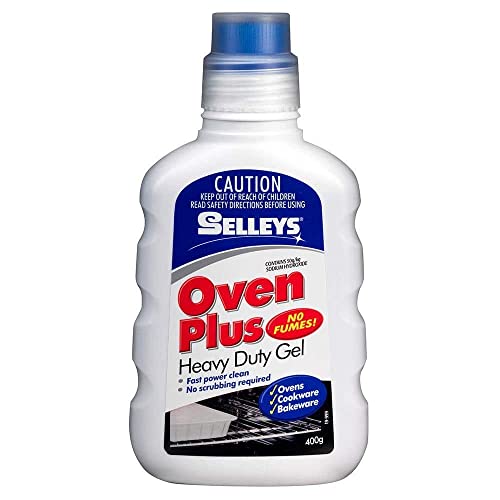
Short on time? Buy Selleys Oven Plus Heavy Duty Gel. It is the highest-rated of our three headline picks at 4.9 stars, it clings to oven walls and door glass instead of running off, and it works without filling your kitchen with aerosol mist. Paint it on a warm oven, wait about 30 minutes, wipe it away.
If your oven is genuinely neglected and you want maximum chemical muscle, the Easy-Off Heavy Duty Oven and BBQ Cleaner twin pack is the classic caustic foaming spray. And for the budget pick, the Astonish Oven and Grill Cleaner is a non-caustic paste with an included sponge and 2,618 reviews, the most-reviewed product on this entire list.
How do the top oven cleaners compare?
Caustic formulas dissolve heavy carbon fastest; non-caustic and fume-free formulas trade a little speed for a much more pleasant kitchen while you work.
| Pick | Format | Rating |
|---|
| Selleys Oven Plus Heavy Duty Gel | Brush-on gel | 4.9 (28) |
| Easy-Off Heavy Duty (2 pack) | Caustic aerosol | 4.4 (21) |
| Astonish Oven and Grill Cleaner | Non-caustic paste | 4.2 (2,618) |
| Easy Off Fume Free (2 pack) | Fume-free spray | 4.2 (100) |
| Mr Muscle Heavy Duty (2 pack) | Caustic aerosol | 5.0 (7) |
| Selleys Oven Cleaning Wipes | Wipes, 12 pack | 4.7 (18) |
| SimplyClean Orange Oven and BBQ | Citrus trigger spray | 5.0 (3) |
How we evaluated these oven cleaners
NestPath researches rather than lab-tests. For this guide we pulled the full oven cleaner category on Amazon Australia, then filtered hard: every pick had to carry a star rating from Australian buyers and sit at a sane price for what it is (grey import listings at double the supermarket price were dropped). We then read the owner reviews, positive and negative, for recurring patterns: does it actually shift baked-on carbon, how bad are the fumes, does the nozzle or applicator hold up.
We also cross-referenced the shortlist against what ranks on ProductReview.com.au, what Australian cleaning companies recommend, and what CHOICE says about oven care, so the picks here reflect broad Australian consensus rather than one retailer's stock list. Where a product the wider market loves is not reliably sold on Amazon Australia (the OzKleen Oven Power kit is the big one), we say so openly in the competition section rather than quietly substituting something weaker.
Finally, we weighted safety and surface compatibility, so this list deliberately spans caustic, fume-free, paste, gel, spray and wipe formats.
We rechecked every pick's Amazon AU listing on 7 October 2026: six were in stock, and the Astonish paste showed dispatch in 2 to 4 weeks.
Best overall: Selleys Oven Plus Heavy Duty Gel
The Selleys Oven Plus Heavy Duty Gel is the pick for most Australian kitchens. At 4.9 stars from 28 Australian reviews it is the highest-rated of our three headline picks, and the format is the reason: instead of blasting an aerosol cloud into a metal box centimetres from your face, you brush a thick gel exactly where you want it, on the walls, the floor, the door glass and the racks.
The gel is designed to work on a warm oven. Heat the oven slightly, switch it off, paint the gel on with a brush or a gloved hand, and give it about 30 minutes for a routine clean or longer for serious build-up. Because it clings to vertical surfaces rather than running off them, the active ingredients stay in contact with the grime the whole time, which is exactly what sprays struggle to do on oven walls. Owners repeatedly describe years of caked-on residue lifting with a single application and a wipe.
The other thing buyers consistently praise is the low odour. The formula is unscented and does not throw the choking fume cloud that traditional caustic aerosols do. It still needs gloves (Selleys and the reviewers agree on that), but you will not need to evacuate the kitchen. For racks and trays, several owners paint the gel on, seal the racks in a garbage bag overnight, and rinse everything clean the next morning, which is a genuinely effective trick.
Flaws but not dealbreakers
It is not effortless. A brush-on gel means you touch every surface you clean, so it is more hands-on than a spray-and-walk-away aerosol. A couple of owners noted a slight lingering odour after cleaning, so a short empty burn-off after wiping is worth doing. And with 28 reviews the sample size is smaller than the Astonish paste's thousands, although the ProductReview community rates the same product highly, which supports the score.
What is the best heavy duty spray for a neglected oven?
When you inherit an oven that has clearly never met a cleaning product, the Easy-Off Heavy Duty Oven and BBQ Cleaner twin pack is the traditional Australian answer. This is the aggressive caustic foam that professional bond cleaners reach for: spray it on, close the door, let the chemistry chew through baked-on grease and carbon, then wipe the residue away without scrubbing.
The twin pack gives you two 325 g cans. Owners rate it 4.4 stars, and the positive reviews follow one pattern: it works on ovens other products give up on. Grease that has been polymerising onto the enamel for years softens into a wipeable sludge in an hour, or overnight for the worst cases. It is also labelled for BBQ grills and stainless steel, so the second can rarely goes to waste in an Australian household.
Treat it with respect, though. This class of aerosol relies on strong caustic chemistry, and the reviews are honest about it: wear gloves, open the windows, and do not lean into the oven while spraying. Several buyers specifically recommend spraying removable racks outdoors. Follow the label, keep it off aluminium and any surface the label excludes, and never use a caustic product like this inside a pyrolytic self-cleaning oven, whose linings are designed for heat cycles rather than chemicals.
Flaws but not dealbreakers
The fumes are real, and a minority of reviewers found the fine mist drifts back out of the oven cavity, so ventilation matters more than with any other pick here. A few owners also reported nozzles that spray unevenly or cans that discharge slowly. If anyone in your household has respiratory sensitivities, choose the fume-free Easy Off below or the Selleys gel instead.
What is the best budget oven cleaner?
The Astonish Oven and Grill Cleaner is the budget pick in this guide and, with 2,618 reviews at 4.2 stars, by far the most-reviewed. At our 7 October 2026 check its Amazon AU listing showed dispatch in 2 to 4 weeks rather than immediate stock. It is a British-made non-caustic paste that comes with a surface-specific sponge in the tub: wet the sponge, load it with paste, and work it over enamel, toughened oven glass and racks.
The cleaning power comes from a mild abrasive plus orange oil rather than harsh alkalis, which changes the whole experience. There is no fume cloud and no burning sensation on skin; the maker states gloves are not required, although we would still keep a pair on for any long session. It leaves a fresh orange scent instead of a chemical one, and the formula is vegan and biodegradable, which matters to a growing share of buyers.
Across thousands of reviews the consensus is clear: for regular maintenance and moderate grime it performs far above its price, and it doubles nicely on cooktops, grill plates and stainless steel sinks. One tub lasts a long time because you only load the sponge with a small amount each pass.
Know its limits, though. An abrasive paste relies partly on your elbow grease, so a decade of untouched carbon will outlast your patience. For archaeology-grade ovens, soften the worst of it first with the Selleys gel or an Easy-Off spray, then keep the oven nice with the Astonish tub afterwards.
Flaws but not dealbreakers
It scrubs rather than dissolves, so heavy burnt-on deposits need repeat passes, and a subset of the 2,618 reviewers found it underpowered on serious build-up. The paste contains an abrasive, so keep it off non-stick and Teflon coatings and polished delicate surfaces, exactly as the label warns. The included sponge also wears out before the paste does; any non-scratch sponge finishes the tub fine.
What is the best fume-free oven cleaner?
If aerosol fumes are the reason you keep postponing the oven, the Easy Off Oven Fume Free Cleaner twin pack exists precisely for you. Same brand family as the heavy duty can, but the formula swaps the choking vapour for a low-odour foam you can apply in a closed kitchen without a mask.
With 100 ratings at 4.2 stars, this is the best-reviewed dedicated fume-free product in the verified Amazon Australia pool. Owners with sensitive noses and small kitchens are exactly the fans you would expect: reviews call out that it is genuinely fume free in use, with one professional cleaning team saying their staff prefer it for indoor jobs. Application is the familiar routine: spray onto the cool surface, wait, then wipe clean with a damp cloth, rinsing the cloth frequently with warm water.
The honest trade-off, straight from the reviews, is speed. It works a little slower than the regular caustic version, and a badly neglected oven may need a second application. For routine cleans every month or two, that difference barely registers; for a five-year clean-up job it does. It comes as a twin pack of two 325 g cans.
Even fume free does not mean rules free: the label still asks for gloves, and the pyrolytic oven warning applies to any chemical cleaner.
Flaws but not dealbreakers
It is the most expensive product on this list, and a minority of reviewers found it needed several attempts on heavier grime, which matches the slower chemistry. If your oven is in genuinely bad shape, budget for two applications or start with a stronger product and switch to this for maintenance.
Which caustic aerosol is best for baked-on carbon?
The Mr Muscle Heavy Duty Oven Cleaner twin pack is the other big brand caustic aerosol worth buying, and its owners are unusually happy, with a perfect 5.0 average from a small base of 7 ratings. The listing is upfront about the chemistry, naming sodium hydroxide as the active ingredient, which is exactly what you want named when the job is dissolving carbonised fat.
In practice it behaves like the Easy-Off heavy duty can: spray onto the oven interior, leave it to work, then wipe the loosened grime away with hot water and detergent. The most useful owner review here reads like a mini manual: wear a mask and gloves at minimum, get the spray into every corner, leave it overnight for best results, then wipe down. Done that way, buyers describe spotless results on ovens that see regular roasting duty, with no scrubbing or scraping required.
In the twin pack it is a close alternative to the Easy-Off equivalent, so the choice mostly comes down to brand preference and stock. The fragrance-free formula is a small point of difference. All the caustic-class rules apply in full: gloves and ventilation every time, follow the label on excluded surfaces, keep it off aluminium, and never use it inside a pyrolytic self-cleaning oven.
Flaws but not dealbreakers
Fourteen ratings is still a thin sample, and the average has already moved from a perfect five stars to 4.7 as more owners rated it, so we rank it below the longer-established Easy-Off despite the higher average. And like every caustic aerosol, it is unpleasant to inhale; the same reviewer who praised the results was explicit about masking up while spraying.
What is the best option for quick maintenance cleans?
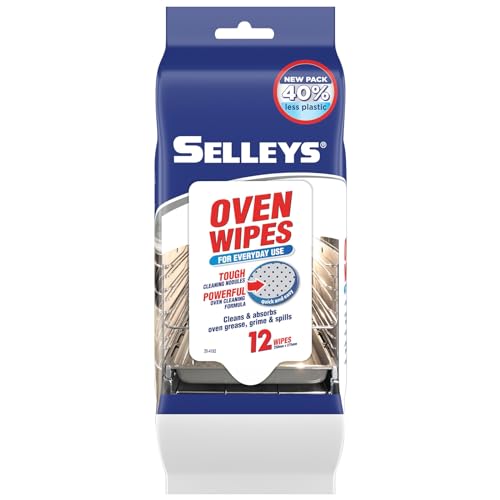
Deep cleans are easier when you almost never need one, and that is the case for the Selleys Oven Cleaning Wipes. Twelve super-sized wipes, each loaded with grease-dissolving cleaner, designed for a two-minute wipe-out of the oven floor and door after a messy bake.
Citrus oil is a legitimate degreaser, not a feel-good gimmick: d-limonene is a solvent that dissolves fats and baked-on grease on contact, which is why it appears in industrial degreasers as well as eco products. SimplyClean pairs it with a plant-based surfactant, and the maker pitches the result at exactly the jobs Australian kitchens generate: oven interiors, stovetops, range hoods, grill plates, baking trays and the BBQ. The fume-free, caustic-free formula means no headaches or stinging eyes mid-clean, and clean-up is a warm water wipe.
The trigger-spray format covers big areas fast, which makes this the best crossover pick if your oven cleaning season coincides with your BBQ cleaning season. It is also the pick we would hand to anyone who is pregnant, chemically sensitive, or cleaning with toddlers underfoot, with the usual proviso that even gentle formulas deserve gloves for long sessions and every product in this category is follow-the-label.
It carries a 5.0-star rating, although only from 3 reviews so far; the product only arrived on Amazon Australia in May 2025. The brand behind it has been selling citrus cleaners in Australia for years, which gives us more confidence than the raw review count would.
Flaws but not dealbreakers
Three reviews is the thinnest sample in this guide, so treat the perfect score as promising rather than proven. And like all non-caustic options, it will need more dwell time and a second pass on serious carbon. The Selleys gel outperforms it on heavy grime.
What should you look for in an oven cleaner?
Caustic or non-caustic is the first fork in the road. Caustic cleaners (the Easy-Off and Mr Muscle aerosols here) use sodium hydroxide to chemically dissolve burnt fat. They are the fastest and strongest option, and also the ones that demand gloves, ventilation and care. Non-caustic products (Astonish, SimplyClean, the fume-free Easy Off) use abrasives, citrus solvents or milder surfactants: slower on heavy carbon, far nicer to use, and safer around more surfaces.
Format decides how much control you get. Aerosols cover a whole cavity in seconds but produce mist you can inhale. Gels and pastes go exactly where you put them and cling to vertical walls, which is why the Selleys gel wins on door glass and side panels. Wipes are for maintenance only. Trigger sprays sit in the middle.
Check your oven type before you buy anything. If you own a pyrolytic self-cleaning oven, stop: manufacturers direct you to run the pyrolytic cycle instead of using chemical cleaners, because caustic products can damage the special lining. Check your manual first. The same label-checking applies to aluminium (caustic cleaners attack it), non-stick coatings (abrasive pastes scratch them) and any decorative or polished trim.
Fumes and household context matter as much as power. Small apartment kitchen with no window? Pick fume-free or citrus. Asthma, pregnancy or small kids in the house? Same answer. Detached house, doors open, disaster oven? The caustic twin packs are the rational choice.
How to use oven cleaner
How do you clean an oven with oven cleaner?
Open a window, put gloves on and take the racks out first, because they clean better outside the oven. Warm the oven for a few minutes and switch it off, since a barely warm cavity helps the product bite, and never spray into a hot oven. Keep the cleaner off the heating elements, the fan and the door seal. Brush or spray it over the floor, walls and door glass, then leave it: about 30 minutes for the Selleys gel, an hour for a caustic aerosol on routine grime, and overnight for heavy carbon. Wipe out with a damp cloth, rinse the cloth often, then go over the cavity twice more with clean water so no residue is left to bake on. If your oven is pyrolytic, skip all of this and run the self-cleaning cycle instead.
How do you clean oven racks?
Racks are the job that goes wrong on a benchtop, so do them in the laundry sink, the bath on an old towel or outside. Coat each rack in gel or spray, seal it inside a large plastic bag or a purpose-made rack bag, and leave it overnight so the product stays wet against the metal instead of drying out. In the morning the carbon slides off with a sponge or a nylon brush and a rinse. Do not use a caustic product on aluminium racks or trays, because sodium hydroxide pits and darkens the metal permanently: use the non-caustic Astonish paste or the SimplyClean citrus spray on those instead. Dry the racks fully before they go back in.
How do you keep your oven clean between deep cleans?
The cheapest oven cleaner is the spill that never bakes on. Wipe the oven floor and door glass once the oven has cooled to barely warm after messy cooks; at that point most splatter lifts with a damp cloth or a single Selleys wipe. Leave it for five more roasts and the same splatter needs chemistry.
Racks and trays respond brilliantly to the soak method: coat them in gel or spray, seal them in a large plastic bag or rack-cleaning bag overnight, then rinse and wipe. It keeps the mess contained and the product in contact with the metal for hours without drying out. Do the racks outdoors or in the laundry sink, not balanced over your benchtop.
A few habits stretch the time between deep cleans: put a baking tray under anything that bubbles, use larger trays so fat does not run off the edges, and give the empty oven a short burn-off after wiping any cleaner residue. Rangehood filters deserve a degrease every couple of months too, because a greasy filter drips back onto the cooktop. For the floor underneath, which collects the same baked-on grease, a steam mop does the job without adding another chemical to the room.
And the one rule that covers every product on this page: never mix cleaning products. Use one, rinse thoroughly, and only then consider another.
You'll also want
A deep oven clean goes faster with the right supporting cast. These are the extras Australian buyers pair with the cleaners above. Each product card shows its current stock status.
The competition
OzKleen Oven Power Kit is the elephant in the room: the Queensland made, fume free bag and soak kit is arguably Australia's favourite oven cleaner and sits at the top of ProductReview's category. We could not verify a reliably stocked Amazon Australia listing for it, so it misses our pool on a technicality, not on quality. If you shop at Woolworths or Coles anyway, it belongs on your shortlist, especially for racks.
Selleys Oven Clean 350 g spray is the aerosol sibling of our top pick. It is a fine product at supermarket prices, but the gel version rates higher with owners and gives you more control, so we see no reason to choose the spray on Amazon.
Easy Off Bam Oven and BBQ Everyday Trigger Spray is an everyday degreaser rather than a deep-clean product; good for weekly maintenance, outclassed by the wipes for convenience and by every deep cleaner here for heavy grime.
K2R Oven and Microwave Cleaner rates well (4.4 stars) and comes as a single 400 g can on Amazon Australia, but it sits outside our picks. For the microwave itself, our best microwave guide has a six-step steam-clean method that needs no product at all.
The Pink Stuff Miracle Cleaning Paste deserves its cult following as a general-purpose paste, but it is not formulated or labelled specifically for oven interiors, so it sits outside this category's picks.
Finally, we excluded the wave of unbranded import sprays with one to three reviews and stock photography, along with cooktop-only creams (Ajax cream, cooktop magic pastes), which clean a different surface and deserve their own guide.
Frequently asked questions
What is the strongest oven cleaner you can buy in Australia?
The strongest widely available products are the caustic aerosols: Easy-Off Heavy Duty and Mr Muscle Heavy Duty, both built on sodium hydroxide. They dissolve baked-on carbon overnight with no scrubbing, and they demand gloves, ventilation and strict label-following in return. Commercial 5-litre products exist but are overkill and higher risk for home kitchens.
Can I use oven cleaner on a pyrolytic self-cleaning oven?
No. Manufacturers of pyrolytic ovens direct owners to use the built-in high-heat cleaning cycle instead of chemical cleaners, and caustic products can permanently damage the pyrolytic lining. Check your oven manual before using any product in this guide; if your oven has a pyrolytic function, run that instead and save the cleaner for racks and trays outside the oven.
Are fume-free oven cleaners as effective as caustic sprays?
They get to a similar end point more slowly. Owner reviews of the Easy Off Fume Free consistently describe it working a little slower than the caustic version, sometimes needing a second application on heavy build-up. For monthly maintenance the difference is minor; for a badly neglected oven, caustic chemistry or a clinging gel will save you real time.
How long should you leave oven cleaner on?
Follow the label for your specific product. As a guide from the products in this list: the Selleys gel works in about 30 minutes on a warm oven, caustic aerosols typically need an hour for routine grime and overnight for heavy carbon, and paste cleaners like Astonish work immediately with rubbing. Longer contact within the label's limits generally means less scrubbing.
Can you use oven cleaner on aluminium trays?
Not the caustic ones. Sodium hydroxide reacts with aluminium, permanently darkening and pitting the metal, which is why caustic labels exclude it. For aluminium trays use a non-caustic option like the Astonish paste or SimplyClean citrus spray, test a corner first, and follow the label's surface list every time.
What do professionals use to clean ovens?
Commercial oven cleaners use the same caustic chemistry as the supermarket aerosols, sodium hydroxide, usually in bulk 5 litre containers and often applied with a dip tank for racks and trays. The household versions of the same idea are on this page: a clinging gel such as the Selleys Oven Plus, a caustic foaming aerosol such as Easy-Off Heavy Duty, and the bag and soak method for racks. You do not need the trade product to get the trade result.
Can you use oven cleaner in an air fryer?
No. Air fryer baskets and drawers are almost always non-stick coated, and caustic oven cleaner strips that coating and can react with the aluminium underneath. Soak the basket in hot water with dishwashing liquid instead, then lift what is left with a soft brush or a paste of bicarb soda and water. Check the manual, because many baskets are dishwasher safe. Keep every product on this page for the oven cavity, racks and trays.
How do you get rid of the oven cleaner smell?
The smell is almost always residue left behind. Wipe the cavity out with clean water two or three more times, changing the water each pass, and pay attention to the corners and the door seal where product collects. Leave the door open with a window or the rangehood running for an hour. Then run the empty oven at about 200 degrees for 15 to 20 minutes to burn off the last of it, with the kitchen ventilated, before you cook in it again.
What is the best homemade oven cleaner?
A paste of bicarb soda and water, spread over the cavity and left overnight, then wiped out and finished with a spray of white vinegar, handles light to moderate grime for almost nothing. It is slower than the products here and it needs real scrubbing on carbonised build-up. If you want a bought product without caustic chemistry, the Astonish orange oil paste and the SimplyClean citrus spray on this page are the caustic-free options.
How do you get burnt black grease off the bottom of the oven?
Treat the oven floor as the heavy carbon zone. Warm the oven slightly and switch it off, then cover the floor with a clinging gel such as the Selleys Oven Plus or a caustic aerosol such as Easy-Off Heavy Duty, keeping it off the heating elements, the fan and the door seal. Leave it overnight for burnt-on black deposits, then wipe out with a damp cloth and go over the floor twice more with clean water. A non-caustic paste like the Astonish needs repeat passes on carbon this heavy. If your oven is pyrolytic, run the self-cleaning cycle instead of using any of these products.
What is the best oven cleaner in Australia?
Selleys Oven Plus Heavy Duty Gel is our pick for most kitchens: it clings to walls and door glass, works in about 30 minutes with low odour and holds a 4.9 star rating. For a genuinely neglected oven, the Easy-Off Heavy Duty twin pack is the caustic option, and the non caustic Astonish paste is the budget pick.
What's the best thing to clean a really dirty oven?
Use a clinging gel such as Selleys Oven Plus or a caustic aerosol such as Easy-Off Heavy Duty, and leave it overnight on burnt on deposits before wiping out and rinsing twice with clean water. Wear gloves, ventilate the kitchen and follow the label. If your oven is pyrolytic, run its self cleaning cycle instead.
Can I clean oven racks with vinegar?
The homemade method in this guide pairs a bicarb soda paste left overnight with a finishing spray of white vinegar, which handles light to moderate grime but needs real scrubbing on carbonised build up. For baked on racks, coat them in gel or spray, seal them in a bag overnight and rinse, keeping caustic products off aluminium racks.
Why should you stop mixing baking soda and vinegar to clean?
Use them one after the other instead of mixed: spread a bicarb soda paste over the cavity, leave it overnight and wipe it out, then finish with a spray of white vinegar. That follows the wider rule in this guide to never mix cleaning products: use one, rinse thoroughly, and only then consider another.
Building out the rest of your kitchen?
A clean oven is step one. These guides cover the rest of the room and the wider house:
About the author
Anish Puri founded NestPath in 2026 after going through the Australian first-home-buyer process himself. NestPath focuses on Australian first-home buyers because the existing review sites are American, generic, or both. Anish handles editorial selection across the homeowner hub. Reach out: hello@nestpath.com.au