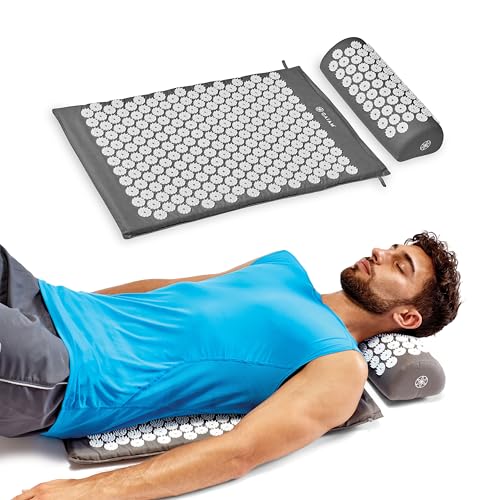
An acupressure mat is a foam or natural-fibre pad studded with hundreds of plastic spikes that you lie on for 10 to 30 minutes to ease back and neck tension. It is based on Traditional Chinese Medicine, and the honest evidence is for relaxation and an endorphin-driven warm glow rather than any medical cure. The right one depends on your budget and how firm you want it - a cheap foam-fill spike mat is the easy way in, the 50,000-review bestseller is the safe all-rounder, and a natural-fibre linen-and-coconut mat is the firmer, eco premium pick. We weighed price, fill type, spike count and what comes in the set. These six run from a 24 dollar Earnmore mat up to a 119 dollar UNMERA linen set.
How to choose an acupressure mat in Australia
An acupressure mat is a simple thing - a foam or natural-fibre pad studded with hundreds or thousands of small plastic spikes that you lie on for 10 to 30 minutes to ease back, neck and shoulder tension. It is based on Traditional Chinese Medicine, the same family of ideas as acupuncture and acupressure massage, and it is worth being honest up front about what it does. The real, well-supported benefit is relaxation: lying on the spikes is uncomfortable for the first minute or two, then your body releases endorphins and the sensation shifts to a warm, relaxed glow. That is a genuine wind-down effect, but it is not a medical cure for pain, injury or illness, so treat it as a relaxation tool rather than a treatment. With that set, choosing one comes down to a few things - your budget, the fill type (cheap forgiving foam versus firmer natural fibre), the spike count, and what comes in the set. This guide covers six acupressure mats from around 24 to 119 dollars, each suited to a different buyer.
What an acupressure mat actually does
This is the most important section to get straight before you spend anything. An acupressure mat works on the principle of Traditional Chinese Medicine, where pressure on points across the body is said to promote circulation and relaxation. The part that is well supported is the relaxation response: the broad, mild pressure of hundreds of spikes prompts an endorphin release, which is why people describe a warm, calming glow after the first uncomfortable minute, and many find it helps them unwind before sleep. What an acupressure mat is not is a medical device - it will not cure back pain, fix an injury or treat a condition, and you should not use it in place of advice from a doctor or physiotherapist. Used as what it is, a low-cost relaxation aid, it is a pleasant addition to a wind-down routine. Used as a promised cure, it will disappoint. Every pick in this guide is judged on that honest basis.
Foam fill versus natural fibre
The single biggest difference between a cheap mat and a premium one is what is inside it. The budget and mid-range mats here - the Earnmore, ProsourceFit, Gaiam and SoulShell - use a foam fill. Foam is light, soft and forgiving, which makes it cheaper to make and gentler to start on, but it is also less firm and less durable over years of use. The premium UNMERA goes the other way with a natural coconut-fibre fill under a linen cover, which is firmer, more durable and gives a more intense, even sensation, and it is the eco choice because it uses natural materials rather than synthetic foam. The Bodhi sits in between on materials, pairing a premium 100 percent cotton cover with a quality build. If you are new to acupressure, the softer foam mats are an easier landing; if you want the firmest, longest-lasting and most sustainable mat, natural fibre is worth the step up in price.
Spike count and coverage
How many spikes a mat has, and how they are arranged, changes the feel. More spikes spread your weight across more points, which can feel less sharp because no single spike takes too much load, while fewer, larger nails concentrate the pressure for a more intense sensation. The Gaiam spreads thousands of pressure nodes evenly across the mat for consistent contact from shoulders to lower back, and the natural-fibre UNMERA uses 221 lotus-style nails for 5304 contact points. There is no single right number - it is a matter of how firm you want the experience and how evenly you want the load spread. What matters more in practice is that the spikes cover the area you want to treat, so if your tension sits in your upper back and neck, make sure the set includes a neck cushion or pillow as well as the main mat, which most of these do.
What comes in the set
Acupressure mats are usually sold as sets, and what is bundled in changes the value. At a minimum you want the mat itself and a neck pillow or cushion, because a lot of tension sits in the neck and upper shoulders and the main mat does not reach there well when you are lying on your back - the Earnmore, ProsourceFit and Gaiam all include one. A carry bag, like the Earnmore comes with, is handy for rolling the mat up to store it or take it to a class. The SoulShell adds a spiky massage ball, which is genuinely useful because it lets you target specific knots and trigger points that a flat mat spreads its pressure too thinly to reach. The premium picks change the materials rather than the piece count - the Bodhi has a Velcro-attach modular cushion you can reposition, and the UNMERA pairs its linen mat with a buckwheat pillow that holds its shape. Count what you will actually use rather than paying for extras you will not.
How to use one, and the break-in period
Getting the most out of an acupressure mat is mostly about easing into it. The first time you lie on the spikes it will feel sharp and a bit uncomfortable - that is normal, and it is why beginners should keep a shirt or thin layer on at first rather than going straight onto bare skin, which spreads the pressure and takes the edge off. Start with 10 minutes and build up towards 20 or 30 as you get used to the sensation, and expect a break-in period of a few sessions before the initial prickle gives way more quickly to the warm, relaxed glow. Lie on it on a firm surface like the floor or a firm bed so the spikes make even contact, breathe slowly, and most people find the back, then the neck with the cushion, the most useful spots. The firmer natural-fibre mats like the UNMERA are more intense, so they especially reward starting shirt-on and building up the time gradually.
Where the premium brands are, and the price ladder
If you have researched acupressure mats you will have seen three premium names come up again and again - Shakti, Pranamat and Bed of Nails. The honest situation for Australian buyers is that those brands are not sold on Amazon AU, so if you want a genuinely premium, natural-fibre mat through Amazon, the UNMERA is the natural substitute - it is the linen-and-coconut, Pranamat-style build at a fraction of those brands' direct prices. With that settled, the price ladder here is straightforward. At the bottom, the Earnmore at around 24 dollars is the cheapest complete set to try the idea. The ProsourceFit at around 36 dollars is the proven bestseller and the best value. The Gaiam at around 47 dollars adds a trusted wellness-brand name, and the SoulShell at around 62 dollars adds a massage ball for trigger-point work. At the top, the Bodhi at around 90 dollars is the German-made, cotton-covered quality pick, and the UNMERA at around 119 dollars is the natural-fibre eco premium. Spend according to how firm and how natural you want the mat, not according to a promised cure that no mat at any price can deliver.
Our verdict
For most people the ProsourceFit Acupressure Mat at around 36 dollars is the smart buy - it is the category bestseller by an enormous margin with more than 50,000 ratings, and it does the core job well: lie on it 10 to 30 minutes a day to work through back and neck tension and trigger an endorphin release, which is why it is our pick. If you only want to spend a little to try acupressure, the Earnmore Acupressure Mat at 24 dollars is a complete set with a neck cushion and carry bag. For a trusted name, the Gaiam at 47 dollars is a yoga and wellness brand with thousands of nodes, and for trigger-point work the SoulShell at 62 dollars adds a spiky massage ball. Stepping up, the Bodhi at 90 dollars is a German wellness brand with a cotton cover and modular cushion. And if you want the firmer, eco, natural-fibre build, the UNMERA at 119 dollars is the linen-and-coconut premium pick and the natural substitute for the Shakti and Pranamat mats that are not on Amazon AU. Whichever you pick, set the expectation honestly - this is a relaxation tool, not a medical cure.
Frequently Asked Questions
Do acupressure mats actually work, or are they a gimmick?
They work for what they are honestly meant to do, which is relaxation, not as a medical cure. An acupressure mat is based on Traditional Chinese Medicine, and the well-supported effect is an endorphin release - after an uncomfortable first minute or two the sensation shifts to a warm, relaxed glow, and many people find it helps them wind down before sleep. What it will not do is cure back pain, treat an injury or fix a medical condition, so do not use it in place of advice from a doctor or physiotherapist. Treated as a low-cost relaxation aid, like the ProsourceFit (around 36 dollars), it is a genuine help; treated as a promised cure, it will disappoint.
What is the difference between a cheap foam mat and an expensive natural-fibre one?
It comes down to the fill. The budget and mid-range mats - the Earnmore (around 24 dollars), ProsourceFit (around 36 dollars), Gaiam (around 47 dollars) and SoulShell (around 62 dollars) - use a foam fill that is light, soft and forgiving, which makes them cheaper and gentler to start on but less firm and less durable. The premium UNMERA (around 119 dollars) uses a natural coconut-fibre fill under a linen cover, which is firmer, more durable and gives a more intense, even sensation, and it is the eco choice because it uses natural materials rather than synthetic foam. New users often prefer the softer foam mats to start, while natural fibre is the pick if you want the firmest, longest-lasting and most sustainable mat.
How long should I lie on an acupressure mat?
Start with about 10 minutes and build up towards 20 or 30 as you get used to it. The first few sessions are a break-in period - the spikes feel sharp at first, then the prickle gives way more quickly to a warm, relaxed glow as you adjust. Lie on it on a firm surface like the floor or a firm bed so the spikes make even contact, breathe slowly, and work the back first, then the neck with the cushion. There is no need to push past comfortable - most of the relaxation benefit comes in the first 15 to 20 minutes, and a mat like the ProsourceFit (around 36 dollars) is designed for exactly that daily 10 to 30 minute routine.
Does it hurt, and should I use it on bare skin?
It is uncomfortable rather than painful, especially the first few times, and beginners should keep a shirt or thin layer on at first. A layer of fabric spreads the pressure across the spikes and takes the edge off, which makes easing in much more pleasant - you can move to bare skin later once you are used to the sensation if you want it more intense. The firmer natural-fibre mats like the UNMERA (around 119 dollars) are more intense than the softer foam ones, so they especially reward starting shirt-on and building up the time gradually. If the sensation ever feels genuinely painful rather than just sharp, get off the mat - it should not hurt.
Which acupressure mat is best for beginners?
A softer foam mat at a low price is the easiest landing, which makes the ProsourceFit (around 36 dollars) or the budget Earnmore (around 24 dollars) the sensible first buy. Foam is more forgiving than firm natural fibre, so the first sessions are gentler while you get used to the spikes, and spending less means you are not out much if acupressure turns out not to be for you. Keep a shirt on at first, start with 10 minutes, and build up. Once you know you like it and want a firmer, more durable mat, that is the time to step up to a natural-fibre option like the UNMERA - starting there can be a lot for a complete beginner.
Why are Shakti, Pranamat and Bed of Nails not in this guide?
Those three premium brands come up constantly in acupressure research, but the honest situation for Australian buyers is that they are not sold on Amazon AU. Rather than point you to listings that do not exist, this guide uses the UNMERA (around 119 dollars) as the natural substitute - it is built the same way, with a 100 percent linen cover over a coconut-fibre fill, so it delivers the same firmer, natural-fibre, Pranamat-style experience through Amazon and usually at a lower price than those brands charge direct. If you specifically want Shakti, Pranamat or Bed of Nails, you would need to buy them from those brands directly rather than through Amazon AU.
Can an acupressure mat help with back pain or sleep?
It can help you relax, which may ease tension and make it easier to wind down before sleep, but it is not a treatment for back pain. The endorphin release from lying on the spikes is a real relaxation effect, and many people use a mat as part of an evening routine for exactly that reason. What it cannot do is cure or treat an underlying back problem, an injury or any medical condition, so if you have persistent or serious pain you should see a doctor or physiotherapist rather than rely on a mat. Used as a relaxation aid alongside proper care - not instead of it - a mat like the ProsourceFit (around 36 dollars) is a reasonable, low-cost addition to a wind-down routine.