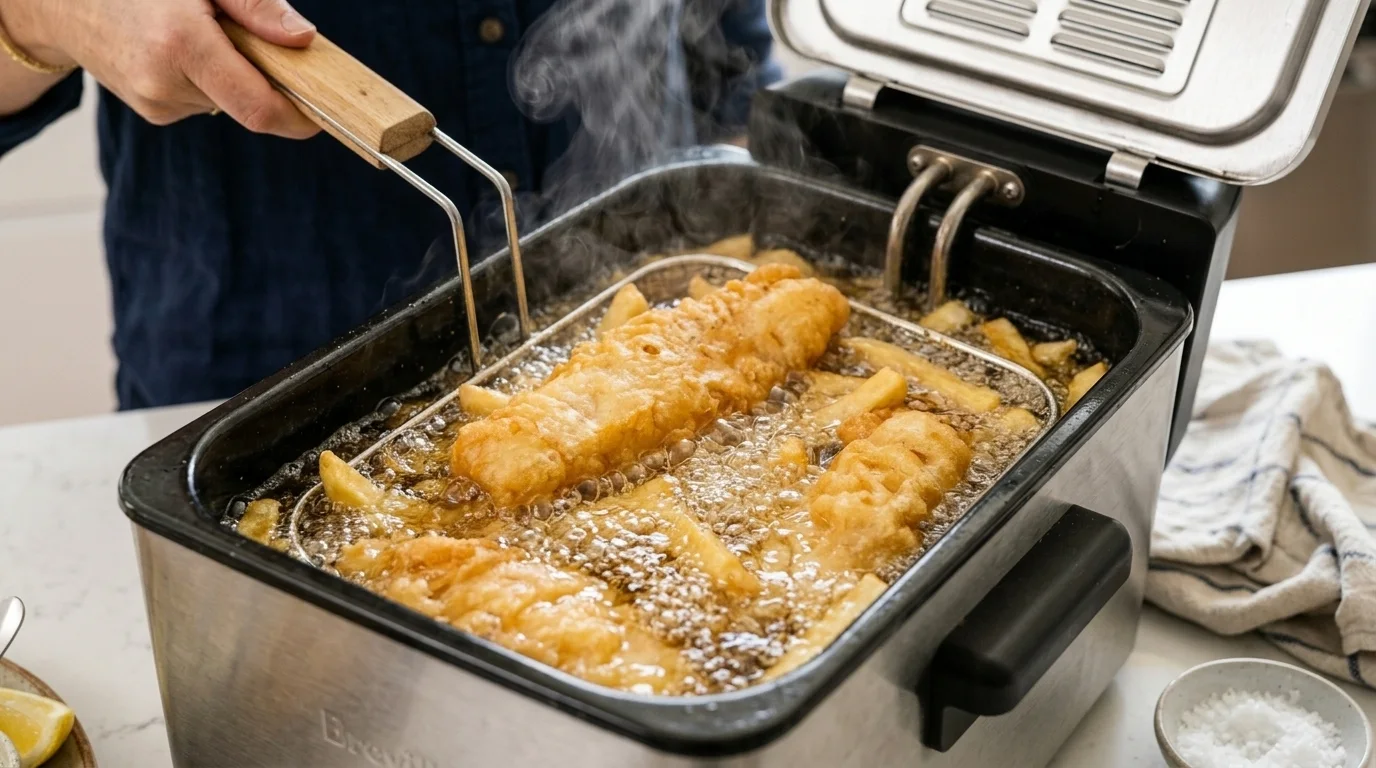
The best deep fryer in Australia for 2026 is the Tefal Filtra Pro FR5181 from about $129, because its patented filtration keeps the oil clean for more sessions, with the Sunbeam DF4500 Multi Cooker Deep Fryer from about $66 the budget pick and the Breville the Smart Deep Fryer BDF500 from about $199 the premium choice on seven one-touch presets. There's a particular kind of Friday night that an air fryer can't quite deliver. Real fish and chips, the batter shattering, the chips gold all the way through, the whole lot done in minutes rather than the slow shuffle of an oven tray. That's what a benchtop deep fryer is for, and for a lot of Australian households it earns its bench space on takeaway savings alone. Two pieces of battered flathead and a serve of chips from the local shop is creeping past $20; a kilo of frozen chips and a bottle of oil costs a fraction of that and feeds the table twice.
Let's be honest about the trade-offs, though, because the internet has spent five years telling you an air fryer does everything. It doesn't. An air fryer is brilliant for everyday crisping with barely any oil, and if "healthier and less mess" is your priority, read our best air fryer Australia guide instead. It's the lower-oil alternative and for most weeknights it's the smarter appliance. But air fryers genuinely compromise on wet batter, beer-battered fish, calamari rings, prawn twisters and donuts. Anything that needs full immersion in hot oil to set a crust comes out flat or dry in an air fryer. A deep fryer is the specialist tool for exactly those jobs, and nothing else does them as well at home.
So who's a deep fryer actually for? Households that fry properly once a week or more: fish-and-chips families, anyone who loves homemade hot chips, people who entertain with finger food, or anyone chasing that one dish (spring rolls, schnitzel, churros) that an air fryer never nails. If you fry three times a year, save your bench space. If frying is a ritual, a dedicated fryer with a lid, a thermostat and easy oil management beats a saucepan of oil on the stove on every measure that matters: safety, temperature control and cleanup. And if the finger food you actually had in mind is party pies rather than battered fish, a dedicated pie maker seals and bakes them without a litre of oil to manage.
At a glance: our top 3 deep fryers
| Pick | Best for | Key spec | Price band | Rating |
|---|
| Sunbeam DF4500 Multi Cooker Deep Fryer | Big batches on a budget | 5L oil, 1600W element, sliding temperature dial | from $66 | 4.3 |
| Tefal Filtra Pro FR5181 | Most homes | 4L oil rated to 1.3kg of food, 2300W, patented oil filtration | from $129 | 4.5 |
| Breville the Smart Deep Fryer BDF500 | Hands-off frying | About 3.8L oil, Cool Zone bowl, 7 one-touch presets | from $199 | 4.5 |
How to choose a deep fryer
The spec sheet on a deep fryer is short, but a few numbers genuinely change how the thing performs day to day. Here's what actually matters when you're choosing. If you are choosing a pan for shallow frying instead, compare electric frypans too.
Capacity: oil litres and food load
Two numbers are in play: how much oil the bowl holds, and how much food you can fry at once. Our three picks span 5L (Sunbeam), 4L of oil rated to 1.3kg of food (Tefal) and roughly 3.8L (Breville). Bigger isn't automatically better: every extra litre of oil is more oil to buy, heat and eventually dispose of. For a couple or a small family, 3.8 to 4L hits the sweet spot: enough to fry a real serve of chips without crowding, but not so much oil that a change feels like a chore. Go to the 5L Sunbeam if you're regularly feeding four or more, or you like to fry in big single batches rather than two rounds.
Wattage and heat recovery
This is the spec most people ignore and shouldn't. When you drop cold, wet food into hot oil, the temperature crashes. How fast the element claws that heat back, the "recovery", is the single biggest factor in whether your food comes out crisp or greasy. Oil that's sitting below temperature soaks into the food instead of sealing it. The Tefal's 2300W element recovers noticeably faster than the Sunbeam's 1600W, which is part of why it's our best-for-most pick. The Breville pairs a powerful heating element with its temperature management to hold the line. If you only ever fry small amounts, recovery matters less; if you cook in volume, it matters a lot.
Oil filtration and cleaning
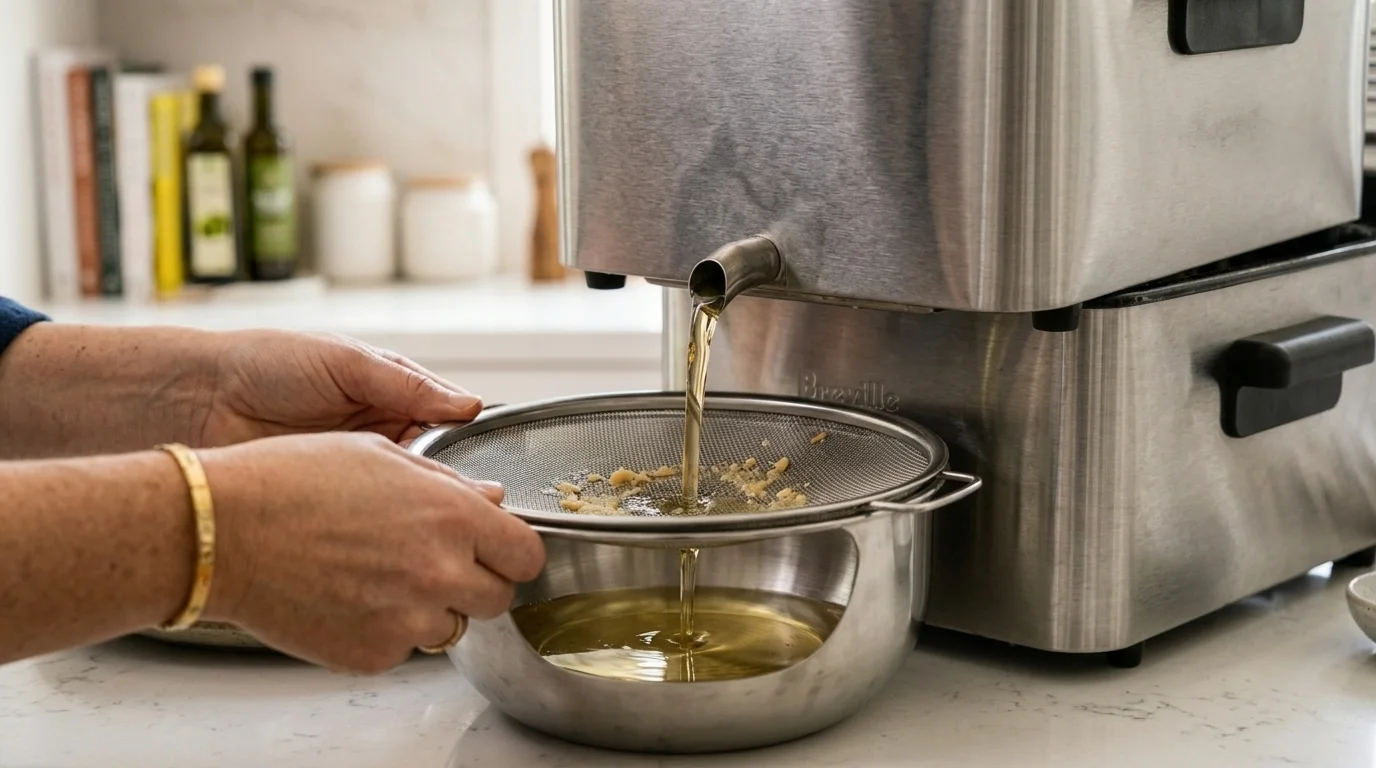
Cleanup is where deep fryers earn or lose their place on the bench, and it's where the price tiers really separate. The Tefal Filtra Pro's headline feature is a patented filtration system: after each use it filters the oil through a mesh as it drains, catching the burnt crumbs and debris that would otherwise turn your oil dark and bitter. Cleaner oil means less smell, better-tasting food and, importantly, oil that lasts several more frying sessions before it needs replacing.
The Breville takes a different route to the same goal with its Cool Zone design: the heating element sits above a cooler section of the bowl, so loose batter and crumbs sink into the cool zone instead of burning at the bottom. Burnt debris is what kills oil fastest, so keeping it out of the heat extends oil life and stops that acrid taste. The Sunbeam has neither system (its oil will need changing sooner), but it offsets that with a removable basket with a hands-free draining lever and dishwasher-friendly parts. Across all three, look for removable bowls and dishwasher-safe components; scrubbing a fixed oil reservoir by hand is the fastest way to fall out of love with deep frying.
Temperature control and presets
Different foods want different oil temperatures: chips around 175 to 190°C, delicate seafood a touch lower, and a second fry for extra-crisp chips higher again. The Sunbeam uses a simple sliding dial, which is fine once you learn it. The Tefal adds a digital timer and a viewing window so you can watch the colour without lifting the lid. The Breville goes furthest: seven one-touch presets (fries, twice-fried fries, fish, wings, calamari, donuts and a custom setting) plus an LCD that shows the live oil temperature and a countdown, and a fresh-versus-frozen toggle that adjusts for the extra cooling that frozen food causes. If you want to think about it as little as possible, presets are worth paying for.
Safety: lid, cool-touch and splatter
Hot oil deserves respect. The big safety advantage of a proper deep fryer over a pan on the stove is that the oil is enclosed. All three picks have lids that contain splatter, and the Breville's splatter-guard lid and the Tefal's lid with a viewing window let you keep the oil covered while it cooks. Look for stable, wide bases and handles that stay cool. Never move a fryer full of hot oil, keep it well back from the edge of the bench, and keep kids and tea-towels clear. These are the same rules as a stovetop, but the enclosed design makes them easier to follow.
Basket and draining
A good basket lifts the food clear of the oil to drain before you tip it out, and a draining lever or hook that holds the basket up over the oil, like the Sunbeam's hands-free draining basket, saves you standing there holding it. Removable baskets that go in the dishwasher are the difference between a five-minute and a fifteen-minute cleanup.
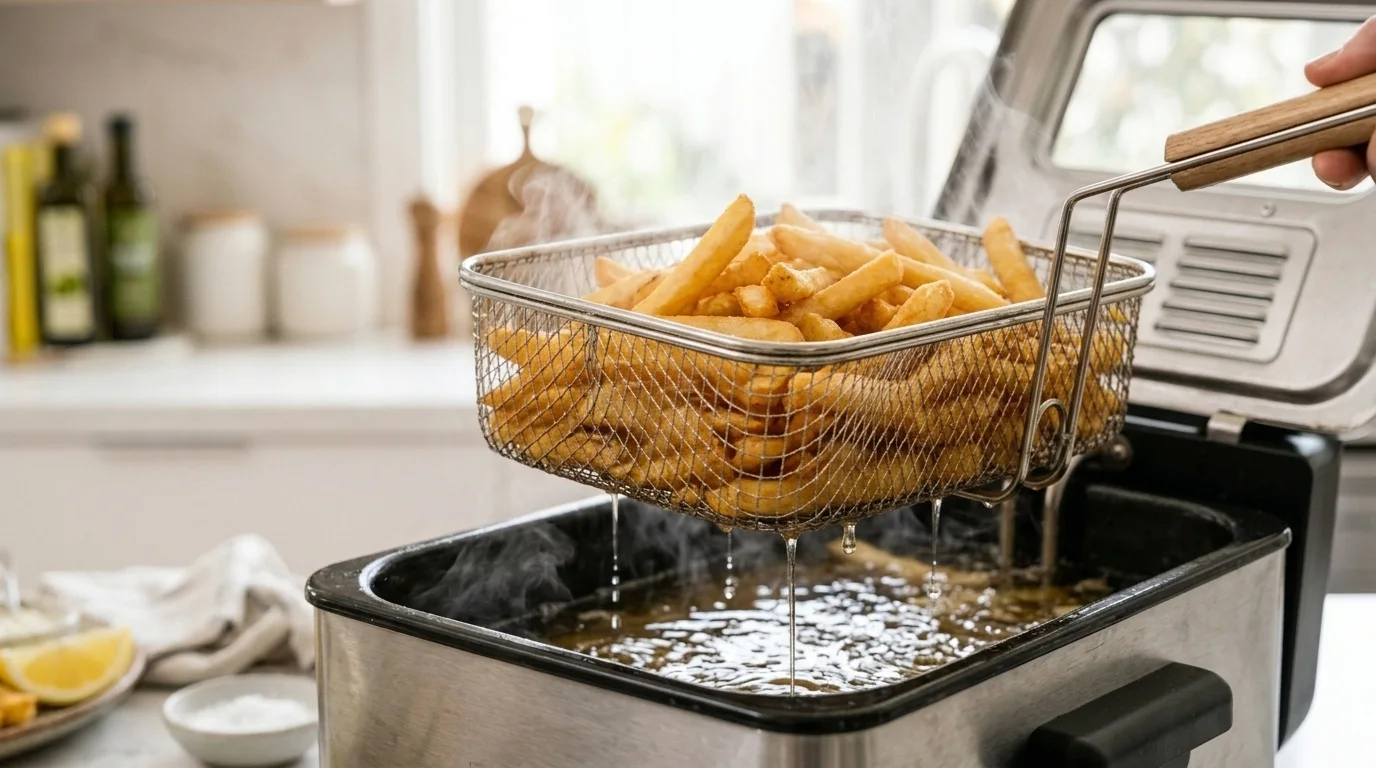
Deep fryer vs air fryer: the honest version
Don't think of these as rivals so much as different tools. An air fryer circulates hot air and uses a teaspoon of oil or none at all; it's fast, low-mess, lower-fat and perfect for everyday roasting, reheating and crisping. A deep fryer immerses food in hot oil and delivers a result an air fryer physically cannot: a proper crunchy batter that sets and shatters, even browning on all sides, and that fried-shop texture.
- Buy an air fryer if your priority is healthier everyday cooking with minimal cleanup, and you're happy to skip wet-battered foods. For most weeknights it wins.
- Buy a deep fryer if battered fish, hand-cut chips, calamari, spring rolls, schnitzel or donuts are a regular event and you want them done right.
- Plenty of kitchens own both: the air fryer for Tuesday, the deep fryer wheeled out for Friday treats and entertaining.
If you're still kitting out your bench, our kitchen essentials guide maps out which appliances actually earn their keep, so you don't end up with three things that do the same job.
Oil care and what oil to use
The oil is the part people get wrong, and it's the part that decides both the taste and the running cost. Use an oil with a high smoke point and a neutral flavour: rice bran, canola, sunflower or peanut oil are all good, widely available and affordable at any Australian supermarket. Avoid extra-virgin olive oil and butter. They smoke and burn well below frying temperature.
- Don't overheat it. Most frying happens between 170°C and 190°C. Above that, oil breaks down faster, smokes and tastes off.
- Filter or strain after each use. Crumbs and batter left in the oil burn next time and turn it dark and bitter. This is exactly what the Tefal's filtration and the Breville's Cool Zone are designed to prevent.
- Store it covered and cool. Let the oil cool fully, then keep it sealed and out of light. Clean, well-stored oil can be reused several times.
- Change it when it darkens, smells stale or foams. Those are the signs it's done.
- Dispose of it properly. Never pour oil down the sink. It sets and blocks drains. Cool it, seal it in a container and put it in the bin, or save it for a council oil-recycling drop-off where one's available.
Running cost and managing the smell
Two things put people off home deep frying: the cost of the oil and the lingering smell. Both are manageable. On cost, a 4 to 5L fryer takes roughly two to four litres of oil to fill, and supermarket frying oil is cheap by the litre. The real lever is how many times you reuse it, and that's precisely where filtration pays off. A fryer that keeps oil clean (the Tefal and Breville) can stretch the same oil across many more sessions than one that doesn't, so over a year the dearer machine can actually cost less to run. Set against the price of takeaway fish and chips, even regular frying at home comes out well ahead.
On smell, the enclosed lid on all three picks already does most of the work compared with an open pan. Beyond that: run your rangehood or open a window, don't overheat the oil (overheated oil is what really stinks out the house), and filter or strain the oil promptly after it cools so old debris isn't sitting there to smell. The oil-filtration on the Tefal specifically helps here, because clean oil simply produces less odour than dirty oil.
How we picked
We don't run a test kitchen and we won't pretend otherwise. Our picks come from three honest inputs: verified Australian availability, manufacturer specifications, and the weight of aggregate owner sentiment across Australian retailers and review sites.
- AU availability is the first gate. Every product here was confirmed in stock on amazon.com.au at the time of writing, with a live price in Australian dollars. We don't list models you can't actually buy here, and we re-check availability when we update.
- Specs are read from the manufacturer, not guessed. Capacities, wattages and features above come from the official product information. Where a figure looked like overseas boilerplate rather than the genuine AU spec, we left it out rather than print something misleading.
- We weigh real owner sentiment. Rather than invent star ratings, we read what Australian buyers consistently praise and complain about, and we factor recurring issues into the pros and cons.
The result is three picks that cover the realistic spread of needs: a big-capacity multi cooker for value (Sunbeam), a fast, clean-oil all-rounder for most homes (Tefal), and a preset-driven premium machine for the cleanest, most hands-off experience (Breville). Prices and availability shift, so check the live figure on the product before you buy.
Frequently Asked Questions
Is a deep fryer worth it if I already own an air fryer?
Yes, if you regularly cook wet-battered food. An air fryer handles everyday crisping with little or no oil, but it cannot reproduce a proper deep-fried batter, calamari or donuts the way full oil immersion does. Many Australian kitchens keep both: the air fryer for weeknight health, the deep fryer for Friday fish-and-chips and entertaining. If you only fry a few times a year, the air fryer alone is enough.
What oil is best for a deep fryer?
Use a neutral oil with a high smoke point such as rice bran, canola, sunflower or peanut oil. They are affordable, widely available in Australian supermarkets and handle frying temperatures of 170 to 190 degrees without breaking down. Avoid extra-virgin olive oil and butter, which smoke and burn well below frying temperature and will taint the food.
How many times can I reuse the oil?
With good care, several times. Strain or filter the oil after each use to remove burnt crumbs, store it sealed and cool away from light, and keep the temperature under control while frying. A fryer with oil filtration like the Tefal Filtra Pro, or Cool Zone like the Breville, keeps the oil cleaner so it lasts noticeably longer. Change the oil once it darkens, smells stale or starts to foam.
Why does oil filtration matter for running cost?
Frying oil is the main running cost of a deep fryer, so anything that makes the oil last longer saves you money. Filtration removes the burnt debris that turns oil dark and bitter, letting you reuse the same oil across many more sessions before it needs replacing. Over a year of regular frying, a fryer that keeps oil clean can cost less to run than a cheaper one that does not, even though it costs more upfront.
How do I stop the kitchen smelling after frying?
Keep the lid on while frying, which all three of our picks allow, and run the rangehood or open a window. Avoid overheating the oil, because overheated oil is the main source of the smell. Filter or strain the oil promptly once it cools so old debris is not left sitting in the bowl. Cleaner oil simply produces less odour, which is one more reason filtration helps.
How do I dispose of used cooking oil in Australia?
Never pour oil down the sink or drain, where it sets and causes blockages. Let the oil cool completely, seal it in a container such as the original bottle or a milk carton, and put it in the general waste bin. Some councils run cooking-oil recycling drop-offs, so check your local council if you would prefer to recycle it.
What size deep fryer should I buy?
For a couple or a small family, a 3.8 to 4 litre fryer like the Breville or Tefal is the sweet spot: enough to fry a real serve of chips without crowding, but not so much oil that changes become a chore. Step up to the 5 litre Sunbeam if you regularly feed four or more people or like to fry in large single batches. Remember that more oil capacity also means more oil to buy and heat each time.
How do you clean a deep fryer?
Let the oil cool completely, then drain it through the fryer own filter or a fine sieve into a sealed container. Lift out the bowl and basket and wash them: all three picks here have removable, dishwasher-friendly parts. Wipe the lid and the splatter shield, because that is where the smell collects. The Tefal Filtra Pro filters as it drains and the Breville Cool Zone bowl keeps crumbs away from the element, so both leave less burnt debris to scrub. Never pour oil down the sink.
How do you fry chips in a deep fryer?
Fry them twice. The first pass at around 175 degrees cooks the potato through without colouring it, then you rest the chips while the oil comes back to temperature and give them a second, hotter pass closer to 190 degrees to crisp the outside. Do it in small batches, because a crowded basket drops the oil temperature and the chips soak up oil instead of sealing. The Breville the Smart Deep Fryer BDF500 has a twice-fried fries preset that runs both stages for you.
Which brand of deep fryer is best in Australia?
Three brands are worth shortlisting. Tefal is the filtration specialist: the Filtra Pro FR5181 we picked drains the oil through a mesh after every use, and the Oleoclean Pro range many people ask about works the same way with a sealed oil store. Breville is the presets brand, with seven one-touch programs on the BDF500. Sunbeam is the value brand, giving you a 5L bowl for the least money. Devanti and Healthy Choice sell cheaper units, mostly through retailers other than Amazon Australia.