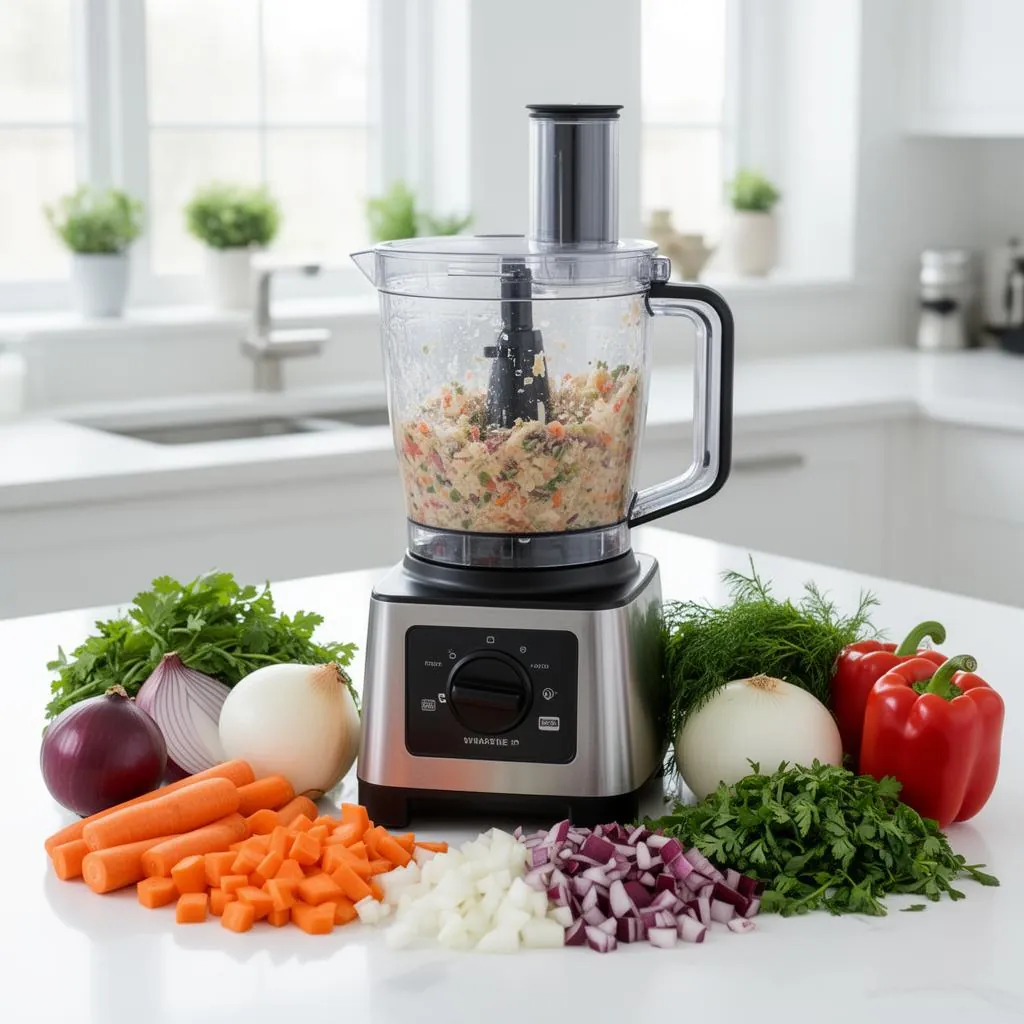
An electric wok is a standalone benchtop appliance with its own heating element that plugs into a power point, so you can stir fry, steam and braise without using the stove. The best electric wok in Australia for 2026 is the Sunbeam DiamondForce, a 7.5L bowl with a diamond infused non stick coating, with the Breville the Hot Wok and Steam the premium buy for searing heat and the Healthy Choice 4.5L the budget way in. It is an underrated appliance in an Australian kitchen. If you love stir-fries, fried rice, hokkien noodles, sang choy bau or a slow-braised beef cheek, an electric wok lets you cook all of it on the benchtop without a gas burner, and crucially, it heats evenly across the whole bowl rather than just where a stovetop flame happens to touch. Plug it in, set the temperature, and the heating element does the work.
The appeal goes beyond convenience. Renters and apartment dwellers without gas get a proper deep, sloped cooking surface that a flat induction pan cannot replicate. Families get a big batch in one go: a 7.5L bowl tosses dinner for four or five without anything tumbling over the side. And because the Sunbeam and Breville bowls lift off their bases, you can carry the bowl to the table for a shared hotpot or a help yourself stir fry night. It is a sociable way to cook.
This guide covers three electric woks we would genuinely recommend in Australia in 2026, all in stock on Amazon AU, spanning a budget pick, an all rounder and a premium model. We have been honest about the one thing electric woks cannot do (match the blistering heat of a commercial gas wok burner), so you buy with clear expectations.
At a glance: our top 3 electric woks
| Pick | Best for | Key spec | Rating |
|---|
| Sunbeam DiamondForce Electric Wok | Most kitchens, our pick | 7.5L bowl, diamond non stick, steaming rack included | 4.7 |
| Healthy Choice 4.5L Electric Wok | Budget pick | 4.5L bowl, 1500W, heats to 240C, adjustable temperature | 3.8 |
| Breville the Hot Wok & Steam | Real searing heat | 2400W cast aluminium, stainless steam tray, dishwasher safe bowl | 4.6 |
How we picked
Last checked: 15 October 2026
We are an editorial guide, not a test lab, and we will not pretend otherwise. These three picks were chosen by combining the maker specifications stated in each listing's product information, the Amazon Australia listing for each product, the consensus of Australian buyer reviews, and our own read of which models suit which households. Every product here was verified as genuinely in stock on Amazon AU on the Last checked date above, with a working Australian buy option; we do not list models you cannot actually buy.
We deliberately spread the picks across a budget, a value all-rounder and a premium tier so there is an honest answer whatever your budget. Where a real limitation exists (chiefly that an electric wok will not match the heat of a gas wok burner), we have said so plainly rather than overselling. If you are kitting out a new kitchen from scratch, our kitchen essentials guide puts the wok in context with the other appliances worth buying first. All three Amazon AU listings were in stock, with the Healthy Choice sold by a third party seller and shipped from Amazon.
Best overall: Sunbeam DiamondForce Electric Wok
Our pick is the Sunbeam DiamondForce: a 7.5L bowl, a diamond infused non stick coating and a steam rack in the box. The Healthy Choice is the budget way in, and the Breville the Hot Wok and Steam is the premium pick for searing heat.
Electric wok vs a wok on the stove
Here is the honest trade-off, because no buying guide should pretend otherwise. The magic of a restaurant stir-fry is wok hei: the smoky, slightly charred flavour that comes from food searing against ferociously hot metal over a roaring gas flame. Commercial wok burners push out enormous heat that a domestic appliance simply cannot reach. So if you are chasing that exact smoky char at home, no electric wok will fully deliver it; that is a job for a carbon steel wok over a live flame.
What an electric wok does instead is arguably more useful for everyday cooking. The heat is even and consistent across the whole bowl, you control the temperature with a dial rather than guessing at a flame, and you do not need a gas connection at all. That is the usual reason people on an induction cooktop buy one, because a round-bottomed wok will not sit on an induction hob. For weeknight stir-fries, fried rice, noodles, curries, braises and steaming, that even, reliable heat is exactly what you want, and the results are excellent.
Among the three picks here, the Breville is the one whose listing is built around heat. The Breville the Hot Wok & Steam uses heat responsive cast aluminium that, per its listing, maintains high searing heat for crisp stir fries. The Sunbeam DiamondForce and the budget Healthy Choice make no such claim, and like any electric wok they will not match a gas burner. If crisp edge stir frying matters to you, that is the reason to look at the Breville.
How to choose an electric wok
A few things actually matter when you are picking one. Work through these and the right model usually becomes obvious.
Capacity (litres)
This is the first decision. A 4.5L bowl, like the Healthy Choice, is genuinely fine for a couple or a small family stir-fry. A 7.5L bowl, like the Sunbeam, comfortably feeds four, handles a beef rendang for six per its listing, and gives you room to toss without ingredients spilling. Bigger is more forgiving, because an overcrowded wok steams food instead of frying it.
Wattage and heat retention
Wattage drives how fast the wok heats and, more importantly, how quickly it recovers after you add cold food. The Healthy Choice runs at 1500W and the Breville at 2400W. Raw wattage is not the whole story, because the material matters too. The Breville listing describes heat responsive cast aluminium to maintain high searing heat, which the other two listings do not claim. If you want a strong sear, look at both the watts and what the base is made of.
Non stick type and durability
Every pick here is non-stick, which is what makes electric woks so easy to live with: you can stir-fry with little to no oil and clean-up is quick. The differences are in toughness. The Sunbeam's DiamondForce is a diamond-infused two-layer coating built to resist wear, the Breville uses a PFOA-free reinforced multi-coat Eterna surface, and the Healthy Choice has a standard non-stick coating that is perfectly good with gentle care. Whatever you buy, stick to wooden or silicone utensils to protect it.
Steaming function
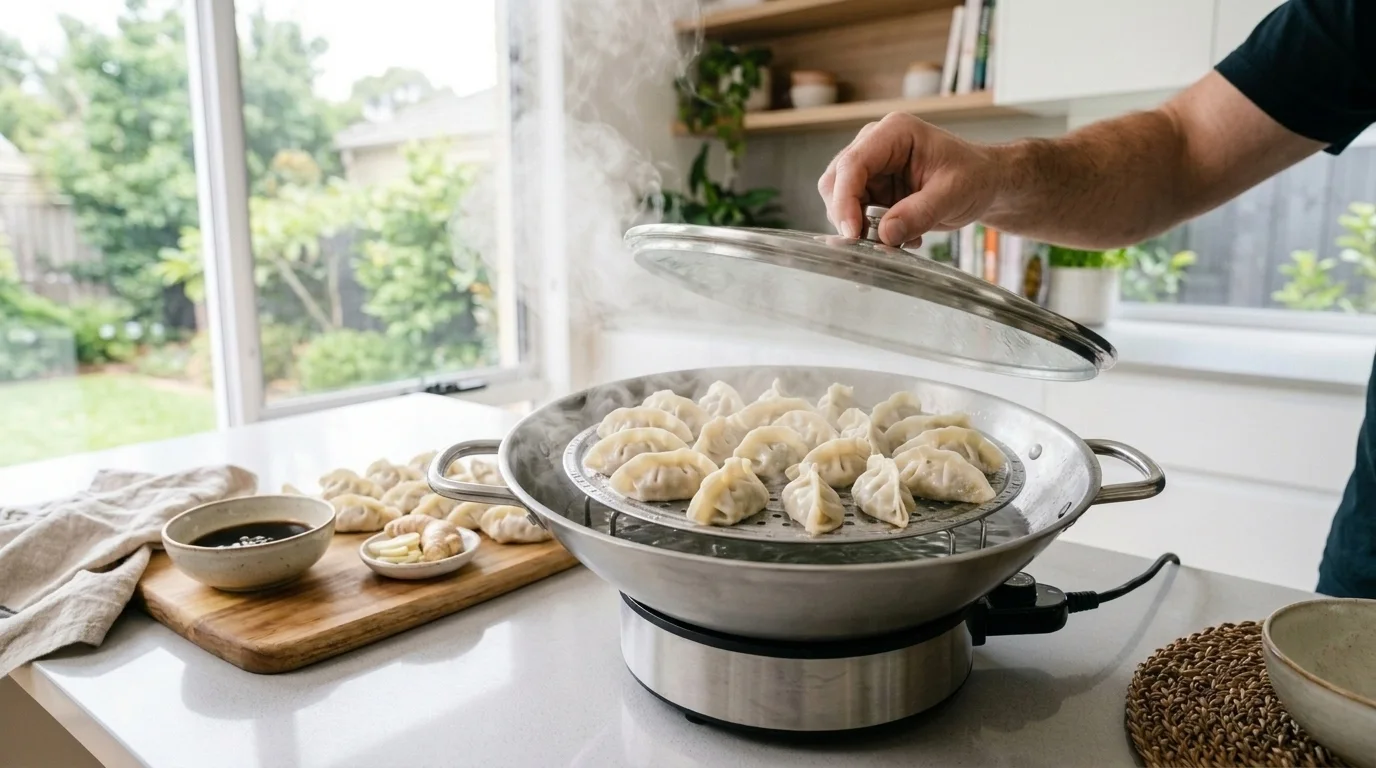
This is an easy feature to overlook and a genuinely handy one. Both the Sunbeam (steaming rack) and the Breville (stainless steel steam tray) let you steam dumplings, bao, fish or veg in the same appliance, sometimes stir-frying a base and steaming on top. The Healthy Choice listing names no steaming accessory. If you love yum cha at home, the steam function alone can justify stepping up from the budget pick. Speaking of the carb side of the meal, pair any of these with a good rice cooker and weeknight dinner is sorted.
Temperature control
Adjustable temperature, as on the Healthy Choice, covers the basics: low for simmering, high for stir frying. The Breville lists variable temperature control, which helps when you want to caramelise onions gently, hold a braise at a steady simmer, or keep a finished dish warm at the table.
Detachable base and cleaning
The best electric woks separate the bowl from the heating base so you can wash the bowl properly. The Sunbeam detaches via a twist dial and its pan, lid, steam rack and base are dishwasher safe with the probe removed; the Breville has a removable, dishwasher safe wok bowl. That detachable design is also what lets you carry the bowl to the dining table, handy for a shared hotpot night.
What you can actually cook in it
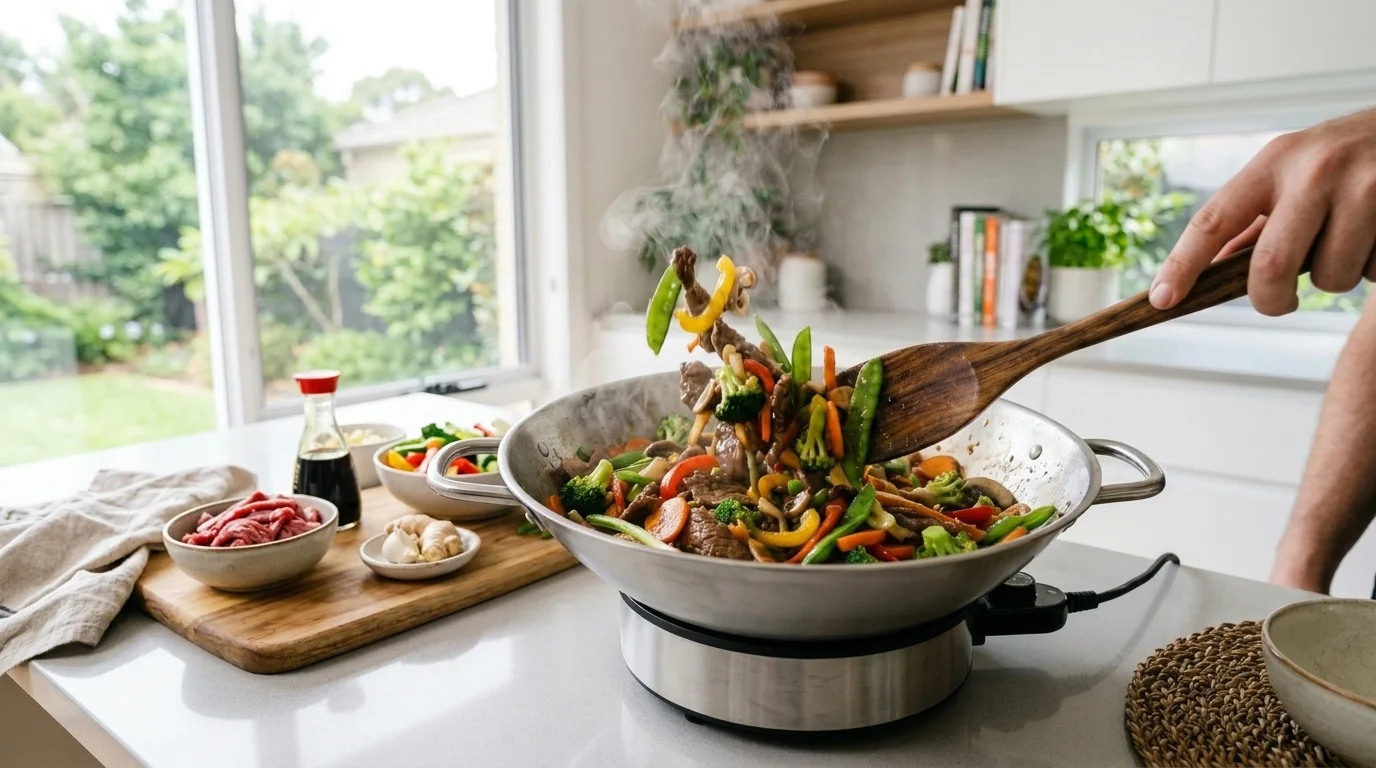
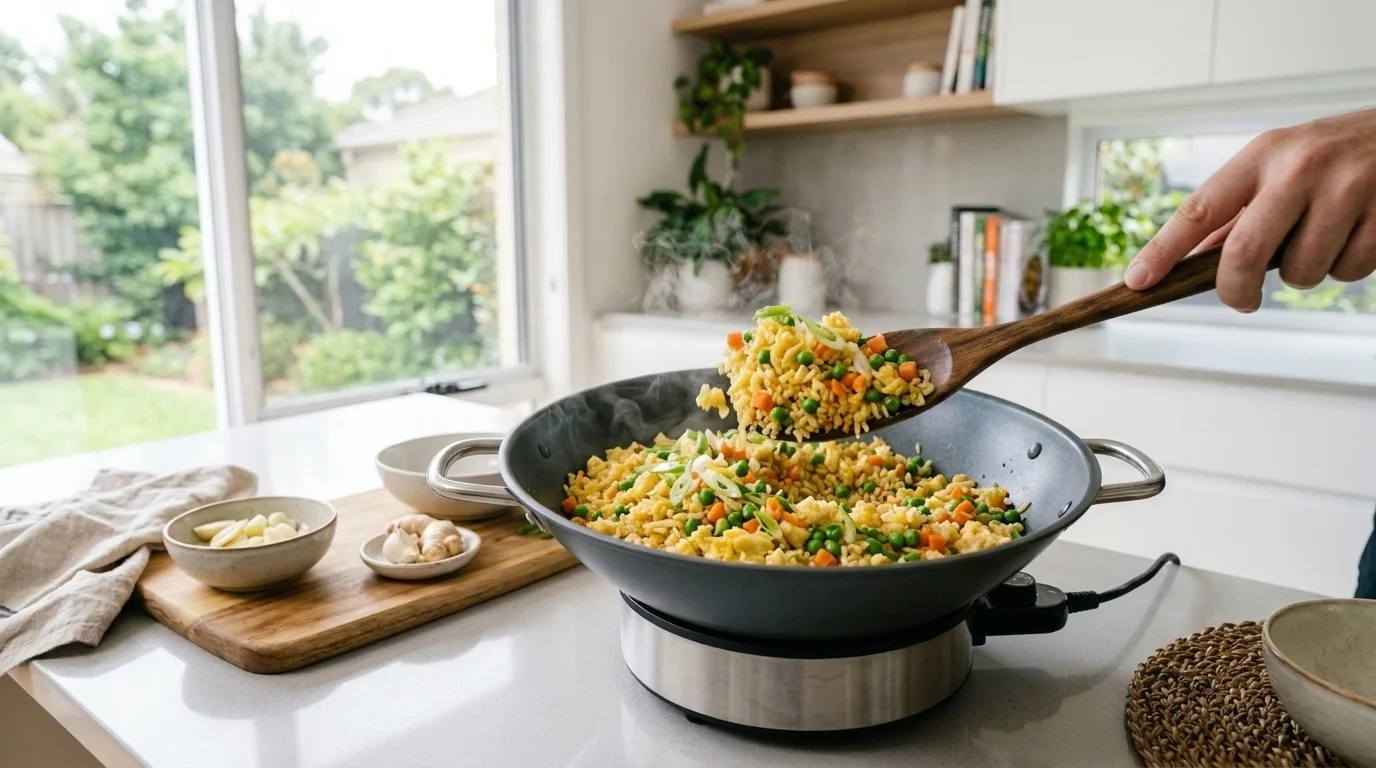
Far more than just stir-fries. An electric wok is a versatile appliance. The obvious wins are stir-fries (beef and broccoli, chicken cashew, garlic prawns) and fried rice, which the deep sloped sides handle beautifully because you can keep tossing without losing grains over the edge.
- Noodles: hokkien, singapore, pad see ew: the wide base gives you room to keep everything moving.
- Sang choy bau: brown the mince hard, then spoon into lettuce cups.
- Braises and curries: the deep bowl is perfect for a slow rendang, butter chicken or a soy-braised pork; for the truly long, low cooks a wok is not built for, a slow cooker is the better tool.
- Steamed dumplings and bao: on the Sunbeam or Breville, drop in the steam rack and you are away.
- Hotpot at the table: carry the lift-off bowl to the dining table, fill with stock, and let everyone cook their own, a brilliant way to feed a crowd.
Stir fry tips for an electric wok
A few habits make a huge difference, especially since electric woks run cooler than a gas burner. Get these right and your stir-fries come out crisp rather than soggy.
- Preheat properly: set the wok to high and give it a few minutes to get genuinely hot before any food goes in. A cold start is the number one cause of stewed-looking veg.
- Mise en place, prep everything first: chop, marinate and measure every ingredient and have it within reach. Electric-wok stir-frying is fast, and you will not have time to dice an onion mid-cook.
- Do not overcrowd: too much food at once drops the temperature and the wok starts steaming instead of frying. This is a common mistake.
- Cook in batches: sear the protein first, lift it out, then do the vegetables, and combine at the end. It takes two extra minutes and the texture is night and day.
- Dry your ingredients: pat proteins dry and do not add wet, just-washed veg. Surface water cools the wok and creates steam.
Cleaning and non stick care
One of the joys of an electric wok is how easy it is to clean. Always unplug and let it cool a little first, then wash the bowl with warm soapy water and a soft sponge. On the Sunbeam and Breville the bowl lifts off and goes in the dishwasher, though hand-washing extends the life of any non-stick coating. Never put the heating control unit or power cord in water. Stick to wood, silicone or nylon utensils, because metal will scratch the coating and shorten its life. Avoid abrasive scourers and harsh cooking sprays, which can build up a sticky residue on non-stick over time.
Where to buy an electric wok in Australia
We checked every listing in this guide on Amazon Australia. Whichever store you use, check the capacity in litres and the wattage rather than the model name: the three picks here range from 4.5L to 8L.
Frequently Asked Questions
Can an electric wok get as hot as a gas wok burner?
No, and any guide that claims otherwise is being dishonest. A commercial gas wok burner pushes out far more heat than any domestic electric appliance, which is why restaurants get that smoky wok hei char. Among our picks the Breville the Hot Wok lists heat responsive cast aluminium to maintain high searing heat, but for everyday stir fries, fried rice, noodles and braises an electric wok gives you even, reliable heat that is more than hot enough.
What size electric wok should I buy?
A 7.5L bowl, like the Sunbeam DiamondForce, feeds four comfortably and stretches to six for a curry or rendang. A 4.5L wok, like the Healthy Choice, is fine for a couple or a small family. The key rule is not to overcrowd, because too much food at once cools the wok and steams your stir fry instead of frying it, so err slightly larger if you are unsure.
Do you need oil in an electric wok?
Very little. All three picks here are non-stick, so a small amount of oil is plenty for flavour and to help searing; you do not need to deep-fry-level it. The Sunbeam's diamond-infused coating in particular is designed to work with little to no oil, which makes electric woks a genuinely healthier way to stir-fry than a traditional oiled steel wok.
Can you steam food in an electric wok?
In the right model, yes. The Sunbeam DiamondForce includes a steaming rack and the Breville the Hot Wok comes with a stainless steel steam tray, so you can steam dumplings, bao, fish or vegetables in the same appliance you stir-fry in. The Healthy Choice listing names no steaming accessory, so if steaming matters to you, look at the Sunbeam or the Breville.
Are electric woks easy to clean?
Yes, that is one of their best features. The non-stick coating means food lifts off easily, and on the Sunbeam and Breville the cooking bowl detaches and is dishwasher-safe. Just never submerge the heating base or power unit in water, let the wok cool first, and use soft sponges and wood or silicone utensils to protect the coating.
Which electric wok is best for stir fries with real char?
The Breville the Hot Wok & Steam is the one to look at. Its listing describes heat responsive cast aluminium to maintain high searing heat for crisp stir fries, which the other two listings do not claim. No electric wok matches a gas burner, but if that restaurant style result is your priority, the Breville is the pick.
Is an electric wok worth it if I already have a stove?
For a lot of people, yes. An electric wok gives you a proper deep, sloped cooking surface with even heat that a flat stovetop pan cannot match, it frees up a burner, and it can be carried to the table for shared hotpot or stir-fry nights. It is especially worth it if you have no gas, cook Asian food regularly, or want a big-batch family stir-fry in one go. If you stir fry occasionally, the budget Healthy Choice makes it an easy, low cost yes.
Is an electric wok any good?
Yes, for everyday cooking. The heat is even across the whole bowl instead of just where a flame touches it, you set a temperature rather than guessing at a flame, and it needs nothing but a power point. The one honest limit is wok hei, the smoky char a commercial gas burner produces, which no benchtop appliance reaches. If searing matters, the Breville the Hot Wok and Steam lists heat responsive cast aluminium to maintain high searing heat.
What is the best electric wok in Australia?
The Sunbeam DiamondForce: a 7.5L bowl with a durable diamond non stick coating and a steaming rack in the box, which suits stir fries for 4 or a beef rendang for 6. If you want searing heat, the Breville the Hot Wok and Steam is the pick. If you just want to try one, the Healthy Choice 4.5L does the job.
Can you use a wok on an electric stove?
A flat bottomed wok, yes. A round bottomed carbon steel wok, no, because it will not sit flat on a solid element or a ceramic top and the heat concentrates in the very centre. Induction is stricter still: the wok has to be flat and magnetic. That mismatch is the usual reason Australians buy an electric wok instead, since it brings its own sloped bowl and its own element.
Do electric woks use a lot of power?
They draw a lot while they are heating and very little once they hold temperature. The Breville is 2400W, which is close to the limit of a single 10 amp Australian power point, and the budget Healthy Choice is 1500W. Give a 2400W wok its own power point rather than sharing a board with a kettle or a toaster.
Is a stainless steel electric wok better than non stick?
They suit different cooking, and the three picks here all have a non stick surface. The Breville has a brushed stainless steel finish and heat responsive cast aluminium, but its listing describes an Eterna PFOA free non stick surface, so stick to wooden or silicone utensils. The Sunbeam DiamondForce coating is listed as needing little to no oil. For hard searing, look at the Breville. For weeknight noodles and egg, any of the three suits.