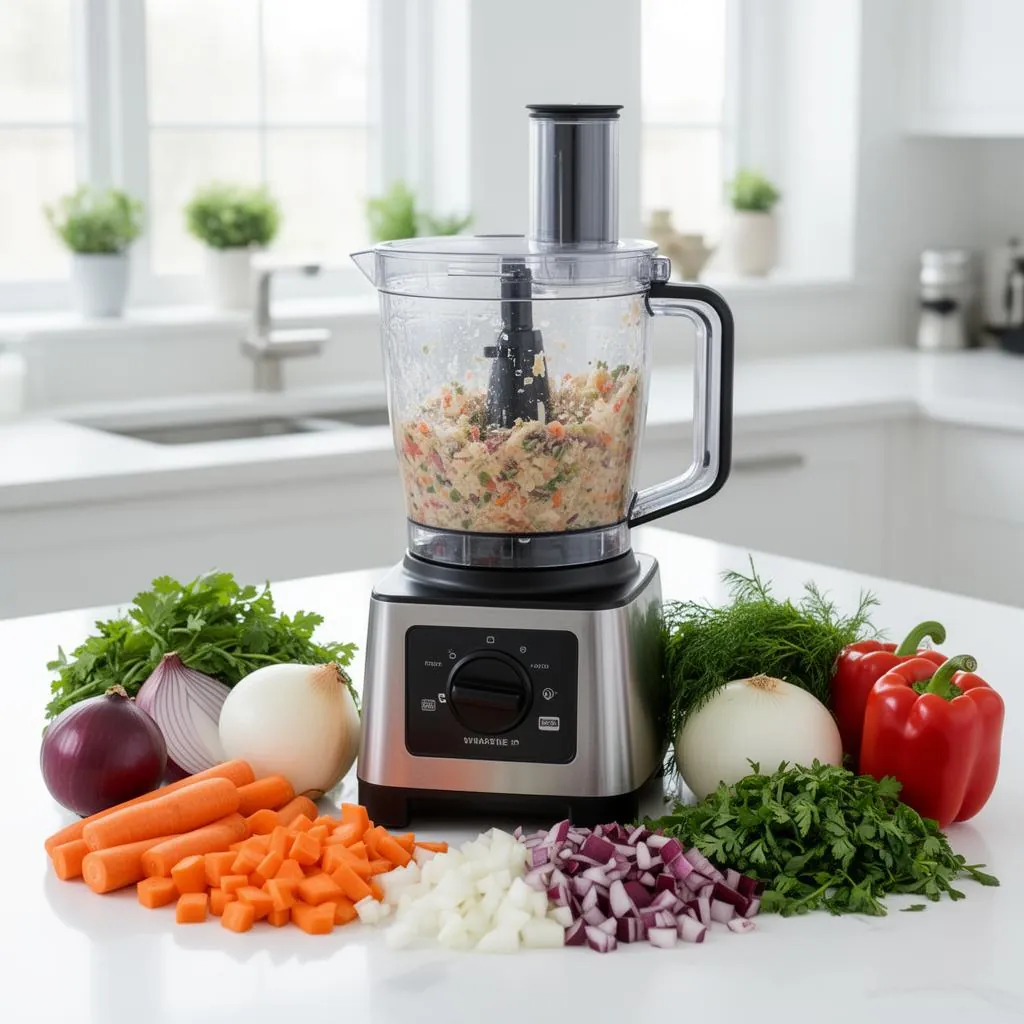
It usually starts with a glut. The tomato plants went berserk, the neighbour dropped off three kilos of mangoes, or you bought a side of beef and want jerky without paying servo prices. A food dehydrator is the appliance that turns all of that into snacks you can store for months, so last summer's dried fruit and a fresh batch of hiking jerky earn their keep.
The best food dehydrator in Australia for most households is the Devanti 9 Tray 700W. Its Amazon AU listing shows nine trays, 700W, a 35 to 70 degrees C range and a timer of up to 19.5 hours, with a 4.5 star rating from 122 ratings. The Sunbeam Food Lab is the digital alternative.
We checked the Amazon AU listings for the food dehydrators on this page, and the ratings, counts and specs below come from those listings. The Devanti listings state 240 volts and an Australian standard or SAA certified plug, while the Sunbeam listing does not state a plug type or voltage. This guide covers capacity, airflow, temperature control, and the question everyone really wants answered: is a dehydrator worth the bench space?
What is a food dehydrator?
A food dehydrator is a benchtop appliance that dries food with low heat and moving air over several hours, so it can make jerky, fruit leather, dried fruit, vegetable crisps and dried herbs. Rated power in watts is the maximum the motor and heater draw, and kilowatt hours are kilowatts multiplied by hours.
Best overall: Devanti Food Dehydrator, 9 Trays, 700W
The Devanti 9 Tray 700W is our pick for most households. Its listing shows nine trays, 700W and an adjustable thermostat from 35 to 70 degrees C, and it is rated 4.5 from 122 ratings. The Sunbeam Food Lab DT6000 is rated higher at 4.6 from 111 ratings, but it lists 6 trays and 500W.
How we chose these food dehydrators
We chose these food dehydrators by reading the bullets and product information table on each Amazon Australia listing and recording the ratings and rating counts shown there. We also read Google Australia results and AI answers to see what shoppers ask about, such as jerky, tray count and running costs. The check date sits below the table.
| Model | Trays | Wattage | Temperature control | Amazon AU rating |
|---|
| Devanti 9 Tray 700W (our pick) | 9 | 700W | Adjustable thermostat, 35 to 70 degrees C, LCD touch timer | 4.5 from 122 ratings |
| Sunbeam Food Lab DT6000 | 6 (product table) | 500W | 8 preset temperatures, 35 to 70 degrees C, digital timer | 4.6 from 111 ratings |
| Devanti 5 Tray 245W (could not be bought on 16 October 2026) | 5 | 245W | 40 to 70 degrees C, LCD display, timer up to 48 hours | 4.1 from 70 ratings |
Always follow the manufacturer's manual and the requirements of your state or territory regulator.
Last checked: 16 October 2026.
What a food dehydrator actually does, and why not just use the oven
A dehydrator removes moisture from food using low, steady heat and constant airflow over many hours. That low and slow combination is the whole point: it dries food without cooking it, so the texture stays chewy or crisp and the flavour concentrates. The result is jerky, fruit leather, dried fruit, vegetable crisps, dried herbs and dog treats that keep for weeks or months in a sealed jar.
The obvious question is why you can't just use the oven you already own. Usually a dehydrator is the better tool if you dry food regularly: it is built for low heat and constant airflow, and both the Devanti 9 Tray 700W and the Sunbeam Food Lab list ranges starting at 35 degrees C. Check your oven's lowest setting against the food you want to dry. The two models we can buy are rated at 500W and 700W.
The other alternative is an air fryer with a "dehydrate" mode. It genuinely works, but you get one shelf and a tiny basket, so you'll be running batch after batch to dry what a dehydrator does in one go. If you only dry food once or twice a year, the air fryer mode may be enough. A dehydrator earns its place the moment you dehydrate regularly or in volume.
What you can actually make
- Jerky: the number one reason Australians buy a dehydrator. Lean beef, kangaroo or chicken, sliced thin and marinated, makes high protein snacks for hikes, road trips and footy season.
- Fruit leather: blend fruit into a purée, spread it thin on a solid tray liner, and dry it into roll ups, a school lunch staple with no added sugar.
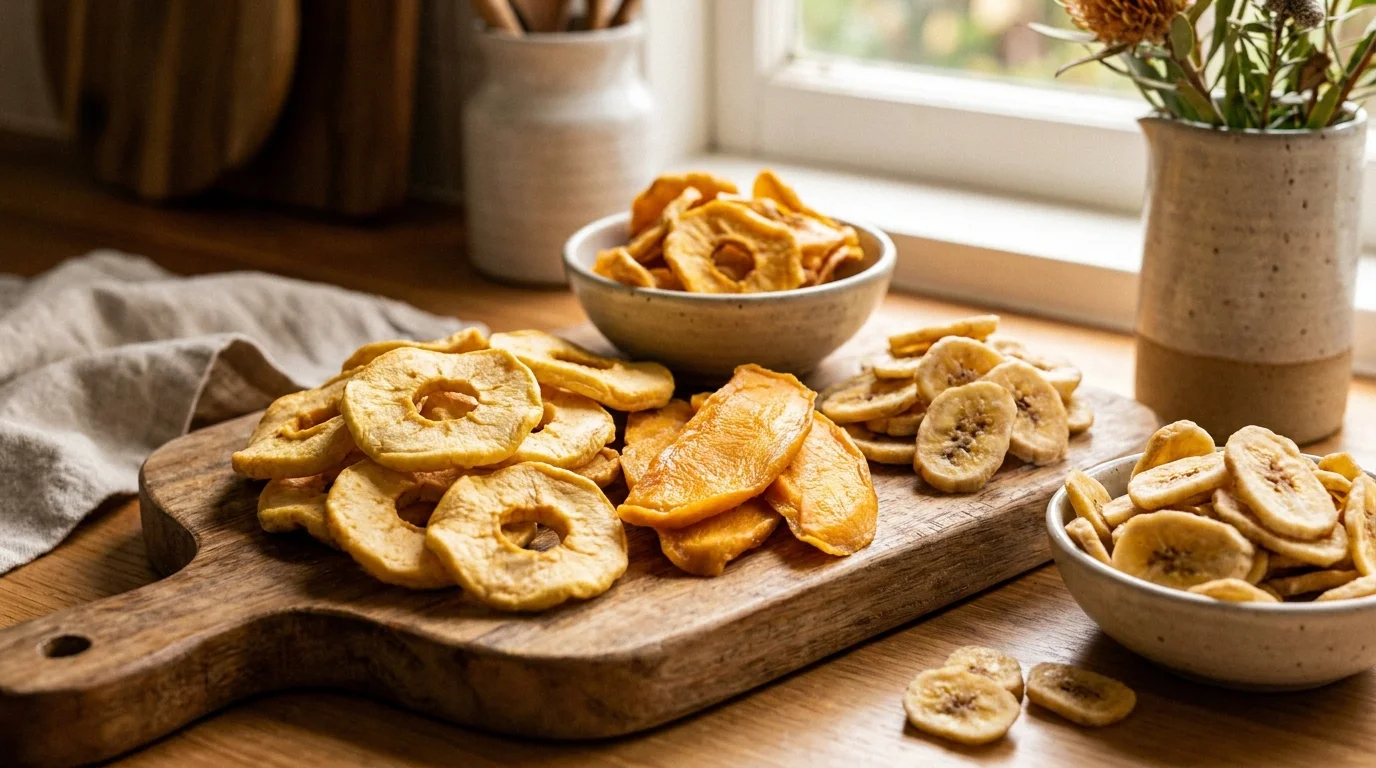
- Dried fruit: apple rings, mango cheeks, banana chips, dried strawberries. Perfect for clearing a summer fruit glut before it spoils.
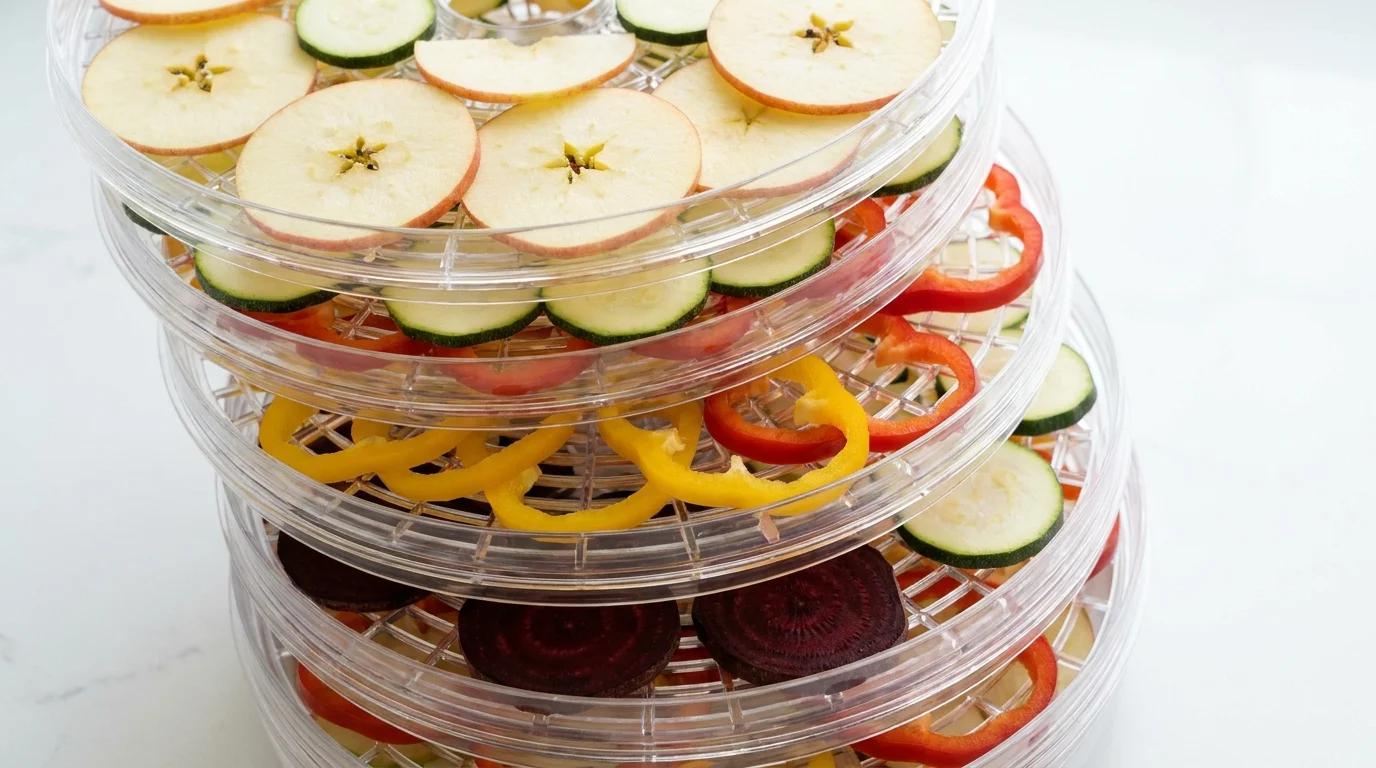
- Vegetable crisps: zucchini, beetroot, capsicum and sweet potato dry into crunchy crisps; you can also dry tomatoes for a semi sundried result.
- Herbs: the fastest win of all. A tray of basil, oregano, mint or parsley from the garden dries in a few hours at low heat and keeps its colour and oils.
- Dog treats: sliced sweet potato or thin strips of liver and chicken make single ingredient treats with no preservatives.
Trays and capacity: how much can you actually dry
Capacity is the spec that decides whether you'll love or resent your dehydrator. It comes down to two things: how many trays, and what type.
Capacity comes down to the tray count and how the trays are laid out. The Devanti 9 Tray 700W lists nine trays and a weight of 9.4 kilograms, so it is a large unit for a bench. The Sunbeam Food Lab lists horizontal air flow, and its listing says there is no need to rotate trays.
For most Australian households the maths is simple. Five trays handle herbs, a couple of trays of apple rings or a small batch of jerky if you dehydrate occasionally. Nine trays give you room for a larger batch in one run, which is why the Devanti 9 Tray 700W is our pick for most people. The trade off is bench and cupboard space, so be honest about where it will live between uses.
How many trays do you need?
Nine trays suit larger batches, and the Devanti 9 Tray 700W lists nine. Six trays suit smaller households, and the Sunbeam Food Lab product table lists 6 trays. Five trays suit occasional drying. Check the weight and bench space before you buy a bigger unit.
Devanti 5 Tray 245W: could not be bought on 16 October 2026
The Amazon AU listing for the Devanti 5 Tray 245W could not be bought on 16 October 2026. The listing shows five removable trays, 245W, a 40 to 70 degrees C range, an LCD display and a timer of up to 48 hours, with a 4.1 star rating from 70 ratings.
Wattage and fan placement: the secret to even drying
This is where cheap and good dehydrators separate. Two units can have the same number of trays and dry completely differently depending on wattage and, more importantly, where the fan sits.
Fan placement changes how air moves across the trays. Horizontal air flow, as the Sunbeam Food Lab lists, moves air across each tray, while vertical air flow from a fan in the base blows up through a stack, so rotate the trays partway through if the top and bottom dry at different rates. The Devanti listings do not state where the fan sits. That is not a deal breaker. It just means you rotate trays halfway through. Knowing this up front saves the "why is the top tray still wet?" frustration.
Wattage is the rated power the unit draws. The Devanti 9 Tray 700W lists 700 watts and the Sunbeam Food Lab lists 500 watts. More watts means more running cost per hour, so the total depends on how often you run it.
Do dehydrators use a lot of electricity?
Check the rated power: the Devanti 9 Tray is listed at 700W and the Sunbeam Food Lab at 500W. Multiply kilowatts by hours to get kilowatt hours, so 700W for ten hours uses seven kilowatt hours. Multiply that by your own tariff per kilowatt hour to see what a batch costs.
Thermostat and temperature range: different foods, different temps
An adjustable thermostat matters because different foods need different temperatures:
- Herbs: around 35 to 40°C. Low and gentle, to preserve the colour and aromatic oils.
- Fruit and vegetables: around 55 to 60°C. Hot enough to dry in a reasonable time without cooking.
- Jerky and meat: follow your dehydrator maker's recipe for the meat. The top setting on the two models we can buy is 70 degrees C.
The Devanti 9 Tray 700W lists an adjustable thermostat from 35 to 70 degrees C, and the Sunbeam Food Lab lists 8 preset temperatures from 35 to 70 degrees C. A unit with a fixed temperature forces every food to the same setting, so check the range before you buy.
A quick food safety note on jerky. Follow your dehydrator maker's recipe for meat, including any pre heating step it specifies. Always start with fresh meat, keep everything clean, and pat the strips dry before they go in. Treat jerky with a little more care than you would dried fruit.
Set against the foods this appliance is actually bought for, that gives you a drying chart you can work from.
| Food | Temperature | General guide | Ready when |
|---|
| Herbs, basil, oregano, mint, parsley | 35 to 40 degrees C | A few hours | Leaves crumble between your fingers |
| Fruit leather | 55 to 60 degrees C | 6 to 14 hours | Surface is tacky, not wet, and peels off the liner |
| Apple rings and mango cheeks | 55 to 60 degrees C | 6 to 14 hours | Leathery and pliable with no moist centre |
| Banana chips | 55 to 60 degrees C | 6 to 14 hours | Chewy for snacking, brittle if you want a crisp |
| Vegetable crisps, zucchini, beetroot, sweet potato | 55 to 60 degrees C | 6 to 14 hours | Snaps cleanly when bent |
Thicker slices and a full machine push every one of those runs to the long end of the range, which is why uniform slicing matters more than any setting on the dial.
Digital vs analog control
Dehydrators split into units with an adjustable thermostat and units with preset temperatures. The Devanti 9 Tray 700W lists an LCD touch timer and adjustable heat, with a timer of up to 19.5 hours. The Sunbeam Food Lab DT6000 lists 8 preset temperatures from 35 to 70 degrees C, an electronic temperature sensor, a digital timer with a countdown on the LCD and automatic shut off. Both list overheat protection.
If you dehydrate occasionally, an adjustable thermostat and a timer cover the job. If you dehydrate most weeks or want repeatable settings, preset temperatures and automatic shut off are worth paying for. It's the same upgrade logic as a programmable slow cooker over a basic dial model.
The picks in detail
What to look for in a small food dehydrator
Because the Devanti 5 Tray 245W could not be bought on 16 October 2026, check three things on any small unit: an adjustable temperature range, a timer and the tray count. The 5 Tray listing shows a 40 to 70 degrees C range, so herbs that need 35 to 40 degrees C sit at the edge of what a unit like it offers. Compare the listed range against the foods you plan to dry.
Sunbeam Food Lab DT6000: the digital alternative
The Sunbeam Food Lab DT6000 is the digital alternative, rated 4.6 from 111 ratings on Amazon AU. The listing shows 500W, 8 preset temperatures from 35 to 70 degrees C, horizontal air flow, a digital timer of up to 19.5 hours with automatic shut off, overheat protection and a recipe booklet. It is sold by Amazon AU. The listing does not state a plug type or voltage.
Devanti 9 Tray 700W or Sunbeam Food Lab DT6000: which to choose
Choose the Devanti 9 Tray 700W (4.5 from 122 ratings) if you want nine trays and an adjustable thermostat from 35 to 70 degrees C. Choose the Sunbeam Food Lab DT6000 (4.6 from 111 ratings) if you want 8 preset temperatures, a digital timer and automatic shut off. The Devanti listing states 240 volts and an SAA certified plug, while the Sunbeam listing does not state a plug type or voltage.
Tips for great results
- Slice evenly: uniform thickness matters for even drying. A mandoline or a steady hand means every piece finishes at the same time instead of some scorching while others stay wet.
- Don't overcrowd: leave a little gap between pieces on each tray. Airflow is what dries the food, and packed trays block it.
- Rotate trays: on stackable units especially, swap the top and bottom trays partway through so everything dries evenly.
- Pat jerky dry: blot marinated strips with paper towel before they go on the tray. Surface moisture slows drying and can make the finish tacky.
- Cool before storing: let everything cool fully, then store in airtight jars or vacuum bags. Warm food traps steam and invites mould.
How do you make beef jerky in a food dehydrator?
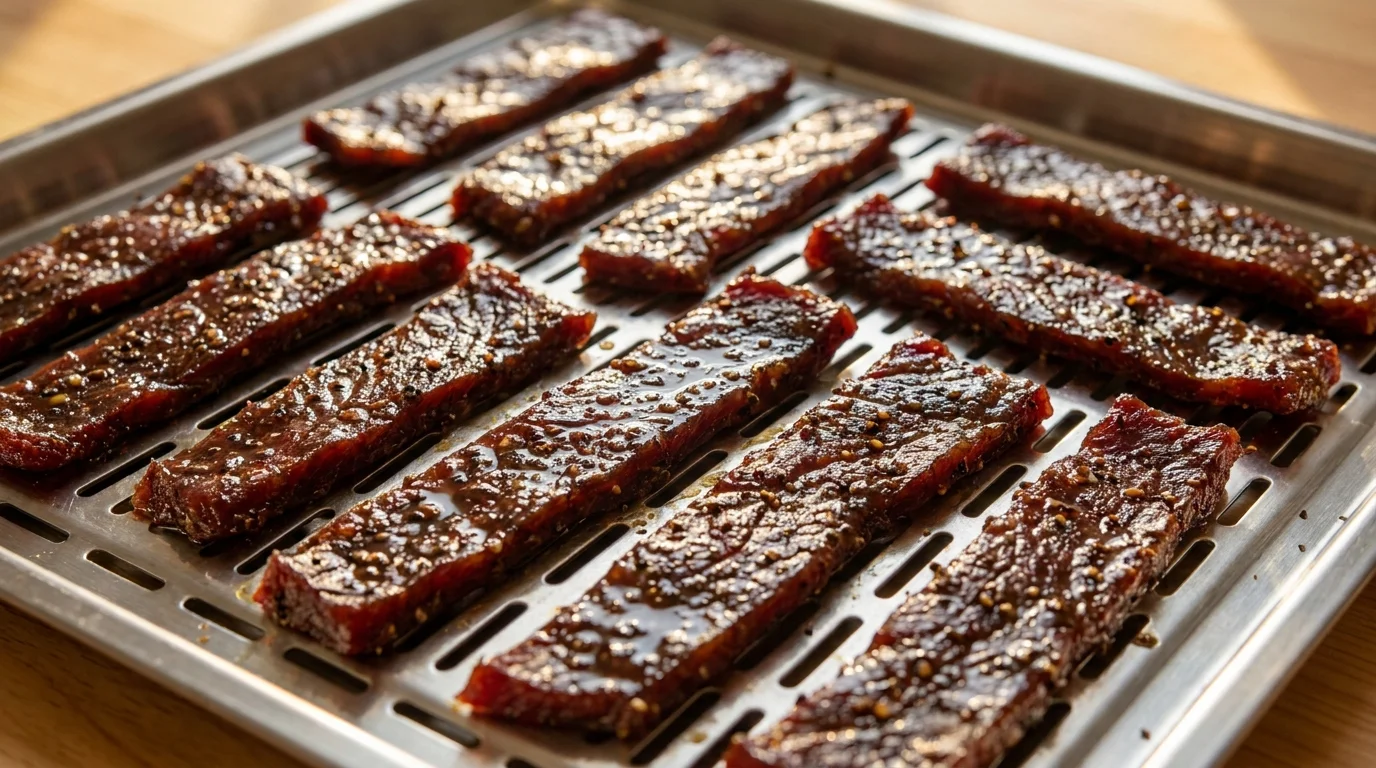
Jerky is one of the main uses for a dehydrator, and the method is short. Start with fresh lean meat, beef topside, kangaroo or chicken breast, and trim every scrap of fat, because fat does not dry and it is what turns a batch rancid in the jar.
- Slice thin and even. Partly freeze the meat first so it firms up, then cut across the grain for a jerky that bites cleanly, or with the grain if you like it chewy. Uniform thickness is the whole game: a mandoline slicer or a sharp knife and a steady hand beats any setting on the machine.
- Marinate in the fridge. Soy, worcestershire, garlic and pepper is the standard Australian base. Most recipes ask for a few hours to overnight, covered, in the fridge rather than on the bench.
- Pat the strips dry. Blot with paper towel before they go on the tray. Surface moisture slows drying and leaves the finish tacky.
- Lay the strips out with gaps. Airflow does the drying, so nothing overlaps. On a stackable unit, rotate the trays partway through.
- Follow the maker's recipe. Use your dehydrator maker's recipe for the meat you are preparing, including any pre-heating step it specifies.
- Finish and cool. Cool them fully before storage, because warm jerky traps steam and invites mould.
Store the finished batch airtight. A jar in a dark cupboard is fine for a few weeks; a vacuum sealer is what stretches a big batch out for months and is the appliance most people buy second.
Which food dehydrator is best for jerky in Australia?
For jerky, start with the Devanti 9 Tray 700W, rated 4.5 from 122 ratings, for volume or the Sunbeam Food Lab DT6000 for digital control. Both listings state a top setting of 70 degrees C and a timer of up to 19.5 hours. Jerky safety depends on the method, so follow your dehydrator maker recipe for the meat.
Can you leave a dehydrator running overnight?
Check your manual first. The Sunbeam Food Lab listing states a timer of up to 19.5 hours, automatic shut off when the time ends and overheat protection. The Devanti 9 Tray lists the same 19.5 hour timer and overheat protection. Set the timer before you leave it and follow the maker instructions.
How do you make biltong in a food dehydrator?
Biltong is not jerky dried differently, it is a different product. The meat goes in thicker, usually as whole strips rather than slices, it is cured in vinegar and a coarse salt, coriander and pepper rub rather than a soy marinade, and it is air-dried at a lower temperature over a longer period so the inside stays red.
Purpose-built biltong boxes run cooler and slower again, so treat a dehydrator batch as the fast version rather than the traditional one.
Is a dehydrator worth it, and what it is not
A dehydrator is worth it if you dehydrate regularly or in volume: a gardener clearing a glut, a hiker or hunter making jerky, a parent making sugar free fruit leather, or a dog owner making single ingredient treats. Bought once and used through the seasons, it can save on servo jerky bags and bins of spoiled fruit.
But be honest about what it isn't. It's slow: as a general guide, jobs take 6 to 14 hours or more, so it's an overnight or all day appliance, not a weeknight one. It takes space, and the larger units are bulky to store. It's not a daily use appliance like a kettle or an air fryer. It earns its keep in bursts. And on cheaper units, expect hot and cold spots that mean rotating trays. If you'd dry food maybe once a year, the dehydrate mode on an existing air fryer may be enough. If you want one pot appliances instead, see the multi cooker guide. If you can already picture three things you'd make this month, buy the dehydrator. For the full picture of which appliances belong in a new kitchen first, see our kitchen essentials guide, and for the everyday cooking workhorses, the best microwave guide.
Where do you buy a food dehydrator in Australia?
Our picks are Amazon AU listings: the Devanti 9 Tray 700W is sold by Artiss Furnishings and the Sunbeam Food Lab DT6000 by Amazon AU. As you move up the range, look for an adjustable temperature range, a timer and more trays. The shops are listed below.
Which shops stock food dehydrators?
Kitchen Warehouse, Sous Vide Chef and Raw Blend each run dehydrator collection pages in Google AU results for this search. Amazon Australia is where our picks are listed. We do not price the non Amazon options here because we only publish figures we can pull from a live listing we check.
What about BioChef, Benchfoods, Excalibur, Ezidri and Wolstead PureDry?
Benchfoods, Excalibur, Ezidri and Wolstead PureDry also appear in Google AU results and in AI answers for this search. BioChef is another name people search for. We have not captured those listings, so we give no rating, no pricing and no ranking. None of them is among our picks.
Which type of food dehydrator is best, stackable or shelf?
The listings we checked do not settle stackable versus shelf, so choose by tray count and airflow. The Devanti 9 Tray 700W lists nine trays, and the Sunbeam Food Lab lists horizontal air flow with no need to rotate trays. For a box shaped unit, check how many trays it holds and what the listing says about airflow.
What does CHOICE say about food dehydrators?
CHOICE publishes a food dehydrator buying guide, and it ranks second in Google AU results for this search. We have not saved its model list or ratings, so check its picks against current listings before you buy. Use it for the general principles.
How do you dehydrate bananas?
Slice them into rounds of even thickness, about the same for every piece, lay them out with gaps so air moves around each one, and run the machine at 55 to 60 degrees C. Expect 6 to 14 hours depending on how thick you cut them and how full the machine is.
Take them out chewy for a soft banana chip or leave them longer for a brittle crisp. A squeeze of lemon juice over the slices before they go in slows the browning. Cool them fully before they go in a jar.
Frequently asked questions
What is the best food dehydrator in Australia in 2026?
The best food dehydrator in Australia for most households is the Devanti 9 Tray 700W. Its Amazon AU listing shows nine trays, 700W, a 35 to 70 degrees C range and a timer of up to 19.5 hours, with a 4.5 star rating from 122 ratings. The Sunbeam Food Lab is the digital alternative.
Which food dehydrator is best for jerky in Australia?
For jerky, start with the Devanti 9 Tray 700W, rated 4.5 from 122 ratings, for volume or the Sunbeam Food Lab DT6000 for digital control. Both listings state a top setting of 70 degrees C and a timer of up to 19.5 hours. Jerky safety depends on the method, so follow your dehydrator maker recipe for the meat.
Is a food dehydrator better than using the oven?
Usually yes, if you dry food regularly. A dehydrator is built for low heat and constant airflow, and both the Devanti 9 Tray 700W and the Sunbeam Food Lab list ranges starting at 35 degrees C. For one batch a year, an air fryer dehydrate mode may be enough.
Can you make jerky in a food dehydrator?
You can, but a home dehydrator cannot prove a meat process safe, so temperature alone is not the control. Follow the recipe from your dehydrator's maker for the meat, including any pre heating step it specifies. Check the maker's manual for the temperature and time it gives for jerky.
What temperature should I dehydrate different foods at?
Different foods need different temperatures: herbs at around 35 to 40 degrees C to preserve their colour and oils, and fruit and vegetables at around 55 to 60 degrees C. An adjustable thermostat lets you choose the setting for each food.
How long does food take to dehydrate?
It depends on the food and how thickly it's sliced, but most jobs run long: herbs can finish in a few hours, while fruit, vegetables and jerky typically take 6 to 14 hours or more. A dehydrator is an overnight or all-day appliance, not a quick one, so plan to start a batch and leave it running.
Why does a dehydrator dry unevenly, and how do I fix it?
Uneven drying comes down to airflow and crowding. If the top and bottom trays dry at different rates, rotate the trays partway through; the Sunbeam Food Lab listing says its horizontal air flow means no need to rotate trays. Slice everything to a uniform thickness, leave gaps between pieces for airflow, and don't overload the trays.
Is a food dehydrator worth it for an average household?
It's worth it if you'll use it regularly or in volume: clearing a garden glut, making jerky for hikes, sugar free fruit leather for lunchboxes, or single ingredient dog treats. It can save on servo jerky and spoiled fruit. If you'd dry food once a year, the dehydrate mode on an existing air fryer is a space saving alternative.
Should I buy a digital or analog food dehydrator?
Digital control is worth paying for if you dehydrate often. The Sunbeam Food Lab lists 8 preset temperatures from 35 to 70 degrees C, a countdown timer up to 19.5 hours and automatic shut off. The Devanti 9 Tray 700W lists an LCD touch timer and adjustable heat.
Do dehydrators use a lot of electricity?
Check the rated power: the Devanti 9 Tray is listed at 700W and the Sunbeam Food Lab at 500W. Multiply kilowatts by hours to get kilowatt hours, so 700W for ten hours uses seven kilowatt hours. Multiply that by your own tariff per kilowatt hour to see what a batch costs.
Can you leave a dehydrator running overnight?
Check your manual first. The Sunbeam Food Lab listing states a timer of up to 19.5 hours, automatic shut off when the time ends and overheat protection. The Devanti 9 Tray lists the same 19.5 hour timer and overheat protection. Set the timer before you leave it and follow the maker instructions.
What is the best dehydrator for dog treats?
Dog treats like sweet potato slices or thin liver strips need the same low steady drying as fruit and jerky. Pick by capacity and temperature range: the Devanti 9 Tray lists nine trays and 35 to 70 degrees C, and the Sunbeam Food Lab lists 8 preset temperatures from 35 to 70. Follow the maker's instructions for meat.