If your kitchen is short on bench space (and most Australian apartments and first homes are), a multi cooker is the single most space-efficient appliance you can buy. One unit combines a pressure cooker, a slow cooker, a rice cooker, a steamer, a sauté pan and a yoghurt maker. That is six gadgets you no longer have to store, replaced by one bench appliance. The premium tier adds an air fryer on top, so it can genuinely replace most of the cooking gadgets a household owns.
The trade-off the marketing rarely mentions is honest in this guide: a multi cooker is brilliant at being a jack-of-all-trades, but a dedicated tool still wins on its one job. It cooks rice, but a dedicated rice cooker does it slightly better. It slow-cooks beautifully, but if that is all you will ever do, a basic slow cooker is cheaper and simpler. The reason to buy a multi cooker is that it does many jobs well enough, in one footprint. You choose speed or convenience per meal.
One Appliance Replaces Six: The Core Pitch
The heart of a multi cooker is an electric pressure cooker with extra modes bolted on. A sealed pot and a programmable element let one machine do the work of a cupboard full of appliances. For a small kitchen, that is the whole appeal. You get the function of six things in the space of one.
What it replaces, in plain terms: a stovetop or electric pressure cooker (fast cooking of tough cuts, stews, curries, beans and stocks); a slow cooker (all-day set-and-forget braising); a rice cooker (hands-off rice and grains); a steamer (vegetables, dumplings, fish); a sauté or frying pan (browning meat and softening onions before the main cook); and a yoghurt maker. The best-for-most pick, the Instant Pot Duo, covers all six.
Pressure Cooking, Explained Simply
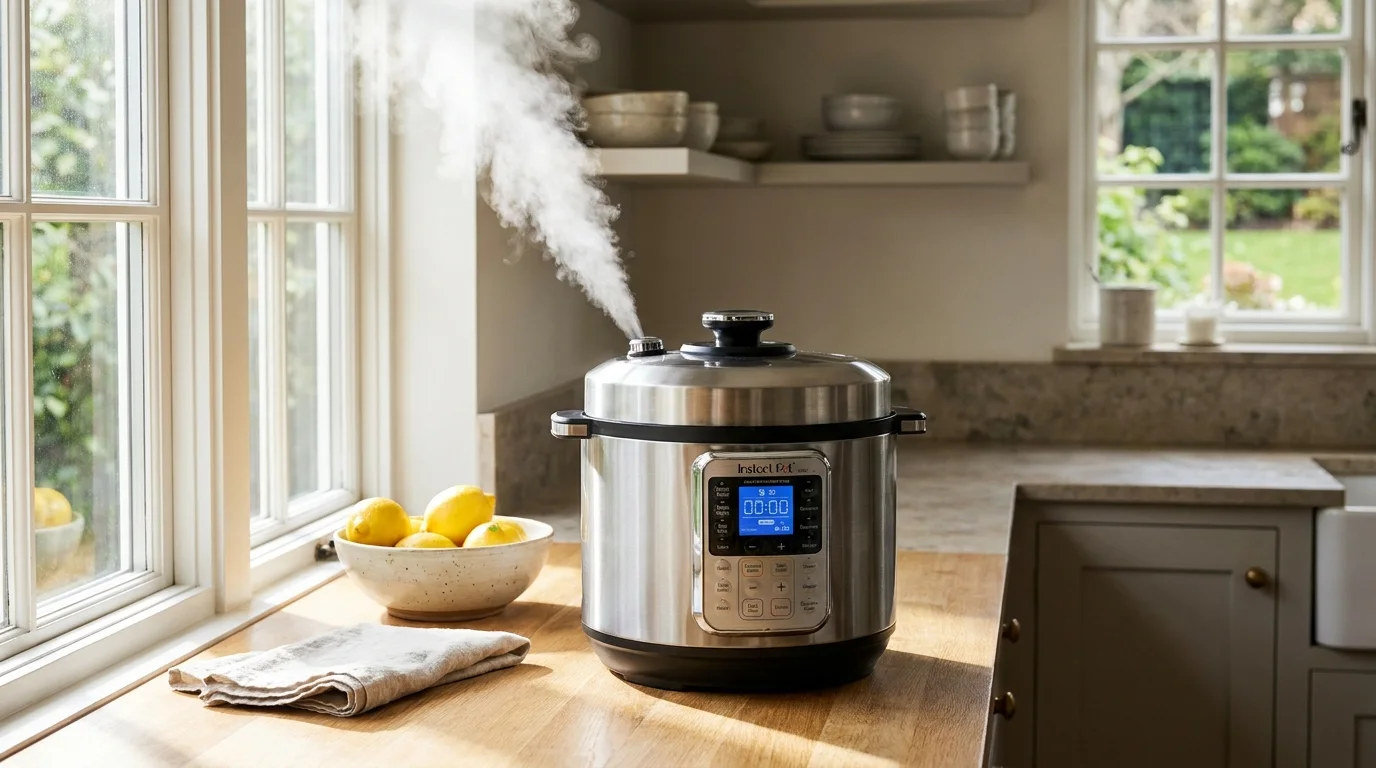
A pressure cooker is a sealed pot. As the liquid inside heats, it produces steam that cannot escape, so pressure builds. That higher pressure raises the boiling point of water above the usual 100°C, which means food cooks at a higher temperature and finishes far faster, up to around 70% faster than conventional methods. It is the reason a beef cheek that needs three hours in the oven can be fall-apart tender in under an hour.
When the cook finishes you release the trapped steam in one of two ways. Natural release lets the pressure drop on its own over 10-20 minutes: gentler, and best for large cuts, stocks and anything foamy like beans or porridge. Quick release opens a valve to vent the steam fast, so you can serve sooner: best for vegetables and seafood you do not want to overcook.
One honest caveat the brand names gloss over: it is not literally instant. The machine has to come up to pressure before the cook timer even starts, which takes roughly 10-15 minutes depending on how full and how cold the pot is. So a recipe that says 8 minutes of pressure cooking is really closer to 25 minutes door to door. It is still dramatically faster than braising for hours. Just do not expect the timer on the display to be the whole story.
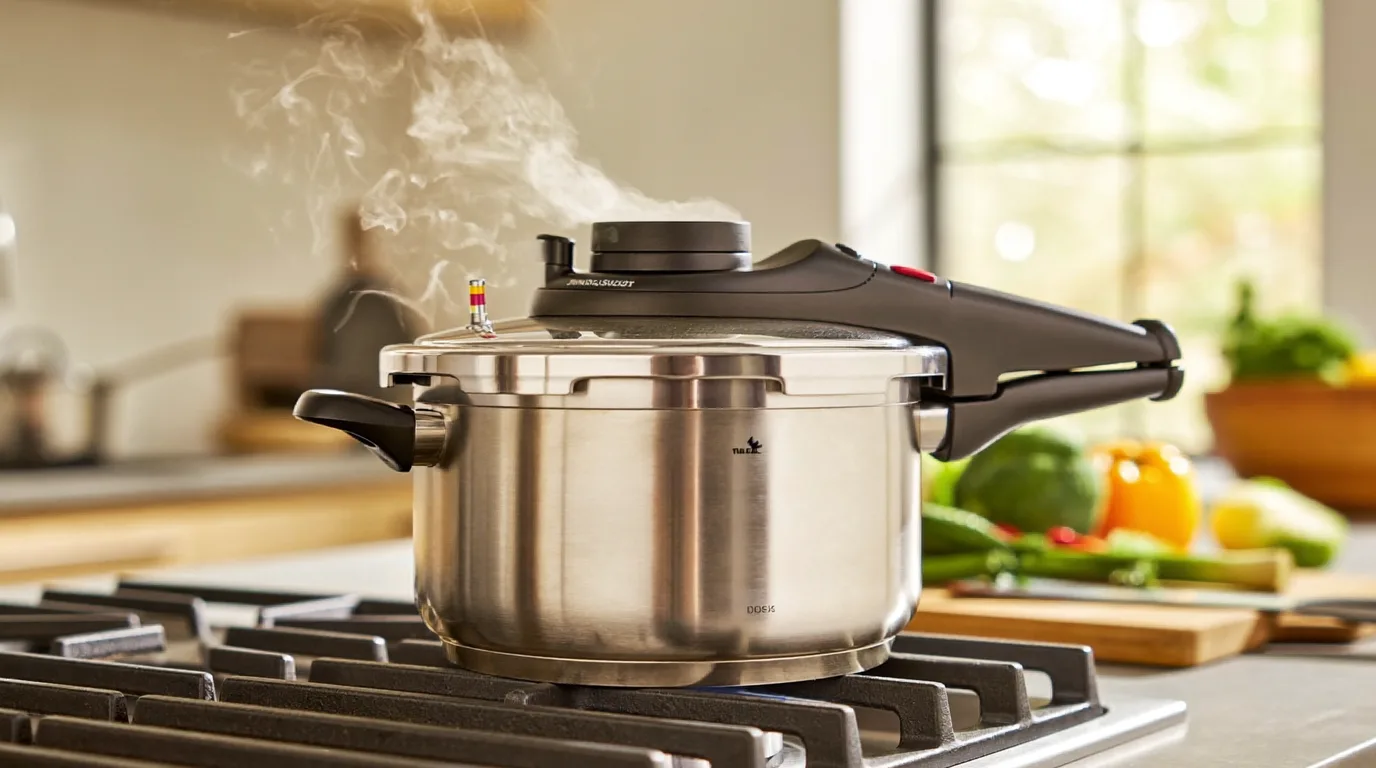
If you want the speed without the extra modes, a sealed stovetop pot is cheaper, faster to pressure and has no electronics to fail. Our guide to the best stovetop pressure cookers in Australia compares six of them.
Pressure Cook vs Slow Cook: When To Use Each
The reason a multi cooker does both is that they solve opposite problems. Knowing which to reach for is most of the skill.
- Pressure cook when you are short on time. It tenderises tough, cheap cuts and cooks dried beans, curries, soups and stews in well under an hour. This is your weeknight mode: decide at 6pm, eat by 7pm.
- Slow cook when you are short on attention. Load it in the morning, set it low, and walk away for six to eight hours. The food cooks gently all day and is ready when you get home. This is your set-and-forget mode for busy or out-of-the-house days.
Most weeks you will use both. That flexibility (speed or convenience, your choice per meal) is exactly what a single-purpose appliance cannot give you, and it is why the multi cooker has become the default first-home cooking appliance for so many households.
7-in-1 vs 11-in-1 vs 14-in-1: The Function-Count Game
Every multi cooker is sold by a headline number, and those numbers keep climbing. It is worth understanding what they actually count, because the figure is mostly marketing. The number is the count of selectable modes, and only a handful of those modes do real work.
The functions that genuinely matter are pressure cook, slow cook, sauté, rice and steam. If a machine does those five well, it covers the vast majority of what any household will ever cook in it. Everything beyond that (yoghurt, sous vide, dehydrate, multigrain, cake, egg) is a nice-to-have that most people try once and rarely return to. If dehydrating is the one you would genuinely use, a dedicated food dehydrator dries a full batch across several trays at once. If it is the sous vide preset you would actually reach for, a sous vide immersion circulator clamps to any pot you already own and holds the water at the temperature you set for the whole cook.
So an 11-in-1 is not meaningfully more capable than a 7-in-1 just because it has four more presets; those presets are often just preset times for the same pressure-cook mode. Do not pay extra for a bigger number on the box. Pay for the functions you will actually use, plus build quality and a pot size that fits your household. The one number that does change the game is the air-fry tier, which is a different mechanism entirely, covered next.
The Air-Fryer / Crisp Tier: The Real Upgrade Reason
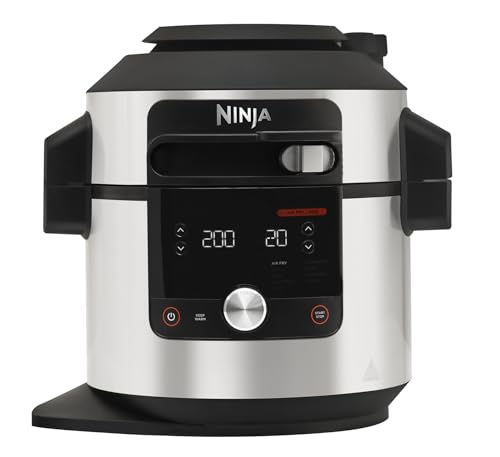
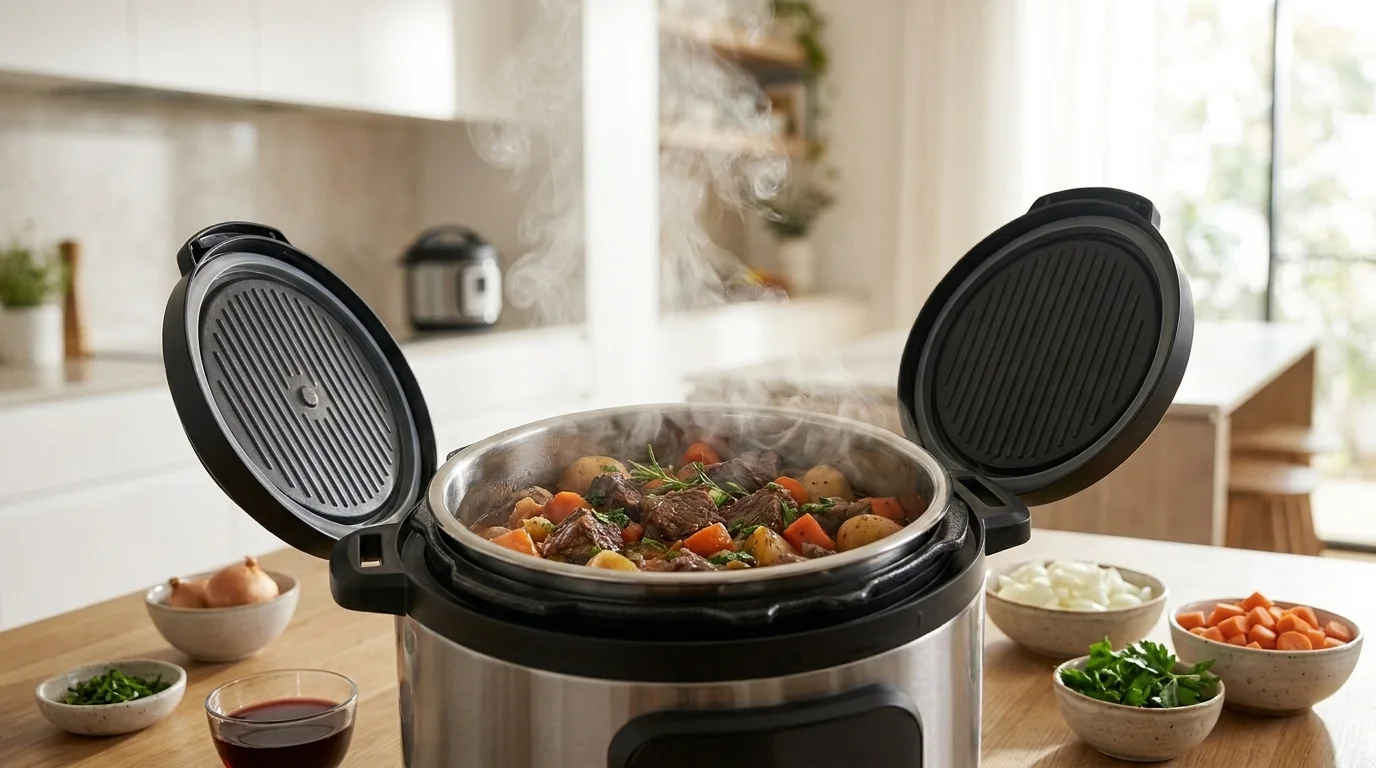
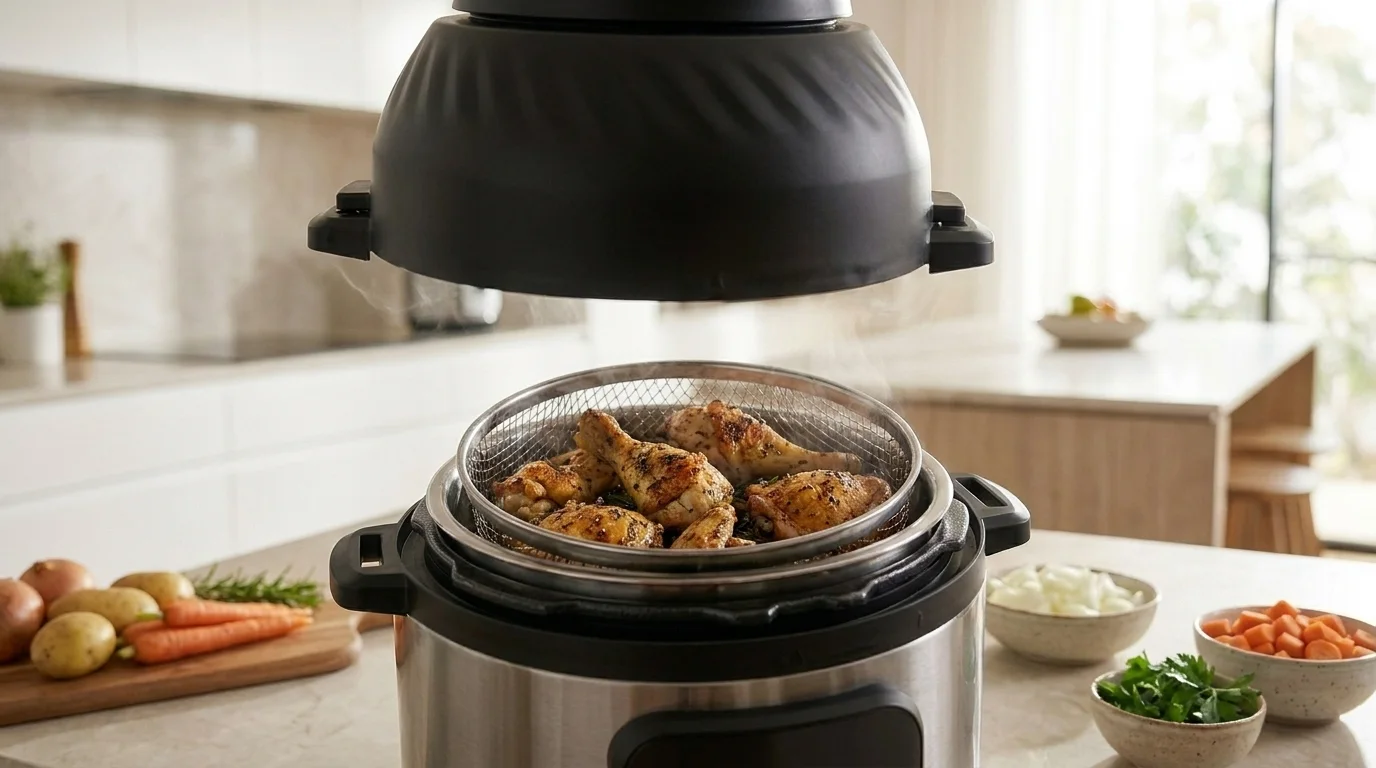
The genuine reason to spend more is air frying. Standard multi cookers can pressure-cook and slow-cook, but they cannot make anything crispy. The lid seals in steam, which is the opposite of what a crunchy finish needs. The premium tier solves this. Models like the Ninja Foodi SmartLid add a crisping lid with a powerful fan, so the same machine also works as an air fryer.
In practice that means one appliance can do the two-stage cook that home cooks love: pressure-cook a chicken or a pork belly until it is fall-apart tender, then switch the same pot to air-fry or crisp to brown and crackle the skin: no second appliance, no transferring food, no swapping lids on the Ninja. If you were otherwise going to buy both a multi cooker and an air fryer, the crisp tier folds them into one footprint and usually costs less than buying the two separately. Neither tier replaces a deep fryer, because wet batter needs a full bath of hot oil to set a crust.
What Size Multi Cooker Should You Buy?
Capacity is measured in litres, and it is the spec people most often get wrong by buying too small to save bench space.
- About 3L suits singles and couples cooking small portions. It is compact, but it will frustrate you the moment you want to batch-cook.
- About 5.7-6L is the family default and the size most people should buy. It comfortably feeds a household of four to six and still handles a big batch for leftovers or the freezer.
- About 7.5-8L suits large families, regular meal preppers and anyone who batch-cooks for the week ahead.
A multi cooker runs perfectly well part-full, so there is no penalty for buying bigger than you need most nights, but there is a real penalty for buying too small the one night you have people over. If you are unsure, size up.
Is Electric Pressure Cooking Safe?
This is the question that stops a lot of buyers, usually because of a parent or grandparent who had a stovetop pressure cooker that hissed and rattled alarmingly. Modern electric pressure cookers are a completely different machine. They are designed around safety from the ground up.
A current model carries ten or more independent safety systems: a lid that physically locks and cannot be opened while the pot is under pressure, an overpressure valve that vents excess steam automatically, overheat protection that cuts the element, and sensors that will not start a cycle if the lid is not sealed correctly. Used as the manual instructs, they are very safe, far safer than the old stovetop units they replaced.
Features That Matter In Australia
Beyond size and the air-fry decision, these are the things worth checking before you buy:
- Both pressure and slow cook present: the whole point of the category. Confirm the model genuinely does both, not just one.
- A sauté or brown function: lets you brown meat and soften onions in the same pot before the main cook, which builds flavour and saves washing a separate pan.
- The function set you will actually use: pressure, slow, rice, steam and sauté covers nearly everyone. Ignore the rest of the count.
- Inner pot material: stainless steel is more durable and browns better; non-stick is easier to clean but wears over time. Both are fine choices; just know the trade-off.
- The air-fry / crisp tier: only if you want to replace an air fryer too.
- Included accessories: a steam rack is standard; a crisping basket comes with the air-fry models. Check what is in the box.
- Dishwasher-safe parts: a removable, dishwasher-safe pot and lid components make daily use far less of a chore.
- Recipe and community support: the Instant Pot ecosystem is unmatched here, which genuinely shortens the learning curve.
The Honest Trade-Offs
A multi cooker is one of the best-value appliances you can put in a small Australian kitchen. It declutters the cupboards, suits meal prep and batch cooking, and is faster and more energy-efficient than heating a whole oven for a single dish. But it is not magic, and a few trade-offs are worth knowing before you buy.
There is a genuine learning curve in the first couple of weeks while you learn release methods and timings. The come-to-pressure time means it is not literally instant. It is a bulky thing to find bench or cupboard space for. The very cheapest do-everything units do nothing brilliantly, so a recognised brand is worth the small premium. And if you only ever slow-cook, a dedicated slow cooker is cheaper; if rice is your daily staple, a dedicated rice cooker cooks it slightly better. For setting up a whole kitchen from scratch, our kitchen essentials guide covers where the multi cooker fits in the wider build-out.
The Bottom Line
For most households the Instant Pot Duo is the safe, well-supported default at the right family size. Go budget with the Russell Hobbs 11-in-1 if you want the core jobs covered for the lowest price, and step up to the Ninja Foodi SmartLid if you want one machine that also air-fries: pressure-cook then crisp in the same pot, and leave the standalone air fryer at the shop.
Frequently Asked Questions
What is a multi cooker and what does it replace?
A multi cooker is an electric pressure cooker with extra modes built in, so one bench appliance does the job of six: a pressure cooker, a slow cooker, a rice cooker, a steamer, a sauté pan and a yoghurt maker. It is ideal for small Australian kitchens and apartments where you cannot store six separate gadgets. The premium tier adds an air fryer on top as well.
Is a multi cooker the same as an Instant Pot?
Instant Pot is a brand, not the category. It is just the most famous multi cooker, the way Esky is a brand of cooler. All Instant Pots are multi cookers, but not all multi cookers are Instant Pots. Russell Hobbs and Ninja make multi cookers too. The Instant Pot Duo earns its reputation mainly through reliability and the largest recipe community of any model.
What is the difference between pressure cook and slow cook?
They solve opposite problems. Pressure cooking seals the pot and builds steam to cook food up to around 70% faster, your weeknight mode for tough cuts, stews and curries in under an hour. Slow cooking runs low and gentle for six to eight hours so you can load it in the morning and walk away, your set-and-forget mode. A multi cooker does both, so you choose speed or convenience per meal.
Is electric pressure cooking safe?
Yes. Modern electric pressure cookers are nothing like the old stovetop ones that hissed and rattled. They carry ten or more independent safety systems, including a lid that locks and cannot be opened under pressure, an overpressure valve that vents steam automatically, and overheat protection. Used as the manual instructs, they are very safe.
What size multi cooker should I buy?
About 3L suits singles and couples, around 5.7 to 6L is the family default that most people should buy, and 7.5 to 8L suits big families and batch cooking. A multi cooker runs fine part-full, so there is no penalty for sizing up, but a too-small pot will frustrate you the night you have guests. If unsure, buy the larger size.
Is the air-fryer multi cooker worth it?
It is worth it if you would otherwise own both a multi cooker and an air fryer. Models like the Ninja Foodi SmartLid add a crisping lid, so the same machine pressure-cooks meat until it falls apart and then air-fries it crispy in the same pot. Folding two appliances into one footprint saves bench space and usually costs less than buying both separately. If you never want crispy food, save the money and buy a standard model.
Which multi cooker should I buy?
For most households the Instant Pot Duo at around $139 is the best-for-most pick, the right family size, reliable, and backed by a huge recipe community. The Russell Hobbs 11-in-1 at around $109 is the budget all-rounder that covers the core jobs for less. The Ninja Foodi SmartLid at around $324 is the premium do-everything pick because it also air-fries, replacing your air fryer too.