Few foods are as Australian as a hot pie. The best pie maker in Australia for 2026 is the Sunbeam Pie Magic 4 Up, with the Breville Quick and Easy LPI285 the one that turns out 8 party pies at a time and the Giles and Posner Mini the budget buy, though the Giles was unavailable at our 8 October 2026 check. We queue for them at the footy, we hand round party pies at every barbecue and birthday, and we tuck them into school lunchboxes through winter. A bench-top pie maker brings all of that home, and once you own one, the bakery run starts to feel like a tax you no longer need to pay.
The appeal is simple. A pie maker heats two thick non-stick plates that crimp and seal pastry into individual pies, cooking them from both sides at once. That means a crisp, properly browned base (the part a conventional oven always struggles with) in well under fifteen minutes, with no preheating a giant cavity and no soggy bottoms. You get individual portions, you control exactly what goes inside, and a homemade pie made from mince and a sheet of shop bought pastry is an easy alternative to the servo version.
This guide covers the pie makers we'd genuinely recommend in Australia for 2026: the iconic Sunbeam Pie Magic, a premium Breville built for entertaining and a budget mini maker that was unavailable at our 8 October 2026 check, plus three in-stock additions, a Quest double deep-fill maker, a Morphy Richards 4-in-1 multipress and a Nifty Good four-piece pie maker. The single most important thing to understand before you buy is below, and it is not the one most shoppers fixate on.
At a glance: all six pie makers
The pie makers side by side, with ratings. Well count is not capacity on its own: the Breville's eight wells make smaller pies than the Sunbeam's four, which is the point the next section explains.
| Pick | Best for | Key spec | Sealing | Rating |
|---|
| Giles & Posner Mini Pie Maker | Best budget, cooking for one (unavailable at our 8 October 2026 check) | 1 to 2 mini deep-fill pies, 550W | Built-in crimping edge | 4.0 |
| Sunbeam Pie Magic 4 Up | Best for most, family dinner | 4 generous deep-fill pies, pastry cutter included | Edge crimper and handle latch | 4.7 |
| Breville the Quick and Easy Pie Maker LPI285 | Best for a crowd and lunchboxes | 8 party-size pies, no pastry cutting, countdown timer | Seal and Snap plates | 4.6 |
| Quest 35970 Double Deep Fill Pie Maker | Two deep-fill pies, imported | 2 pies, 9cm pastry cutter included, 700W | Built-in crimping edge | 4.4 |
| Morphy Richards 4-in-1 Multipress | Pies plus jaffles, paninis and waffles | Interchangeable plates, adjustable thermostat | Pie plate set among four | 4.2 (6 ratings) |
| Nifty Good 4 Piece Pie Maker | Four pies, sold by GiftBox Australia | 4 pies, per the listing title | Not stated in the listing | New listing (first available 22 September 2026) |
Best overall: Sunbeam Pie Magic 4 Up
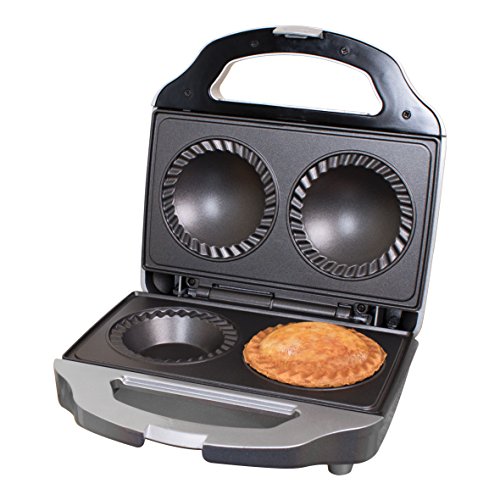
The Sunbeam Pie Magic 4 Up is the pie maker we would buy for most households. It makes four generous, full-sized deep-fill pies at once, includes a pastry cutter sized to the plates, and seals with an edge crimper plus a handle latch. It was in stock and sold by Amazon AU, with 4.7 stars from 650 ratings, the highest rating of the pie makers here.
How to choose a pie maker
The number of wells is not the headline: pie SIZE is
This is the buying insight almost everyone gets backwards. It is tempting to read 8 pies and assume it makes more food than a 4-pie model, but the Breville's eight wells make smaller party pies, while the Sunbeam's four make full-sized deep-fill pies. How much food a maker turns out depends on both the number of wells and the size of each pie, so compare pie size, not just the count.
Here is the honest spread across the pie makers in this guide:
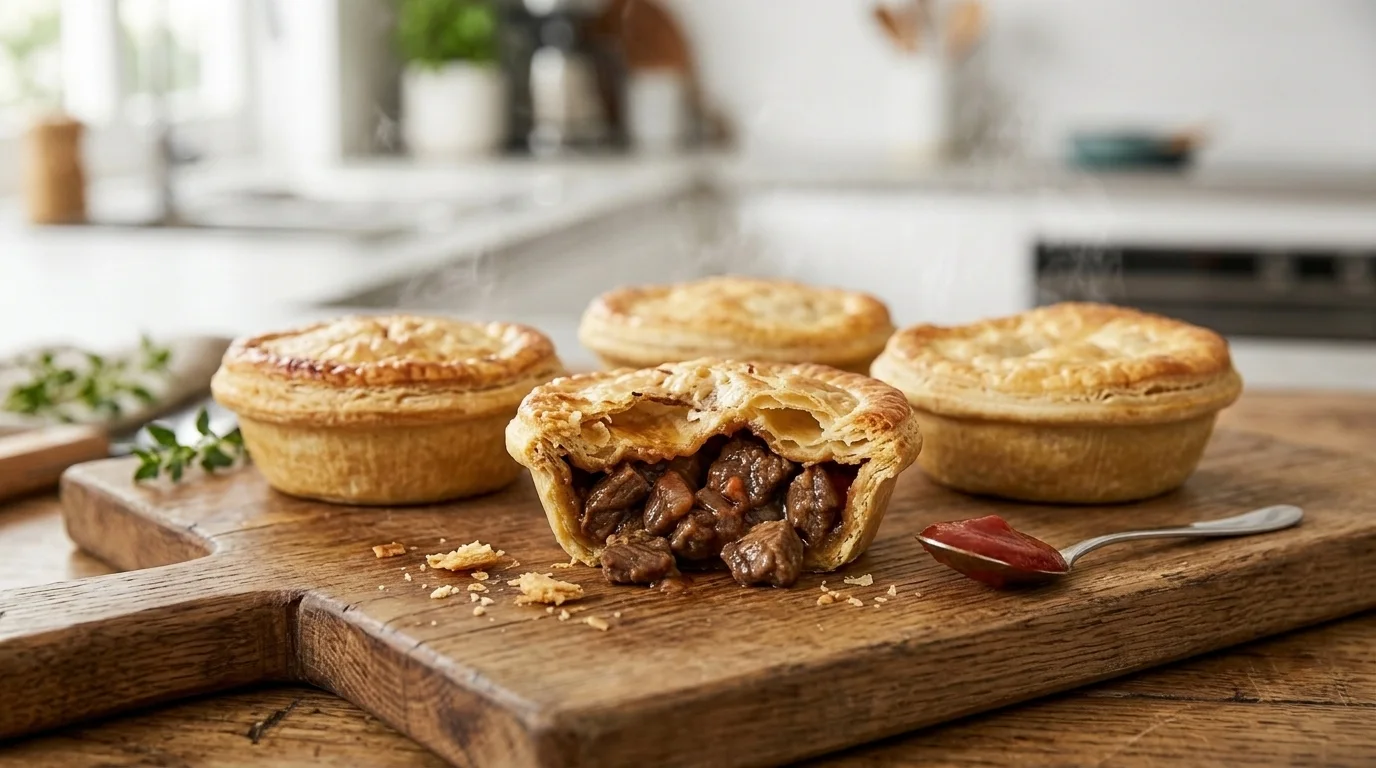
- Sunbeam Pie Magic 4 Up: 4 generous, full-sized deep-fill pies. These are proper meal pies; one or two is a satisfying dinner.
- Breville the Quick and Easy Pie Maker: 8 smaller party-pie-sized pies. Great for a crowd or kids' lunches, but each pie is the size you'd pass around at a party, not a full dinner pie.
- Giles & Posner Mini Pie Maker: 1 to 2 mini deep-fill pies at a time. Perfect for one person; not a batch machine. It was unavailable at our 8 October 2026 check.
- Quest 35970: 2 deep-fill pies at a time, with a 9cm pastry cutter included, per its listing.
- Morphy Richards 4-in-1 Multipress: pie plates are one of four interchangeable plate sets, alongside jaffle, panini and waffle plates.
- Nifty Good 4 Piece Pie Maker: 4 pies, going by its listing title; the listing does not state the pie size.
So match the maker to the job. Want a few proper pies for a family dinner? The Sunbeam's four full-sized wells win. Catering party pies for a gathering or filling lunchboxes for the week? The Breville's eight smaller wells make more sense. Cooking for one in a small kitchen? The mini maker is all you need.
Is a pastry cutter included?
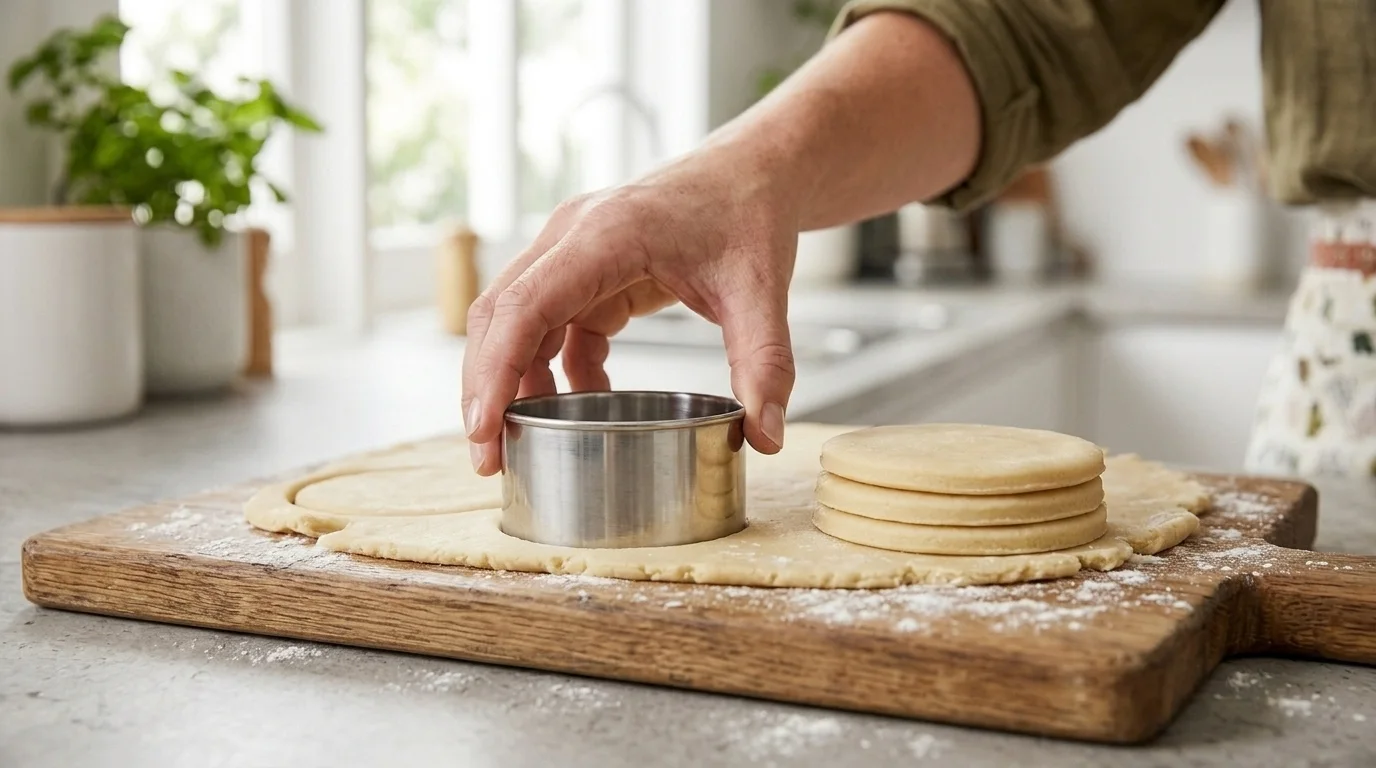
A cutter sized to the plates is a small thing that makes a real difference. The Sunbeam Pie Magic includes one in the box, so your pastry rounds match the wells first time, every time, no measuring, no guesswork, far less waste. The Breville sidesteps the problem differently: you lay two whole sheets of pastry straight on and its plates do the shaping, so there's no cutting at all. The budget Giles & Posner uses a built-in crimping edge to seal but expects you to rough-cut your own pastry to fit its small wells.
Sealing and crimping
A pie that leaks is a pie that welds itself to the plates and makes a mess. Look for a firm seal. The Sunbeam combines an edge crimper with a handle latch that clamps the lid down so the pies seal without leaking. The Breville's Seal and Snap plate design both seals the edges and snaps the finished pies apart for easy lifting. Even the budget Giles & Posner has a built-in crimping edge to close the pastry, modest, but it does the core job.
Non-stick, cleaning and storage
The Sunbeam Pie Magic, the Breville and the Giles & Posner all use non-stick top and bottom plates, which is non-negotiable, pastry and hot filling need to release cleanly. For cleaning, wipe the plates while they're still warm (cooled-on filling is the enemy) and never take a metal knife or a scourer to the coating. Storage matters more than people expect on a small bench: the Sunbeam stores upright with cord storage and non-slip feet, which keeps it out of the way between footy weekends.
What you can actually make in a pie maker
A pie maker is far more versatile than its name suggests. On the savoury side you've got the classics (chunky beef-and-gravy, steak-and-mushroom, chicken-and-leek, curried-veg), plus mini quiches, sausage rolls, frittatas and even pizza scrolls. The fillings are where a slow cooker earns its place alongside it: slow-cook a batch of pulled beef, lamb shank meat or a thick curry on the weekend, then spoon it into pies all week.
Sweet pies are where it really wins over kids. Think apple, apple-and-cinnamon, mixed berry, lemon curd, jam tarts, custard pies and even little chocolate self-saucing puddings. Some people use the deep wells for individual cakes and muffins too. A pie maker quietly becomes a dessert machine.
Pastry tips that make or break the result
- Shortcrust for the base, puff for the top. This is the bakery-standard combination: a sturdy shortcrust bottom that holds the filling without going soggy, and a light puff lid that rises golden. You can use all puff if you prefer a lighter pie, but an all-puff base can struggle to stay crisp under a wet filling.
- Shop-bought sheets are completely fine. A box of frozen shortcrust and puff sheets from any supermarket is exactly what most home cooks use. Let them thaw just enough to handle without cracking. If you are making your own pastry rather than buying sheets, a set of decent mixing bowls is the only other kit you need.
- You generally don't need to blind-bake. Because a pie maker heats the base directly and hard, the bottom crisps as it cooks: no separate blind-bake step like an oven pie. The exception is very wet fillings, where a thin layer of breadcrumbs or a slightly thicker filling helps.
- Don't overfill. Leave room for the lid to seal; an overfilled well is the number-one cause of leaks and welded pastry.
- An egg wash on the lid gives you that glossy, golden bakery finish.
Pie maker vs oven vs sandwich press
An oven can make beautiful pies, but it's slower (you preheat a whole cavity), it browns the top far better than the base, and a single large pie is harder to portion than individual ones. A pie maker beats it on speed, on crisp bases and on tidy single servings, which is exactly why it earns bench space.
People also ask whether a sandwich press can stand in. It can't, really. A press has flat or ribbed plates that flatten a sandwich; it cannot crimp and seal a pastry pocket. A press makes toasties and paninis; a pie maker makes sealed pies. With fixed plates they are complementary appliances, not substitutes, and many Australian kitchens happily own both; a waffle maker is usually a third machine again. The exception is a plate-swap appliance like the Morphy Richards 4-in-1 Multipress, which per its listing takes interchangeable pie, jaffle, panini and waffle plates in one appliance.
Where to buy a pie maker in Australia
This is a category Australian retailers own, so it is worth knowing the full shelf before you order. Kmart sells the Anko pie maker at the budget end of the category. Harvey Norman carries the Sunbeam Pie Magic Traditional 4 Up, Harris Scarfe the Smith and Nobel 4 Pie, Woolworths the Nifty Good 4 Piece, The Good Guys the Breville Quick and Easy, and Bunnings the Vikus. Big W stocks the Sunbeam range too. If you want to judge well depth and bench footprint before you buy, both are easier to see on a store shelf than in a listing photo, and the difference between four deep wells and eight party-pie wells is obvious in the hand. We do not earn anything on the in-store options and we have not compared them directly, so treat those as other places to look rather than as picks.
Cleaning and care
Treat the non-stick coating gently and a pie maker will last for years. Unplug it and let it cool slightly, then wipe the warm plates with a damp cloth or paper towel. Warm crumbs and filling lift off in seconds where cooled-on ones cling. Never submerge the body in water, and only ever use wood or silicone tools on the plates, never metal or abrasive scourers. For stubborn baked-on bits, drape a damp cloth over the cooled plate for a few minutes to soften them first. Store it where the lid stays shut and the cord is tidy, ideally upright if the model allows.
How we picked
We curate these picks from products on Amazon AU, cross-checked against manufacturer specifications and aggregated owner sentiment from Australian buyers. We did not lab-test these units over weeks and we won't pretend otherwise. We last checked stock, seller and ratings on 8 October 2026: the Giles and Posner mini was unavailable and stays listed with a dated note, the Quest 35970 sold through the Amazon UK Global Store, and the Morphy Richards multipress had only six ratings, which we state rather than hide. We sanity-check the specs against the maker's own listings and frame the trade-offs honestly, especially the pie-size difference that the marketing tends to gloss over. Prices are indicative in AUD and move around; check the live figure before you buy.
Also listed: Morphy Richards 4-in-1 Multipress
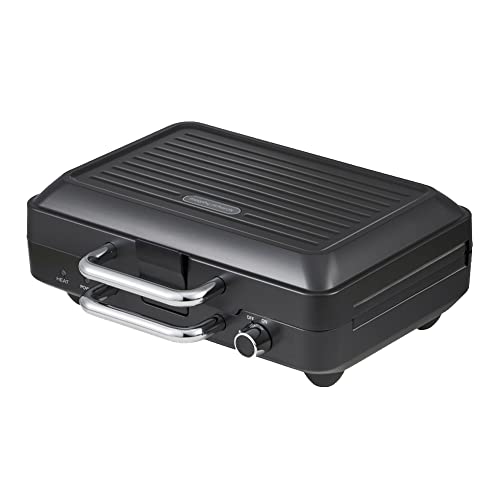
The Morphy Richards 4-in-1 Multipress is the pick if you want a pie maker that also earns its bench space the rest of the week. Its listing describes interchangeable plates for toasted jaffles, grilled paninis, waffles and savoury pies, an adjustable thermostat and non-stick plates. It was in stock, sold by Glen Dimplex Australia and shipped from Amazon, with 4.2 stars from only six ratings, so treat that score as early. Unlike a sandwich press, it has dedicated pie plates.
Also listed: Quest 35970 Double Deep Fill Pie Maker
The Quest 35970 makes two deep-fill pies at a time, with a built-in crimping edge and a double-sided pastry cutter for 9cm bases, according to its listing, and it carries 4.4 stars from 1,337 ratings. At our 8 October 2026 check it sold through the Amazon UK Global Store, and Amazon notes that UK imports may differ from local products, so check the plug type and the delivery, returns and warranty terms before you buy.
Also listed: Nifty Good 4 Piece Pie Maker
The Nifty Good is a four-piece pie maker, going by its listing title. It was in stock on Amazon Australia, sold and shipped by GiftBox Australia, on a listing first available on 22 September 2026. The listing gives little beyond the title, so check the plate size, the power and what comes in the box before you buy.
Frequently Asked Questions
What is the best pie maker in Australia in 2026?
For most Australian households the Sunbeam Pie Magic 4 Up is the best pie maker in 2026. It makes four generous, full-sized deep-fill pies at once, includes a pastry cutter sized to the plates, and uses an edge crimper plus a handle latch to seal pies without leaks. For one or two people on a budget the Giles & Posner Mini Pie Maker makes mini pies, though it was unavailable at our 8 October 2026 check, and for entertaining the Breville the Quick and Easy Pie Maker makes eight party-pie-sized pies with no pastry cutting.
Does a pie maker with more wells make more food?
Not necessarily, and this is a common mistake buyers make. Well count alone does not tell you capacity: the Breville's eight wells make smaller party pies than the Sunbeam's four full-sized ones. The Sunbeam Pie Magic makes four generous, full-sized deep-fill pies; the Breville makes eight smaller party-pie-sized pies; the Giles & Posner mini maker makes one or two mini pies. Choose based on whether you want a few proper meal pies or lots of little party-sized ones.
What is the difference between the Sunbeam Pie Magic and the Breville pie maker?
The Sunbeam Pie Magic 4 Up makes four full-sized deep-fill pies and comes with a pastry cutter, so it suits family dinners where you want a proper meal pie. The Breville the Quick and Easy Pie Maker makes eight smaller party-pie-sized pies, needs no pastry cutting (you lay two whole sheets straight on), and has a countdown timer, so it suits parties, batch cooking and kids lunches. The Sunbeam is about size and tradition; the Breville is about convenience and volume.
Can you make sweet pies in a pie maker?
Yes. Beyond savoury classics like beef-and-gravy and chicken-and-leek, a pie maker is great for sweet pies, apple, apple-and-cinnamon, mixed berry, lemon curd, jam tarts and custard pies. Many people also use the deep wells for individual cakes, muffins and little self-saucing puddings. It quietly doubles as a dessert maker.
What pastry should I use in a pie maker?
The bakery-standard combination is shortcrust for the base and puff for the lid, a sturdy bottom that won't go soggy and a light, golden top. Shop-bought frozen pastry sheets are completely fine and are what most home cooks use; just let them thaw enough to handle without cracking. You generally do not need to blind-bake, because the pie maker heats the base directly and crisps it as it cooks.
Can a sandwich press make pies?
No. A sandwich press has flat or ribbed plates designed to flatten a sandwich; it cannot crimp and seal a pastry pocket the way a pie maker does. A press makes toasties and paninis, a pie maker makes sealed pies, and with fixed plates they are complementary appliances rather than substitutes. If you want both functions from fixed-plate machines you need both, or a plate-swap appliance like the Morphy Richards 4-in-1 Multipress, which per its listing takes interchangeable pie, jaffle, panini and waffle plates.
How do you clean a pie maker?
Unplug it and let it cool slightly, then wipe the still-warm non-stick plates with a damp cloth or paper towel, warm filling lifts off easily while cooled-on filling clings. Never submerge the body in water, and only use wood or silicone tools on the plates, never metal or a scourer. For stubborn baked-on bits, lay a damp cloth over the cooled plate for a few minutes to soften them before wiping.
Is a pie maker worth it?
Yes, if your household eats pies more than about twice a month. A homemade pie from mince, vegetables and a sheet of shop bought pastry is a simple alternative to a servo pie. A modest run of homemade pies makes a pie maker worth having. It earns its bench space a second way as a dessert machine, because the same wells make apple pies, custard tarts and little self-saucing puddings.
Is the Kmart Anko pie maker any good?
It is a low-cost way to find out whether you will use a pie maker at all, and plenty of Australian households are perfectly happy with one. What you give up against the Sunbeam Pie Magic is well depth, plate coating durability and a pastry cutter sized to the plates. It is not on our list because we compare the Amazon AU range, so buy it in store at Kmart if you want it.
How do you use a pie maker?
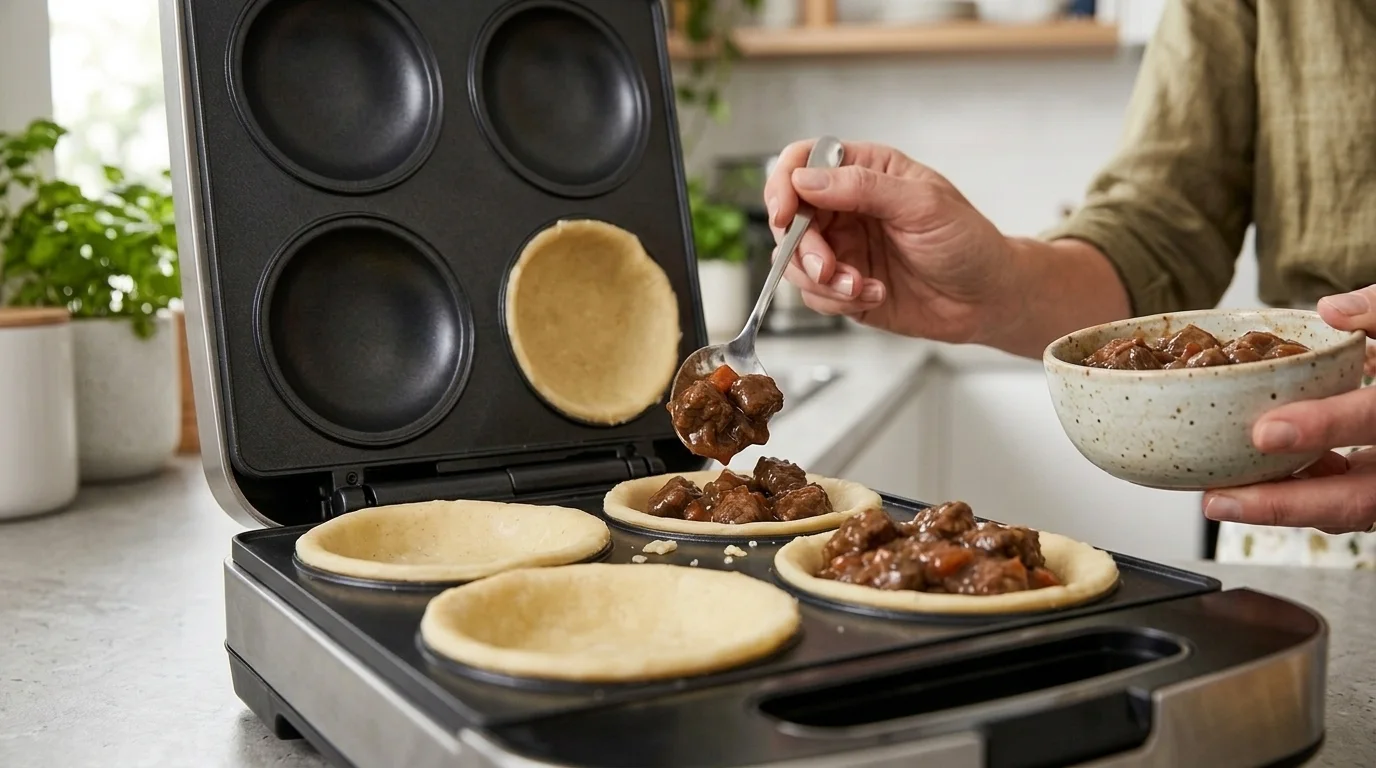
Five steps. Preheat it with the lid closed for about 3 minutes until the ready light comes on. Cut pastry rounds slightly larger than the wells, using the cutter if your model includes one, and press a shortcrust base into each well. Spoon in cold or barely warm filling and do not fill past the rim, because overfilling is the main cause of leaks. Lay a puff lid on top, brush it with egg wash and close the lid. Leave it alone until the pastry is golden.
How long does a pie take in a pie maker?
About 15 minutes of cooking after roughly 5 minutes of preparation, plus a 3 minute preheat. That is the timing Sunbeam quotes for a meat pie in its own recipes and it matches what these machines do: both plates heat at once, so the base browns at the same rate as the lid instead of steaming. Frozen pastry straight from the freezer adds a few minutes, and a very wet filling adds a few more.
Where can you buy a pie maker in Australia?
Everywhere, which is why prices vary so much. Kmart sells the Anko at the budget end, Big W and Harvey Norman carry the Sunbeam Pie Magic range, Harris Scarfe has the Smith and Nobel, Woolworths the Nifty Good, and The Good Guys the Breville. Amazon AU, which is where our picks are priced, is the easiest place to compare models side by side. A store visit is the easier way to judge well depth and bench footprint, which listing photos rarely show well.
What is the best machine for making pies?
For individual pies at home, a dedicated pie maker beats an oven on speed, crisp bases and tidy single servings. The Sunbeam Pie Magic 4 Up is the pie maker we would buy for most households. If you also want jaffles, paninis and waffles, the Morphy Richards 4-in-1 Multipress takes interchangeable pie plates.
Is there a big difference between premium and budget Sunbeam pie makers?
This guide compares one Sunbeam, the Pie Magic 4 Up, so it does not establish differences across Sunbeam's range. Against a budget maker such as the Kmart Anko, you give up well depth, plate coating durability and a pastry cutter sized to the plates. Compare pie size, well count and how the lid seals.