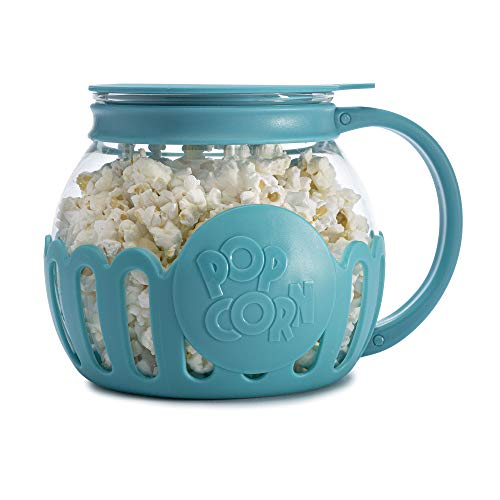
Amazon Australia sells and ships it itself, unlike the Russell Hobbs and the Whirley Pop, which sold through overseas Global Stores at the 9 October 2026 check, and its listing carries far more ratings than any other card. The trade off is the same as any microwave popper: results lean on your microwave, and it cannot make stovetop kettle corn. For a hot air machine see the Russell Hobbs Fiesta below, and for kettle corn the Whirley Pop.
The three ways to make popcorn
Every home popcorn maker is really just one of three methods in a different shell. Understand the methods and the right product almost picks itself. Here is the honest trade-off on each.
Microwave popcorn machines: Ecolution Micro-Pop (a simple glass jug)
The microwave method is the entry point. The Ecolution Micro-Pop is a 1.5-quart borosilicate glass jug that you fill with bare kernels and sit in the microwave, the hot air inside circulates and pops them with no oil required. The 3-in-1 lid measures your kernels and even melts a knob of butter on top while it runs, and because the jug is glass you watch the whole batch pop.
The appeal is obvious: it is the entry level option, there is no appliance to plug in or find bench space for, and it goes in the dishwasher. Crucially it replaces those wasteful single-use microwave bags, which are pricier per serve and come pre-loaded with oil and salt you cannot control. The catch is batch size, because it suits one or two people rather than a crowd, and your results lean on how good your microwave is, so it is worth checking the wattage of yours against our best microwave guide. For small kitchens, a household of one or two, or anyone who just wants popcorn without owning another gadget, it is the smart buy.
Hot air: Russell Hobbs Fiesta (healthiest and most hands off)
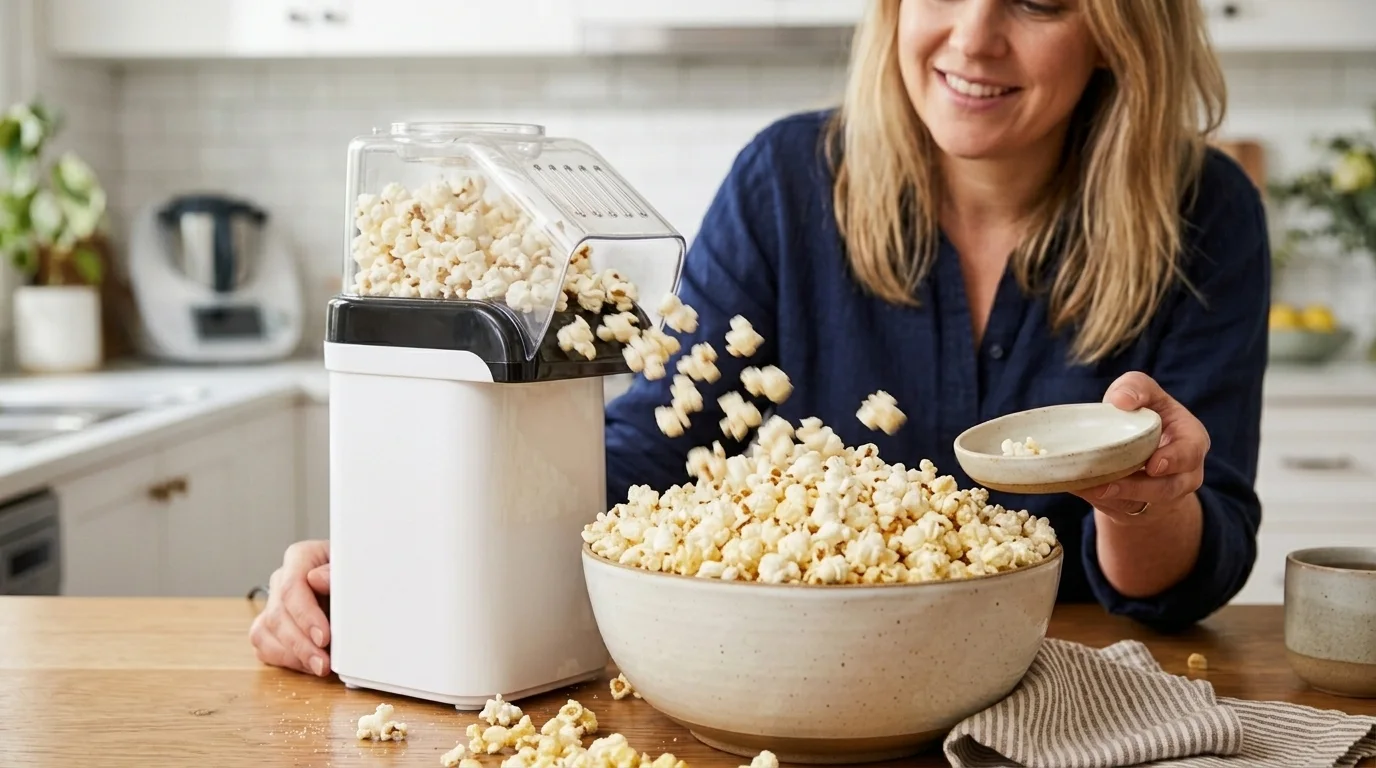
Hot air is the method to choose for big family batches without oil, and the Russell Hobbs Fiesta is our hot air pick. A 1290W element blasts hot air through the kernels with zero oil or fat, which makes it comfortably the healthiest way to pop, there is simply no added fat or calories beyond the corn itself. It is ready in under three minutes, the removable lid doubles as a corn measuring spoon (one spoon makes roughly 35-50g of popcorn), and the whole thing wipes clean.
It is the hot air pick for a reason: fast, big batch, hands off, kid friendly from about age 8, and from a recognised household brand. At the 9 October 2026 check the Amazon Australia listing we link sold through the Amazon Germany Global Store, so expect longer delivery and check that the plug suits an Australian power point before you buy. You flick it on, it pours a bowl of fluffy popcorn into your dish, and there is no pan to scrub. Pair it with a few healthier snacks from our best air fryer guide and movie night practically caters itself.
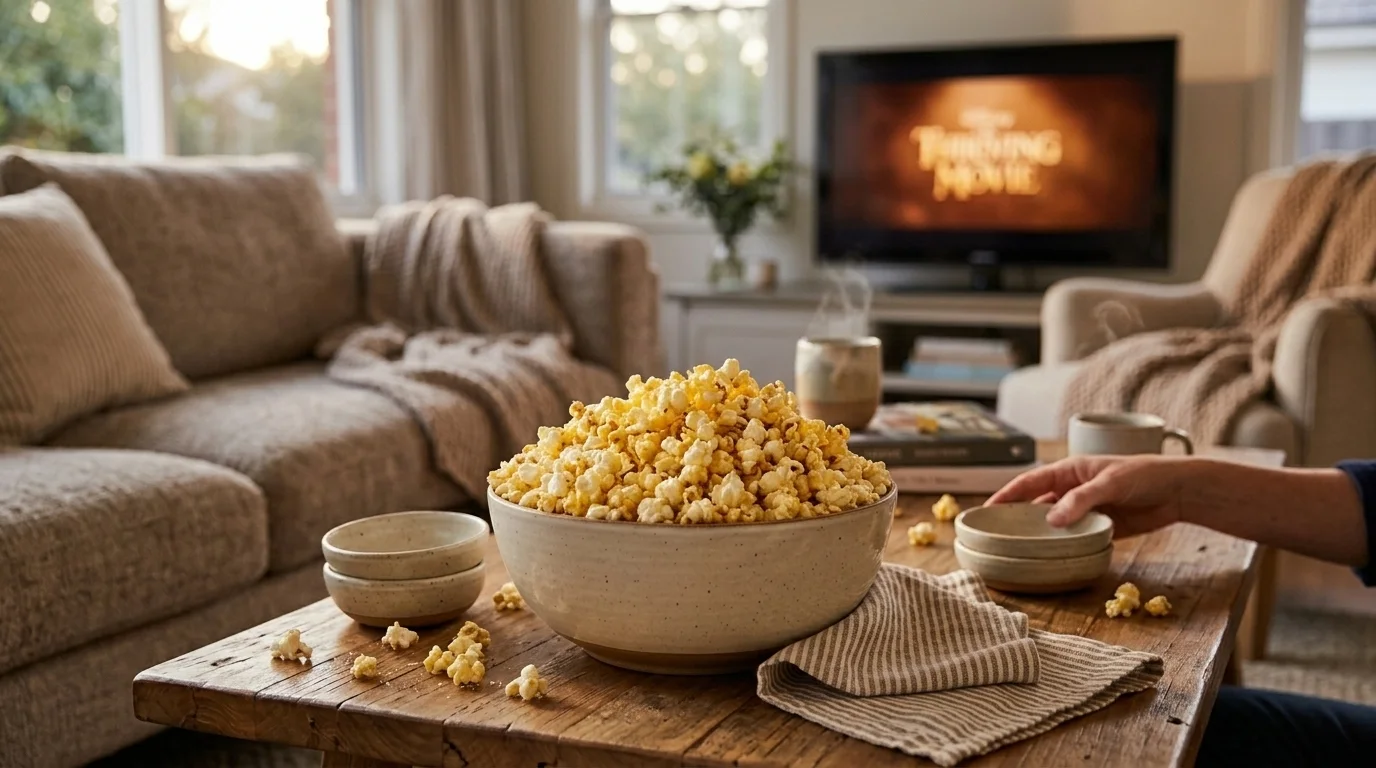
Stovetop: Whirley Pop (best taste and kettle corn)
Stovetop is the method the popcorn purists swear by, and the Wabash Valley Farms Whirley Pop is the enthusiast pick. You add a little oil and your kernels to the aluminium pot on the cooktop, then turn the hand-crank, which drives a patented stirring system that keeps every kernel moving across the base. Nothing sits still long enough to scorch, so you get an even, fully-popped batch in about three minutes with almost no duds.
Why bother with the cranking? Taste. Oil-popped stovetop corn tastes closest to genuine cinema popcorn, and the Whirley Pop is the easiest way to make true kettle corn at home. Just add a spoon of sugar with the oil for that sweet-salty crackle. The honest trade-offs are that it uses oil, so it is not the healthiest method, and it asks for a couple of minutes of hands-on cranking rather than walking away. In return you get the best flavour of the three and a tank-like aluminium build backed by a 25-year warranty.
Two buying notes for the Whirley Pop. At the 9 October 2026 check the Amazon Australia listing we link sold through the Amazon US Global Store, so expect longer delivery. And check your cooktop first: Wabash Valley Farms says the aluminium Whirley Pop works on any kitchen stove top (electric, gas, flattop, ceramic) or camping stove, and its list does not mention induction. For an induction hob, Williams Sonoma Australia lists a stainless steel Whirley Pop as suitable for use on all cooktops, including induction, though it is not one of the cards here.
How to choose the right popcorn maker
Method first, then a few practical factors. Here is how to narrow it down.
- Match the method to what you value. Simplest, no appliance to store: microwave (Ecolution, or the Lékué if you want a bowl that collapses flat). Healthiest, hands-off, big family batches: hot air (Russell Hobbs). Best taste and kettle corn, happy to use a little oil: stovetop (Whirley Pop).
- Batch size. A microwave popper handles a bowl or two, fine for couples. A hot-air popper churns out a large family bowl in one go. The Whirley Pop makes a big stovetop batch but you are committed to standing there cranking it.
- Oil versus no oil, and calories. This is the real health lever. Both the microwave and hot-air methods can use zero oil, so the popcorn stays genuinely light. Stovetop popping adds oil by design, which lifts the flavour and the calorie count together. Fine in moderation, just go in with eyes open.
- Cleaning. The Ecolution glass jug is dishwasher-safe. The Russell Hobbs wipes clean because nothing burns onto it without oil. The Whirley Pop needs the oil residue wiped from the pot after each use, which is the price of the better taste.
- Storage. The Ecolution glass jug lives in a drawer, and the Lékué collapses flat to fit in one. The hot-air popper is a small benchtop or cupboard appliance. The Whirley Pop is a saucepan-sized pot that lives with your cookware.
- Flavouring and kettle corn. If sweet-and-salty kettle corn is a must, only the stovetop method does it properly, because you cook the sugar in with the kernels. The other two are best for popping plain, then seasoning in the bowl.
Popcorn tips for a better bowl
Whichever maker you pick, a few small habits lift the result. If you are building a proper movie night at home, our best slushie machine guide covers the other half of the snack table.
- Know your kernels: butterfly versus mushroom. Butterfly (or snowflake) kernels pop into big irregular wings; they are tender and grab seasoning well, which is what most supermarket popping corn is. Mushroom kernels pop into dense round balls that survive coating in caramel or kettle-corn sugar without shattering. For everyday movie nights, butterfly is perfect; for sticky sweet coatings, hunt down mushroom.
- Stop the burning. Burnt popcorn is almost always heat with no movement. The Whirley Pop solves this with its stirring crank; in the microwave, do not over-run the timer past when the pops slow to a few seconds apart; with hot air, simply do not block the air vents.
- Season smarter. Salt sticks better to slightly damp popcorn, so a light spritz of oil or melted butter first helps it cling. Beyond salt and butter, try nutritional yeast for a cheesy hit, a pinch of smoked paprika, cinnamon-sugar, or a drizzle of melted dark chocolate for a treat.
- Keep it fresh. Popcorn goes chewy once it cools in the open air. Pop it just before the film starts, and store leftover popped corn in an airtight container so it stays crisp.
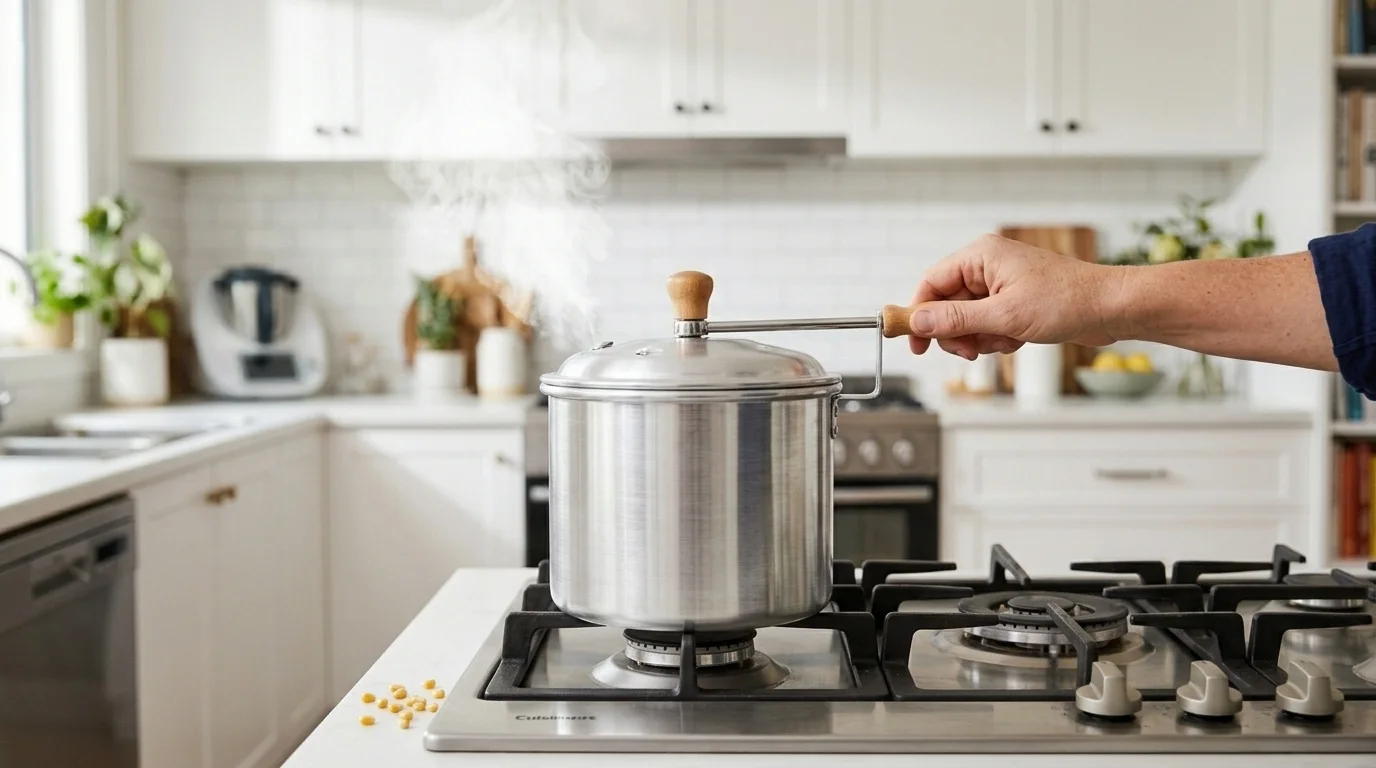
Is home popcorn actually healthier and cheaper?
On both counts, yes, and it is not close. Take cost first. A typical bag of popping corn yields dozens of batches, so a generous home popped bowl costs far less in kernels than a cinema tub or a supermarket microwave bag. Over a school holiday fortnight of movie nights, a popper or a hot air machine soon pays for itself.
Now health. Air-popped popcorn is a wholegrain and is naturally high in fibre and low in calories. The problem with shop-bought versions is what gets added. Cinema popcorn and pre-packed microwave bags are typically loaded with oil, salt and sometimes butter-flavour additives you never see. Pop it yourself with the hot-air or microwave method and you can use no oil at all, then add exactly as much salt as you want. Even the oil-popped stovetop method is more honest than a mystery bag, because you control the type and amount of oil. For more lighter-snack ideas to round out the table, our best blender guide covers smoothies and milkshakes.
How we picked
Last checked: 9 October 2026, covering the stock, seller and rating of every listing on Amazon Australia.
We did not pop a thousand batches in a lab, and we are not going to pretend we did. Instead, our picks are built on three honest inputs. First, we checked that every product has an Amazon Australia listing you can buy from, and each product card says where a listing sells through an overseas Global Store. There is no point recommending something you cannot actually buy here. Second, we read the manufacturer specifications closely and reflect only what they state: the Lékué's collapsible 2.8 litre silicone bowl, the Ecolution's 1.5 quart glass microwave design, the Russell Hobbs's 1290W oil free hot air system, and the Whirley Pop's stovetop stirring mechanism and 25 year warranty. The stovetop, cooktop and cinema details come from the Wabash Valley Farms instructions and FAQ, the Williams Sonoma Australia product page for the stainless steel version, and the Cretors commercial machine pages. Third, we weighed the aggregate sentiment of Australian and international owners to sanity-check that each product does what it claims.
The deliberate structure here is method first, so the choice maps to how you actually think about popcorn (convenience, health or taste), with the Lékué as our best overall pick. For more appliances that earn their bench space, see our full sandwich press guide and the wider kitchen range.
Frequently Asked Questions
What is the best popcorn maker in Australia in 2026?
The best popcorn maker in Australia for most households is the Lékué Platinum Silicone Microwave Popcorn Maker, a collapsible silicone bowl you fill with kernels and pop in the microwave. For a hot air machine, the Russell Hobbs Fiesta Hot Air Popcorn Maker is our hot air pick. Its 1290W element pops a big family batch in under three minutes using hot air with no oil, which makes it both the healthiest method and the most hands-off. If you want the simplest option, the Ecolution Micro-Pop microwave glass popper is excellent for one or two people. If taste matters most, the Wabash Valley Farms Whirley Pop stovetop popper makes the most cinema-like popcorn and kettle corn.
What is the healthiest way to make popcorn?
Hot-air popping is the healthiest method because it uses no oil or fat at all, the Russell Hobbs Fiesta pops with hot air alone, so the only calories come from the corn itself. The microwave method with a glass popper like the Ecolution Micro-Pop is also oil-free and very light. Stovetop popping, as with the Whirley Pop, adds oil by design, which improves the taste but raises the calorie count. Whichever method you use, popping at home is far healthier than cinema popcorn or pre-packed microwave bags because you control the oil and salt.
Is a popcorn maker cheaper than buying microwave bags?
Yes, and it pays for itself quickly. A bag of plain popping corn makes dozens of batches, so a bowl you pop yourself costs far less than a single use microwave bag or a cinema tub. Across a school-holiday run of movie nights, even a hot-air popper recovers its cost in a matter of weeks, and you get fresher popcorn with no waste.
Do you need oil to make popcorn?
It depends on the method. Hot-air poppers like the Russell Hobbs Fiesta and microwave glass poppers like the Ecolution Micro-Pop need no oil at all, hot air does the work. Stovetop poppers such as the Whirley Pop do use oil, because the oil carries the heat and is part of what gives stovetop popcorn its richer, more cinema-like flavour. If avoiding oil is your priority, choose hot air or microwave; if flavour is the priority, the oil-popped stovetop method wins.
What is kettle corn and can you make it at home?
Kettle corn is the sweet-and-salty popcorn you find at fairs and markets, made by cooking sugar in with the oil and kernels so it caramelises lightly as the corn pops. You can absolutely make it at home, but you need a stovetop popper like the Whirley Pop, because the sugar has to be heated with the kernels. Hot-air and microwave poppers cannot make true kettle corn since they have nowhere to cook the sugar, with those, you can only add sweet toppings to plain popped corn afterwards.
What is the difference between butterfly and mushroom popcorn kernels?
Butterfly (also called snowflake) kernels pop into large, irregular winged shapes that are light and tender and hold loose seasonings like salt and butter well, this is what most supermarket popping corn is. Mushroom kernels pop into dense, round ball shapes that are sturdier and stand up to sticky coatings such as caramel or kettle-corn sugar without crumbling. For everyday movie-night popcorn, butterfly is ideal; if you plan to make coated or kettle corn, look for mushroom kernels.
How do you stop popcorn from burning?
Burning is almost always caused by heat with no movement. The Whirley Pop avoids it with a hand-crank stirring system that keeps every kernel moving across the hot base. In the microwave, do not run the timer past the point where the pops slow to a few seconds apart, since that is when scorching starts. With a hot-air popper, keep the air vents clear so the heat does not concentrate. As a rule, stop the moment popping slows down rather than waiting for the last few kernels.
How do you use a popcorn maker?
With the Russell Hobbs Fiesta hot air machine you measure 35 to 50g of kernels with the supplied spoon, tip them into the chamber, sit a bowl under the chute and switch it on. The 1290W element does the rest in under three minutes and needs no oil. With the Ecolution Micro-Pop you fill the 1.5 quart glass jug with bare kernels, fit the lid and microwave it. With the Lékué you fill the bowl to the line with kernels, fit the suction lid and microwave it for about a minute and a half. With the Whirley Pop you add oil and kernels to the pan and turn the crank steadily over a medium hob.
How do you clean a popcorn maker?
Unplug the machine and let it cool first. A hot air popper such as the Russell Hobbs Fiesta never touches oil, so a wipe with a damp cloth and a dry of the chute is usually all it needs, and the lid doubles as the measuring spoon so it rinses under the tap. The Ecolution Micro-Pop glass jug is dishwasher safe. The Whirley Pop uses oil, so wipe the pan out while it is still warm and dry it fully. Never put a motor housing under water. The Lékué silicone bowl is dishwasher safe too.
Which brand of popcorn machine is the best in Australia?
There is no single best brand, only the best brand for a method. Russell Hobbs is a recognised household name in hot air poppers, which is why it is our hot air pick. Wabash Valley Farms owns the stovetop category with the Whirley Pop and backs it with a 25 year warranty. Sunbeam, Cuisinart, Cucinetta, Presto, Arcosteel and Heller all sell poppers here too, so shop by method and wattage rather than by badge.
What about the cheap popcorn makers at Kmart and Big W?
Kmart, Big W and The Good Guys all stock budget poppers, including the Kmart Anko hot air machine. They pop corn perfectly well. What you give up is build quality, warranty length and parts support, which is why our picks sit above them. If you want a machine still working after five school holidays, spend a little more. If you want popcorn this weekend for the price of a cinema tub, the Kmart one is a fair buy.
What is the best popcorn machine for a home cinema room?
For the cinema look you want a cart or countertop kettle machine of the sort Airflo and Vevor sell through Harvey Norman and Big W. Those take a lot of bench space, so they are a furniture decision as much as an appliance one. For the taste rather than the look, a stovetop popper like the Whirley Pop gets you closer for a fraction of the money, because oil popping is the same method cinemas use.
Where do you buy popcorn kernels in Australia?
Plain popping corn sits in the dry goods aisle at the major supermarkets and in bulk food shops, and one bag makes dozens of batches. Most supermarket corn is butterfly, also sold as snowflake, which pops into light winged pieces that hold salt and butter well. If you plan to make caramel or kettle corn, look for mushroom kernels at a bulk food shop, because they pop into dense round balls that survive a sticky coating.
What is the best portable popcorn maker?
The Lékué Platinum Silicone Microwave Popcorn Maker is the most portable popcorn maker in this guide. Its silicone bowl collapses from 5 inches tall to 2 inches, it is dishwasher safe, and it needs only a microwave, so it packs easily for a holiday home or a shared kitchen.
How do you air pop popcorn?
Air pop popcorn in a hot air popper: measure 35 to 50g of kernels with the supplied spoon, tip them into the chamber, put a bowl under the chute and switch it on. The Russell Hobbs Fiesta's 1290W element pops a batch in under three minutes using hot air, with no oil.
Is aluminum or stainless steel better for popping popcorn?
Choose by your cooktop. Wabash Valley Farms says its aluminium Whirley Pop works on any kitchen stove top (electric, gas, flattop, ceramic) or camping stove, and its list does not mention induction. For induction, Williams Sonoma Australia lists a stainless steel Whirley Pop as suitable for all cooktops, including induction.
Is it better to use oil or butter when popping popcorn?
Pop in oil and add butter afterwards. The Wabash Valley Farms Whirley Pop instructions use 1 to 3 tablespoons of oil for half a cup of kernels, then say to add butter and salt once the popcorn is in the serving bowl. Hot air and microwave poppers need no oil at all.
What do movie theaters use to pop their popcorn?
Cinemas use commercial kettle machines that pop corn in oil inside a stainless steel kettle. Cretors, a maker of concession machines, lists kettle sizes from 20 oz to 60 oz and beyond, built for hundreds of servings per hour. A stovetop popper such as the Whirley Pop uses the same oil method on a small scale.