Sparkling water is everywhere in Australia, and buying it by the bottle adds up fast — both in dollars and in plastic. A soda maker fixes both. It turns cold tap water into fizzy water on your bench in seconds, for a fraction of the cost of bottled, with no crates of empties to recycle. Sitting alongside a good kettle and a microwave, it is one of those small appliances that quietly earns its bench space every single day.
The catch is that soda makers are not all the same, and the marketing rarely explains the one thing that actually matters: the CO2 cylinder. That little gas canister is the real ongoing cost, and understanding how it works — and the fact that you swap it rather than throw it away — is the difference between a soda maker that saves you money and one that frustrates you. We have researched the Australian market for 2026 and picked three machines that cover the genuine range of needs, from the cheapest fizzy-water workhorse to a do-everything carbonator to a design-led showpiece.
Here is the honest breakdown — how these machines work, what the cylinders really cost, the difference between carbonating water and carbonating more, and which of the three is right for you.
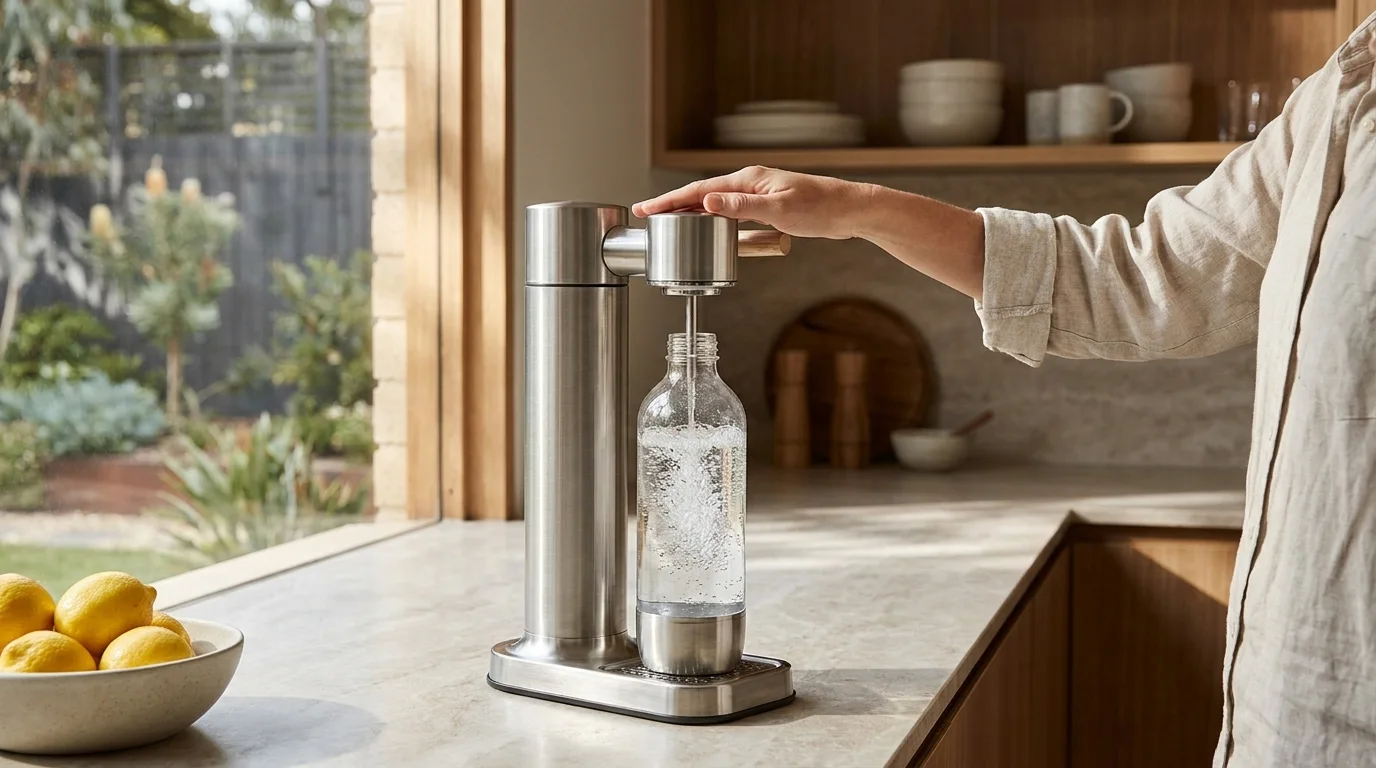
How a soda maker actually works
The mechanism is simpler than the box makes it look. A CO2 gas cylinder loads into the back or base of the machine — it either screws in or clicks in, depending on the model. You fill the carbonating bottle with cold water, attach it to the machine, and then press a button or pull a lever. That action injects carbon dioxide into the water, and the gas dissolves to create the bubbles. Release the bottle, and you have sparkling water ready to drink.
A few details make a real difference to the result. Colder water holds fizz far better than room-temperature water, so chill your bottle in the fridge before you carbonate — it is the single biggest thing you can do for better bubbles. The number of presses or pulls controls how fizzy the water gets: a couple of bursts for a light spritz, more for an aggressive sparkle. And if you want a flavoured drink rather than plain soda water, you carbonate the water first, then stir in cordial, fruit or a flavour syrup afterwards. The fizz goes in before the flavour, not after.
- Load the cylinder: screw or click the CO2 canister into the machine (a one-time setup until it runs empty).
- Fill with cold water: colder water carbonates better and holds the fizz longer.
- Carbonate: press or pull, more times for more bubbles, fewer for a gentle sparkle.
- Flavour last: add cordial, fruit or syrup to the finished sparkling water if you want a flavoured drink.
The CO2 cylinder is the real ongoing cost — and you swap it, not bin it
This is the single most important thing to understand before you buy, and it is the part most people get wrong. The machine itself is a one-off purchase. The CO2 cylinder is the consumable — think of it like ink for a printer, or the bags for a vacuum sealer. A standard 60L cylinder carbonates roughly 60 litres of sparkling water before it runs out. How long that lasts depends entirely on how much fizzy water your household drinks, but for many homes a cylinder lasts a month or more.
Here is the bit that saves you money: when a cylinder runs empty, you do not throw it away and buy a brand-new one. You exchange the empty for a full one — a straight swap — and you only pay for the gas, not for a whole new canister. In Australia you can do this swap at Woolworths, Coles, Big W, Kmart, Bunnings and plenty of other retailers, typically for somewhere around $25 to $35 per swap. Buying a brand-new cylinder outright costs considerably more, which is why the swap is the whole point.
Work the maths through and the value is obvious. If a swap costs around $30 and makes roughly 60 litres, that is about 50 cents a litre for sparkling water — and most of that is the gas, since the bottle and machine are reusable. Compare that to bottled sparkling water from the supermarket, which routinely costs well over a dollar a litre, comes wrapped in single-use plastic, and has to be lugged home. Over a year, a household that drinks sparkling water regularly saves a meaningful amount and keeps a startling number of plastic bottles out of the bin. That cost-per-litre gap is the core reason soda makers exist.
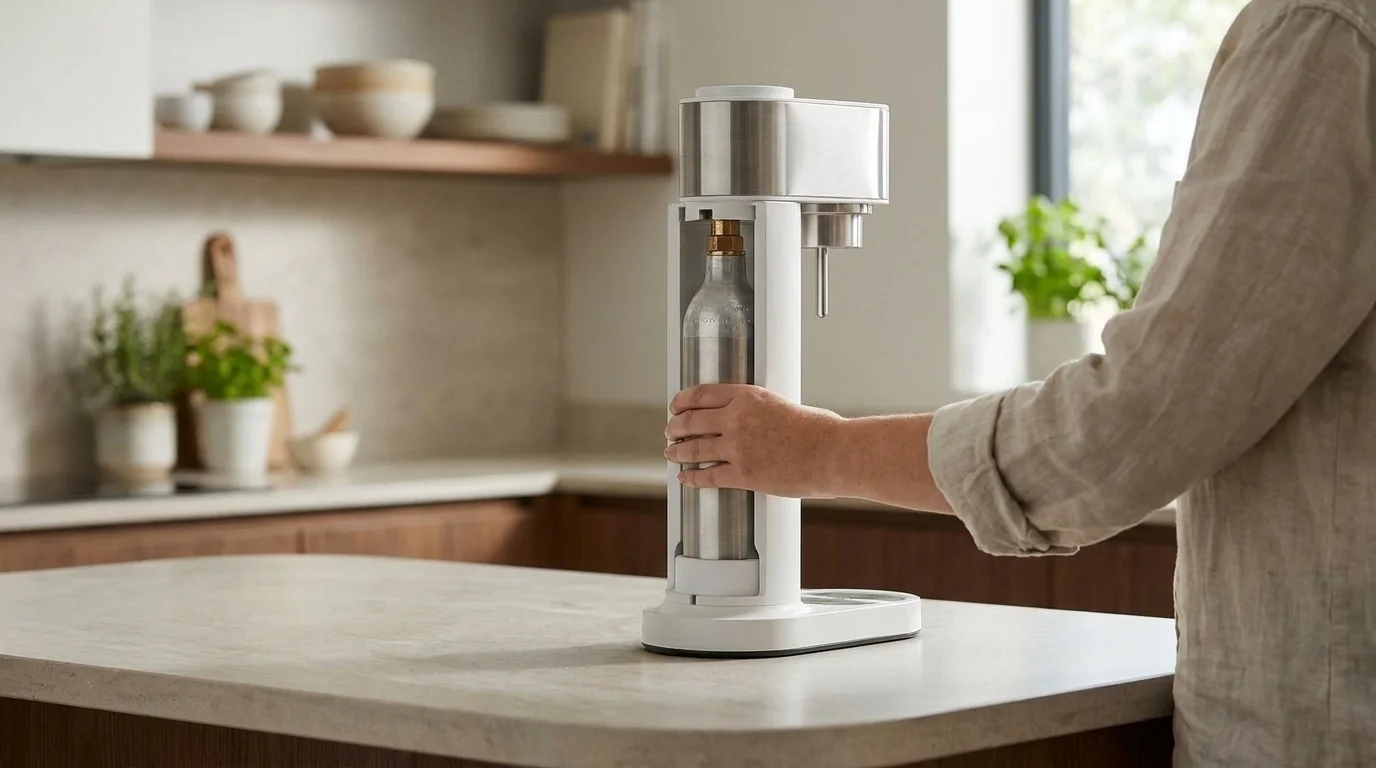
Cylinder type and compatibility — get this right before you buy
Not every cylinder fits every machine, and this trips up a lot of first-time buyers. There are two common fittings on the Australian market, and they are not interchangeable.
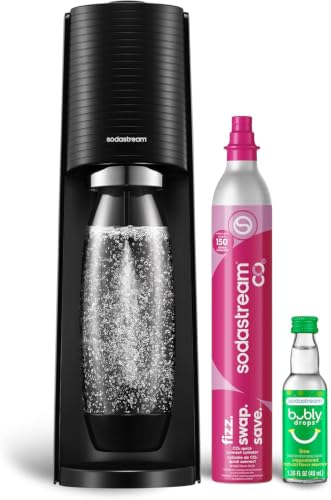
- Quick Connect (click-in): SodaStream's newer machines — including the Terra and the Art — use a Quick Connect cylinder that simply clicks straight into place. There is no twisting; you push it in and it locks. It is fast and foolproof. These cylinders are exchanged through SodaStream's own retail network.
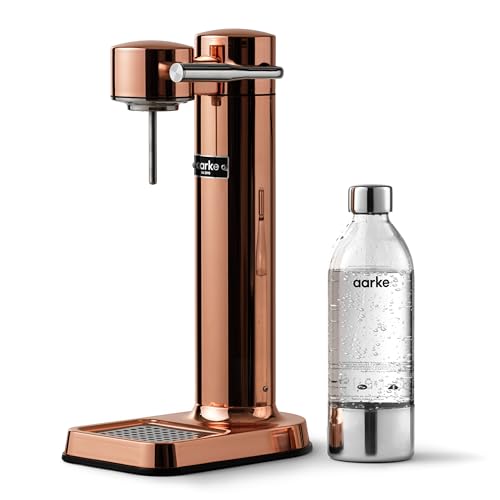
- Standard screw-type 60L: Many other machines, including the Breville InFizz Fusion and the Aarke Carbonator 3, use a standard screw-in 60L cylinder that you twist into the machine. This is the older, more universal fitting, and the good news is that standard screw cylinders are very widely available and exchangeable across the supermarket and hardware networks.
The practical upshot: before you buy spare or replacement cylinders, check which type your machine takes. A SodaStream Terra needs Quick Connect; a Breville InFizz or an Aarke needs standard screw. Both Aarke and Breville are deliberately designed to work with the widely available screw cylinders, so you are never short of swap locations. Just do not assume a cylinder from one system will fit the other — it will not.
Carbonates water only, or carbonates more — the big functional split
This is the question that decides how much you should spend. The vast majority of soda makers — including both the SodaStream Terra and the Aarke Carbonator 3 — are designed to carbonate water only. You make sparkling water, then add your cordial, syrup or fruit afterwards. Putting juice, soft drink or wine directly into a standard machine is a mistake: the sugars and particles cause a foamy, messy over-flow, and doing it can void the warranty. For plain sparkling water, or for flavoured drinks made by adding cordial to fizzy water, a water-only machine is exactly right and you should not pay more for anything else.
The exception — and the only genuine reason to spend up for extra function — is the Breville InFizz Fusion. Its FusionCap is engineered specifically to carbonate things other than water: juice, iced tea, cocktails, hard seltzers, wine, and to re-fizz flat soft drink that has gone flat in the fridge. The cap controls how the CO2 is released, fast or slow, which helps limit foaming. If the idea of sparkling juice, a fizzy cocktail or reviving a flat bottle of lemonade appeals to you, the InFizz is the machine that does it properly. If you only ever want sparkling water, that capability is money you do not need to spend.
Flavour, bottles and everyday use
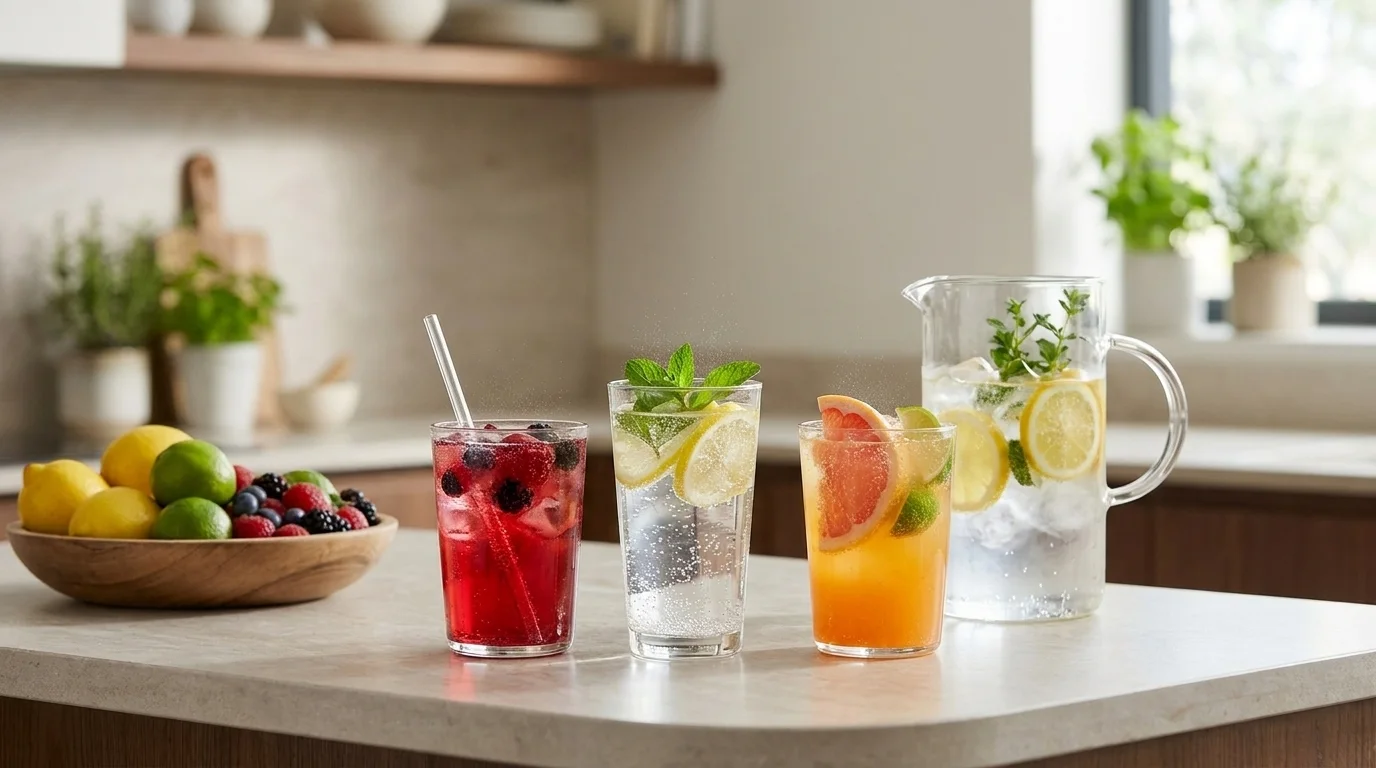
For flavoured drinks, the routine is always the same on a water-only machine: carbonate cold water first, then stir in your flavour. SodaStream sells a broad range of its own flavour syrups, including recognised soft-drink brands, but you are not locked into them — ordinary cordial, a splash of fruit juice, fresh fruit or a squeeze of citrus all work beautifully, and many people prefer controlling their own sugar and flavour this way.
The bottles matter more than you might think. Carbonating bottles are reusable and most are dishwasher-safe, but check the specifics: some bottles are top-rack only, and some premium machines ship with a glass carafe that is for serving at the table, not for carbonating in the machine. SodaStream's snap-lock bottles attach and release with a quick click, which is fast and fuss-free; screw-on bottles are common elsewhere and seal just as well, they just take a moment longer. Either way, keep a spare bottle chilled in the fridge so you always have cold water ready to fizz.
The Australian context — and the honest trade-offs
Sparkling water is hugely popular here, and a soda maker cuts both the cost and the plastic of buying it by the bottle. The cylinder-exchange network in Australia is genuinely widespread — supermarkets, Bunnings, Kmart and Big W all do swaps — so for most people, refilling gas is no harder than picking it up with the weekly shop. For a household that gets through a lot of fizzy water or soft drink, the savings stack up quickly and the bin gets a lot lighter.
None of this is without compromise, and it is worth being honest about the trade-offs. The CO2 cylinder is a recurring cost, and you do need a swap location within reasonable reach — that is the main consideration. Only the Breville InFizz Fusion handles non-water drinks, so if that matters, the cheaper machines will not do it. Getting the fizz level right takes a little practice at first, since it is easy to over- or under-gas your first few bottles. And the machine does take up a slice of bench space. For the overwhelming majority of households, none of that outweighs the everyday savings, the convenience and the sharp drop in plastic waste. If you are kitting out a new kitchen, a soda maker slots neatly alongside the other kitchen essentials worth buying early.
Which soda maker should you buy?
It comes down to one question: do you only want sparkling water, or do you want to fizz more than water, or do you care most about how the machine looks on the bench?
- Just want sparkling water, for the lowest price: the SodaStream Terra. It is the best buy for most people — cheap, easy, Quick Connect cylinders, snap-lock dishwasher-safe bottle. Add your own cordial for flavoured drinks.
- Want to carbonate juice, cocktails, wine or flat soft drink: the Breville InFizz Fusion. The FusionCap is the only one of the three built to fizz more than water, and that is the genuine reason to spend the extra.
- Want a beautiful, durable, all-metal machine: the Aarke Carbonator 3. Swedish-designed stainless steel, slim footprint, water only. You pay for materials and design, not extra function.
Frequently Asked Questions
How does a soda maker work?
A CO2 gas cylinder loads into the machine, either screwing in or clicking in depending on the model. You fill the carbonating bottle with cold water, attach it, then press a button or pull a lever to inject carbon dioxide into the water — the gas dissolves and creates the bubbles. Colder water holds the fizz much better, so chill your bottle first. For a flavoured drink, you carbonate the water first and then stir in cordial, fruit or syrup afterwards, rather than carbonating the flavoured liquid directly.
How much do CO2 cylinders cost and how do refills work?
The machine is a one-off cost, but the CO2 cylinder is the ongoing consumable — like ink for a printer. A standard 60L cylinder carbonates roughly 60 litres of sparkling water. When it runs empty you do not buy a brand-new one or throw it away; you exchange the empty for a full one — a straight swap — and pay only for the gas. In Australia you can do this at Woolworths, Coles, Big W, Kmart, Bunnings and many other retailers for roughly $25 to $35 per swap, which works out to well under what bottled sparkling water costs per litre.
Can I carbonate juice or soft drink in a soda maker?
Only in a machine built for it. Most soda makers, including the SodaStream Terra and the Aarke Carbonator 3, are designed for water only — putting juice, soft drink or wine into them causes a foamy mess and can void the warranty. The exception is the Breville InFizz Fusion, whose FusionCap is designed to carbonate juice, tea, cocktails and wine and to refizz flat soft drink, with controlled CO2 release to limit foaming. If carbonating more than water matters to you, that is the machine to choose; if you only want sparkling water, a standard machine is all you need.
What is the difference between Quick Connect and screw cylinders?
They are two different cylinder fittings, and they are not interchangeable. SodaStream's newer machines, including the Terra and the Art, use a Quick Connect cylinder that clicks straight into place with no twisting, exchanged through SodaStream's own retail network. Many other machines, including the Breville InFizz Fusion and the Aarke Carbonator 3, use a standard screw-type 60L cylinder that you twist in, and these are very widely available and exchangeable across supermarkets and hardware stores. Always check which type your machine takes before buying spare or replacement cylinders.
Is a soda maker cheaper than buying bottled sparkling water?
For anyone who drinks sparkling water regularly, yes, comfortably. A cylinder swap costing around $30 makes roughly 60 litres, which is about 50 cents a litre — and most of that is the gas, since the bottle and machine are reusable. Bottled sparkling water from the supermarket routinely costs well over a dollar a litre, comes in single-use plastic and has to be carried home. Over a year the savings add up to a meaningful amount, and you keep a large number of plastic bottles out of the bin at the same time.
Do I need to use SodaStream syrups?
No. SodaStream sells a broad range of its own flavour syrups, including recognised soft-drink brands, but you are not locked into them. You can carbonate plain water and stir in ordinary cordial, a splash of fruit juice, fresh fruit or a squeeze of citrus — many people prefer this because it lets them control their own sugar and flavour. The machine carbonates the water; what you add afterwards is entirely up to you.
Which soda maker should I buy?
If you just want sparkling water at the lowest price, the SodaStream Terra is the best buy for most people — cheap, easy, with click-in Quick Connect cylinders and a snap-lock dishwasher-safe bottle. If you want to carbonate juice, cocktails, wine or flat soft drink, the Breville InFizz Fusion is the only one of the three built for it. If you want a beautiful, durable all-metal machine that looks like a design object on the bench, the Aarke Carbonator 3 is the premium choice, though it carbonates water only. Match the machine to whether you want fizzy water, fizzy everything, or a showpiece.