Australians buy meat in bulk and own big freezers, and that combination is why a vacuum sealer earns its bench space. When you portion a family tray of mince, a bulk lamb pack or a side of salmon into airtight, vacuum sealed bags, you help protect it from freezer burn and pull out one meal's worth at a time instead of defrosting the whole lot. FoodSaver says food sealed in its bags and rolls stays fresh up to five times longer than food stored the usual way, and wasting fewer forgotten, frost bitten portions offsets some of the cost.
It is also the gateway to two trends a lot of new homeowners get into: batch meal prep (seal a fortnight of portioned dinners in one Sunday session) and sous vide (vacuum sealing is how you bag the food before it goes in the water bath). If you already run an air fryer and a slow cooker, a vacuum sealer is the third appliance that turns bulk buying into real grocery savings rather than freezer clutter.
We have researched the vacuum sealers available in Australia for 2026 and picked two FoodSaver models, one full featured and one simpler. Below the picks we cover the two things nobody tells you before you buy, the bag and roll consumable reality and why external sealers struggle with liquids, so you choose the right machine the first time.
External (clamp) vs chamber sealers: what you are actually buying
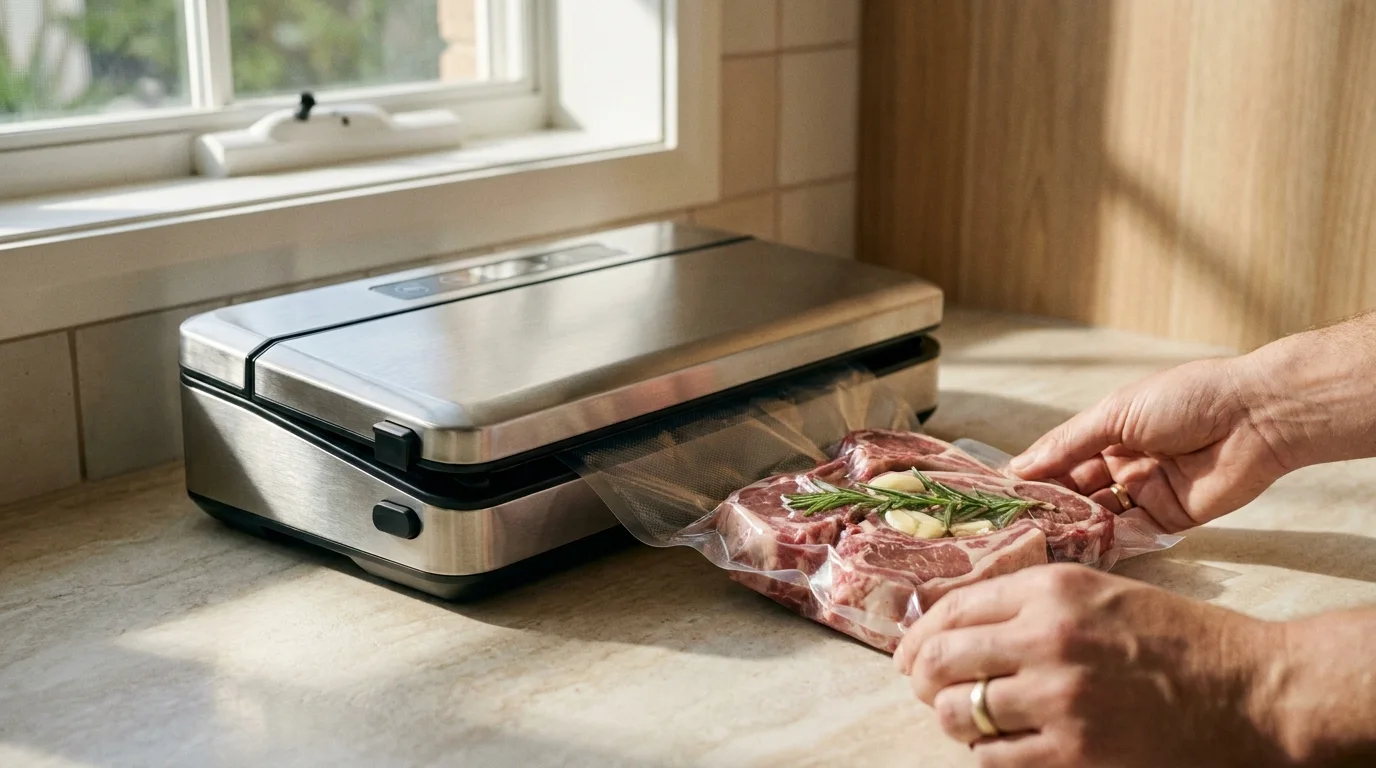
Most home vacuum sealers, including both of our picks, are an external clamp sealer. You place the open end of the bag into the machine, close the lid to clamp it, and the unit sucks the air out through that open end before heat sealing the bag shut. They are compact and sit on the bench.
The other type you may read about is a chamber sealer, where the entire bag goes inside a sealed chamber and the air is removed from the whole chamber at once. Chamber machines handle liquids better and use cheaper smooth bags, but they are mostly larger, pricier machines. For a home kitchen they are overkill, so we only mention them so you know the category exists. For most household portioning and freezing, an external clamp sealer is the right tool.
The bag and roll reality: the number one buyer gotcha
This is the most important thing to understand before you buy: external sealers like our two picks need textured or embossed bags and rolls. The tiny channels embossed into one side of the bag are what let the air escape past the clamp while the machine pumps. A smooth bag, such as an ordinary freezer bag or the flat smooth sous vide pouches sold for chamber machines, may seal at the top without vacuuming, because there is no channel for the air to travel through. If a seal fails, check the bag first.
- Bags are an ongoing cost. Like a printer and its ink, the machine is a one-off but the consumables are forever. Budget for embossed rolls as part of owning a sealer.
- Brand rolls cost more; third party rolls fit many machines. FoodSaver branded embossed rolls usually cost more. Cheaper third party embossed rolls fit many external sealers; check the roll width and that it is embossed, and follow the maker's advice.
- A built in cutter plus roll storage saves real money. Buy rolls instead of pre cut bags and cut your own lengths: a small bag for a single chicken breast, a long one for a whole fish. The FoodSaver VS3198 has a built in cutter and on board roll storage, so the roll lives inside the machine.
- Reusable options exist. Both FoodSaver picks can vacuum seal FoodSaver containers and zipper bags through the accessory hose, with no embossed bag needed, which trims the consumable bill over time.
Our pick: FoodSaver VS3198 Controlled Multi Seal
If you seal meat, batch cook or sous vide, the VS3198 is the one to buy. It has five settings, Sous Vide, Moist, Dry, Marinate and Pulse, so you can match the cycle to what you are sealing. Moist is a setting for damp and marinated food, Marinate uses vacuum pulses to draw marinade into meat (FoodSaver says it marinates in around 12 minutes), and Pulse gives you manual control over suction for delicate items like fresh bread or berries. It carries both a heat sealer and a retractable accessory hose for FoodSaver containers and zipper bags, has built in roll storage with a cutter so you make your own bag lengths, and has a removable drip tray that catches liquid and lifts straight out for cleaning.
- Pros: Five settings including Moist, Sous Vide and Marinate, pulse control for delicate foods, heat sealer plus accessory hose for containers and zipper bags, built in roll storage and cutter, removable drip tray, 24 month replacement warranty
- Cons: Costs more than the VS4500, and has more features than a casual user needs
- Best for: Meal preppers, bulk buyers, sous vide cooks and anyone who seals marinated or damp food
Dry vs moist modes, and why it matters
Moisture at the bag opening can stop a heat seal forming properly, which is why some sealers have a moist setting designed for damp food such as marinated meat or brined chicken. The VS3198 has separate dry and moist settings. The VS4500 has a single one touch cycle with no moist setting, so with the VS4500, freeze wet food first or keep the bag opening dry.
For very wet or liquid foods such as soups, stews, curries or lots of marinade, an external sealer can pull liquid toward the seal bar. The reliable fix is to freeze the liquid solid in the bag first (lay it flat on a tray), then vacuum seal the frozen block. This is the one genuine weakness of external sealers compared with chamber machines.
Budget pick: FoodSaver VS4500 Lock and Seal
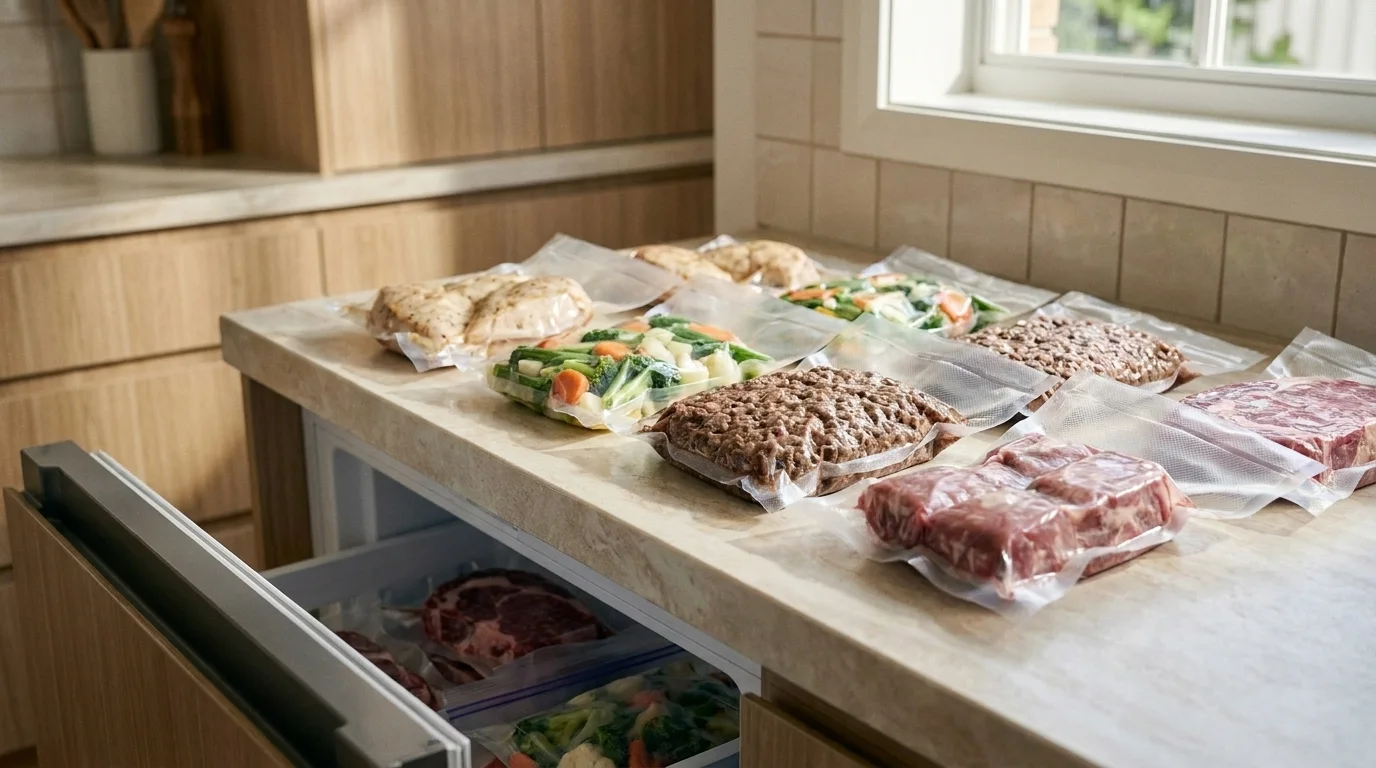
The VS4500 is the simpler, cheaper FoodSaver. It is an external sealer with a one touch locking lever and one touch Seal or Vacuum Seal buttons: you place the bag in, lock the lid and press a button. It comes with an accessory adaptor hose, so beyond heat sealing embossed bags it vacuum seals FoodSaver containers and reusable zipper bags. The pack includes a 28cm roll, five pre cut bags and five zipper bags.
- Pros: Simple one touch operation with a locking lever, accessory hose for containers and zipper bags, starter roll and bags included, 24 month replacement warranty
- Cons: No separate dry and moist settings, and no sous vide, marinate or pulse modes
- Best for: Households that mostly seal dry food and want a straightforward FoodSaver
An honest note on brand coverage
Both of our picks are FoodSaver, and we want to be straight about why. FoodSaver has a large bag, roll and accessory range in Australia, so consumables are easy to restock, and its two models here cover a full featured option and a simpler one. Other brands make good external sealers too, so treat these as two sound starting points rather than the only choices.
We have not crowned either pick with invented review scores or awards. We picked two FoodSaver models sold on Amazon AU and described their features from FoodSaver's Australian product pages.
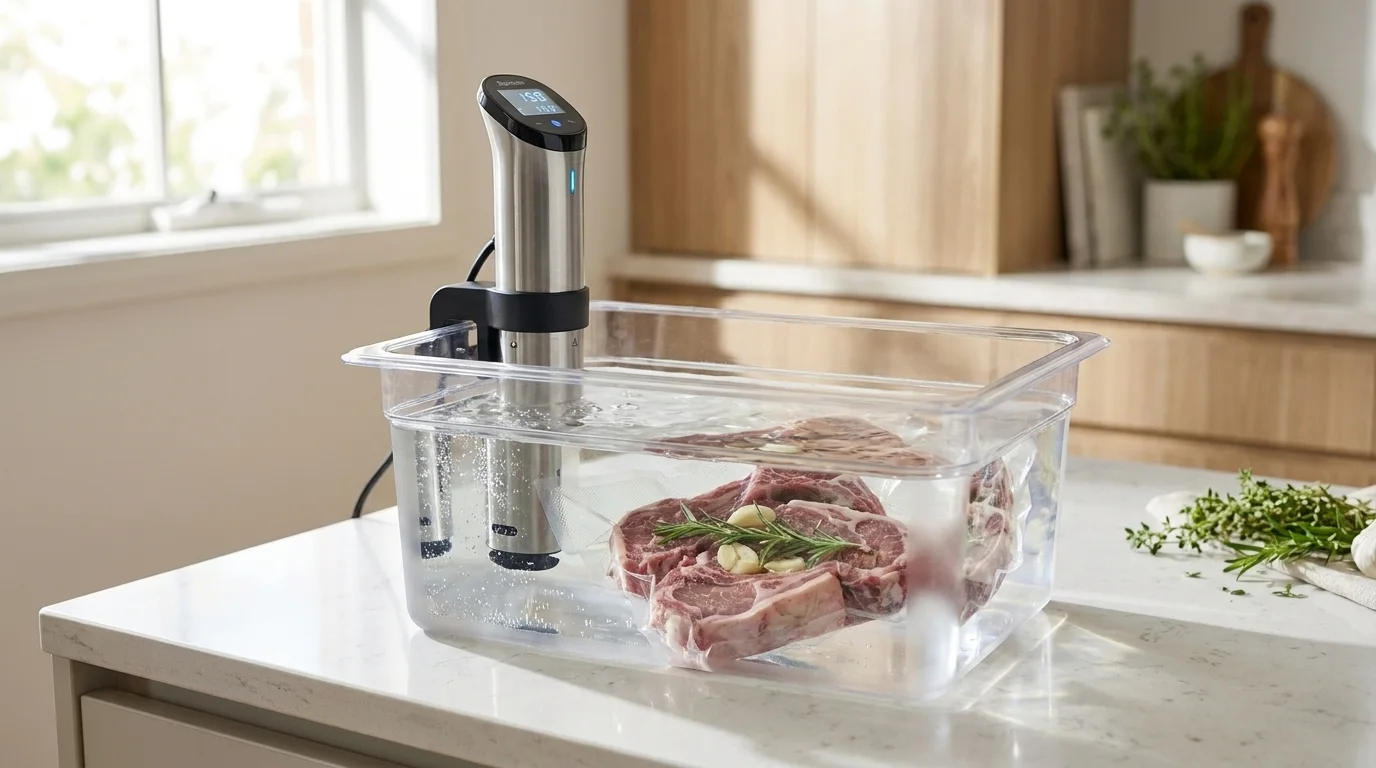
Vacuum sealing and sous vide: how they connect
Sous vide means cooking food sealed in a bag in a precisely temperature controlled water bath, and vacuum sealing is how you get the food into that bag with the air removed so it sinks and cooks evenly. Both of our picks can bag food for sous vide, and the FoodSaver VS3198 goes further with a dedicated Sous Vide setting. If you have just bought a sous vide wand or you are eyeing one, pairing it with either sealer is the natural combination, and the same sealed bags freeze well for cook from frozen weeknight dinners.
Features that matter when you buy in Australia
When buyers compare the best vacuum sealer options, these are the specs worth weighing, and the ones to ignore:
- Dry and moist modes: moist mode is a setting designed for damp food such as marinated meat. The VS3198 has it; the VS4500 does not, so it suits mostly dry food.
- Bag width: wider machines take whole fish, large roasts and family sized portions; the VS4500 comes with a 28cm starter roll, so check the roll width your machine takes.
- Built in cutter and roll storage: lets you buy rolls and cut custom lengths. The VS3198 has both.
- Accessory hose: lets the machine vacuum seal FoodSaver containers and zipper bags too, cutting your ongoing bag spend. Both FoodSaver picks have it.
- Removable drip tray: the VS3198 has one that catches liquid and lifts out for cleaning.
- Pulse control: manual control over suction for delicate foods such as bread or berries. The VS3198 has it.
- Warranty and support: both are Australian FoodSaver models, and FoodSaver Australia lists a 24 month replacement warranty for each.
For the wider kitchen build-out, our kitchen essentials guide covers what to buy first when you move in, and the induction cooktop guide pairs well if you sous vide or batch cook.
Honest trade-offs before you commit
A vacuum sealer is one of the higher value kitchen buys for a bulk buying household, but it is not free of compromises. The ongoing bag cost is real, so factor embossed rolls into the running cost and lean on third party rolls plus reusable containers to keep it down. External sealers struggle with liquids, so freeze soups and curries first, and a machine without a moist mode, like the VS4500, is best kept for dry food. If you truly need to seal litres of liquid routinely, that is chamber sealer territory, a different and far pricier league than any home unit here. For the way most Australians actually use one, portioning bulk meat, prepping meals and sous vide, these two picks cover it.
Frequently Asked Questions
What is the difference between an external and a chamber vacuum sealer?
An external clamp sealer, which is what most home units including both of our picks are, holds the open end of the bag in the machine, sucks the air out through that opening and heat seals it. A chamber sealer puts the whole bag inside a sealed chamber and removes the air from the entire chamber at once. Chamber machines seal liquids far better and use cheaper smooth bags, but they are mostly larger, pricier machines, so they are more than most home kitchens need. For portioning meat, meal prep, bulk freezing and sous vide, an external sealer is the right choice.
Do I need special bags for a vacuum sealer?
Yes, and this is the most common mistake. External sealers need textured or embossed bags and rolls, because the embossed channels are what let the air escape past the clamp while the machine pumps. A smooth freezer bag or a flat smooth sous vide pouch may seal at the top without vacuuming, because there is no channel for the air to travel through. Branded FoodSaver embossed rolls work but cost more; cheaper third party embossed rolls fit many external machines, but check the width and follow the maker's advice. A built in cutter lets you cut custom lengths from a roll instead of buying pre cut bags.
What is the difference between dry and moist mode?
Dry mode is the standard cycle for dry foods. Moisture at the bag opening can stop a heat seal forming properly, so some sealers have a moist setting designed for damp food such as marinated meat or brined chicken. The FoodSaver VS3198 has separate dry and moist settings. The VS4500 has a single one touch cycle with no moist setting, so it suits dry food; freeze wet food before sealing it.
Can I use a vacuum sealer for sous vide?
Yes. Vacuum sealing is the standard way to bag food for sous vide, because removing the air lets the bag sink and the food cook evenly in the water bath. Both of our picks can bag food for sous vide, and the FoodSaver VS3198 has a dedicated Sous Vide setting. The same sealed bags also freeze well, so you can prep, freeze and cook from frozen later. Just remember to use textured or embossed bags, not the flat smooth pouches sold for chamber machines.
Are vacuum sealer bags expensive to keep buying?
Bags are an ongoing cost, like ink for a printer, but you can manage it. Branded rolls cost more, while cheaper third party embossed rolls fit many external machines and bring the price down. Buying rolls and cutting your own lengths with a built in cutter is cheaper than buying pre cut bags, and using the accessory hose to seal reusable containers and zipper bags removes the bag cost entirely for a chunk of your storage. For a household that buys meat in bulk, cutting freezer burn and food waste helps offset the bag spend.
Can a vacuum sealer seal liquids and soups?
External sealers struggle with liquids, because the pump pulls liquid up toward the seal bar before the bag is closed. The reliable fix is to freeze the liquid solid first: lay the bag flat on a tray in the freezer, then vacuum seal the frozen block. The VS3198 also has a removable drip tray that catches spills. If you need to seal litres of liquid routinely, that is chamber sealer territory rather than a home external machine.
Which vacuum sealer should I buy?
For most kitchens the FoodSaver VS3198 Controlled Multi Seal is the one to buy: five settings including Dry, Moist, Sous Vide and Marinate, pulse control, built in roll storage with a cutter, an accessory hose for containers and zipper bags, and a removable drip tray. If you mostly seal dry food and want something simpler and cheaper, the FoodSaver VS4500 Lock and Seal has one touch sealing and an accessory hose, but no separate moist setting.