The upgrade that ends soggy esky camping
If you have ever opened the esky on day three of a trip to find the bacon swimming in melted ice soup, a 12V camping fridge is the single upgrade that fixes it. A proper compressor fridge keeps food at a safe, set temperature for as long as you have power, with no ice runs and no waterlogged sandwiches. It is the difference between rationing your cold food and just camping.
Choosing one comes down to three decisions, and the rest of this guide walks through each. First, capacity: how many litres you need for the number of people and days you travel. Second, cooling type: a real compressor versus a cheap thermoelectric cooler, and if it is a compressor, which brand. Third, power: the 12V draw, the battery protection cutoff, and whether you want single or dual zone. Get those three right and the rest is detail.
Compressor vs thermoelectric: buy a compressor
This is the most important call, so make it first. A real compressor fridge works like the one in your kitchen: it actively pumps heat out, holds a precise temperature, and can freeze right down to minus 20C even on a 40 degree day. A thermoelectric or Peltier cooler and warmer can only chill to roughly 20C below the surrounding air, cannot freeze anything, and struggles badly in summer heat. For camping in an Australian summer, a thermoelectric box is close to useless.
So the rule is simple: buy a compressor. Every one of the six picks in this guide is a compressor fridge freezer. If you are looking at a unit that does not clearly say compressor, or that advertises a warming mode and a thin price, walk away.
How many litres do you need?
A rough rule of thumb: allow around 10 to 15 litres per person for a weekend, and more again for longer trips or if you want to carry frozen food. Drinks eat space fast, so if your trips are beer and esky social ones, size up. Whatever you pull out of it goes warm fast in the sun, which is the gap an insulated stubby holder fills.
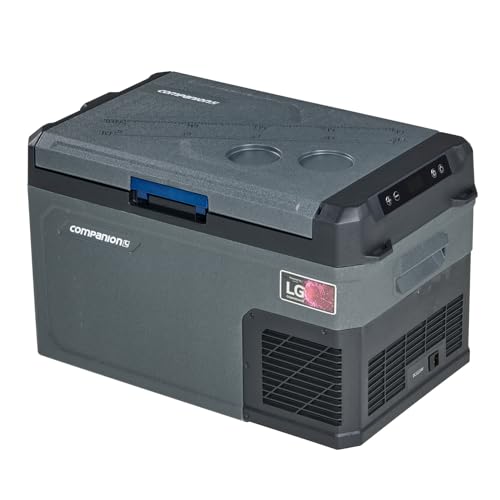
In practice: a 15 to 25L fridge suits a weekend for two or a solo traveller; 30 to 50L covers a family or a longer trip with frozen meals; and 75L is for a big family, a long remote trip, or a caravan where the fridge lives in one spot. The two smallest units below are the weekend and solo end of that range.
Single zone vs dual zone
A single zone fridge holds one temperature throughout: you set it as a fridge OR run the whole box as a freezer, but not both at once. A dual zone fridge has two compartments you can control independently, so one side keeps drinks cold while the other keeps meat and ice cream frozen at the same time.
Some fridges can switch between the two. The Alpicool T50 50L below has a detachable sensor divider, and its listing says it switches the single zone into two separate temperature zones, one fridge and one freezer. The BODEGACOOLER is sold as a dual zone fridge and freezer. If running both at once matters to you, check how each unit splits its capacity before you buy.
The compressor brand matters (LG vs generic)
Not all compressors are equal. Name brand compressors from LG, Secop or Danfoss are generally quieter, more power efficient and longer lived than the generic compressors that most budget fridges use. A generic compressor is not automatically bad, and the cheaper Alpicool units run on them perfectly well for most people. But if you are spending real money or relying on the fridge for long remote trips, a known compressor brand is worth paying for.
On Amazon Australia, the picks with a genuine LG compressor are the Companion 30L and the San Hima 75L. The Alpicool models and the BODEGACOOLER use generic compressors. None of that is a dealbreaker, but it is worth knowing exactly what you are buying.
Will it flatten my car battery?
This is the question everyone asks, and the honest answer is: it can, if you run it off the starter battery while the engine is off for too long. A 12V fridge draws meaningful current, and an overnight stop with the engine off can pull a single starter battery low enough to leave you stranded.
Every fridge in this guide has a 3 level battery protection cutoff that shuts the fridge down before the battery drops too far, which protects you from a flat in the morning. But the real solution for stationary use at camp is to give the fridge its own power: a dual battery or a DC to DC charger in the vehicle, or a portable power station you can run it from while you are parked up. Set up like that, the fridge sips power happily for days.
Engel, Dometic and Bushman: where to look
Here is the part most affiliate guides quietly skip. The heritage premium camping fridge brands that experienced 4WD and caravan owners ask for by name (Engel, Dometic, ARB, Bushman, Evakool and National Luna) are not among the picks in this guide, which only covers fridges listed on Amazon AU. They sell through specialist outdoor retailers such as BCF, Snowys and Anaconda, and through their own websites.
The brands in this guide are value and importer brands listed on Amazon AU: Alpicool, Companion, San Hima and BODEGACOOLER, two of them with genuine LG compressors.
We think the honest thing to do is say all of this plainly. If your heart is set on an Engel or a Bushman, buy it from a specialist retailer or the brand directly. If you want a capable compressor fridge from Amazon AU, the picks above are the genuine Amazon AU field, and they are good value for what they are.
A note on star ratings
Treat the star counts on Amazon camping fridges with some care, because most of them are pooled global ratings rather than Australian only. The Alpicool and BODEGACOOLER counts in this guide are pooled from overseas markets, so a glowing number does not necessarily reflect Australian conditions or AU spec stock. The Companion is a brand new listing with no reviews yet. The San Hima, by contrast, has genuine Australian reviews: only a handful so far, but they are real and local.
Our advice: weight local reviews more heavily than a big pooled global number, and read what AU buyers actually say about heat performance and usable volume.
Care and setup
- Cool the fridge down on mains power before you pack it, so it is not fighting warm food and a hot day at once.
- Leave airflow gaps around the vents, because a fridge crammed against gear and walls runs hot and works harder.
- Secure it with a fridge slide or a tie down strap in a 4WD so it cannot tip or slide on corrugations.
- Run it on ECO mode when you are stationary to cut the power draw.
- Keep it reasonably level, especially the LG compressor units, for the longest compressor life.
Frequently Asked Questions
What size camping fridge do I need?
As a rough guide, allow around 10 to 15 litres per person for a weekend, and more for longer trips or if you carry frozen food and drinks. A 15 to 25L fridge suits a weekend for two or a solo traveller, 30 to 50L covers a family or a longer trip, and 75L is for a big family or a caravan that stays in one spot. Remember that drinks take up space quickly, so size up if your trips are social ones.
What is the difference between a compressor and a thermoelectric camping fridge?
A compressor fridge actively pumps heat out like your kitchen fridge, holds a precise temperature, and can freeze down to minus 20C even in hot weather. A thermoelectric or Peltier cooler only chills to about 20C below the surrounding air, cannot freeze, and struggles in summer heat. For Australian camping you want a compressor fridge, and every pick in this guide is one.
Will a 12V camping fridge flatten my car battery?
It can if you run it off a single starter battery with the engine off for too long. All the fridges here have a 3 level battery protection cutoff that shuts the fridge down before the battery drops too low. For stationary use at camp the better answer is to power it from a dual battery, a DC to DC charger, or a portable power station so the starter battery stays untouched.
What is a dual zone camping fridge?
A dual zone camping fridge has two temperature zones for fridge and freezer use. The Alpicool T50 listing says its detachable sensor divider can switch a single temperature zone into two separate temperature zones for fridge and freezer use. The BODEGACOOLER is sold as a dual zone fridge and freezer.
Where can I buy Engel, Dometic and Bushman fridges?
Look for them at specialist outdoor retailers like BCF, Snowys and Anaconda, or on the brand websites. This guide only covers fridges listed on Amazon AU, and none of the heritage premium brands such as Engel, Dometic, ARB, Bushman, Evakool and National Luna made our picks. The capable compressor fridges here are from Alpicool, Companion, San Hima and BODEGACOOLER.
Does the compressor brand matter (LG vs generic)?
It does, though not enough to rule out generic units. Name brand compressors from LG, Secop or Danfoss tend to be quieter, more power efficient and longer lived than the generic compressors most budget fridges use. On Amazon AU the LG compressor picks are the Companion 30L and the San Hima 75L. The Alpicool models and the BODEGACOOLER run generic compressors, which are fine for most campers but worth knowing about if you rely on the fridge for long remote trips.
Are the star ratings on Amazon camping fridges trustworthy?
Treat them with care. Most camping fridge ratings on Amazon AU are pooled global, meaning they combine reviews from overseas markets rather than Australia alone. The Alpicool and BODEGACOOLER counts are pooled, the Companion is a new listing with no reviews yet, and the San Hima has genuine but few Australian reviews. Weigh local reviews more heavily and read what AU buyers say about heat performance.