Best overall: OneTigris JOVIAN 4 Person Camping Tent 3 Season Family Tent
The OneTigris JOVIAN 4 Person Camping Tent 3 Season Family Tent is the tent we put first for most campers who drive to the site. Its Amazon AU listing shows 4.8 stars from 207 ratings, the highest of the four tents we recommend, and says it sleeps up to 4 campers. The outer tent is rated 2000mm and the floor 5000mm.
The listing describes a dome with flexible poles that sets up in minutes, and the kit lists an inner tent, outer tent, footprint, tent frame, tent stakes, guy lines and a grab handled stuff sack. It weighs 12.3 lb (5.6 kg) and packs down to 9 x 9 x 19.6 inches, so it suits the car boot more than a long hike. The Ever Advanced has more ratings, 1,163 against 207, so the JOVIAN count is the smaller one.
The listing calls it a 3 season tent. The Stella listing is built around a 4 Season Design; the Swagger table also lists 4 Season, although its title and bullets do not say so. Its 2000mm outer tent is a lower figure than the 3000mm on the Stella, so check the forecast and peg the tent down in wind.
How the camping tents compare
This table puts the four tents we recommend side by side, using only each Amazon AU listing's own figures. Where a listing gives two values for one spec, the table shows both and says where each appears.
| Tent | Sleeps | Waterproof figure | Weight | Setup |
|---|
| OneTigris JOVIAN 4 Person | Up to 4 campers | Outer tent 2000mm, floor and floor mat 5000mm | 12.3 lb (5.6 kg) | Dome with flexible poles, sets up in minutes |
| Ever Advanced 6 Person Blackout Cabin | 6 people | Title says water resistant, table lists 4000mm but marks it not waterproof | 22.3 pounds | 60 seconds in the title and bullets, 2 Minutes in the table |
| OneTigris Stella 4 Season | 2 people | 3000mm | 2.2 kg in the first bullet, 2.3 kg in the last bullet, 4.41 pounds in the table | Flexible poles cross at the top, 3 Minutes in the table |
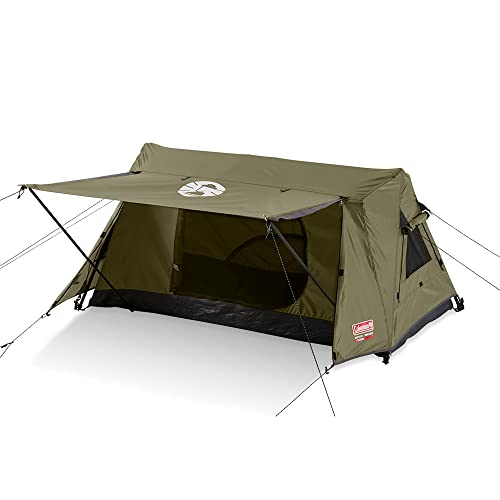
| Coleman Instant Up Swagger | Title says 1/3 Person, table says 1 Person | 1500 mm in the table | 11.2 kg in the table | Instant Up frame, easy one person setup |
The Stella is the lightest of the four on every weight figure its listing gives. The Ever Advanced is the one listing whose title and table disagree about waterproofing, so treat it as a fair weather cabin and pitch the fly properly.
How we checked these camping tents
We compared camping tents on Amazon AU using each listing's star rating, rating count, full title, bullet points, product information table, description and A+ content. Our two sources are the Amazon AU listing itself and the maker's own wording on that listing, because no separate maker manual was saved for this guide. This is desk research, not hands on testing, and a small rating count is always said plainly.
We recommend a tent only when its link opened the product we had saved. Two links opened a different listing and we could not confirm a third, so all three sit in their own section near the end. Last checked: 22 October 2026.
Camping tent terms in plain words
Waterproof rating: the figure in millimetres that a listing gives for its fabric, such as the 2000mm outer tent and 5000mm floor on the JOVIAN. A higher figure is a higher rating, so compare it with the weather you camp in.
3 season and 4 season: the labels makers use for the weather a tent is built for. The JOVIAN listing says 3 Season, and the Stella listing says 4 Season Design.
Instant tent: a tent sold as an instant or easy up design, such as the Swagger's Instant Up frame and the Ever Advanced's instant cabin. Dome and cabin are shapes: the product tables list the JOVIAN and the Stella as a dome and the Ever Advanced as a cabin.
Capacity ratings run small, so size up
Treat a tent's person rating as a maximum rather than a comfortable number, and size up from your headcount. The JOVIAN listing is a useful guide: it says the tent sleeps up to 4 campers or fits 2 camp cots with room for backpacks, so two adults and two children is about its limit. Once the tent is chosen, the next decision is what goes inside it, so see our guide to the best camping mattress in Australia.
The Ever Advanced listing gives open dimensions of 9 ft x 9 ft x 73 inches for 6 people, and its table lists a floor area of 81 Square Feet. At the small end, the Stella listing gives a setup size of 2.1 m x 1.30 m x 1.15 m for 2 people, and the Swagger components line gives 220 cm x 110 cm x 85 cm. If you want room to sit out a wet afternoon, go up a size.
Six person cabin: Ever Advanced 6 Person Blackout Cabin Tent
Setup speed: instant frames versus poles
Nothing sours the start of a trip like wrestling poles in fading light. The Coleman Instant Up Swagger has an Instant Up frame and its bullets promise easy one person setup, and the Ever Advanced listing says its cabin can be set up in 60 seconds, while its table lists an assembly time of 2 Minutes. The JOVIAN lists flexible poles and setup in minutes, and the Stella's poles cross at the top of the dome, with an assembly time of 3 Minutes in its table.
The rule is simple: if you camp from the car and value speed, go instant; if you carry your tent, accept poles for the weight saving. If you would rather skip poles altogether, see our guide to inflatable tents.
One person Instant Up tent: Coleman Instant Up Swagger 1/3 Person Tent
Waterproof ratings and what the millimetre number means
The millimetre figure on a listing is the waterproof rating the maker gives the fabric, and a higher figure is a higher rating. Compare it with the weather you expect to camp in, and treat a listing that gives no number as telling you less.
The Stella lists a 3000mm waterproof rating. The JOVIAN lists 2000mm for the outer tent and 5000mm for the tent bottom and floor mat. The Swagger title says waterproof and its table lists 1500 mm. The Ever Advanced gives two values: its title says water resistant, while its table lists 4000mm and also marks the tent not waterproof, so treat it as a fair weather cabin. Whatever the rating, check the forecast and peg the tent down in wind.
Two person 4 season dome: OneTigris Stella 4 Season Tent
Ventilation, mesh and condensation
Condensation is moisture from your breath collecting inside the tent, so airflow matters. The Stella listing describes a quality mesh inner tent for good airflow, and the Ever Advanced lists 3 large zippered mesh roll up windows plus an overhead net window. The Swagger bullets list circle ventilation for additional airflow, and the JOVIAN table lists waterproof and ventilated as additional features.
On a still, humid night there is no breeze for the mesh to work with, and that is where a camping fan earns its space in the camping tub. A mosquito repellent covers the hours you spend outside the tent.
Floors and groundsheets
The floor takes the most abuse, so the listing figures matter. The JOVIAN lists a 210D Oxford fabric tent bottom and floor mat rated 5000mm and includes a footprint. The Stella lists a 40D nylon tent bottom under a 20D nylon body. The Swagger bullets list a heavy duty PE floor, and the Ever Advanced table lists a polyester floor. Pitch any of them on cleared ground and use the footprint or a groundsheet where the kit includes one.
What comes in the box
Check the kit before you buy so you do not need extras. The JOVIAN listing lists an inner tent, outer tent, footprint, tent frame, tent stakes, guy lines and a grab handled stuff sack. The Stella lists tent poles, 10 stakes, four guy lines of 2.5 m and a storage bag. The Swagger bullets say a full fly is included.
The Ever Advanced bullets say the cabin has storage bags for keys and phones and a woven belt that can hang lights, fans or clothes. The Swagger bullets also name a separately available Instant Swagger Stretcher, which is not part of the tent.
Packed size and weight: carrying versus driving
If you carry your tent, weight and packed size are everything; if you drive to the site, they barely matter. The Stella is the lightest here: its first bullet says 2.2 kg, its last bullet says 2.3 kg and its table says 4.41 pounds, with a package size of 21.6 x 5.9 inches (55 cm x 15 cm). The JOVIAN weighs 12.3 lb (5.6 kg) and packs down to 9 x 9 x 19.6 inches. The Swagger table lists 11.2 kg, and the Ever Advanced lists 22.3 pounds packed at 7.9 x 7.9 x 47.6 inches.
Decide how the tent gets to the campsite first and the weight question answers itself. If the tent goes on your back, our guide to the best hiking backpack in Australia covers what to carry it in.
When you need a 4 season tent
The JOVIAN listing describes itself as a 3 Season tent, and a 4 season label is the maker's description of a tent built for harsher conditions, so read what the listing backs it with. The Stella listing gives a 4 Season Design, a 3000mm waterproof rating, a 40D nylon tent bottom and a removable blackout outer tent, and its table lists quick setup, rainproof, snowproof and windproof as features.
That is the Stella's case for colder or exposed trips. It is a two person tent, so a pair should expect to share a setup size of 2.1 m x 1.30 m x 1.15 m. For casual trips in mild weather a 3 season tent may be enough, and you may not need to pay for a 4 season design.
Blackout fabric and sleeping in
Blackout fabric is a darkened material, and two of the tents here use it. The Ever Advanced listing says its blackout design is perfect for sleeping in and keeps out most temp changes, and its table lists dark interior fabric and 50 UPF. The Stella listing says its removable blackout outer tent allows for greater flexibility in use.
If you camp with children or simply value a lie in, blackout fabric is worth seeking out. Check which part of the tent carries it before you buy: on the Ever Advanced it is the cabin fabric, and on the Stella it is the removable outer tent.
Camping tent brands on Amazon AU
The four tents we recommend come from three makers: OneTigris (the JOVIAN and the Stella), Ever Advanced (the 6 Person cabin) and Coleman (the Instant Up Swagger). Their Amazon AU listings show 4.8 from 207 ratings and 4.5 from 491 for the two OneTigris tents, 4.3 from 1,163 for the Ever Advanced and 4.4 from only 7 for the Coleman. The Ever Advanced has the most ratings of the four and the Coleman by far the fewest, so its score is a thin count.
Judge each tent on its own listing figures: waterproof rating, sleeping capacity, weight and how many people have rated it. A brand name tells you less than those four things.
Choosing the right tent for you
For most car campers the JOVIAN is the tent to start with: four person capacity, a 5000mm floor and the highest rating of the four. If you need a six person cabin with a dark interior, the Ever Advanced 6 Person is the one to look at, and it has the most ratings of the four. For two people heading out in colder weather, the Stella is the 4 season option, and for one person camping from the car the Coleman Instant Up Swagger has an Instant Up frame.
Whichever you choose, size up from your headcount, check the waterproof rating against the weather you camp in, and match the weight to whether you are carrying or driving.
Tents we left out of the recommendations
Two Amazon AU links in our research opened a different listing from the tent we had saved, and we could not confirm the listing for a third, so we do not recommend them and we do not describe their specifications. Each card below carries a dated note.
Naturehike Cloud Up Base 1 Person Tent: could not be bought on 22 October 2026
Frequently Asked Questions
What is the best camping tent in 2026?
For car campers, the OneTigris JOVIAN 4 Person Camping Tent 3 Season Family Tent is the tent we put first. Its Amazon AU listing shows 4.8 stars from 207 ratings, sleeps up to 4 campers, and lists a 2000mm outer tent with a 5000mm floor. At 5.6 kg it suits the car boot more than a long hike.
Which brand is considered the best for camping tents?
No brand wins outright, so judge the tent rather than the badge. Of the four tents we recommend, the two best rated Amazon AU listings are both OneTigris: the JOVIAN at 4.8 stars from 207 ratings and the Stella at 4.5 from 491. Ever Advanced is rated 4.3 and Coleman 4.4 from only 7 ratings.
Which brand of camping tent is the best?
It depends on how you camp, so choose by use first. A family of four suits the OneTigris JOVIAN, six people who want a dark interior suit the Ever Advanced cabin, a cold weather pair suits the OneTigris Stella, and one person camping from the car suits the Coleman Instant Up Swagger.
Is Coleman or Oztrail better?
Brand alone does not settle it. The one Coleman we recommend, the Instant Up Swagger 1/3 Person Tent, shows 4.4 stars from only 7 ratings on Amazon AU, which is a thin count, and we have no OZtrail listing to set against it. Compare any two tents by waterproof figure, sleeping capacity, weight and rating count.