Our best overall epilator is the Braun Silk-épil 9 Flex 9-041 3D: a fully flexible head, wet and dry use and 1,487 Amazon AU ratings averaging 4.5, the largest rating base here. At the 3 October 2026 check it was sold through the Amazon Global Store from Germany, so delivery, returns and warranty terms differ from local stock.
Compared alongside it are the corded Philips Epilator Series 2000 BRE237/00 and wet and dry Braun Silk-épil 7 7-030, Silk-épil 7 7-081 and Silk-épil 9 9-241 3D, all sold and shipped by Amazon AU, plus the Silk-épil 7 7-041 from a UK seller. The Silk-épil 7 SE7-041 that held the top spot was out of stock on Amazon AU on 3 October 2026.
An epilator is a handheld device with a rotating head of tiny tweezers that pulls hair out from the root, so one session lasts two to four weeks instead of the day or two you get from a razor. For facial hair the right tool is a trimmer, and our beard trimmer buying guide compares seven. For fine peach fuzz on the cheeks, see our dermaplaning tool for facial peach fuzz guide.
An epilator is one of those grooming tools people are quietly curious about but nervous to try. The promise is genuinely appealing: weeks of smooth skin from a single device you own, with no recurring waxing appointments and no daily shaving. The hesitation is just as real: everyone has heard that epilators hurt, and nobody wants to spend money on a gadget that ends up in the back of a drawer after one painful go. And if you would rather bring the waxing home than give it up altogether, that is a different purchase entirely: our at-home wax warmer guide covers the digital pots and beginner kits.
The honest position is that epilators are a fantastic tool for the right person and the wrong tool for someone else, and the difference comes down to your hair, your skin, and your patience for the first few sessions. This guide explains how epilators actually work, addresses the pain question directly and without sales spin, and compares the corded and wet and dry models described below.
The Amazon AU buy boxes showed the Philips Series 2000, Silk-épil 7 7-030, Silk-épil 7 7-081 and Silk-épil 9 9-241 3D as sold and shipped by Amazon AU at the 3 October 2026 check, the Silk-épil 9 Flex 9-041 3D as sold from Amazon Germany through the Global Store, and the Silk-épil 7 7-041 as sold and shipped by Rarewaves UK. Prices on the product cards come from the live Amazon AU listings.
How the epilators compare
| Epilator | Power | Wet and dry | What is in the box (per maker) | Sold by | Price band |
|---|
| Philips Epilator Series 2000 BRE237/00 | Corded per Amazon AU listing | Not stated (corded) | Epilator, massage cap, shaving head with comb, cleaning brush (Amazon AU listing) | Amazon AU | Under $80 |
| Braun Silk-épil 7 7-030 | Cordless per Amazon AU listing | Yes, per Braun Australia | Epilator, shaver head, trimmer comb, Smart plug (Braun Australia) | Amazon AU | Under $180 |
| Braun Silk-épil 9 9-241 3D | Cordless per Amazon AU listing | Yes, per Braun Australia | Epilator, shaver head, trimmer comb, skin contact cap, bikini trimmer, Smart plug (Braun Australia) | Amazon AU | Under $300 |
| Braun Silk-épil 7 7-081 SkinSpa | Battery powered per the listing | Yes, per the listing | Epilator, exfoliation brush head, massage pad, shaver head, trimmer comb, skin contact cap (Braun Australia) | Amazon AU | Under $180 |
| Braun Silk-épil 7 7-041 | Battery powered per the listing | Yes, per the listing | Epilator, cap with massage rollers (Amazon listing) | Rarewaves UK | Under $300 |
| Braun Silk-épil 9 Flex 9-041 3D | Battery powered per the listing | Yes, per the listing | Epilator, shaving attachment, trimmer attachment, massage roller attachment (Amazon listing) | Amazon Germany, through the Global Store | Under $300 |
Box contents per Braun Australia and the Amazon listings; sellers and price bands from the Amazon AU buy boxes, checked 3 October 2026.
Use the table to match power and wet use to how you plan to epilate, then read the section for the price band you are considering below. A corded model suits a first try on legs and underarms; a cordless wet and dry model suits shower use and longer sessions.
How Epilators Actually Work
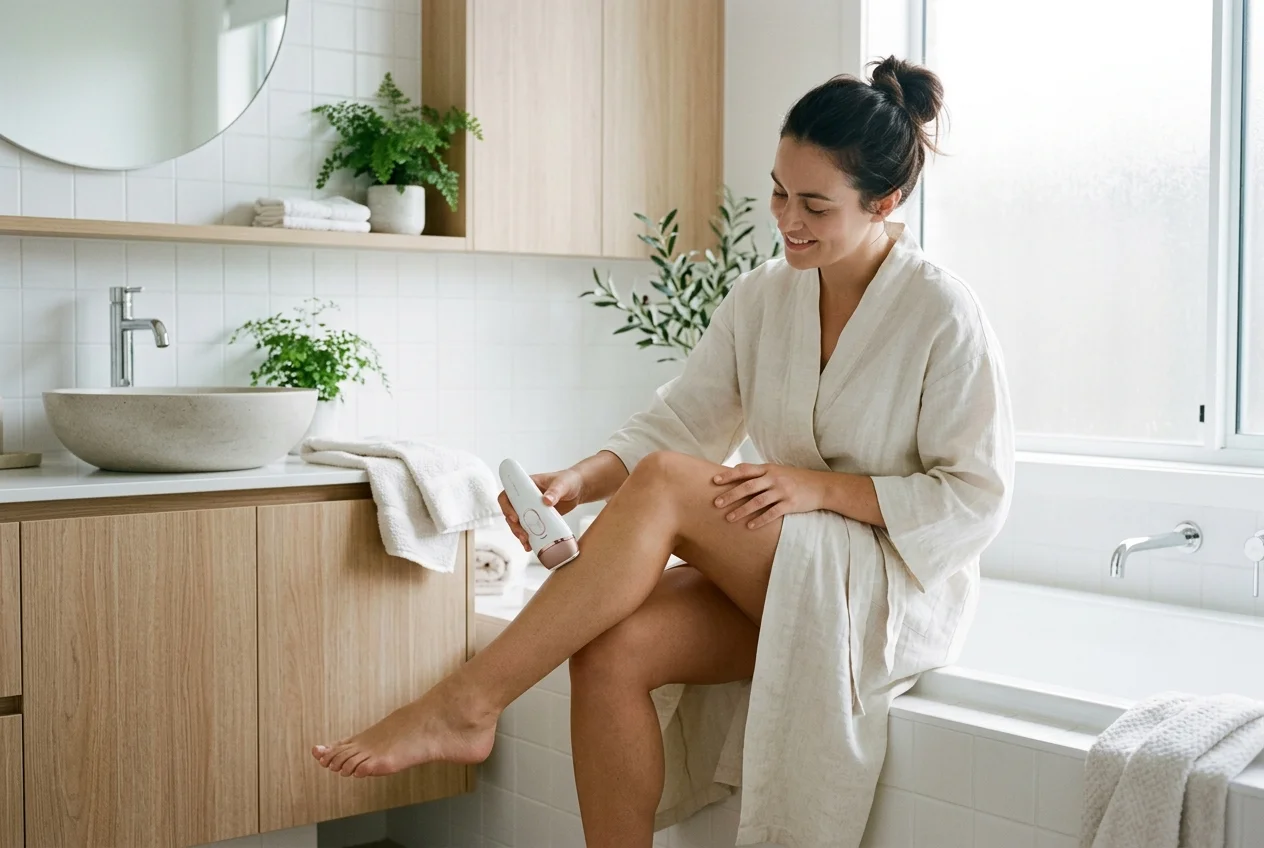
An epilator is a handheld device with a rotating head full of tiny tweezers or rotating discs. As you glide it across your skin, the head spins and the tweezers open and close rapidly, grabbing hairs and pulling them out from the root. A typical epilator head plucks dozens of hairs per second. It is essentially mechanised tweezing, doing in one slow pass what would take hours by hand.
The key word is root. This is what separates epilating from shaving, and it is the entire reason people put up with the process.
Shaving cuts the hair off at the skin surface. The follicle is untouched, so regrowth is visible within a day or two and feels stubbly because you are feeling the blunt, cut end of the hair. Epilating removes the whole hair including the root, so there is nothing at the surface and nothing to feel, and because the follicle has to grow an entirely new hair from scratch, regrowth takes far longer. Most people get two to four weeks of smoothness from an epilator versus one to two days from a razor. When the hair does return, it grows back with a soft, tapered tip rather than a blunt stubbly edge, so it feels finer.
Waxing also removes hair from the root and gives a similar duration of smoothness, but it is messier, requires heating and strips or a salon visit, and pulls a whole area at once. An epilator does the same root-removal job but is reusable indefinitely, works on regrowth as short as a few millimetres, and lets you work slowly and precisely on small areas. IPL (intense pulsed light) is a different category entirely: it targets the pigment in the follicle over many sessions to reduce hair growth over months. IPL is a long-term reduction strategy; an epilator is an immediate, on-demand removal tool. They solve different problems, which we cover in the FAQ below, and our guide to IPL hair removal devices covers that side of the choice.
Does It Hurt? Managing the Pain
This is the single biggest question people have, so here is the honest answer: yes, epilating can hurt, particularly the first few times, but it fades substantially with regular use, and there is a lot you can do to minimise it.
The sensation is a quick prickle as hairs are pulled, strongest on sensitive areas and on the very first session when you are removing a full growth of coarse hair. The reason it eases over time is twofold. First, your nerves genuinely acclimatise: the second and third sessions are noticeably more tolerable than the first as your skin gets used to the sensation. Second, with regular epilating the hair grows back finer and sparser, so there is simply less to pull and each session is gentler than the last.
The practical steps that make the biggest difference:
- Epilate after a warm shower or bath. Warm skin has more open, relaxed follicles, so hairs release more easily. This is why wet-and-dry epilators that work in the shower are worth the premium for pain-sensitive users.
- Exfoliate first. Gently exfoliating a day or two before lifts trapped hairs to the surface and clears dead skin, so the epilator grabs hair rather than skipping or tugging.
- Get the hair length right. A suitable hair length is around 2 to 5 millimetres. Too long and the pull is more painful; too short and the tweezers cannot grip. If your hair is long, trim or shave a few days before your first epilation session.
- Go slowly and pull the skin taut. Hold the epilator at a slight angle, move it slowly against the direction of growth, and keep the skin stretched flat with your free hand. Rushing causes the head to skip and snap hairs rather than pull them cleanly.
- Start with legs. Legs are the least sensitive area and the best place to build tolerance before moving to underarms or the bikini line.
Most people who give it three or four sessions report that the discomfort settles into something very manageable. If after a genuine adjustment period it still feels unbearable, epilation may simply not be for you, and that is a legitimate outcome, not a failure of technique.
Wet and dry versus corded: what to buy and why
One of the first real decisions is whether to buy a wet-and-dry cordless epilator or a corded, dry-only model. Both work; they suit different priorities.
Wet-and-dry epilators are cordless, rechargeable, and fully waterproof so you can use them in the shower or bath. The warm water relaxes the skin and follicles, and many users find shower epilation dramatically more comfortable than dry use. Being cordless also means total freedom of movement, which matters when you are contorting to reach the back of a calf or an ankle. The trade-off is a higher price and a battery you need to keep charged. Braun Australia lists the Silk-épil 7 7-030 and Silk-épil 9 9-241 3D for wet and dry use.
Corded, dry-only epilators plug into the wall and are used on dry skin. They are cheaper and often a little lighter, and you never have to think about battery charge, and the pull is consistent because mains power does not sag the way a depleting battery can. The downside is the obvious one: you are tethered to a power point, and you lose the pain-reducing benefit of shower use. For a first epilator where you are finding out whether epilation suits you, a corded dry model is a sensible, low-cost entry. For ongoing use where comfort matters, wet-and-dry earns its premium. If you decide epilating is not for you after all, an electric shaver is the faster daily alternative.
Heads and attachments: what actually matters
Epilators are sold on attachment counts and tweezer numbers, and some of it matters more than the rest. Here is what to actually pay attention to.
Number of tweezers is the headline spec. More tweezers means more hairs captured per pass, which means fewer strokes over the same patch of skin and a faster session. The Amazon AU listing describes the Braun Silk-épil 7 7-030 as having a wide head that removes more hair in one stroke, and says it catches hairs as short as 0.5 mm. Fewer passes is not just about speed; it also means less repeated discomfort over the same area, which is a genuine comfort benefit on the value and premium models.
Pivoting and flex heads allow the head to move with body contours. The Amazon AU gallery shows a wide pivoting head on the Braun Silk-épil 9 9-241 3D and describes it as following body contours. Head movement is a feature to compare if you have struggled to keep a rigid head against curved areas such as ankles, knees and the bikini line, where a fixed head can lift off the skin and skip hairs.
Caps and attachments tailor the device to different jobs. Common inclusions are a facial cap or precision cap that exposes fewer tweezers for delicate areas, a sensitive-area cap that limits the contact zone, an efficiency cap that maximises skin contact for large areas like legs, and on some kits a bikini trimmer or a shaver head. The Amazon AU listing for the Braun Silk-épil 7 7-030 says its light reveals fine hairs and describes a massage roller cap to help reduce the pain sensation, and Braun Australia lists a skin contact cap and a bikini trimmer with the Silk-épil 9 9-241. Do not over-index on a long accessory list, though; the tweezer count, the flex head and a good light are what change the day-to-day experience.
Best overall: Braun Silk-épil 9 Flex 9-041 3D
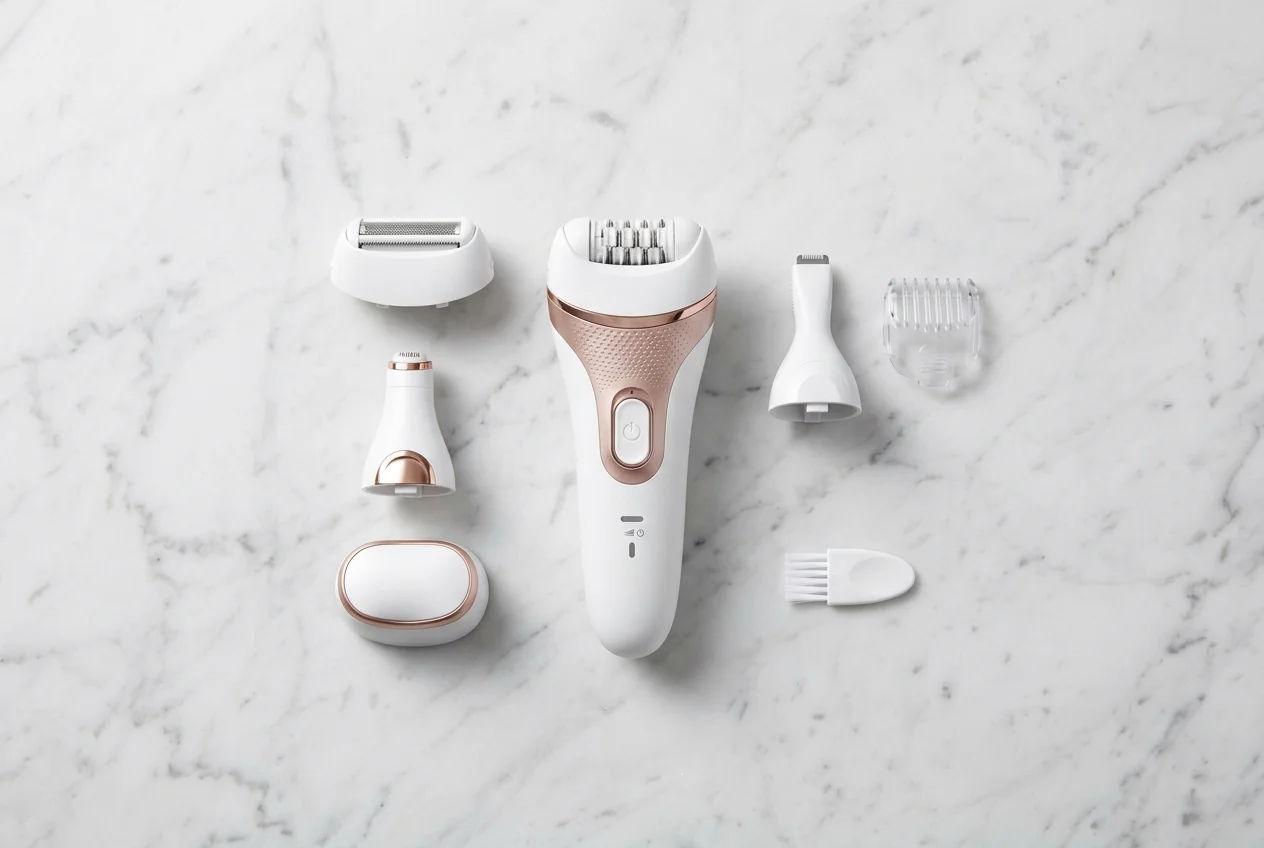
The Braun Silk-épil 9 Flex 9-041 3D is our best overall epilator on the evidence we could check. Its listing describes a fully flexible head, wet and dry use, a massage roller attachment, Smart Touch for switching between power and gentle modes, and capture of hairs as short as 0.5 mm. It had 1,487 ratings averaging 4.5, the largest rating base of the six epilators here; the Silk-épil 7 7-081 matched its average from 15 ratings, and the 7-041 had 633 ratings averaging 4.4.
How to use an epilator, step by step
Most bad first experiences come from technique rather than the device. The whole routine takes about ten minutes a leg once you have done it a few times.
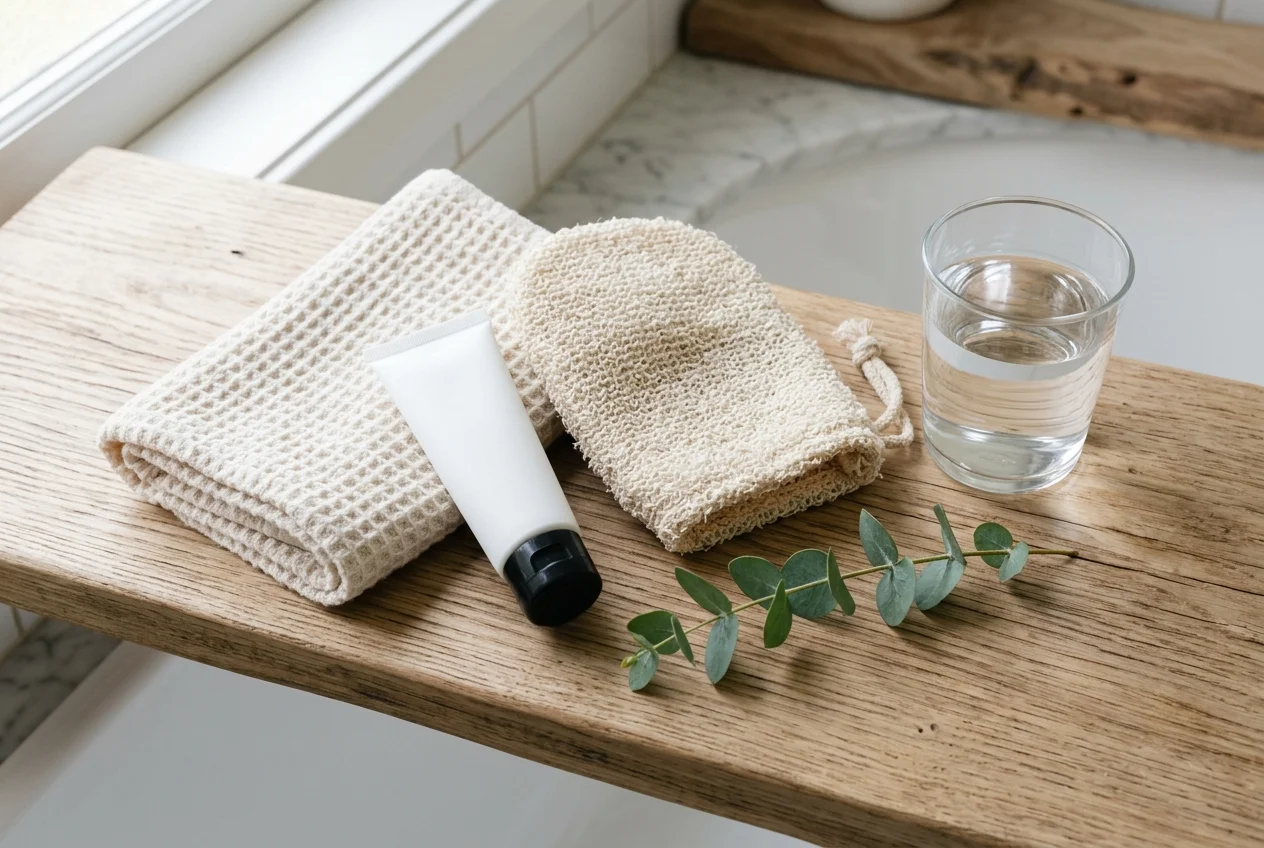
- Exfoliate a day or two before. A gentle mitt or scrub lifts trapped hairs to the surface so the tweezers grip them instead of skipping.
- Check the hair length. Between 2 and 5 millimetres is a suitable hair length. Longer hair pulls harder; shorter hair slips past the tweezers.
- Warm the skin. Epilate straight after a warm shower or bath, or in the shower itself on a wet-and-dry model like the Silk-épil 7. Warm, relaxed follicles release hair far more easily.
- Start on a leg. Legs are the least sensitive area and the right place to build tolerance before underarms or the bikini line.
- Pull the skin taut and hold the head at a slight angle. Keep the tweezers flush against the skin with your free hand stretching it flat.
- Move slowly, against the growth. Work up the leg rather than down it, and let the head do the work. Rushing makes it skip and snap hairs instead of pulling them cleanly.
- Finish with a fragrance-free moisturiser and give the skin a few hours away from heat, heavy sweating and tight fabric.
Do the first session in the evening so any redness settles overnight, and expect the second and third sessions to hurt noticeably less than the first.
Ingrown Hairs & Skin Care
The flip side of root removal is that it can occasionally trap a new hair under the skin as it grows back, causing an ingrown. The good news is that a consistent, simple skincare routine prevents most of them, and over time, epilation tends to cause fewer ingrowns than waxing because it removes hairs individually rather than ripping a whole area at once. A body oil pressed into damp skin after the shower is one easy way to keep skin supple; see our body oil for damp skin after a shower picks.
The single most effective habit is regular exfoliation. Using a gentle exfoliating mitt or scrub two or three times a week between epilation sessions clears dead skin from the follicle openings so new hairs grow up and out rather than curling sideways under trapped skin. Exfoliating the day before you epilate also lifts hairs to the surface so the tweezers grip them cleanly. After epilating, soothe the skin with a fragrance-free moisturiser to calm any redness and keep the skin supple, because irritated, dry skin is more prone to ingrowns. Our body lotion guide covers the fragrance-free options worth keeping beside the epilator.
For sensitive skin, work up slowly: start on legs, epilate in the evening so any redness settles overnight rather than under makeup or tight clothing, and avoid heat, heavy sweating and tight fabrics on freshly epilated skin for a few hours. Use the sensitive-area cap if your epilator includes one. Mild redness and a few small bumps immediately after a session are normal and typically fade within a few hours; persistent irritation is a sign to slow down, exfoliate more gently, and give your skin longer between sessions. Anyone who is genuinely prone to bad ingrown hairs should weigh epilation carefully; it can suit them once a good exfoliation routine is established, but it is not a guaranteed fit.
What about a face epilator?
Facial hair is a separate product category. The full-size body head is too wide and too aggressive for the upper lip or chin, which is why the answer in the FAQ below is about the facial cap rather than the main head.
What matters when you compare them is the same as on a body epilator: how many tweezers the head carries, whether it can be used wet, and whether it comes with a cap sized for the face.
Braun vs Philips vs Panasonic: which brand wins?
Braun and Philips are represented by the models compared here. Here is the honest breakdown.
Braun is represented by the Silk-épil 7 7-030 and Silk-épil 9 9-241 3D. Braun Australia lists both for wet and dry use with a shaver head and trimmer comb, and also lists a skin contact cap and bikini trimmer for the Silk-épil 9 9-241 3D.
Philips is represented by the Epilator Series 2000 BRE237/00, described as corded with a washable shaver head in the Amazon AU listing. Philips Australia lists no batteries and a 2 year warranty, and the Philips manual names the HQ8505 supply unit.
Panasonic has no product card on this page.
If you are kitting out the rest of your bathroom routine, our guides to the best hair dryers and the best electric toothbrushes in Australia round out the personal-care shelf.
How we picked
We compared power, wet and dry use, heads and attachments in the box, the maker's warranty, and the seller. The sources were Braun Australia and Philips Australia pages, the makers' manuals and the Amazon AU listings, checked 3 October 2026.
Braun's manual allows any 492-coded power supply; the current 492 codes are registered to Procter and Gamble Australia; the Braun 7-030, 7-081 and 9-241 are sold and shipped by Amazon AU. Philips names the HQ8505 supply unit for the Series 2000, and that unit was on the Australian electrical equipment register. The Braun Silk-épil 9 Flex 9-041 3D is sold through the Amazon Global Store from Germany rather than by Amazon AU, and its Global Store notice says plugs may differ, so check the charger plug when it arrives. The Braun Silk-épil 7 SE7-041 that was our top pick was out of stock on Amazon AU at the 3 October 2026 check, so the Silk-épil 9 Flex 9-041 3D, with the largest rating base here, is now our best overall pick. The same 7-041 model number is listed from Rarewaves UK, a UK seller, so the charger plug, delivery and warranty terms may differ from a unit sold by Amazon AU.
Frequently Asked Questions
Does epilating hurt?
Yes, epilating can hurt, particularly the first few sessions, because it pulls hairs out from the root rather than cutting them at the surface. The sensation is a quick prickle, strongest on sensitive areas and on your very first session when you are removing a full growth of coarse hair. The important part is that it eases substantially with regular use: your skin acclimatises to the sensation, and the hair grows back finer and sparser so there is less to pull each time. You can reduce the discomfort significantly by epilating after a warm shower, exfoliating beforehand, keeping the hair at a length of 2 to 5mm, pulling the skin taut, moving slowly, and starting on your legs before moving to more sensitive areas.
How long do epilator results last?
Most people get two to four weeks of smooth skin from a single epilation session, compared with one to two days from shaving. The reason is that epilating removes the entire hair including the root, so the follicle has to grow a completely new hair from scratch rather than simply pushing the cut end back to the surface. Regrowth timing varies between individuals and across different areas of the body, but the multi-week result is the core reason people choose epilation over shaving. When the hair does return it grows back with a soft, tapered tip rather than a blunt stubbly edge, so it feels finer than shaved regrowth.
Can you epilate your face?
You can epilate fine facial hair such as upper-lip or chin hair, but only with an epilator and cap specifically designed for the face. Many models include a smaller facial or precision cap that exposes fewer tweezers for delicate, controlled removal. The full-size body head is not appropriate for the face. Facial skin is more sensitive and more prone to irritation, so go slowly, do it in the evening so any redness settles overnight, and follow with a gentle fragrance-free moisturiser. Very coarse facial hair is generally not a good candidate for epilation. For that, a dedicated facial trimmer or professional treatment is usually a better fit.
Wet or dry: which is better?
Wet-and-dry epilators can be used in a warm shower or bath, where the warmth relaxes the skin and follicles so hairs release more easily and the pull stings less. Dry, corded epilators are cheaper and never need charging, with a consistently strong pull, but you lose the shower comfort benefit and you are tethered to a power point. Braun Australia lists the Silk-épil 7 7-030 and Silk-épil 9 9-241 3D for wet and dry use. A dry corded model can also be used while you find out whether epilation suits you.
Epilator vs IPL: which should I choose?
They solve different problems. An epilator is an immediate, on-demand tool that removes hair from the root and gives you two to four weeks of smoothness per session, indefinitely, because you own it and use it whenever you need to. IPL (intense pulsed light) is a long-term reduction strategy: it targets the pigment in the follicle over a course of many sessions across several months to gradually reduce how much hair grows back, and it works best on lighter skin with darker hair. Choose an epilator if you want results today and an affordable, reusable device. Choose IPL if you are committed to a multi-month routine and your goal is lasting hair reduction rather than periodic removal. Many people start with an epilator and consider IPL only later.
How do I avoid ingrown hairs after epilating?
The most effective prevention is regular exfoliation: using a gentle exfoliating mitt or scrub two or three times a week clears dead skin from the follicle openings so new hairs grow up and out rather than curling under the skin. Exfoliating the day before you epilate also lifts hairs so the tweezers grip them cleanly. After each session, apply a fragrance-free moisturiser to keep the skin supple and calm any redness, since dry irritated skin is more prone to ingrowns. Over time, epilation tends to cause fewer ingrowns than waxing because it removes hairs individually rather than stripping a whole area at once. If you are genuinely prone to ingrowns, establish the exfoliation routine before you start and build up slowly.
Is Braun or Philips better?
Braun and Philips offer different configurations in this comparison. Braun Australia lists the Silk-épil 7 7-030 and Silk-épil 9 9-241 3D for wet and dry use with a shaver head and trimmer comb, with a skin contact cap and bikini trimmer also listed for the latter. The Amazon AU listing describes the Philips Epilator Series 2000 BRE237/00 as corded with a washable shaver head, and Philips Australia lists a 2 year warranty and no batteries.
What is an epilator?
An epilator is a handheld grooming device with a rotating head full of tiny tweezers or discs. As you glide it over the skin the head spins and the tweezers open and close, gripping hairs and pulling them out from the root, dozens per second. It is mechanised tweezing rather than shaving, which is why the result lasts two to four weeks rather than a day or two, and why regrowth comes back with a soft tapered tip instead of blunt stubble.
Do dermatologists recommend epilators?
Epilation is generally treated as a safe at-home hair removal method for healthy skin, in the same bracket as waxing, and it is a matter of preference rather than prescription. If you have a skin condition, are pregnant or take medication that thins the skin, ask your GP or a dermatologist before you start rather than after.
How do you clean an epilator?
Clean it after every session, while the debris is still loose. Switch it off, pull the head or cap away, and brush the tweezer discs out with the small brush in the box. On a wet-and-dry model you can rinse the head under running water, then stand it up to dry completely before you click it back on. On a dry-only model use the brush alone and wipe the discs with a little isopropyl alcohol on a cotton bud. Never put the motor body under a tap unless the model is rated for it.
Does epilating reduce hair growth over time?
It does not remove hair permanently, and any device that claims it does is overstating. What regular epilating does is thin the result: because the whole hair is pulled from the follicle, regrowth comes back finer, sparser and with a soft tapered tip, so each session takes less time and hurts less than the last. For actual long-term reduction you want IPL, which works on the pigment in the follicle over a course of months, and is a different tool for a different goal.
How long does an epilator last?
Two answers, because the question is usually asked two ways. The Amazon AU listings identify the Braun Silk-épil 7 7-030 and Silk-épil 9 9-241 3D as battery powered, while the Philips Epilator Series 2000 BRE237/00 is corded. As a device, a good epilator is a multi-year purchase: there is no consumable head to replace the way there is on a shaver, so what usually ends its life is the battery rather than the tweezers. Rinsing the head after each use and letting it dry fully is the single habit that keeps one going.
What is the most effective epilator?
Our best overall pick is the Braun Silk-épil 9 Flex 9-041 3D, whose listing describes a fully flexible head and capture of hairs as short as 0.5 mm, with the largest rating base of the epilators here. Effectiveness still depends on head width, tweezers, wet use and technique. The other reference points are the corded Philips Epilator Series 2000 BRE237/00 and the wet and dry Braun Silk-épil 7 and Silk-épil 9 models, as described by the maker pages and Amazon listings.
Does hair grow back thicker with an epilator?
No. Epilating pulls the whole hair out from the root, so regrowth starts with a soft, tapered tip instead of the blunt cut end a razor leaves, which is why it feels finer rather than thicker. If you notice unusual changes in hair growth, ask your GP.
Is it okay to epilate your bikini line?
You can epilate the bikini line, but it is more sensitive than your legs, so build tolerance on your legs first. Use a sensitive area cap if your epilator has one, and a pivoting or flexible head helps keep contact on curves. The Braun Silk-épil 9 9-241 3D comes with a bikini trimmer. If you have a skin condition, ask your GP first.
Which brand of IPL hair removal is best?
This guide compares epilators, not IPL devices, so it does not rank IPL brands. IPL is a long term reduction tool that targets the pigment in the follicle over many sessions across several months and works best on lighter skin with darker hair. An epilator removes hair from the root and gives two to four weeks of smoothness per session.
Which corded epilator is the best?
The only corded epilator in this guide is the Philips epilator BRE237/00, which the Amazon AU listing describes as corded with a washable shaver head; Philips Australia lists no batteries and a 2 year warranty. It had 4.1 stars from 18 ratings on Amazon Australia. A corded model never needs charging, but it ties you to a power point and is used on dry skin.
What are the drawbacks of using an epilator?
It can hurt, especially in the first few sessions, though it eases with regular use. It can occasionally trap a new hair under the skin as it grows back, so exfoliate regularly, and mild redness after a session is normal. Hair needs to be around 2 to 5 millimetres for the tweezers to grip, and results last two to four weeks rather than permanently.