The hair dryer is one of those products where the price range is absurd: you can spend $30 or $700 on what is fundamentally the same concept, a fan that blows hot air. The best hair dryer in Australia for most people is the ghd Helios at about $185, a 2,200W dual-ion dryer, with the Remington Proluxe at about $49 the best budget blow dryer at 2,400W and the Dyson Supersonic at about $599 the premium option. The question is whether the $670 gap represents real, meaningful improvements in how your hair looks and feels, or whether you are paying for a Dyson logo and a beautiful unboxing experience.
The honest answer is somewhere in between. There is a real difference between a $30 dryer and a $100 dryer: speed, heat consistency, noise levels, and features like ionic technology that genuinely affect frizz. The difference between a $100 dryer and a $600 Dyson Supersonic is more nuanced: real, but not proportional to the price difference.
Here is what the technology actually does, which models are worth buying in Australia in 2026, and the honest answer to whether the Dyson Supersonic is worth its price tag.
| Pick | Best for | Key spec | Price band | Rating |
|---|
| Remington Proluxe Dryer | Best budget, under $60 | 2,400W, ionic, diffuser and concentrator included | from $49 | 4.3 |
| ghd Helios | Best for most, mid-range | 2,200W, dual ion, salon-grade airflow | from $185 | 4.6 |
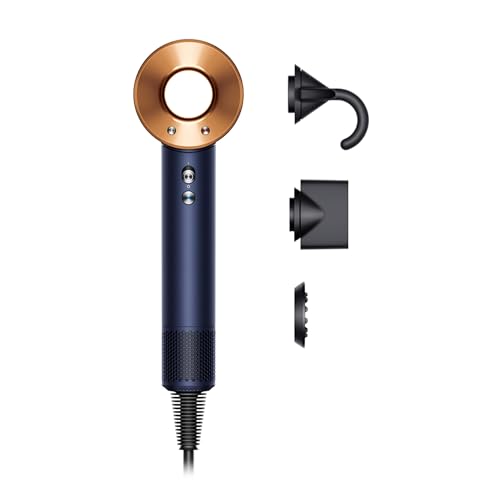
| Dyson Supersonic | Premium, thick or frizz-prone hair | 1,600W, intelligent heat control, motor in the handle | from $599 | 4.7 |
Ionic vs Ceramic vs Tourmaline: What Actually Matters
Hair dryer marketing is full of technology terms that range from genuinely meaningful to borderline fiction. Here is the honest breakdown:
Ionic technology is real and meaningful. When hair dries, water molecules need to evaporate from the hair shaft. Positively charged water molecules on wet hair are attracted to negative ions. When a dryer produces negative ions, it breaks water molecules into smaller clusters that evaporate faster and disperse more evenly. The result: faster drying and significantly reduced frizz. Ionic dryers are genuinely better for anyone with frizz-prone or thick hair. They are not magic, but the difference is noticeable.
Ceramic refers to ceramic heating elements or ceramic-coated components. Ceramic heats more evenly than bare metal coils, distributing heat consistently across the airstream rather than in concentrated hot spots. This means more even drying and less chance of heat damage from hot spots. Most decent dryers in the $50 and above range now use some form of ceramic technology.
Tourmaline is a semi-precious mineral that emits negative ions and infrared heat. In practice, tourmaline dryers are essentially another way of saying ionic, because the tourmaline coating enhances ion emission. The marketing around tourmaline often overstates the difference from standard ionic technology. It is better than nothing, but do not pay a significant premium specifically for tourmaline over a good ionic dryer. Whatever the dryer, product build-up dulls the finish faster than any nozzle fixes, so a clarifying shampoo every few weeks earns its place next to it.
Infrared heat (used in some premium dryers) heats the hair from the inside out rather than just the surface. This can reduce heat damage because you need lower surface temperatures to achieve the same drying effect. It is a genuine benefit for fine or damaged hair.
Wattage: Does More Power Mean Better?
Wattage is the specification most people look at first, but it is also the most misunderstood. Higher wattage does mean more airflow and generally faster drying, but there are important nuances:
Australian power points deliver 230V and most household circuits are rated at 10 amps, giving a maximum of 2,300W. Most Australian hair dryers are rated at 1,800 to 2,400W. Hair dryers rated above 2,400W typically require a 15-amp circuit and are not suitable for standard Australian bathrooms.
More wattage means more airflow, which dries hair faster. But more airflow with more heat can increase heat damage. The better dryers (at any price point) focus on airflow efficiency and heat consistency rather than simply raw wattage. A 2,100W dryer with excellent airflow engineering can dry hair faster than a 2,400W dryer with poorly designed air channels.
For context: thick or long hair benefits most from high wattage (2,200W or more). Fine or short hair dries quickly even on lower settings. High wattage is less important, and reduced heat settings matter more to prevent damage.
Best Budget Hair Dryers Under $60
The sub-$60 category has improved substantially. Modern budget dryers include ionic technology, multiple heat and speed settings, and concentrator nozzles that would have been mid-range features five years ago.
The Remington Proluxe is the standout in this price range. At 2,400W, it produces more airflow than many $150-plus dryers, and the OPTIheat technology uses multiple thermostats to maintain a consistent temperature rather than the fluctuating heat that cheaper dryers produce. Fluctuating heat, where the dryer alternates between hot and too-hot, is one of the primary causes of heat damage, so heat consistency is worth prioritising. The included diffuser and concentrator nozzle add versatility that most budget dryers skip. For someone who wants reliable daily performance without a significant investment, the Remington Proluxe is the clear choice. If you want the blow-dry finish in one step rather than juggling a dryer and a brush, our hair dryer brush guide covers that alternative.
Best Mid-Range Hair Dryers ($60 to $200)
In the $60 to $200 range, you are looking at professional-grade dryers from ghd, BaByliss, and Parlux that hairdressers genuinely use. These represent a meaningful step up in build quality, airflow engineering, and longevity.
The ghd Helios is the Australian stylist's mid-range recommendation and has been for several years. At $185, it is not cheap for the price bracket, but the aeroprecis motor technology produces a precision, concentrated airstream that dries hair faster with less heat. The combination of higher velocity air and consistent temperature means you can use lower heat settings and still dry quickly. This is the key quality argument for mid-range dryers: they dry faster at lower temperatures, which means less cumulative heat damage over time. The 3-metre professional cord is a quality-of-life detail that matters more than you would expect: salon-length cords allow genuine freedom of movement during drying and styling.
The ghd Helios is particularly well-suited for thick, coarse, or frizzy hair, hair types that need heat management the most. For fine hair, the Parlux 385 or BaByliss Professional are strong alternatives at similar prices.
Best Premium Hair Dryers ($200+)
Above $200, the market essentially bifurcates into the Dyson Supersonic and everything else. The everything else includes professional salon dryers from Parlux and BaByliss that are excellent but less well-known to Australian consumers.
The Dyson Supersonic is unambiguously the most technologically advanced hair dryer available in Australia in 2026. The V9 digital motor spins at 110,000 RPM. For comparison, conventional hair dryer motors spin at around 20,000 to 30,000 RPM. This allows Dyson to put the motor inside the handle rather than the head, completely changing the balance of the dryer. The head is light, the balance is forward, and prolonged use is less fatiguing than conventional dryers.
The intelligent heat control measures the air temperature 40 times per second and adjusts power to maintain a consistent temperature, preventing the extreme heat spikes that cause heat damage in conventional dryers. The five included attachments are all high quality: a concentrator, diffuser, wide-tooth comb, flyaway smoother, and styling concentrator.
Is the Dyson Supersonic Worth $600?
This is the question everyone asks, and the honest answer is: it depends on your hair and your priorities.
The Dyson Supersonic is genuinely worth it if: You have thick, long, or frizz-prone hair that takes 20 or more minutes to dry. You style your hair daily, meaning heat damage accumulates. You value the ergonomics. The motor-in-handle design is meaningfully better for long drying sessions. You care deeply about the attachment quality and versatility.
The Dyson Supersonic is probably not worth it if: You have short or fine hair that dries in under 10 minutes regardless. You are a wash-and-go person who does not style. You are comparing it to a ghd Helios or Parlux, and the real-world hair quality difference between these and the Dyson is much smaller than the price difference. You would rather invest the $400 difference in professional treatments, or in a hair straightener you do not yet own.
The Dyson Supersonic is exceptional and genuinely different from anything else on the market. At $600, it is a luxury purchase. It is not a $600-better experience than a $150 ghd Helios, but it is meaningfully better. If budget allows and hair care matters to you, it is a genuinely good product. If value for money is the priority, the ghd Helios delivers 80% of the result for less than a third of the price.
Frequently Asked Questions
Should I use low or high heat to dry my hair?
Lower heat with higher airspeed causes less damage than high heat with lower airspeed, even if the total drying time is similar. The ideal technique: use high speed and medium heat to get hair 80% dry, then switch to medium speed and lower heat for the final styling stage. Keep the dryer moving constantly, holding it in one spot concentrates heat and causes localised damage. Most hairdressers recommend finishing with a blast of cool air to seal the cuticle and add shine.
How far should I hold a hair dryer from my hair?
The recommended distance is 15 to 20cm between the nozzle and your hair. Closer than 10cm concentrates heat significantly and increases damage risk. The concentrator nozzle that comes with most dryers helps focus the airstream for styling, use it, as it allows more precise control than the bare nozzle at any distance. If you use a diffuser for curly hair, you can get closer because the diffuser disperses the air over a wider surface area, reducing concentrated heat exposure.
Does a hair dryer cause permanent hair damage?
Repeated heat styling does cause cumulative damage to the hair shaft, primarily to the cuticle layer that protects the cortex. This damage is real but largely cosmetic: it affects shine, texture, and breakage rather than hair growth or long-term scalp health. The damage is most significant from high temperatures and prolonged exposure. Using a heat protectant spray before drying (which forms a barrier on the hair shaft), using the lowest effective heat setting, and keeping the dryer moving all significantly reduce cumulative damage. Premium dryers with intelligent heat control and consistent temperatures cause less damage than budget dryers with fluctuating heat output.
What brand of hair dryer is best in Australia?
It depends on the budget band. Under $60, Remington is the safest name, and the Proluxe at about $49 is our budget pick at 2,400W. Between $100 and $200, ghd and Parlux are the salon brands, and the ghd Helios at about $185 is our best for most. Above $500, Dyson and Shark own the category, with the Supersonic at about $599. VS Sassoon and Kmart cover the very cheap end, and Laifen is the newer challenger. Buy on wattage, heat settings and warranty rather than on the badge.
What hair dryers do hairdressers recommend?
Salons buy for eight hours a day, so they choose light, durable, high airflow dryers rather than the cheapest. Parlux and ghd are the two names that come up most in Australian salons, and the ghd Helios at 2,200W is the model most often recommended for home use. Dyson has moved into salons too, mostly for the ergonomics of the motor in the handle over a long day. What no hairdresser recommends is a supermarket dryer with one heat setting, because inconsistent heat is what damages hair.
Is a blow dryer the same as a hair dryer?
Yes. Blow dryer, hairdryer and hair dryer all describe the same appliance, a fan that pushes air across a heating element. Blow dryer is the more common term in North America and blow-dry is what Australians call the result rather than the tool. There is no product difference to shop for, so a search for the best blow dryer in Australia and one for the best hair dryer return the same models. A blow-dry brush is a different thing: a dryer and a round brush combined into one handle.
Is an ionic hair dryer worth it?
For frizz-prone, thick or long hair, yes. A dryer producing negative ions breaks the water on the hair into smaller droplets that evaporate faster and more evenly, so hair dries quicker and lies flatter. All three of our picks are ionic, from the Remington Proluxe at about $49 upwards, so it is no longer a feature you pay a premium for. If your hair is fine, short and dries in under 10 minutes, the difference is small, and consistent heat matters more than ion output.
How do you spot an unsafe hair dryer?
Look for the Regulatory Compliance Mark, the RCM triangle with a tick, which is what says an appliance meets Australian electrical safety rules. Consumer group Choice has reported buying dryers from overseas marketplaces that carried no RCM mark at all. Check the plate says 230V or 240V rather than 120V, since a US-voltage dryer on an Australian outlet is a fire risk. Check the plug is a genuine Australian pin pattern, not an adaptor, and that there is a named importer or supplier on the box.
Can a hair dryer damage your hearing?
It can with heavy daily use. Choice measures hair dryers at around 85 decibels at a distance of 15cm, and the threshold where damage starts is about 95 decibels after 30 to 60 minutes of continuous exposure. A single morning blow-dry is well inside safe limits. The people who need to think about it are hairdressers running a dryer for hours. If your dryer is noticeably louder than others, that usually points at a worn motor bearing rather than more power, and it is a sign to replace it.