By Anish Puri·6 June 2026·Last updated 20 October 2026·14 min read
The best foam roller in this guide is the TriggerPoint GRID Foam Roller (33cm), which shows 4.6 stars from 3,229 ratings on Amazon AU, where Amazon AU is the seller. Its listing describes a multi density exterior over a rigid, hollow core. The ProsourceFit and Amazon Basics rollers are firm high density alternatives.
Prices checked 27 October 2026 on Amazon AU and subject to change.
How we picked the best foam rollers in Australia
The best foam roller in Australia for most people is the TriggerPoint GRID Foam Roller (33cm). It shows 4.6 stars from 3,229 ratings on Amazon AU, where Amazon AU is the seller, and its listing describes a multi density exterior over a rigid, hollow core. A foam roller is a simple piece of recovery equipment, and the right one depends on how firm the foam is, how long the roller is, whether it vibrates and where you will use it. We compared six rollers on Amazon Australia on those points.
The short version: start with the TriggerPoint GRID if you want a roller with a rigid, hollow core. The ProsourceFit and Amazon Basics are the firm high density starters, the Gaiam (sold by Amazon US) is the 36 inch roller and the Rolflex PRO (sold by Amazon US) is the leverage compression tool. The COOBST vibrating roller could not be bought on 20 October 2026.
How we checked: we read the Amazon AU listing for each roller, including its title, bullet points, product information, star rating, rating count and the seller shown on the buy box. Specs come from the maker's bullet points and the product information on each listing. Where this page gives a rating or a count, it is the one shown on that listing. We did not test any roller ourselves, so the descriptions here are the listings' own words and the makers' claims.
Last checked: 20 October 2026
How the six foam rollers compare
Roller
Suits
Length and density
Seller
Rating
ProsourceFit High Density Foam Roller (12 inch)
A firm half round roller for stretching and warm ups
Half round, high density EPP foam, 30.48 cm long
Amazon AU
4.4 from 4,571
Amazon Basics High Density Round Foam Roller (61cm)
A round roller for exercise and recovery
Round, approximately 61cm long, material named two ways on the listing, see card
Amazon AU
4.5 from 93,574
TriggerPoint GRID Foam Roller (33cm)
Best overall
Multi density exterior over a rigid, hollow core, 33cm long
Amazon AU
4.6 from 3,229
COOBST Vibrating Foam Roller
Could not be bought on 20 October 2026
High density EVA foam, 5 vibration intensities, USB-C charging
No seller shown
4.2 from 78
Gaiam Restore Foam Roller (36 inch)
A long roller for the glutes, calves and quads; the listing says avoid use on lower back, neck or head
36 inches long, medium density, smooth foam
Amazon US
4.4 from 1,029
Rolflex PRO Leverage Compression Roller
Rolling without getting on the ground
Leverage compression tool, high density foam
Amazon US
4.4 from 1,188
ProsourceFit High Density Foam Roller (12 inch)
The ProsourceFit is a firm half round roller. It shows 4.4 stars from 4,571 ratings on Amazon AU, where Amazon AU is the seller. Its listing describes high density foam with a stiff surface for stretching, warm ups and cooldowns, and a half round shape that keeps it in place with one side flat on the ground. The product information gives its size as 7.62 x 7.62 x 30.48 cm, so it will not span your whole back in one pass.
The bullet points say it is made from high density expanded polypropylene (EPP), is lightweight and easy to clean, and maintains its shape even with consistent use. The listing offers 12, 18 and 36 inch sizes, and its title says 12 inches long, so this card is the shortest size. The listing description also says it has a lightly textured surface that enhances grip and stability during exercises.
The bullet points also say the half round shape stretches tight muscles and provides a core stabilizer for muscle strengthening, and that the design enables exercise use from ab workout assistance to push ups and more. The product information lists ProsourceFit as the manufacturer, China as the country of origin and a weight of 40.82 Grams, and the buy box showed returns eligible for change of mind returns within 30 days of receipt.
Budget pick
ProsourceFit
ProsourceFit High Density Foam Roller (12 inch)
4.4(4,571)
A firm half round roller whose listing describes high density foam with a stiff surface for stretching, warm ups and cooldowns, and a half round shape that keeps it in place. It shows 4.4 stars from 4,571 ratings on Amazon AU, sold by Amazon AU, and the product information gives its size as 7.62 x 7.62 x 30.48 cm.
$13.47
Amazon.com.au price as of 11:01 pm AEDT, subject to change
As an Amazon Associate, NestPath earns from qualifying purchases.
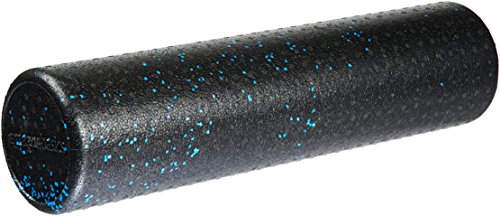
Amazon Basics High Density Round Foam Roller (61cm)
The Amazon Basics round roller shows 4.5 stars from 93,574 ratings on Amazon AU, where Amazon AU is the seller. Its listing measures approximately 61 x 15 x 15 centimetres and names the material two ways: the bullet points say molded polypropylene to maintain firmness, while the same listing's page text says polyethylene foam to maintain firmness and, in its description, high density polyethylene foam. Check the material you want before you order. The bullet points call it a high density foam roller with molded edges, lightweight and easy to clean and transport, and say it is ideal for balance, strengthening, flexibility and rehab exercises.
The listing title offers 30cm, 46cm, 61cm and 91cm lengths, so check that the 61cm size is selected before you buy.
The title describes it as an exercise, massage and muscle recovery roller. The buy box on the Amazon AU page showed that it ships in product packaging and that returns are eligible for change of mind returns within 30 days of receipt. The title lists four lengths, 30cm, 46cm, 61cm and 91cm, so read the size on the listing before you order.
Also great
Amazon Basics
Amazon Basics High Density Round Foam Roller (61cm)
4.5(93,574)
A round roller whose listing describes high density foam with molded edges, measuring approximately 61 x 15 x 15 centimetres. Its bullet points say molded polypropylene to maintain firmness, while the same listing's page text says polyethylene foam to maintain firmness. It shows 4.5 stars from 93,574 ratings on Amazon AU, sold by Amazon AU. The listing title also offers 30cm, 46cm and 91cm lengths, so check that the 61cm size is selected.
$34.90
Amazon.com.au price as of 11:00 am AEDT, subject to change
As an Amazon Associate, NestPath earns from qualifying purchases.
Best overall: TriggerPoint GRID Foam Roller (33cm)
The TriggerPoint GRID is the best overall pick for most people, because it shows 4.6 stars from 3,229 ratings on Amazon AU, where Amazon AU is the seller, and its listing describes a patented design with a multi density exterior constructed over a rigid, hollow core. The listing says it is constructed from quality materials that will not break down or lose shape from repeated use. The product information gives its size as 33 x 14 x 14 cm, so it is a short roller that will not cover your whole back in one pass.
The listing description calls the exterior durable multi density EVA foam and says the GRID Original supports up to 500 pounds. The listing also includes access to a free online instructional video library on foam rolling, and the product information gives the item model number as 15323 and the weight as 500 Grams. These are the maker's claims, not something we tested.
The product information lists the manufacturer as Implus Corporation and the country of origin as Taiwan, and the title names the colour as Pink. The buy box on the Amazon AU page showed returns eligible for change of mind returns within 30 days of receipt, and the product information says the item is not discontinued by the manufacturer. Check the listing for the size you want before you order.
Top pick
TRIGGERPOINT
TriggerPoint GRID Foam Roller (33cm)
4.6(3,229)
The listing describes a patented foam roller design with a multi density exterior constructed over a rigid, hollow core, and says it is constructed from quality materials that will not break down or lose shape from repeated use. It shows 4.6 stars from 3,229 ratings on Amazon AU, sold by Amazon AU, and the product information gives its size as 33 x 14 x 14 cm.
$58.08
Amazon.com.au price as of 11:01 pm AEDT, subject to change
As an Amazon Associate, NestPath earns from qualifying purchases.
Density: start soft, work up to firm
Density decides how firm a roller feels under your body weight. The Gaiam listing calls it a medium density foam roller. The ProsourceFit and Amazon Basics listings describe high density foam, and the Rolflex PRO title calls it a high density foam roller. The TriggerPoint GRID listing describes a multi density exterior. Choose the density by how firm you want the roller to feel. The Gaiam bullet points describe the foam as smooth yet firm, designed for repeated use and pressure so you can apply your desired pressure while the roller maintains its shape and density.
The practical advice is simple: ease in. If a roller feels too intense, take some of your body weight off it rather than pushing harder, and stop if you feel pain. The TriggerPoint listing includes access to a free online instructional video library on foam rolling.
Texture: what each listing says about the surface
The Gaiam listing describes durable yet smooth foam. The ProsourceFit listing description says it has a lightly textured surface that enhances grip and stability during exercises. The TriggerPoint GRID listing describes a multi density exterior over a rigid, hollow core, and its description calls the exterior durable EVA foam. The Amazon Basics listing does not describe a surface texture, so we do not label it smooth or textured.
If you are choosing between a smooth roller and a textured one, read each listing for the surface it describes rather than assuming.
COOBST Vibrating Foam Roller: could not be bought on 20 October 2026
Could not be bought on 20 October 2026: the Amazon AU page for this listing said Currently unavailable and showed no add to cart button, so we do not recommend it. Its listing described 5 intensities of vibrations, a pulsing mode, a combination of firm nodules, a tubular section and a flat region, and a built in 2500 mAh rechargeable battery charged through a USB-C port. It showed 4.2 stars from 78 ratings.
The product information gave its size as 30.99 x 11 x 11 cm and its weight as 1.36 kg, and the bullet points said the battery can last for up to 2 to 6 hours and that the roller shuts down automatically after 15 minutes. The title said it came with a carry bag. The listing described the foam as high density EVA that is soft and pliable yet very firm, and said the roller can be used from the back or the chest, clockwise and counter clockwise.
COOBST
COOBST Vibrating Foam Roller
4.2(78)
Could not be bought on 20 October 2026: the Amazon AU page for this listing said Currently unavailable and the feed showed it out of stock, so we do not recommend it. Its listing described 5 intensities of vibrations, a pulsing mode and a built in 2500 mAh rechargeable battery.
As an Amazon Associate, NestPath earns from qualifying purchases.
Gaiam Restore Foam Roller (36 inch): a long roller with listed safety limits
The Gaiam Restore shows 4.4 stars from 1,029 ratings on Amazon AU. Its listing calls it a medium density foam roller with durable yet smooth foam that maintains its shape and density, and its bullet points describe the 36 inch length as suiting tight glutes, calves and quads. The Important information section on the listing says to always apply gentle pressure, to avoid use on lower back, neck or head, and not to use it for prolonged periods or with excessive pressure. The product information gives its size as 91.44 x 15.24 x 15.24 cm and its weight as 467.2 Grams. On 20 October 2026 the Amazon AU page showed it sold by Amazon US, with a notice that US imports may differ from local products and additional terms apply.
The bullet points say the 36 inch length suits the glutes, calves and quads and that it is for the home or gym and can be easily stored. They also market it for the back, arms and legs and for full body work, but the Important information section on the same listing says to avoid use on lower back, neck or head, and that it is not intended for use by children. It advises consulting a healthcare professional before use if you have any medical conditions or concerns. The product information lists Fit For Life as the manufacturer and 05-58274 as the item model number, and the buy box described the item as returnable.
Also great
Gaiam
Gaiam Restore Foam Roller (36 inch)
4.4(1,029)
A 36 inch roller whose listing describes medium density foam that is durable yet smooth and maintains its shape and density. It shows 4.4 stars from 1,029 ratings on Amazon AU and the product information gives its size as 91.44 x 15.24 x 15.24 cm.
$47.32
Amazon.com.au price as of 11:01 pm AEDT, subject to change
As an Amazon Associate, NestPath earns from qualifying purchases.
Length changes what a roller can reach. From the product information, the ProsourceFit measures 7.62 x 7.62 x 30.48 cm, the TriggerPoint GRID 33 x 14 x 14 cm and the Gaiam 91.44 x 15.24 x 15.24 cm, while the Amazon Basics bullet points give approximately 61 x 15 x 15 centimetres. The TriggerPoint is listed at 500 Grams and the Gaiam at 467.2 Grams. Pick the length around where you will use it and what you want to roll. On tiles or floorboards a yoga mat under the roller can stop it sliding away.
Which foam roller is best for back pain, and can you roll your lower back?
For the back and legs, the Gaiam is the longest roller here, and its bullet points name the glutes, calves and quads. Avoid rolling your lower back on it: its Important information says to avoid use on lower back, neck or head, and to apply gentle pressure. We have not tested any roller for pain.
For the legs, the Rolflex PRO bullet points name the legs, arms, hands and feet for warm ups and cool downs. The ProsourceFit bullet points describe its high density foam as a stiff surface for stretching, warm ups and cooldowns, as a back cracker and for back support. These are the listings' own words, not something we tested.
Vibration: what a vibrating roller adds
A vibrating roller adds a battery to a foam roller. The COOBST listing described 5 intensities of vibrations, a pulsing mode and a built in rechargeable battery, but that roller could not be bought on 20 October 2026, and none of the other five titles on this page say vibrating. The COOBST bullet points listed loosening up tight muscles, supporting a pre workout warm up and post workout recovery among its uses, and said the unit shuts down automatically after 15 minutes. We have not tested any of those uses.
If you want vibration without a roller, a massage gun is another way to get it. Rolling is only one part of a recovery routine, and if you would rather take the whole body cold, our guide to portable ice baths covers that option. If you are considering heat as part of that routine, compare portable infrared sauna options too.
Core and durability: what the listings say
A rigid, hollow core is the TriggerPoint GRID's main structural feature: its listing describes a multi density exterior constructed over a rigid, hollow core and says it is constructed from quality materials that will not break down or lose shape from repeated use. The COOBST title says Durable EVA Foam & Solid Core, but that is the unavailable roller covered above. The Gaiam, ProsourceFit, Amazon Basics and Rolflex PRO listings describe their foam rather than a core. The Gaiam says its roller maintains its shape and density, and the ProsourceFit says it maintains its shape even with consistent use. The Amazon Basics bullet points call it lightweight, easy to clean and transport, and the ProsourceFit bullet points call its foam an easy to clean, lightweight recovery tool. The TriggerPoint, ProsourceFit and Amazon Basics listings each showed Amazon AU as the seller, with returns eligible for change of mind returns within 30 days of receipt.
Foam type is the other thing to read. The ProsourceFit listing says it is made from high density expanded polypropylene (EPP), the Amazon Basics listing names molded polypropylene in its bullet points and polyethylene foam elsewhere on the page, and the COOBST listing described high density EVA foam, though that roller could not be bought on 20 October 2026. Read the foam type on the listing before you buy.
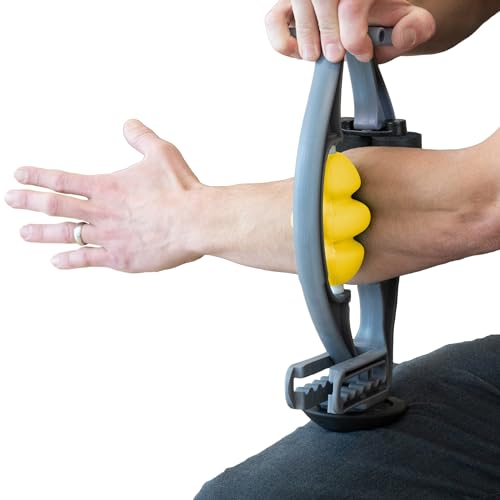
Rolflex PRO Leverage Compression Roller: rolling without getting on the ground
The Rolflex PRO shows 4.4 stars from 1,188 ratings on Amazon AU. Its title calls it a Leverage Compression High Density Foam Roller, and the first bullet point says you can stop getting on the ground or twisting awkwardly to use a styrofoam foam roller or muscle roller stick. The bullet points name the legs, arms, hands and feet to roll during a warm up or cool down. On 20 October 2026 the Amazon AU page showed it sold by Amazon US, with a notice that US imports may differ from local products and additional terms apply.
The bullet points call it a foam roller you can actually use and a great tool to roll tight fascia and muscle before and after exercise. The title adds that it is a deep tissue massager for muscle massage, recovery and myofascial trigger point release, the byline shows the brand as Rolflex, and the buy box described the item as returnable.
Also great
Rolflex
Rolflex PRO Leverage Compression Roller
4.4(1,188)
A leverage compression roller whose listing says you can stop getting on the ground or twisting awkwardly to use a styrofoam foam roller or muscle roller stick, and names the legs, arms, hands and feet for warm ups and cool downs. It shows 4.4 stars from 1,188 ratings on Amazon AU.
$135.79
Amazon.com.au price as of 11:00 am AEDT, subject to change
As an Amazon Associate, NestPath earns from qualifying purchases.
The Rolflex is a different kind of tool from a cylinder. Choose it if getting down to the floor is what stops you rolling, and choose the TriggerPoint GRID if you want a standard roller. For recovery you lie on rather than work at, an acupressure mat is a companion to any of these.
Which foam roller should you buy?
The TriggerPoint GRID Foam Roller (33cm) is the best foam roller to buy for most people: it shows 4.6 stars from 3,229 ratings on Amazon AU and its listing describes a multi density exterior over a rigid, hollow core. Choose the ProsourceFit or Amazon Basics for a firm starter.
Choose the Gaiam if you want a 36 inch roller and the Rolflex PRO if you want to roll without getting on the ground; both are sold by Amazon US. The COOBST vibrating roller could not be bought on 20 October 2026. Before you order any of them, check the size and the seller on the listing.
Frequently asked questions
Are foam rollers good?
Foam rollers are sold for muscle recovery, and the five in stock rollers on this page show between 4.4 and 4.6 stars on their Amazon AU listings. The TriggerPoint GRID is the highest at 4.6 stars from 3,229 ratings. We have not tested how well any roller works, so treat the listing descriptions as the makers' claims.
What is the difference between foam rollers?
The main differences in these listings are density, length, surface and how you use them. The Gaiam is a medium density roller 36 inches long, the ProsourceFit and Amazon Basics describe high density foam, the TriggerPoint GRID has a multi density exterior over a rigid, hollow core, and the Rolflex PRO is a leverage compression tool.
Is a smooth or ribbed foam roller better?
Neither is better for everyone, and the listings do not settle it. The Gaiam listing describes smooth foam, the ProsourceFit page describes a lightly textured surface and the TriggerPoint GRID listing describes a multi density exterior. Choose the surface you find comfortable to roll on, and ease in with any roller.
DETAILED REVIEWS
Top pick
TRIGGERPOINT
TriggerPoint GRID Foam Roller (33cm)
4.6(3,229)
The listing describes a patented foam roller design with a multi density exterior constructed over a rigid, hollow core, and says it is constructed from quality materials that will not break down or lose shape from repeated use. It shows 4.6 stars from 3,229 ratings on Amazon AU, sold by Amazon AU, and the product information gives its size as 33 x 14 x 14 cm.
$58.08
Amazon.com.au price as of 11:01 pm AEDT, subject to change
As an Amazon Associate, NestPath earns from qualifying purchases.
Budget pick
ProsourceFit
ProsourceFit High Density Foam Roller (12 inch)
4.4(4,571)
A firm half round roller whose listing describes high density foam with a stiff surface for stretching, warm ups and cooldowns, and a half round shape that keeps it in place. It shows 4.4 stars from 4,571 ratings on Amazon AU, sold by Amazon AU, and the product information gives its size as 7.62 x 7.62 x 30.48 cm.
$13.47
Amazon.com.au price as of 11:01 pm AEDT, subject to change
As an Amazon Associate, NestPath earns from qualifying purchases.
Also great
Amazon Basics
Amazon Basics High Density Round Foam Roller (61cm)
4.5(93,574)
A round roller whose listing describes high density foam with molded edges, measuring approximately 61 x 15 x 15 centimetres. Its bullet points say molded polypropylene to maintain firmness, while the same listing's page text says polyethylene foam to maintain firmness. It shows 4.5 stars from 93,574 ratings on Amazon AU, sold by Amazon AU. The listing title also offers 30cm, 46cm and 91cm lengths, so check that the 61cm size is selected.
$34.90
Amazon.com.au price as of 11:00 am AEDT, subject to change
As an Amazon Associate, NestPath earns from qualifying purchases.
COOBST
COOBST Vibrating Foam Roller
4.2(78)
Could not be bought on 20 October 2026: the Amazon AU page for this listing said Currently unavailable and the feed showed it out of stock, so we do not recommend it. Its listing described 5 intensities of vibrations, a pulsing mode and a built in 2500 mAh rechargeable battery.
As an Amazon Associate, NestPath earns from qualifying purchases.
Also great
Gaiam
Gaiam Restore Foam Roller (36 inch)
4.4(1,029)
A 36 inch roller whose listing describes medium density foam that is durable yet smooth and maintains its shape and density. It shows 4.4 stars from 1,029 ratings on Amazon AU and the product information gives its size as 91.44 x 15.24 x 15.24 cm.
$47.32
Amazon.com.au price as of 11:01 pm AEDT, subject to change
As an Amazon Associate, NestPath earns from qualifying purchases.
Also great
Rolflex
Rolflex PRO Leverage Compression Roller
4.4(1,188)
A leverage compression roller whose listing says you can stop getting on the ground or twisting awkwardly to use a styrofoam foam roller or muscle roller stick, and names the legs, arms, hands and feet for warm ups and cool downs. It shows 4.4 stars from 1,188 ratings on Amazon AU.
$135.79
Amazon.com.au price as of 11:00 am AEDT, subject to change
Affiliate Disclosure: As an Amazon Associate, NestPath earns from qualifying purchases. This means if you click a product link and buy something, we may receive a small commission at no extra cost to you. We only recommend products we genuinely believe will help new homeowners. This does not influence our recommendations.
CERTAIN CONTENT THAT APPEARS ON THIS SITE COMES FROM AMAZON. THIS CONTENT IS PROVIDED ‘AS IS’ AND IS SUBJECT TO CHANGE OR REMOVAL AT ANY TIME.