A hair straightener is one of the most-used appliances on an Australian bathroom vanity, and one of the most confusing to buy. The best hair straightener in Australia for most people is the ghd platinum+, which holds 185°C, the temperature ghd calls its optimum styling heat, and heats in 20 seconds, with the Cloud Nine The Original Iron the gentler pick at 11 settings from 100°C and the Remington Shine Therapy the budget iron at 9 settings with a 15 second heat-up. The same shelf holds budget irons and very expensive ones, every brand claims its plates are gentler than the next, and the loudest advice online is a Reddit thread of people swearing by whatever they personally own. Underneath the noise the decision is actually simple: it comes down to plate material, the heat range you can dial in, and the plate width that suits your hair.
This guide cuts through it for the Australian market in 2026: what ceramic, titanium and tourmaline plates actually do, which heat setting suits fine versus thick hair, the ghd-versus-Cloud-Nine question everyone asks, and our three headline picks across budget, mid-range and premium, plus five more listed irons. We've also flagged a buying trap specific to Amazon Australia that the listicles never mention.
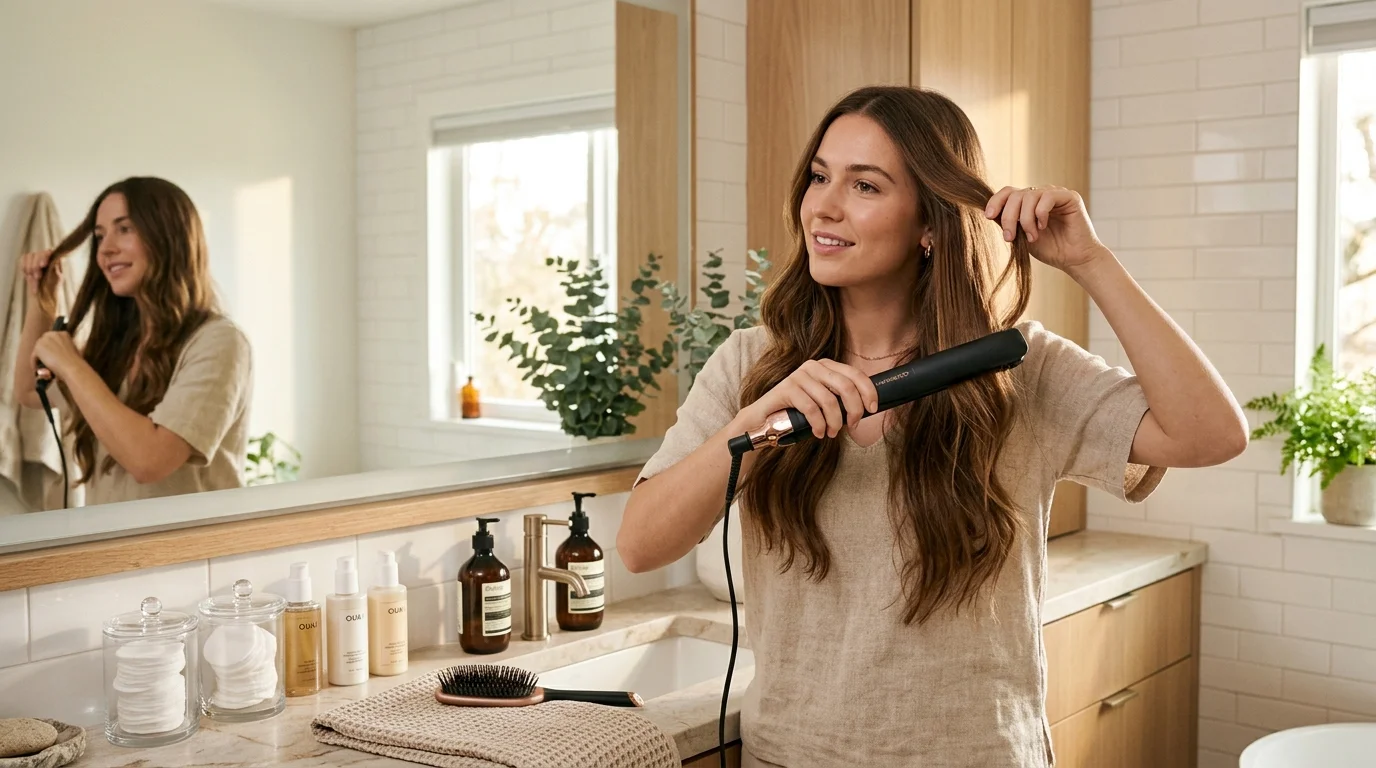
The straighteners at a glance
| Pick | Best for | Key spec | Price band | Rating |
|---|
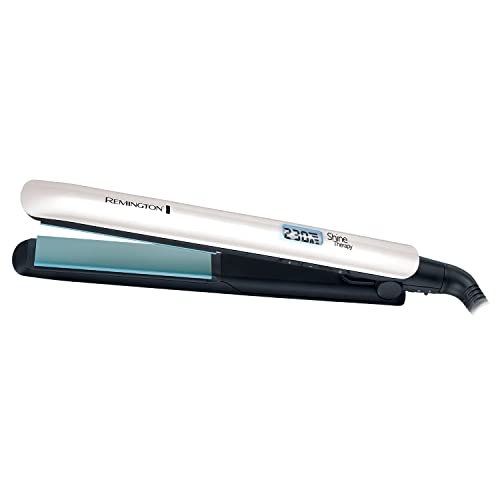
| Remington Shine Therapy | Budget buyers | Ceramic with argan oil, 9 settings from 150°C to 230°C, 15 second heat-up | Budget | 4.6 |
| ghd platinum+ | Most people, our pick | Ceramic ultra-zone sensors, fixed 185°C, 20 second heat-up, AU plug and dual voltage | Midrange | 4.6 |
| Cloud Nine The Original Iron | Fine or coloured hair | Mineral ceramic floating plates, 11 settings from 100°C to 200°C | Premium | 4.7 |
How we chose these hair straighteners
Last checked: 7 October 2026. We also checked ghd's own product page for the ghd platinum+ against its Amazon Australia listing.
We compared the straighteners listed on Amazon Australia using each listing's plate material, heat range, heat up time and safety features, the seller and stock shown on each listing, and the ratings and review counts on each listing. Where a listing is an import through the Amazon Global Store, the card says so. NestPath does not test irons in a lab; the specifications here are the makers' as listed.
Ceramic vs Titanium vs Tourmaline: What the Plates Actually Do
Plate material is the single most important spec, and the marketing around it is the murkiest. Here is the honest breakdown of the three you'll see on every box.
Ceramic plates heat evenly and gently. Rather than concentrating heat in hot spots the way bare metal does, ceramic distributes warmth consistently across the whole plate, and it emits infrared heat that warms the hair shaft from within. The practical result is fewer scorched patches and less damage per pass, which is why ceramic is the right default for fine, fragile, coloured or chemically-treated hair. The trade-off is that ceramic plates take a touch longer to recover their temperature after each stroke, so very thick hair can need a second pass.
Titanium plates heat faster, run hotter and hold their temperature better under load. Because titanium is lightweight and a superb heat conductor, a titanium iron blasts through coarse, thick or curly hair in fewer passes. The heat doesn't drop as you drag the plate down a thick section. The catch is that titanium runs at higher surface temperatures, so on fine or damaged hair it's easier to overdo it. Titanium is the professional's choice for thick and Afro-textured hair; for fine hair it's overkill and a damage risk.
Tourmaline is not a plate material on its own. It's a semi-precious mineral crushed into a coating over ceramic or titanium plates. When heated it emits negative ions that smooth the hair cuticle and cut frizz and static. Tourmaline is genuinely good, but it's an enhancement to a ceramic or titanium plate, not an alternative to one. Don't pay a big premium for "tourmaline" in isolation. What matters is whether the underlying plate is ceramic or titanium.
The short version: fine, coloured or damaged hair → ceramic. Thick, coarse or curly hair → titanium (or wide ceramic plates run hot). Frizz-prone hair → look for a tourmaline or ion coating on top of either.
Heat Settings by Hair Type: The Number That Matters Most
The temperature you straighten at does more damage or protection than the brand on the handle. A clarifying shampoo to remove product buildup is a way to start heat styling on clean hair. The rule professionals work to: use the lowest temperature that actually holds your style, and never go higher "to be quick".
- Fine, bleached or fragile hair: 150 to 170°C. This is exactly why a straightener that bottoms out at 100°C (like the Cloud Nine) beats one that only goes down to 180°C. You want headroom at the low end.
- Normal, healthy medium hair: 180 to 185°C. This is the sweet spot, and not by accident: ghd fixes its irons at 185°C because, ghd says, hotter than that causes irreversible damage, and below it styles don't last.
- Thick, coarse or curly hair: 190 to 210°C. Coarse hair needs more heat to reshape, and this is where titanium or wide ceramic plates earn their place.
Anything regularly above 210°C is a damage zone for most people. A straightener with a digital display and several settings is worth more than one with a single fixed temperature unless (like ghd) that fixed temperature is the researched optimum. And whatever the iron, a heat-protectant spray before styling is non-negotiable: it's the cheapest damage insurance you can buy. If your hair is curly, drying it with a diffuser first means fewer passes with the iron, which protects the hair more than any single temperature setting.
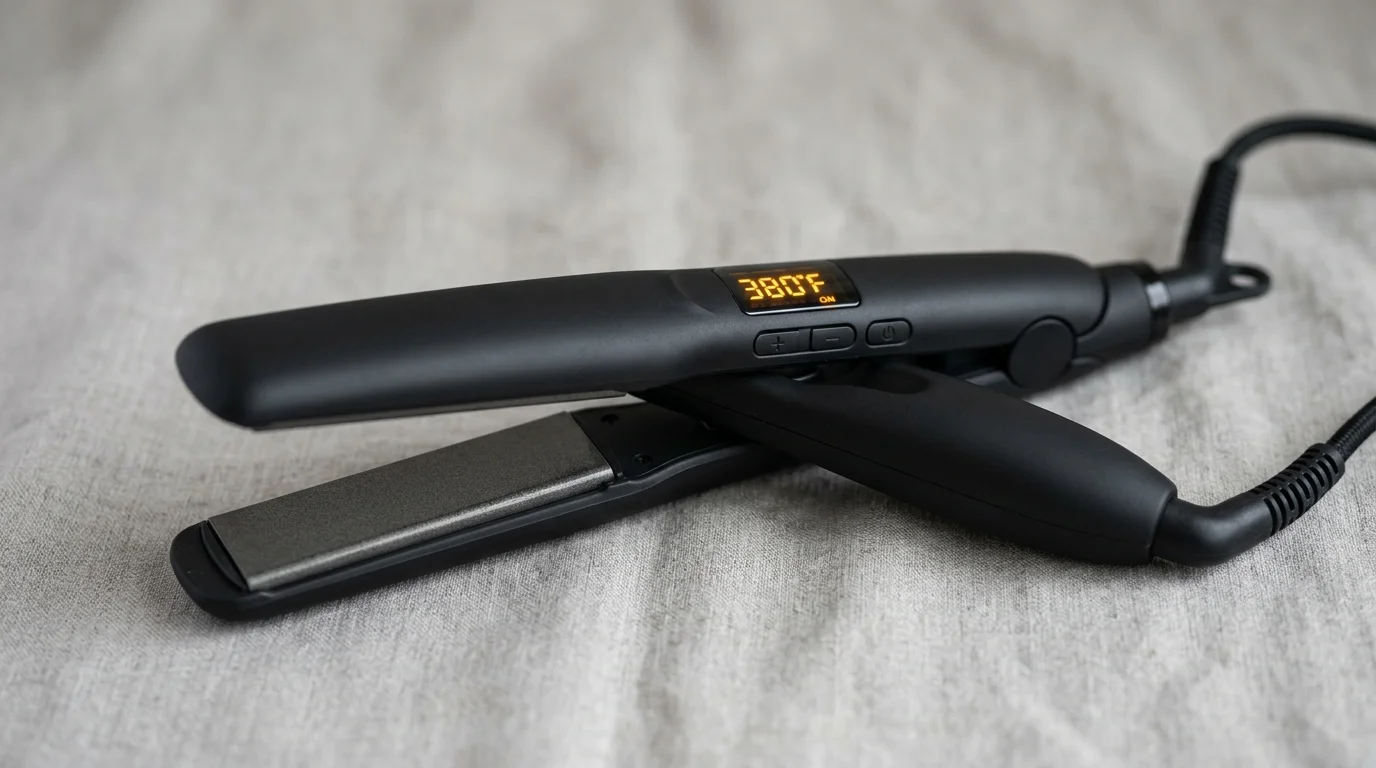
Plate Width: Match It to Your Hair Length and Thickness
Plate width is the spec most people ignore and then regret. It controls how much hair you can straighten per pass and how precisely you can work near the roots.
Narrow plates (around 13 to 25mm) are made for short hair, fringes, men's styling and getting close to the scalp and hairline. They're fiddly and slow on long hair: too few strands per pass.
Standard plates (around 25 to 30mm) are the all-rounder. For most people with shoulder-length to mid-back hair of average thickness, a standard-width iron like the ghd platinum+ is the right call, versatile enough to straighten and curl, though a dedicated curling wand shapes a curl faster.
Wide plates (around 38 to 50mm) cover far more hair per stroke, which is the difference between a 10-minute and a 25-minute styling session if you have long, thick or very curly hair. Cloud Nine and ghd both sell dedicated wide-plate "Wide Iron" and "Max" models for exactly this reason. If your hair is long and thick, a wide-plate iron is the upgrade that actually changes your morning.
Best Budget Hair Straighteners Under $100
The budget category is dominated by Remington on Amazon Australia, and the value is genuinely good: ceramic plates, digital heat control and fast heat up that would have been midrange features a few years ago.
The Remington Shine Therapy is the standout. Its ceramic plates are infused with Moroccan argan oil micro-conditioners that emit as the plates heat, leaving hair noticeably glossier, and it offers nine digital heat settings from 150 to 230°C so you can dial in the right temperature for your hair rather than being stuck on one. A 15-second heat-up and floating plates that self-adjust for even pressure round out a package that, at under $60, is hard to argue with. It had the most ratings of the cards in this guide. At our 7 October 2026 check this listing sold through the Amazon UK Global Store, so check the plug before you buy.
One important buying note for budget irons: several budget straighteners on Amazon Australia (including some Remington listings) are imported stock that occasionally ships with an overseas plug (UK or Indian style) rather than an Australian one, and the listing photos don't always make this obvious. Before you buy any budget iron, check recent Australian reviews for plug complaints and confirm the listing specifies an AU plug. An overseas-plug unit isn't a fault you can easily fix. It's a return. Genuine Australian-market brands like VS Sassoon sidestep the issue entirely if you'd rather not risk it; the AU models listed below, such as the Remington Super Glide S5501AU, name the AU plug on the listing.
Best overall: ghd platinum+
This is where the Australian salon brands live, and where most people should spend. The build quality, plate engineering and longevity step up enough to justify the price, and these are the irons hairdressers actually reach for.
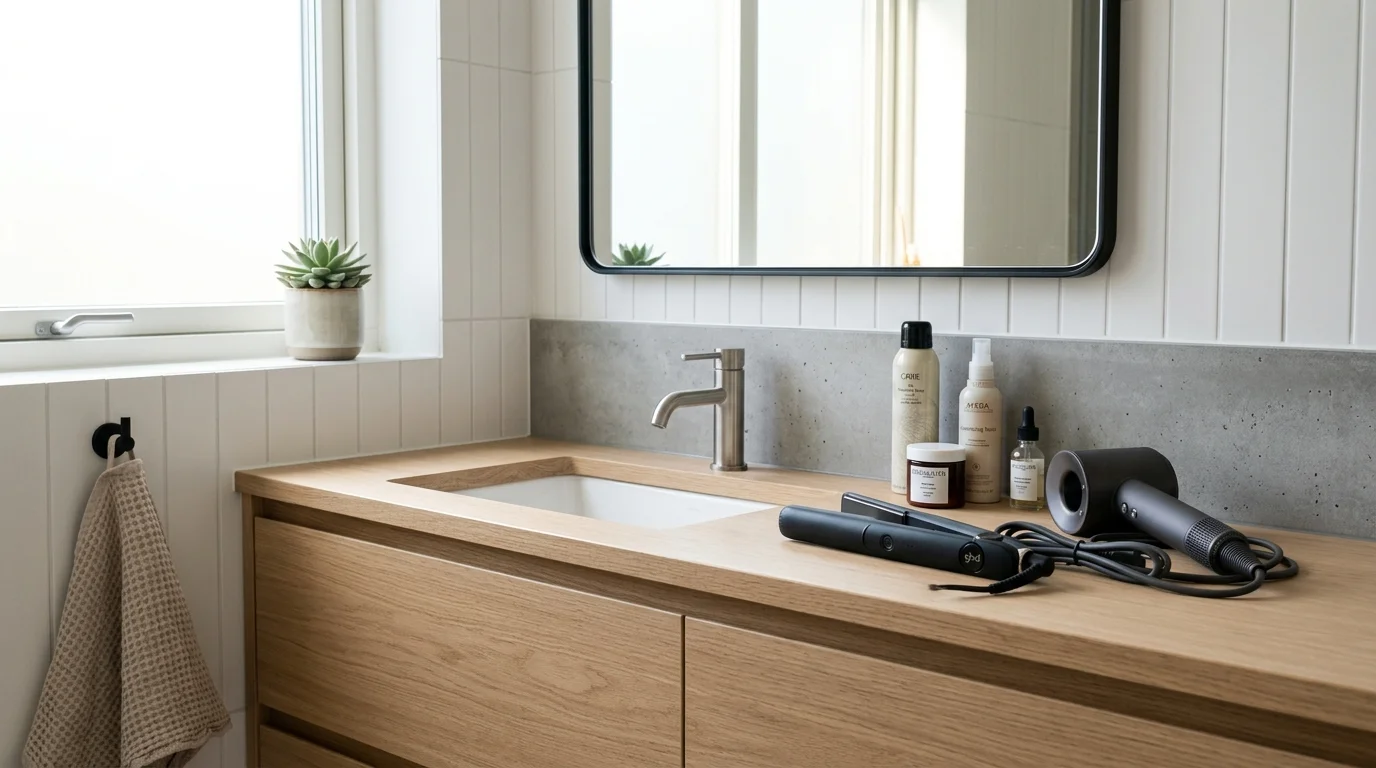
The ghd platinum+ is the Australian benchmark. ghd's signature move is fixing the temperature at 185°C (the temperature ghd calls its optimum, saying hotter causes irreversible damage), but the platinum+ goes further with ultra-zone predictive technology: sensors read the thickness of your hair and your styling speed and adjust heat across the plates 250 times a second, so a thick section and a fine wisp each get the right heat from the same pass. It heats in 20 seconds, the rounded barrel curls as fluently as it straightens, and crucially for Australian buyers it has universal voltage with an AU plug. It works overseas and there's no parallel-import plug lottery. A 30-minute auto-sleep handles the "did I leave it on?" anxiety. It had 4.6 stars from more than 14,000 ratings on Amazon Australia, sold by Amazon AU.
If the platinum+ stretches the budget, the ghd Gold sits lower in the range with dual-zone (rather than ultra-zone) heat control at the same 185°C styling temperature, minus the predictive smarts. The ghd original (listed below) uses single-zone ceramic at the same 185°C.
Best Premium Hair Straighteners
At the premium end the question shifts from "is this good?" to "what does it do that the ghd doesn't?" The honest answer, for most people, is: it gives you finer control at the gentle end of the heat range.
The Cloud Nine Original Iron is the standout, and its case is specific. Where most irons offer a handful of settings starting around 180°C, the Cloud Nine gives you eleven settings starting at just 100°C, true low-heat styling that fine, coloured, bleached or damaged hair genuinely benefits from. Its mineral-infused floating plates seal the hair cuticle to lock in moisture and shine, and it has a 360° swivel cord and a hibernation mode. It's made in South Korea and reviews are strong, though far fewer than the ghd's.
The honest caveat: an Australian reviewer with thick hair said it did not work on thick hair. If your hair is thick rather than fine, the Cloud Nine's strength (gentle low heat) works against you, and you're better off with the ghd's 185°C smart heat or a dedicated wide-plate model like the Cloud Nine Wide Iron or ghd Max. The Original Iron is a fine-and-coloured-hair specialist, and judged on that brief it's superb.
At our 7 October 2026 check the Grey listing on our original Cloud Nine card opened a different listing, so that exact listing was not on sale; the Blue Original Iron with Revive Mode was in stock, sold by Cloud Nine AUS and shipped by Amazon.
ghd vs Cloud Nine vs Dyson: Which Brand Wins?
This is the question the Reddit threads circle endlessly, so here's the straight answer:
ghd is the safe, proven default: a wide model range, a big review base, the AU plug on the platinum+ listing, and a fixed-temperature philosophy that takes the guesswork out of damage. If you don't want to think about it, buy ghd.
Cloud Nine wins on flexibility and gentleness (adjustable heat down to 100°C), making it the better pick for fine, coloured or fragile hair where low-heat control matters most. It's pricier for fewer reviews, so you're paying a small confidence premium.
Dyson (the Corrale) is the wildcard: cordless, with flexing copper plates that gather hair to reduce heat exposure. It's a genuine engineering achievement, but at a much higher price than the ghd the real-world result on most hair isn't double as good. It's a luxury and travel pick, not a value one, and it sits outside our headline picks for that reason.
For the vast majority of Australian buyers the order is simple: ghd platinum+ for proven all-round styling, Cloud Nine for gentle low-heat control on delicate hair, Remington for a capable budget iron.
What about the Dyson Airstrait and the wider ghd range?
The Australian shopping results are full of models we do not carry, so here is where they sit. The Dyson Airstrait dries and straightens wet hair with air instead of hot plates, which is a different job from every iron above. The rest of the ghd range, from the original (listed above) and the Gold to the Chronos, runs on the same fixed 185°C idea as our platinum+ pick. Apart from the ghd original listed above, they are context, not picks. For the rest of the grooming routine, see our electric shaver guide.
Frequently Asked Questions
Which hair straightener is best in Australia in 2026?
For most people the ghd platinum+ is the best all round hair straightener in Australia. It's the salon-benchmark brand, has ultra-zone smart heat at the optimum 185°C, ships with an Australian plug and universal voltage, and carries thousands of reviews at 4.6 stars. If you have fine, coloured or fragile hair, the Cloud Nine Original Iron is better thanks to heat settings that drop to 100°C. On a budget, the Remington Shine Therapy is a genuinely capable ceramic iron. There's no single "best for everyone". It depends on your hair type, but the ghd platinum+ is the safest universal pick.
What's the best hair straightener for thick hair?
Thick, coarse or curly hair needs more heat and more plate width than fine hair. Look for either titanium plates (which run hotter and recover temperature faster) or wide ceramic plates of 38mm or more. The ghd Max and the Cloud Nine Wide Iron are both purpose-built wide-plate irons for thick and long hair. They cover far more hair per pass, turning a 25-minute session into a 10-minute one. The standard ghd platinum+ also handles thick hair well at its 185°C smart heat; the one iron we'd steer thick-haired buyers away from is the standard Cloud Nine Original, whose gentle 200°C ceiling can mean extra passes.
What's the best hair straightener for fine hair?
Fine, fragile or bleached hair needs gentle, low, even heat: ceramic plates and a temperature you can drop to 150 to 170°C. The Cloud Nine Original Iron is the standout here because its eleven settings start at just 100°C, giving you far more low-heat headroom than irons that bottom out at 180°C. The ghd platinum+ is also excellent for fine hair, as its ultra-zone sensors automatically dial heat down for finer sections. Avoid titanium-plate irons for fine hair. They run hot and are easy to overdo. And always use a heat-protectant spray; fine hair shows damage fastest.
Is ghd or Cloud Nine better?
Both are excellent professional-grade brands, and the right choice depends on your hair. ghd fixes its temperature at the optimum 185°C and uses smart ultra-zone heat. It's the proven, lower-effort choice with a far bigger review base and an AU plug stated on the platinum+ listing. Cloud Nine lets you adjust heat across eleven settings down to 100°C, making it the better pick for fine, coloured or damaged hair that needs gentle low heat. For most people ghd is the safe default; for delicate or coloured hair, Cloud Nine's adjustability gives it the edge.
Is ceramic or titanium better for a hair straightener?
Ceramic is gentler and heats more evenly, making it the better choice for fine, coloured or damaged hair. It emits infrared heat that warms the hair from within and reduces hot-spot damage. Titanium heats faster, runs hotter and holds its temperature under load, so it powers through thick, coarse and curly hair in fewer passes. Neither is universally "better": match the plate to your hair. Fine or fragile hair wants ceramic; thick or coarse hair wants titanium. Tourmaline isn't an alternative to either. It's an ion-emitting coating layered over ceramic or titanium plates to smooth frizz.
Can I use an Australian hair straightener overseas?
Only if it has universal (dual) voltage. Australia runs on 230V; the US and Japan run on 100 to 120V. A single-voltage Australian straightener plugged into a US outlet through a plug adapter alone will underperform or fail. A plug adapter changes the pin shape, not the voltage. Premium irons like the ghd platinum+ have universal voltage built in (just add a plug adapter for the country you're visiting), which is one of the practical advantages of stepping up from a budget single-voltage iron. Check for "universal voltage" or "100 to 240V" on the spec sheet before you travel, and never run a straightener through a cheap travel voltage converter. The heat draw can overload it.
Do hair straighteners turn themselves off?
The good ones do. Auto-shutoff (also called sleep or hibernation mode) cuts power after a set period of inactivity (30 minutes on the ghd platinum+ and Cloud Nine Original), which is the feature that ends the "did I leave it on?" panic on the drive to work. It's a genuine safety feature worth prioritising, especially in a busy household. Budget irons increasingly include it too, but always confirm before buying, and regardless of auto-shutoff, get into the habit of unplugging your iron and resting it on a heat-proof mat or its protective guard while it cools.
How do you curl your hair with a straightener?
Take a section about 3cm wide, clamp the iron near the roots, rotate it a half turn away from your face and draw it down slowly to the ends. Keep the plates moving or you will set a crease. A rounded barrel curls far better than a square one, which is why the ghd platinum+ curls as well as it straightens. Work at your normal styling heat, around 185°C for medium hair, and let each curl cool in your hand before you brush it out.
What is the best travel hair straightener in Australia?
For travel the two specs that matter are dual voltage and size. Of our three headline picks, the ghd platinum+ is the one whose listing states universal voltage with an AU plug, so it works on a 110V supply overseas without a converter. A plug adapter changes the pin shape, not the voltage, and a single voltage Australian iron will underperform or fail on it. Narrow plates of about 13mm to 25mm pack smaller, but they are slow on long hair.
What is the best brand of hair straightener in Australia?
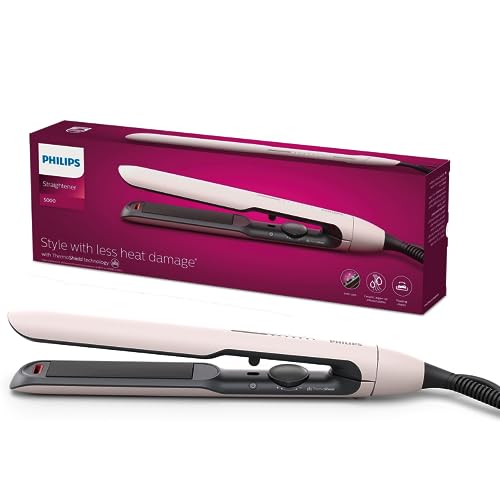
ghd is the safe default: a wide range, a big review base and a fixed 185°C that takes the guesswork out of damage. Cloud Nine wins on gentleness, with 11 settings from 100°C. Dyson is the engineering wildcard and the priciest. Below them, Remington, VS Sassoon and Philips cover the budget shelf, and VS Sassoon was listed with Amazon AU as the seller.
Is a cordless hair straightener worth buying?
Only for touch-ups. A cordless iron runs off a battery, so it cannot hold a steady plate temperature the way a mains iron does, and the run time is usually well short of a full blow-dry and style. The Dyson Corrale is the one that does it properly and it costs well above a ghd. For a full style at home, a corded iron at a fixed 185°C is the better buy, and a cordless one is a bag or travel extra.
What straighteners do hairdressers recommend?
ghd and Cloud Nine are the professional grade names in this guide. The ghd platinum+ is the Australian salon benchmark and our pick for most people, with ultra zone heat at a fixed 185°C. The Cloud Nine Original Iron suits fine or coloured hair, with eleven settings starting at 100°C. We have not surveyed hairdressers ourselves.
Is there a sale on ghd straighteners?
Check the current price on the ghd platinum+ and ghd original cards before you buy, because ghd prices move and a sale can come and go. If the platinum+ stretches the budget, the ghd Gold sits lower in the range, with dual zone rather than ultra zone heat control at the same 185°C.
What is the best hair straightener for sleek, straight hair?
For most hair, the ghd platinum+ is our pick: its sensors adjust heat across the plates 250 times a second at a fixed 185°C. If your hair is frizz prone, look for a tourmaline or ion coating on top of the plates, such as the Remington Super Glide S5501AU's tourmaline ceramic plates or the Philips 5000 Series' ionic care.