How to choose an electric heating pad in Australia
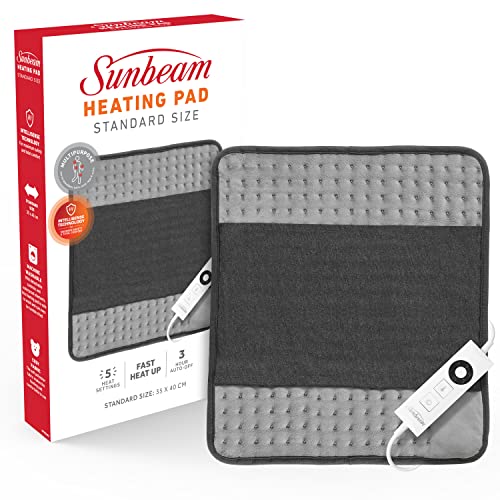
The best heating pad in Australia is the Sunbeam Multipurpose Electric Heating Pad HPM5000, rated 4.6 from 231 ratings, because its listing says IntelliSense keeps the temperature consistent and it has 5 heat settings and a 3 hour auto off. For period cramps and wider coverage, five other pads are compared below.
An electric heating pad puts steady warmth on a sore back, a stiff neck, tight shoulders or period cramps, and the first question is whether it stays plugged in or comes with you. The Sunbeam and the two RENPHO pads have power cords and list an auto off time, so they suit home use near a power point. The Slimpal, the iDOO and the Comfytemp are cordless and rechargeable, so you can wear them at home, in the office or while travelling, and they run for the battery life their listings give. After cordless versus corded, it comes down to coverage and shape, whether the pad is built for period cramps or general back and neck use, and the size. This guide covers six heating pads, each suited to a different situation.
The table sets the six pads side by side using what each Amazon AU listing states.
| Pad | Rating (count) | Power | What the listing says |
|---|
| Sunbeam Multipurpose Electric Heating Pad HPM5000 | 4.6 (231) | Plug in, Type I outlets | 5 heat settings, auto off after 3 hours, 35x40cm |
| Slimpal Cordless Rechargeable Heating Pad | 4.3 (3,225) | Rechargeable battery | 4 heat settings, 3 vibration modes, no automatic shut offs every 30 minutes |
| iDOO Cordless Period Cramp Heating Pad | 4.3 (2,675) | Rechargeable battery | 3 heating levels, 3 vibration modes, auto off after 30 minutes |
| Comfytemp Cordless Dual Zone Heating Wrap | 4.2 (468) | Rechargeable battery | 5000mAh battery, 2 to 6 hours of warmth, no vibration |
| RENPHO XL Heating Pad (61 x 31 cm) | 4.1 (24,292) | Power cord | 6 temperature settings, timer switches off after 1.5 hours |
| RENPHO Extra Large Heating Pad (84 x 61 cm) | 4.1 (24,292) | Power cord, 230V | 6 heat settings, 90 minutes timing settings, 2 straps |
Best overall: Sunbeam Multipurpose Electric Heating Pad HPM5000
The Sunbeam Multipurpose Electric Heating Pad HPM5000 is the best overall pick, rated 4.6 from 231 ratings. Its listing says IntelliSense keeps the temperature consistent and prevents overheating, it heats up in 90 seconds, and it shuts off after 3 hours. It is compatible with Type I power outlets in Australia and New Zealand.
The listing also says the pad is made with easy to clean polyester that you wash by detaching the controller and placing the pad in the washing machine, and that a fabric sleeve helps keep it in place on an arm or leg. At 35x40cm it is smaller than the two RENPHO pads, so it suits a sore spot on the back, neck or shoulders more than a whole back.
Mains versus cordless is the decision that shapes everything else. A corded pad like the Sunbeam keeps you near a power point and shuts off on a timer, which the Sunbeam listing gives as 3 hours. A cordless rechargeable pad like the Slimpal or the iDOO frees you from the cord so you can wear it and move around, but it runs on a battery, and the iDOO listing gives 4 hours when fully charged. The simple rule: if you mostly use a pad sitting on the couch or lying in bed at home, buy a corded pad. If you want relief on the go, at a desk, in the car or out and about with period cramps, buy a cordless one. If it is the whole bed you want warm rather than one sore spot, an electric blanket is the better tool.
Period cramps and general aches: iDOO Cordless Period Cramp Heating Pad
The iDOO Cordless Period Cramp Heating Pad is a cordless belt rated 4.3 from 2,675 ratings. Its listing says it has 2s fast heating, 3 heating levels of 48°C, 56°C and 60°C, 3 vibration massage modes, and an adjustable elastic belt that can stretch up to 102cm.
Heating pads split into two design camps: wearable belts like the iDOO, the Slimpal and the Comfytemp, and flat pads you drape over whichever area aches, such as the Sunbeam and the two RENPHO pads. The Slimpal listing gives 3 vibration modes and 4 heat settings, while the Comfytemp listing describes a 16cm wide abdominal heating zone and notes that no massage or vibration function is included. Decide first whether you are mainly treating cramps or general aches, because a cramp belt is awkward over a shoulder and a big flat pad is no good strapped to your belly on the move. For period pain some people alternate heat with a TENS machine, which uses gentle electrical pulses instead of warmth.
Coverage and size: RENPHO Extra Large Heating Pad (84 x 61 cm)
The RENPHO Extra Large Heating Pad is listed at 84x61cm and rated 4.1 from 24,292 ratings. Its listing says it is primarily designed for the shoulders and neck and can also be applied to the back, waist, abdomen and legs, and that it stays in place with snap fasteners, weighted edges and 2 straps.
How much of you the pad needs to cover changes the size you should buy. A wearable cramp belt or a compact pad targets one area, which is all you need for cramps or a single sore point. But if you want to warm a whole back or a wide stretch of muscle at once, you want a large pad so you are not shuffling a small one around chasing the ache. The Sunbeam is listed at 35x40cm, and the RENPHO XL is listed at 61x31cm for wrapping the back, shoulders, abdomen, legs or arms. The extra large listing adds a note to wear a piece of clothing inside, put on the pad, then put on a coat or blanket to keep the temperature, so size up only if the broad coverage is what you actually need.
Heat settings and battery life: Comfytemp Cordless Dual Zone Heating Wrap
The Comfytemp Cordless Dual Zone Heating Wrap is rated 4.2 from 468 ratings. Its listing says it delivers warmth to your lower back and abdominal area, and that its 5000mAh battery delivers 2 to 6 hours of continuous warmth.
Not all warmth is equal, and a few features separate a good pad from a frustrating one. Adjustable heat levels let you run gentle for a long session or turn it up for a quick deep warm: the Sunbeam listing gives 5 heat settings and heat up in just 90 seconds, the RENPHO XL listing gives 6 temperature settings ranging from 40℃ to 65℃, and the iDOO listing gives 3 heating levels of 48°C, 56°C and 60°C. Even heating is what stops a pad having hot and cold patches, and the Sunbeam listing says IntelliSense technology keeps the temperature consistent. The Comfytemp battery is listed as removable, at approximately 6 x 10 cm, and can be swapped out with a compatible power bank of the same size to extend use.
Brands worth knowing: Slimpal Cordless Rechargeable Heating Pad
The Slimpal Cordless Rechargeable Heating Pad is rated 4.3 from 3,225 ratings. Its listing says NTC sensors give extended hours of consistent and safe operation without the need for automatic shut offs every 30 minutes, and that it is lightweight, portable and rechargeable.
Knowing who makes what helps you buy with confidence. The six listings carry the brands Sunbeam, Slimpal, iDOO, Comfytemp and RENPHO. The Slimpal, iDOO and Comfytemp listings are for cordless belts and wraps, while the Sunbeam and the two RENPHO pads are corded flat pads. We have not saved a Beurer listing, so no Beurer pad is reviewed here.
Safety and auto off timers: RENPHO XL Heating Pad (61 x 31 cm)
The RENPHO XL Heating Pad is rated 4.1 from 24,292 ratings. Its listing says a built in timer safely switches off the controller after 1.5 hours, and that it is certified by ETL.
The most important rule is to never fall asleep on a heating pad, because prolonged heat against skin while you are asleep can cause burns. Auto off timers are only a back up, and they differ by listing: the Sunbeam listing says it shuts off after 3 hours, the RENPHO XL listing says 1.5 hours, the RENPHO extra large listing gives 90 minutes timing settings and the iDOO listing says it shuts off after 30 minutes. Follow the maker's instructions for each pad: the iDOO listing says not to use it directly on the skin but across the clothing, while the RENPHO XL listing says it can be used on bare skin. Never use a pad on numb skin or with damaged wiring. A heating pad suits everyday aches and stiffness, and if pain persists or gets worse, see a doctor rather than relying on heat alone.
How we checked these heating pads
We read the Amazon AU listing for each pad and took the rating, review count, title, bullet points and product information from it, then used the makers' own information as it appears there. Specs come from the maker's bullet points and the product information on each listing. We compared pads on what those listings state, not on lab tests.
Last checked: 20 October 2026
Our verdict
The best overall pick is the Sunbeam Multipurpose Electric Heating Pad HPM5000, rated 4.6 from 231 ratings, because its listing says IntelliSense keeps the temperature consistent and it has 5 heat settings and an auto off after 3 hours. If you want a cordless wearable, the Slimpal Cordless Rechargeable Heating Pad is rated 4.3 from 3,225 ratings, and its listing says it runs without automatic shut offs every 30 minutes. For period cramps the iDOO Cordless Period Cramp Heating Pad is rated 4.3 from 2,675 ratings with 3 vibration massage modes, and the Comfytemp Cordless Dual Zone Heating Wrap is rated 4.2 from 468 ratings with a 16cm wide abdominal heating zone. For coverage, the RENPHO XL Heating Pad is listed at 61x31cm and the RENPHO Extra Large Heating Pad at 84x61cm, and both show 4.1 stars from 24,292 ratings. A pad only supplies heat, so if you want the knots worked as well, a neck and shoulder massager is the tool for that.
Run times, belts, sizes and timers from the listings
Corded and cordless run times
Corded pads run from the wall and cordless pads run from a battery, so the listings give different limits. The Sunbeam listing says it shuts off after 3 hours, the iDOO listing gives 4 hours from a full charge, and the Comfytemp listing gives 2 to 6 hours from its 5000mAh battery. The corded RENPHO XL lists 6 temperature settings from 40℃ to 65℃, so the listings do not show cordless pads as weaker.
Belts for period cramps
For period cramps the listings describe cordless belts. The iDOO listing says 2s fast heating, 3 heating levels of 48°C, 56°C and 60°C and 3 vibration massage modes, with an elastic belt that stretches up to 102cm. The Slimpal listing gives 3 vibration modes and 4 heat settings, and the Comfytemp listing gives a 16cm wide abdominal heating zone with no vibration function.
Pad sizes
The listings give three sizes for the corded flat pads. The Sunbeam is 35x40cm, the RENPHO XL is 61x31cm for the back, shoulders, abdomen, legs or arms, and the RENPHO extra large is 84x61cm, primarily designed for the shoulders and neck. The cordless belts wrap around the waist.
Sleeping and session length
Never fall asleep on a heating pad, because prolonged heat against skin while you are asleep can cause burns. Listed auto off times differ: 30 minutes on the iDOO, 90 minutes on the RENPHO extra large, 1.5 hours on the RENPHO XL and 3 hours on the Sunbeam, so a timer is no reason to doze off. Follow the maker's instructions for your pad and let your skin cool between sessions.
Brands in this guide
The pads here come from Sunbeam, Slimpal, iDOO, Comfytemp and RENPHO, and each one has a captured Amazon AU listing. The Sunbeam listing says it is compatible with Type I power outlets in Australia and New Zealand. No Beurer listing is saved, so no Beurer pad is reviewed here.
Cords, controllers and batteries
The Sunbeam listing says to detach the controller and place the pad in the washing machine, and the RENPHO XL listing mentions an extra long 1.7M power cord for moving around the house. The RENPHO extra large listing says it stays in place with snap fasteners, weighted edges and 2 straps. The Comfytemp listing says its removable battery is approx. 6 x 10 cm and can be swapped for a compatible power bank of the same size.
Heat levels and belts at a glance
Heat level counts differ across the six listings. The Sunbeam listing gives 5 heat settings with heat up in just 90 seconds, the Slimpal gives 4 heat settings, the iDOO gives 3 heating levels, and the RENPHO XL and the RENPHO extra large both give 6. The Slimpal listing says its adjustable elastic belt stretches up to 57 inches, and the RENPHO extra large listing gives the voltage as 230V, so check the fit and the plug before you choose.
Frequently Asked Questions
Which heat pad is best for back pain?
The Sunbeam Multipurpose Electric Heating Pad HPM5000 is our best overall pick for back pain, rated 4.6 from 231 ratings. Its listing names the back among its sore spots, with 5 heat settings and an auto off after 3 hours. For a larger pad, the RENPHO XL is listed at 61x31cm and rated 4.1 from 24,292 ratings.
Where can I buy a heat pack?
Every pad in this guide links to its Amazon AU listing, which shows the current seller and the add to cart button. A heat pack can also mean a microwavable wheat or lupin bag, which is a different product and is not covered here, because all six pads in this guide are electric heating pads.