Why do merino socks feel like a rip-off until the first cold morning?
Because the price tag is the only thing you can see on the listing page, and the merino percentage is the only thing that matters. A pair of merino socks that costs $43 sounds absurd next to a ten-pack of cotton work socks for the same money. Then the first genuinely cold week hits, you put a merino pair on inside your boots, and by mid-afternoon your feet are dry, warm and not stinking. That is the whole pitch, and it is real.
Winter is exactly when Australians go looking. Search demand more than doubles in June and has climbed sharply through this quarter, so you are shopping at the busiest and most confusing moment, when every listing on Amazon AU has merino in the title and only about half of them say how much merino is actually in the yarn.
This guide picks apart seven merino sock listings on Amazon AU, states the fibre content where the listing states it, and says plainly where it does not. Merino socks are the most unisex thing in a wardrobe, though several of these listings are marketed to men.
What should you buy if you just want the short answer?
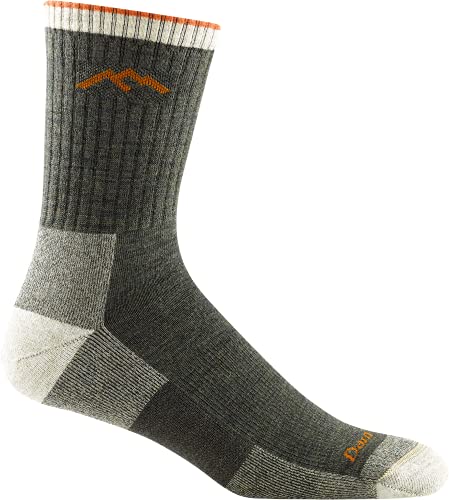
Look for 70 to 80 percent merino, because a pure wool sock wears through at the heel far faster than a blend with nylon in it. On that rule the Time May Tell Hiking Cushion at $34.14 is the pick, at a stated 80 percent merino, and the Sandsuced boot socks at $7.00 a pair are the cheapest way to find out whether merino suits you. Buy the Darn Tough Solid Crew if you want one pair that outlives everything else in the drawer. It is the highest-rated pick here at 4.8 out of 5 across 4,764 ratings, it is fine gauge merino with a true seamless toe, and it carries a lifetime guarantee. At $43.59 for a single pair it is also the least sensible thing to buy in bulk.
Buy the Time May Tell Merino Wool Hiking Cushion Socks if you want the best balance of stated fibre content and price. The listing spells out 80 percent merino wool blend with 14 percent nylon, 5 percent polyester and 1 percent spandex, a 23 cm cuff height, and broad size banding of US 6 to 13, for $34.14.
Buy the Sandsuced Merino Wool Boot Socks if you want boot-height merino for the least money. Three pairs for $21.00 works out at $7.00 a pair, on a listing holding 4.5 out of 5 across 1,150 ratings.
- Best overall: Darn Tough Solid Crew, $43.59
- Best value: Time May Tell Hiking Cushion, $34.14
- Lowest total price: Socksfad Patterned Crew, $18.85 for six pairs
- Most reviewed by a wide margin: Alvada 80 percent Merino, 35,170 ratings
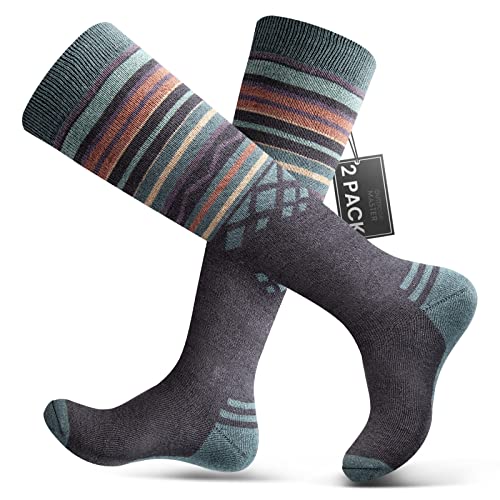
- Best for ski boots: OutdoorMaster Ski Socks, $38.99
How do the seven picks compare at a glance?
The most useful column below is the middle one. Only three of these seven listings publish a merino percentage, and that is not a small detail: a sock at 40 percent merino behaves very differently in a boot to one at 80 percent. Prices are what Amazon AU showed at the time of writing and they move through winter.
| Sock | Merino stated on listing | Best for | Pairs | Price | Price per pair |
|---|
| Darn Tough Solid Crew | Fine gauge merino, no percentage given | Everyday and travel | 1 | $43.59 | $43.59 |
| Time May Tell Hiking Cushion | 80 percent merino blend | Hiking and work boots | Not stated | $34.14 | Not stated |
| Sandsuced Boot Socks | None stated | Budget boot sock | 3 | $21.00 | $7.00 |
| Alvada Merino Hiking | 80 percent merino | Cold-weather cushion | 3 | $54.24 | $18.08 |
| Nordic Socks Merino Crew | 40 percent merino | Around the house | 2 | $34.99 | $17.50 |
| OutdoorMaster Ski Socks | Merino blend, no percentage given | Ski and snowboard boots | 2 | $38.99 | $19.50 |
| Socksfad Patterned Crew | None stated | Office and dress shoes | 6 | $18.85 | $3.14 |
How did NestPath choose these seven merino socks?
NestPath does not run a wear-test lab and does not pretend to. This guide aggregates: it reads the live Amazon AU listing for every candidate, checks the star rating and count as Amazon reports them in Australia, checks the product is in stock for Australian delivery, and reads what the listing claims about fibre content, cuff height, cushioning and sizing.
Three screens knocked candidates out. The first was fibre: many listings surfacing under merino searches are cotton or acrylic socks with merino in the back-end search terms rather than the yarn, and every one was dropped. The second was pricing sanity, because anything at more than double the category norm is almost always a marketplace seller sitting on a listing rather than a real price. The third was identity. Apparel listings share one review pool across every colour and size child, so a rating count can belong to a variant you are not buying, and sixteen otherwise-eligible listings had no recoverable brand on the product page at all.
Every star rating and count quoted below was pulled from the Australian storefront, not a US mirror, and the brand on each pick was resolved against the byline on the live product page rather than guessed from the title.
Which merino socks should you buy if you only ever buy one pair?
The Darn Tough Solid Crew, without much argument. It is the highest-rated pick in this guide at 4.8 out of 5 across 4,764 Australian-visible ratings, and it is the only one here sold with a lifetime guarantee. Darn Tough will replace the sock if it wears out, which reframes the $43.59 entirely: you are not buying a sock, you are buying the last pair of that sock you will need.
The construction is where the money goes. It is a fine gauge knit rather than a chunky one, so it fits inside a normal work shoe or dress boot without sizing up, and the toe is true seamless, so no ridge sits across your toes when you lace up tight. The listing describes it as anti-microbial and breathable and pitches multi-day wear while travelling, which is the single best argument for merino over cotton.
Because it is fine gauge, it works across the year rather than only in July. The socks are still knitted in Vermont, which is unusual at this price and a large part of why the durability reputation holds up. Australian reviewers mention wearing a pair for more than 80 hours across several days without odour. One practical note: this listing is a single pair, so three pairs is $130, and at that point the maths starts to favour the multi-packs below.
Flaws but not dealbreakers
It is the most expensive thing here on a per-pair basis by a very wide margin, and one pair is not a sock drawer. The listing does not publish a merino percentage, which is frustrating on a premium product. Reviewers also note the fine gauge knit picks up pet hair and lint readily, which is cosmetic but noticeable on the darker colours.
What is the best merino sock for hiking and work boots?
The Time May Tell Merino Wool Hiking Cushion Socks, at $34.14 and 4.5 out of 5 across 12,789 ratings. This is the pick that tells you the most about what you are buying: the listing publishes the full fibre breakdown at 80 percent merino wool blend, 14 percent nylon, 5 percent polyester and 1 percent spandex, along with a 23 cm cuff height and a size range covering US 6 to 13.
That blend is the sweet spot for boots. Pure merino is warm and soft but stretches out and wears through at the heel; the nylon and spandex are what stop the sock sagging inside a boot after four hours of walking, and what keep it from going baggy after a dozen washes. Eighty percent is high enough that the merino still does the temperature and odour work rather than just being a marketing word on the packet.
The 23 cm cuff sits above a standard hiking boot collar, which is the height you want if you have ever finished a walk with a rub mark across your ankle bone. The listing is honest enough to print the wash instructions on the page: inside out, gentle cycle, warm or cool water, mild soap, no bleach, no fabric softener, tumble dry low. For most Australian buyers this is the correct pick. It states its fibre content, covers a wide range of feet with broad size bands, and carries a rating count in five figures.
Flaws but not dealbreakers
Cushioning is moderate rather than heavy. One Australian reviewer bought them specifically for hiking and found there was less toe and heel padding than expected, so if you want a genuinely plush footbed for long days, the Alvada pick below is thicker. Another found them slippery inside a shoe. Sizing runs generous at the small end.
What is the cheapest way to try merino socks without committing?
If you just want the smallest outlay, the Socksfad six pack at $18.85 further down is it. For a boot sock, the Sandsuced Merino Wool Boot Socks at $21.00 for three pairs is the cheapest boot-height way in. That is $7.00 a pair, on a listing that still carries 4.5 out of 5 across 1,150 ratings. If you have never worn merino and you are not yet convinced it is worth triple the price of cotton, this is the low-risk way to find out.
They are cut as boot socks, tall enough to sit above a work boot, and knitted thick. Australian reviewers consistently describe them as warmer and thicker than expected for the money, which is the right expectation to set: a cosy, chunky sock rather than a technical one. For a cold morning at home, for gumboots in the garden, or for a first winter in a house colder than the inspection suggested, they do the job.
Be clear-eyed about what you are getting. The Sandsuced listing publishes no fibre breakdown anywhere and the product description is two words long. At $7.00 a pair that is a defensible trade, but you are buying on the reviews rather than the specification, and at least one Australian reviewer disputes the merino content outright. Treat these as the entry point rather than the destination.
Flaws but not dealbreakers
No stated fibre content at all, which is the single biggest knock against them and the reason they are the budget pick rather than the value pick. Sizing draws complaints in both directions. The thickness that makes them cosy also makes them a poor fit in shoes with a snug toe box, and a couple of Australian reviewers report seam failures at the toe.
Which merino socks have convinced the most buyers?
The Alvada 80 percent Merino Wool Hiking Socks, with 35,170 ratings at 4.6 out of 5. That is the most-reviewed product in this guide by a factor of nearly three, and it has been listed on Amazon since 2018, so the rating count reflects years of repeat buying rather than a launch spike. At $54.24 for a three-pack it is also the most expensive listing here in absolute terms, though at about $18 a pair it undercuts the Darn Tough comfortably.
The specification is unusually detailed for a marketplace listing: 80 percent merino, 15 percent polyester, 4 percent nylon and 1 percent spandex, a full cushion footbed running end to end rather than just under the heel, ventilation channels through the upper, and reinforced yarn through both the heel and the toe. Sizing is unisex in two bands, small to medium covering men's 5 to 9.5 and women's 6 to 10.5, medium to large covering men's 9.5 to 14 and women's 11 to 15.
This is the pick for genuinely cold conditions where you want padding as well as warmth: alpine walks, a Tasmanian winter, a European trip in December. Australian reviewers describe them as thick enough for winter boots and warm enough at minus fifteen.
Flaws but not dealbreakers
Pilling is the recurring complaint. More than one Australian reviewer reports lint balls appearing after the first few washes, which does not affect warmth but does make them look tired quickly. The shaft is shorter than a typical hiking sock, so they sit lower on the calf than the photos suggest. Small feet may find even the smallest size loose.
Which merino socks are best for wearing around the house?
The Nordic Socks Merino Wool Crew, at $34.99 for two pairs and 4.6 out of 5 across 782 ratings. This is the only pick here built on full terry construction, which means the cushioned loop pile runs through the entire sock rather than just the footbed. The brand describes it as designed for people who spend long hours standing in cold weather, and that translates directly to a cold tiled kitchen floor in a new build. If the sock never leaves the house, our bed socks guide covers the softer, thinner option.
The listing is upfront that this is a 40 percent merino blend, mixed with elastane, polyester and acrylic. That is materially lower than the 80 percent picks above and you should factor it in: less merino means less of the odour resistance and moisture management that makes merino worth paying for, and more of the warmth coming from sheer bulk. For a house sock that is a reasonable trade. For a boot sock you would wear three days running, it is not.
One genuinely interesting detail is that the merino is processed to remove lanolin. The stated reason is dye uptake, so the colours come out brighter, but the side effect is that the socks do not carry the faintly sheepy smell that puts some people off natural wool. If you have tried wool socks and disliked the smell rather than the itch, this is the one to try. They are sold as unisex and the sizing is generous.
Flaws but not dealbreakers
They are thick. One Australian reviewer returned them because they simply would not fit inside regular shoes and boots, and described them as an ultra-heavyweight cabin sock rather than an everyday one. Another found the colours much more muted in person than the listing photos suggest. At 40 percent merino, they are the least merino-heavy pick that states a number.
What should you wear inside ski and snowboard boots?
The OutdoorMaster Ski Socks, at $38.99 for two pairs and 4.7 out of 5 across 5,172 ratings. That rating is the second highest in this guide, behind only the Darn Tough. Ski socks are a genuinely different product to hiking socks and swapping one for the other is the most common mistake first-time snow travellers make.
The difference is height and compression. That means a snug cuff rather than graduated medical pressure, and for the latter our compression socks guide covers the mmHg ranges and what each one is for. These are cut over the calf, so the cuff finishes well above the top of a ski or snowboard boot with no seam sitting under the boot cuff to dig into your shin all day. The cuff is non-slip, which matters because a sock that creeps down inside a rigid boot cannot be fixed without taking the boot off on a chairlift.
Australians buy ski socks either for the local alpine season or for northern hemisphere trips in December and January. Either way, buy them thin rather than thick. The instinct to wear the thickest sock available inside a ski boot is exactly wrong, because compressing the sock cuts circulation and cold feet follow. They also work as a tall winter sock under jeans if you never make it to the snow.
Flaws but not dealbreakers
The listing does not publish a merino percentage, only that it is a merino blend, which is a real gap on a $38.99 product. Sizing and cuff design vary between colourways on the same listing, so read the specific colour description rather than assuming. Anyone taller than about 175 cm may find the over-the-calf height sits lower than intended.
Are there merino socks that work with dress shoes?
The Socksfad patterned merino crew socks, at $18.85 for six pairs and 4.4 out of 5 across 234 ratings. This is the only pick here designed to be seen. The stripe and diamond patterns in navy, brown and grey are cut to pair with dress shoes and office boots rather than hiking boots, and at roughly $3.14 a pair it is the cheapest per-pair option in the guide.
The listing describes a blend of merino wool, cotton, polyester and spandex with 7 percent spandex for a stay-put fit, a mid-weight knit and a fully cushioned footbed. It does not publish a merino percentage, and that omission matters more here than anywhere else because cotton is explicitly in the blend, and cotton holds moisture rather than moving it, which is the exact behaviour you were trying to escape.
The listing deserves credit for one thing: it prints an honest shrinkage warning, recommending cold hand washing or a gentle cycle and laying flat to dry. Buy these if you want winter-weight socks for an office and you like the patterns. Do not buy them expecting three-day odour resistance.
Flaws but not dealbreakers
This is the lowest-rated pick in the guide at 4.4 and it has the smallest rating count at 234, so the evidence base is thinner. One Australian reviewer in July reported the leg length running much shorter than pictured and disputed the wool content outright. No published merino percentage on a blend that includes cotton is a genuine weakness.
What should you look for in merino socks before you buy?
Merino percentage first, and everything else second. Somewhere between 60 and 80 percent merino with the balance in nylon and a little elastane is the durable, functional sweet spot. Below about 40 percent you are buying a warm sock rather than a merino sock, and the odour resistance and moisture handling drop off sharply. Above 90 percent the sock is glorious for a fortnight and then stretches out and thins at the heel. If a listing will not tell you the percentage, assume it is lower than you would like.
Cushioning weight comes next, and it is the spec people get wrong most often. Liner is thin and worn under another sock, light cushion suits running and dress shoes, mid cushion is the everyday and hiking default, and heavy cushion is for cold and for boots with room to spare. Thicker is not warmer once the sock is compressed, which is why ski socks are thin.
Then height: ankle and no-show for running shoes, crew for everyday and light hiking, boot height for work boots, over the calf for ski boots. The sock has to finish above the top of whatever is rubbing against your leg.
Check for reinforced heel and toe explicitly, because those are the two failure points on every sock ever made, and look for a seamless toe if you are prone to blisters. Finally, the odour claim: merino resists odour because the fibre traps the compounds bacteria produce, and that property scales with merino content, which is one more reason to insist on a stated percentage.
Which merino socks are made in Australia?
Every pick in this guide is an Amazon Australia listing, and none of them is Australian made, so it is worth saying plainly where the local wool actually goes. Humphrey Law has knitted socks in Victoria since 1907 and sells its health sock, with a soft non-restrictive top, for swollen feet and poor circulation. Lindner Quality Socks knits in Victoria too, Mongrel Socks uses Tasmanian merino, and Toorallie, Wilderness Wear and Nature's Socks all sell Australian-made merino ranges. Macpac and Kathmandu sell their own merino under house labels, mostly knitted offshore.
You will not find most of those on Amazon Australia, which is why they are not ranked here, and we will not publish a price we cannot check on a live listing. Buy them from the brands directly or from The Wool Room, Williams Woolshed, Anaconda, Macpac and Kathmandu, and watch for Aldi's seasonal ski range and Kmart's cheap wool blends if price is the only thing that matters. If a soft, non-binding top is what you are after because your feet swell, our compression socks guide covers the other end of that decision.
What are the disadvantages of merino wool socks?
Five, and none of them is a reason not to buy a pair. Durability is the real one: merino fibre is soft and it wears through at the heel and the ball of the foot faster than nylon does, which is exactly why the blends here run 40 to 80 percent merino rather than 100. Price is the second, at $3.14 to $43.59 a pair across this guide against a few dollars for cotton work socks. Third, they pill, particularly where a boot collar rubs, and that is cosmetic rather than structural. Fourth, thick merino takes longer to dry than synthetic, so a pair washed on a wet Melbourne night may not be ready in the morning. Fifth, the itch: merino is finer than the wool most people remember from a school jumper and very few find it scratchy, but if you have reacted to wool before, buy one pair before six. In work boots the durability point matters most, so look for a stated nylon content rather than the highest merino number.
How do you wash merino socks without shrinking them?
Cool water, gentle cycle, no fabric softener, and never a hot tumble dryer. Shrinkage in wool is felting, and felting is caused by heat plus agitation, so the two things you control are temperature and how violently the machine moves the load. A cool or warm gentle cycle at 30 degrees does almost no damage. A hot wash on a normal cycle will shrink a merino sock a full size in one go.
Turn the socks inside out before they go in, because most of the sweat and skin oil sits on the inside and it protects the outer face from abrasion against the drum. Put them in a mesh laundry bag if the load contains anything with a zip or a hook, because merino snags easily and a snagged loop becomes a hole within a couple of wears.
Skip fabric softener entirely, because it works by coating fibres and coating merino kills the moisture wicking you paid for. Use a wool-specific detergent or a plain mild liquid without enzymes or bleach, since enzyme detergents break down protein and wool is a protein fibre.
Drying is where most socks die. Lay them flat or hang them somewhere with airflow, and if you must use a dryer, use the lowest heat and pull them out slightly damp. One more habit worth building: rest them. Merino recovers its shape if you give it a day between wears, which is another reason to own three or four pairs rather than one.
What else will you want with them?
Nothing here is essential, but a $43 sock deserves a proper detergent rather than whatever is under the sink. The same merino argument applies at the other end of the wardrobe, which is what our guide to the best women's jumpers in Australia is about.
- Softly Wool Wash, eucalyptus, 1.25 L two-pack at $16.00, an Australian staple wool wash rated 4.6 out of 5 and the simplest fix for the fabric softener problem.
- Mesh laundry bags for socks, three-pack at $15.99 and 4.6 out of 5 across 2,000 ratings, so pairs stay together and nothing snags on a zip.
- Eucalan no-rinse delicate wash, 500 ml, rated 4.8 out of 5 across 1,300 ratings, for hand washing the pairs you care about without a rinse cycle.
- Grangers Merino Cleaner, 300 ml at 4.6 out of 5 across 521 ratings, formulated specifically for merino base layers and socks.
- Kimmama extra-large mesh wash bag at $14.99, the most-reviewed wash bag on Amazon AU with 13,200 ratings, for washing a full load of woollens at once.
- Softly Delicates and Woolens detergent, 1.25 L two-pack at $16.00, if you want one bottle that handles socks, jumpers and everything else marked wool.
Which merino socks did not make the cut?
Three groups were excluded, and it is worth knowing why so you can spot them.
The first group is the fake merino. A meaningful share of the first page for merino sock searches is cotton athletic socks and polyester cushion socks that have simply put merino in their back-end search terms. They look identical in grid view, they are cheaper, and they do none of the things you are buying merino for. The tell is the product description: if merino, wool or a fibre percentage appears nowhere below the title, walk away.
The second group is the listings with no recoverable brand: descriptor-only titles, no brand byline, no manufacturer field. They may well be fine socks, but there is no way to tell you what you are buying or who stands behind it if the toe seam fails in a month.
The third group is the pricing outliers. Apparel listings are frequently held by third-party sellers at two or three times the normal price, particularly on sizes and colours that have run low, so anything above double the category norm was dropped rather than presented as a premium option.
One note worth flagging: several of the most respected merino sock brands in Australia, including a number of Australian-made mills, do not sell through Amazon AU at all. If Australian-made matters to you specifically, a direct-from-brand purchase is the right move.
Merino sock questions Australians actually ask
Are merino wool socks worth the money in Australia?
Yes, if you buy for the right reason. Merino socks cost three to six times what cotton socks cost, and the return is odour resistance across multiple days, warmth that does not turn clammy, and moisture that moves away from the skin. If you spend the day in boots, travel with hand luggage, or live somewhere genuinely cold, the maths works quickly. If you want socks for a warm coastal climate and a desk job, cotton is fine.
How many days can you wear merino socks before washing them?
Two to three days of normal wear is realistic, and hikers routinely stretch it further. Merino traps the compounds that produce odour inside the fibre rather than letting them sit on the surface, which is why the multi-day claim holds up where it would not for cotton or polyester. Air them between wears rather than balling them up, and the effect improves.
Do merino wool socks shrink in the wash?
They can, and heat is the cause. Wool felts when heat and agitation combine, so a hot wash or a hot tumble dry will shrink a merino sock noticeably in one cycle. Wash cool on a gentle cycle, skip the fabric softener, and lay flat or tumble dry on the lowest heat setting. Blends with nylon and elastane resist shrinkage better than very high merino socks do.
Is 80 percent merino better than a lower blend?
For boots and multi-day wear, yes. The Time May Tell pick in this guide states 80 percent merino wool blend with 14 percent nylon, 5 percent polyester and 1 percent spandex, and that ratio keeps the merino doing the temperature and odour work while the nylon carries the durability. Lower blends are warm but behave more like a conventional sock. The key point is that a listing which states its percentage at all is telling you more than one that does not.
Can you wear merino socks in an Australian summer?
Fine gauge merino, yes. Merino regulates rather than just insulates, so a thin merino crew is comfortable well outside winter and is the reason merino is a standard travel fabric. Heavy cushioned and full terry socks are winter-only. Match the cushioning weight to the season rather than avoiding the fibre.
Do merino wool socks itch?
Rarely. Merino fibre is much finer than the wool in an old school jumper, and fineness is what decides whether wool prickles against skin, so most people who cannot wear ordinary wool are fine in merino. Blends make it softer again: the 40 percent merino Nordic Socks feel gentler than an 80 percent blend. If you have reacted to wool before, buy a single pair rather than a six pack and wear them for a full day first.
Are merino wool socks good for sweaty feet?
Yes, better than cotton or synthetic. Merino absorbs moisture into the fibre rather than holding it against the skin, so the sock still feels dry when a cotton one would be soaked, and it resists odour well enough that multi-day wear is normal for travellers. For genuinely sweaty feet, pick a blend with nylon for durability and a crew or boot height that reaches above the shoe collar, and change socks rather than washing them less.
Which merino sock brands are made in Australia?
Humphrey Law has knitted socks in Victoria since 1907, Lindner Quality Socks also knits in Victoria, Mongrel Socks uses Tasmanian merino, and Toorallie, Wilderness Wear and Natures Socks all sell Australian-made merino ranges. None of them is a mainstream Amazon Australia listing, which is why the picks on this page are imported brands, and it is also why we do not quote prices for them. Buy Australian made direct from the brand or from a wool specialist.
Where can you buy merino socks in Australia?
Amazon Australia carries every pick on this page, which is where our prices come from. For Australian-made pairs, go to the brands directly or to The Wool Room and Williams Woolshed. Macpac, Kathmandu and Anaconda stock their own merino ranges year round, Aldi runs a seasonal ski sock in its snow sale, and Kmart carries cheap wool blends. Check the stated merino percentage wherever you buy, because plenty of socks sold as wool are mostly acrylic.
What else should you sort out while you are in the wardrobe?
Merino socks arrive alongside a bigger seasonal reset. These guides cover the rest.
About the author
Anish Puri founded NestPath in 2026 after going through the Australian first-home-buyer process himself. NestPath focuses on Australian first-home buyers because the existing review sites are American, generic, or both. Anish handles editorial selection across the homeowner hub. Reach out: hello@nestpath.com.au